

Introduction
Clinics in Las Vegas face significant challenges in ambulance billing due to intricate regulations and diverse payer requirements. Healthcare providers must grasp these intricacies to optimize revenue cycle management and prioritize patient care. Clinics must implement effective best practices to ensure compliance and improve financial outcomes in their billing processes.
This article delves into essential strategies for mastering ambulance billing in Las Vegas, empowering clinics to streamline operations and recover revenue efficiently. By mastering these strategies, clinics can not only ensure compliance but also enhance their financial performance, ultimately benefiting patient care.
Understand the Las Vegas Ambulance Billing Landscape
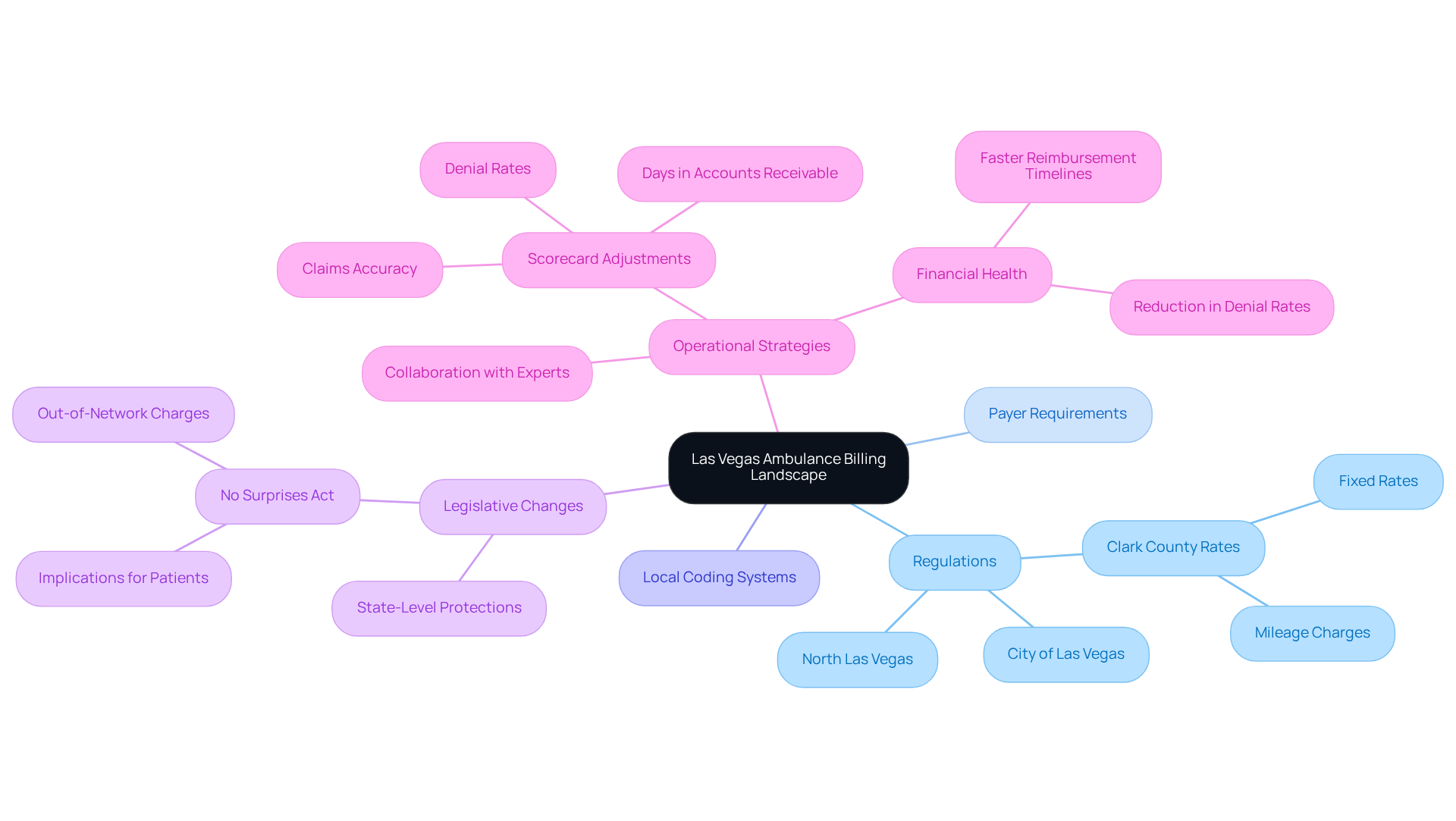
Navigating the city of Las Vegas ambulance billing landscape presents significant challenges for clinics, requiring a thorough understanding of regulations and payer requirements. Familiarity with local coding systems and insurance policies is essential, as the City of Las Vegas and North Las Vegas may adopt different protocols and reimbursement rates. For instance, Clark County has set fixed rates for ambulance rides, but extra fees may apply depending on the distance to the nearest hospital, which can greatly influence payment results.
Clinics must actively monitor legislative changes, including the No Surprises Act, to ensure compliance and improve patient satisfaction. This act aims to protect patients from unexpected out-of-network charges during emergencies; however, many ambulance providers operate independently and may not have contracts with health plans, leading to potential surprise bills.
Collaborating with local EMS billing experts and attending targeted workshops equips clinics with essential insights into the billing landscape. Clinics that adopt scorecard-driven adjustments tied to claims accuracy, denial rates, and days in accounts receivable can demonstrate operational rigor, potentially achieving a reduction in denial rates by 20-30% and faster reimbursement timelines of 15-25% within 30-90 days. These strategies not only streamline operations but also enhance the overall financial health of the organization.
To effectively navigate these complexities, Healthcare Partners Consulting & Billing, LLC (HPC) provides tailored consultations designed to meet your organization’s specific needs, including city of Las Vegas ambulance billing. During a 30-minute call, we will outline your current workflow and pinpoint the most effective administrative solutions, ensuring you are prepared to tackle the unique challenges of ambulance operations in Las Vegas. Schedule a meeting with HPC today to discover how we can help your clinic thrive.
Implement Effective Billing Practices for Ambulance Services
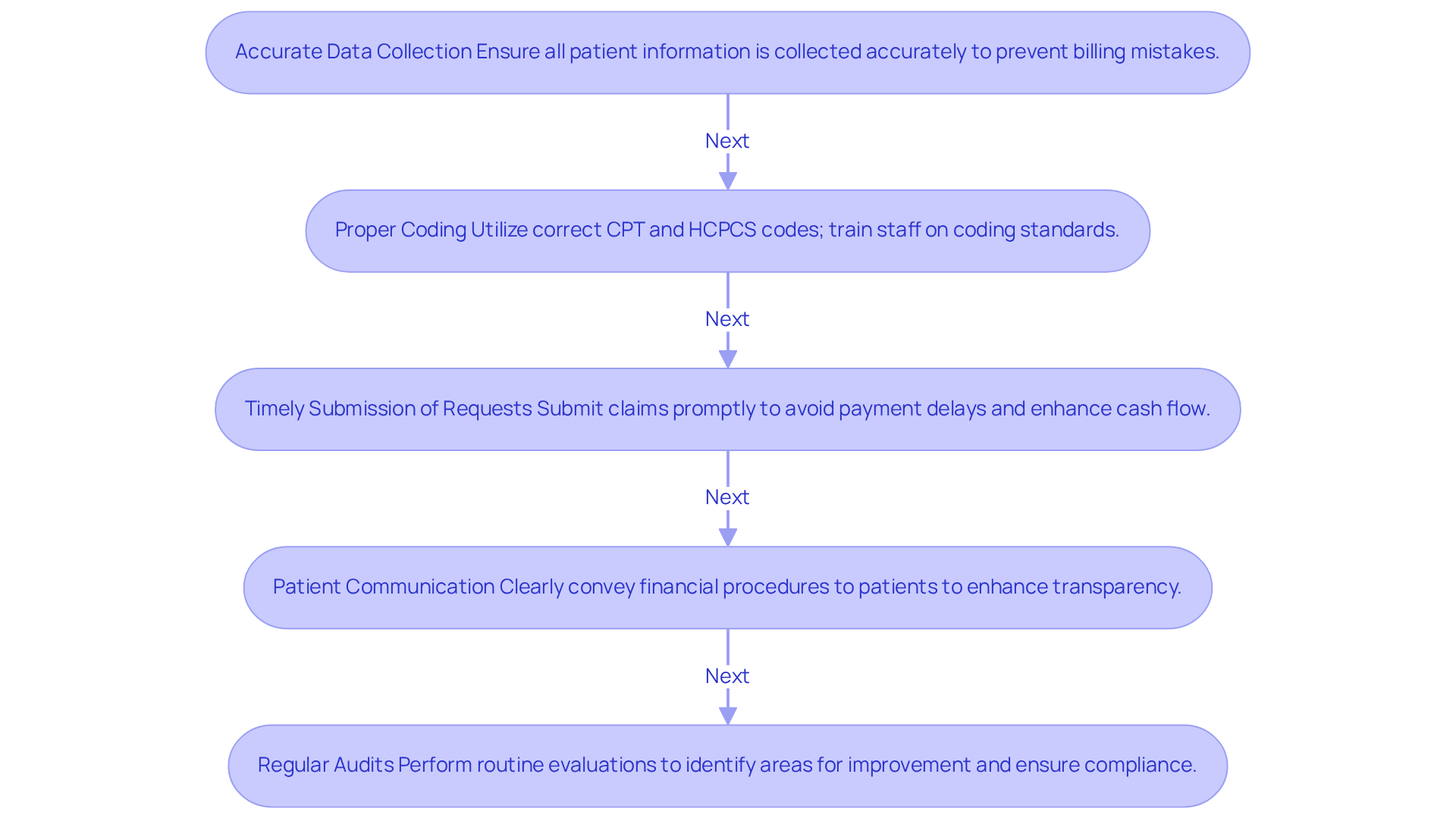
To implement effective billing practices for ambulance services, clinics must prioritize accuracy and efficiency in their processes:
- Accurate Data Collection: Ensure that all patient information, including demographics and insurance details, is collected accurately at the time of service. Billing inaccuracies can lead to substantial financial setbacks, as roughly 80% of medical bills include mistakes, which can greatly postpone the billing process and result in revenue loss.
- Proper Coding: Utilize the correct CPT and HCPCS codes for ambulance services. Training staff on coding standards and keeping abreast of updates is essential for compliance and maximizing reimbursement. Studies indicate that up to 12% of medical submissions are made with incorrect codes, highlighting the necessity for stringent coding practices.
- Timely Submission of Requests: Submit requests promptly to avoid delays in payment. Establish a routine for reviewing and submitting claims within the required timeframes. Timely submissions can lead to faster reimbursements, with organizations achieving quicker payments within 30-90 days.
- Patient Communication: Clearly convey financial procedures to patients, including possible out-of-pocket expenses, to enhance transparency and minimize disputes. Effective communication can mitigate misunderstandings and foster trust between providers and patients.
- Regular Audits: Perform routine evaluations of invoicing methods to pinpoint areas for enhancement and ensure adherence to payer requirements. Implementing scorecard-driven adjustments linked to claims accuracy and rejection rates can enhance operational rigor, potentially reducing rejections by 20-30% and improving overall revenue cycle performance.
Ultimately, these strategies can transform billing practices, leading to improved financial outcomes for clinics.
Optimize Denial Management for Revenue Recovery
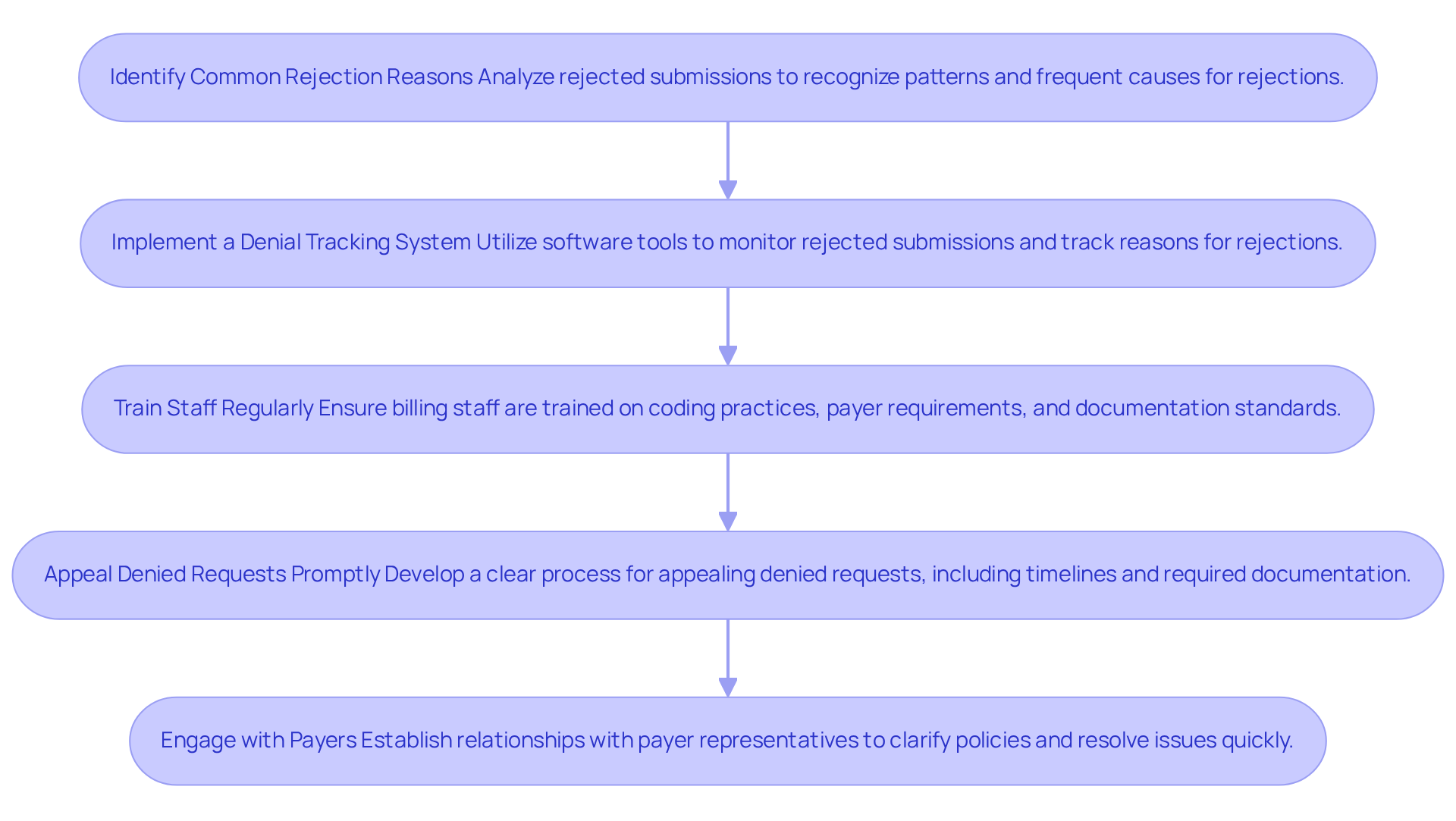
To optimize denial management for revenue recovery, clinics should adopt a systematic approach that also addresses underpayments and aging claims:
- Identify Common Rejection Reasons: Analyze rejected submissions to recognize patterns and frequent causes for rejections, such as coding mistakes, absence of medical necessity, or incomplete documentation. Consider the implications of underpayments and unprocessed requests stemming from these refusals, as they can greatly affect patient statements.
- Implement a Denial Tracking System: Utilize software tools to monitor rejected submissions and track the reasons for rejections. This data can guide training and process enhancements, ensuring that aging requests and related patient statements are addressed swiftly.
- Train Staff Regularly: Ensure that billing staff are trained on the latest coding practices, payer requirements, and documentation standards to minimize errors that lead to denials. Training should also focus on managing patient statements effectively to minimize underpayments and improve communication.
- Appeal Denied Requests Promptly: Develop a clear process for appealing denied requests, including timelines and required documentation. Prompt appeals can significantly improve recovery rates and help in addressing any aging claims that may be affecting cash flow and patient statements.
- Engage with Payers: Establish relationships with payer representatives to clarify policies and resolve issues quickly. Regular communication can help prevent future denials and ensure that underpayments are addressed efficiently, ultimately improving the accuracy of patient statements.
Leverage Technology and Data Analytics for Billing Efficiency
In an increasingly complex healthcare landscape, clinics must prioritize billing efficiency to ensure sustainable operations and enhanced patient care. Clinics can leverage technology and data analytics to enhance billing efficiency through the following strategies:
- Implement Billing Software: Utilize specialized billing software that integrates seamlessly with electronic health records (EHR) systems, such as TherapyNotes, SimplePractice, and Valant. This integration streamlines data entry and minimizes errors. As a result, healthcare providers can focus more on patient care.
- Automate Claims Processing: Automating the claims submission process ensures timely filing and significantly reduces the manual workload. This approach can lead to faster reimbursement, with improvements of 15-25% within 30-90 days, as supported by industry insights from Medical Billers and Coders (MBC). Healthcare Partners Consulting & Billing, LLC (HPC) specializes in optimizing this process, ensuring compliance and minimizing rejections.
- Utilize Data Analytics: Analyzing billing data helps identify trends, such as common rejection reasons or payment delays. This information is crucial for guiding process improvements and targeted training initiatives, ultimately enhancing revenue cycle performance. For example, implementing scorecard-driven adjustments can assist in monitoring the accuracy of submissions and rates of refusals, contributing to a potential decrease in rejections by 20-30%.
- Monitor Key Performance Indicators (KPIs): Regularly track KPIs such as clean submission rates, days in accounts receivable, and rejection rates. This monitoring enables clinics to evaluate financial performance and identify areas requiring enhancement, contributing to a potential decrease in denials by 20-30%. HPC provides detailed financial reports that include claim volumes and aging reports, helping clinics monitor their performance effectively.
- Stay Updated on Technology Trends: Continuously review emerging technologies in the invoicing space, including AI and machine learning. These advancements can significantly enhance efficiency and accuracy in financial processes, ensuring clinics remain competitive and compliant. Automated notifications in invoicing software can identify potential coding problems or absent documentation prior to submissions, further enhancing invoicing reliability. HPC’s dedication to innovation guarantees that operations benefit from the latest advancements in payment technology.
- Flexible Service Plans: HPC offers adaptable service plans customized to the size of your operation and claim volume, ensuring that you receive the level of support that best fits your needs. This approach allows clinics to choose between full-cycle billing or targeted accounts receivable assistance, enhancing operational efficiency.
- Transparent Pricing Models: With pricing models that include percentage-based fees, flat rates for defined scopes, or custom subscription packages, HPC ensures transparency with no hidden fees, allowing clinics to budget effectively.
- Veteran-Owned Expertise: As a veteran-owned company with 39 years of experience, HPC brings a deep understanding of the unique challenges faced by mental and behavioral health practices, ensuring compliance and optimizing revenue cycle management.
By embracing these strategies, clinics can not only streamline their billing processes but also significantly improve their financial health and patient satisfaction.

Conclusion
The intricacies of ambulance billing in Las Vegas present significant challenges that demand a focused and strategic response. Clinics can enhance their billing processes by implementing best practices, which leads to improved financial outcomes and patient satisfaction.
Key strategies discussed include:
- Accurate data collection
- Proper coding
- Timely submission of claims
- Effective denial management
Each of these elements plays a crucial role in minimizing errors and optimizing revenue recovery. Additionally, leveraging technology and data analytics can streamline operations, allowing healthcare providers to focus on what truly matters: delivering quality patient care.
As the healthcare environment continues to evolve, it is essential for clinics to adopt these best practices and remain proactive in their billing strategies. Engaging with experts like Healthcare Partners Consulting & Billing, LLC (HPC) can provide tailored solutions that empower healthcare providers by removing administrative burdens. Adopting these strategies is not merely beneficial; it is essential for clinics aiming to succeed in the competitive ambulance billing landscape.
Frequently Asked Questions
What are the main challenges in the Las Vegas ambulance billing landscape?
The main challenges include understanding regulations and payer requirements, familiarity with local coding systems and insurance policies, and navigating different protocols and reimbursement rates between the City of Las Vegas and North Las Vegas.
How do fixed rates for ambulance rides in Clark County affect billing?
Clark County has set fixed rates for ambulance rides, but additional fees may apply based on the distance to the nearest hospital, which can significantly influence payment outcomes.
What is the No Surprises Act and how does it impact ambulance billing?
The No Surprises Act aims to protect patients from unexpected out-of-network charges during emergencies. However, many ambulance providers operate independently and may not have contracts with health plans, leading to potential surprise bills.
How can clinics improve their ambulance billing processes?
Clinics can improve their processes by actively monitoring legislative changes, collaborating with local EMS billing experts, and attending targeted workshops to gain insights into the billing landscape.
What strategies can clinics implement to reduce denial rates and improve reimbursement timelines?
Clinics can adopt scorecard-driven adjustments tied to claims accuracy, denial rates, and days in accounts receivable, potentially achieving a reduction in denial rates by 20-30% and faster reimbursement timelines of 15-25% within 30-90 days.
How can Healthcare Partners Consulting & Billing, LLC (HPC) assist clinics with ambulance billing?
HPC provides tailored consultations to meet specific organizational needs, including city of Las Vegas ambulance billing, by outlining current workflows and identifying effective administrative solutions during a 30-minute call.