Introduction
The landscape of internal medicine is undergoing significant transformation, driven largely by the integration of electronic health records (EHR). EHR systems play a pivotal role in enhancing clinic operations and patient care. By integrating essential features such as:
- Comprehensive medical billing
- Robust patient support
- Advanced decision support tools
- Seamless electronic communication
clinics can significantly improve their efficiency and patient engagement. However, navigating the complexities of EHR systems presents significant challenges for healthcare providers, necessitating a strategic approach to maximize benefits while ensuring compliance and minimizing administrative burdens. This article delineates four critical EHR features that are essential for empowering internal medicine clinics to thrive in the contemporary healthcare environment.
Comprehensive Medical Billing Integration
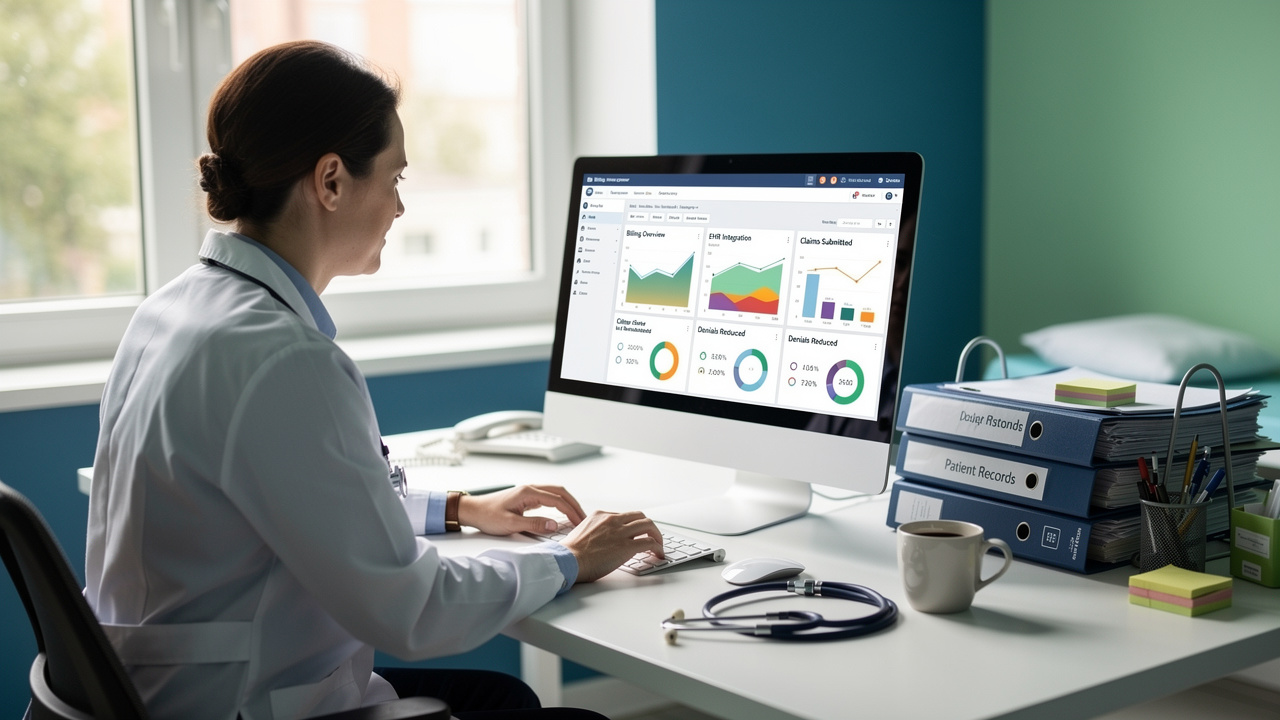
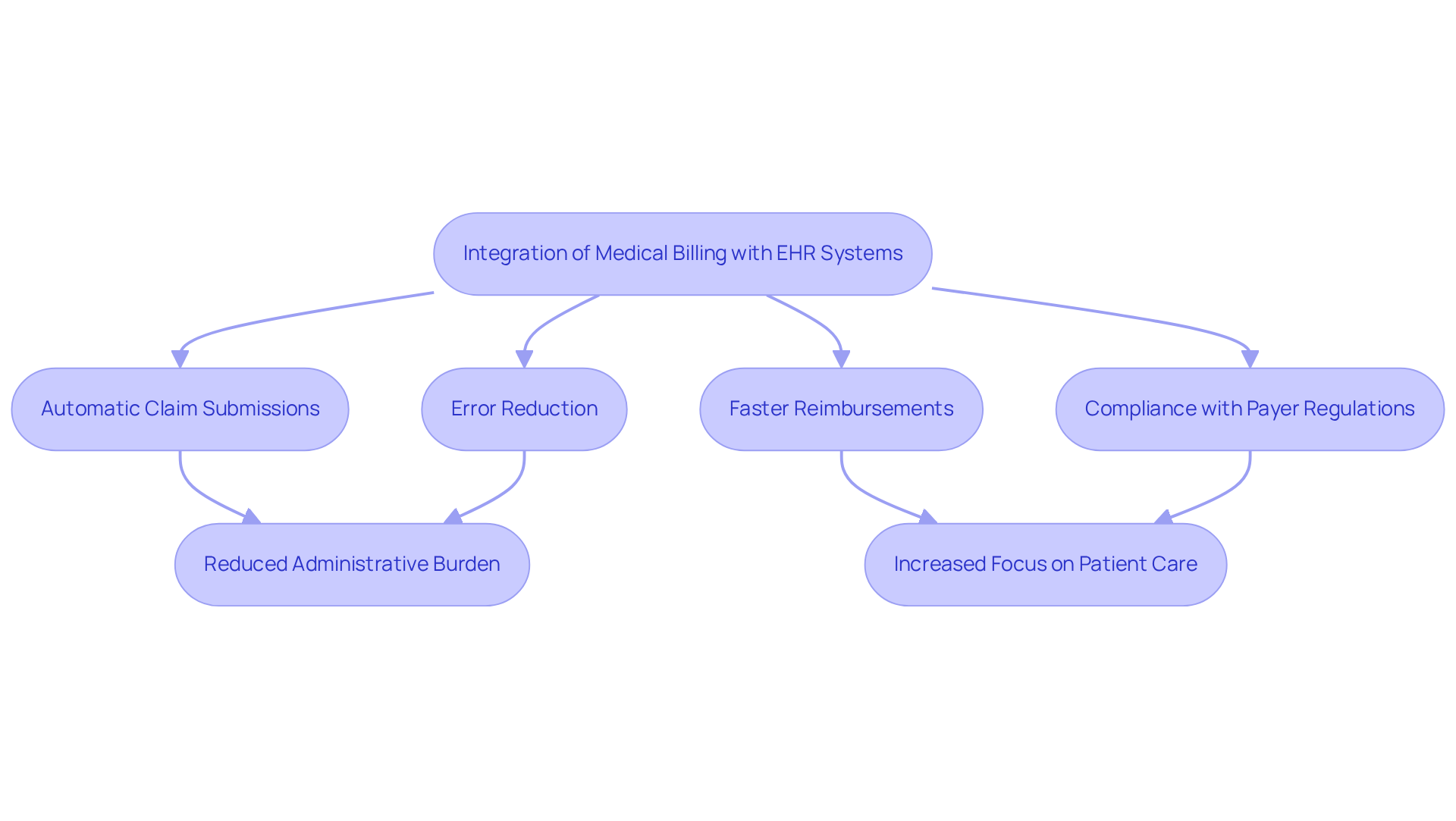
The integration of medical billing processes with internal medicine EHR systems is essential for optimizing healthcare operations. A robust EHR platform must seamlessly integrate with medical billing processes to facilitate automatic claim submissions and tracking. This integration reduces errors, speeds up reimbursements, and ensures compliance with payer regulations. Automating billing tasks significantly alleviates administrative burdens for healthcare providers. This allows them to focus more on patient care. For instance, approaches utilizing integrated billing systems have reported a significant reduction in claim denials, with some experiencing revenue increases of up to 30%.
Healthcare Partners Consulting (HPC) offers a quick quiz to assist mental health organizations in evaluating their profitability and uncovering hidden revenue leaks. This personalized assessment provides customized recommendations to improve efficiency and billing accuracy, ensuring that organizations can maximize their profitability. Additionally, HPC provides customized administrative support services, including scheduling, document management, and insurance claims assistance, to streamline operations further.
Recent trends suggest that the incorporation of medical billing within internal medicine EHR is becoming increasingly vital, especially as the healthcare landscape transitions towards value-based care models. In 2026, practices that adopt these integrated solutions are projected to see improvements in operational efficiency, with data analytics playing a crucial role in optimizing revenue cycle management strategies. Moreover, case studies indicate that organizations that adopt integrated solutions can expect significant financial benefits, experiencing 20-40% higher net collection rates.
As the demand for streamlined operations grows, the focus on compliance and data security remains paramount. Healthcare providers face challenges due to stricter documentation requirements and complex billing codes. They must invest in solutions that not only enhance efficiency but also protect against claim denials. In this evolving environment, the integration of medical billing with internal medicine EHR systems is essential for achieving financial sustainability in healthcare.
Robust Patient Support Features
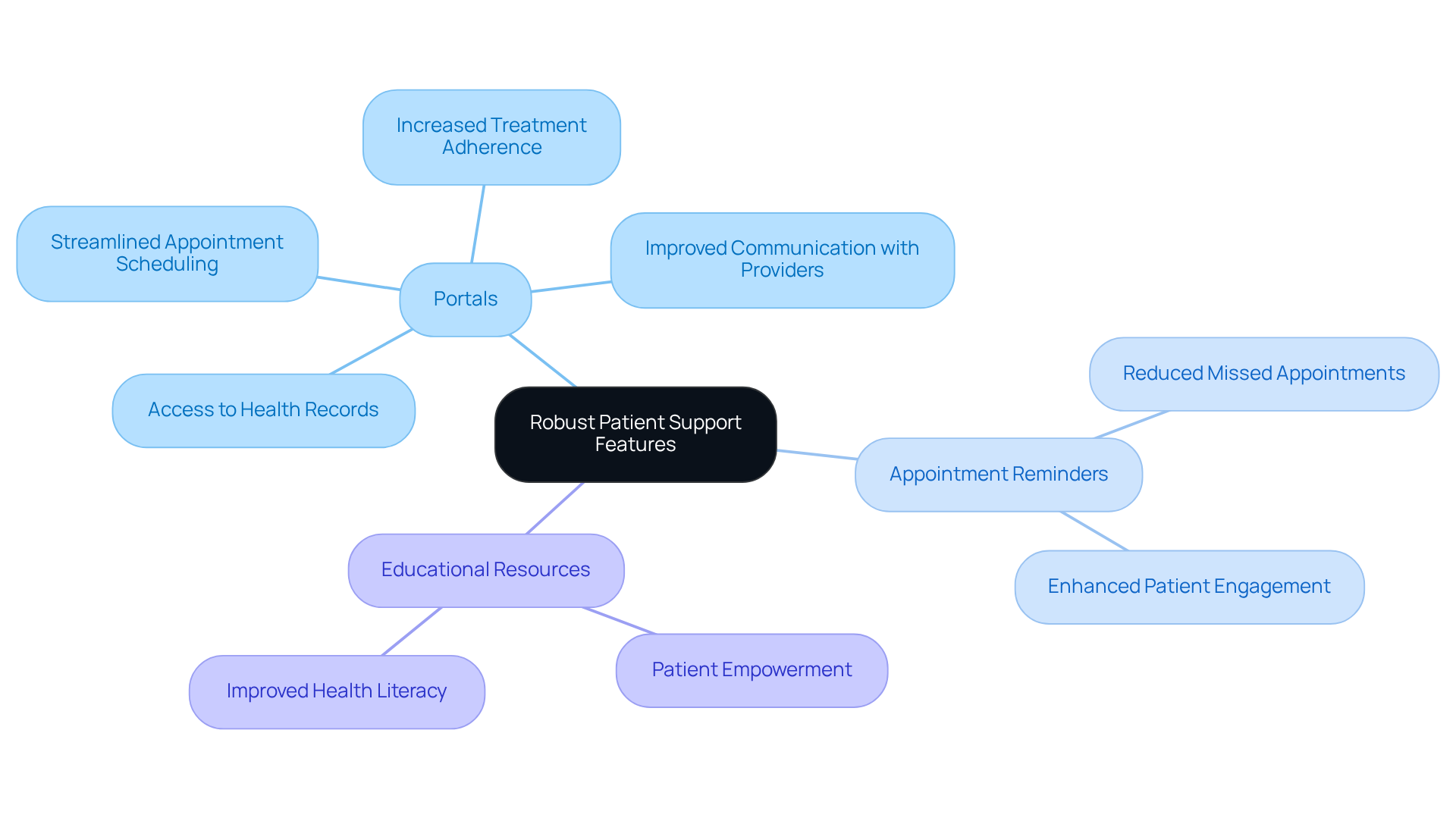
To optimize patient engagement, an effective EHR must integrate comprehensive support features. Robust support features, including:
are essential. Patient portals enhance individual empowerment by granting access to health records, streamlining appointment scheduling, and improving communication with providers. This accessibility significantly enhances satisfaction and fosters active engagement in their healthcare journey. For instance, approaches utilizing health portals often experience increased adherence to treatment plans, which correlates with improved health outcomes. To further enhance your organization’s administrative solutions, we recommend a 30-minute consultation with Healthcare Partners Consulting to assess your current workflow. During this call, we will outline customized services that can improve your practice’s efficiency and engagement with clients.
Advanced Decision Support Tools
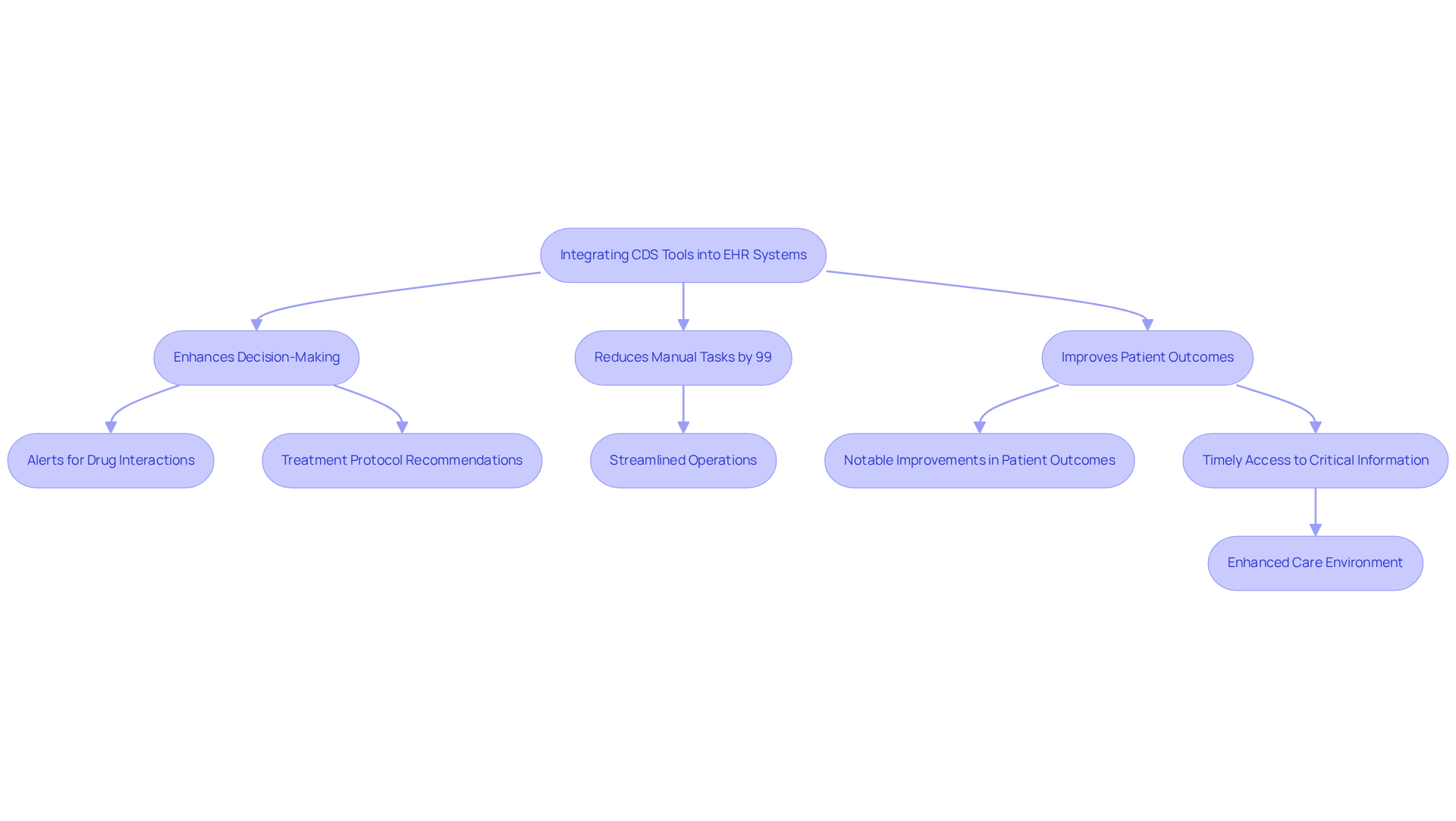
Integrating clinical decision support (CDS) tools into internal medicine EHR systems is essential for enhancing patient care and safety. CDS tools provide alerts regarding potential drug interactions and recommend treatment protocols tailored to an individual’s medical history. By integrating these tools into daily workflows, medical providers can enhance their decision-making capabilities, resulting in improved care and safety for patients.
Research shows that RCM integrations can decrease manual tasks by as much as 99%, thereby streamlining operations and significantly reducing errors. Furthermore, case studies demonstrate that practices employing advanced CDS tools, such as those highlighted in the ‘Impact of Clinical Decision Support on Documentation Burden,’ have achieved notable improvements in patient outcomes, underscoring the critical role of these solutions in contemporary medical practice.
The latest advancements in CDS tools are transforming how providers engage with internal medicine EHR systems, ensuring timely access to critical information and promoting a more efficient care environment.
Seamless Electronic Communication and Connectivity
An ideal Electronic Health Record (EHR) system must facilitate secure communication and interoperability to optimize patient care. This connectivity facilitates efficient information exchange, thereby minimizing delays in care and improving the patient experience. For instance, approaches that utilize secure messaging report enhanced patient satisfaction and decreased no-show rates, as patients can easily communicate their needs and receive timely responses.
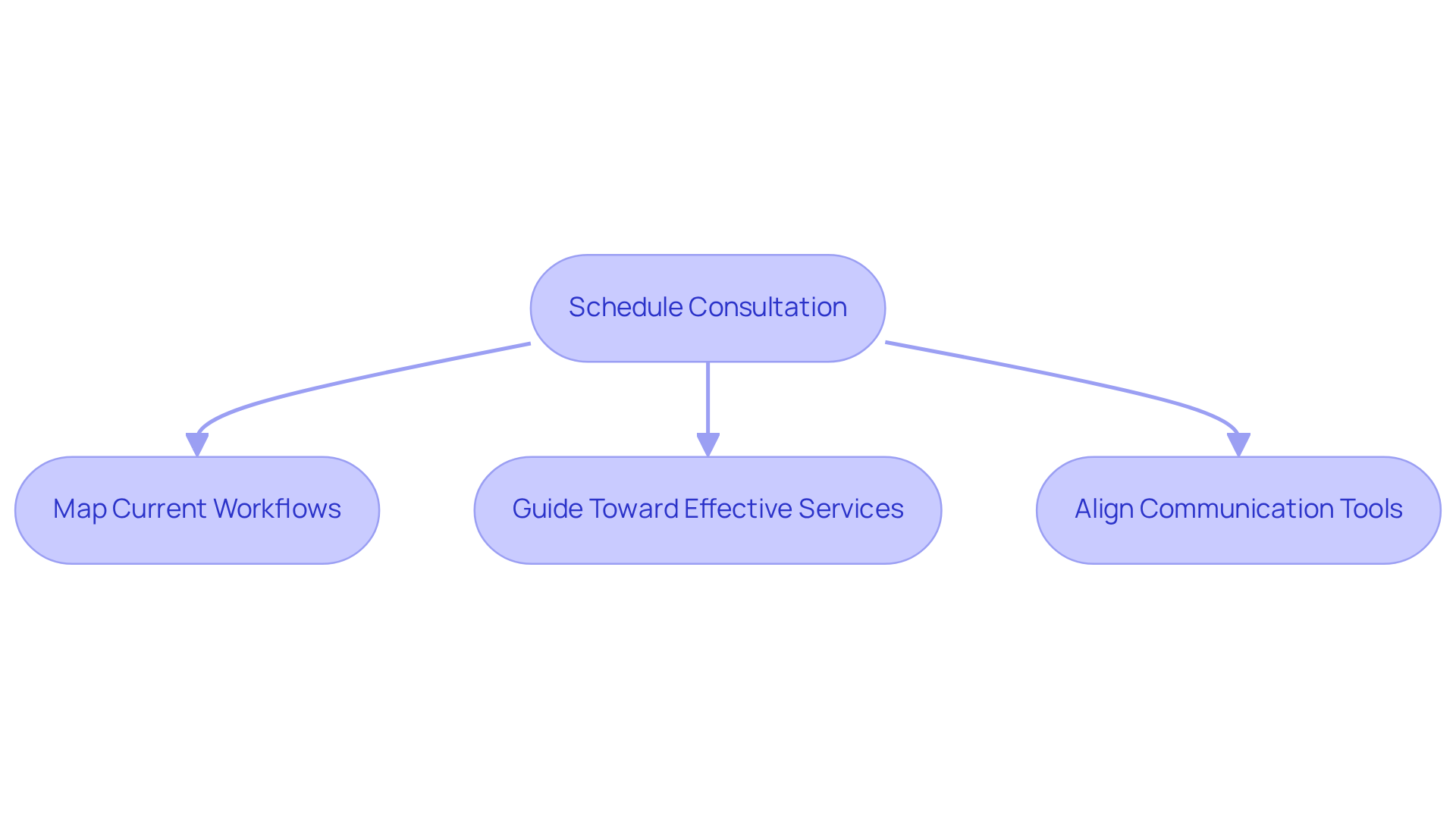
Mental health clinic owners are encouraged to schedule a 30-minute consultation with Healthcare Partners Consulting to enhance these capabilities. During this call, we will:
- Map your current workflows
- Guide you toward the services that will move the needle fastest
- Ensure that your communication tools are effective and aligned with your practice’s unique needs
Conclusion
Integrating essential EHR features is crucial for the operational success of internal medicine clinics. By focusing on comprehensive medical billing integration, robust patient support features, advanced decision support tools, and seamless electronic communication, clinics can significantly reduce administrative burdens and improve overall efficiency. This integration enables providers to focus more on delivering high-quality patient care.
Key insights from the article highlight the importance of integrating medical billing with EHR systems to optimize revenue cycle management and ensure compliance with payer regulations. The inclusion of patient support features fosters engagement and satisfaction, while advanced decision support tools enhance clinical decision-making and patient safety. Furthermore, effective electronic communication facilitates timely information exchange, ultimately improving the patient experience.
In a rapidly evolving healthcare landscape, prioritizing these EHR functionalities is essential for clinics aiming to thrive. Embracing these technologies not only enhances operational efficiency but also transforms patient care delivery. For clinics looking to enhance their practices, engaging with experts like Healthcare Partners Consulting & Billing, LLC can provide tailored solutions that align with their unique needs and goals. Taking proactive steps today can pave the way for a more successful and patient-centered future in internal medicine.
Frequently Asked Questions
Why is the integration of medical billing processes with EHR systems important?
The integration is essential for optimizing healthcare operations as it facilitates automatic claim submissions and tracking, reduces errors, speeds up reimbursements, and ensures compliance with payer regulations.
How does automating billing tasks benefit healthcare providers?
Automating billing tasks alleviates administrative burdens, allowing healthcare providers to focus more on patient care.
What financial benefits can organizations expect from integrated billing systems?
Organizations utilizing integrated billing systems have reported significant reductions in claim denials and revenue increases of up to 30%, with some experiencing 20-40% higher net collection rates.
What services does Healthcare Partners Consulting (HPC) offer to assist mental health organizations?
HPC offers a quick quiz to evaluate profitability, customized recommendations to improve efficiency and billing accuracy, and administrative support services including scheduling, document management, and insurance claims assistance.
How is the trend towards integrated medical billing and EHR systems expected to evolve by 2026?
By 2026, practices adopting integrated solutions are projected to see improvements in operational efficiency, with data analytics playing a crucial role in optimizing revenue cycle management strategies.
What challenges do healthcare providers face regarding compliance and data security?
Providers face challenges due to stricter documentation requirements and complex billing codes, necessitating investments in solutions that enhance efficiency while protecting against claim denials.
Why is the integration of medical billing with EHR systems crucial for financial sustainability in healthcare?
It is essential for achieving financial sustainability as it helps streamline operations, improve billing accuracy, and adapt to the evolving healthcare landscape focused on value-based care models.