
Introduction
In the rapidly changing healthcare landscape, urology practices encounter significant challenges that impact their operational efficiency and patient care. Implementing effective management strategies allows practices to streamline operations and improve patient engagement.
What key obstacles must urology practices overcome to achieve operational excellence, and how can they use technology and strategic frameworks to succeed?
This article delves into best practices for urology practice management, offering insights into overcoming common challenges while empowering healthcare providers to focus on what truly matters: delivering exceptional patient care.
Ultimately, addressing these challenges is essential for urology practices to prioritize exceptional patient care and thrive in a competitive market.
Establish Core Operational Strategies for Urology Practices
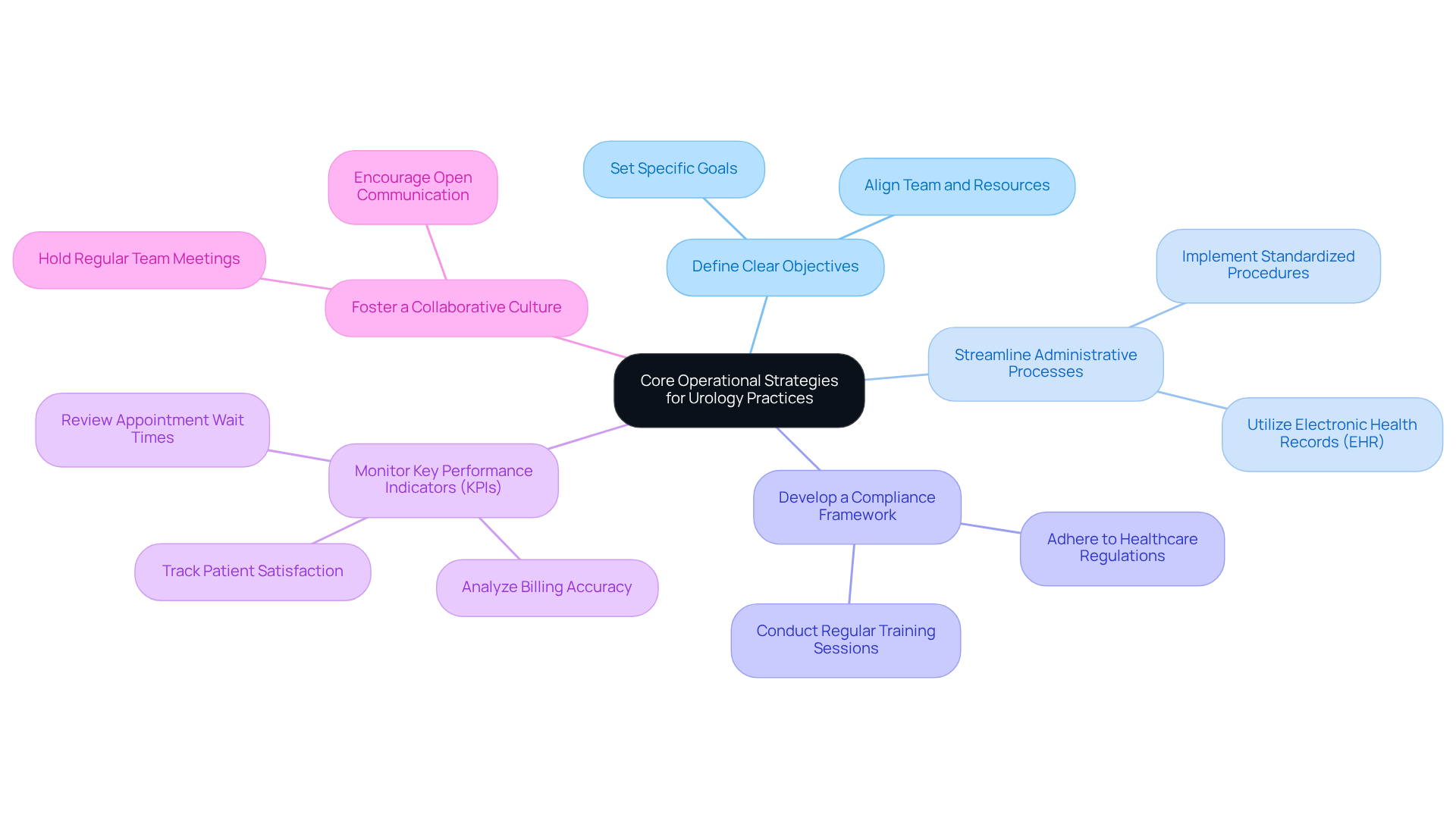
To thrive in a competitive healthcare landscape, urology practice management must confront the challenges of operational inefficiency and compliance. To establish effective operational strategies, urology practices should focus on the following key areas:
- Define Clear Objectives: Set specific, measurable goals for client support, financial performance, and operational efficiency. This clarity aligns the team and resources towards common objectives, ensuring everyone is working towards the same targets.
- Streamline Administrative Processes: Implement standardized procedures for scheduling, billing, and intake to reduce administrative burdens. Utilizing electronic health records (EHR) can automate many of these tasks, allowing staff to focus on care and enhancing overall efficiency.
- Develop a Compliance Framework: Ensure that all operational strategies adhere to healthcare regulations and standards. Regular training sessions for staff on compliance issues can reduce risks and enhance operational integrity, fostering a culture of accountability.
- Monitor Key Performance Indicators (KPIs): Establish KPIs to track performance in areas such as patient satisfaction, appointment wait times, and billing accuracy. Regularly reviewing these metrics allows practices to identify areas for improvement and make data-driven decisions. Scorecard-driven adjustments tied to claims accuracy, denial rates, and days in accounts receivable can further demonstrate operational rigor and enhance financial performance.
- Foster a Collaborative Culture: Encourage open communication among staff to promote teamwork and problem-solving. Regular meetings can help tackle challenges and celebrate achievements, fostering a positive work atmosphere that ultimately enhances care quality. This collaborative approach can lead to enhanced outcomes for individuals and higher satisfaction rates.
Ultimately, the implementation of these strategies can redefine operational success and patient care within urology practice management.
Identify and Overcome Common Challenges in Urology Management
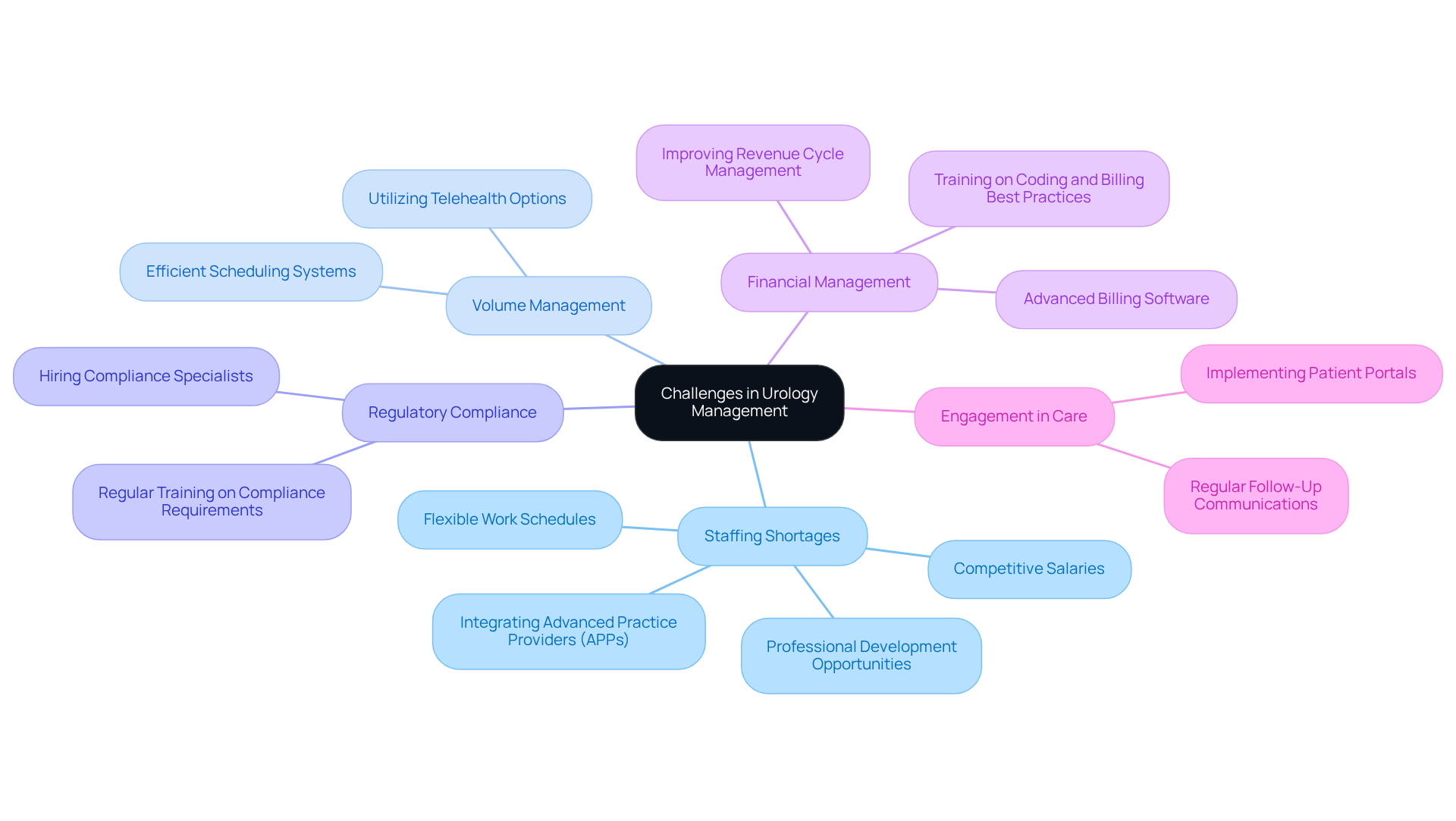
Urology facilities encounter numerous challenges that threaten their operational efficiency and the quality of care they deliver. Key issues include:
- Staffing Shortages: The urology field is facing a significant shortage, with projections indicating a deficit of 950 full-time equivalent urologists by 2026, escalating to over 2,200 by 2036. Practices should offer competitive salaries and flexible work schedules. Additionally, providing professional development opportunities can help attract and retain qualified staff. Integrating Advanced Practice Providers (APPs) can also alleviate some of the staffing pressures, allowing urologists to focus on more complex cases.
- Volume Management: High volumes of individuals can lead to staff burnout and decreased satisfaction. Implementing efficient scheduling systems and utilizing telehealth options can help manage patient flow, reduce wait times, and enhance overall patient experience. This approach not only improves operational efficiency but also supports staff well-being.
- Regulatory Compliance: Navigating the complex landscape of healthcare regulations is a daunting task for many organizations. Regular training and updates on compliance requirements, along with hiring compliance specialists, can help organizations stay ahead of regulatory changes and avoid costly penalties.
- Financial Management: Billing and collections continue to pose a significant challenge for many urology facilities. Utilizing advanced billing software and training staff on coding and billing best practices can improve revenue cycle management, leading to a reduction in claim denials by 20-30% and faster reimbursement within 30-90 days by 15-25%. This not only improves cash flow but also reduces administrative burdens.
- Engagement in Care: Involving individuals in their treatment is essential for satisfaction and favorable outcomes. By implementing portals for individuals and ensuring regular follow-up communications, practices can enhance engagement and foster long-term relationships that improve adherence to treatment plans. Addressing these challenges is crucial for sustaining high-quality care and operational success in urology practice management.
Leverage Technology for Enhanced Practice Efficiency
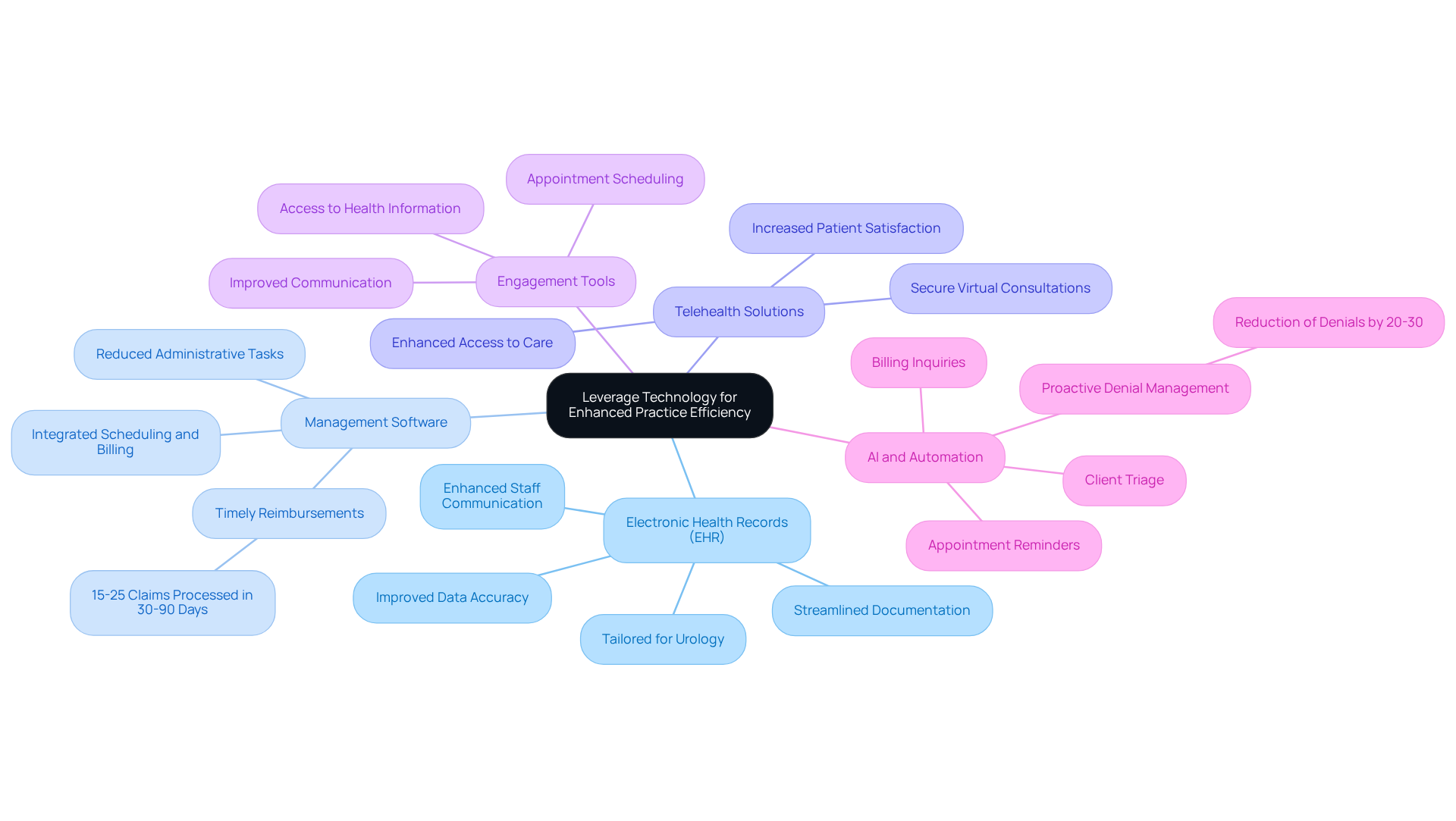
To thrive in an increasingly complex healthcare landscape, urology practice management must strategically leverage technology. Here are several key strategies to consider:
- Implement Electronic Health Records (EHR): EHR systems streamline documentation, improve data accuracy, and enhance communication among staff. Choosing an EHR specifically tailored for urology ensures that it addresses the distinct requirements of the field, thereby enhancing care quality and operational efficiency. Healthcare Partners Consulting offers seamless integrations with leading EHR platforms like TherapyNotes and AdvancedMD, ensuring compatibility and ease of use.
- Utilize Management Software: Investing in comprehensive management software can significantly reduce administrative tasks. This software should integrate scheduling, billing, and communication for optimal efficiency. Such integration not only enhances overall productivity but also supports timely reimbursements, with faster reimbursement timelines achievable within 15-25% of claims processed in 30-90 days. These solutions are designed for urology practice management, addressing the specific needs of urology practices to help ensure compliance and minimize the risk of denials.
- Adopt Telehealth Solutions: Telehealth enhances access to care and boosts satisfaction among individuals receiving care. Implementing secure telehealth platforms enables virtual consultations, follow-ups, and education, making healthcare more accessible and convenient. Healthcare Partners Consulting provides robust telehealth solutions that integrate with existing practice management systems.
- Incorporate Engagement Tools: Utilizing portals and mobile applications facilitates communication, appointment scheduling, and access to health information. These tools empower individuals, enhancing their involvement in their care and improving overall satisfaction. Our engagement solutions are designed to foster better communication and enhance health outcomes.
- Explore AI and Automation: Integrating AI-driven tools for tasks such as appointment reminders, billing inquiries, and client triage can free up staff time and reduce the likelihood of errors. Automation not only streamlines workflows but also supports proactive denial management, potentially reducing denials by 20-30% through improved accuracy and efficiency. Healthcare Partners Consulting’s automation tools are designed to improve operational efficiency and reduce administrative burdens.
Without these advancements, practices risk falling behind in delivering optimal patient care and operational excellence.
Enhance Patient Engagement and Communication Strategies
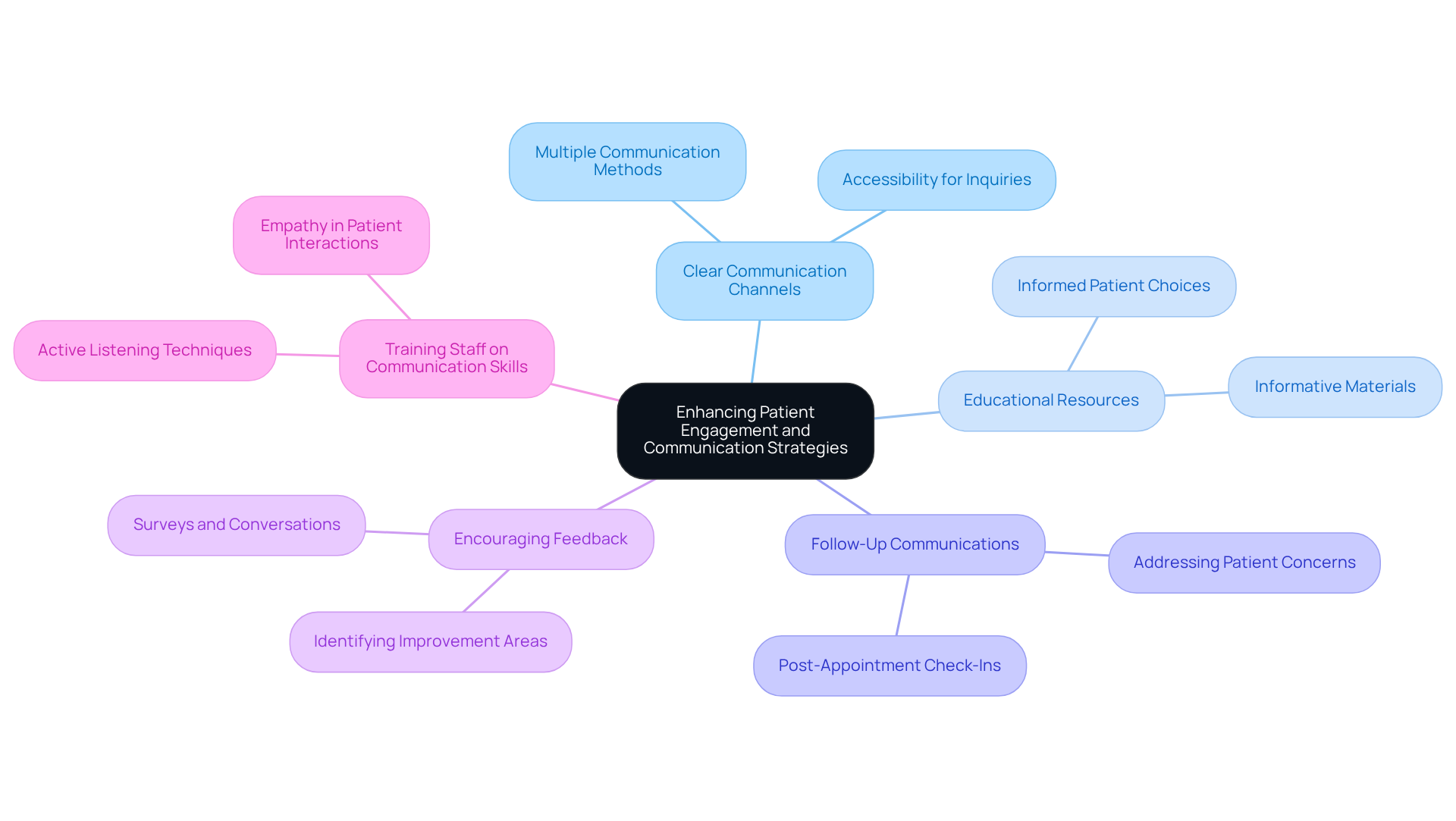
To enhance patient engagement and communication, urology practices must adopt strategic approaches that prioritize clear communication and education:
- Establish Clear Communication Channels: Ensure individuals have multiple ways to communicate with the practice, including phone, email, and secure messaging through portals. This accessibility reduces barriers to communication, facilitating inquiries and concerns from individuals.
- Provide Educational Resources: Offer individuals educational materials about their conditions and treatment options. This enables individuals to make informed choices and boosts their involvement in their treatment, resulting in improved health outcomes.
- Utilize Follow-Up Communications: After appointments, send follow-up messages to check on individuals’ progress and address any concerns. This approach fosters continuous communication, thereby strengthening the patient-provider relationship.
- Encourage Feedback: Actively seek input from individuals through surveys or informal conversations. Understanding patient experiences enables organizations to identify improvement areas, enhancing satisfaction and fostering client loyalty.
- Train Staff on Communication Skills: Provide training for staff on effective communication techniques, including active listening and empathy. Proficient communication skills significantly improve patient interactions and satisfaction, contributing to a more effective healthcare environment.
In 2026, approaches that prioritize these strategies can anticipate enhanced engagement from individuals, with studies showing that 88% of individuals prefer receiving medical information directly from their doctors. Furthermore, incorporating technology, such as EHR and management platforms like TherapyNotes, SimplePractice, Valant, AdvancedMD, and IntakeQ, into urology practice management to support these communication efforts can improve interactions between providers while preserving the essential human touch that individuals appreciate. As Angela Smith, MD, emphasizes, “When individuals are engaged in their own health care, they’re likely to use fewer services,” highlighting the importance of involving individuals in their healthcare decisions.
Ultimately, these strategies not only foster patient engagement but also ensure that healthcare providers can deliver more effective and personalized care.
Conclusion
Effective management strategies are vital for urology practices to navigate operational challenges and enhance patient care. Focusing on core operational strategies enables practices to streamline processes and enhance compliance, resulting in better patient outcomes.
Insights emphasize the need for clear objectives, addressing staffing shortages, and leveraging technology for efficiency. The integration of electronic health records, management software, and telehealth solutions reduces administrative burdens and empowers healthcare providers to focus on delivering high-quality care. Furthermore, enhancing patient engagement through effective communication strategies fosters stronger relationships and improves treatment adherence.
As urology practices navigate the complexities of healthcare management, embracing these best practices is crucial. By prioritizing operational excellence and patient-centered care, practices can thrive and empower providers to focus on patient care. Engaging with experts like Healthcare Partners Consulting & Billing, LLC can significantly elevate practice management and patient care quality.
Frequently Asked Questions
What are the core operational strategies for urology practices?
Core operational strategies for urology practices include defining clear objectives, streamlining administrative processes, developing a compliance framework, monitoring key performance indicators (KPIs), and fostering a collaborative culture.
Why is it important to define clear objectives in urology practice management?
Defining clear objectives helps set specific, measurable goals for client support, financial performance, and operational efficiency, aligning the team and resources towards common targets.
How can urology practices streamline their administrative processes?
Urology practices can streamline administrative processes by implementing standardized procedures for scheduling, billing, and intake, and utilizing electronic health records (EHR) to automate tasks, allowing staff to focus more on patient care.
What is the significance of developing a compliance framework?
Developing a compliance framework ensures that operational strategies adhere to healthcare regulations and standards, reducing risks and enhancing operational integrity through regular staff training on compliance issues.
What are key performance indicators (KPIs) and why are they important?
Key performance indicators (KPIs) are metrics used to track performance in areas such as patient satisfaction, appointment wait times, and billing accuracy. They are important for identifying areas for improvement and making data-driven decisions.
How can fostering a collaborative culture benefit urology practices?
Fostering a collaborative culture encourages open communication among staff, promotes teamwork and problem-solving, and can lead to enhanced care quality and higher satisfaction rates among patients.
What outcomes can be expected from implementing these operational strategies in urology practices?
Implementing these operational strategies can redefine operational success and improve patient care within urology practice management.