
Introduction
Clinics face significant challenges in managing home care billing services, which can impact their revenue cycle management. With the demand for home health care projected to surge, understanding the intricacies of billing processes can empower healthcare providers to enhance efficiency and focus on patient care. Clinics often struggle with the complexities of billing, leading to inefficiencies and revenue loss. This article explores best practices that not only safeguard revenue but also enable providers to prioritize what truly matters – patient care. By implementing effective billing practices, clinics can not only protect their revenue but also enhance their focus on patient care.
Understand Home Care Billing Fundamentals
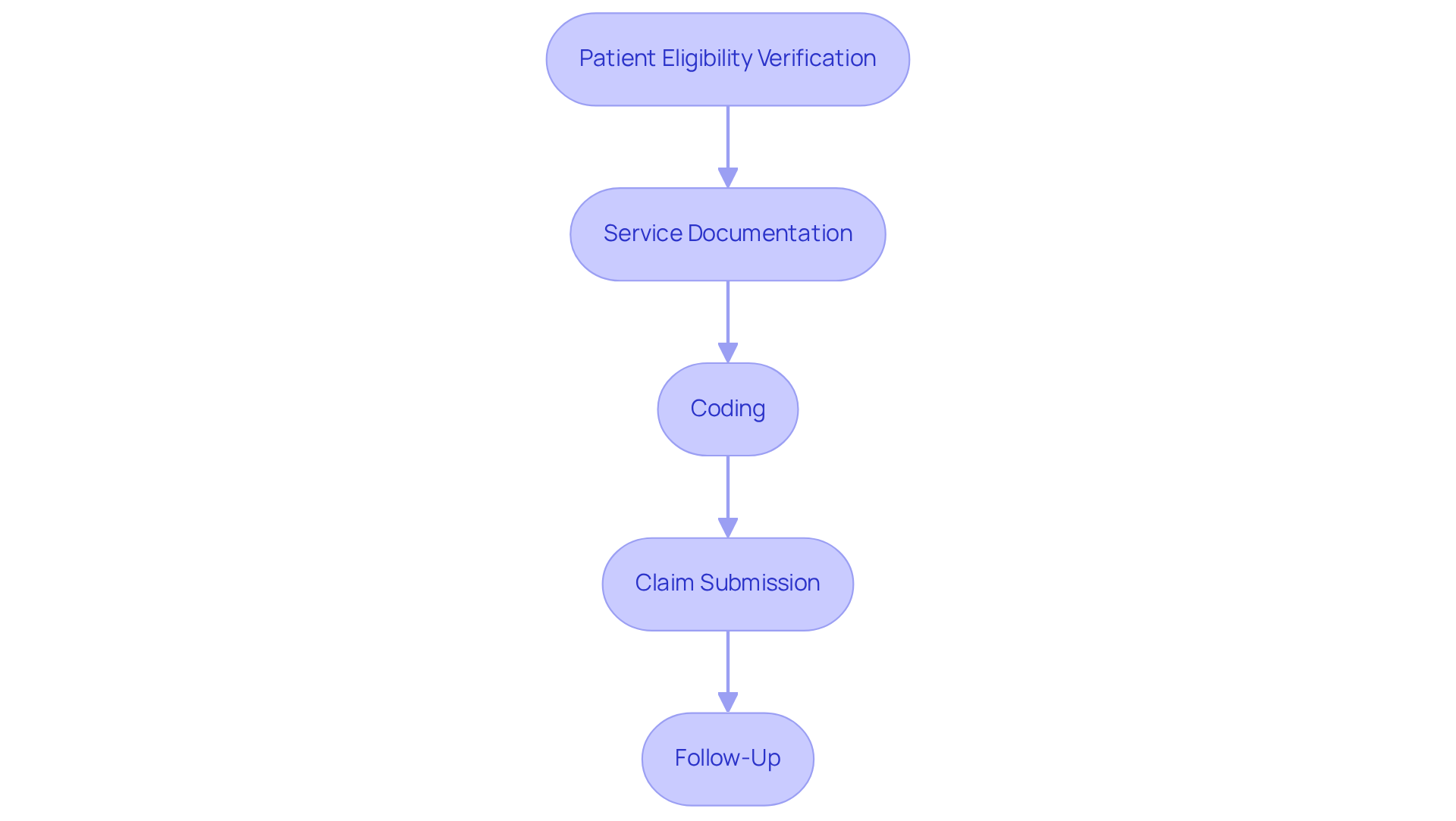
Timely reimbursement for home care billing services hinges on a series of critical billing steps that healthcare providers must navigate effectively. The key components of this process include:
- Patient Eligibility Verification: Verifying a patient’s eligibility for Medicare, Medicaid, or private insurance prior to delivering care is crucial to avoid denial of reimbursement. This foundational step can significantly reduce the likelihood of payment issues, especially as the demand for home health care and personal care aides is expected to rise by 34% from 2019 to 2029.
- Service Documentation: Accurate documentation of all services provided is essential. This encompasses keeping comprehensive records of patient interactions, treatments, and outcomes, which are vital for validating assertions. Errors in documentation can lead to significant financial losses and operational setbacks, resulting in rejections of claims.
- Coding: Employing the correct coding systems (ICD-10, CPT, HCPCS) to classify services accurately is imperative. Incorrect coding can lead to rejections of requests and delayed payments, impacting cash flow. Agencies can lose 15-30% of their potential monthly revenue due to mistakes in coding and authorizations.
- Claim Submission: Claims should be submitted promptly and in a complete manner. Utilizing electronic submission of requests can accelerate the process and reduce mistakes, resulting in quicker reimbursements, usually within 30 to 90 days. This efficiency really matters, especially considering that the home care industry saw a median revenue increase of $52,192 last year, showcasing the financial benefits of optimized home care billing services.
- Follow-Up: Regular monitoring of submitted requests is necessary to track their status and address any issues that may arise. This proactive approach can result in a decrease in rejections by 20-30%, enhancing overall revenue cycle performance. By implementing scorecard-driven adjustments linked to accuracy and denial rates, clinics can showcase operational rigor and enhance their revenue outcomes. Furthermore, personalized consultations provided by Healthcare Partners Consulting & Billing, LLC (HPC) can assist in identifying optimal administrative solutions customized to your practice’s requirements, ensuring effective management of patient statements and addressing specific challenges related to underpayments, unprocessed submissions, and aging submissions.
By mastering these fundamentals, clinics can streamline their financial processes. They can also improve operational rigor through scorecard-driven adjustments tied to claims accuracy. This enhancement in revenue cycle management ultimately allows them to focus more on patient care. Ultimately, a refined billing process not only safeguards revenue but also empowers clinics to prioritize patient care more effectively.
Ensure Compliance with Healthcare Regulations
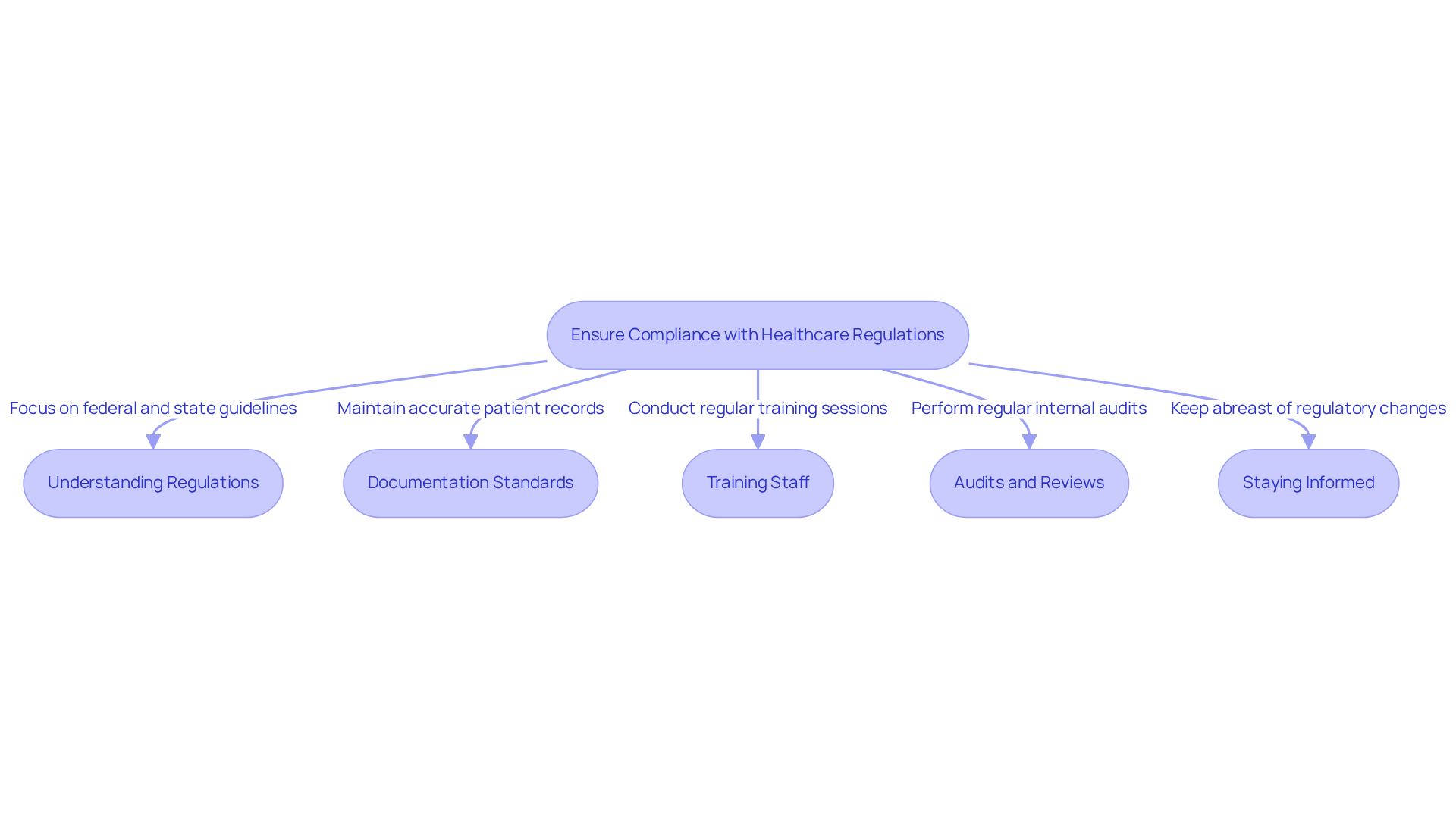
Adherence in home care billing services is not merely a regulatory requirement; it is a cornerstone of operational integrity and financial sustainability. Key areas to focus on include:
- Understanding Regulations: Familiarizing yourself with both federal and state guidelines that govern home care practices, particularly Medicare and Medicaid protocols, is crucial. This knowledge establishes the basis for compliant invoicing practices in home care billing services.
- Documentation Standards: All documentation must adhere to regulatory standards. This involves maintaining accurate patient records and documentation that support financial claims, ensuring that all care provided is justifiable.
- Training Staff: Regular training sessions for staff on compliance requirements and updates to regulations are vital. This proactive approach aids in avoiding invoicing errors and ensures that all team members are aligned with current practices.
- Audits and Reviews: Conducting regular internal audits is essential to identify potential compliance issues before they escalate. This proactive strategy can significantly mitigate risks associated with payer audits and enhance overall compliance. Additionally, continuously monitoring providers’ credentials, licenses, and regulatory statuses ensures real-time confirmation of good standing. Healthcare Partners Consulting & Billing, LLC (HPC) offers comprehensive credentialing and re-credentialing services to support this process.
- Staying Informed: Keeping abreast of changes in healthcare laws and regulations is critical. Subscribing to industry newsletters and attending relevant training sessions can help ensure that your clinic remains compliant with evolving standards. Notably, the revised hospital price transparency requirements that went into effect on January 1, 2026, highlight the importance of transparency in billing practices.
By prioritizing these compliance areas, clinics safeguard their operations and enhance their reputation within the healthcare community, especially regarding home care billing services. Moreover, concentrating on adherence can lead to a decrease in reimbursement rejections by 20-30% and enable quicker payments, enhancing revenue cycle performance by 15-25% within 30-90 days. This rigorous approach, backed by scorecard adjustments that focus on accuracy and denial rates, is key to long-term success. HPC’s expertise in revenue cycle management ensures that your practice can enhance invoicing processes, address underpayments, and manage aging accounts effectively.
Implement Effective Denial Management Strategies
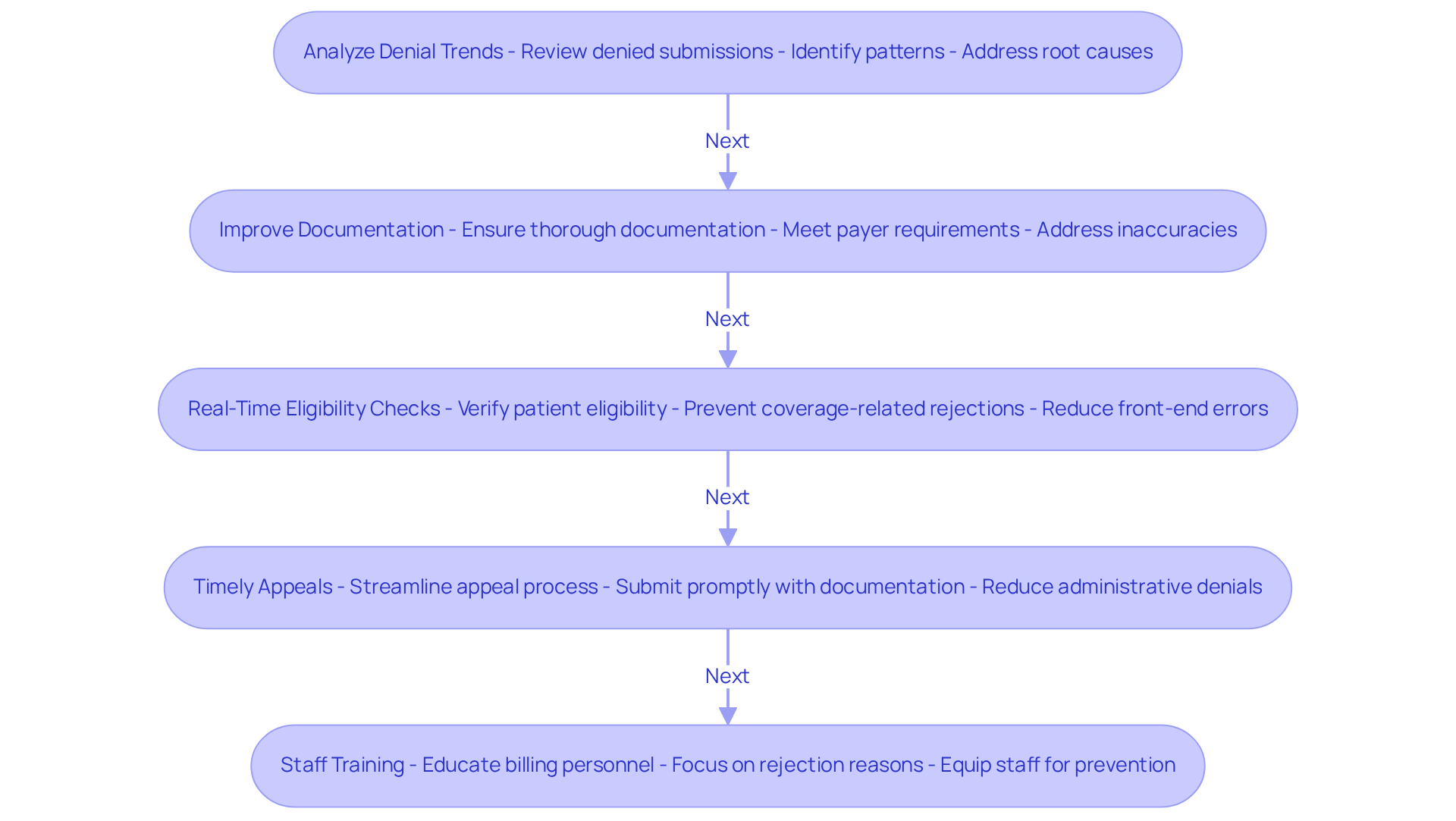
Effectively managing denials is crucial for optimizing the billing process and ensuring financial stability. Here are strategies to effectively manage and reduce denials:
- Analyze Denial Trends: Regularly review denied submissions to identify patterns. Clinics often struggle to pinpoint the reasons behind claim rejections. Understanding these reasons can assist clinics in addressing root causes, as rejection rates have been trending upward, with initial rejection rates reaching 11.81% in 2024.
- Improve Documentation: Documentation must be thorough and meet payer requirements. Incomplete or unclear documentation is a frequent cause for rejections, contributing to the 68% of providers who cite inaccurate or incomplete patient data at intake as a primary factor for these issues.
- Real-Time Eligibility Checks: Implement systems to verify patient eligibility in real-time before services are rendered. This can prevent rejections related to coverage issues, as over 44% of these are front-end rejections stemming from registration and eligibility errors.
- Timely Appeals: Develop a streamlined process for appealing denied claims. Ensure that appeals are submitted promptly and include all necessary documentation to support the case. Final rejection rates decrease significantly after appeals, indicating that many refusals are administrative rather than related to coverage.
- Staff Training: Educate billing personnel on common rejection reasons and effective strategies for prevention and resolution. Equipping staff with knowledge can greatly lower rejection rates, as organizations that invest in proactive prevention strategies are better prepared to handle challenges and sustain financial stability.
By adopting these strategies, clinics can enhance revenue cycle management. This is particularly important for addressing underpayments and aging claims. This proactive approach not only mitigates financial losses but also fosters a more efficient revenue cycle.
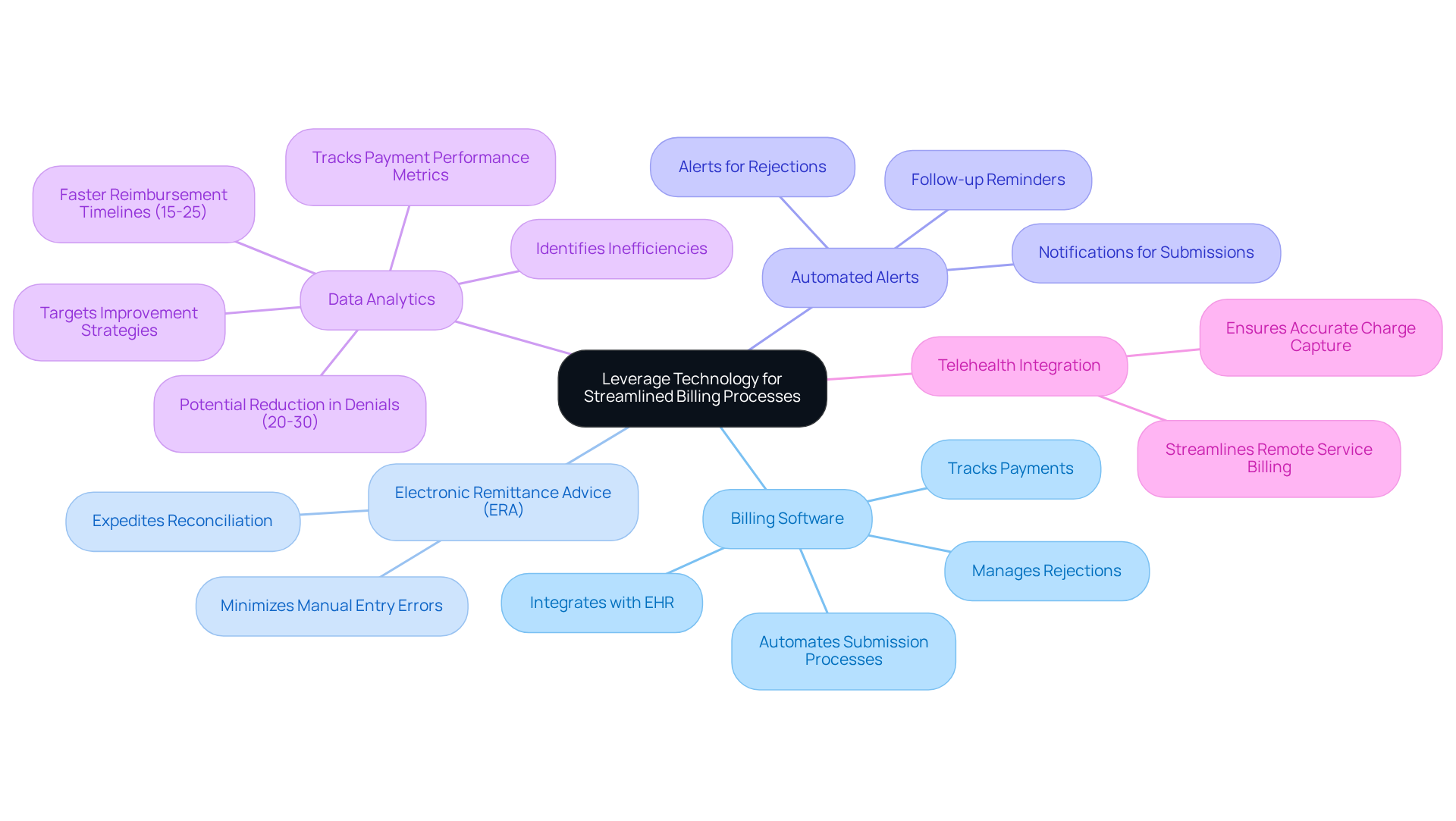
Leverage Technology for Streamlined Billing Processes
In the evolving landscape of healthcare, technology is pivotal in optimizing home care billing services and payment processes. Here are effective strategies to leverage technology:
- Billing Software: Invest in comprehensive billing software that automates submission processes, tracks payments, and manages rejections. Look for solutions that integrate seamlessly with electronic health records (EHR) to ensure a smooth data flow.
- Electronic Remittance Advice (ERA): Utilize ERA to receive payment information electronically, expediting the reconciliation process and minimizing manual entry errors. Manual entry errors can lead to delays and inaccuracies in payment processing.
- Automated Alerts: Implement automated notifications for submission processes, rejections, and follow-ups. This proactive approach ensures that no claims are overlooked and that timely actions are taken.
- Data Analytics: Utilize data analysis tools to track essential payment performance metrics, such as rejection rates and average time to payment. By leveraging data analytics, clinics can not only identify inefficiencies but also implement targeted strategies for improvement, potentially leading to a 20-30% reduction in denials and faster reimbursement timelines of 15-25% within 30-90 days.
- Telehealth Integration: If applicable, incorporate telehealth services into your invoicing system to streamline processes for remote services, ensuring that all services are captured and charged appropriately.
Ultimately, the integration of these technologies can transform home care billing services, enabling clinics to prioritize patient care over administrative tasks.
Conclusion
Optimizing home care billing services is crucial for clinics striving to enhance operational efficiency and prioritize patient care. Implementing best practices in billing processes enables healthcare providers to alleviate administrative burdens, thereby allowing them to focus more on patient care. The emphasis on compliance, effective denial management, and the integration of technology not only safeguards revenue but also empowers clinics to thrive in a competitive landscape.
Key insights from the article highlight the importance of:
- Understanding home care billing fundamentals
- Ensuring compliance with healthcare regulations
- Adopting effective denial management strategies
By verifying patient eligibility, maintaining accurate documentation, and utilizing advanced billing technologies, clinics can streamline their financial processes and improve cash flow. Moreover, regular training and audits can help mitigate risks associated with compliance, ultimately leading to enhanced revenue cycle performance.
Ultimately, optimizing home care billing services is essential for fostering an environment where patient care takes precedence over administrative burdens. Embracing these best practices and leveraging the expertise of Healthcare Partners Consulting & Billing, LLC (HPC) can lead to sustainable growth and improved patient outcomes. For clinics ready to take the next step, reaching out to HPC at info@hpcbilling.com or calling 888-517-4992 can provide the tailored support needed to navigate the complexities of home care billing effectively.
Frequently Asked Questions
What is the importance of patient eligibility verification in home care billing?
Patient eligibility verification is crucial as it ensures that a patient qualifies for Medicare, Medicaid, or private insurance before care is delivered, reducing the likelihood of reimbursement denial.
Why is service documentation essential in home care billing?
Accurate service documentation is essential because it involves keeping comprehensive records of patient interactions, treatments, and outcomes, which are vital for validating claims. Errors in documentation can lead to financial losses and claim rejections.
What coding systems are used in home care billing?
The coding systems used in home care billing include ICD-10, CPT, and HCPCS, which are necessary for accurately classifying services. Incorrect coding can result in claim rejections and delayed payments.
How should claims be submitted for home care services?
Claims should be submitted promptly and completely, preferably through electronic submission, to accelerate the process and reduce mistakes. This can lead to quicker reimbursements, typically within 30 to 90 days.
What role does follow-up play in the home care billing process?
Regular follow-up on submitted claims is necessary to track their status and address any issues, which can decrease rejections by 20-30% and enhance overall revenue cycle performance.
How can clinics improve their revenue cycle management in home care billing?
Clinics can improve revenue cycle management by implementing scorecard-driven adjustments linked to claims accuracy and denial rates, which enhances operational rigor and revenue outcomes.
What benefits can personalized consultations provide in home care billing?
Personalized consultations can help identify optimal administrative solutions tailored to a practice’s needs, ensuring effective management of patient statements and addressing challenges related to underpayments and unprocessed submissions.