
Introduction
In the intricate landscape of mental health clinics, the implementation of effective medical billing solutions is critical for operational success and optimal patient care. Streamlining administrative processes and enhancing compliance allows clinics to prioritize quality patient care. Clinics face increasing challenges due to rising claim denial rates and complex regulatory changes, necessitating effective strategies and tools for success. This article outlines best practices for optimizing billing processes, enabling healthcare providers to effectively navigate challenges and secure sustainable financial health.
Assess Practice Needs and Goals for Billing Solutions
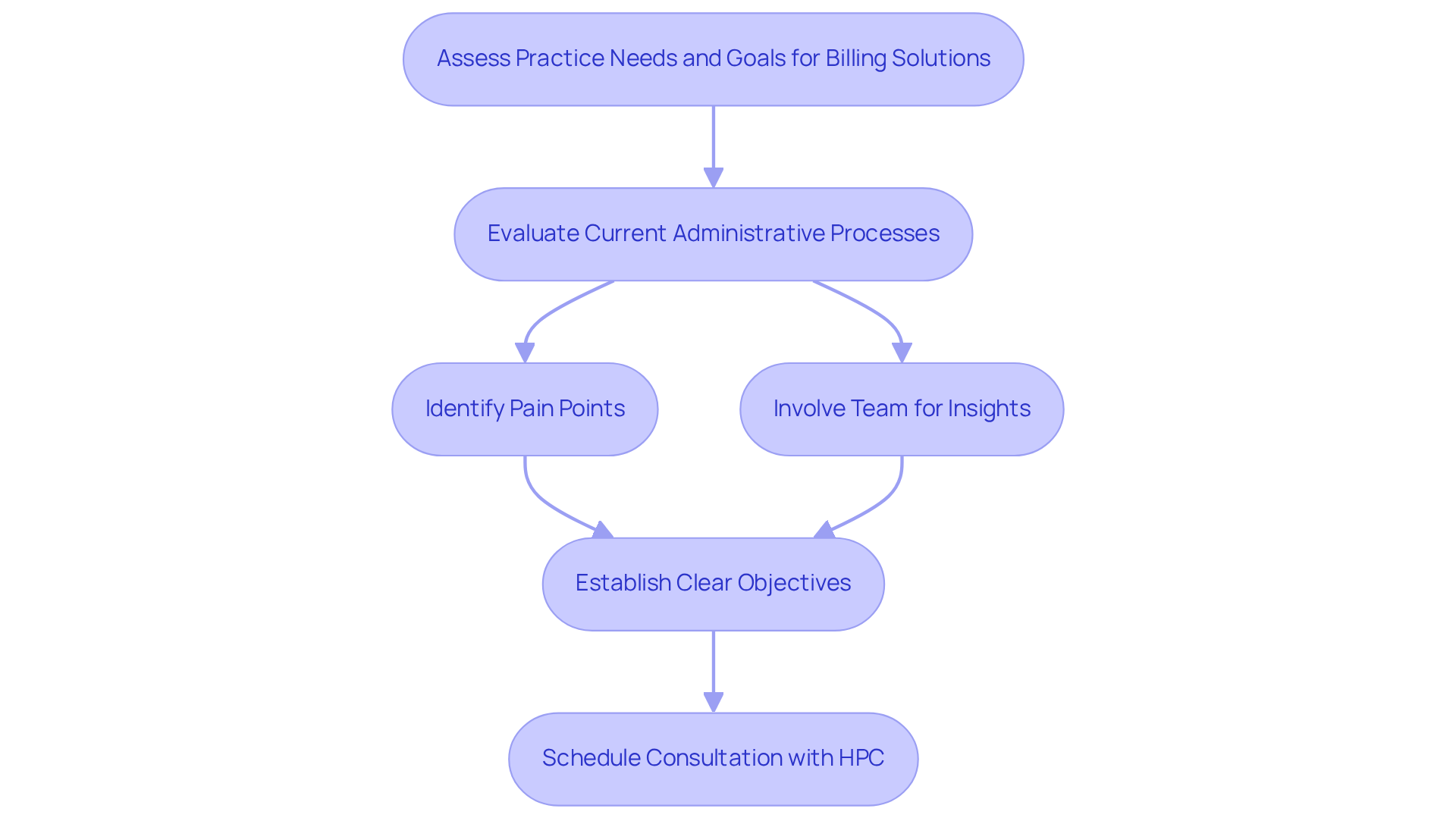
To effectively assess your practice’s financial needs, begin with a comprehensive evaluation of your current administrative processes. Identify pain points, including rising claim denial rates averaging 12-20% for behavioral services in 2026, and inefficiencies in payment cycles that may result in substantial revenue loss. Notably, 82-85% of behavioral health denials are preventable, underscoring the necessity of addressing documentation and coding gaps. Involve your team in providing insights on their experiences and challenges with the current system; this collaboration can uncover vital areas for enhancement.
Establish clear objectives for what you want to achieve with a new invoicing approach, such as reducing administrative burdens, improving cash flow, or enhancing compliance with regulations. This foundational step will guide you in choosing medical billing solutions that not only meet your operational needs but also support your commitment to patient care.
Healthcare Partners Consulting & Billing, LLC (HPC) provides customized consultations to assist in identifying optimal medical billing solutions tailored to meet your organization’s unique needs. By scheduling a 30-minute call, you can outline your current workflow and identify which services, including our specialized denial management strategies, will drive the most significant improvements for your operations. Additionally, consider utilizing HPC’s quick assessment tool to evaluate your mental health practice’s profitability. This tool offers immediate feedback on concealed revenue leaks and tailored suggestions to enhance efficiency and accuracy in invoicing, further improving your operational effectiveness.
Action Steps:
- Conduct a SWOT analysis (Strengths, Weaknesses, Opportunities, Threats) of your current invoicing processes to identify areas for enhancement.
- Collect input from staff regarding their experiences with administrative tasks to comprehend the practical challenges they encounter.
- Confirm mental wellness benefits at intake to avoid invoicing mistakes, as some benefits may be overseen by different firms than medical benefits.
- Define specific objectives, such as reducing claim denials by 20% or enhancing cycle times by 30%, to create measurable targets for your financial strategy.
Evaluate Features and Compliance of Billing Solutions
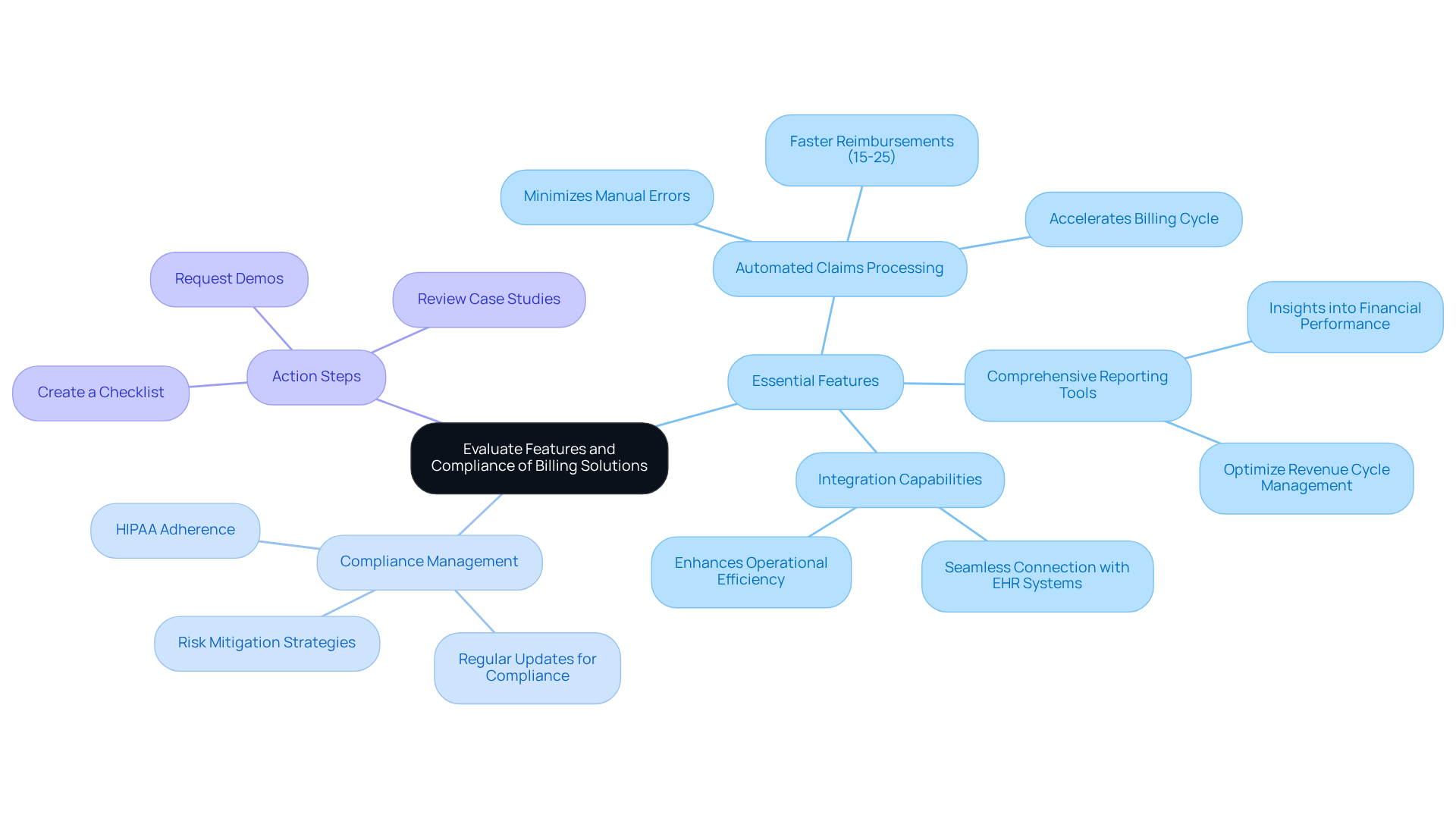
In the evolving landscape of mental wellness clinics, selecting the right medical billing solutions is paramount for ensuring operational success and regulatory compliance. When assessing medical billing solutions, it is crucial to concentrate on essential features that enhance operational efficiency and ensure adherence to changing regulations. Look for systems that offer:
- Automated Claims Processing: This feature minimizes manual errors and accelerates the billing cycle, leading to faster reimbursements. Clinics that utilize medical billing solutions for specialized mental health services experience reimbursements that are 15-25% faster, typically within 30-90 days.
- Comprehensive Reporting Tools: These tools provide valuable insights into financial performance, helping to identify areas for improvement and optimize revenue cycle management.
- Integration Capabilities: The ability to seamlessly connect with existing electronic record (EHR) systems streamlines data flow, enhancing overall operational efficiency.
A robust compliance management framework for medical billing solutions ensures adherence to HIPAA and other regulatory requirements, minimizing the risk of audits and penalties. Regular updates to the medical billing solutions are crucial to align with changing regulations and coding standards.
With 39 years of experience, Healthcare Partners Consulting, a veteran-owned company, prioritizes a compliance-first approach. To safeguard your practice against compliance issues and enhance efficiency, consider the following action steps:
- Create a checklist of essential features customized to your organization’s specific needs.
- Request demos from potential vendors to assess usability and functionality.
- Review case studies or testimonials from other mental health practices that have successfully implemented these approaches, noting improvements in denial reduction (20-30%) and overall revenue cycle performance. Client testimonials from professionals such as Dr. Sarah Mitchell and Dr. Michael Rodriguez emphasize notable revenue growth and decreases in administrative tasks, demonstrating the effectiveness of customized financial management.
Implementing these strategies not only mitigates compliance risks but also positions your practice for sustainable financial growth.
Implement Billing Solutions with Effective Strategies
Transitioning to a new medical billing solution can present significant challenges for mental health clinics. To implement your chosen billing solution effectively, consider the following strategies:
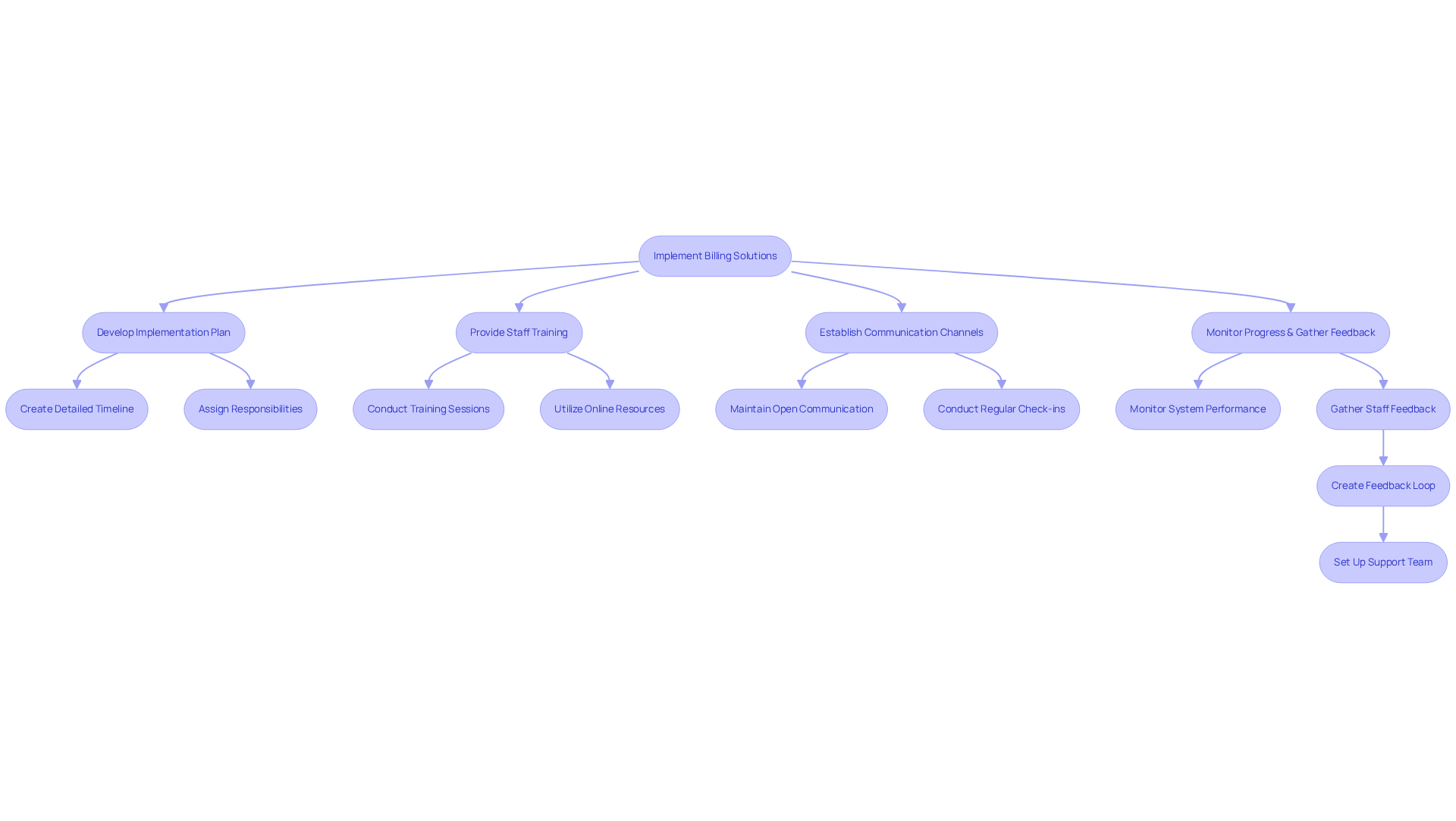
- Develop a Comprehensive Implementation Plan: Create a detailed timeline that outlines key milestones and assigns responsibilities to each team member involved in the transition. This structured approach ensures accountability and clarity throughout the process.
- Provide Staff Training: It’s essential to conduct thorough training sessions so that all staff members become proficient in using the new system. Utilize a mix of hands-on training, online resources, and ongoing support to reinforce learning and build confidence in the new processes.
- Establish Clear Communication Channels: Maintain open lines of communication among staff to address any concerns or questions during the transition. Regular check-ins can help identify and resolve issues promptly, fostering a collaborative environment.
- Monitor Progress and Gather Feedback: After implementation, closely monitor the system’s performance and solicit feedback from staff regarding its usability and effectiveness. This feedback loop is crucial for making necessary adjustments to optimize the system’s functionality.
Action Steps:
- Schedule training sessions well in advance of the go-live date to ensure all staff are prepared.
- Create a feedback loop where staff can report issues or suggest improvements, enhancing the system’s adaptability.
- Set up a dedicated support team to assist with troubleshooting during the initial rollout, ensuring a smooth transition and minimizing disruptions.
Ultimately, the effective implementation of medical billing solutions can lead to substantial improvements in financial performance and operational efficiency.
Optimize and Manage Billing Solutions for Sustained Success
To secure the long-term success of your billing solutions, it is imperative to adopt strategic optimization measures:
- Regularly Review Billing Performance Metrics: Analyze key performance indicators (KPIs) such as claim denial rates, days in accounts receivable, and overall revenue cycle efficiency. This data is essential for recognizing trends and areas for enhancement. Effective medical billing solutions can achieve a denial reduction of 20-30% and facilitate quicker reimbursement of 15-25% within 30-90 days. Additionally, actively consider Healthcare Partners Consulting’s quick quiz to assess your mental health practice’s profitability score. This tool can assist in identifying hidden revenue leaks and offer tailored suggestions to improve efficiency and accuracy in invoicing.
- Stay Updated on Regulatory Changes: Keeping abreast of changes in healthcare regulations and coding standards is essential. Regular training sessions and updates for staff can help maintain compliance and reduce the risk of errors. This is particularly important as new coding requirements come into effect in 2026, including updates to the CPT Code Set and the enforcement of the No Surprises Act.
- Solicit Patient Feedback: Actively engage with patients to gather insights on their payment experiences. Understanding their perspective can help identify areas for improvement and enhance patient satisfaction, which is vital for maintaining a positive relationship with your clientele.
- Leverage Technology for Continuous Improvement: Utilize advanced analytics and reporting tools to gain insights into invoicing processes. Implementing automation where possible can reduce manual tasks and improve accuracy, streamlining operations and enhancing overall efficiency. Healthcare Partners Consulting provides adaptable service plans customized to the scale of your practice and preferred level of assistance, ensuring that you possess the appropriate tools to enhance your revenue cycle.
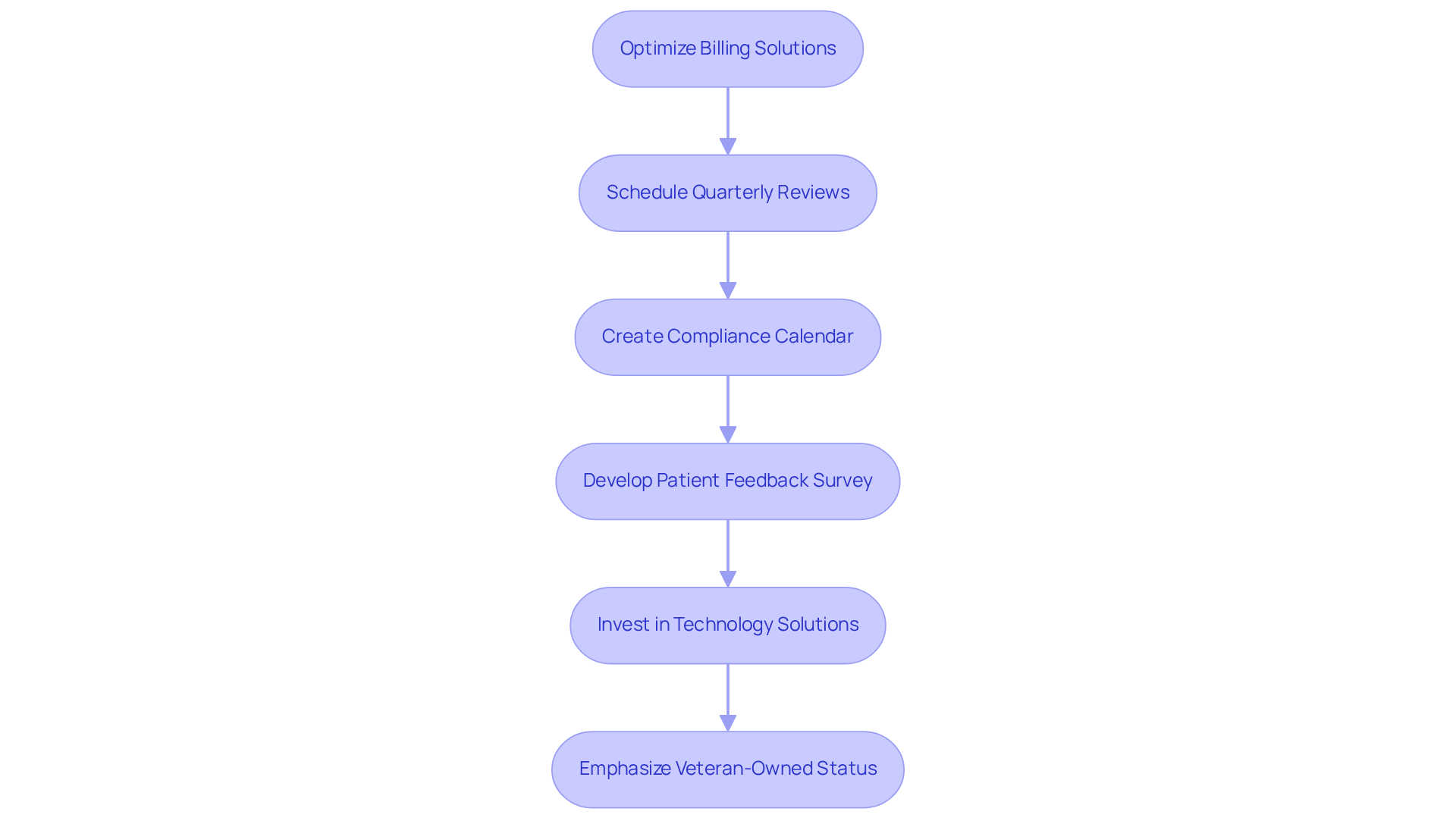
Action Steps:
- Schedule quarterly reviews of billing performance metrics to ensure ongoing optimization.
- Create a compliance calendar to track regulatory updates and training needs, ensuring your team is well-prepared for the changes in 2026.
- Develop a patient feedback survey to assess billing experiences and identify areas for improvement.
- Invest in technology solutions that facilitate automation and enhance data analysis capabilities.
- Emphasize the veteran-owned status of Healthcare Partners Consulting as a distinctive advantage in your practice’s marketing strategy.
By implementing these strategies, your practice can significantly enhance its billing efficiency and overall financial health.
Conclusion
Mastering medical billing solutions in mental health clinics requires empowering healthcare providers by reducing administrative burdens. This approach enables practitioners to spend more time on patient care while maintaining compliance and efficiency. By adopting a comprehensive strategy to billing, clinics can improve their financial health and streamline operations, ultimately benefiting both providers and patients.
The article outlines critical steps for assessing practice needs, evaluating billing solutions, implementing effective strategies, and optimizing billing processes. Key insights include:
- The importance of involving staff in identifying challenges
- Selecting features that enhance compliance and efficiency
- Establishing clear communication during the transition to new systems
Additionally, leveraging technology and regularly reviewing performance metrics are vital for sustaining success in billing operations.
Implementing best practices in medical billing is crucial for success in mental health clinics. By focusing on compliance, operational efficiency, and the unique needs of mental health practices, clinics can achieve substantial improvements in revenue cycle management. Embracing these strategies not only enhances financial performance but also reinforces the commitment to quality patient care. To optimize your billing solutions effectively, consider consulting with Healthcare Partners Consulting & Billing, LLC.
Frequently Asked Questions
What is the first step in assessing a practice’s financial needs for billing solutions?
The first step is to conduct a comprehensive evaluation of your current administrative processes to identify pain points, such as rising claim denial rates and inefficiencies in payment cycles.
What are the average claim denial rates for behavioral services in 2026?
The average claim denial rates for behavioral services in 2026 are between 12-20%.
How many behavioral health denials are considered preventable?
82-85% of behavioral health denials are considered preventable.
Why is it important to involve your team in the assessment process?
Involving your team can provide insights into their experiences and challenges with the current system, helping to uncover vital areas for enhancement.
What objectives should be established when looking for a new invoicing approach?
Objectives may include reducing administrative burdens, improving cash flow, or enhancing compliance with regulations.
How can Healthcare Partners Consulting & Billing, LLC (HPC) assist practices?
HPC provides customized consultations to help identify optimal medical billing solutions tailored to an organization’s unique needs.
What is the purpose of HPC’s quick assessment tool?
The quick assessment tool evaluates a mental health practice’s profitability, offering immediate feedback on concealed revenue leaks and tailored suggestions to enhance efficiency and accuracy in invoicing.
What action steps are recommended for improving invoicing processes?
Recommended action steps include conducting a SWOT analysis, collecting staff input, confirming mental wellness benefits at intake, and defining specific measurable objectives for the financial strategy.