
Introduction
Outsourcing medical billing has become a strategic imperative for healthcare providers aiming to optimize operational efficiency while maintaining a focus on patient care. By leveraging the expertise of third-party billing companies, such as Healthcare Partners Consulting & Billing, LLC (HPC), practices can streamline their revenue cycle management and reduce administrative burdens.
Healthcare providers often face significant challenges in managing billing processes efficiently. Choosing the appropriate billing partner can significantly enhance operational efficiency and compliance, ultimately leading to improved financial outcomes.
Define Third-Party Medical Billing and Its Importance
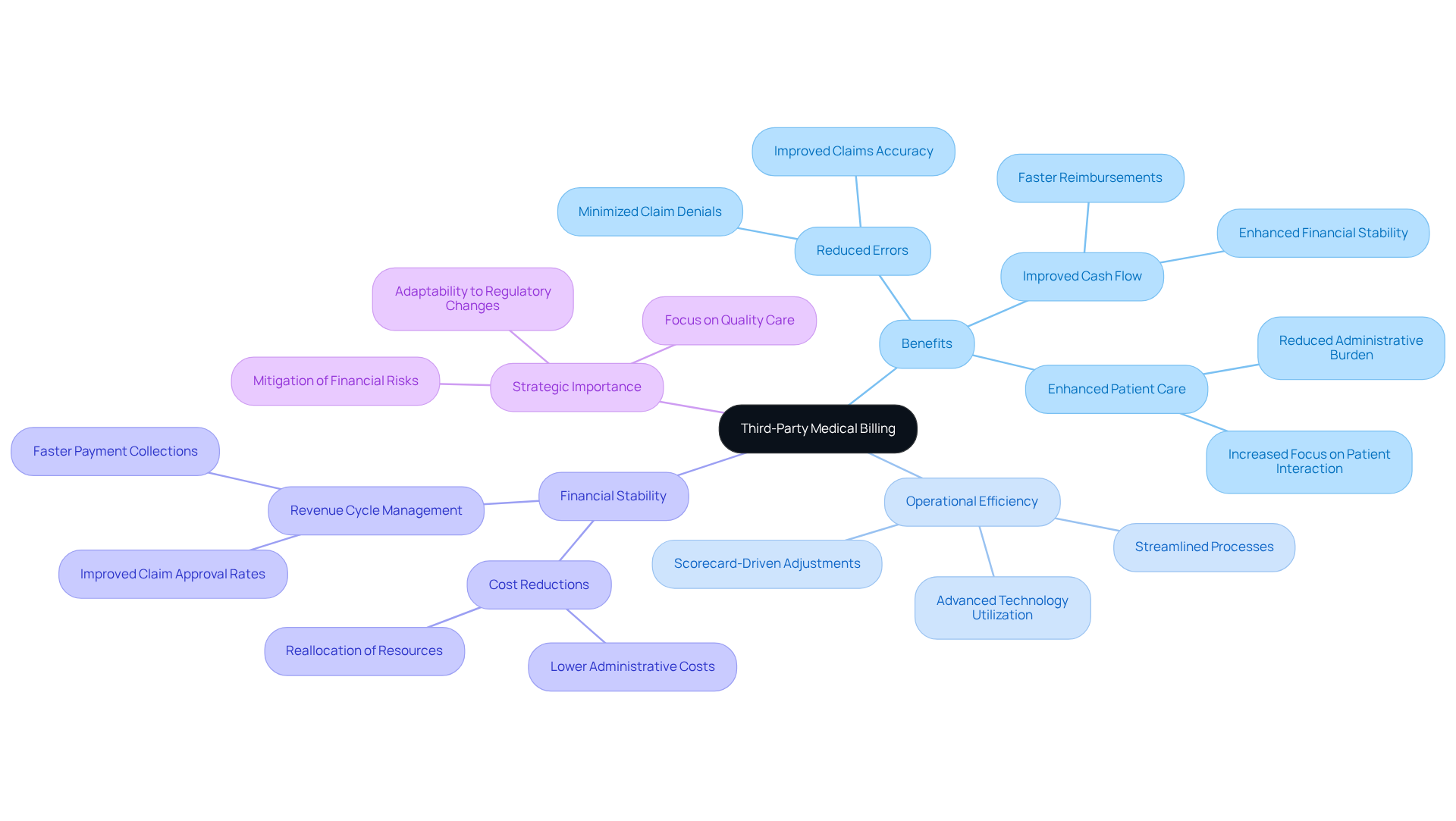
Outsourcing claims management to 3rd party medical billing companies allows medical providers to prioritize patient care over administrative tasks. This approach streamlines operations, reduces errors, and improves cash flow, directly supporting patient care. Delegating invoicing tasks alleviates administrative burdens, enhancing patient care and operational efficiency. 3rd party medical billing companies utilize advanced technology and industry expertise to optimize revenue cycles and ensure compliance with medical regulations.
The significance of third-party invoicing is underscored by its ability to decrease claim denials by 20-30% and accelerate reimbursement processes, with payments often received 15-25% faster within 30-90 days. This efficiency improves financial stability and enables healthcare providers to invest more in patient care initiatives.
Case studies illustrate the tangible benefits of outsourcing financial management. For instance, organizations that transitioned to third-party invoicing reported substantial cost reductions, allowing for investments in technology upgrades and employee training. Furthermore, these companies implement scorecard-driven adjustments to monitor claims accuracy and denial rates, ensuring operational rigor and continuous improvement.
As the medical landscape evolves, the role of 3rd party medical billing companies becomes increasingly essential. With rising operational costs and complex regulatory demands, outsourcing financial functions provides a strategic imperative, enabling organizations to focus on delivering quality care while enhancing their revenue cycle management.
Explore Benefits of Third-Party Medical Billing Services
Healthcare practices, particularly mental health clinics, often face significant operational challenges that can be alleviated through third-party medical reimbursement services. Key advantages include:
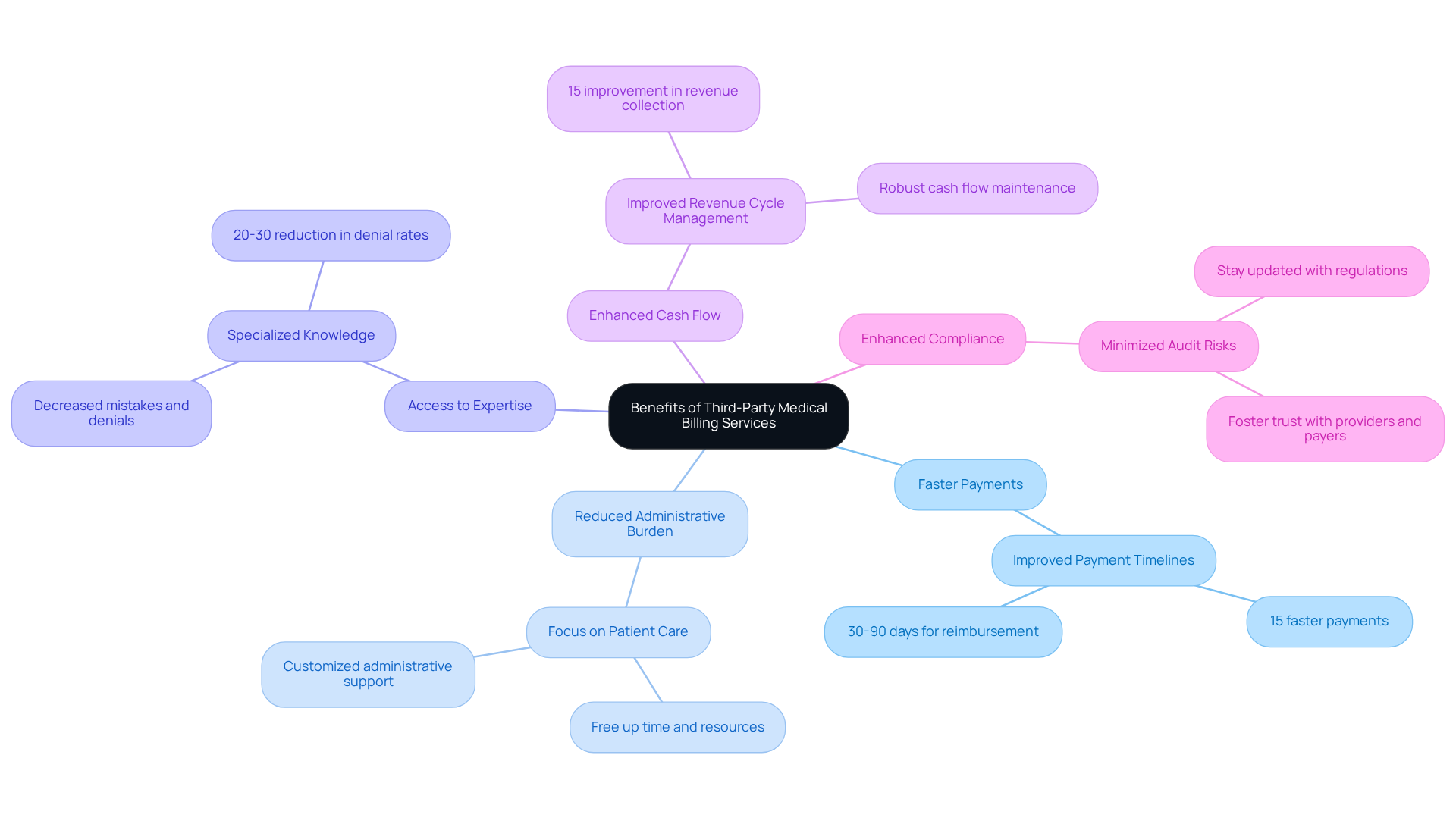
- Faster Payments: Third-party invoicing companies, such as Healthcare Partners Consulting & Billing, LLC (HPC), have established relationships with payers, expediting the claims process and leading to quicker reimbursements. Practices utilizing these services can experience payment timelines that improve by 15%. Third-party medical billing companies can play a crucial role in the healthcare industry within 30-90 days, aligning with the statistic that organizations outsourcing their financial processes often see a 15% enhancement in overall revenue collection.
- Reduced Administrative Burden: By outsourcing invoicing tasks, healthcare providers can free up valuable time and resources, allowing them to concentrate on patient care. This shift reduces stress and improves overall operational efficiency. HPC offers customized administrative support services, including scheduling and document management, to further support this goal.
- Access to Expertise: Billing companies employ specialists well-versed in coding, compliance, and payer requirements. This expertise decreases the chances of mistakes and denials, leading to a reduction of 20-30%, supported by the statistic that outsourced invoicing can result in a 20-30% decrease in denial rates.
- Enhanced Cash Flow: Effective invoicing processes contribute to improved revenue cycle management, ensuring that organizations maintain a robust cash flow. Organizations that outsource their invoicing often see a 15% improvement in overall revenue collection, further supported by HPC’s tailored solutions for mental health practices.
- Enhanced Compliance: Third-party billing services stay updated with the latest regulations and compliance requirements, minimizing the risk of audits and penalties. HPC’s commitment to a compliance-first approach fosters trust and strengthens relationships with medical providers and payers.
These advantages enable providers to concentrate on patient care while effectively managing their financial operations. Case studies demonstrate that organizations using third-party invoicing services improve revenue management and achieve a 20% increase in patient satisfaction scores, attributed to fewer invoicing errors and faster processing times. Furthermore, HPC, a veteran-owned organization with 39 years of expertise, provides a swift quiz to evaluate your mental health service’s profitability, offering tailored suggestions to enhance efficiency and financial accuracy.
Implement Best Practices for Choosing a Third-Party Billing Partner
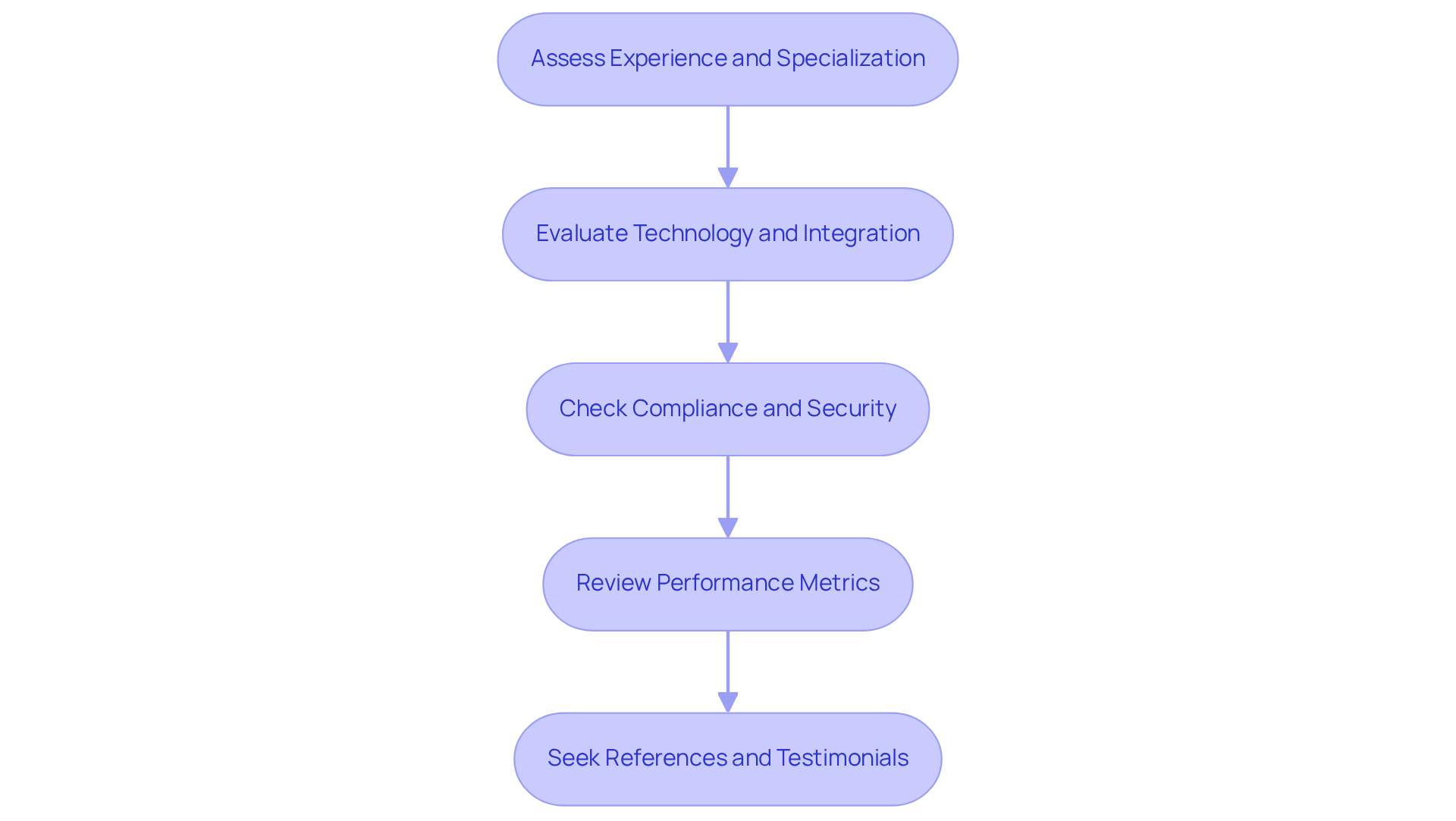
Choosing the right 3rd party medical billing companies is critical, as they directly impact the financial health of a healthcare organization. Here are best practices to consider:
- Assess Experience and Specialization: Look for a company with expertise in your specific field, such as mental health or primary care, to ensure they grasp the unique challenges and needs. Healthcare Partners Consulting & Billing, LLC (HPC) is a veteran-owned organization with 39 years of experience. They specialize in medical and mental health claims management, which can significantly decrease claim denials by 20-30% and accelerate reimbursements by 15-25% within 30-90 days.
- Evaluate Technology and Integration: Ensure the partner utilizes advanced technology that integrates seamlessly with your practice management systems, facilitating efficient data exchange and reporting. HPC offers integrations with platforms like TherapyNotes, SimplePractice, and Valant, enhancing operational efficiency and minimizing errors.
- Check Compliance and Security: Verify that the invoicing organization adheres to HIPAA regulations and has robust data security measures in place to protect patient information. Compliance is crucial to avoid penalties and maintain trust with patients.
- Review Performance Metrics: Ask for performance metrics such as clean claim rates, denial rates, and average days in accounts receivable to gauge their effectiveness. HPC emphasizes a compliance-first approach, ensuring that claims are processed accurately and efficiently, typically achieving a clean claim rate of 98% on the first submission and maintaining denial rates below 5%.
- Seek References and Testimonials: Request references from other medical providers to gain insights into the partner’s reliability and service quality. HPC has a proven track record of assisting organizations in enhancing their operational efficiency and concentrating on patient care, as highlighted by testimonials from clients like Dr. Sarah Mitchell and Dr. Michael Rodriguez, who have experienced significant revenue increases and reduced administrative burdens.
Ultimately, the right partner can transform operational efficiency and enhance the quality of patient care, making it a decision of utmost importance.
Establish Effective Communication with Billing Companies
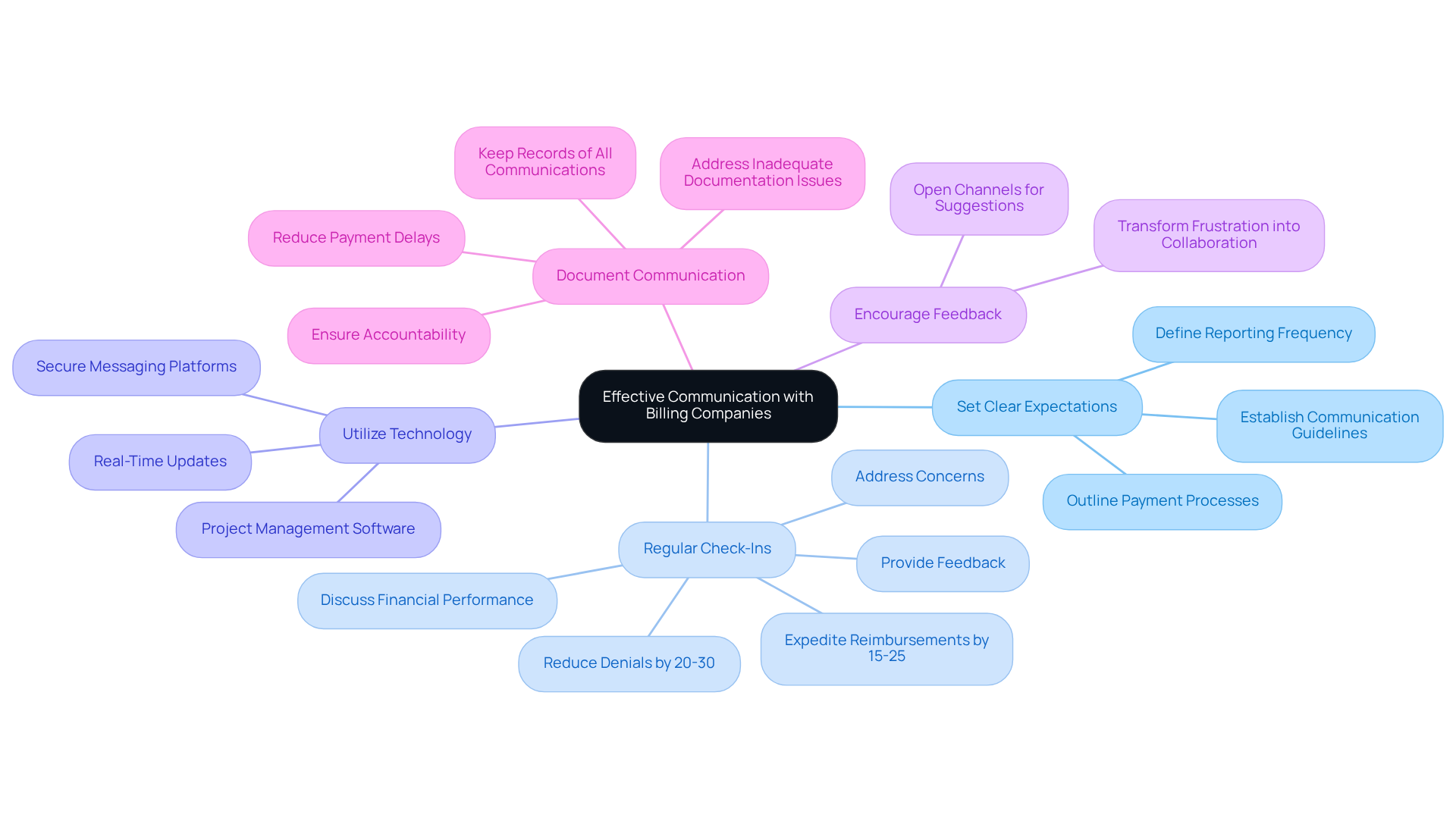
Optimizing the invoicing process hinges on effective communication with your financial partner. Here are strategies to establish and maintain clear communication:
- Set Clear Expectations: Clearly outline your expectations regarding payment processes, reporting, and communication frequency to ensure alignment from the start. This step helps prevent misunderstandings and establishes the groundwork for a productive partnership with Healthcare Partners Consulting & Billing, LLC (HPC), recognized for its customized solutions in medical revenue management and adaptable service plans tailored to meet the distinct needs of your practice.
- Regular Check-Ins: Schedule regular meetings to discuss financial performance, address concerns, and provide feedback. This fosters a collaborative environment and keeps both parties informed. Regular communication can reduce denials by 20-30%. Additionally, it can expedite reimbursements by 15-25% within 30-90 days, enhancing overall revenue cycle performance, especially with HPC’s expertise in mental and behavioral health billing.
- Utilize Technology: Leverage communication tools such as secure messaging platforms or project management software to facilitate real-time updates and information sharing. These tools can enhance communication and minimize delays in responses, ultimately improving operational efficiency in your organization.
- Encourage Feedback: Create an open channel for feedback, allowing both your organization and HPC to voice concerns and suggestions for improvement. This two-way communication can transform frustration into collaboration, benefiting both parties and enhancing the invoicing process.
- Document Communication: Keep records of all communications to ensure accountability and provide a reference for future discussions. Delays and rejections in payments often stem from inadequate documentation practices, highlighting a critical area for improvement. Insufficient documentation has been reported by 27% of invoicing firms as a primary reason for delayed or rejected payments, emphasizing the necessity for comprehensive documentation methods.
By focusing on effective communication, providers can strengthen their partnership with Healthcare Partners Consulting & Billing, LLC (HPC), a veteran-owned firm with 39 years of experience specializing in medical and mental health financial services. Ultimately, the strength of your partnership with HPC can significantly influence your organization’s financial success.
Monitor and Evaluate Billing Practices for Continuous Improvement
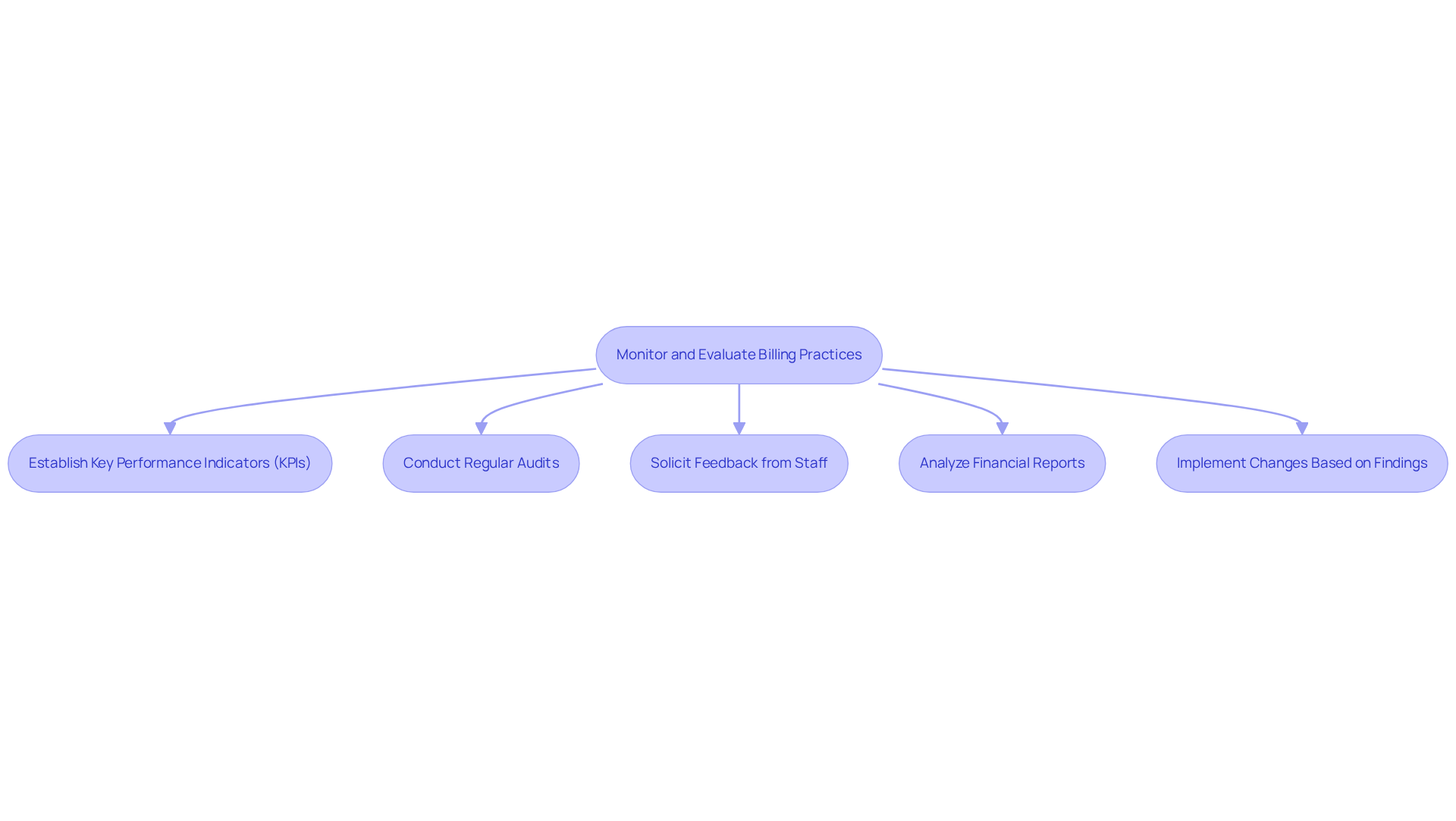
Invoicing practices in healthcare often face challenges that can hinder operational efficiency and compliance. Here are effective steps to monitor and evaluate your billing processes:
- Establish Key Performance Indicators (KPIs): Define KPIs such as claim denial rates, days in accounts receivable, and collection rates to measure the effectiveness of your revenue processes. Effective KPI tracking can lead to denial reductions of 20-30% and faster reimbursement rates of 15-25% within 30-90 days.
- Conduct Regular Audits: Carry out frequent evaluations of invoicing methods to identify discrepancies, compliance issues, and areas for enhancement. This operational rigor can be demonstrated through scorecard-driven adjustments tied to claims accuracy, denial rates, and days in accounts receivable.
- Solicit Feedback from Staff: Gather input from your team regarding the invoicing process to identify pain points and opportunities for enhancement. Engaging your team can uncover insights that lead to significant operational improvements.
- Analyze Financial Reports: Review financial reports regularly to assess the impact of invoicing practices on overall revenue and cash flow. Understanding these metrics is crucial for making informed decisions that enhance financial performance.
- Implement Changes Based on Findings: Use the insights gained from monitoring and evaluation to implement changes that enhance billing efficiency and compliance. By actively adapting to findings, healthcare providers can optimize revenue cycles and maintain a focus on patient care.
Additionally, consider utilizing HPC’s quick quiz to discover your mental health service’s profitability score. This tool enables you to identify concealed revenue leaks and receive tailored suggestions to enhance efficiency and accuracy in invoicing. With HPC’s customized administrative support services, you can ensure your office runs smoothly, addressing underpayments and aging claims effectively. Without regular evaluation, healthcare providers risk not only financial losses but also a decline in the quality of care they provide to patients.
Conclusion
Outsourcing medical billing to third-party companies is a strategic move that empowers healthcare providers to focus on what truly matters: patient care. By alleviating administrative burdens, practices can enhance operational efficiency and improve financial outcomes. The integration of specialized billing services not only streamlines revenue cycles but also ensures compliance with ever-evolving regulations, ultimately fostering a more effective healthcare environment.
The article highlights several key benefits of utilizing third-party medical billing services, including:
- Faster payment timelines
- Reduced administrative workload
- Access to billing expertise
- Improved cash flow
- Enhanced compliance
Organizations that embrace these services, such as Healthcare Partners Consulting & Billing, LLC (HPC), can experience significant improvements in revenue collection and patient satisfaction. The emphasis on a compliance-first approach and the veteran-owned status of HPC further solidify its position as a trusted partner in the healthcare billing landscape.
In an increasingly complex healthcare landscape, the choice of a billing partner is critical for operational success. By implementing best practices for communication and continuous evaluation, healthcare providers can ensure their financial operations are not only efficient but also aligned with their mission to deliver quality patient care. The right billing partner not only streamlines operations but also empowers healthcare providers to prioritize patient care above all else. For those ready to take the next step, reaching out to HPC at info@hpcbilling.com or calling 888-517-4992 can pave the way for enhanced operational success.
Frequently Asked Questions
What is third-party medical billing?
Third-party medical billing involves outsourcing claims management to specialized companies, allowing healthcare providers to focus on patient care while streamlining operations, reducing errors, and improving cash flow.
Why is third-party medical billing important?
It decreases claim denials by 20-30%, accelerates reimbursement processes, and improves financial stability, enabling healthcare providers to invest more in patient care initiatives.
How does third-party medical billing improve payment timelines?
Third-party billing companies have established relationships with payers, which can lead to quicker reimbursements, often improving payment timelines by 15%.
What are the benefits of outsourcing invoicing tasks?
Outsourcing invoicing reduces administrative burdens, allowing healthcare providers to focus on patient care, enhances operational efficiency, and decreases stress.
How does third-party medical billing enhance compliance?
Billing services stay updated with the latest regulations and compliance requirements, minimizing the risk of audits and penalties, and fostering trust with medical providers and payers.
What expertise do third-party billing companies offer?
They employ specialists knowledgeable in coding, compliance, and payer requirements, which helps decrease mistakes and denial rates by 20-30%.
How does third-party medical billing affect cash flow?
Effective invoicing processes contribute to improved revenue cycle management, often resulting in a 15% improvement in overall revenue collection for organizations that outsource their invoicing.
What impact does third-party medical billing have on patient satisfaction?
Organizations using third-party invoicing services have reported a 20% increase in patient satisfaction scores due to fewer invoicing errors and faster processing times.