

Introduction
The complexities of medical billing in mental health clinics can lead to significant operational challenges that affect both revenue and patient care. Implementing tailored best practices allows clinics to streamline billing processes, reduce administrative burdens, and enhance patient care focus. This article explores four essential practices that can empower mental health providers to optimize their billing services and achieve financial stability.
Understand the Medical Billing Process
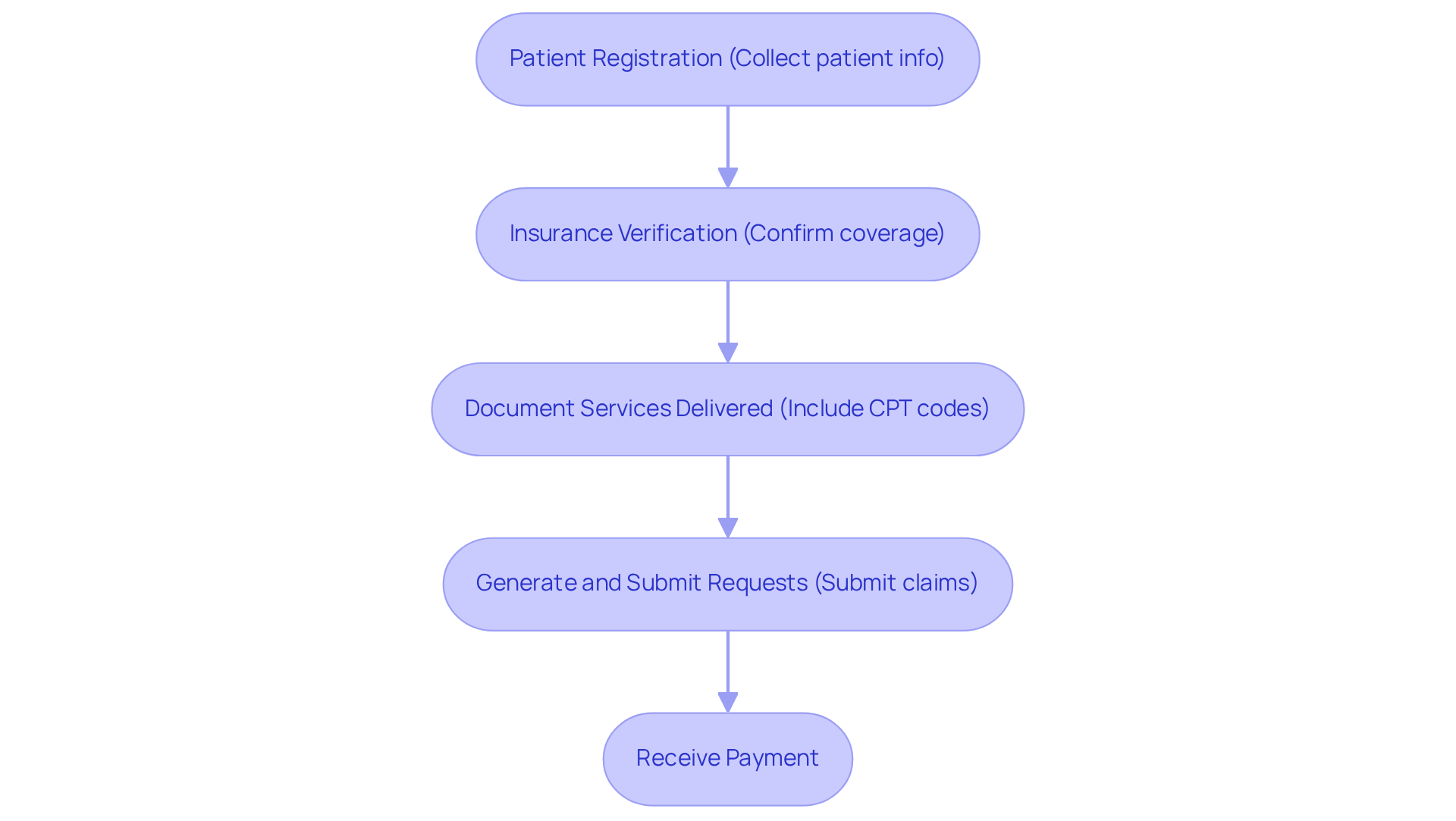
Navigating the medical reimbursement process for mental health providers requires adherence to several critical steps to ensure timely and accurate compensation. It begins with patient registration, where essential information is collected, followed by insurance verification to confirm coverage and understand benefits, including any annual visit caps and out-of-pocket expenses. Next, providers document the services delivered during patient encounters, which is crucial for accurate coding. Relevant CPT codes, including those for psychotherapy and evaluation/management visits, must be included in this documentation to ensure compliance and optimize reimbursement.
After comprehensive documentation, requests are generated and submitted to insurance companies for payment. To reduce mistakes and enhance financial operations, healthcare facilities should keep a checklist to guarantee all required documentation is finalized before submitting claims. By taking this proactive approach, providers can reduce denials by 20-30% and receive faster reimbursements, often within 15-25% of the usual timeframe, typically 30-90 days. Moreover, connecting patient registration portals with financial and insurance software enables prompt verification and smooth access to patient information, further improving efficiency and precision in financial management.
By comprehending and enhancing each phase in the medical revenue process, mental health practices can greatly boost their financial cycle performance. Ultimately, refining these processes not only enhances financial performance but also allows providers to prioritize patient care.
Implement Accurate Coding and Documentation
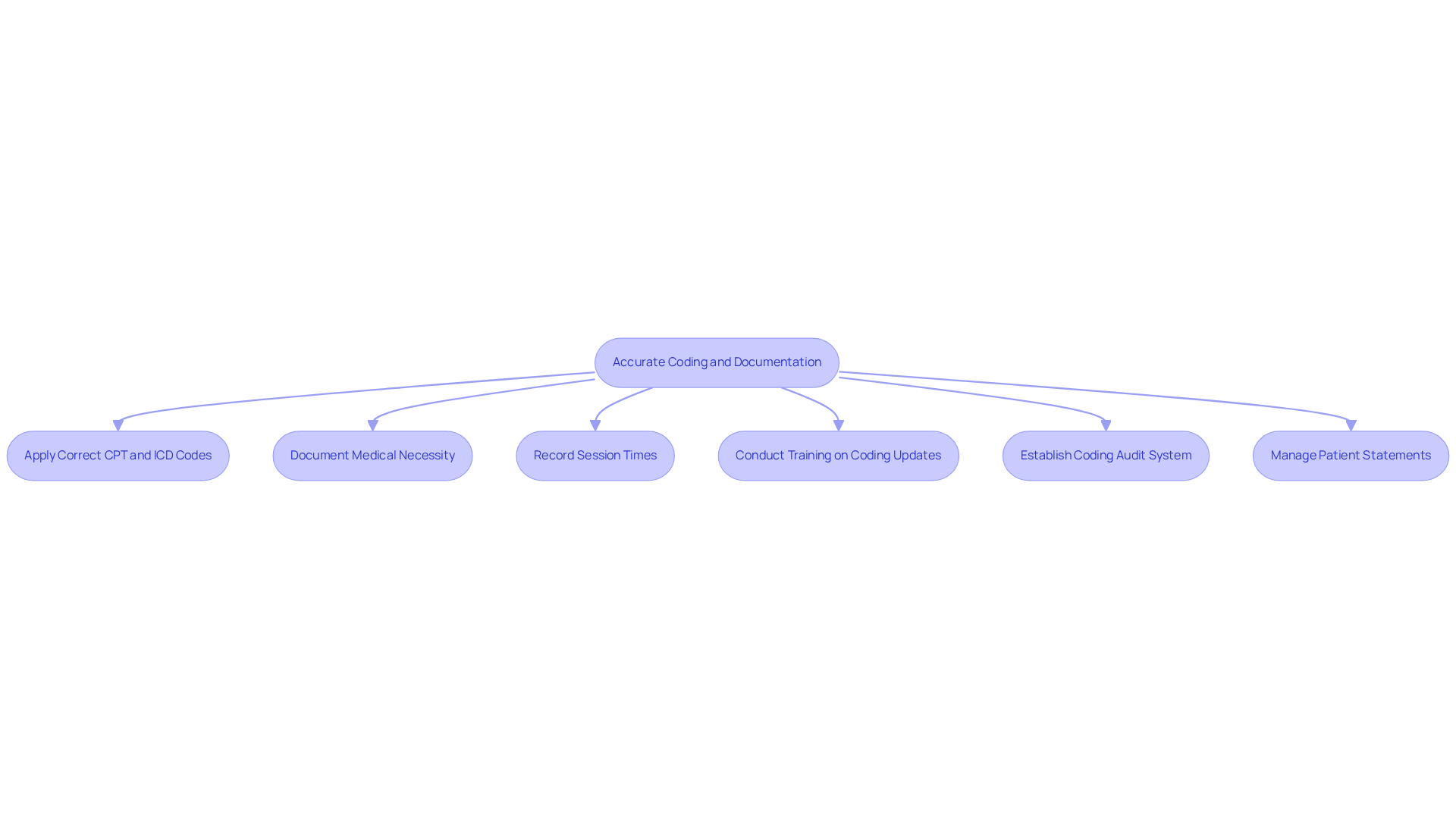
Effective invoicing in mental health clinics hinges on precise coding and documentation, which are essential for financial sustainability. Providers must apply the correct Current Procedural Terminology (CPT) and International Classification of Diseases (ICD) codes to accurately reflect the services rendered. This includes documenting the medical necessity of services, which is crucial for insurance reimbursement.
For instance, if a therapist conducts a 60-minute session, they must record the start and end times to validate the charges. Conducting regular training sessions on coding updates and documentation standards is essential for minimizing errors. Furthermore, establishing a coding audit system can assist in detecting and correcting errors prior to submissions, thereby improving overall financial efficiency.
Moreover, managing patient statements effectively is crucial for tackling underpayments, unprocessed claims, and aging claims. Streamlining these processes enables mental health organizations to improve billing efficiency with doctors billing services and ensure timely reimbursements, allowing providers to focus on patient care.
Ultimately, prioritizing accurate coding and documentation not only safeguards financial health but also enhances the quality of patient care.
Adopt Effective Denial Management Strategies
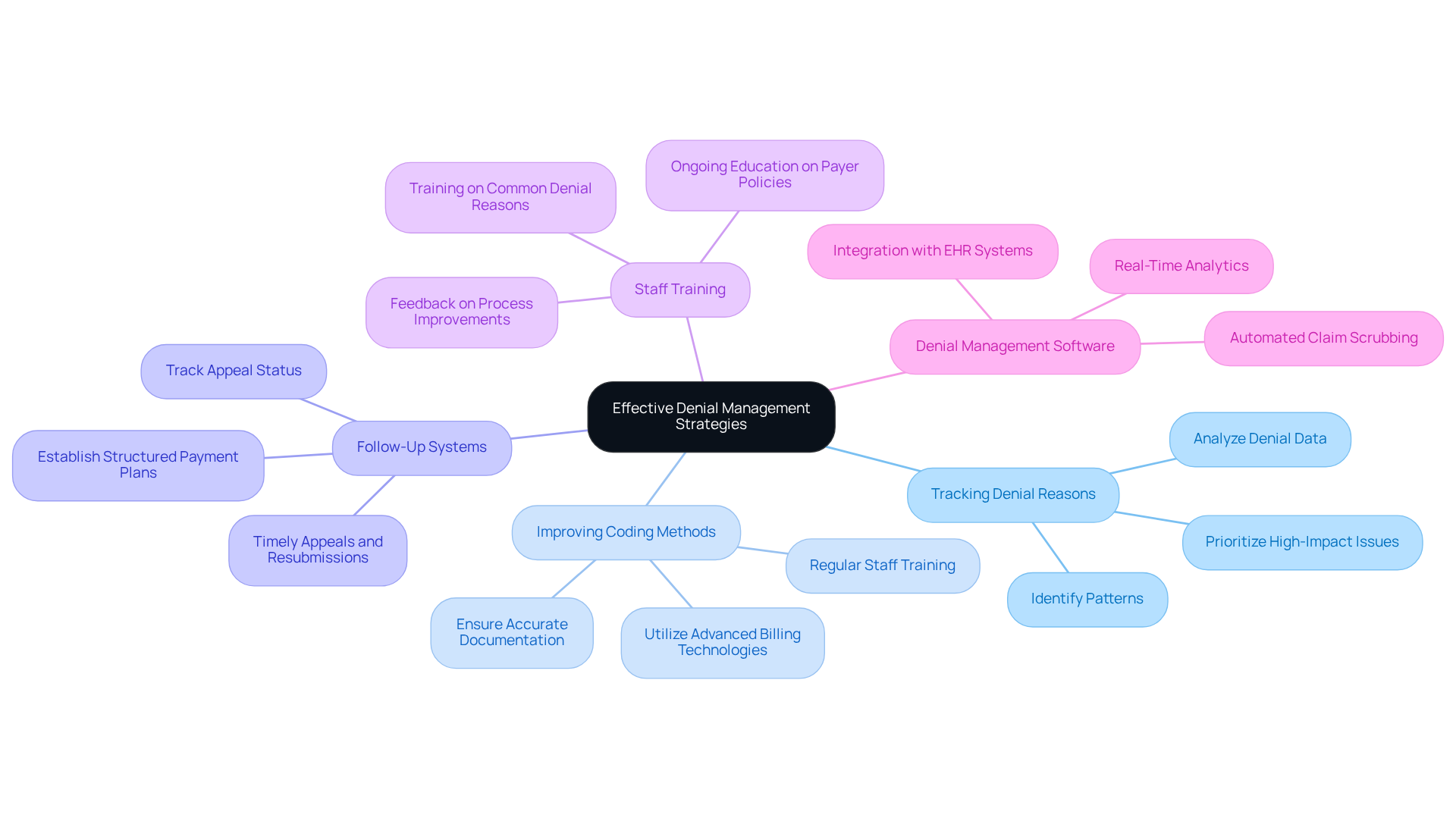
Many mental health facilities struggle with the complexities of denial management, leading to significant revenue loss. Implementing effective denial management strategies is crucial for minimizing this loss. Clinics should adopt a systematic approach to track and analyze denial reasons, enabling them to identify patterns and address root causes. For instance, if a considerable number of requests are rejected due to coding mistakes, healthcare facilities can focus on improving their coding methods. A robust follow-up system for denied claims is essential. It ensures timely appeals and resubmissions, which are critical for maintaining cash flow.
Regular training sessions for staff on common denial reasons and preventive measures can enhance the financial health of the practice. Using denial management software can make this process smoother, providing valuable analytics and insights for better future submissions. Additionally, Healthcare Partners Consulting & Billing, LLC (HPC) offers a rapid assessment quiz that assists healthcare facilities in identifying concealed revenue leaks and enhancing accuracy in financial processes.
By concentrating on these strategies, healthcare facilities can achieve a denial reduction of 20-30% and experience quicker reimbursement timelines of 15-25% within 30-90 days, ultimately supporting their financial stability and operational efficiency. Addressing denial management is not just a financial necessity; it is essential for sustaining operational efficiency and ensuring the long-term viability of healthcare practices.
Leverage Technology for Billing Efficiency
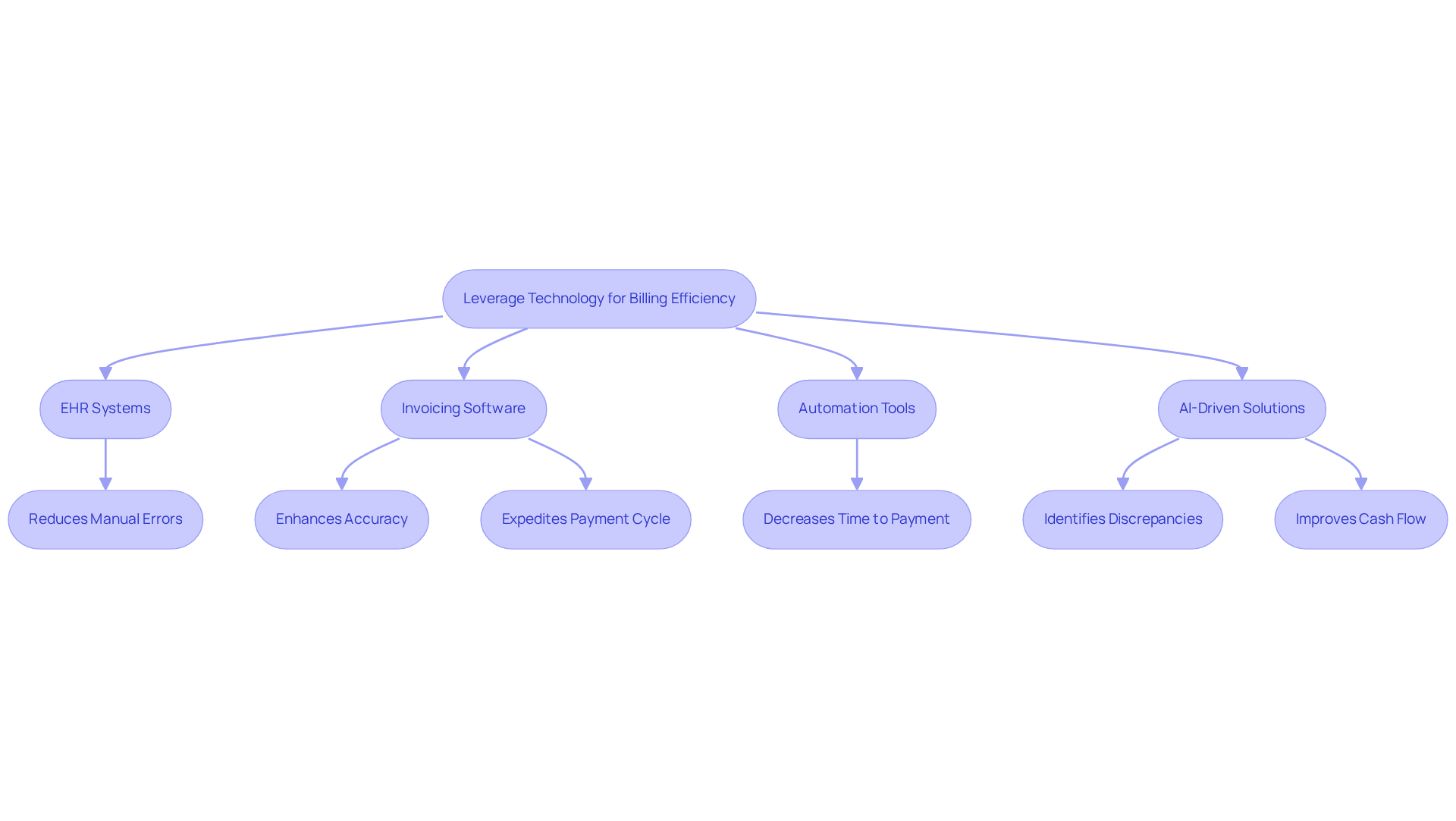
Financial efficiency in mental health clinics can be significantly enhanced through the strategic implementation of technology. Implementing Electronic Health Record (EHR) systems, such as TherapyNotes or SimplePractice, streamlines the documentation process by automatically linking clinical notes to coding systems, thereby reducing manual data entry errors. Additionally, the integration of invoicing software with EHR systems enhances accuracy and expedites the payment cycle.
Automation tools facilitate real-time eligibility verification and submission of requests, significantly decreasing the time to payment. For instance, AI-driven solutions can analyze payment patterns and identify discrepancies before claims are submitted, leading to a reduction in claim denials and quicker reimbursements.
By embracing these technological advancements, mental health clinics can improve their doctors billing services, alleviate administrative burdens, and dedicate more time to patient care. For tailored solutions that fit your practice’s needs, consider reaching out to Healthcare Partners Consulting for a consultation.
Conclusion
Inefficient billing practices can jeopardize financial stability in mental health clinics, diverting attention from essential patient care. By implementing best practices – such as understanding the medical billing process, ensuring accurate coding, and adopting effective denial management strategies – mental health providers can improve their revenue cycle management. These strategies streamline operations, allowing practitioners to focus more on patient care and enhance the quality of services provided.
Key insights from the article highlight the importance of meticulous documentation and coding, which are critical for maximizing reimbursements and minimizing claim denials. By adopting a proactive approach to denial management and utilizing advanced technology, mental health clinics can reduce administrative burdens and improve their financial performance. The emphasis on compliance-first practices ensures that providers maintain integrity and transparency in their operations, fostering trust with patients and payers alike.
In conclusion, the significance of refining billing practices in mental health clinics cannot be overstated. Ultimately, the refinement of billing practices is not just a financial necessity; it is a crucial element in elevating the standard of mental health care nationwide. For those seeking tailored solutions to optimize their billing processes, reaching out to Healthcare Partners Consulting & Billing, LLC (HPC) can provide the necessary support and expertise to navigate these challenges effectively.
Frequently Asked Questions
What is the first step in the medical billing process for mental health providers?
The first step is patient registration, where essential information is collected from the patient.
Why is insurance verification important in the medical billing process?
Insurance verification is important to confirm coverage and understand benefits, including any annual visit caps and out-of-pocket expenses.
What role does documentation play in the medical billing process?
Documentation is crucial for accurately coding the services delivered during patient encounters, which ensures compliance and optimizes reimbursement.
What types of codes must be included in the documentation?
Relevant CPT codes, including those for psychotherapy and evaluation/management visits, must be included in the documentation.
What happens after the documentation is completed?
After documentation, requests for payment are generated and submitted to insurance companies.
How can healthcare facilities reduce mistakes in the billing process?
Healthcare facilities can reduce mistakes by keeping a checklist to ensure all required documentation is finalized before submitting claims.
What impact can a proactive approach have on claim denials and reimbursements?
A proactive approach can reduce denials by 20-30% and lead to faster reimbursements, often within 15-25% of the usual timeframe, which is typically 30-90 days.
How can connecting patient registration portals with financial and insurance software help?
It enables prompt verification and smooth access to patient information, improving efficiency and precision in financial management.
What is the overall benefit of enhancing the medical revenue process for mental health practices?
Enhancing the medical revenue process can greatly boost financial cycle performance and allow providers to prioritize patient care.