
Introduction
In the intricate financial landscape of healthcare, effective budgeting emerges as a strategic imperative rather than a mere necessity. By mastering the art of budgeting, healthcare organizations can enhance operational efficiency, ensure compliance, and ultimately improve patient care outcomes. However, healthcare organizations face numerous financial hurdles that complicate effective budgeting, from unpredictable revenue streams to rising operational costs.
How can healthcare providers effectively navigate these obstacles to prioritize the delivery of quality care? This article examines best practices for effective budgeting in healthcare, providing insights that enhance financial management and support the mission of healthcare providers across the nation.
Define Healthcare Budgeting and Its Importance
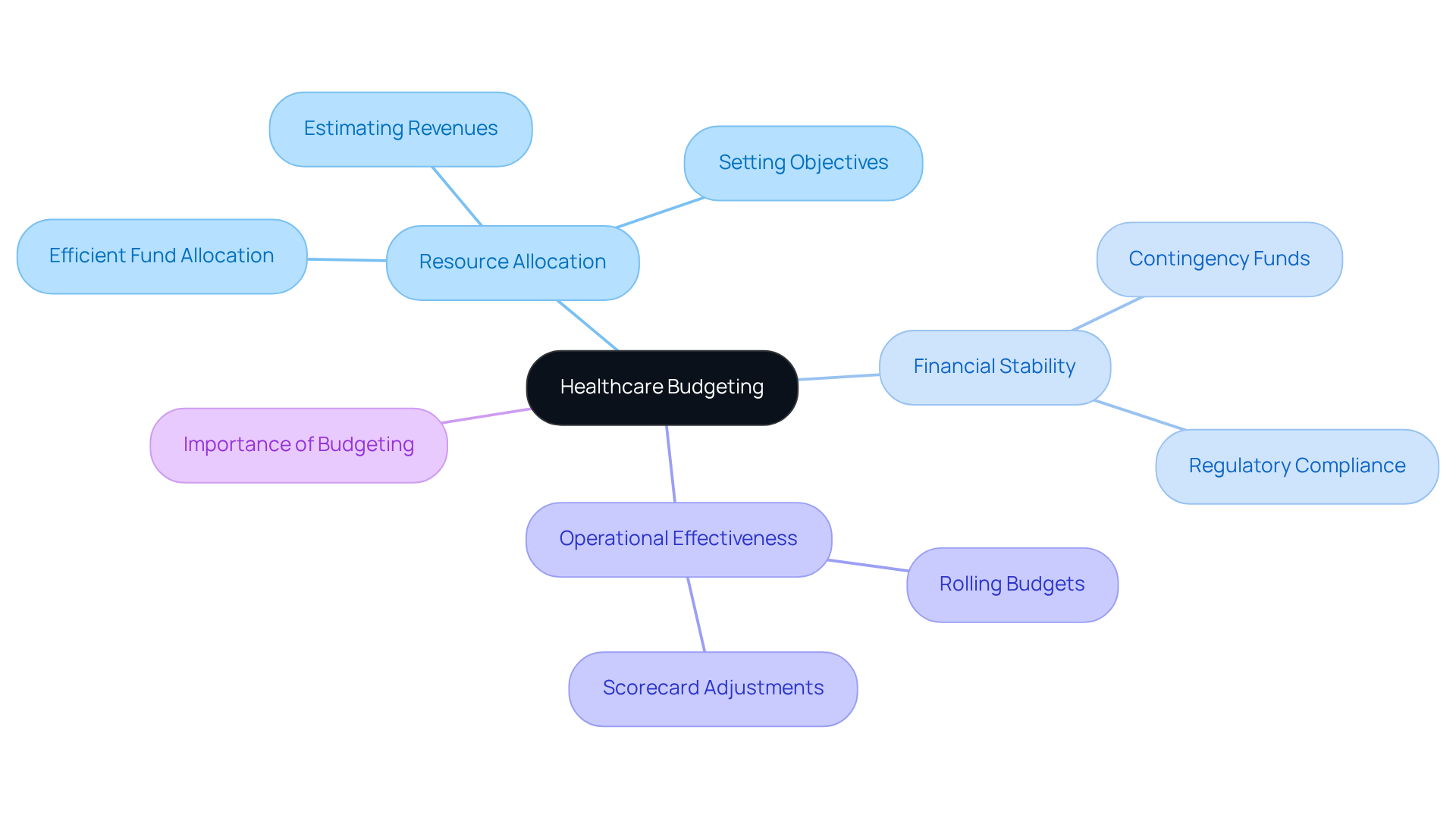
Healthcare resource allocation is a critical strategic process that directly impacts the operational effectiveness of healthcare organizations. This involves estimating revenues and expenses, setting budgetary objectives, and ensuring funds are allocated efficiently to support patient care and organizational goals. Effective financial planning is essential for maintaining financial stability, prioritizing spending, and ensuring regulatory compliance in healthcare.
The importance of budgeting in healthcare is becoming increasingly evident as organizations navigate fluctuating reimbursement rates and patient demand. Organizations are encouraged to build contingency funds, typically setting aside 2% to 5% of their total budget for unexpected expenses or revenue shortfalls. This proactive approach safeguards against financial uncertainties while enhancing operational efficiency.
Case studies illustrate the impact of sound financial planning on healthcare operations. For instance, organizations employing rolling budgets have reported improved agility in decision-making, allowing for continuous updates based on real-time data. This method improves visibility and lessens the workload associated with traditional financial planning processes. Additionally, healthcare practices that implement scorecard-driven adjustments tied to claims accuracy and denial rates have seen denial reductions of 20-30% and faster reimbursements of 15-25% within 30-90 days, significantly improving their revenue cycle performance.
Statistics underscore the necessity of robust financial planning practices. Labor costs, which account for 50% to 60% of total healthcare operating costs, necessitate careful planning to ensure competitive wages and staffing levels. Furthermore, effective financial planning supports the allocation of capital investments, which are essential for enhancing service delivery and patient care.
A well-structured budgeting in healthcare process is essential for healthcare entities to adapt to an evolving landscape, ensuring effective resource allocation for operational needs and patient care objectives. Neglecting a structured budgeting process can jeopardize both operational efficiency and the quality of patient care.
Explore Types of Healthcare Budgets
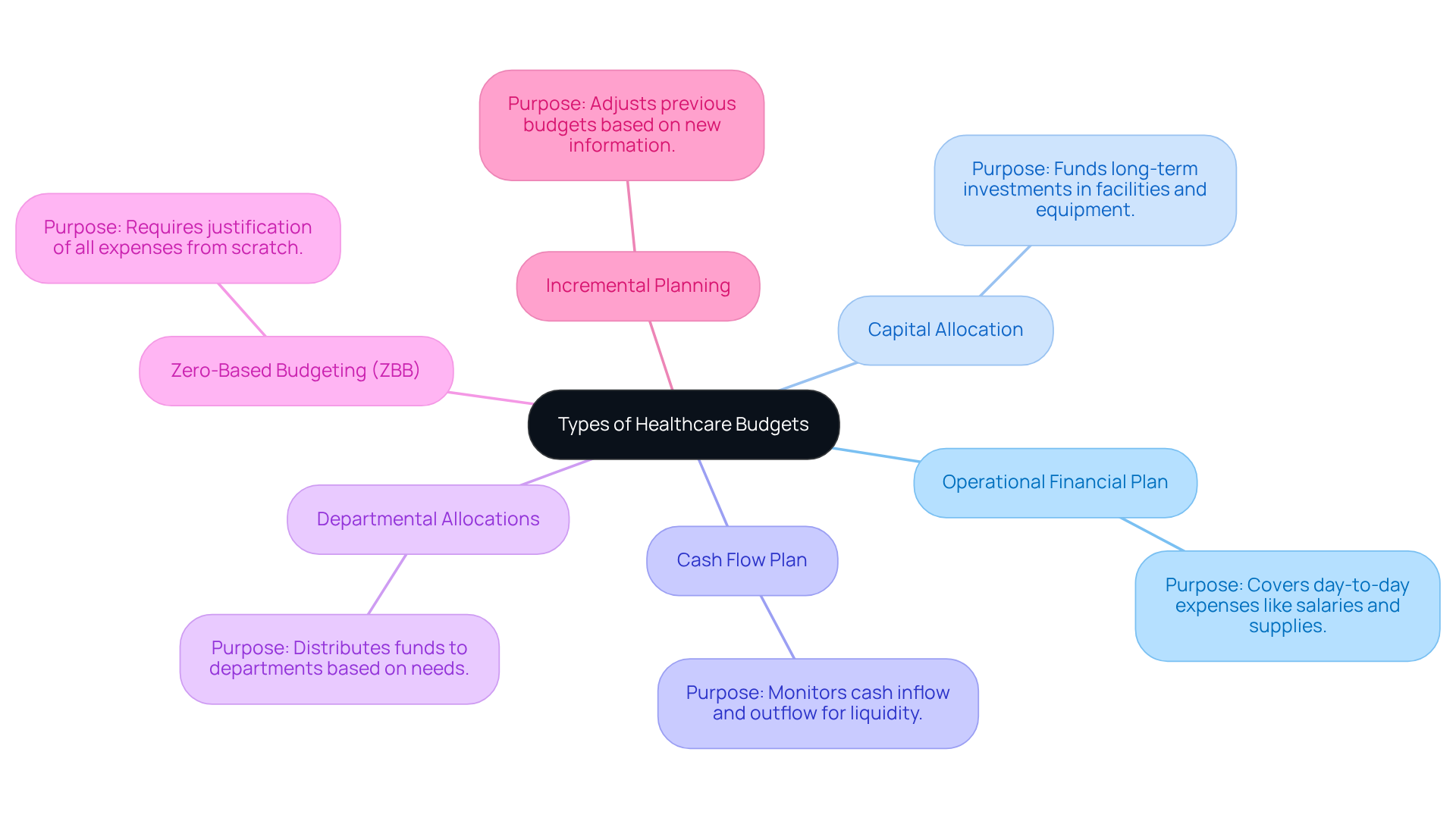
Healthcare organizations face diverse challenges in budgeting in healthcare that require tailored strategies to ensure both operational efficiency and financial stability. They utilize several types of budgets, each designed to meet specific operational and strategic needs:
- Operational Financial Plan: This plan encompasses day-to-day expenses, including salaries, supplies, and administrative costs, ensuring that essential functions continue smoothly.
- Capital Allocation: Focused on long-term investments, this plan designates funds for facilities and equipment, crucial for maintaining and enhancing healthcare services.
- Cash Flow Plan: Monitoring the inflow and outflow of cash, this plan is essential for ensuring liquidity and stability, allowing organizations to meet their obligations.
- Departmental Allocations: These allocations distribute funds to specific departments based on their operational needs, promoting accountability and tailored resource distribution.
- Zero-Based Budgeting (ZBB): This approach requires justifying all expenses from the ground up, fostering cost efficiency and eliminating unnecessary expenditures. It can uncover waste but may be time-consuming to implement.
- Incremental Planning: By modifying prior allocations based on new economic information, this approach often results in reduced examination of expenses, potentially sustaining inefficiencies.
Understanding these budget categories is essential for healthcare organizations to effectively implement budgeting in healthcare and tailor their resource allocation strategies, leading to improved performance and patient care outcomes. For instance, implementing best practices in budgeting in healthcare can lead to denial reductions of 20-30% and faster reimbursements of 15-25% within 30-90 days, demonstrating the tangible benefits of a well-structured budgeting in healthcare process. Moreover, effective management of patient statements, especially addressing underpayments, unprocessed claims, and aging claims, is essential for sustaining economic health. Healthcare Partners Consulting & Billing, LLC (HPC) offers specialized services that streamline this process, ensuring that entities can efficiently manage their patient statements and claims. By utilizing adaptable financial strategies, entities can adjust more effectively to fluctuating patient volumes and operational requirements, ensuring ongoing fiscal stability. As Robert Murray notes, “Global budgets can create the conditions necessary to hold hospitals accountable for the cost of services they provide while requiring a minimum of regulatory complexity to implement and enforce.” Additionally, being aware of common pitfalls, like the tendency to overlook detailed expense justifications in incremental financial planning, can help organizations avoid misapplications and enhance their financial effectiveness.
Implement Effective Budgeting Strategies for Success
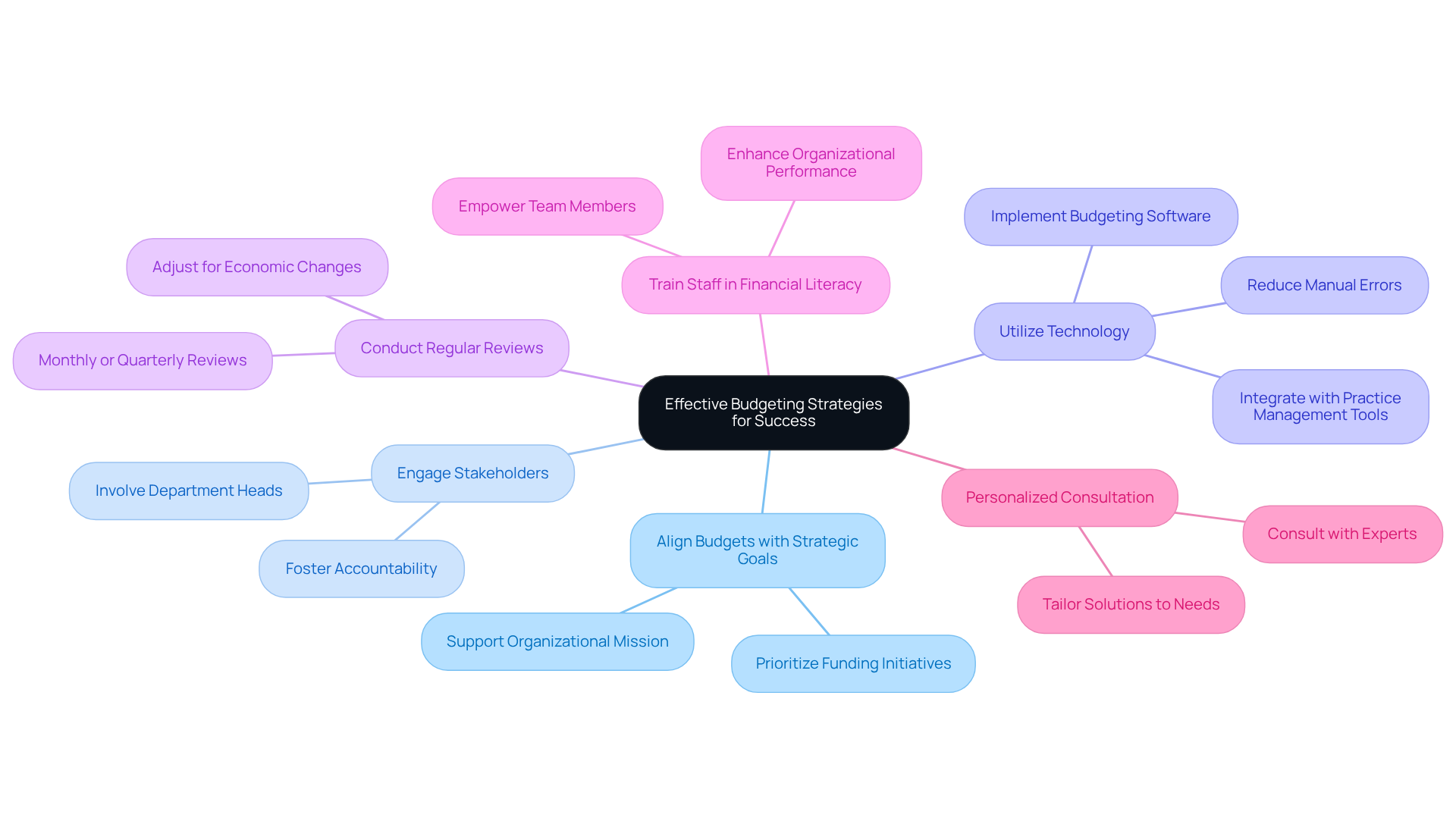
Effective budgeting in healthcare strategies are essential for organizations aiming to enhance operational efficiency and patient care. To implement effective budgeting strategies in healthcare, consider the following best practices:
- Align Budgets with Strategic Goals: Ensure that every budget line item supports the organization’s overall mission and objectives. This alignment helps prioritize funding for initiatives that drive patient care and operational efficiency.
- Engage Stakeholders: Involve department heads and staff in the financial planning process to gain insights and foster accountability. Collaborative financial planning environments lead to better resource allocation and enhance commitment to financial goals.
- Utilize Technology: Leverage budgeting software, such as the Axiom FP&A suite, to automate processes, improve accuracy, and reduce manual errors. This tool can reduce the time spent on data reconciliation and financial planning by as much as 75%, leading to faster reporting and better decision-making. Additionally, consider integrations with platforms like TherapyNotes, SimplePractice, Valant, AdvancedMD, and IntakeQ to streamline your practice management.
- Conduct Regular Reviews: Establish monthly or quarterly financial review cycles to monitor performance and make necessary adjustments. Without regular reviews, organizations risk misalignment with economic changes, leading to ineffective budgeting. Moreover, healthcare organizations should consider initiating budgeting in healthcare by forecasting budgets five years ahead to establish a long-term strategic vision.
- Train Staff in Financial Literacy: Equip team members with the knowledge to understand financial principles, fostering a culture of financial responsibility. This training empowers staff to contribute to budget discussions and enhances overall organizational performance. Cross-departmental collaboration is crucial for effective financial planning, as it integrates insights from various departments.
- Personalized Consultation: If you need assistance in selecting the right service, consider scheduling a consultation with Healthcare Partners Consulting & Billing, LLC (HPC) to discuss your practice. We’ll map your current workflow and point you at the services that will move the needle fastest, including comprehensive revenue cycle management tailored to behavioral and mental health practices. This personalized approach ensures that you identify the optimal administrative solutions tailored to your specific needs.
These strategies not only enhance budgeting in healthcare accuracy but also empower healthcare providers to concentrate on delivering quality patient care. By adopting these strategies, healthcare organizations can not only improve their financial health but also significantly impact patient care quality. For example, entities that embrace continuous learning in budget management can enhance revenue cycle performance, including a decrease in claim denials by 20-30% and quicker reimbursements within 15-25% of 30-90 days. By applying these optimal methods, healthcare entities can navigate economic uncertainties and enhance their operational efficiency.
Identify Challenges in Healthcare Budgeting
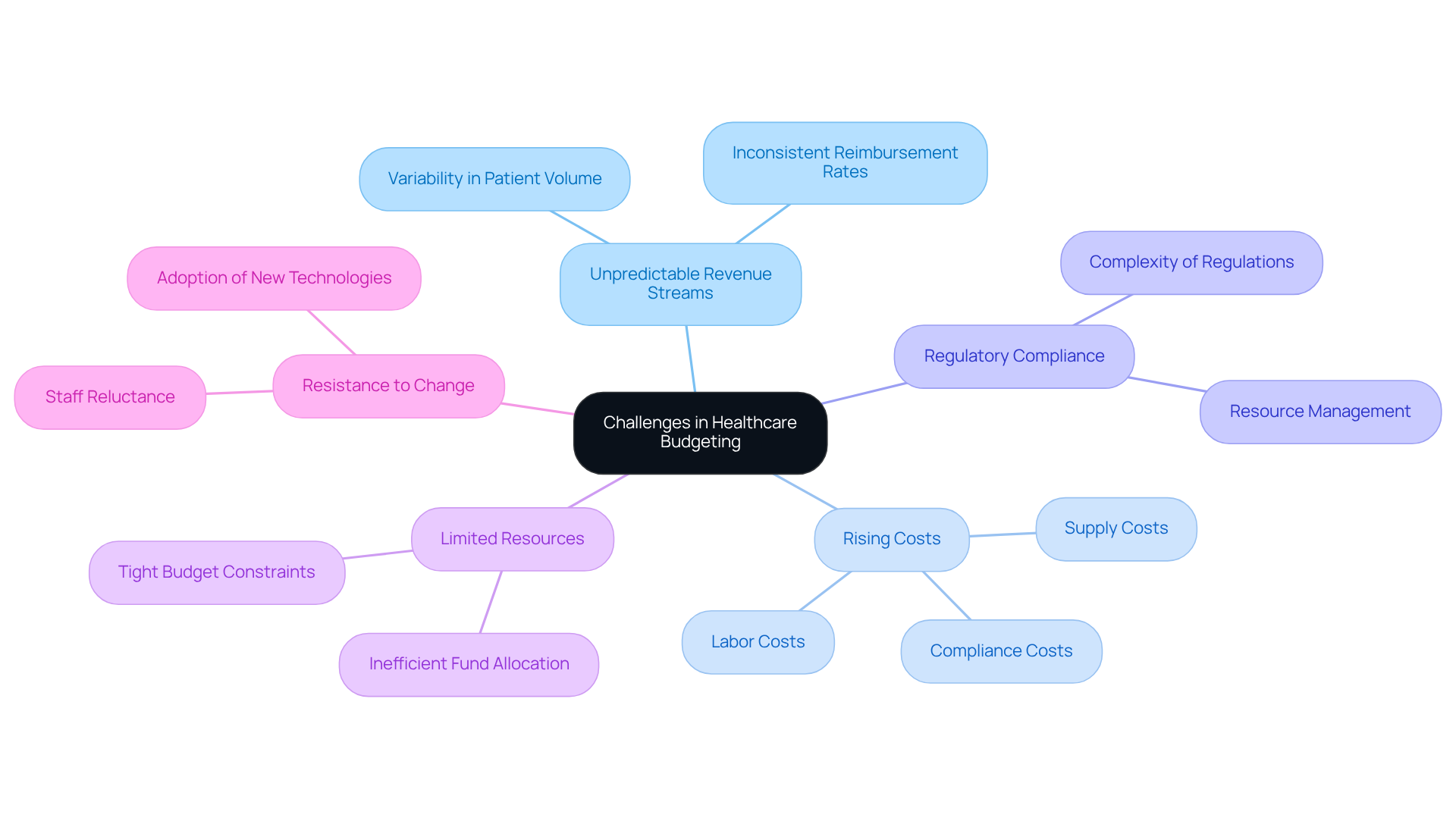
Healthcare entities encounter significant challenges in budgeting in healthcare that threaten their economic stability and operational effectiveness. Key issues include:
- Unpredictable Revenue Streams: Variability in patient volume and reimbursement rates complicates accurate revenue forecasting. This variability makes it difficult for organizations to plan effectively.
- Rising Costs: The ongoing rise in expenses associated with labor, supplies, and compliance places pressure on resources. Careful management of finances is required to address these rising costs.
- Regulatory Compliance: The complexity of healthcare regulations necessitates careful resource management to avoid costly penalties. This complexity further complicates the planning process.
- Limited Resources: It’s common for healthcare entities to face tight budget constraints, which hampers their ability to allocate funds efficiently across various departments.
- Resistance to Change: Staff may resist adopting new budgeting processes or technologies. This resistance can hinder the implementation of more effective monetary strategies.
To tackle these challenges, healthcare entities must engage in proactive planning. Promoting stakeholder involvement is also crucial. Implementing scorecard-driven adjustments tied to claims accuracy, denial rates, and days in accounts receivable can enhance operational rigor and improve financial outcomes. Specifically, organizations should focus on:
- Optimizing Patient Statements: Ensure clarity and accuracy in patient statements to reduce confusion and improve payment rates.
- Managing Underpayments: Develop strategies to identify and rectify underpayments promptly, ensuring that all services rendered are compensated appropriately.
- Addressing Aging Claims: Implement a systematic approach to follow up on aging claims, reducing the time they remain unpaid and improving cash flow.
For instance, organizations that focus on reducing denial rates by 20-30% and achieving faster reimbursements of 15-25% within 30-90 days can significantly bolster their revenue cycle performance. Continuous improvement in budgeting in healthcare practices, along with a compliance-first approach to claims management, is essential for navigating the complexities of the healthcare financial landscape. Ultimately, without a strategic approach to budgeting in healthcare, organizations risk compromising their financial health and operational success.
Conclusion
Effective budgeting in healthcare is essential, as it directly impacts both patient care quality and the operational success of healthcare organizations. Structured budgeting practices enable healthcare entities to navigate financial uncertainties and optimize resource allocation, enhancing patient outcomes.
Throughout the article, key strategies for effective budgeting have been highlighted, including:
- Aligning budgets with strategic goals
- Engaging stakeholders
- Leveraging technology
- Conducting regular financial reviews
These practices foster accountability and transparency, allowing healthcare providers to concentrate on what matters most: delivering exceptional patient care. Additionally, understanding the various types of budgets and the challenges faced in healthcare budgeting equips organizations with the tools necessary to adapt and thrive in a complex financial landscape.
Ultimately, prioritizing effective budgeting is crucial for sustaining quality patient care and navigating the complexities of the healthcare financial landscape. For those seeking to enhance their budgeting processes, engaging with experts like Healthcare Partners Consulting & Billing, LLC (HPC) can provide tailored solutions that streamline operations and empower healthcare providers to focus on their core mission.
Frequently Asked Questions
What is healthcare budgeting?
Healthcare budgeting is the process of estimating revenues and expenses, setting budgetary objectives, and ensuring efficient allocation of funds to support patient care and organizational goals.
Why is budgeting important in healthcare?
Budgeting is crucial in healthcare as it helps organizations maintain financial stability, prioritize spending, ensure regulatory compliance, and navigate fluctuating reimbursement rates and patient demand.
How much should healthcare organizations set aside for unexpected expenses?
Organizations are encouraged to build contingency funds by setting aside 2% to 5% of their total budget for unexpected expenses or revenue shortfalls.
What are the benefits of using rolling budgets in healthcare?
Rolling budgets improve agility in decision-making, allow for continuous updates based on real-time data, enhance visibility, and reduce the workload associated with traditional financial planning processes.
How can scorecard-driven adjustments impact healthcare revenue cycles?
Implementing scorecard-driven adjustments tied to claims accuracy and denial rates can lead to denial reductions of 20-30% and faster reimbursements of 15-25% within 30-90 days, significantly improving revenue cycle performance.
What percentage of total healthcare operating costs do labor costs account for?
Labor costs account for 50% to 60% of total healthcare operating costs, making careful planning essential for competitive wages and staffing levels.
What is the consequence of neglecting a structured budgeting process in healthcare?
Neglecting a structured budgeting process can jeopardize operational efficiency and the quality of patient care.