
Introduction
The effectiveness of patient care in mental health clinics hinges on the qualifications of their professionals. Ensuring that mental health clinics operate with qualified professionals is paramount in delivering effective patient care. The credentialing process, often viewed as a bureaucratic obstacle, is actually a vital component that safeguards the integrity of healthcare services.
This article outlines four best practices that streamline credentialing and empower healthcare providers by reducing administrative burdens. This enables them to concentrate on delivering high-quality patient care. Clinics must navigate compliance complexities to enhance operational efficiency and improve patient outcomes.
Understand the Credentialing Process
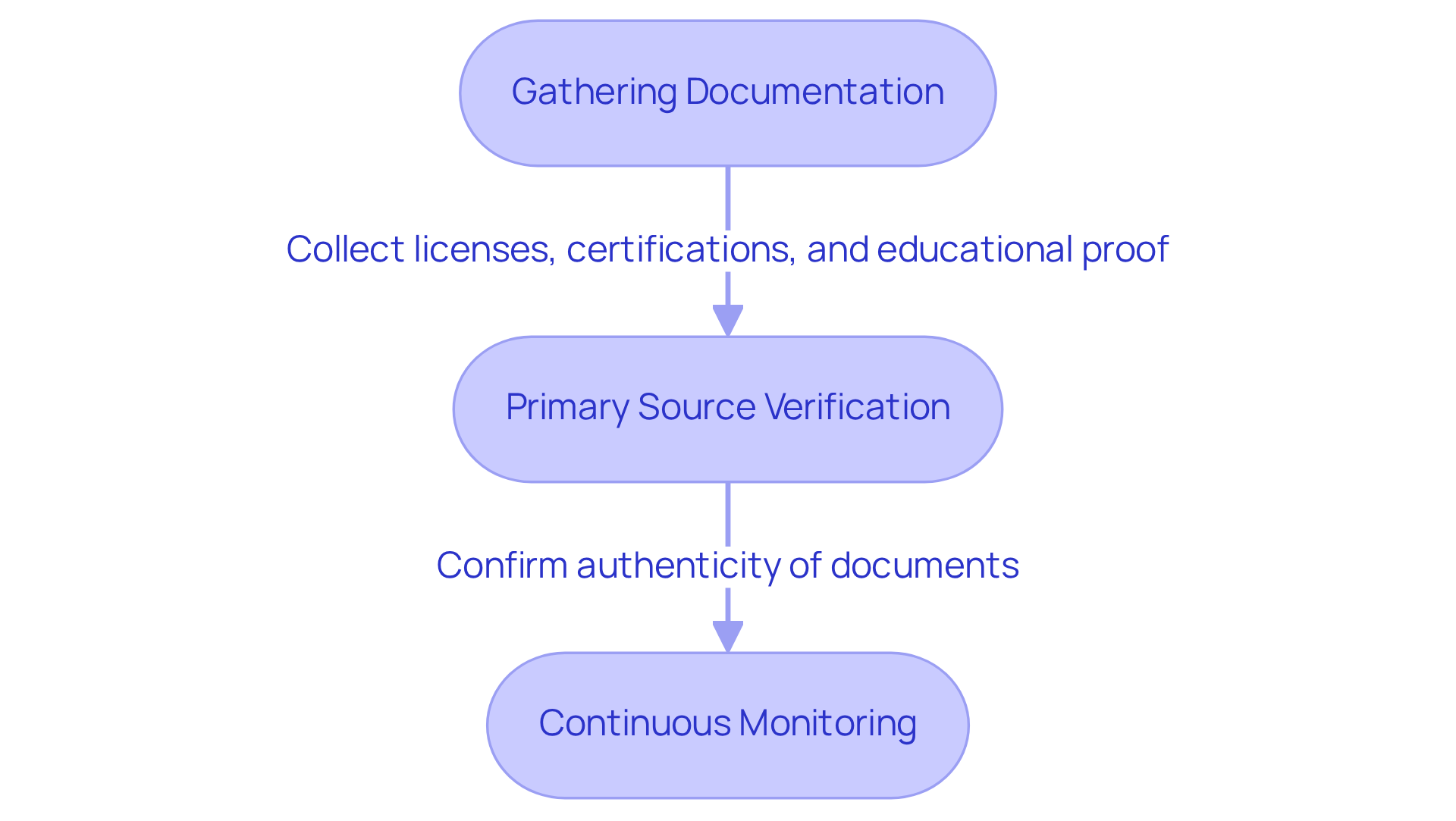
Ensuring the competence of providers in mental health facilities hinges on rigorous qualification verification processes. This process typically begins with the collection of essential documentation, including licenses, certifications, and proof of education. Following this, clinics must engage in primary source verification to confirm the authenticity of the submitted documents. Manual verification processes can lead to significant delays and potential compliance issues, as 76% of healthcare organizations still rely on these methods for part of their qualification workflow.
Key steps in the credentialing process include:
- Gathering Documentation: Collecting necessary licenses, certifications, and educational proof.
- Primary Source Verification: Confirming the authenticity of the documentation to ensure compliance with state and federal regulations.
- Continuous Monitoring: Implementing ongoing credential monitoring to avoid lapses and maintain provider legitimacy.
Organizations that adopt continuous credentialing monitoring technologies, like those from Healthcare Partners Consulting, not only enhance risk management but also significantly improve patient safety. Lapses in credentials can adversely affect healthcare service delivery. Furthermore, the average verification process takes 90-120 days, which can postpone provider onboarding and restrict patient access to care. Streamlining these steps through tailored revenue cycle management allows mental health organizations to ensure compliance and enhance their reputation by permitting only qualified professionals to practice.
Research has demonstrated that healthcare facilities investing in specialized verification personnel experience significant advantages, including a decrease in processing time by as much as 30%. Additionally, 63% of healthcare organizations have reported reduced turnaround times for credentialing by using automated solutions. This operational rigor not only enhances efficiency but also fosters improved patient care outcomes, enabling healthcare facilities to concentrate more on their core mission of delivering quality mental health services. Ultimately, the integration of advanced verification technologies can redefine operational efficiency and elevate the standard of care in mental health services.
Identify Compliance Requirements for Credentialing
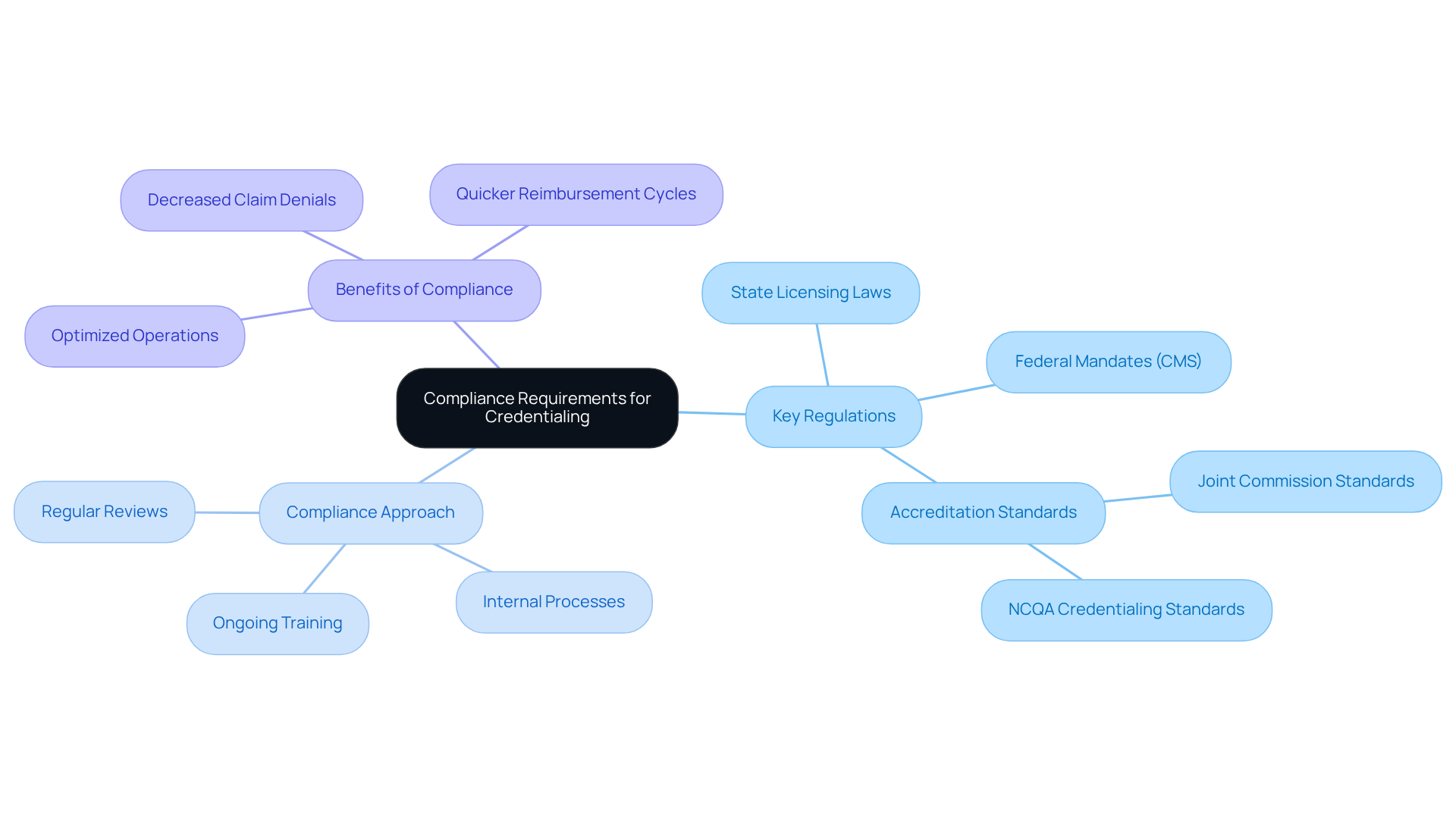
Mental health facilities face significant challenges in navigating the complex compliance landscape that governs their operations. Key regulations include:
- State licensing laws
- Federal mandates from the Centers for Medicare & Medicaid Services (CMS)
- Accreditation standards set by organizations like the Joint Commission
As of 2026, healthcare facilities must adhere to updated NCQA credentialing standards, highlighting the importance of maintaining accurate provider data and timely reporting of changes in credentialing.
Clinics must adopt a compliance-first approach to navigate the complexities of regulations and avoid costly penalties. This involves:
- Regular reviews of all applicable regulations
- Implementing robust internal processes to monitor adherence
- Ongoing training for credentialing
Ongoing training is crucial for maintaining operational efficiency and staying updated on compliance requirements.
Healthcare Partners Consulting provides tailored revenue cycle management services for behavioral and mental wellness practices. By utilizing these services, healthcare facilities can:
- Optimize their operations
- Decrease claim denials by 20-30%
- Attain quicker reimbursement cycles, with payments processed within 30-90 days
Case studies reveal that organizations prioritizing compliance and utilizing effective revenue cycle management demonstrate operational rigor and improve their revenue cycle performance. Ultimately, prioritizing compliance is essential not just for regulatory adherence but for the long-term viability of mental wellness practices.
Implement Efficient Credentialing Systems
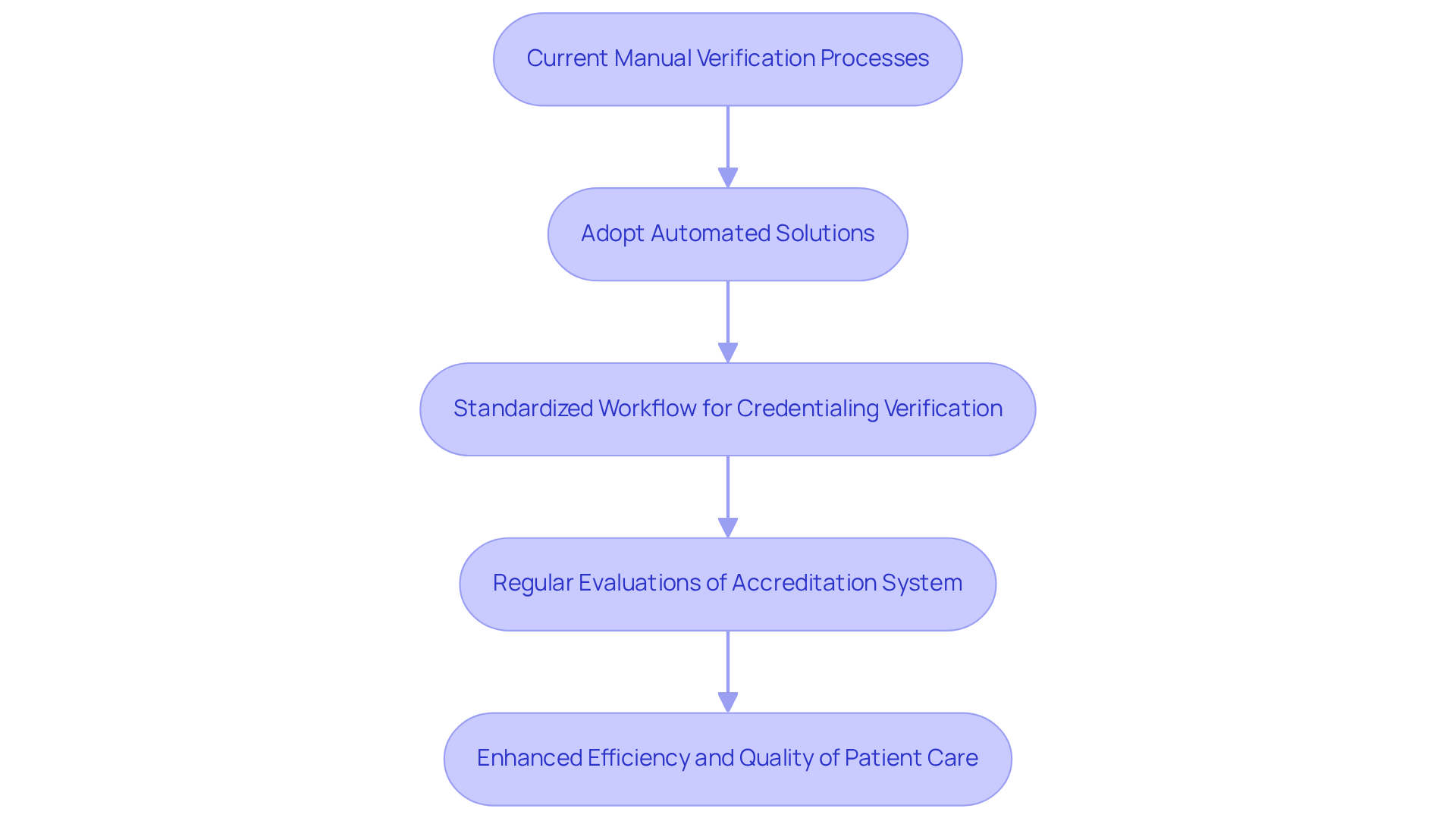
Current manual verification processes consume valuable time and resources, detracting from patient care. To enhance the effectiveness of the verification system, mental health clinics should adopt automated solutions. Management software for credentialing significantly reduces time spent on manual tasks. This allows staff to focus on essential aspects of patient care.
Establishing a standardized workflow for credentialing verification ensures consistency and accuracy. Additionally, regular evaluations of the accreditation system identify areas for improvement, ensuring compliance and efficiency.
Ultimately, embracing automation in credentialing verification not only enhances efficiency but also elevates the quality of patient care.
Monitor and Evaluate Credentialing Practices
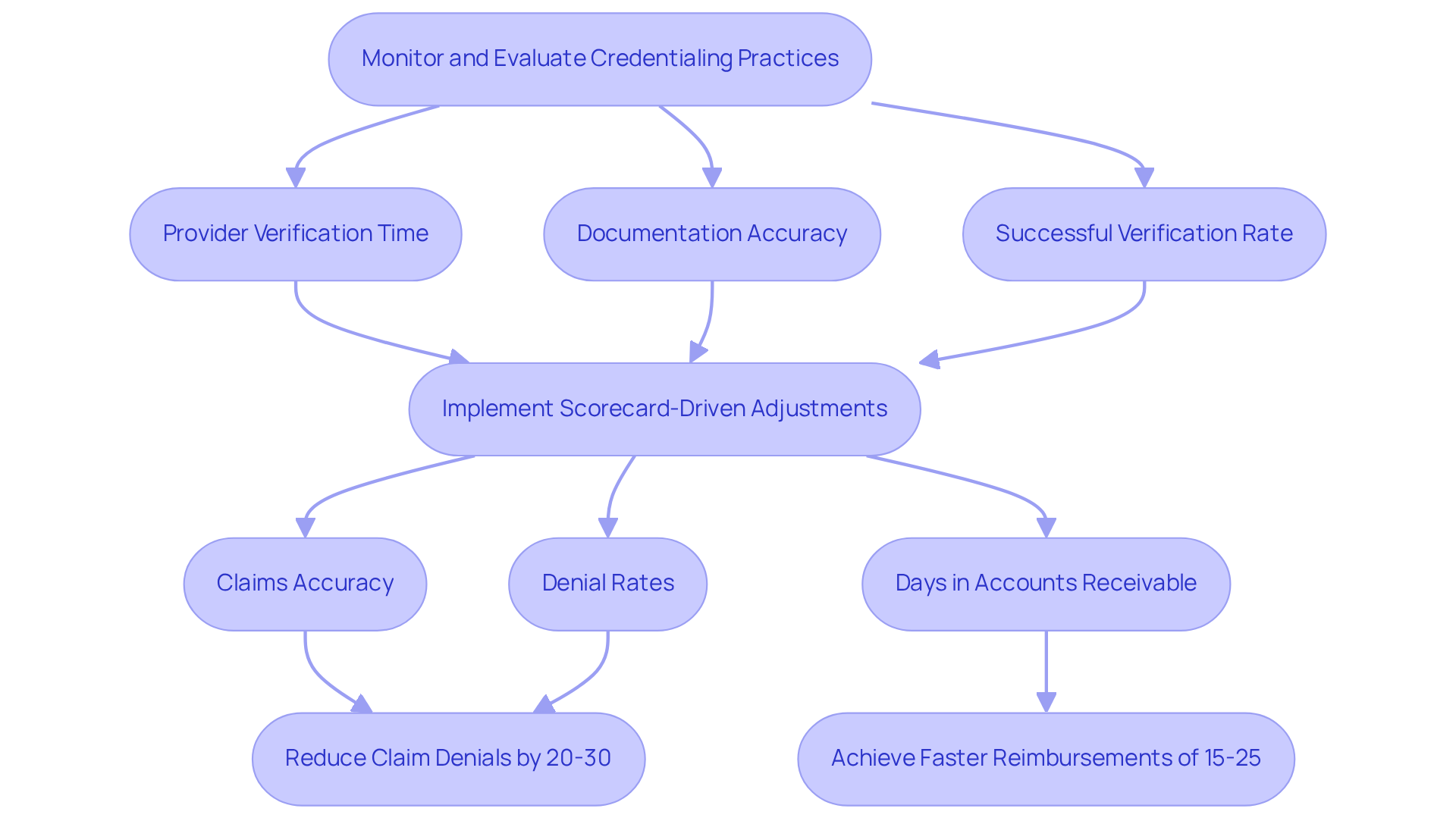
Mental health clinics face significant challenges in maintaining compliance and operational efficiency without regular monitoring and evaluation of credentialing practices. Establishing key performance indicators (KPIs) is crucial for assessing the effectiveness of qualification systems. Clinics should track metrics such as:
- The time taken for provider verification
- Documentation accuracy
- The rate of successful verifications
Implementing scorecard-driven adjustments can enhance these systems. By focusing on:
- Claims accuracy
- Denial rates
- Days in accounts receivable
Clinics can reduce claim denials by 20-30% and achieve faster reimbursements of 15-25% within 30-90 days.
Conducting periodic reviews of the credentialing system helps to identify bottlenecks and areas for improvement. Gathering input from personnel involved in qualification activities provides valuable insights for improvement, helping the organization adapt to regulatory changes. By prioritizing these practices, mental health clinics can optimize their credentialing, ultimately supporting better patient care and financial performance.
Conclusion
Effective credentialing in mental health clinics is not just a regulatory requirement; it is a cornerstone of quality patient care. By implementing best practices, clinics can streamline their credentialing processes, boost compliance, and concentrate on patient care. A compliance-first approach safeguards healthcare integrity and reduces administrative burdens for providers.
Key strategies discussed include:
- Understanding the credentialing process
- Identifying compliance requirements
- Implementing efficient systems
- Continuously monitoring practices
Each of these elements plays a crucial role in minimizing delays, improving operational efficiency, and ensuring that only qualified professionals are allowed to practice. Navigating the intricate regulations can pose significant challenges for clinics. However, using advanced technologies and automation speeds up credentialing, improving patient outcomes and financial results.
In conclusion, prioritizing effective credentialing practices is vital for mental health clinics aiming to thrive in a competitive landscape. By adopting a comprehensive revenue cycle management approach tailored to behavioral and mental health, organizations can ensure they not only comply with regulations but also elevate the standard of care they provide. Embracing these best practices will enhance operational efficiency and contribute to the overall success and sustainability of mental health services.
For further assistance in optimizing credentialing processes, consider reaching out to Healthcare Partners Consulting & Billing, LLC at info@hpcbilling.com or call 888-517-4992.
Frequently Asked Questions
What is the credentialing process in mental health facilities?
The credentialing process involves verifying the qualifications of providers by collecting essential documentation such as licenses, certifications, and proof of education, followed by primary source verification to confirm the authenticity of these documents.
Why is primary source verification important?
Primary source verification is crucial to ensure compliance with state and federal regulations and to confirm the authenticity of the documentation submitted by providers.
What are the key steps in the credentialing process?
The key steps include gathering documentation, conducting primary source verification, and implementing continuous monitoring of credentials to maintain provider legitimacy.
How does continuous credentialing monitoring benefit healthcare organizations?
Continuous credentialing monitoring enhances risk management, improves patient safety, and helps avoid lapses in provider credentials, which can adversely affect healthcare service delivery.
What is the average time required for the credentialing verification process?
The average verification process takes between 90 to 120 days, which can delay provider onboarding and restrict patient access to care.
How can organizations streamline the credentialing process?
Organizations can streamline the credentialing process through tailored revenue cycle management and by adopting continuous credentialing monitoring technologies, which can enhance compliance and improve their reputation.
What advantages do healthcare facilities gain by investing in specialized verification personnel?
Investing in specialized verification personnel can decrease processing time by as much as 30% and lead to reduced turnaround times for credentialing, enhancing operational efficiency.
What impact does automation have on the credentialing process?
Automation can significantly reduce turnaround times for credentialing, with 63% of healthcare organizations reporting improvements when using automated solutions, ultimately allowing facilities to focus more on delivering quality mental health services.