

Introduction
Mental health clinics must navigate the complexities of Revenue Cycle Management (RCM) to achieve financial stability and operational efficiency. By mastering RCM, these clinics can streamline processes from patient registration to billing, ultimately enhancing cash flow and patient care.
Mental health clinics often face overwhelming insurance requirements that complicate the revenue cycle, jeopardizing revenue and service quality. As a result, clinics may struggle to maintain financial health and deliver quality patient care.
By optimizing their revenue cycle, mental health providers can ensure they prioritize patient care amidst financial challenges.
Define Revenue Cycle Management (RCM) and Its Importance in Healthcare
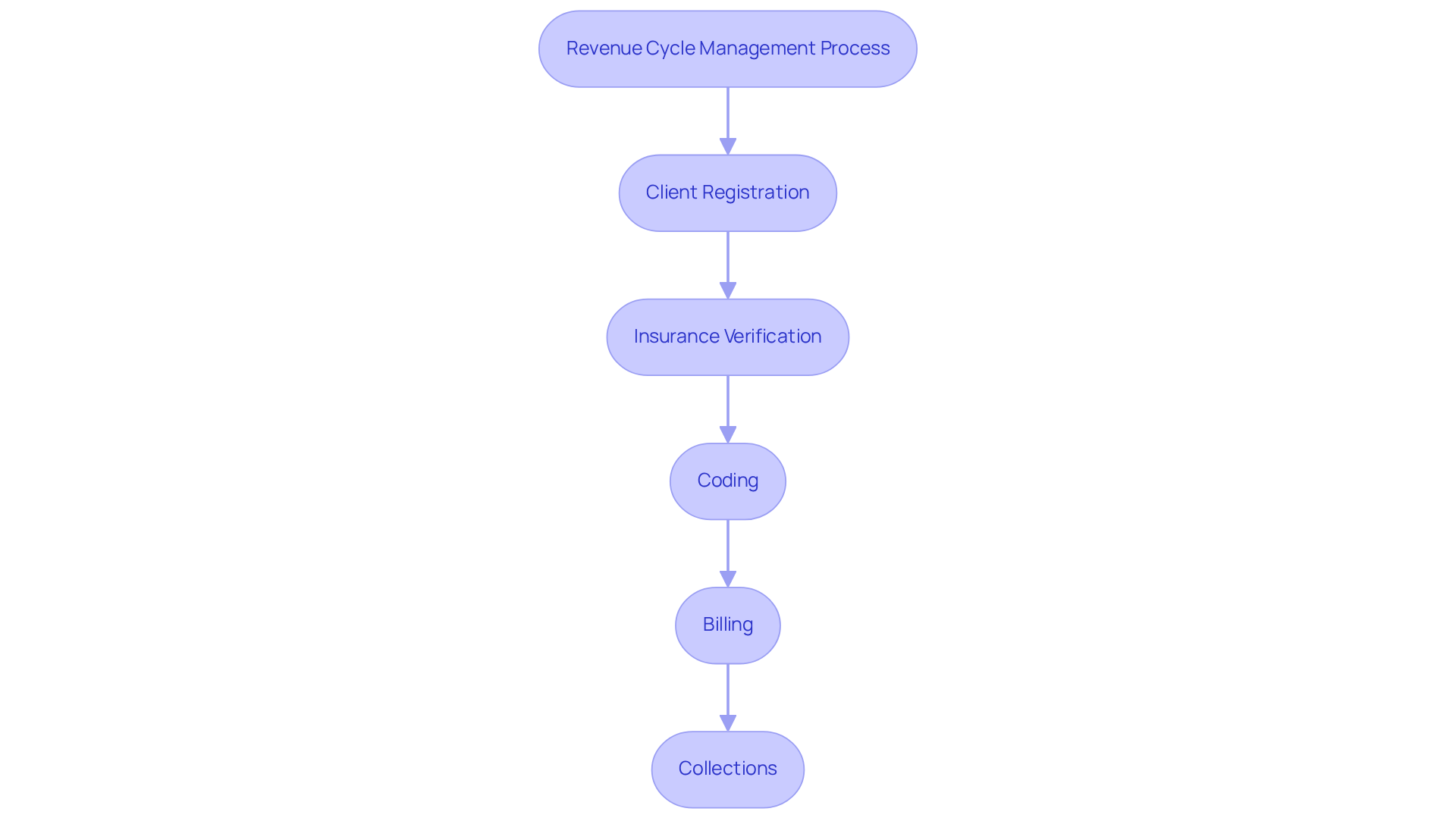
The financial health of healthcare organizations hinges on effective Revenue Cycle Management (RCM), which, as indicated by the RCM full form in healthcare, encompasses everything from appointment scheduling to payment collection. Key stages of this process include:
- Client registration
- Insurance verification
- Coding
- Billing
- Collections
Each stage plays a vital role in the overall financial management.
For mental wellness clinics, understanding the RCM full form in healthcare is crucial as it has a direct impact on their financial stability and operational efficiency. Effective RCM methods, defined by the RCM full form in healthcare, ensure timely reimbursements, improving cash flow and allowing providers to concentrate on patient care rather than administrative tasks. By streamlining these processes, mental wellness clinics can significantly reduce errors and minimize claim denials, which are often a major source of revenue loss. Implementing robust RCM strategies, known as the RCM full form in healthcare, can reduce denials by 20-30% and accelerate reimbursement timelines by 15-25%, typically within 30-90 days.
Healthcare Partners Consulting & Billing, LLC (HPC) provides customized denial management services and individualized administrative support, including scheduling, document management, and insurance claims assistance, to empower mental health providers. Case studies have demonstrated that clinics implementing effective RCM strategies not only enhance their financial outcomes but also improve satisfaction levels by offering clearer communication regarding payment expectations. Furthermore, we encourage you to evaluate your organization’s profitability through our quick quiz, which offers personalized suggestions to enhance efficiency and billing precision.
Ultimately, neglecting the RCM full form in healthcare can jeopardize the quality of care that mental wellness practices provide to their patients.
Explore the Key Stages of the Revenue Cycle in Mental Health Clinics
Optimizing the revenue cycle in mental health clinics is crucial for financial performance and compliance.
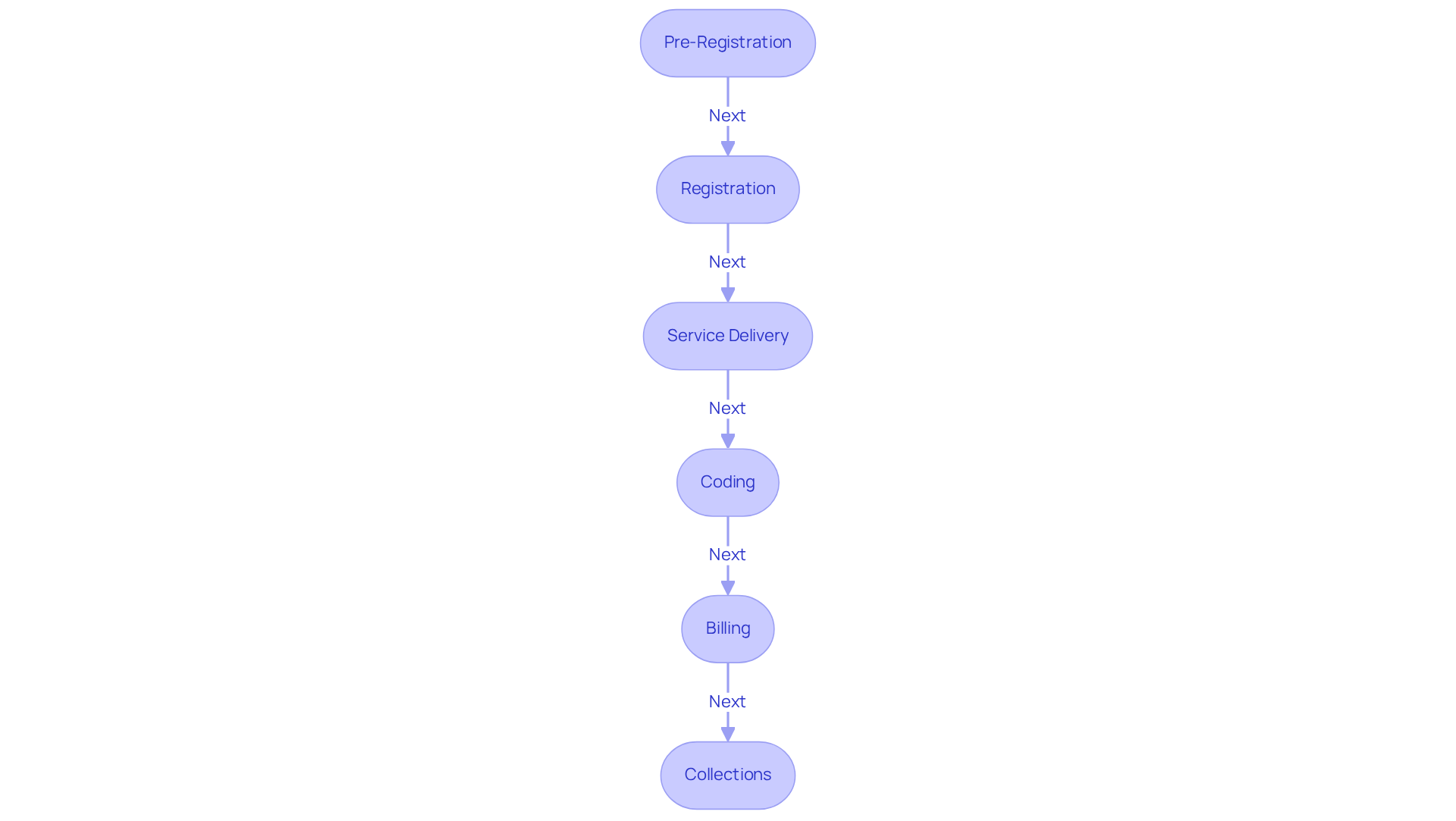
- Pre-Registration: This initial step is vital for gathering individual information and verifying insurance eligibility before appointments. Effective pre-registration can set clear financial expectations and reduce collection issues.
- Registration: During this stage, precise patient information is entered into the system, ensuring that financial records are accurate. High-quality registration processes, enhanced by automation, help prevent financial repercussions during audits and ensure necessary authorizations are secured.
- Service Delivery: This is where treatment occurs, and meticulous documentation is crucial for subsequent coding and invoicing processes. Without proper clinical documentation, clinics face increased denial risks.
- Coding: Accurate coding of services provided is essential for proper reimbursement. Mental wellness approaches must ensure that codes accurately represent the services provided to prevent claim denials, which can fluctuate between 15% to 25% in mental wellness services.
- Billing: After coding, claims are submitted to insurance companies for payment. Detailing this stage is crucial to prevent denials and ensure timely payments, which can be sped up with effective claim submissions. HPC offers tailored solutions to streamline billing workflows, allowing healthcare professionals to focus on patient care while managing billing complexities.
- Collections: Ultimately, operations must follow up on unpaid claims and manage payments from individuals to maintain financial stability. This improvement in cash flow positions clinics for sustainable growth, often leading to a 20-40% reduction in accounts receivable days. HPC’s expertise in optimizing statements and addressing underpayments and aging claims ensures that organizations are better positioned for growth, often experiencing a 20-30% reduction in denial rates and a 15-25% increase in faster reimbursements within 30-90 days.
Comprehending and refining each of these stages is essential for mental clinics to improve their revenue cycle management, which is the RCM full form in healthcare. By refining these stages, clinics can enhance their operational efficiency and focus on delivering exceptional patient care.
Identify Common Challenges in Revenue Cycle Management for Mental Health Practices
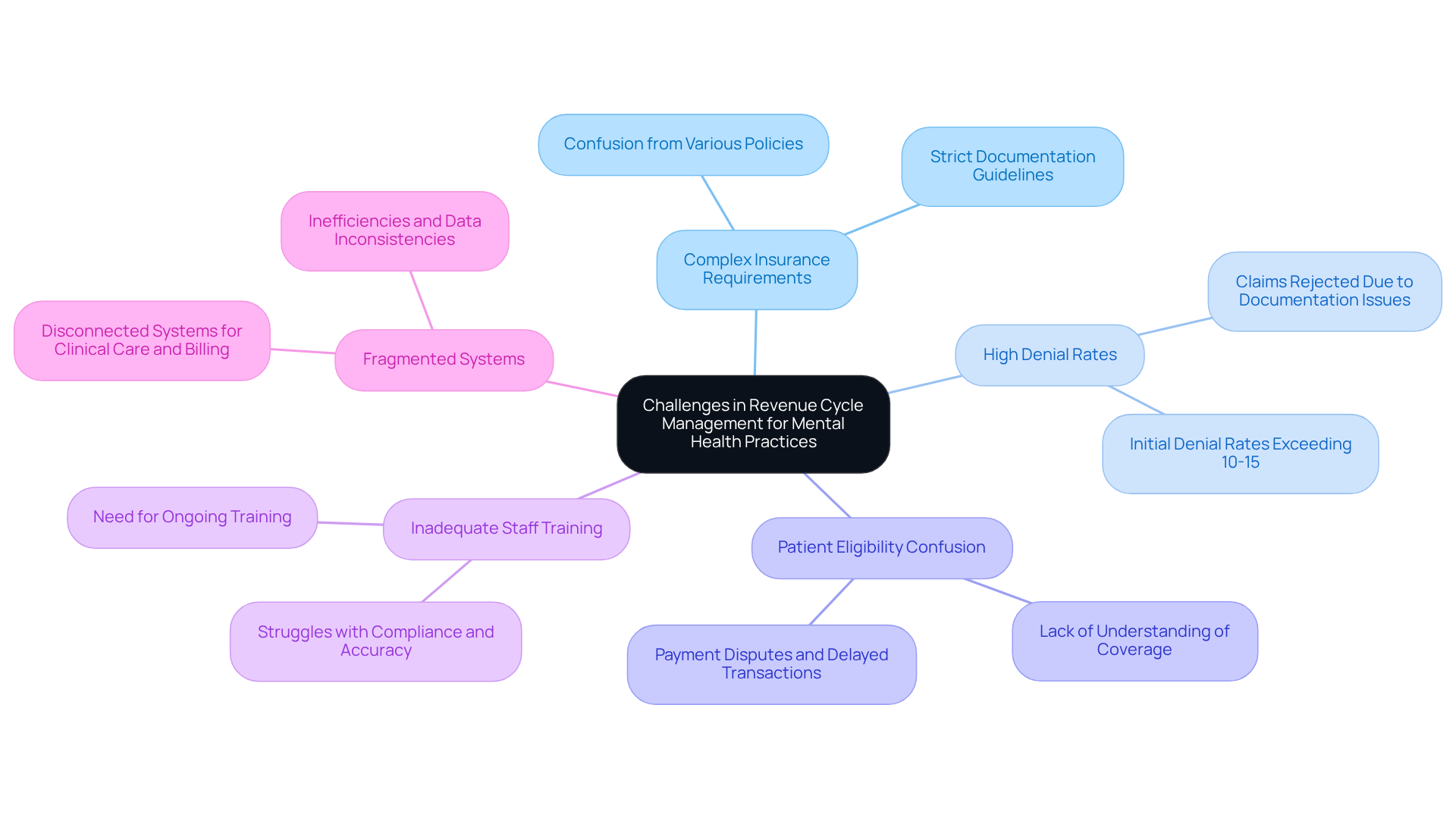
Mental wellness practices face significant challenges in revenue cycle management, highlighting the importance of the RCM full form in healthcare, which can severely impact their financial performance and operational efficiency. Key issues include:
- Complex Insurance Requirements: The intricacies of various insurance policies create confusion, leading to billing errors and claim denials. Mental wellness providers navigate strict documentation guidelines that vary by payer, increasing the risk of mistakes.
- High Denial Rates: Claims are often rejected due to insufficient documentation or incorrect coding, with denial rates for mental care providers frequently exceeding 10-15%. Many behavioral health organizations experience initial denial rates between 10-15% without systematic denial prevention strategies. Without these strategies, practices face substantial revenue losses, hindering their operational success.
- Patient Eligibility Confusion: Patients may not fully comprehend their coverage, leading to payment disputes and delayed transactions. This confusion often stems from complex insurance policies and the lack of clear communication regarding benefits.
- Inadequate Staff Training: Staff members who are not adequately trained in the nuances of mental health reimbursement may struggle with compliance and accuracy, increasing the likelihood of errors. Ongoing training and compliance oversight are crucial to prevent avoidable denials in payments.
- Fragmented Systems: Numerous approaches employ various systems for invoicing and patient management, resulting in inefficiencies and data inconsistencies. Many behavioral organizations utilize disconnected systems for clinical care, scheduling, and billing, which disrupt cash flow and complicate the billing process, making it challenging to maintain precise records.
Addressing these challenges is crucial for clinics to enhance their financial outcomes and operational effectiveness. Healthcare Partners Consulting offers dedicated virtual assistant services tailored to behavioral and mental health settings, including scheduling, client intake, and communications. Additionally, organizations benefit from direct access to a named billing team, including a billing manager and accounts receivable manager, ensuring personalized support. If you’re unsure which service fits best for your practice, consider scheduling a 30-minute consultation with Healthcare Partners Consulting. During this call, we’ll map your current workflow and point you toward the services that will move the needle fastest.
Implement Strategies for Effective Revenue Cycle Management in Mental Health Clinics
To enhance revenue cycle management in mental health clinics, it is crucial to address common challenges and implement effective strategies:
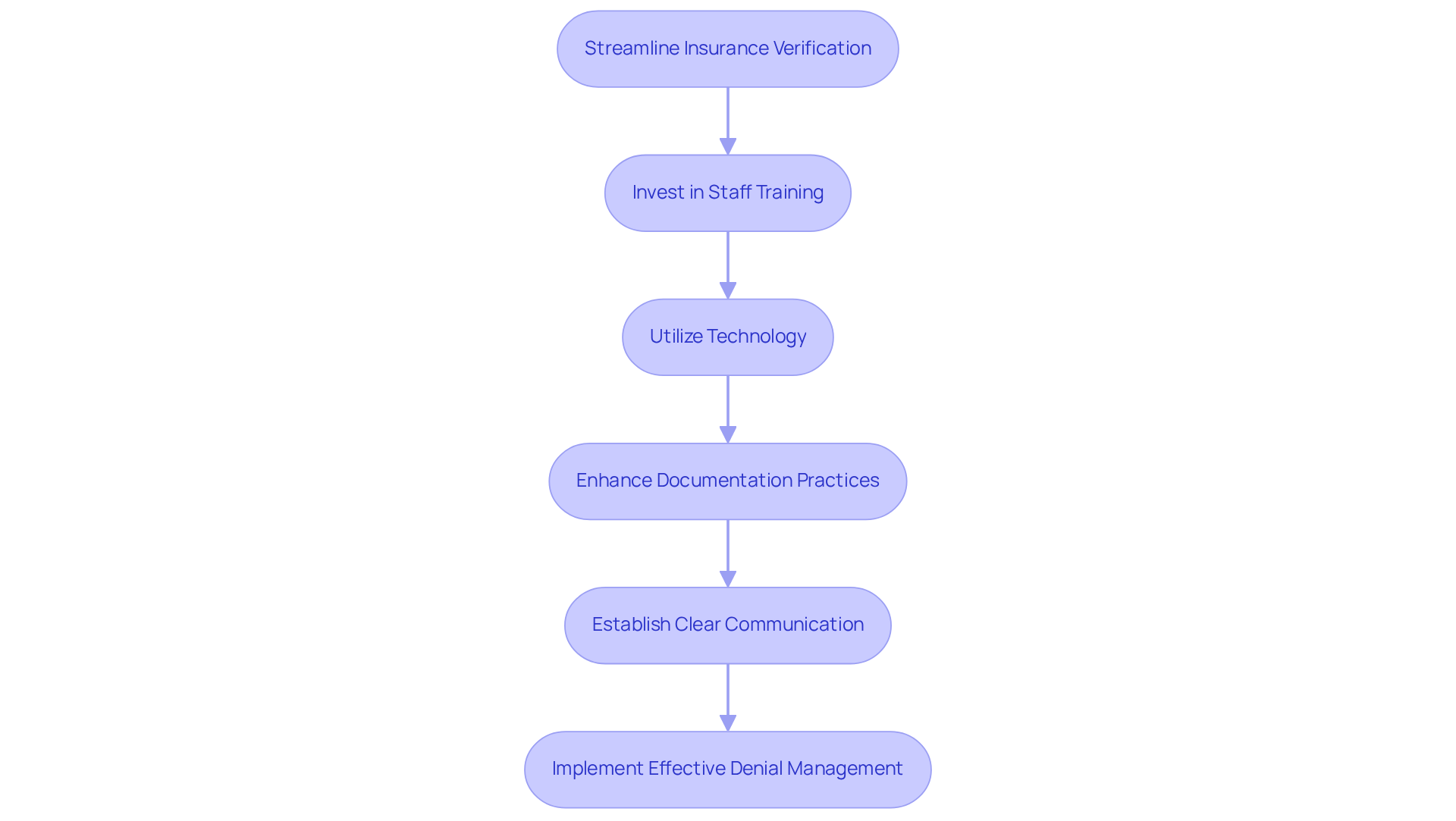
- Streamline Insurance Verification: Implement a robust system for verifying patient insurance coverage before appointments. This proactive approach can significantly reduce eligibility issues, which are a common cause of claim denials.
- Invest in Staff Training: Regular training sessions on coding, payment practices, and insurance policies are essential. Such training can lead to a reduction in errors and enhance overall efficiency, as staff become more skilled at navigating complex financial requirements.
- Utilize Technology: Leverage electronic health records (EHR) and financial software to automate processes. Automation minimizes manual errors and enhances data accuracy, which is crucial for timely reimbursements. Advanced EHR systems can also facilitate real-time insurance eligibility checks, further streamlining the RCM process.
- Enhance Documentation Practices: Ensure that all patient interactions and treatments are thoroughly documented. Accurate documentation supports proper coding and billing, which is vital for compliance and maximizing reimbursement potential. Conducting regular audits of documentation practices helps pinpoint areas that need improvement.
- Establish Clear Communication: Foster open dialogue with individuals regarding their financial responsibilities and insurance coverage. Clear explanations of charges and available payment options can reduce confusion, enhance collections, and improve the overall experience for individuals.
- Implement Effective Denial Management: Partner with Healthcare Partners Consulting, a veteran-owned company with 39 years of experience, to appeal the right denials swiftly and recover the revenue you’ve earned. Their data-driven guidance can assist in growing your operation sustainably while ensuring compliance and maximizing revenue recovery.
Implementing these strategies allows mental health clinics to optimize their revenue cycle management, which is also known as the RCM full form in healthcare. This leads to improved financial health and enables a greater focus on patient care. Ultimately, these strategies not only improve financial outcomes but also allow clinics to prioritize patient care more effectively.
Conclusion
For mental health clinics, mastering revenue cycle management is not just beneficial; it is essential for survival in a competitive landscape. Understanding the RCM full form in healthcare is crucial for these clinics striving for financial stability and operational excellence. By effectively managing the revenue cycle, clinics can ensure timely reimbursements, reduce errors, and ultimately focus more on patient care. RCM significantly impacts the financial health of practices and the quality of patient care.
Throughout the article, key stages of revenue cycle management were explored, including:
- Client registration
- Insurance verification
- Coding
- Billing
- Collections
Each phase is integral to optimizing the revenue cycle, and implementing effective strategies can lead to substantial improvements in cash flow and a reduction in claim denials. The challenges faced by mental health practices, such as complex insurance requirements and inadequate staff training, often lead to financial instability and hinder the delivery of quality care. These challenges underscore the necessity for targeted solutions that enable clinics to effectively address these challenges with confidence.
Ultimately, mental health clinics need to focus on refining their RCM practices to boost financial health and elevate patient care. By embracing robust RCM strategies and leveraging expert support from providers like Healthcare Partners Consulting & Billing, LLC, clinics can overcome common challenges and achieve sustainable growth. Taking proactive steps today will not only secure the financial future of these practices but also ensure that they continue to deliver high-quality care to those in need. For personalized guidance, consider reaching out to HPC at info@hpcbilling.com or call 888-517-4992 to explore how tailored solutions can benefit your practice.
Frequently Asked Questions
What is Revenue Cycle Management (RCM) in healthcare?
Revenue Cycle Management (RCM) in healthcare refers to the financial processes that healthcare organizations use to manage the revenue from patient care, encompassing stages from appointment scheduling to payment collection.
What are the key stages of the RCM process?
The key stages of the RCM process include client registration, insurance verification, coding, billing, and collections.
Why is understanding RCM important for mental wellness clinics?
Understanding RCM is crucial for mental wellness clinics because it directly impacts their financial stability and operational efficiency, allowing providers to focus more on patient care rather than administrative tasks.
How can effective RCM methods benefit healthcare providers?
Effective RCM methods ensure timely reimbursements, improve cash flow, reduce errors, and minimize claim denials, which can significantly enhance financial outcomes for healthcare providers.
What impact can robust RCM strategies have on claim denials and reimbursement timelines?
Implementing robust RCM strategies can reduce claim denials by 20-30% and accelerate reimbursement timelines by 15-25%, typically achieving reimbursements within 30-90 days.
What services does Healthcare Partners Consulting & Billing, LLC (HPC) offer?
HPC provides customized denial management services, individualized administrative support, scheduling, document management, and insurance claims assistance to empower mental health providers.
How can effective RCM strategies improve patient satisfaction?
Effective RCM strategies can enhance patient satisfaction by offering clearer communication regarding payment expectations and improving the overall financial management of clinics.
What risks are associated with neglecting RCM in healthcare?
Neglecting RCM can jeopardize the quality of care that mental wellness practices provide to their patients, potentially leading to financial instability and operational inefficiencies.