

Introduction
In the intricate realm of healthcare, the complexities of billing practices can significantly impact providers’ financial stability. Effective billing practices are critical for securing timely compensation for healthcare providers. Implementing best practices in primary care billing enhances financial performance and reduces administrative burdens, enabling providers to prioritize patient care. Navigating the complexities of billing practices can lead to significant claim denials, impacting revenue flow. Addressing these challenges is crucial for practices aiming to enhance their financial health and focus on delivering quality patient care.
Understand the Primary Care Revenue Cycle
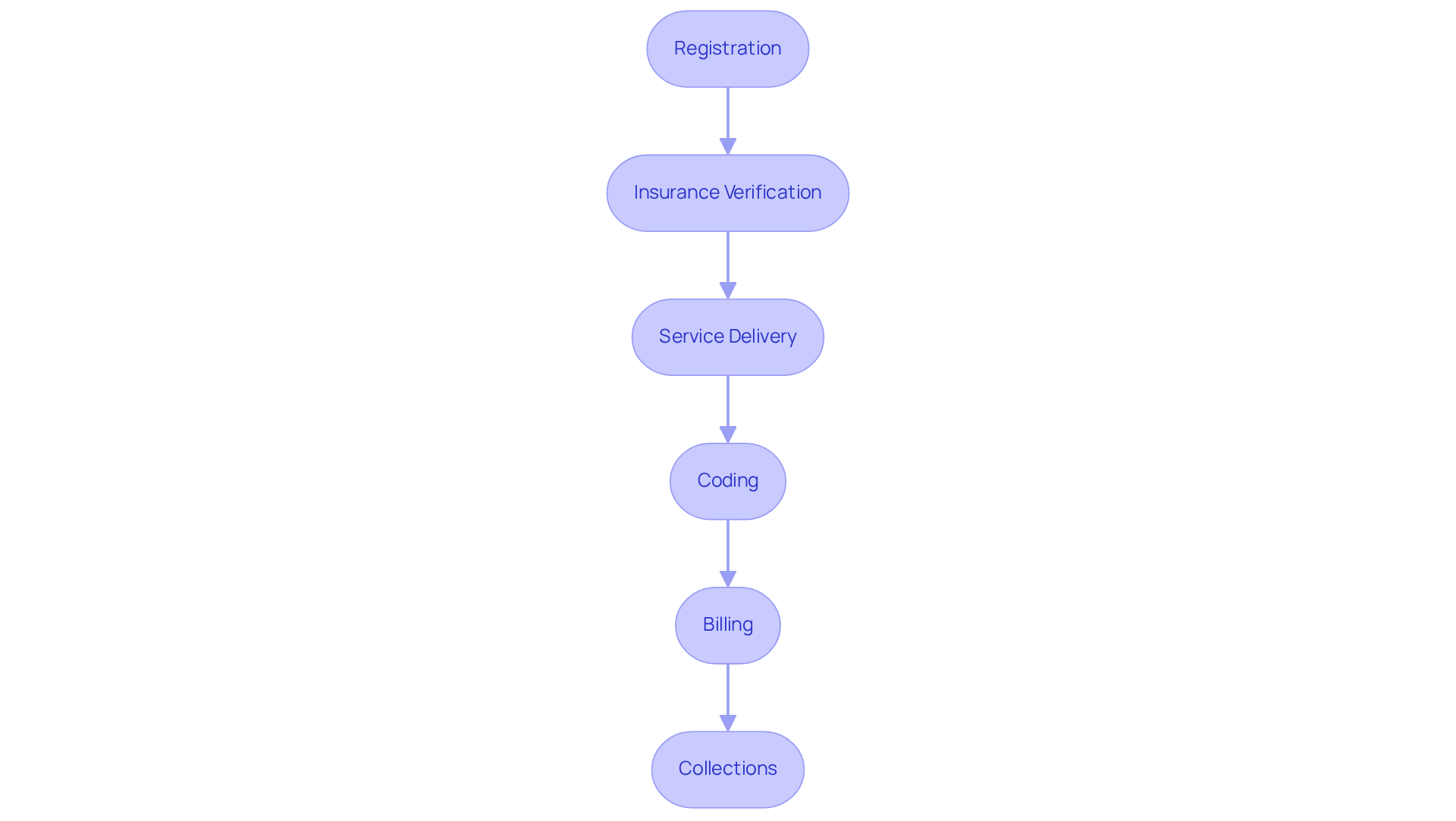
Inaccurate registration can lead to significant billing delays, impacting cash flow for healthcare providers. The primary care revenue cycle includes several essential stages, such as registration, insurance verification, service delivery, coding, and primary care billing services, along with collections. Every stage plays a crucial role in helping healthcare providers get paid accurately and on time for their services.
- Registration: Collecting precise information about individuals is crucial. Ensure that all demographic and insurance details are verified at registration to prevent billing delays.
- Insurance Verification: Confirming eligibility and benefits before service delivery can significantly reduce claim denials. Implement automated systems to streamline this process and enhance accuracy.
- Service Delivery: During patient visits, careful recording of all services provided is essential. This documentation is vital for accurate coding and billing.
- Coding: Proper coding is critical for reimbursement. Stay informed about coding changes and ensure that all services are accurately coded to reflect the care provided.
- Billing: Submit claims promptly and regularly follow up on unpaid claims. A systematic approach to billing can improve cash flow and reduce outstanding accounts receivable.
- Collections: Establish clear policies for client payments and actively follow up on outstanding balances. Offering flexible payment options can enhance collection rates.
By optimizing the revenue cycle with primary care billing services, healthcare providers can not only enhance their financial performance but also redirect their focus towards delivering quality patient care.
Enhance Clinical Documentation for Compliance and Accuracy
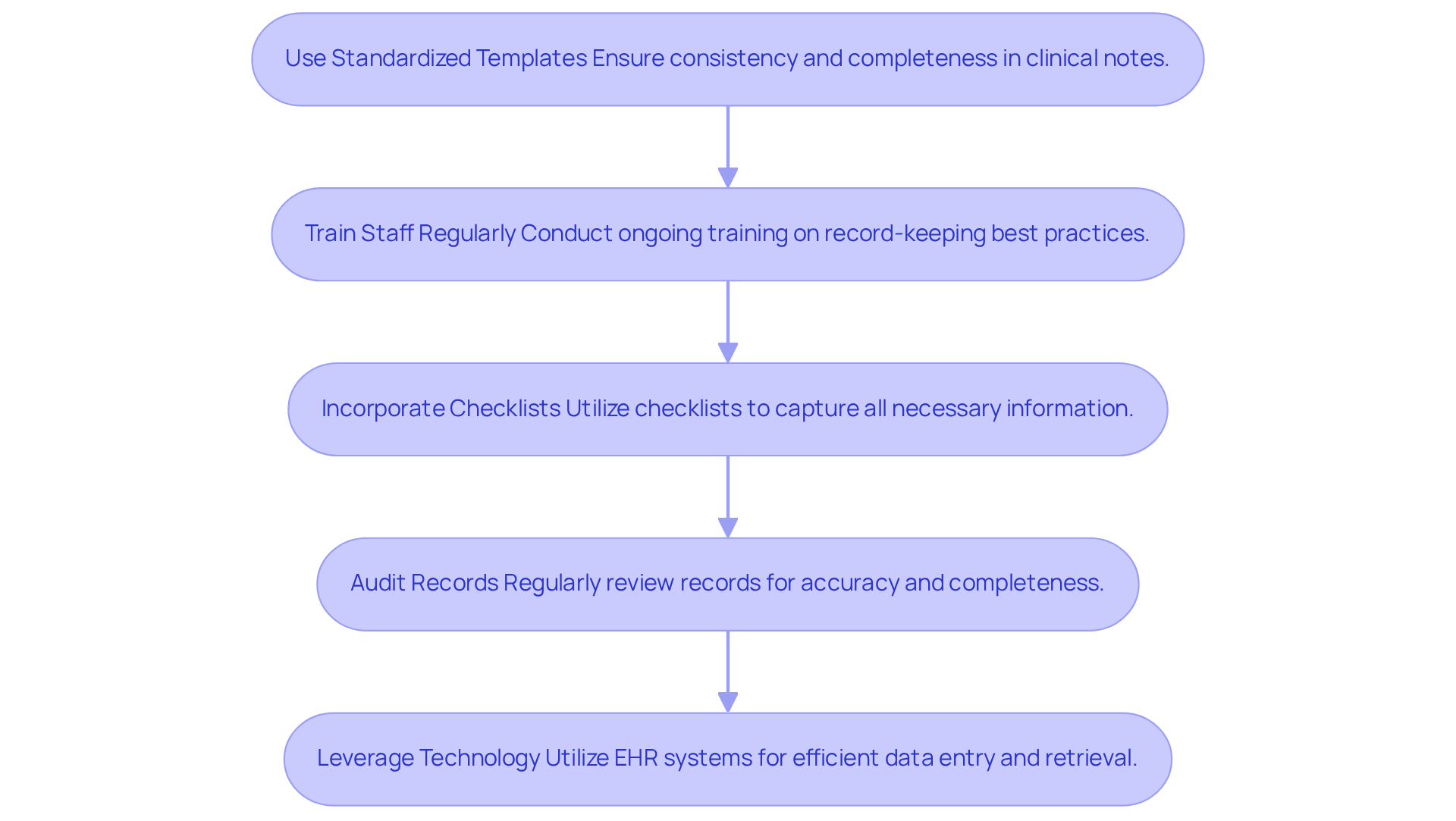
Accurate clinical records are crucial for effective billing and compliance, yet many organizations face challenges in achieving this standard. Here are best practices to enhance documentation:
- Use Standardized Templates: Implement standardized templates for clinical notes to ensure consistency and completeness. This minimizes uncertainty and improves clarity in records, which is essential for compliance.
- Train Staff Regularly: Conduct regular training sessions for clinical staff on best practices for record-keeping, including coding guidelines and compliance requirements. Ongoing education enables clinicians to enhance record-keeping, resulting in improved care for individuals and better reimbursement results. Jonathan Maharaj, Founder and Director of Aurora Financials Limited, emphasizes the importance of vigilance regarding regulatory changes.
- Incorporate Checklists: Utilize checklists during encounters with individuals to ensure all necessary information is captured. This includes capturing patient history, treatment plans, and follow-up instructions, all of which are vital for thorough record-keeping.
- Audit Records: However, many organizations struggle with maintaining the accuracy and completeness of clinical records. Regularly reviewing clinical records for accuracy and completeness can offer practical feedback to staff, directly improving their record-keeping practices. This can result in a 20-30% decrease in claim rejections and a 15-25% quicker reimbursement within 30-90 days. This corresponds with findings from AHIMA, which indicates that 67% of denials are preventable through enhanced record-keeping practices.
- Leverage Technology: Utilize electronic health record (EHR) systems that enable easy entry and retrieval of individual information. Ensure that the EHR is set up to prompt for essential record elements, enhancing operational efficiency. Beginning in 2026, EHR systems must incorporate enhanced security features, including end-to-end encryption and multi-factor authentication, to safeguard sensitive data.
Recognizing and addressing these common pitfalls can significantly enhance the effectiveness of clinical documentation practices.
Implement Effective Denial Management Strategies
Effectively managing rejections is crucial for optimizing revenue cycle performance in healthcare. Management of rejections is a proactive strategy for identifying, analyzing, and resolving issues with patient statements and aging submissions. Implementing effective management strategies for claims can significantly enhance revenue cycle performance. Here are best practices to consider:
- Analyze Denial Trends: Regularly review denied submissions to identify patterns and root causes. This analysis helps identify areas for improvement in documentation, coding, and billing processes. As a result, rejection rates can decrease by 20-30%, enhancing the management of aging claims.
- Establish a Denial Management Team: Create a dedicated group responsible for handling rejections. This team should be trained in coding, billing, and compliance to effectively address and resolve issues, ensuring a structured approach to management that aligns with client statement processes.
- Implement Real-Time Eligibility Verification: Ensure that eligibility is verified in real-time during the registration process. This can prevent many denials related to coverage issues, as over 50% of rejections arise from front-end errors, which can also impact the timely processing of patient statements.
- Appeal Denied Requests Promptly: Develop a systematic approach for appealing denied requests. Ensure that appeals are submitted within the required timeframes and include all essential materials to support the request, as timely appeals can lead to quicker reimbursement within 15-25% of 30-90 days, directly affecting the management of aging requests.
- Educate Staff on Common Rejection Reasons: Provide training to staff on the most frequent causes for reimbursement rejections and how to prevent them. This knowledge enables staff to take proactive measures in preventing rejections, which can represent up to 35% of all refusals due to incomplete or erroneous documentation, thereby improving the overall efficiency of statements for individuals.
Ultimately, a robust denial management strategy not only enhances financial outcomes but also allows healthcare providers to focus on delivering quality care.

Leverage Outsourcing for Streamlined Billing Operations
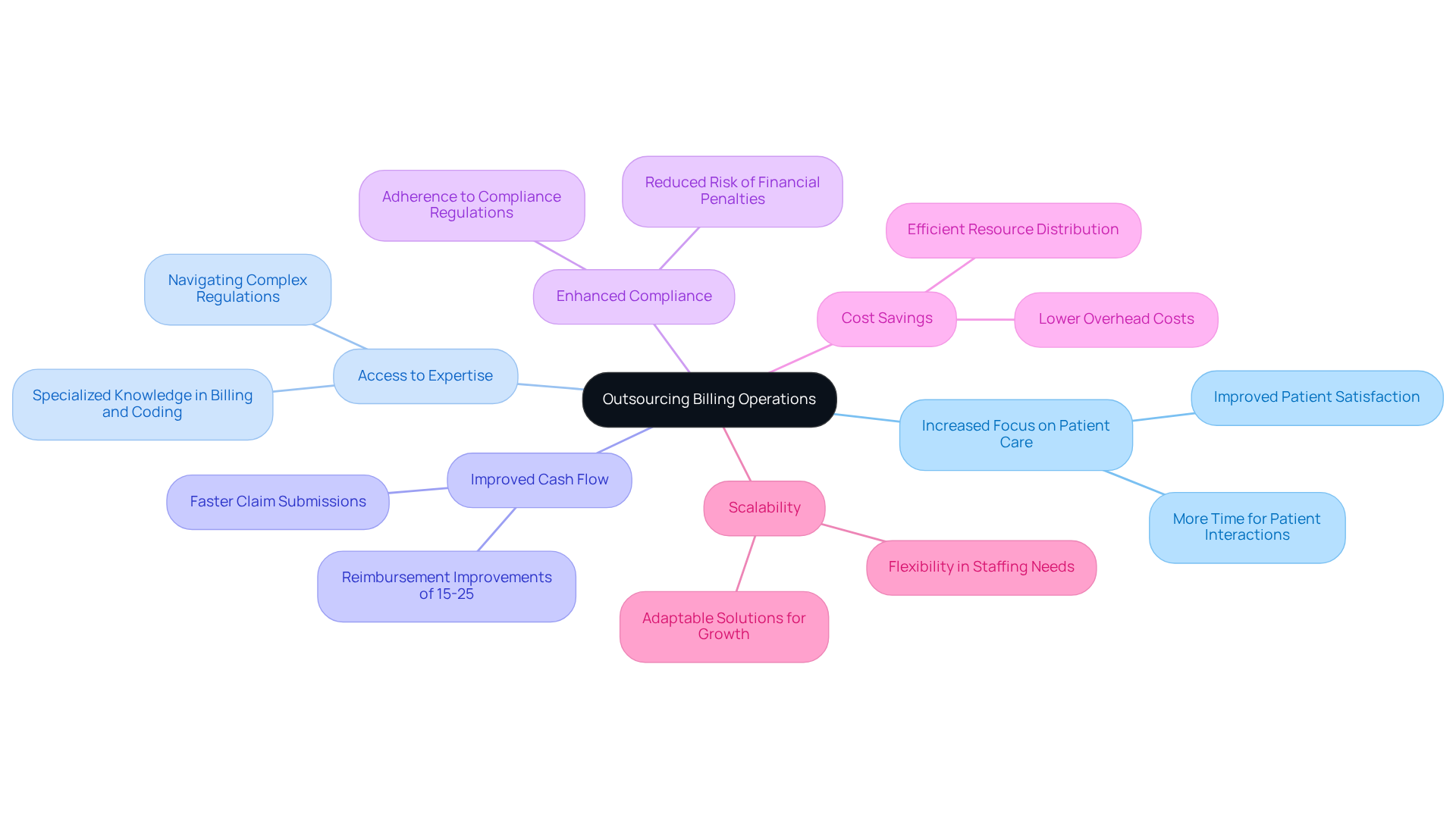
Outsourcing primary care billing services can transform healthcare practices, particularly in the mental health sector. Here are the key benefits of leveraging outsourcing with Healthcare Partners Consulting & Billing, LLC (HPC):
- Increased Focus on Patient Care: By delegating billing tasks to specialized partners like HPC, healthcare providers can devote more time to patient interactions, leading to improved satisfaction and health outcomes.
- Access to Expertise: HPC brings specialized knowledge in billing and coding, ensuring accurate and efficient processing of submissions. Navigating complex healthcare regulations without specialized knowledge can lead to costly errors, particularly in behavioral and mental health practices.
- Improved Cash Flow: Outsourcing can significantly enhance cash flow by facilitating faster claim submissions and reducing payment cycles. Practices can experience reimbursement improvements of 15-25% within 30-90 days, as noted in industry studies, which is vital for maintaining financial health.
- Enhanced Compliance: HPC’s professional billing services are adept at adhering to compliance regulations, thereby reducing the risk of errors and ensuring that practices meet industry standards. Failure to adhere to compliance can result in severe financial penalties.
- Cost Savings: By outsourcing, practices can lower overhead costs associated with maintaining an in-house billing team. This facilitates a more efficient distribution of resources, allowing practices to invest in care for individuals and other essential areas.
- Scalability: As healthcare practices expand, outsourcing with HPC provides scalable solutions that can adapt to evolving needs without the challenges of hiring and training new staff. This flexibility is essential for managing growth efficiently.
Outsourcing billing operations streamlines processes and reduces administrative burdens, enabling healthcare providers to focus on delivering high-quality patient care. Effective management of primary care billing services can significantly reduce reimbursement rejections by 20-30%, enhancing revenue cycle performance. For instance, a case study highlighted that practices utilizing HPC’s end-to-end medical billing services saw a significant decrease in claim denials, demonstrating the tangible benefits of this approach. As a veteran-owned company with 39 years of experience, HPC is uniquely positioned to support mental health practices in achieving their financial and operational goals. With HPC’s expertise, practices can not only enhance their financial health but also ensure sustainable growth in a challenging landscape.
Conclusion
Enhancing financial performance in primary care is crucial for healthcare providers aiming to improve their operations while maintaining a strong focus on patient care. Implementing best practices throughout the revenue cycle – such as accurate registration, insurance verification, effective denial management, and outsourcing – can significantly enhance billing efficiency and reduce administrative burdens. This enables providers to dedicate more time and resources to delivering quality care to their patients.
Key strategies discussed include:
- The importance of accurate clinical documentation
- The establishment of a dedicated denial management team
- The benefits of outsourcing billing operations to specialized partners like Healthcare Partners Consulting & Billing, LLC (HPC)
These practices not only streamline billing processes but also ensure compliance with industry regulations, ultimately leading to improved cash flow and reduced claim denials. Emphasizing staff training and leveraging technology further supports the goal of achieving a more efficient revenue cycle.
Healthcare providers are grappling with rising operational challenges, making the adoption of these best practices essential. By focusing on effective billing strategies, practices can maintain financial health while prioritizing patient care. Engaging with experts like HPC can be the key to navigating the complexities of healthcare billing and ensuring long-term success. For more information, contact HPC at info@hpcbilling.com or call 888-517-4992.
Frequently Asked Questions
What is the primary care revenue cycle?
The primary care revenue cycle includes several essential stages such as registration, insurance verification, service delivery, coding, billing, and collections, all of which are crucial for ensuring healthcare providers get paid accurately and on time for their services.
Why is accurate registration important in the revenue cycle?
Accurate registration is important because it involves collecting precise demographic and insurance information, which helps prevent billing delays that can significantly impact cash flow for healthcare providers.
How does insurance verification affect claim denials?
Confirming eligibility and benefits before service delivery can significantly reduce claim denials, making it essential to implement automated systems to streamline this process and enhance accuracy.
What role does service delivery play in the revenue cycle?
During patient visits, careful recording of all services provided is essential for accurate coding and billing, making service delivery a critical component of the revenue cycle.
Why is proper coding important for reimbursement?
Proper coding is critical for reimbursement because it ensures that all services are accurately coded to reflect the care provided, which is necessary for receiving payment.
What should be done to improve billing processes?
To improve billing processes, claims should be submitted promptly, and there should be regular follow-ups on unpaid claims. A systematic approach to billing can enhance cash flow and reduce outstanding accounts receivable.
How can collections be optimized in the revenue cycle?
Collections can be optimized by establishing clear policies for client payments and actively following up on outstanding balances. Offering flexible payment options can also enhance collection rates.
What is the overall benefit of optimizing the revenue cycle with primary care billing services?
Optimizing the revenue cycle with primary care billing services can enhance financial performance for healthcare providers and allow them to focus more on delivering quality patient care.