
Introduction
As mental health clinics confront the dual pressures of efficiency and quality, the need for robust practice management programs has never been more critical. The landscape of mental health care is evolving rapidly, with increasing demands for efficiency and quality in practice management. As clinics strive to enhance their operational effectiveness, the implementation of comprehensive practice management programs becomes essential. These programs not only streamline administrative tasks but also empower healthcare providers to focus on what truly matters: patient care. Clinics face significant hurdles in navigating the complexities of regulatory compliance while implementing new programs. The successful integration of these programs is not merely beneficial; it is essential for sustaining high standards of patient care in an increasingly regulated landscape.
Define Practice Management Programs and Their Importance in Mental Health Clinics
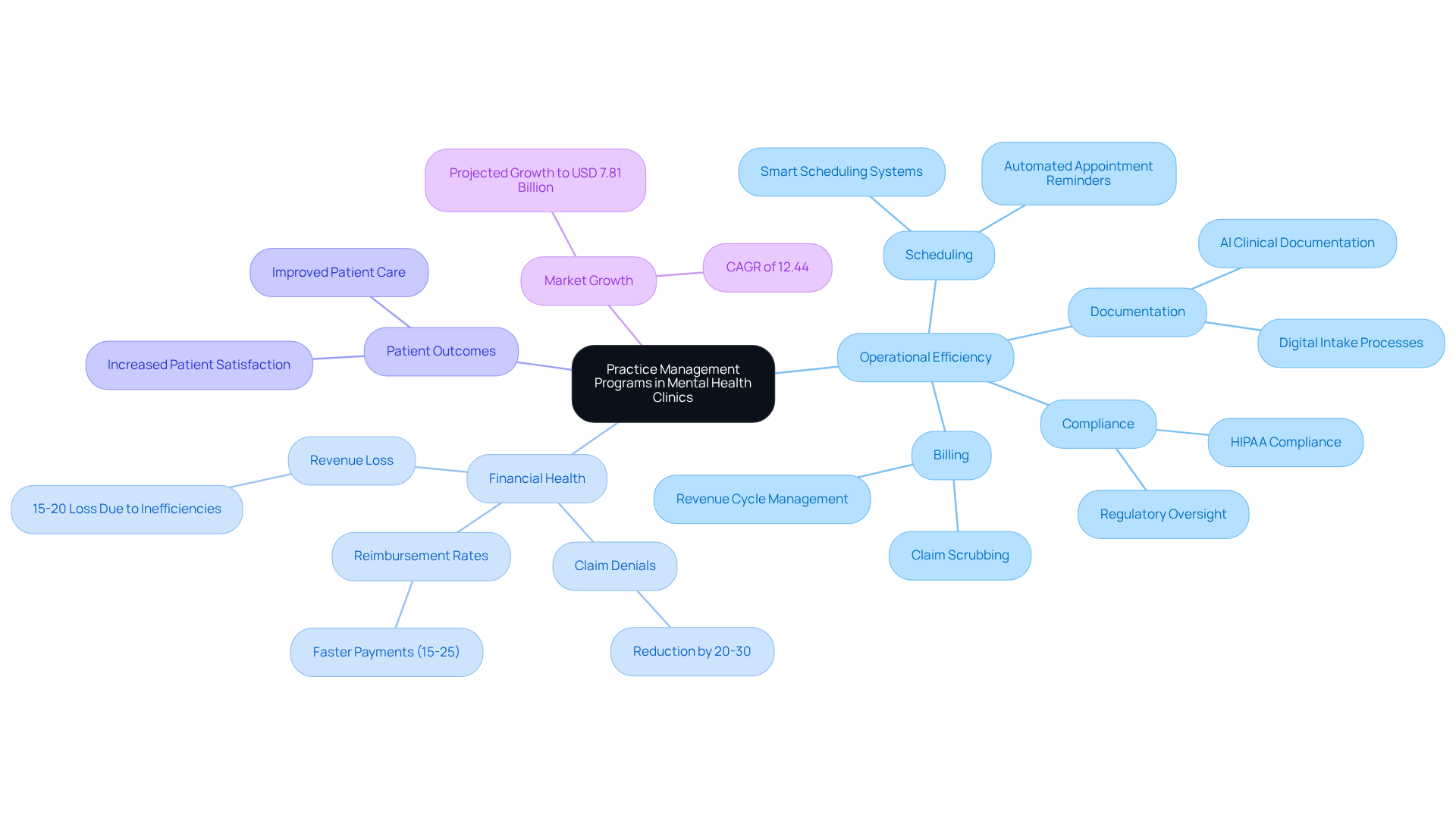
The integration of a practice management program is essential for enhancing operational efficiency in mental health facilities. These programs incorporate a range of administrative and operational strategies that significantly improve effectiveness. Typically, a practice management program integrates scheduling, billing, documentation, and compliance oversight, which are crucial for alleviating the administrative burdens faced by healthcare providers. Implementing a robust practice management program enables clinics to streamline patient flow and enhance communication. This ensures adherence to healthcare regulations and leads to better patient outcomes and satisfaction.
In 2026, the significance of these programs is underscored by the anticipated growth of the mental health software market, projected to increase from USD 2.72 billion to USD 7.81 billion by 2035, expanding at a CAGR of 12.44%. This growth reflects the rising demand for improved administrative efficiency and the necessity for a practice management program that integrates solutions supporting both clinical and operational functions.
Expert opinions indicate that a practice management program can result in a 20-30% decrease in claim denials and quicker reimbursement rates of 15-25% within 30-90 days. These enhancements are vital for maintaining financial health in mental health organizations, where a practice management program can mitigate administrative inefficiencies that lead to significant revenue loss. For example, the average behavioral health organization loses 15-20% of potential revenue due to scheduling gaps, undercoded notes, and denied claims.
Case studies illustrate the transformative impact of management programs. Facilities that implemented a practice management program reported improved organization, allowing therapists to devote more time to patient care rather than administrative tasks. Additionally, approaches utilizing smart scheduling systems have achieved a 30% increase in bookings per provider per month, effectively reducing revenue loss from unfilled slots.
Ultimately, these operational systems are not just about efficiency; they are crucial for mental health organizations aiming to thrive in a competitive landscape while delivering exceptional care.
Identify Key Components of Effective Practice Management Programs
Effective practice management programs are essential for operational success and improved patient care in mental health clinics, especially when leveraging the expertise of Healthcare Partners Consulting & Billing, LLC (HPC).
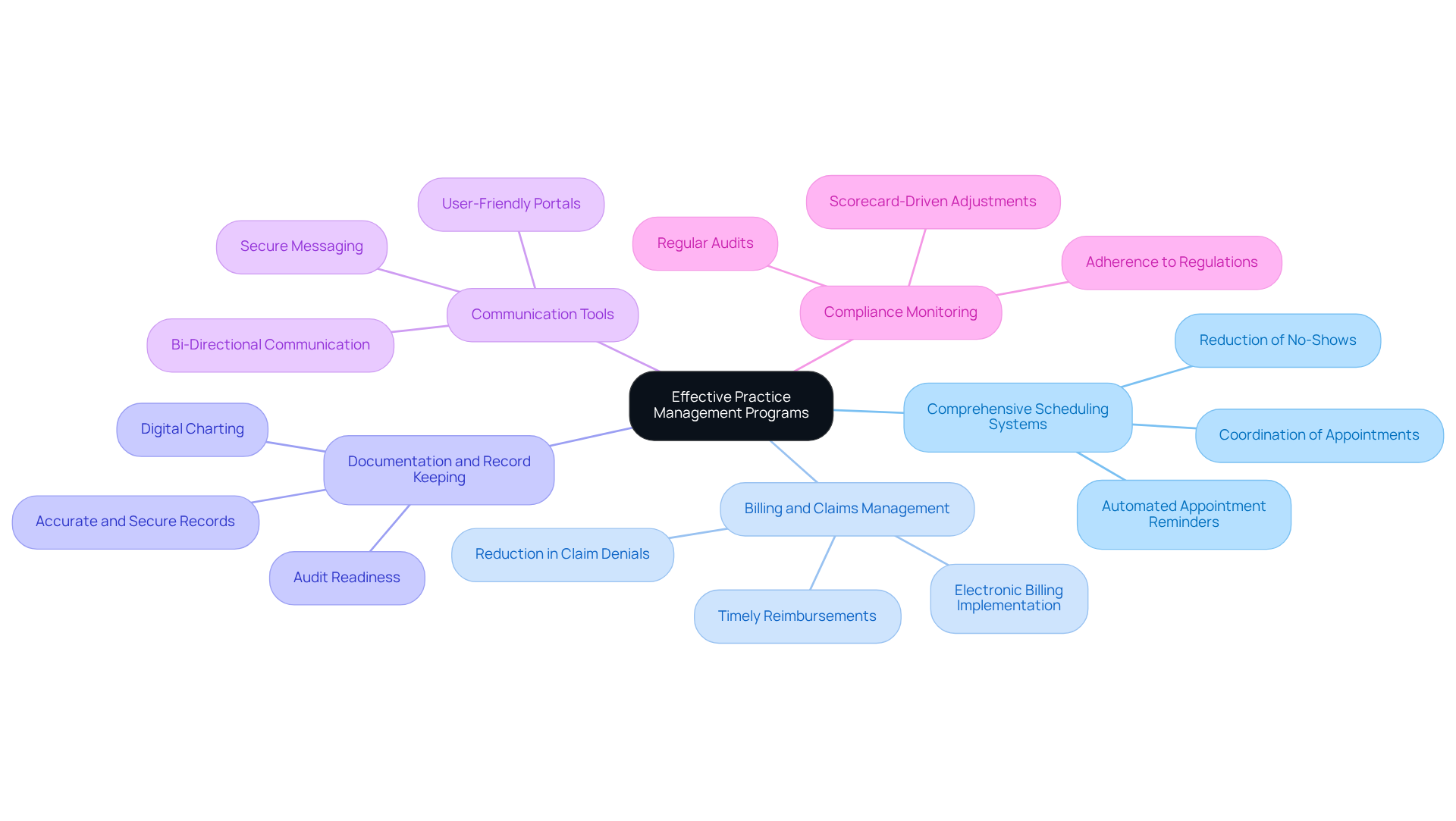
- Comprehensive Scheduling Systems: These systems help coordinate appointments more effectively, which can cut down on no-shows and make better use of clinician time. Automated appointment reminders can further enhance engagement and minimize miscommunication, aligning with HPC’s commitment to empowering healthcare providers.
- Billing and Claims Management: Efficient billing processes are vital for ensuring timely reimbursements and minimizing errors. Implementing electronic billing and claims submission can lead to a reduction in claim denials by 20-30% and faster reimbursements within 15-25% of claims processed in 30-90 days, thereby improving the overall revenue cycle performance. HPC specializes in comprehensive revenue cycle management tailored to behavioral and mental health practices, ensuring compliance and maximizing revenue.
- Documentation and Record Keeping: Maintaining accurate and secure records of individuals is essential for compliance with healthcare regulations and for delivering quality care. Digital charting and electronic forms simplify documentation, promoting confidentiality and ensuring audit readiness, which is a priority for HPC’s clients.
- Communication Tools: Effective communication channels, such as secure messaging and user-friendly portals, enhance engagement and satisfaction. These tools facilitate bi-directional communication, allowing for better collaboration between patients and providers, a service that HPC integrates into their practice management program.
- Compliance Monitoring: Regular audits and compliance checks are necessary to ensure adherence to healthcare regulations, safeguarding the facility against potential legal issues. Utilizing scorecard-driven adjustments tied to claims accuracy, denial rates, and days in accounts receivable can help maintain high operational standards. HPC’s expertise in compliance-first approaches ensures that healthcare facilities are well-prepared for audits and regulatory requirements.
Integrating these components with HPC’s tailored solutions through a practice management program empowers mental health facilities to improve both operational efficiency and the quality of care provided to patients.
Implement Strategies for Successful Integration of Practice Management Programs
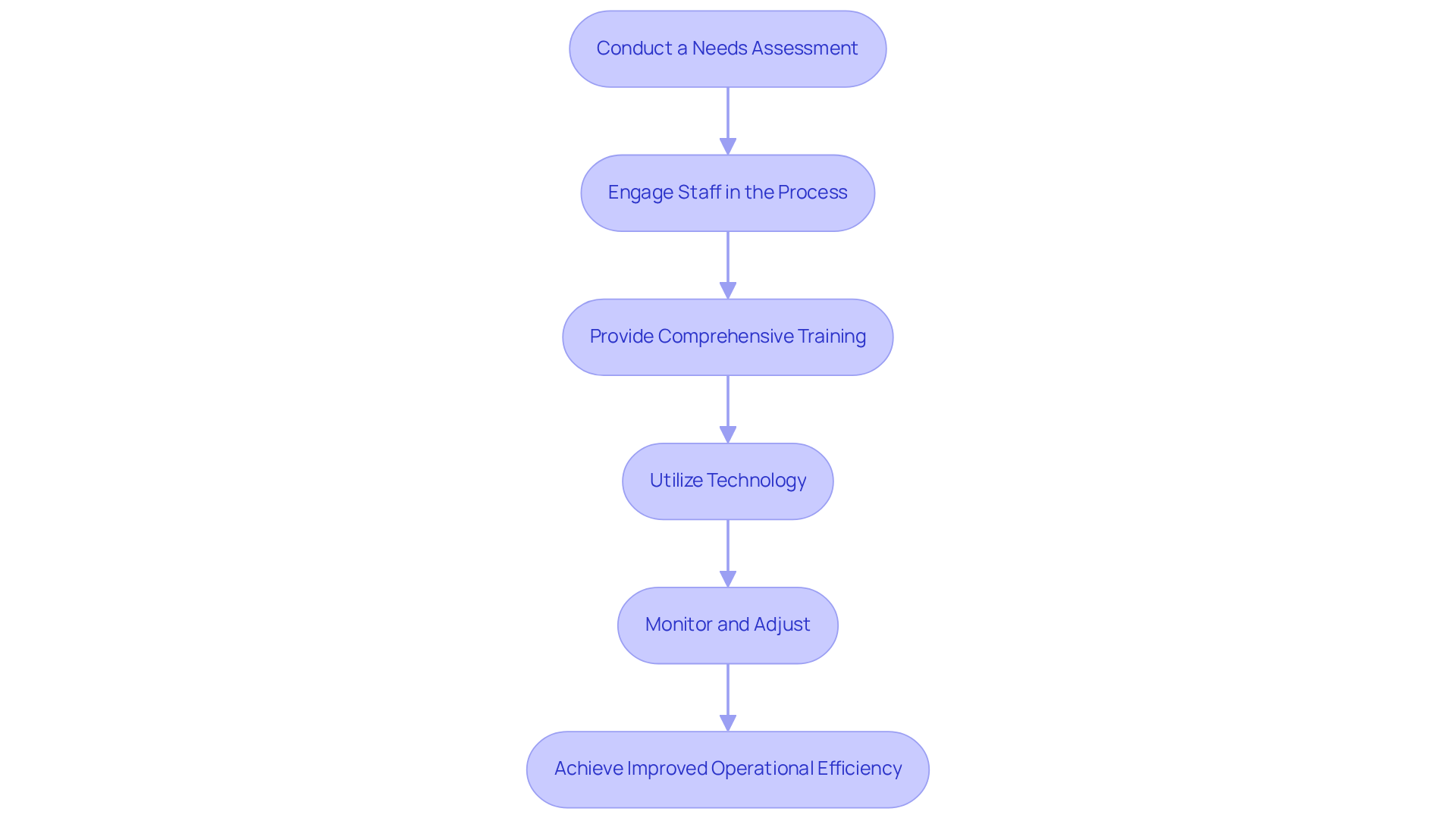
Integrating a practice management program in mental health clinics requires a strategic approach to ensure effectiveness and efficiency. To successfully achieve this, consider the following strategies:
- Conduct a Needs Assessment: Begin by evaluating the specific needs of your clinic. Identifying specific needs is essential to tailor the program effectively, as generic solutions often fail to address unique challenges.
- Engage Staff in the Process: Involve your staff in both the planning and implementation phases. This engagement fosters buy-in and allows you to address any concerns, ultimately leading to a smoother transition.
- Provide Comprehensive Training: Offer thorough training sessions for all staff members. Familiarizing them with new systems and processes is crucial for effective implementation and operational efficiency.
- Utilize Technology: Leverage integrated software that consolidates various functions – such as scheduling, billing, and documentation – into a single platform. Evaluate platforms such as TherapyNotes, SimplePractice, Valant, AdvancedMD, and IntakeQ to ensure compatibility and functionality. Such integration is pivotal for optimizing operations and boosting overall productivity.
- Monitor and Adjust: After implementation, continuously monitor the program’s effectiveness. Use scorecard-driven adjustments tied to claims accuracy, denial rates, and days in accounts receivable to ensure operational rigor. Make necessary adjustments to improve efficiency and outcomes.
By adopting these strategies, clinics can expect not only smoother transitions but also measurable improvements in operational efficiency and revenue cycle performance. For example, organizations that implement these strategies can anticipate a denial reduction of 20-30% and quicker reimbursement within 15-25% of 30-90 days. Furthermore, a case analysis from a local mental health facility showed that involving staff in the integration process resulted in a 25% boost in operational efficiency and a significant enhancement in satisfaction scores. As a veteran-owned organization with 39 years of experience, Healthcare Partners Consulting emphasizes personalized consultation services to assist entities in identifying optimal administrative solutions tailored to their needs. Ultimately, the right strategies can transform operational challenges into opportunities for enhanced performance and patient satisfaction.
Evaluate and Adapt Practice Management Programs for Continuous Improvement
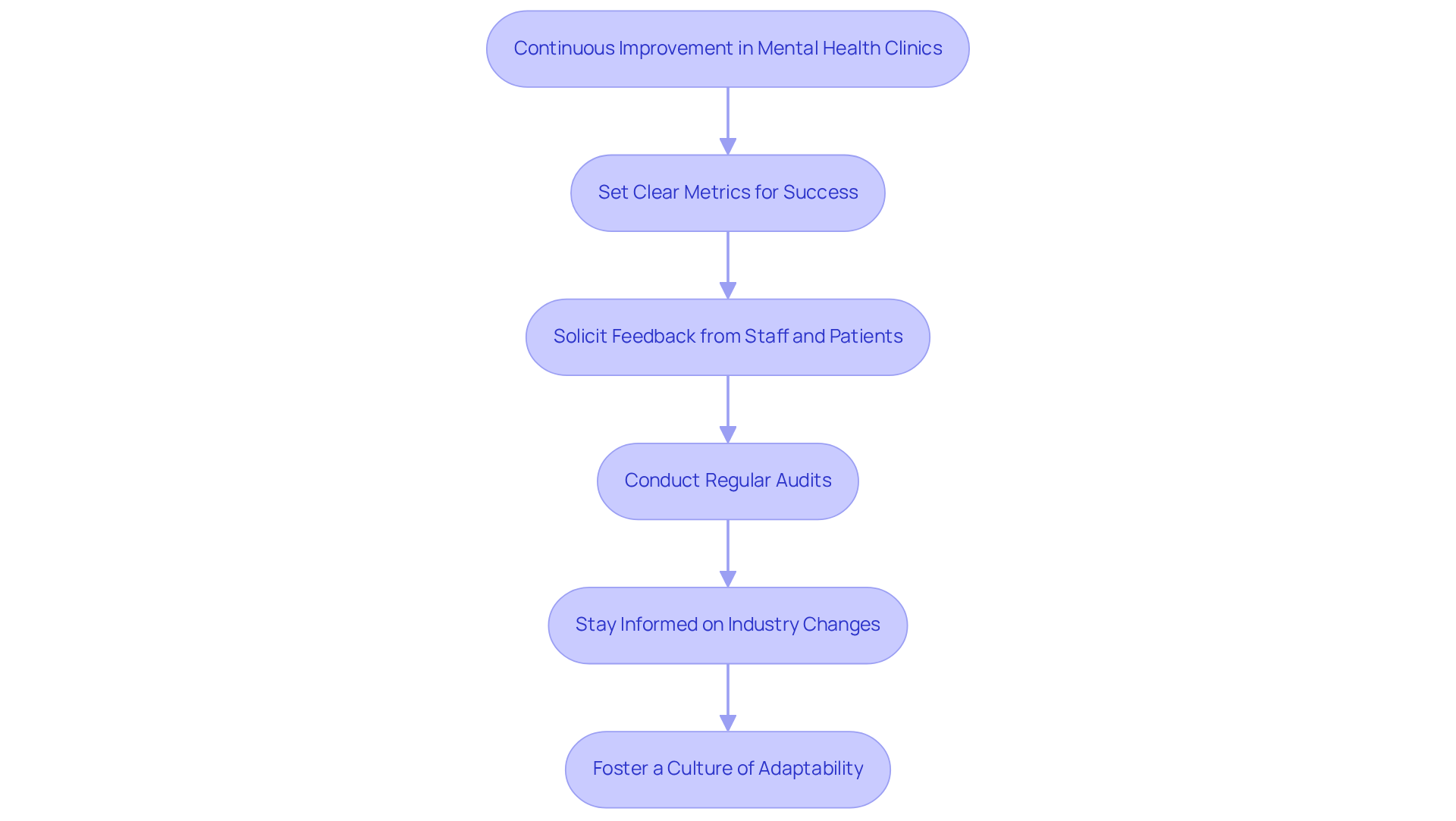
Mental health clinics face increasing pressure to enhance operational efficiency and patient care. Ongoing enhancement of operational programs is crucial for achieving these goals. Clinics should adopt the following best practices:
- Set clear metrics for success by establishing key performance indicators (KPIs) to assess the effectiveness of the practice management program. Metrics such as claims accuracy, denial rates, and days in accounts receivable provide valuable insights into operational performance. For example, implementing scorecard-driven adjustments can reduce denials by 20-30%. Additionally, it can expedite reimbursements by 15-25% within 30-90 days.
- Solicit feedback from staff and patients: Gather input from staff and patients regularly to pinpoint improvement areas. This feedback loop is crucial for understanding service effectiveness and making necessary adjustments.
- Conduct regular audits: Perform audits to assess compliance with healthcare regulations and the efficiency of administrative processes. Regular assessments within the practice management program help recognize inefficiencies and ensure compliance with optimal methods.
- Stay informed on industry changes: Keep updated on modifications in healthcare regulations and optimal methods to ensure the program remains compliant and effective. This proactive approach helps clinics adapt to evolving standards and improve service delivery.
- Foster a culture of adaptability: Encourage staff to embrace change and be open to new ideas that can enhance management practices. A culture that values adaptability can lead to innovative solutions and improved patient outcomes.
Additionally, Healthcare Partners Consulting & Billing, LLC (HPC) offers a quick quiz to assist practices in evaluating their mental health service profitability. By answering a few questions, healthcare facilities can identify hidden revenue leaks and receive tailored recommendations to enhance efficiency and billing precision. This tool, along with HPC’s tailored administrative support services-including scheduling, document oversight, and insurance claims-ensures that healthcare facilities are well-supported in their operational efforts.
Without these strategies, clinics risk stagnation in service quality and operational performance. Case studies have shown that clinics prioritizing these practices not only improve operational efficiency but also enhance patient satisfaction and retention.
Conclusion
Effective practice management is essential for mental health clinics striving to enhance both operational efficiency and patient care. Integrating strategies that reduce administrative burdens allows healthcare providers to concentrate on delivering quality care. The emphasis on tailored solutions, particularly those offered by Healthcare Partners Consulting & Billing, LLC (HPC), empowers clinics to navigate the complexities of practice management while ensuring compliance and maximizing revenue.
Key components of successful practice management programs include:
- Comprehensive scheduling systems
- Efficient billing and claims management
- Meticulous documentation
- Effective communication tools
- Rigorous compliance monitoring
These elements work synergistically to reduce claim denials, expedite reimbursements, and ultimately enhance the financial health of mental health organizations. This strategic approach not only enhances operational efficiency but also positions clinics for sustainable growth.
As the demand for mental health services continues to grow, the importance of robust practice management cannot be overstated. Clinics that prioritize these best practices not only improve operational efficiency but also enhance patient satisfaction and retention. Embracing adaptability and tapping into the expertise of veteran-owned HPC can truly make a difference for mental health facilities, turning challenges into opportunities for growth and excellence in patient care. Engaging with HPC’s tailored solutions could redefine your clinic’s approach to practice management, leading to unprecedented growth and patient care excellence. For further assistance, reach out to HPC at info@hpcbilling.com or call 888-517-4992 to explore how to elevate your practice management program today.
Frequently Asked Questions
What are practice management programs in mental health clinics?
Practice management programs are integrated systems that enhance operational efficiency in mental health facilities by incorporating administrative and operational strategies, including scheduling, billing, documentation, and compliance oversight.
Why are practice management programs important for mental health clinics?
They alleviate administrative burdens, streamline patient flow, enhance communication, ensure adherence to healthcare regulations, and ultimately lead to better patient outcomes and satisfaction.
What is the projected growth of the mental health software market?
The mental health software market is projected to grow from USD 2.72 billion in 2026 to USD 7.81 billion by 2035, with a compound annual growth rate (CAGR) of 12.44%.
How do practice management programs impact claim denials and reimbursement rates?
Implementing a practice management program can lead to a 20-30% decrease in claim denials and quicker reimbursement rates of 15-25% within 30-90 days.
What financial benefits can mental health organizations expect from practice management programs?
These programs can mitigate administrative inefficiencies that lead to significant revenue loss, as the average behavioral health organization loses 15-20% of potential revenue due to scheduling gaps, undercoded notes, and denied claims.
Can you provide an example of the impact of practice management programs?
Facilities that implemented these programs reported improved organization, allowing therapists to spend more time on patient care. Additionally, smart scheduling systems have led to a 30% increase in bookings per provider per month, reducing revenue loss from unfilled slots.
What is the overall significance of practice management programs for mental health organizations?
They are crucial for enhancing operational efficiency, maintaining financial health, and enabling mental health organizations to thrive in a competitive landscape while delivering exceptional care.