
Introduction
Clinics face significant challenges in submitting paper claims for mental health services, which can jeopardize their financial health. Understanding the intricacies of this process streamlines operations and significantly reduces the risk of costly errors. Clinics must navigate the evolving landscape of insurance requirements and submission guidelines to ensure efficient and accurate claims processing. This guide will explore effective strategies for submitting paper claims, addressing common challenges, and implementing follow-up practices to ensure the financial stability of mental health facilities.
Understand the Basics of Paper Claims Submission
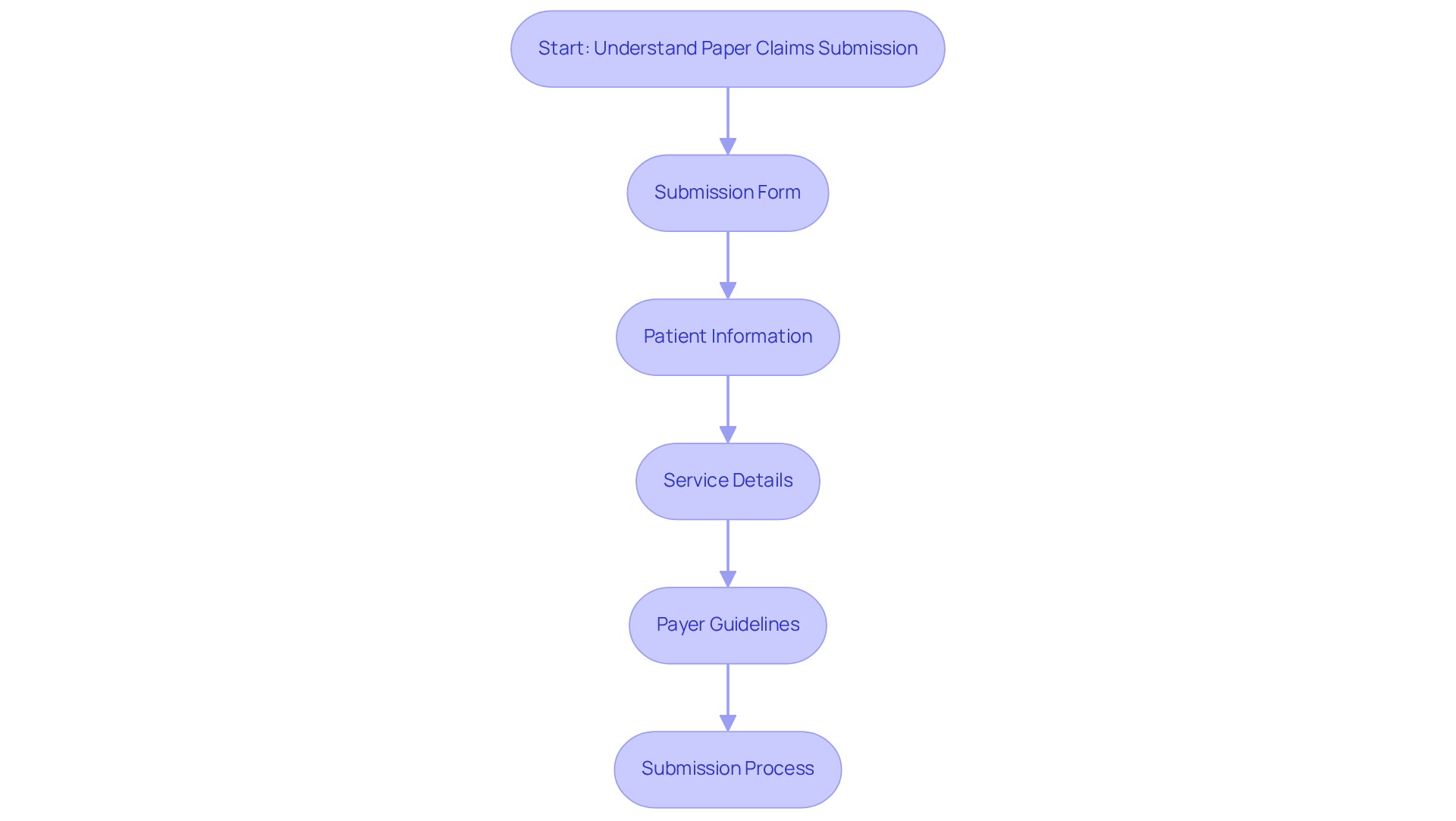
To ensure successful submission of paper claims for mental health services, a clear understanding of key concepts is crucial:
- Submission Form: The CMS-1500 form is the primary document for submitting requests. Ensure you are using the latest version (02/12), as it is the only one accepted by Medicare and many other insurers.
- Patient Information: Accurate collection of patient details is critical. This includes the patient’s full name, date of birth, insurance policy number, and contact details. All information must correspond with what is on record with the insurance provider to prevent denial of requests.
- Service Details: Document the services provided meticulously, including dates of service, procedure codes (CPT/ICD-10), and the provider’s National Provider Identifier (NPI). Accurate coding is vital. Errors in coding can lead to payment delays, creating challenges for mental health facilities.
- Payer Guidelines: Familiarize yourself with the specific requirements of each insurance payer. Each may have distinct submission guidelines, including required attachments and submission formats, which are essential for successful processing of requests.
- Submission Process: Understand the steps involved in submitting a request, including how to package and send the request form. Tracking submissions is also important to ensure they are received by the payer, as timely submission is often required to avoid outright denial.
By mastering these basics, mental health facilities can simplify their submission process. This significantly decreases the chances of mistakes that lead to payment delays. In fact, a significant percentage of mental health clinics use the CMS-1500 form for submission of invoices, highlighting its importance in the billing process. Experts emphasize that in submitting paper claims, the best practice is to ensure precise patient details are essential for successful submissions. Failure to provide these details can disrupt cash flow and lead to denials.
Prepare and Submit Your Paper Claims
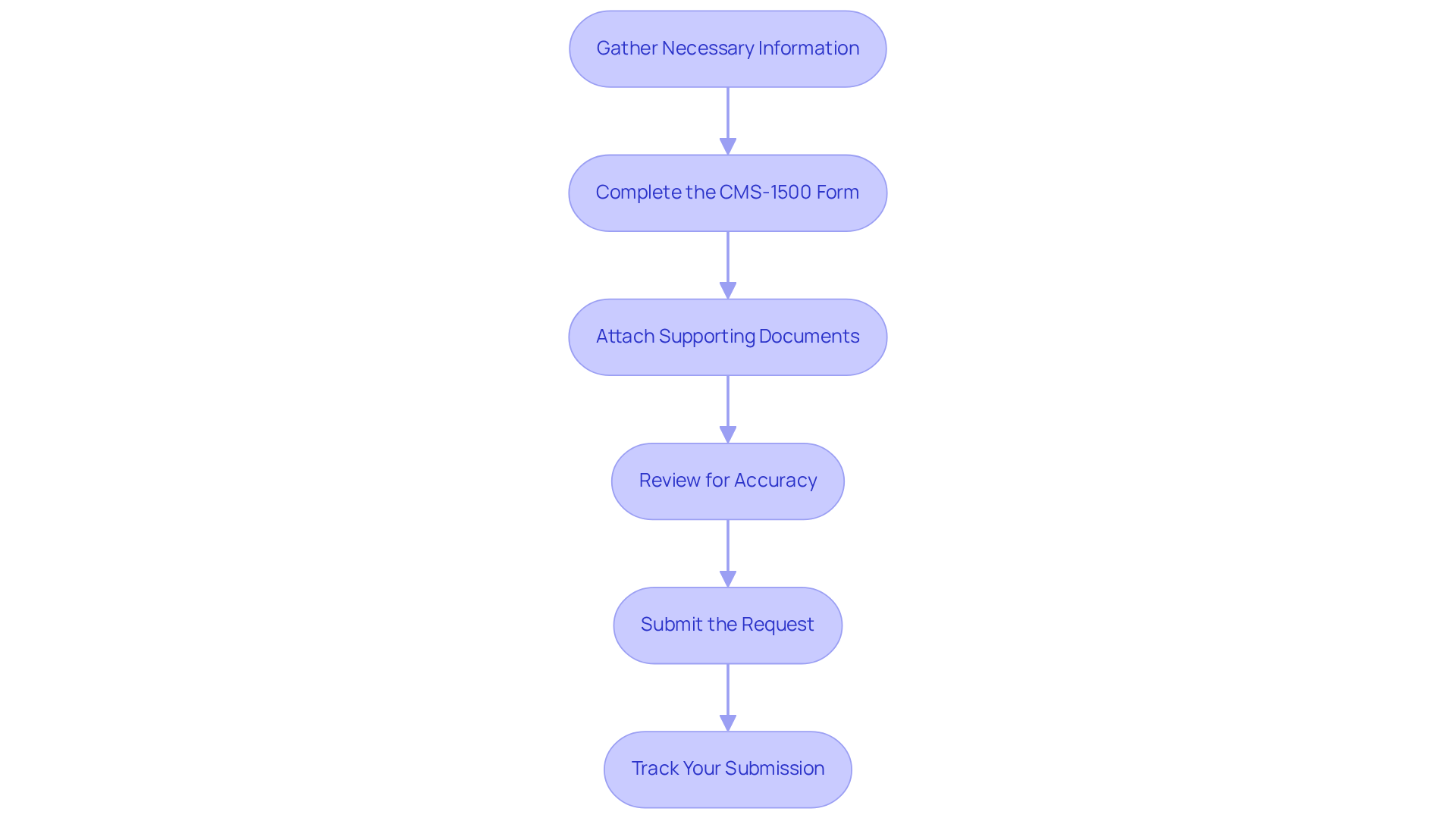
To prepare and submit your paper claims effectively, follow these steps:
-
Gather Necessary Information: Collect all required patient and service information, including:
- Patient demographics (name, date of birth, insurance details)
- Provider information (NPI, tax ID)
- Service details (CPT/ICD-10 codes, dates of service)
-
Complete the CMS-1500 Form: Accurately complete the CMS-1500 form. Focus on the following:
- Ensure all fields are completed, including the patient’s insurance information and the provider’s details.
- Use the correct codes for the services rendered, such as CPT codes 90832 for 30-minute sessions or 90834 for 45- to 55-minute sessions.
- Verify for any absent signatures or dates, as these can result in rejection.
-
Attach Supporting Documents: Include any necessary documentation, such as:
- Referral letters
- Prior authorization letters, as many insurance plans require these to avoid claim denials.
- Progress notes that justify the services provided, ensuring they clearly detail the medical necessity of the treatment.
-
Review for Accuracy: Before submission, review the entire claim for accuracy. Common errors to check for include:
- Incorrect patient information, which can trigger immediate rejections.
- Missing or incorrect codes, particularly diagnosis pointers that must align with the billed services.
- Incomplete forms, as unsigned or improperly filled forms often fail payer documentation standards.
-
Submit the Request: Mail the completed request form and attachments to the appropriate insurance address. Use a secure method, such as certified mail, to ensure it is received.
-
Track Your Submission: Maintain a record of the submission date along with any tracking details. This will assist you in following up if needed, particularly as requests must be submitted within 90 days of the service date to prevent rejection.
In submitting paper claims, the best practice is to follow these steps to enhance mental health clinics‘ chances of timely and accurate reimbursements. Neglecting these steps could jeopardize timely reimbursements, ultimately affecting the clinic’s operational viability.
Troubleshoot Common Issues in Claims Submission
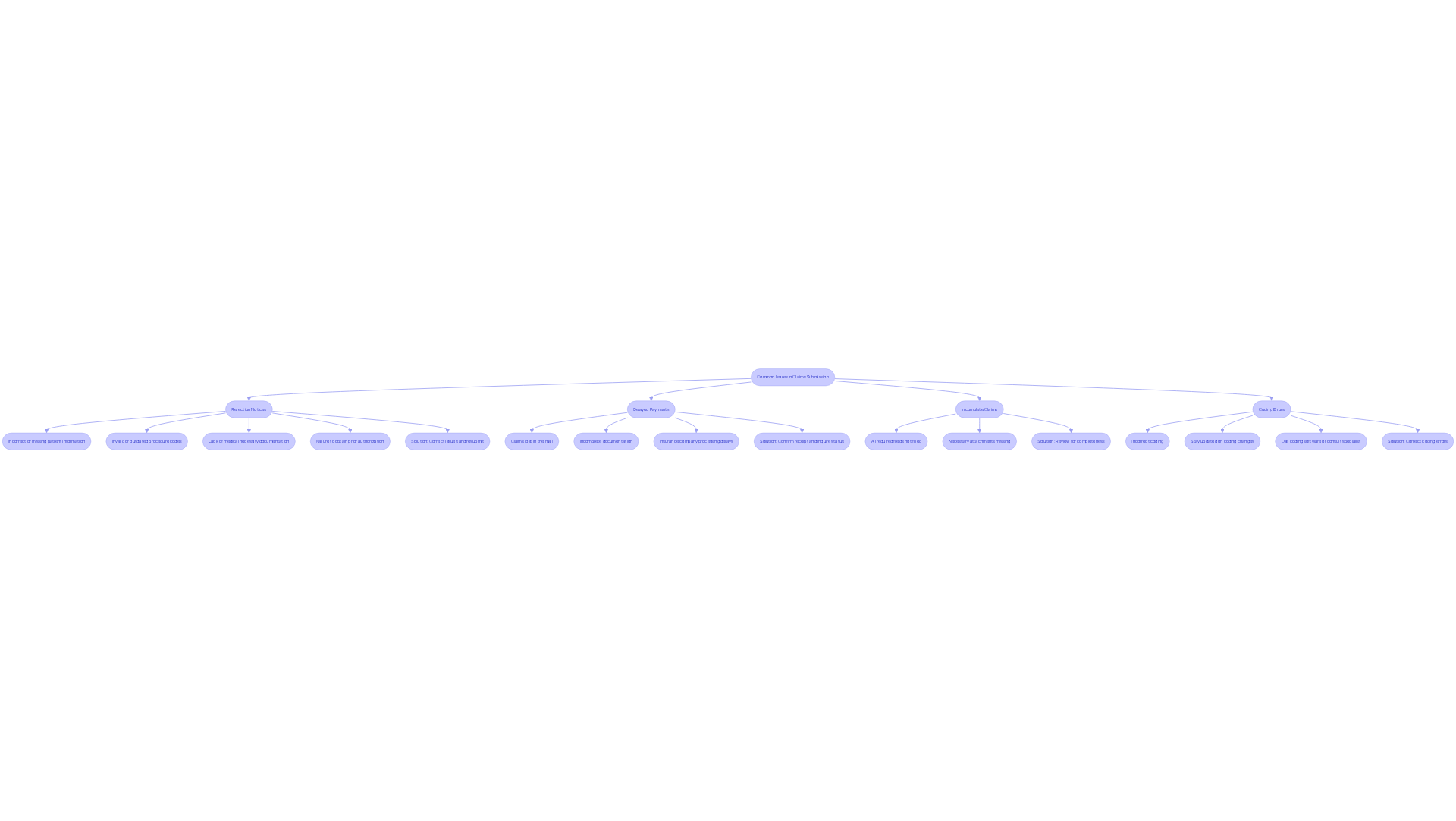
In submitting paper claims, the best practice is to address the various challenges that mental health clinics often encounter, as these can hinder their billing efficiency. Here’s how to troubleshoot them:
-
Rejection Notices: Upon rejection of a request, thoroughly examine the notice. Common reasons include:
- Incorrect or missing patient information
- Invalid or outdated procedure codes
- Lack of medical necessity documentation
- Failure to obtain prior authorization
Solution: Correct the identified issues and promptly resubmit the claim. Significantly, medical necessity denials are the largest source of revenue loss for behavioral health practices. This highlights the critical need for accurate documentation to avoid financial losses, as 50-65% of rejected submissions never get resubmitted; therefore, in submitting paper claims, the best practice is to ensure thorough documentation.
-
Delayed Payments: In the event of postponed payments, verify the request status with the insurance company. Delays can occur due to:
- Claims being lost in the mail
- Incomplete documentation
- Insurance company processing delays
Solution: Contact the payer to confirm receipt of the claim and inquire about the status. In submitting paper claims, the best practice is to ensure consistent communication with insurance providers, which can greatly lessen rejected requests and enhance the billing procedure. Such delays can jeopardize cash flow, affecting the clinic’s operational stability.
-
Incomplete Claims: Claims may be returned for being incomplete. Ensure that:
- All required fields on the CMS-1500 form are filled out
- Necessary attachments are included
Solution: Review the claim for completeness before resubmission. In submitting paper claims, the best practice is to have a denial-resistant billing workflow that is consistent and includes thorough checks for all required documentation.
-
Coding Errors: Incorrect coding can lead to denials or payment reductions. To avoid this:
- Stay updated on coding changes and payer-specific guidelines
- Use coding software or consult with a coding specialist if needed
Solution: Correct any coding errors and ensure accurate documentation before resubmitting. Behavioral health billing requires specialized knowledge of codes and authorization structures, making it essential to maintain staff training on these aspects.
Addressing these issues effectively can safeguard the financial health of mental health practices.
Follow Up on Your Submitted Claims
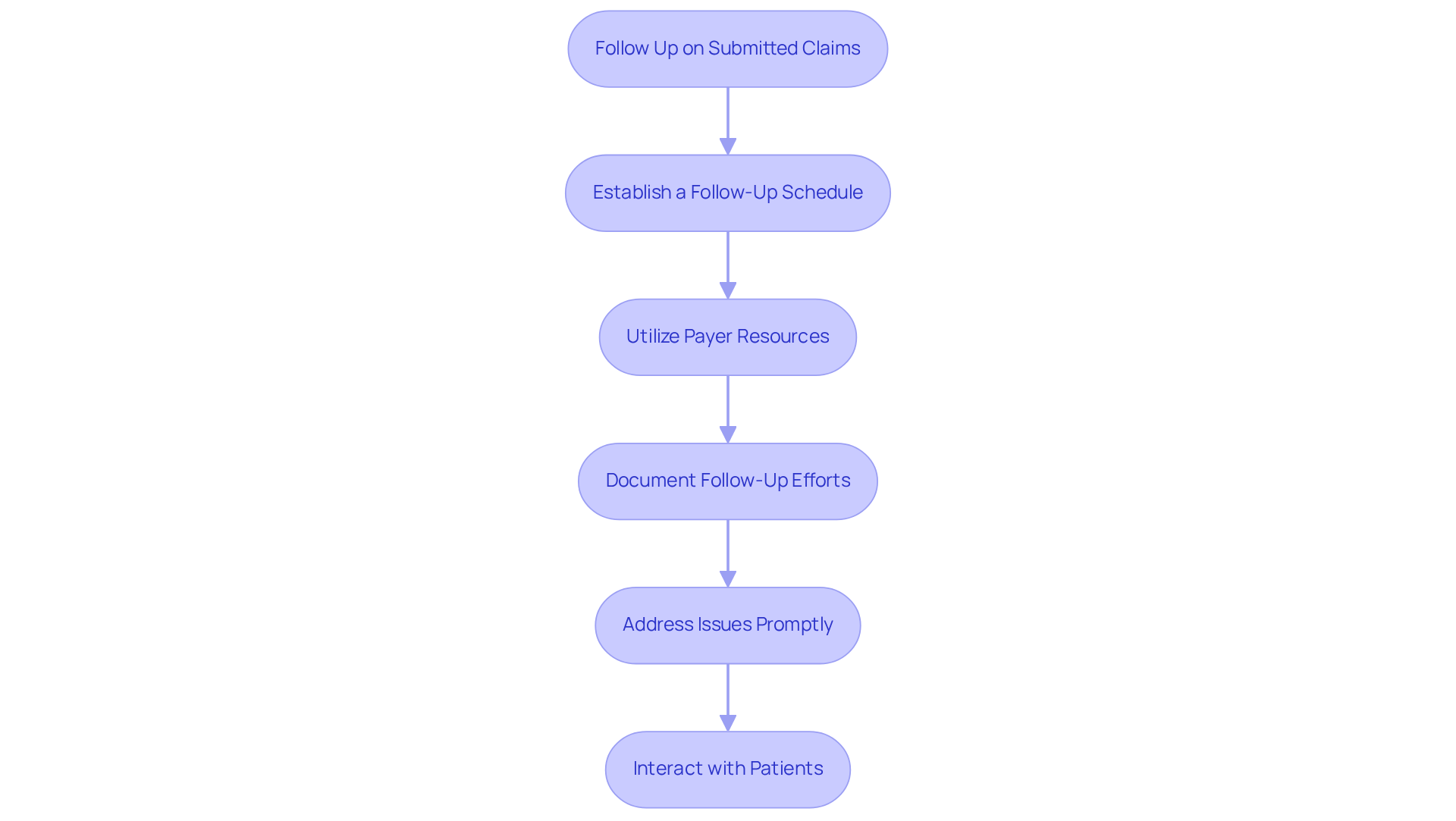
Timely processing and payment of submitted claims are critical for the financial health of mental health clinics. To ensure this, follow these best practices:
-
Establish a Follow-Up Schedule: Create a timeline for following up on requests. Typically, follow up:
- 14 days after submitting electronic claims
- 30 days after submitting paper claims
-
Utilize Payer Resources: Leverage the insurance company’s online portal or customer service for checking status updates. Have the following information ready:
- Patient’s name
- Claim number
- Dates of service
-
Document Follow-Up Efforts: Maintain a log of all follow-up communications, including:
- Dates of calls or inquiries
- Names of representatives spoken to
- Any information received regarding claim status
-
Address Issues Promptly: If a request is denied or pending due to missing information, resolve the issue without delay. Common reasons for denials include administrative errors (25%) and lack of prior authorization (9%). Gather the necessary documentation and resubmit as needed.
-
Interact with Patients: Keep patients updated about their status, especially if there are delays or problems. Keeping patients informed builds their trust and satisfaction.
Establishing a systematic follow-up procedure enhances management efficiency. This approach ensures prompt reimbursements for mental health clinics. In submitting paper claims, the best practice is to provide consistent training on coding guidelines and submission procedures to further decrease mistakes and enhance overall efficiency, resulting in improved financial well-being for the practice. Healthcare billing experts emphasize that efficient use of payer resources simplifies the reimbursement process. In 2024, denial rates for in-network submissions averaged 19%. Additionally, Healthcare Partners Consulting offers personalized consultations to help identify optimal administrative solutions, ensuring that your practice can achieve clean claims, fast follow-up, and clear reporting for enhanced operational efficiency.
Conclusion
Navigating the complexities of submitting paper claims for mental health services is crucial for ensuring timely reimbursements and safeguarding the financial health of clinics. By understanding the intricacies of the CMS-1500 form, accurately documenting patient and service details, and adhering to payer guidelines, mental health facilities can significantly reduce the risk of claim denials and payment delays.
This guide details the critical steps for successful claims submission, including:
- Gathering necessary information
- Completing forms meticulously
- Attaching required documentation
- Following up diligently
These practices are essential for streamlining the claims process and enhancing operational efficiency in mental health clinics. Furthermore, addressing common issues such as coding errors, incomplete claims, and rejection notices can safeguard against financial losses and ensure a smooth billing experience.
The importance of effective paper claims submission is paramount. Implementing these best practices enables mental health clinics to improve cash flow and enhance patient trust. A proactive approach to claims management, with regular follow-ups and thorough documentation, leads to better outcomes and sustainability. Adopting these strategies is essential for achieving operational excellence in the mental health sector.
Frequently Asked Questions
What is the primary document used for submitting paper claims for mental health services?
The primary document for submitting paper claims is the CMS-1500 form. It is important to use the latest version (02/12) as it is the only version accepted by Medicare and many other insurers.
What patient information is necessary for successful claim submission?
Necessary patient information includes the patient’s full name, date of birth, insurance policy number, and contact details. All information must match what is on record with the insurance provider to prevent claim denials.
What details about the services provided must be documented in the claims?
It is essential to document the dates of service, procedure codes (CPT/ICD-10), and the provider’s National Provider Identifier (NPI). Accurate coding is crucial to avoid payment delays.
Why is it important to understand payer guidelines?
Understanding payer guidelines is important because each insurance payer may have distinct submission requirements, including necessary attachments and submission formats, which are critical for successful processing of claims.
What steps should be followed in the submission process of claims?
The submission process involves understanding how to package and send the request form, as well as tracking submissions to ensure they are received by the payer. Timely submission is often required to avoid denial.
How can mastering the basics of paper claims submission benefit mental health facilities?
Mastering the basics can simplify the submission process and significantly decrease the chances of mistakes that lead to payment delays, thereby improving cash flow for mental health facilities.
What is the significance of the CMS-1500 form in the billing process for mental health clinics?
A significant percentage of mental health clinics use the CMS-1500 form for submitting invoices, highlighting its importance in the billing process. Accurate patient details are essential for successful submissions to avoid disruptions in cash flow and potential denials.