

Introduction
The complexities of ABA therapy billing often lead to significant administrative challenges for healthcare providers. By implementing best practices tailored to the unique requirements of ABA services, clinics can enhance their billing processes, ensuring compliance while maximizing reimbursement. To address these complexities, providers must implement strategies to streamline their billing workflows and reduce administrative burdens. This article delves into essential strategies that empower mental health clinics to optimize their ABA therapy billing services, enabling a greater focus on delivering high-quality patient care.
Understand the Unique Requirements of ABA Therapy Billing
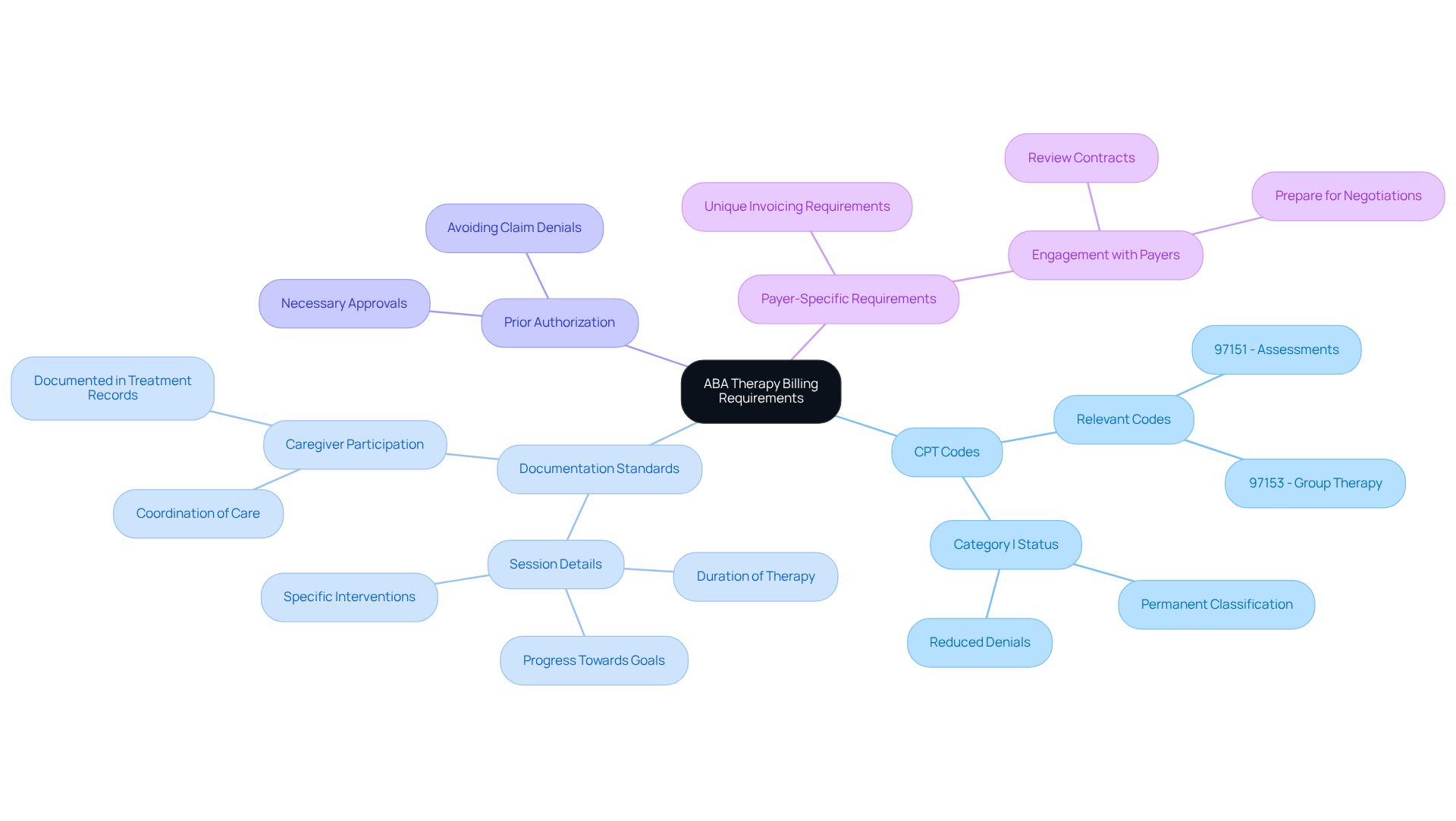
Navigating the complexities of ABA therapy billing services requires a thorough understanding of coding and documentation standards to ensure compliance and maximize reimbursement. Key aspects include:
- CPT Codes: Familiarize yourself with the relevant Current Procedural Terminology (CPT) codes for ABA services, such as 97151 for assessments and 97153 for group therapy. Precise coding is essential to ensure that submissions are processed accurately.
- Documentation Standards: Each session must be documented meticulously, including details such as the duration of therapy, the specific interventions used, and the progress made towards treatment goals. This documentation supports the medical necessity of the services provided.
- Prior Authorization: Many payers require prior authorization for ABA services. Ensure that all necessary approvals are obtained before services are rendered to avoid claim denials.
- Payer-Specific Requirements: Different insurance companies may have unique invoicing requirements. Stay updated on each payer’s policies to ensure compliance and avoid delays in reimbursement.
With 39 years of experience in medical and mental health financial processes, our veteran-owned firm, Healthcare Partners Consulting, is dedicated to optimizing ABA therapy billing services for healthcare providers. We prioritize transparency and customize our service teams, allowing healthcare providers to focus on patient care while we handle the complexities of financial processes. We also offer seamless integrations with EHR and practice management platforms like TherapyNotes and SimplePractice, enhancing practice efficiency and ensuring compliance with payer requirements. As the ABA Coding Coalition continues to advocate for the community, we encourage providers to engage with payers to review contracts and prepare for potential negotiations regarding new payment increments. By proactively engaging with payers and understanding their requirements, providers can safeguard their financial health and enhance service delivery.
Ensure Compliance with Documentation Standards and Regulations
Failure to adhere to compliance in ABA therapy billing services can lead to significant financial repercussions, making it imperative to implement robust practices. Key compliance practices include:
- Accurate Documentation: Maintain comprehensive records for each therapy session, detailing the date, duration, interventions used, and patient progress. It’s crucial that this documentation clearly shows medical necessity and meets payer requirements to reduce the chances of denials.
- Regular Audits: Conduct internal reviews of documentation and payment practices to identify areas for improvement and ensure adherence to compliance standards. This proactive approach can significantly mitigate risks associated with audits from payers, as evidenced by findings from recent audits indicating a 100% error rate in some states’ Medicaid ABA payments.
- Training Staff: Regularly educate staff on compliance requirements and updates in payment regulations. Ensuring that everyone involved in the invoicing process is knowledgeable and capable of maintaining compliance is crucial, especially as enforcement is expected to become more stringent in 2026.
- Utilize Checklists: Implement checklists for documentation and billing processes to ensure that all necessary information is captured before submissions. This approach can help lower denial rates by 20% to 30% when consistently applied.
- Real-Time Documentation: Highlight the significance of completing real-time documentation to avoid delays in processing. Providers that strengthen their documentation practices are better positioned to navigate the complexities of compliance and payer rules, ultimately enhancing operational efficiency and reducing payment disruptions.
- Optimizing Claims Management: Address underpayments, unprocessed claims, and aging claims effectively to enhance revenue recovery. Implementing a robust denial management strategy is vital for appealing the right denials promptly, ensuring that the revenue you’ve earned is recovered efficiently. Healthcare Partners Consulting & Billing, LLC (HPC) provides data-driven guidance to assist organizations in growing sustainably while navigating these challenges.
- Enhanced Compliance Solutions: Leverage comprehensive revenue cycle management tailored specifically for behavioral and mental health settings. By concentrating on compliance-first strategies, Healthcare Partners Consulting & Billing, LLC (HPC) offers aba therapy billing services that enable clinic owners to optimize their revenue processes and enhance overall practice efficiency. Without a commitment to compliance, organizations risk not only financial losses but also their reputation in the healthcare industry.

Implement Efficient Billing Workflows and Denial Management Strategies
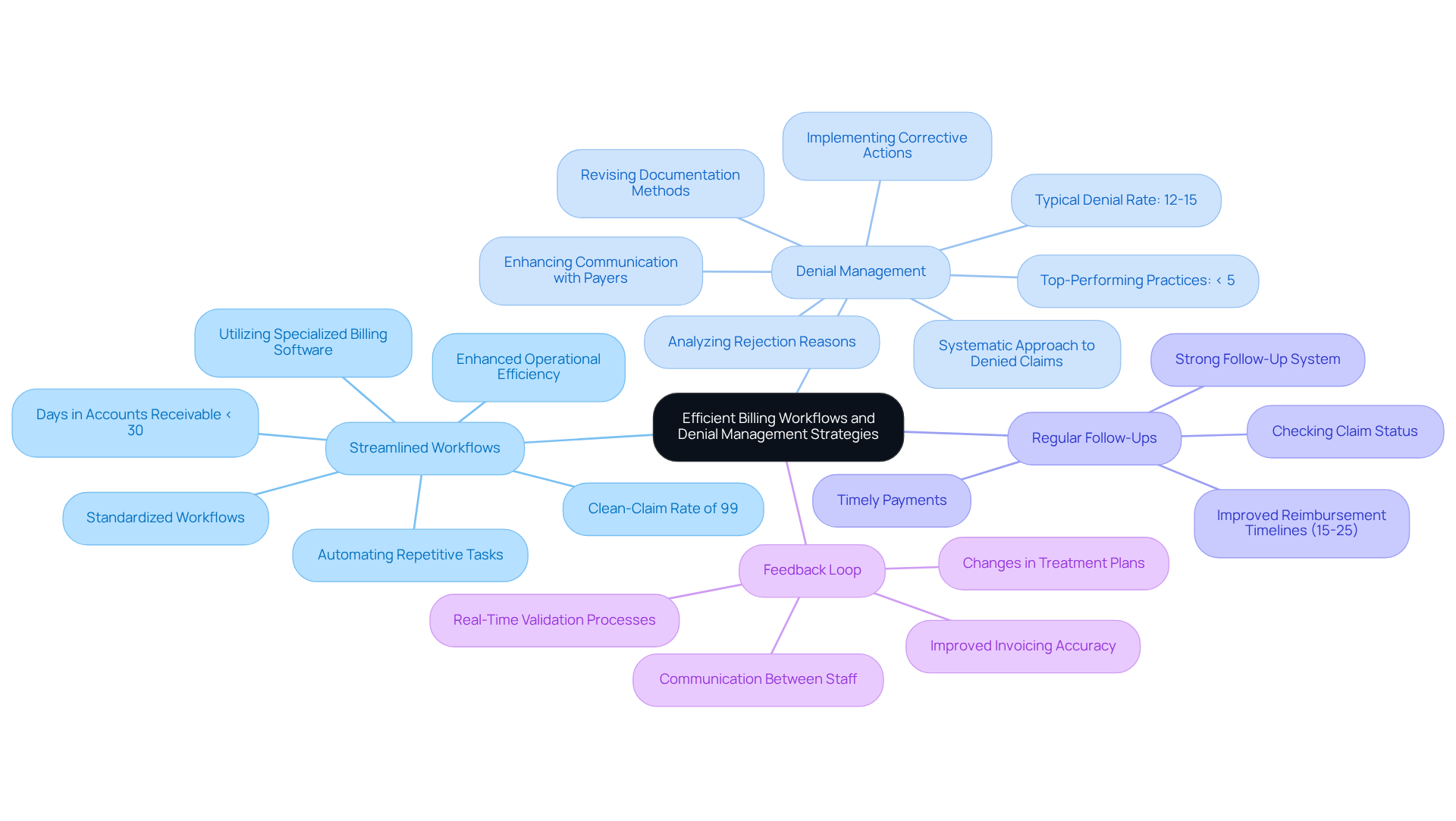
Many clinics struggle with high denial rates, which can significantly impact their revenue. To optimize billing processes and reduce claim denials, mental health clinics should implement the following strategies:
- Streamlined Workflows: Establish standardized workflows for billing processes, encompassing patient intake through to claim submission. Automating repetitive tasks and utilizing specialized billing software can significantly enhance operational efficiency. Practices using BillAI report a clean-claim rate of 99%. Additionally, they experience days in accounts receivable (AR) of less than 30 days. This underscores the benefits of streamlined workflows. Furthermore, Healthcare Partners Consulting offers customized administrative support services to help maintain these workflows, ensuring your office runs smoothly.
- Denial Management: Develop a systematic approach to managing denied claims. Analyzing rejection reasons helps identify patterns, allowing clinics to implement corrective actions that prevent future occurrences. This may involve revising documentation methods or enhancing communication with payers. The typical behavioral health practice faces a 12-15% denial rate for submissions, while top-performing practices maintain theirs below 5%, setting a standard for enhancement. HPC’s expertise in aba therapy billing services can effectively assist in addressing these issues.
- Regular Follow-Ups: Establish a strong follow-up system for outstanding requests. Regularly checking the status of claims with payers ensures timely payments and addresses any issues that may arise, reducing the average days in accounts receivable. Implementing these follow-ups can lead to improved reimbursement timelines by 15% to 25% within 30 to 90 days. With HPC’s dedicated invoicing team, including a manager for invoicing and an accounts receivable manager, clinics can ensure that follow-ups are handled efficiently.
- Feedback Loop: Establish a feedback loop between clinical staff and financial personnel. Effective communication about changes in treatment plans or patient progress is essential for precise invoicing, ensuring that all necessary information is captured and submitted accurately. For instance, integrating real-time validation processes can significantly reduce rejections by catching errors early in the workflow. HPC highlights the significance of this communication to improve invoicing accuracy and overall practice efficiency.
By adopting these strategies, clinics can transform their billing processes and enhance their financial outcomes.
Leverage Technology and Specialized Services for Streamlined Billing
Integrating technology into ABA therapy billing services presents a critical opportunity for enhancing operational efficiency and accuracy. Consider the following best practices, supported by the expertise of Healthcare Partners Consulting, a veteran-owned company with 39 years of experience in medical and mental health billing:
- Billing Software: Invest in specialized billing software tailored for ABA therapy. These tools automate coding, monitor requests, and generate reports, effectively reducing the administrative burden on staff. Clinics using this software have seen claim denial rates drop by 20-30% and reimbursement cycles speed up by 15-25% within 30 to 90 days. Healthcare Partners Consulting provides dedicated teams that specialize in ABA therapy billing services to ensure compliance and maximize reimbursements.
- EHR Integration: Utilize electronic health records (EHR) that seamlessly connect with payment systems. This integration streamlines data entry and ensures that documentation aligns with payment requirements, thereby minimizing errors and enhancing compliance with payer-specific rules. Our services include compatibility with platforms like TherapyNotes and SimplePractice.
- Telehealth Solutions: Implement telehealth platforms that facilitate remote therapy sessions while incorporating payment functionalities. This approach enables seamless processing of services provided via telehealth, expanding access to care and enhancing service delivery.
- Outsourcing Invoicing Services: Partner with specialized companies that focus on ABA therapy billing services, like Healthcare Partners Consulting. Our specialists utilize ABA therapy billing services to navigate intricate reimbursement requirements, maximizing returns while reducing the administrative burden for your organization. Case studies show that practices outsourcing their financial processes can achieve significant enhancements in clean submission rates and quicker payment cycles, improving overall revenue stability.
- Real-Time Analytics: Utilize real-time analytics tools to monitor performance related to invoicing. These tools provide insights into claim status, denial trends, and accounts receivable aging, enabling proactive management of revenue cycles and operational adjustments based on performance metrics.
Implementing these strategies can significantly reduce the administrative burdens clinics face, allowing them to focus on what truly matters: patient care. Recognizing and addressing common billing pitfalls can safeguard your clinic’s financial health and ensure sustainable growth.

Conclusion
The complexities of ABA therapy billing present significant challenges for mental health clinics, impacting both compliance and reimbursement. By understanding the unique requirements of ABA therapy billing, healthcare providers can streamline their processes and focus more on patient care rather than administrative burdens. Prioritizing compliance-first strategies safeguards financial health and improves service delivery quality.
Key insights from this article highlight the importance of:
- Accurate documentation
- Regular audits
- Efficient billing workflows
By implementing strong denial management strategies and utilizing technology, clinics can effectively reduce claim denials and speed up reimbursement timelines. The integration of specialized billing software and EHR systems further supports compliance and operational efficiency, allowing clinics to thrive in a challenging regulatory environment.
Ultimately, prioritizing effective ABA therapy billing practices is crucial for the sustainability of mental health clinics. By adopting these best practices, providers can empower themselves to navigate the complexities of billing with confidence, ensuring that they can dedicate their efforts to what truly matters: delivering exceptional care to their patients. Engaging with expert services like Healthcare Partners Consulting & Billing, LLC (HPC) can provide the necessary support to optimize billing processes and enhance practice efficiency, paving the way for a healthier future in mental health care.
Frequently Asked Questions
What are the key aspects of ABA therapy billing services?
Key aspects include understanding CPT codes, adhering to documentation standards, obtaining prior authorization, and being aware of payer-specific requirements.
What are some relevant CPT codes for ABA services?
Relevant CPT codes include 97151 for assessments and 97153 for group therapy.
Why is documentation important in ABA therapy billing?
Documentation is crucial as it must detail the duration of therapy, specific interventions used, and progress towards treatment goals, supporting the medical necessity of the services provided.
What is the role of prior authorization in ABA therapy billing?
Many payers require prior authorization for ABA services, and obtaining these approvals before services are rendered is essential to avoid claim denials.
How do payer-specific requirements affect ABA therapy billing?
Different insurance companies have unique invoicing requirements, so staying updated on each payer’s policies is necessary to ensure compliance and avoid reimbursement delays.
What services does Healthcare Partners Consulting offer for ABA therapy billing?
Healthcare Partners Consulting offers optimization of ABA therapy billing services, prioritizes transparency, customizes service teams, and provides seamless integrations with EHR and practice management platforms.
How can providers engage with payers regarding ABA therapy billing?
Providers are encouraged to engage with payers to review contracts and prepare for potential negotiations regarding new payment increments, which can help safeguard their financial health.