

Introduction
Navigating the complexities of medical billing presents significant challenges for healthcare providers, particularly when distinguishing between emergency physician billing and traditional methods. Each approach offers unique challenges and opportunities that can significantly impact a practice’s financial health and operational efficiency. Providers must consider how to choose the right billing method to optimize revenue while ensuring compliance and quality care.
We will explore the key differences between these two billing systems, offering insights that empower healthcare practitioners to make informed decisions tailored to their specific needs.
Define Emergency Physician Billing and Traditional Medical Billing
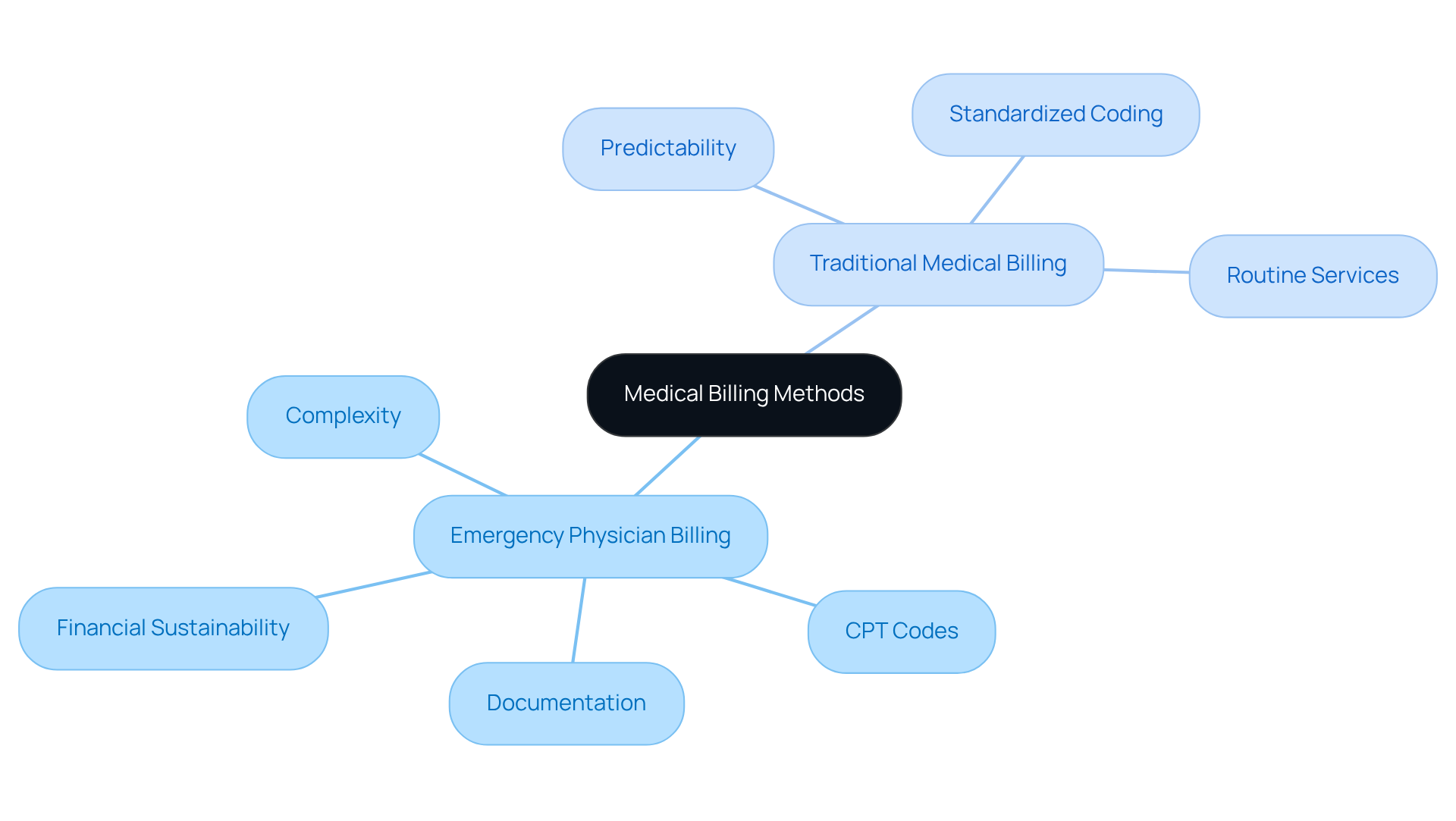
Urgent Care Physician Invoicing represents a critical aspect of healthcare finance, particularly in high-pressure situations. This method is complex, accommodating a variety of unscheduled, high-acuity patient encounters. Emergency invoicing typically utilizes specific Current Procedural Terminology (CPT) codes that accurately represent the urgency and complexity of the medical interventions provided. Detailed documentation is essential to justify the level of care delivered, ensuring compliance and appropriate reimbursement.
In contrast, Traditional Medical Invoicing encompasses the practices utilized in scheduled healthcare settings, such as primary care or specialty clinics. This method generally features a more predictable flow of patient encounters, allowing for standardized coding and documentation processes. Traditional invoicing emphasizes routine services, such as consultations and follow-up visits, and frequently utilizes a simpler coding structure compared to emergency invoicing.
Grasping these definitions is vital for assessing the criteria of coding, reimbursement, and documentation. The distinct operational environments of each payment method highlight the unique challenges and requirements faced by healthcare providers, particularly in emergency settings where timely and accurate invoicing is critical for financial sustainability. Additionally, the 2026 Medicare Physician Fee Schedule updates will introduce a slight increase in the conversion factor for emergency medicine payments, which may alter the financial landscape for emergency medicine providers.
At Healthcare Partners Consulting & Billing, LLC (HPC), we recognize the complexities of medical billing, especially in the mental and behavioral health sectors. We tailor our plans to fit your practice size, claim volume, and the level of support you need, ensuring that you receive the specialized assistance necessary. With 39 years of experience and a commitment to compliance, we empower healthcare providers by optimizing patient statements and claims management, addressing underpayments, unprocessed claims, and aging claims effectively. Our focus on relationship-driven service and proven revenue cycle improvements positions us as a leader in the field, dedicated to enhancing the financial health of your practice. As reimbursement landscapes evolve, understanding these nuances will be essential for maintaining financial viability in urgent care settings.
Compare Key Criteria: Coding, Reimbursement, and Documentation
A comparative analysis of Emergency Physician Billing and Traditional Medical Billing reveals significant differences in coding, reimbursement, and documentation practices:
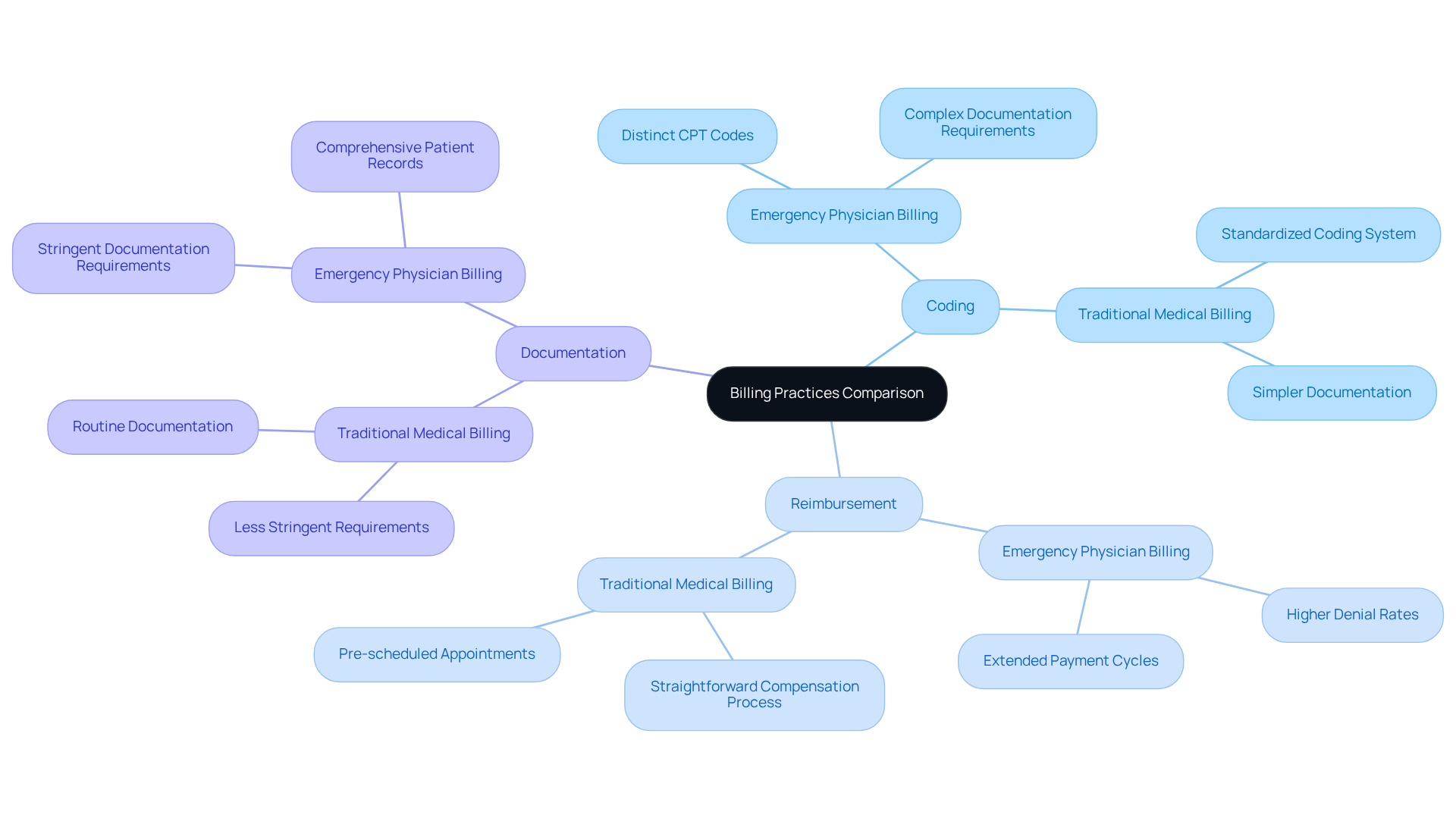
- Coding: Emergency Physician Services utilizes a distinct set of CPT codes that reflect the complexity and urgency of care in emergency settings. These codes require thorough documentation to validate the medical necessity of treatments provided. Conversely, Traditional Medical Coding employs a standardized system that is less complex, often involving routine tasks that are simpler to document and justify.
- Reimbursement: The reimbursement landscape for urgent care physician services presents challenges, primarily due to the unpredictable nature of critical care. Insurers may impose stricter scrutiny on claims, resulting in higher denial rates and extended payment cycles. In contrast, Traditional Medical Reimbursement generally benefits from a more straightforward compensation process, as appointments are pre-scheduled and usually align with established payment guidelines.
- Documentation: Documentation requirements in Emergency Physician Services are stringent, necessitating comprehensive records that justify the level of care provided. This includes detailed notes on patient assessments and treatment decisions. Traditional Medical Invoicing, while still necessitating documentation, often has less stringent requirements, as the tasks performed are generally more routine and predictable.
This analysis underscores the complexities faced by emergency physicians in financial practices, especially in relation to emergency physician billing compared to the more straightforward processes of traditional medical reimbursement.
Evaluate Pros and Cons of Each Billing Method
When comparing emergency physician billing with traditional medical billing, distinct advantages and challenges emerge that can significantly impact healthcare practices.
Emergency Physician Billing
Pros:
- Higher Reimbursement Potential: Emergency services often command higher fees due to the complexity and urgency of care, potentially leading to increased revenue for practices. For example, emergency physician compensation rose from $265,458 in 2004 to $353,000 in 2019, illustrating the financial advantages of this payment method.
- Flexibility: Adaptive coding allows for responsiveness based on the unique circumstances of each patient encounter, which can enhance reimbursement.
Cons:
- Complexity: Billing processes can be quite intricate, often overwhelming administrative staff with the need for specialized coding and documentation knowledge. Emergency physician billing is primarily based on a fee-for-service model, with 85% of billed services related to evaluation and management, necessitating a thorough understanding of coding nuances.
- Higher Denial Rates: Claims may face more scrutiny from insurers, resulting in higher denial rates and longer payment cycles. Research shows that emergency departments frequently face denial rates that can be reduced through enhanced payment practices, potentially lowering denials by 20-30%.
Traditional Medical Billing
Pros:
- Simplicity: The billing process is generally more straightforward, with standardized coding and documentation requirements, making it easier for staff to manage. This simplicity can lead to a more efficient revenue cycle, with predictable cash flow.
- Predictable Revenue Cycle: Scheduled appointments lead to a more predictable flow of revenue, reducing the risk of cash flow disruptions. Traditional payment methods often lead to quicker reimbursement, with transactions usually processed within 30-90 days.
Cons:
- Lower Reimbursement Rates: Routine services may yield lower reimbursement compared to emergency services, potentially impacting overall revenue. A study revealed that average reimbursements for emergency physician billing services declined by 29% from 2000 to 2020, emphasizing the financial difficulties encountered by conventional payment methods.
- Limited Flexibility: The standardized nature of traditional invoicing may not accommodate the unique needs of every patient encounter, potentially leading to missed revenue opportunities. This rigidity can hinder practices from maximizing their revenue potential.
This evaluation highlights the unique operational challenges and opportunities presented by each payment method, guiding healthcare providers in selecting the most suitable approach for their practice. Ultimately, the choice between these billing methods can profoundly influence a practice’s financial health and operational efficiency.

Identify Suitable Scenarios for Each Billing Approach
In the dynamic landscape of healthcare, selecting the right billing approach is essential for capturing the full spectrum of patient care, particularly in emergency settings. Here’s a breakdown of suitable scenarios for each billing method:
Suitable Scenarios for Emergency Physician Billing:
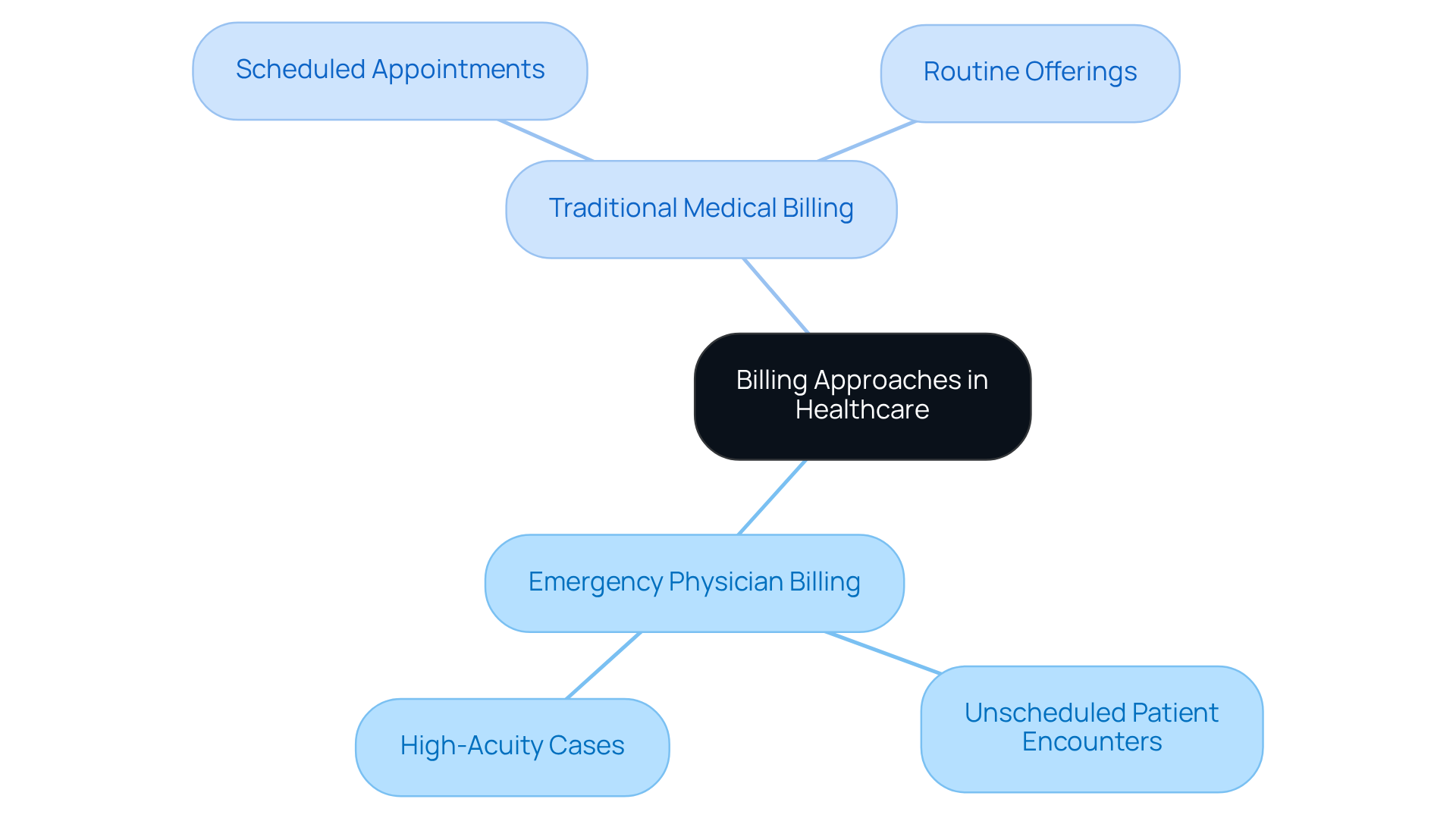
- Unscheduled Patient Encounters: Emergency Physician Billing is particularly effective for practices that frequently manage unscheduled visits, such as emergency departments and urgent care clinics. These environments often encounter unpredictable patient needs, making this payment method essential for capturing the complexity of care provided. With nearly four decades of experience, Healthcare Partners Consulting is dedicated to helping practices like yours receive fair compensation for their vital work.
- High-Acuity Cases: This billing approach is also appropriate for high-acuity patients who require immediate and complex medical interventions. The urgency and complexity of care in these situations warrant the use of Emergency Physician Compensation, ensuring that providers are adequately rewarded for their services. The No Surprises Act plays a significant role here, protecting patients from unexpected medical bills.
Suitable Scenarios for Traditional Medical Billing:
- Scheduled Appointments: Traditional Medical Billing is best suited for practices that operate on a scheduled appointment basis, such as primary care or specialty clinics. In these settings, patient encounters are more predictable, allowing for streamlined billing processes. At Healthcare Partners Consulting, we focus on compliance to help streamline your operations and boost efficiency.
- Routine Offerings: This method is effective for practices delivering routine medical care, including annual check-ups or follow-up visits. The documentation and coding requirements in these cases are generally less complex, making Traditional Medical Processing a practical choice. Practices can expect a denial reduction of 20-30% and faster reimbursement of 15-25% within 30-90 days.
By understanding these scenarios, healthcare providers can align their financial practices with the nature of their patient care services, ultimately enhancing operational efficiency and revenue cycle performance. Ultimately, adopting this method can lead to improved financial stability and patient satisfaction, reinforcing the practice’s commitment to quality care. Incorporating case studies, such as those demonstrating the effectiveness of emergency physician billing in urgent care settings, can further illustrate the real-world applications of these billing methods.
Conclusion
Differentiating between emergency physician billing and traditional medical billing is essential for healthcare providers managing financial complexities. Each billing method serves distinct operational environments: emergency billing is tailored for high-acuity, unscheduled patient encounters, while traditional billing is designed for routine, scheduled appointments. Recognizing these differences enables informed decision-making, enhancing financial health and operational efficiency for healthcare providers.
Key insights from the comparative analysis reveal that:
- Emergency physician billing involves intricate coding and documentation requirements, often leading to higher reimbursement potential but also increased complexity and denial rates.
- Traditional medical billing offers a more straightforward process with predictable revenue cycles, albeit at potentially lower reimbursement rates.
By evaluating the pros and cons of each method, healthcare providers can align their billing practices with the nature of their services, ensuring they capture the full spectrum of patient care.
Ultimately, the choice between emergency physician billing and traditional medical billing can profoundly affect a practice’s financial sustainability. Emphasizing a compliance-first approach and leveraging the expertise of specialized billing services, such as those offered by Healthcare Partners Consulting & Billing, LLC (HPC), can empower providers to focus on delivering quality patient care while optimizing their revenue cycle management. Partnering with experienced billing services can enhance financial outcomes and uphold excellence in healthcare delivery.
Frequently Asked Questions
What is Emergency Physician Billing?
Emergency Physician Billing refers to the invoicing process used in urgent care settings, which involves high-pressure situations and unscheduled, high-acuity patient encounters. It utilizes specific Current Procedural Terminology (CPT) codes to accurately represent the urgency and complexity of medical interventions.
How does Emergency Physician Billing differ from Traditional Medical Billing?
Emergency Physician Billing is used for unscheduled and urgent patient encounters, requiring detailed documentation and specific coding for reimbursement. In contrast, Traditional Medical Billing is used in scheduled healthcare settings, featuring a more predictable flow of patient encounters and simpler coding structures for routine services.
Why is detailed documentation important in Emergency Physician Billing?
Detailed documentation is essential in Emergency Physician Billing to justify the level of care delivered, ensuring compliance with regulations and appropriate reimbursement for the services provided.
What are the implications of the 2026 Medicare Physician Fee Schedule updates for emergency medicine?
The 2026 Medicare Physician Fee Schedule updates will introduce a slight increase in the conversion factor for emergency medicine payments, which may impact the financial landscape for emergency medicine providers.
How does Healthcare Partners Consulting & Billing, LLC (HPC) support healthcare providers?
HPC offers tailored billing plans based on practice size, claim volume, and support needs, focusing on optimizing patient statements and claims management. They address issues like underpayments and aging claims, leveraging 39 years of experience to enhance the financial health of practices.
Why is understanding the differences in billing methods important for healthcare providers?
Understanding the differences in Emergency and Traditional Medical Billing is vital for assessing coding, reimbursement, and documentation criteria, which are crucial for maintaining financial sustainability, especially in urgent care settings.