
Introduction
In the intricate landscape of healthcare, effective practice management is crucial for prioritizing patient care. Implementing best practices in operational management, financial strategies, and human resources allows healthcare organizations to enhance efficiency and service quality effectively. Healthcare providers often face overwhelming administrative tasks that detract from patient care. How can they maintain compliance while optimizing patient outcomes? This article explores four key best practices that empower healthcare providers to streamline their operations and elevate the standard of care they deliver.
Establish Operational Management Fundamentals
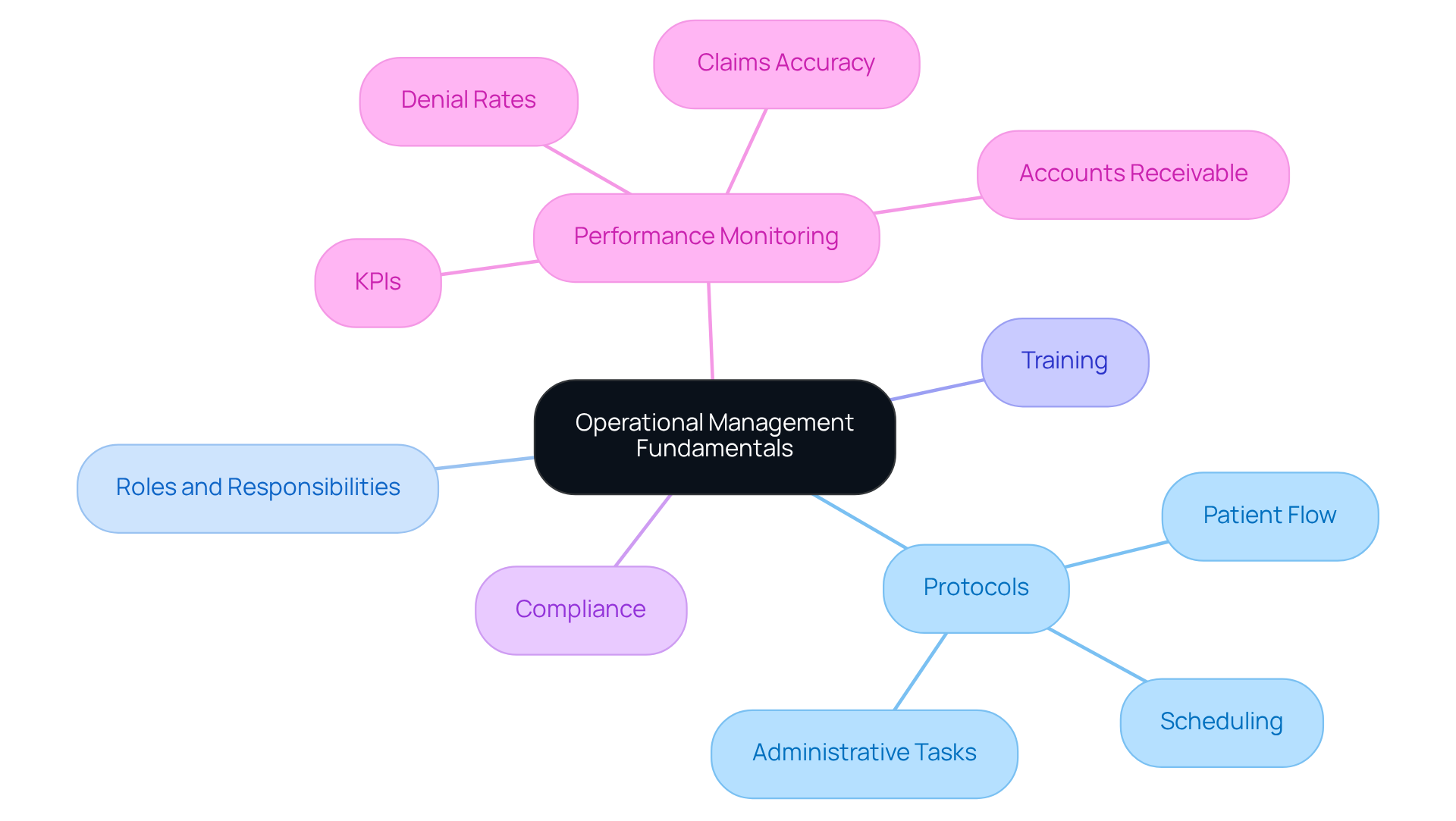
To establish effective operational management fundamentals, medical practices must prioritize the development of clear protocols for scheduling, patient flow, and administrative tasks. This entails defining roles and responsibilities for staff, implementing standardized procedures for intake, and ensuring compliance with healthcare regulations. For instance, a well-defined intake process can significantly reduce wait times and enhance satisfaction. Regular training sessions for staff on these operational protocols are essential to improve adherence and efficiency. Focusing on these essential components allows medical practices to create a stable environment that prioritizes high-quality patient care.
Healthcare Partners Consulting & Billing, LLC (HPC) provides tailored administrative support services specifically designed for mental health facilities, ensuring that your office operates efficiently. Whether you require help with scheduling, document management, or insurance claims, HPC is committed to empowering healthcare providers by alleviating administrative burdens, enabling them to concentrate on delivering high-quality care. A case study from Greenway Health demonstrates how integrated technology can streamline workflows and enhance patient outcomes, showcasing the effectiveness of these methods. Additionally, you can discover your mental health practice’s profitability score by taking a quick quiz that assesses your current operations and provides personalized recommendations for improvement. This focus not only enhances operational efficiency but also significantly improves the quality of care provided to patients.
Implementation Tip: Conduct regular audits of processes to identify bottlenecks and areas for improvement. Monitor key performance indicators (KPIs) such as claims accuracy, denial rates, and days in accounts receivable to uphold high standards of efficiency.
Implement Effective Financial Management Strategies
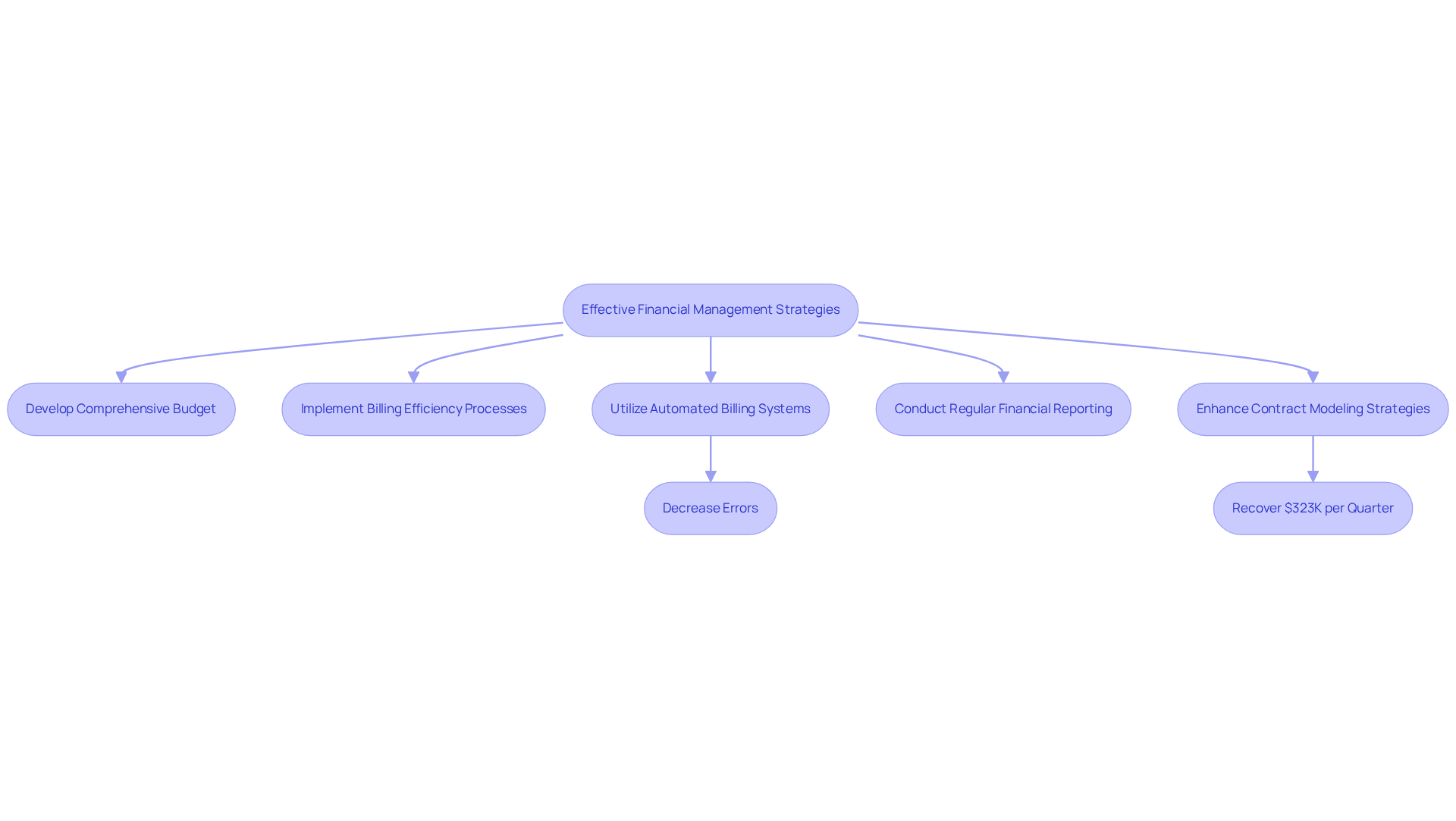
Effective financial management is not just beneficial; it is crucial for the sustainability of physician practice management in the mental health sector. Developing a comprehensive budget that encompasses all operational costs, revenue projections, and unexpected expenses is essential. Implementing robust physician practice management processes can significantly enhance billing efficiency and collections. For instance, Healthcare Partners Consulting & Billing, LLC (HPC) offers tailored service plans that align with your operational scale and claim volume, helping organizations improve their billing processes. Automated billing systems have been shown to decrease errors and enhance cash flow, with entities experiencing quicker reimbursement cycles of 15-25% within 30-90 days.
Regular financial reporting and analysis are vital for identifying trends and informing strategic decisions. HPC provides detailed monthly reporting, including claim volumes, aging reports, and denial rates, which can assist organizations in refining their financial strategies. A case study from Prevea Health demonstrates how enhancing contract modeling strategies resulted in better reimbursement analysis and financial performance, highlighting the significance of aligning costs with anticipated reimbursements. Specifically, Prevea Health recovered over $323K per quarter through smarter contract management, showing how effective financial strategies can lead to measurable improvements.
Moreover, 62% of providers report lacking essential data and analytics for claims submission. HPC addresses this gap by offering personalized consultations to identify optimal administrative solutions, ensuring organizations have the support they need to thrive. Furthermore, HPC’s services integrate seamlessly with EHR systems like TherapyNotes and SimplePractice, enhancing operational efficiency.
By prioritizing physician practice management, organizations can enhance their financial stability, which allows them to focus more on delivering quality patient care. Employing scorecard-driven adjustments linked to claims accuracy, denial rates, and days in accounts receivable can further illustrate efficiency and support sustainable growth.
Implementation Tip: Investing in financial management software that integrates seamlessly with existing management systems can streamline billing and reporting processes, ultimately contributing to a more efficient operational framework.
Optimize Human Resources and Compliance Practices
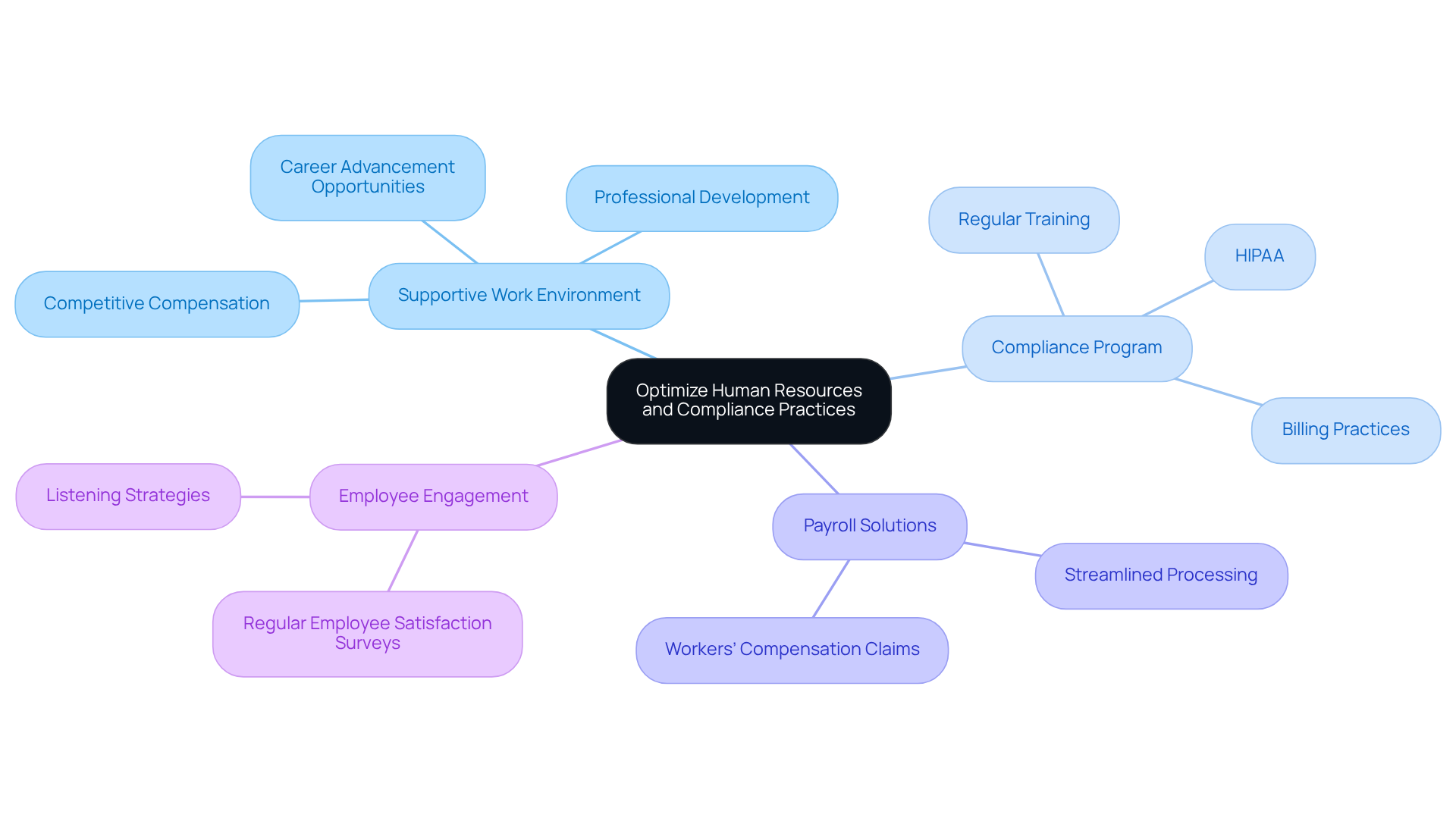
To enhance human resources and compliance methods, medical providers must prioritize a supportive work environment that fosters employee engagement and retention. This includes competitive compensation, professional development, and defined career advancement opportunities. A robust compliance program is essential for meeting healthcare regulations and reducing legal risks. Regular training on compliance topics, such as HIPAA and billing practices, keeps staff informed and minimizes the risk of violations. By focusing on these human resources and compliance strategies, practices can enhance operational effectiveness and improve patient care outcomes.
Healthcare Partners Consulting (HPC) offers payroll enhancement solutions that streamline payroll processing while ensuring compliance with regulations and integrating specialized workflows for workers’ compensation claims. By leveraging HPC’s expertise, mental health clinic owners can identify optimal administrative solutions tailored to their specific needs through personalized consultations. This strategic approach not only alleviates administrative burdens but also allows providers to focus more on delivering quality care to their clients.
Implementation Tip: Conduct regular employee satisfaction surveys to gather feedback and identify areas for improvement in workplace culture. By utilizing HPC’s payroll solutions, organizations can facilitate these surveys effectively, enhancing employee engagement and retention. Ultimately, these strategies not only improve compliance but also elevate the quality of care provided to patients.
Leverage Technology for Enhanced Practice Efficiency
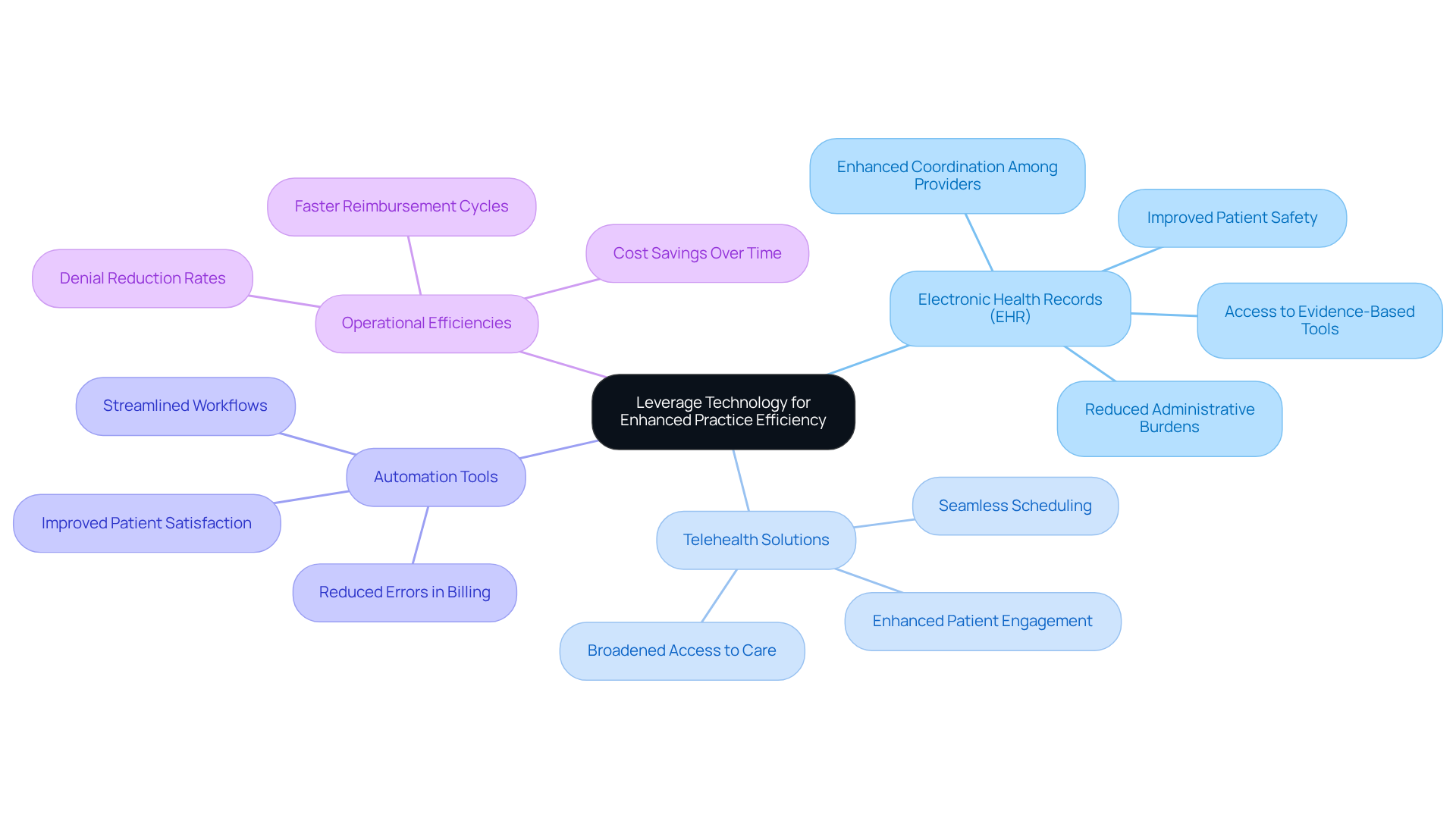
In the evolving landscape of healthcare, the integration of technology is no longer optional but essential for enhancing practice efficiency and patient care. Implementing electronic health records (EHR) systems, such as TherapyNotes or SimplePractice, can streamline documentation and facilitate better communication among healthcare providers. EHRs reduce administrative burdens and enhance coordination among professionals, resulting in better outcomes for patients. For example, systems that have implemented EHRs report a decrease in medical errors and improved access to information about individuals, thereby facilitating evidence-based decision-making.
Telehealth solutions have progressed from temporary measures to essential elements of healthcare delivery, broadening access to care and enhancing engagement. By integrating telehealth with EHR systems, practices can offer seamless scheduling for both virtual and in-person visits, enhancing the overall experience for individuals.
Automation tools for scheduling, billing, and reminders can significantly reduce administrative workloads, enabling staff to concentrate more on interactions with individuals receiving care. For instance, utilizing health portals empowers individuals to manage their appointments and access their health information, which has been shown to enhance satisfaction and adherence to treatment plans. This leads to improved patient satisfaction and better adherence to treatment plans.
Furthermore, approaches that adopt these technologies can achieve operational efficiencies, including denial reduction rates of 20-30% and quicker reimbursement cycles of 15-25% within 30-90 days. Regularly evaluating and updating technology solutions is crucial to ensure they address the changing needs of the organization and adhere to industry standards, ultimately resulting in improved care for patients.
At Healthcare Partners Consulting (HPC), we specialize in providing tailored administrative support services for mental health organizations, including dedicated virtual assistant services for scheduling, client intake, and communications, as well as direct access to a billing team consisting of a billing manager, accounts receivable manager, and intake specialist. By leveraging HPC’s expertise, you can evaluate your operations’ profitability through a quick quiz that uncovers hidden revenue leaks and offers tailored recommendations for improving efficiency and billing accuracy. This method not only enhances your operations but also enables you to concentrate more on care for individuals. By strategically adopting these technologies, healthcare practices can not only improve operational efficiency but also significantly elevate the quality of care provided to patients.
Conclusion
Effective physician practice management is not just beneficial; it is essential for delivering high-quality patient care. By focusing on operational management fundamentals, financial strategies, human resources, compliance practices, and leveraging technology, healthcare providers can significantly reduce administrative burdens. This shift enables practitioners to focus more on patient care, which in turn enhances outcomes and satisfaction.
The article underscores the critical role of clear protocols, effective financial management, and a nurturing work environment in achieving operational success. Implementing tailored administrative support services, such as those offered by Healthcare Partners Consulting & Billing, LLC (HPC), can streamline operations and enhance efficiency. Additionally, integrating technology solutions like electronic health records and telehealth can further optimize practice management, ensuring that healthcare providers remain compliant while improving patient engagement and care delivery.
Ultimately, prioritizing these best practices strengthens the operational framework of physician practices and cultivates a culture of excellence in patient care. By embracing a compliance-first approach and leveraging the expertise of specialized billing teams, healthcare providers can navigate the complexities of the industry with confidence. By taking these proactive measures, healthcare providers can ensure their practices thrive in an increasingly complex environment. For further assistance, consider reaching out to HPC at info@hpcbilling.com or call 888-517-4992 to explore tailored solutions for your practice.
Frequently Asked Questions
What are the key components of effective operational management in medical practices?
Effective operational management in medical practices involves developing clear protocols for scheduling, patient flow, and administrative tasks, defining staff roles and responsibilities, implementing standardized intake procedures, and ensuring compliance with healthcare regulations.
How can a well-defined intake process benefit a medical practice?
A well-defined intake process can significantly reduce wait times and enhance patient satisfaction.
Why is regular training important for staff in medical practices?
Regular training sessions for staff on operational protocols are essential to improve adherence and efficiency in the practice.
What services does Healthcare Partners Consulting & Billing, LLC (HPC) provide?
HPC provides tailored administrative support services for mental health facilities, including assistance with scheduling, document management, and insurance claims.
How can integrated technology improve medical practice operations?
Integrated technology can streamline workflows and enhance patient outcomes, as demonstrated by a case study from Greenway Health.
What tool can help assess the profitability of a mental health practice?
A quick quiz is available to assess a mental health practice’s current operations and provide personalized recommendations for improvement.
What is an implementation tip for improving operational efficiency?
Conduct regular audits of processes to identify bottlenecks and areas for improvement, and monitor key performance indicators (KPIs) such as claims accuracy, denial rates, and days in accounts receivable.