

Introduction
The effective implementation of medical coding standards is critical for compliance and optimal patient care in healthcare today. The MEAT criteria – Monitored, Evaluated, Assessed/Addressed, and Treated – serve as a vital framework for ensuring that medical documentation accurately reflects the ongoing management of chronic conditions.
Despite the importance of the MEAT criteria, many providers find it challenging to integrate these standards into their practices, jeopardizing compliance and threatening the quality of patient care. Addressing these challenges is essential for safeguarding both financial stability and the quality of care provided to patients.
Define MEAT Criteria: Understanding Its Role in Medical Coding
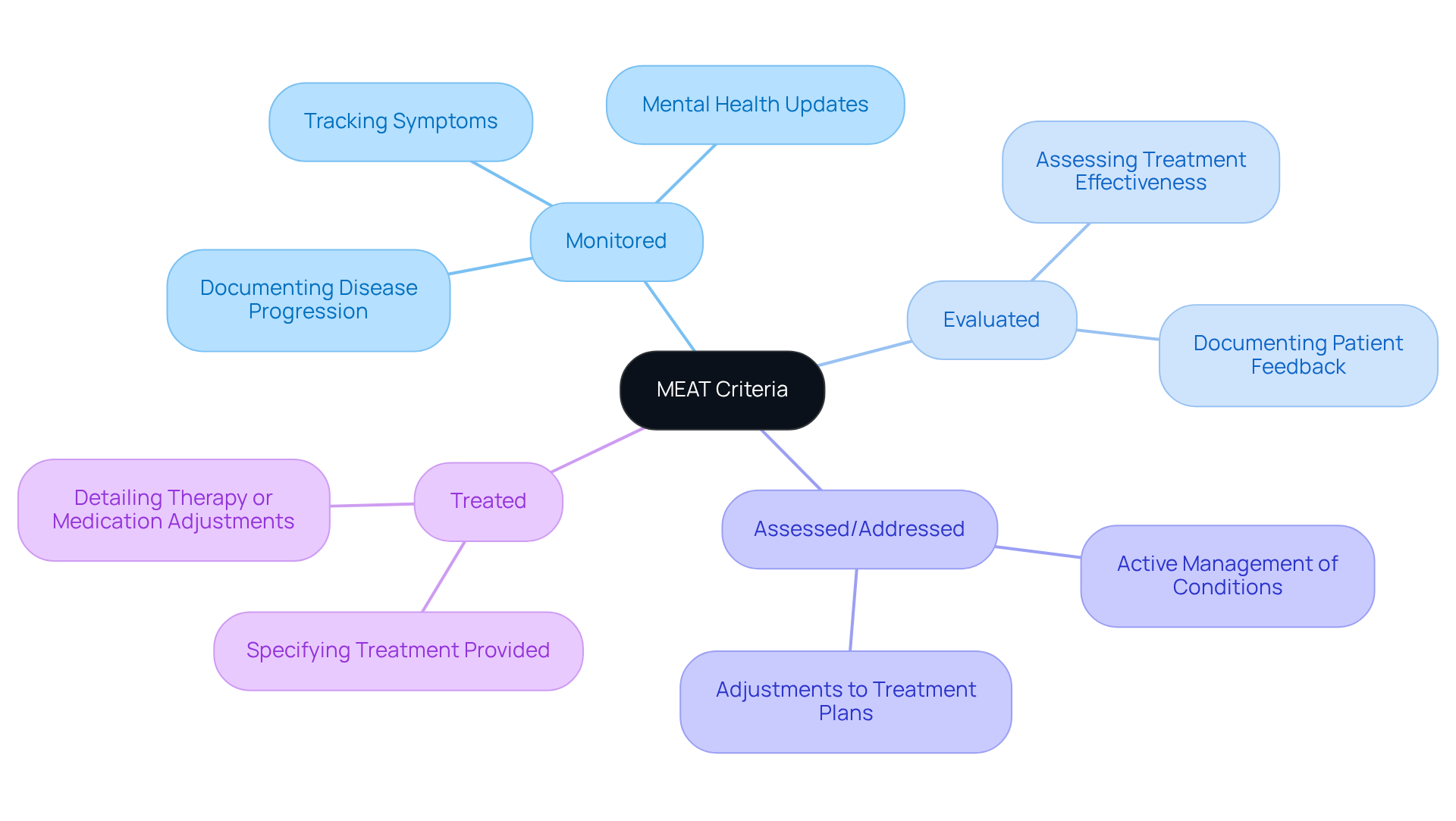
The MEAT medical coding criteria are essential for validating diagnoses, particularly for chronic conditions and risk adjustment. Each component – Monitored, Evaluated, Assessed/Addressed, and Treated – plays a critical role in ensuring that documentation accurately reflects active patient care during clinical encounters.
- Monitored: This entails tracking the patient’s symptoms and disease progression over time, ensuring that any changes in their condition are meticulously documented. For example, regular updates on an individual’s mental health status can provide insights into treatment effectiveness.
- Evaluated: Healthcare providers must assess the effectiveness of treatments and interventions, documenting their findings to substantiate coding decisions. This assessment can encompass input from the individual concerning their reaction to therapy.
- Assessed/Addressed: Clinicians must actively manage the individual’s condition, demonstrating that it has been noted in the records. For instance, a clinician might document adjustments made to a treatment plan based on the individual’s progress.
- Treated: Ultimately, records must specify the treatment provided, confirming that the condition is under active management. This could involve detailing the types of therapy or medication adjustments made during the individual’s care.
Adhering to these criteria enhances record-keeping practices related to MEAT medical coding, ensuring compliance with regulatory standards while accurately reflecting the care provided to patients. Inadequate documentation practices can lead to significant financial repercussions, emphasizing the importance of following the MEAT principles. Ongoing education on documentation practices is essential for maintaining high standards and avoiding the administrative burdens and clawbacks associated with non-compliance. Understanding and implementing these standards is vital for the financial health and regulatory compliance of healthcare practices. At Healthcare Partners Consulting, we specialize in providing expert mental and behavioral health billing solutions, ensuring that your practice benefits from tailored coding support and effective revenue cycle management. Our processes include using internal checklists and payer-specific guidelines to enhance coding accuracy and compliance.
Emphasize Compliance: The Importance of MEAT in Risk Adjustment
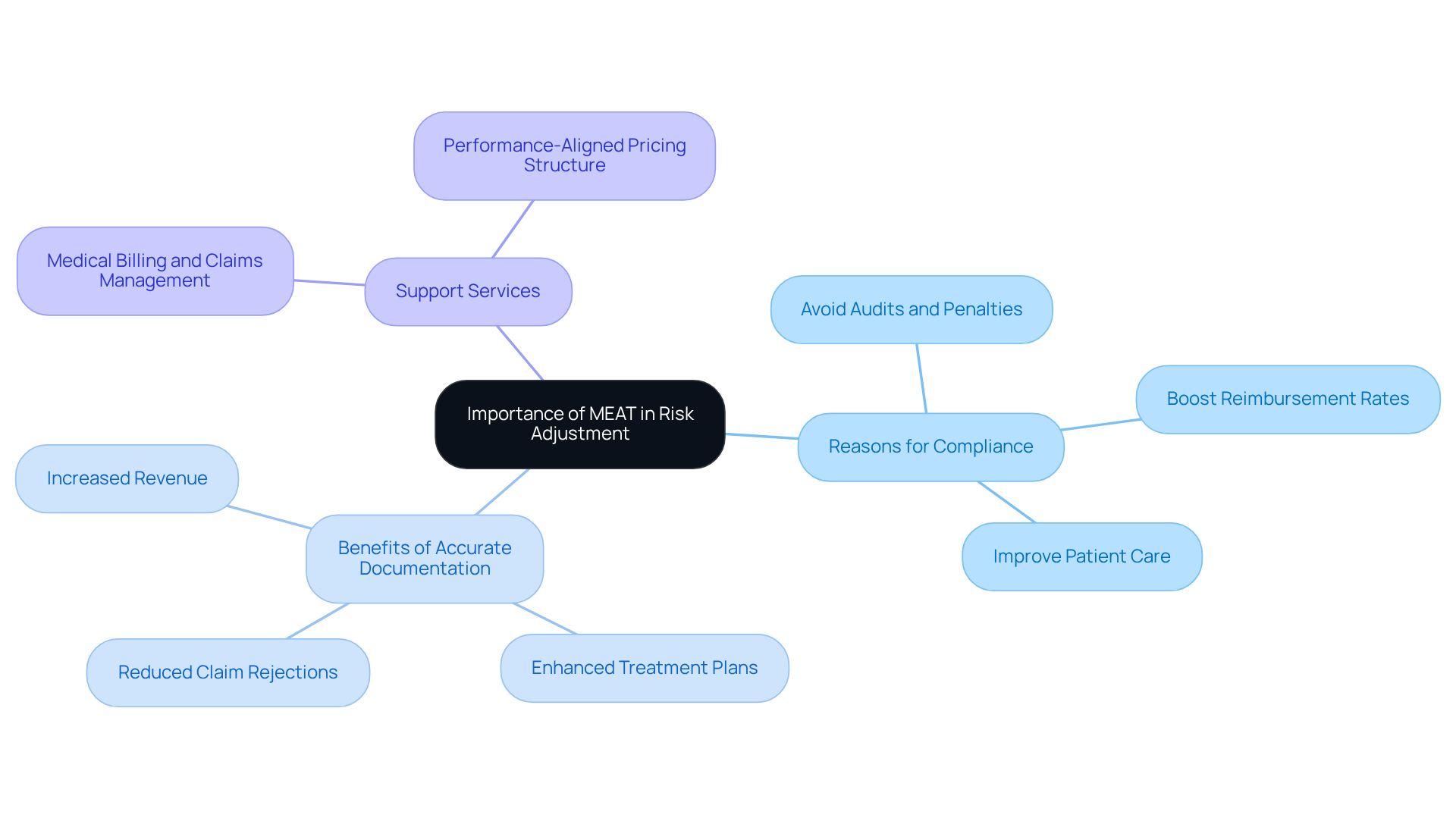
Healthcare providers face significant challenges in maintaining compliance with risk adjustment standards for Medicare Advantage plans. Ensuring that documentation meets these standards is crucial for several reasons:
- Avoid Audits and Penalties: Accurate documentation mitigates the risk of audits by regulatory bodies, which can lead to substantial financial penalties for non-compliance.
- Boost Reimbursement Rates: Well-documented conditions that align with established standards can lead to increased reimbursement rates, reflecting the complexity and severity of individual conditions.
- Improve Patient Care: Compliance guarantees that all aspects of a patient’s care are documented, resulting in enhanced treatment plans and outcomes.
Healthcare Partners Consulting provides essential administrative support services such as:
- Medical billing and claims management
- Performance-aligned pricing structure, starting at a minimum of $500 for practices with gross income up to $6,500
These services are vital for maintaining compliance with MEAT criteria. For instance, a study revealed that practices adhering to specific standards experienced a 30% increase in revenue due to improved coding precision and fewer claim rejections. This underscores the financial benefits of compliance, significantly impacting the viability of healthcare practices.
Implement Best Practices: Strategies for Effective MEAT Documentation
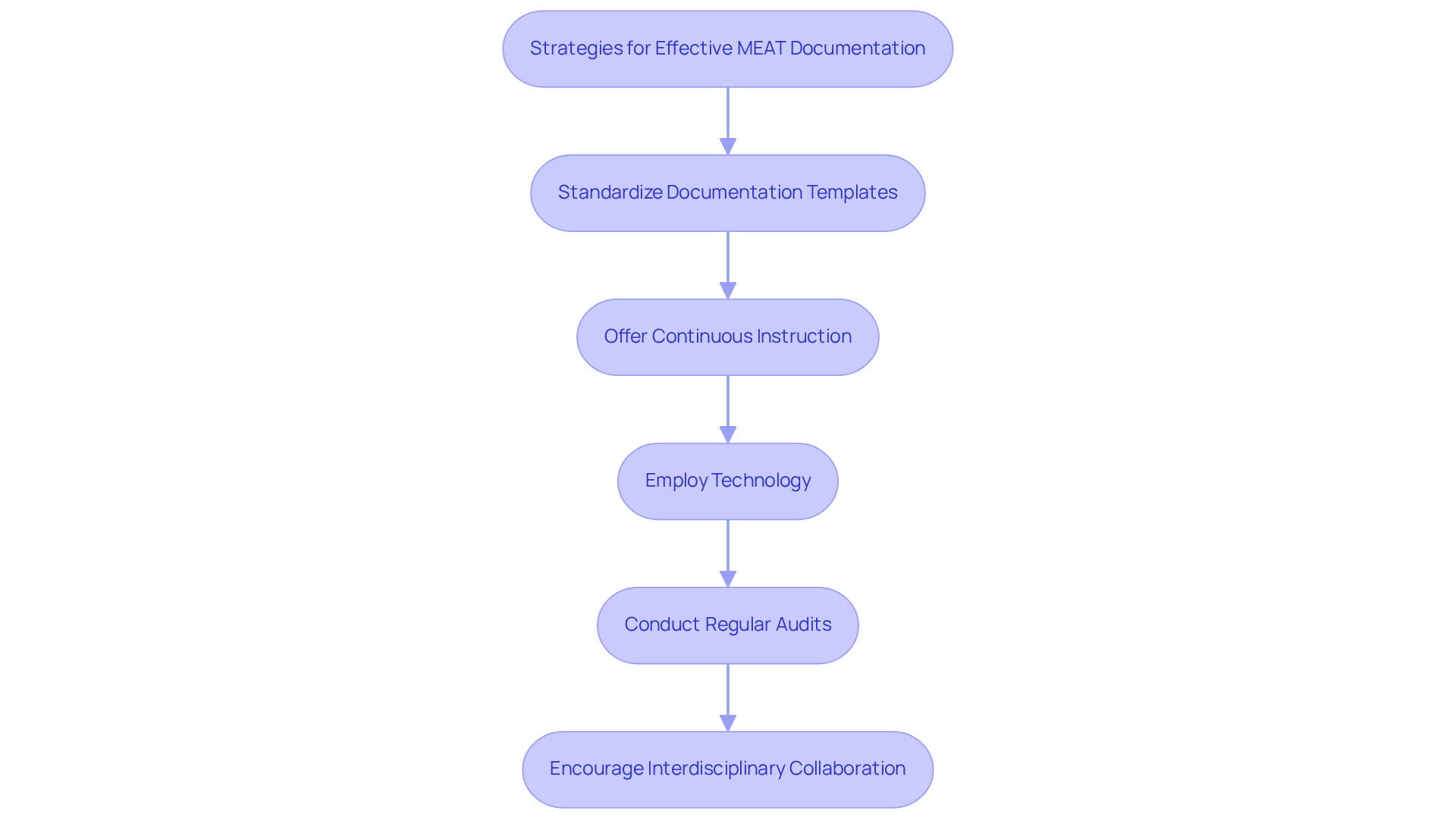
Healthcare providers often struggle with maintaining comprehensive documentation, which can lead to significant gaps in patient care. To effectively implement MEAT criteria in documentation, healthcare providers can adopt the following best practices:
- Standardize Documentation Templates: Create templates that encourage clinicians to include all essential components during encounters with individuals. This ensures that no critical information is overlooked.
- Offer Continuous Instruction: Frequent training sessions for employees on the significance of evaluation standards and how to document properly can greatly enhance compliance rates.
- Employ Technology: Introduce electronic health record (EHR) systems that feature prompts for essential record-keeping, facilitating the collection of necessary information during visits.
- Conduct Regular Audits: Periodically review record-keeping practices to ensure adherence to MEAT criteria. This can help identify areas for improvement and reinforce compliance.
- Encourage Interdisciplinary Collaboration: Foster communication between clinical and administrative staff to ensure that all aspects of care are documented accurately and comprehensively.
Ultimately, the commitment to these practices can transform the quality of care delivered to individuals, ensuring their needs are met effectively.
Highlight Benefits: How MEAT Enhances Coding Accuracy and Patient Care
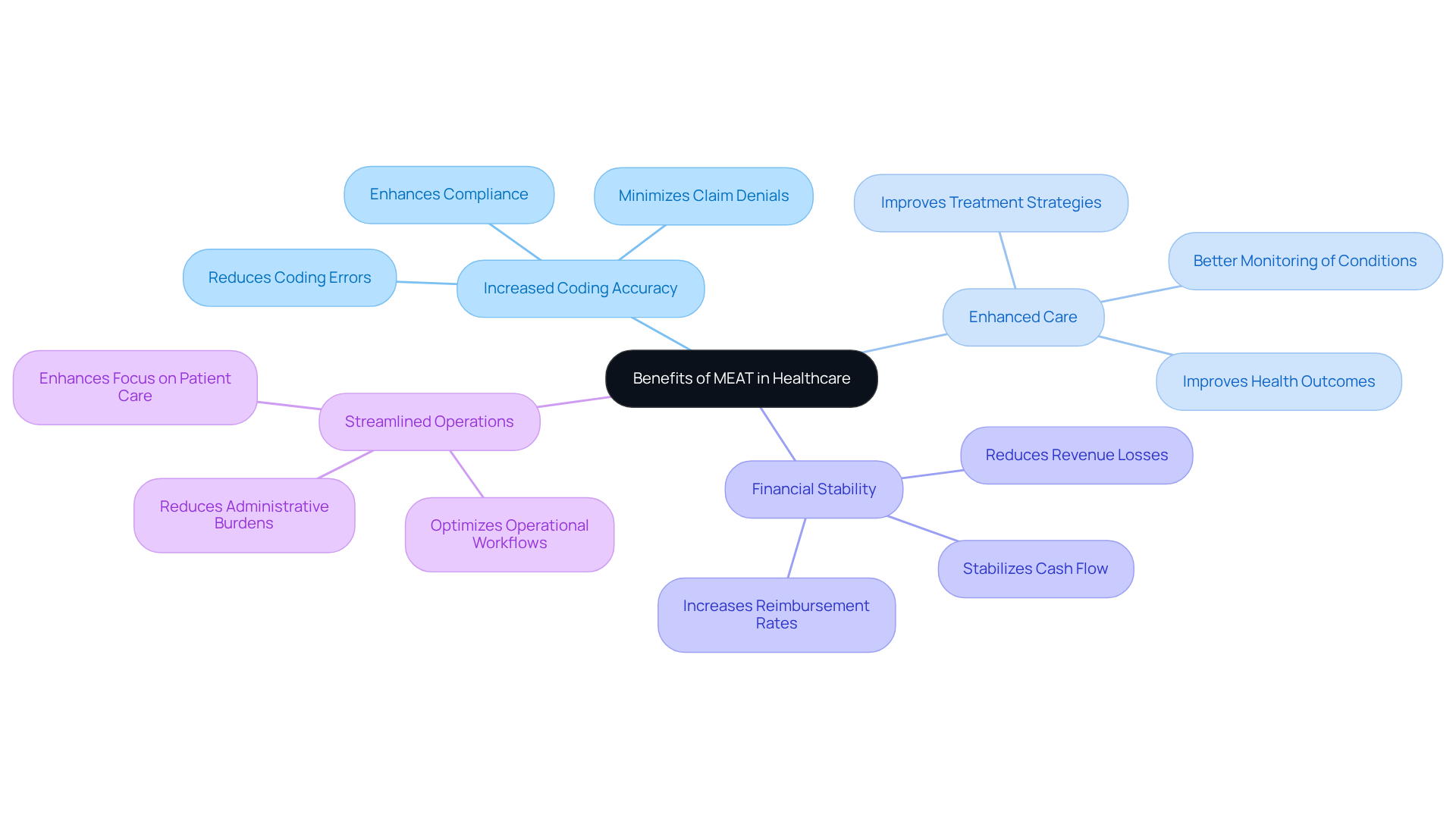
In the complex landscape of healthcare, accurate documentation is not just beneficial; it is essential for operational success. Adhering to MEAT criteria offers numerous advantages for healthcare providers, including:
- Increased Coding Accuracy: By adhering to MEAT criteria, healthcare providers can ensure comprehensive documentation, which significantly reduces coding errors and minimizes claim denials and rejections. This accuracy is vital for practices that use Healthcare Partners Consulting’s administrative support services. These services streamline coding processes and enhance compliance.
- Enhanced Care: Precise records enable better monitoring of individuals’ conditions, leading to more effective treatment strategies and improved health results. For example, methods that have embraced specific records have reported significant improvements in individual management and care quality, aligning with the objectives of Healthcare Partners Consulting to enhance operational efficiency.
- Financial Stability: Improved coding accuracy directly influences reimbursement rates, fostering financial stability for healthcare practices. Organizations utilizing such records have observed a significant reduction in claim denials, resulting in a more stable revenue flow. This financial stability is essential for practices supported by Healthcare Partners Consulting, which aims to enhance cash flow and reduce denials.
- Streamlined Operations: Standardizing record-keeping practices around performance standards allows healthcare providers to enhance operations, reducing administrative burdens and enabling a greater focus on care for individuals. Healthcare Partners Consulting’s expertise in office management and consulting services further supports this goal by optimizing operational workflows.
Implementing MEAT criteria enhances compliance and significantly elevates the overall quality of care that patients receive. Additionally, annual recapture requirements are crucial for maintaining HCC eligibility, emphasizing the necessity of consistent documentation practices.
Conclusion
The implementation of MEAT criteria is essential for healthcare providers aiming to enhance compliance and patient care quality. Focusing on Monitoring, Evaluating, Assessing/Addressing, and Treating allows healthcare providers to ensure their documentation accurately reflects active patient management. Adhering to these standards not only supports effective coding but also protects against financial penalties while enhancing care quality.
Key insights discussed throughout the article emphasize the importance of accurate documentation in mitigating audits, boosting reimbursement rates, and ultimately enhancing patient outcomes. Strategies such as:
- Standardizing documentation templates
- Providing continuous training
- Employing technology
are essential for maintaining compliance with MEAT standards. These practices streamline operations and cultivate a culture of thoroughness and accountability in patient care.
The significance of adhering to MEAT criteria extends beyond compliance; it is a fundamental aspect of delivering high-quality healthcare. As healthcare providers strive for operational excellence, embracing these best practices will lead to improved coding accuracy, better patient management, and enhanced financial stability. Ultimately, the commitment to MEAT documentation is a strategic investment in the future of patient care and operational success.
Frequently Asked Questions
What does MEAT stand for in medical coding?
MEAT stands for Monitored, Evaluated, Assessed/Addressed, and Treated, which are criteria used to validate diagnoses, particularly for chronic conditions in medical coding.
Why is the MEAT criteria important in medical coding?
The MEAT criteria are essential for ensuring that documentation accurately reflects active patient care during clinical encounters, which is crucial for validating diagnoses and ensuring compliance with regulatory standards.
What does “Monitored” entail in the MEAT criteria?
“Monitored” involves tracking the patient’s symptoms and disease progression over time, ensuring that any changes in their condition are documented, such as regular updates on mental health status.
How does “Evaluated” fit into the MEAT criteria?
“Evaluated” refers to healthcare providers assessing the effectiveness of treatments and interventions, documenting their findings to support coding decisions, which may include patient feedback on therapy reactions.
What does “Assessed/Addressed” mean in the context of MEAT?
“Assessed/Addressed” indicates that clinicians must actively manage the patient’s condition and document any adjustments made to the treatment plan based on the individual’s progress.
What is meant by “Treated” in the MEAT criteria?
“Treated” specifies that records must detail the treatment provided, confirming that the condition is under active management, including types of therapy or medication adjustments made during care.
What are the consequences of inadequate documentation practices in medical coding?
Inadequate documentation can lead to significant financial repercussions and non-compliance with regulatory standards, underscoring the importance of adhering to the MEAT principles.
How can healthcare practices ensure compliance with MEAT criteria?
Ongoing education on documentation practices is essential, along with using internal checklists and payer-specific guidelines to enhance coding accuracy and compliance.
What services does Healthcare Partners Consulting provide related to MEAT criteria?
Healthcare Partners Consulting specializes in mental and behavioral health billing solutions, offering tailored coding support and effective revenue cycle management to ensure compliance with MEAT criteria.