
Introduction
Effective practice management serves as the foundation for successful mental health clinics, emphasizing the critical need for quality patient care alongside operational efficiency. By implementing best practices in:
- Financial management
- Workflow optimization
- Compliance
healthcare providers can significantly reduce administrative burdens. This reduction allows them to concentrate on what truly matters: their patients. Mental health clinics often struggle to maintain high-quality patient care while managing complex operational demands. Addressing these challenges is essential for enhancing patient outcomes and ensuring the long-term viability of mental health clinics.
Define Effective Practice Management in Healthcare
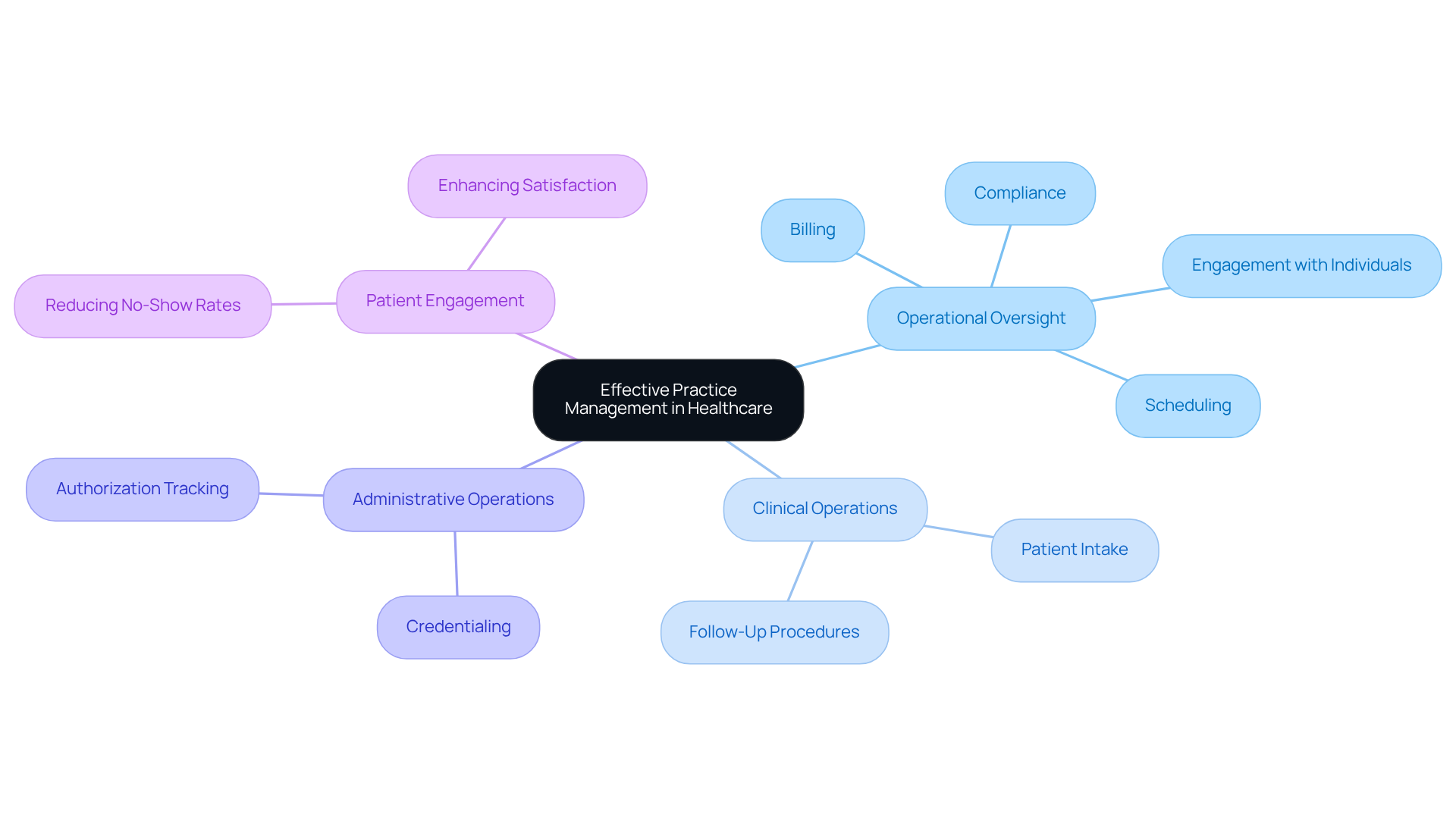
Effective oversight in healthcare, particularly in mental health facilities, is crucial for improving both care quality and operational efficiency. This entails strategic oversight of clinical and administrative operations, including scheduling, billing, compliance, and engagement with individuals receiving care, all of which are crucial components of practice management in healthcare. A well-defined operational framework for practice management in healthcare enables healthcare facilities to streamline workflows and minimize administrative challenges. This focus allows them to prioritize exceptional care.
For example, facilities that implement structured workflows for patient intake and follow-up have experienced notable enhancements in patient satisfaction and decreases in no-show rates, which can exceed 15% in facilities facing operational difficulties. Furthermore, effective practice management in healthcare can lead to denial reductions of 20-30% and quicker reimbursement timelines of 15-25% within 30-90 days, thereby improving the overall financial well-being of the clinic.
Case studies illustrate the impact of integrated management systems. For instance, approaches that employ electronic health record (EHR) systems like TherapyNotes and SimplePractice, along with telehealth solutions, have enhanced scheduling, decreased wait times, and increased satisfaction among individuals receiving care. Furthermore, facilities that rigorously manage billing and authorization processes safeguard their revenue, which is vital for maintaining revenue in today’s challenging reimbursement landscape.
The current landscape indicates that operational bottlenecks, rather than patient demand, are the primary challenges for practice management in healthcare within mental health organizations. Mental health organizations often face significant operational bottlenecks that hinder their effectiveness. By addressing these bottlenecks, organizations can significantly enhance their practice management in healthcare and overall financial performance. By concentrating on these essential areas, mental health organizations can effectively navigate the complexities of operational oversight and enhance their service delivery. This strategic focus not only enhances service delivery but also positions organizations for sustainable success in a competitive landscape.
Identify Core Components of Successful Practice Management
Effective practice management in mental health clinics hinges on several critical components that ensure both operational success and quality patient care:
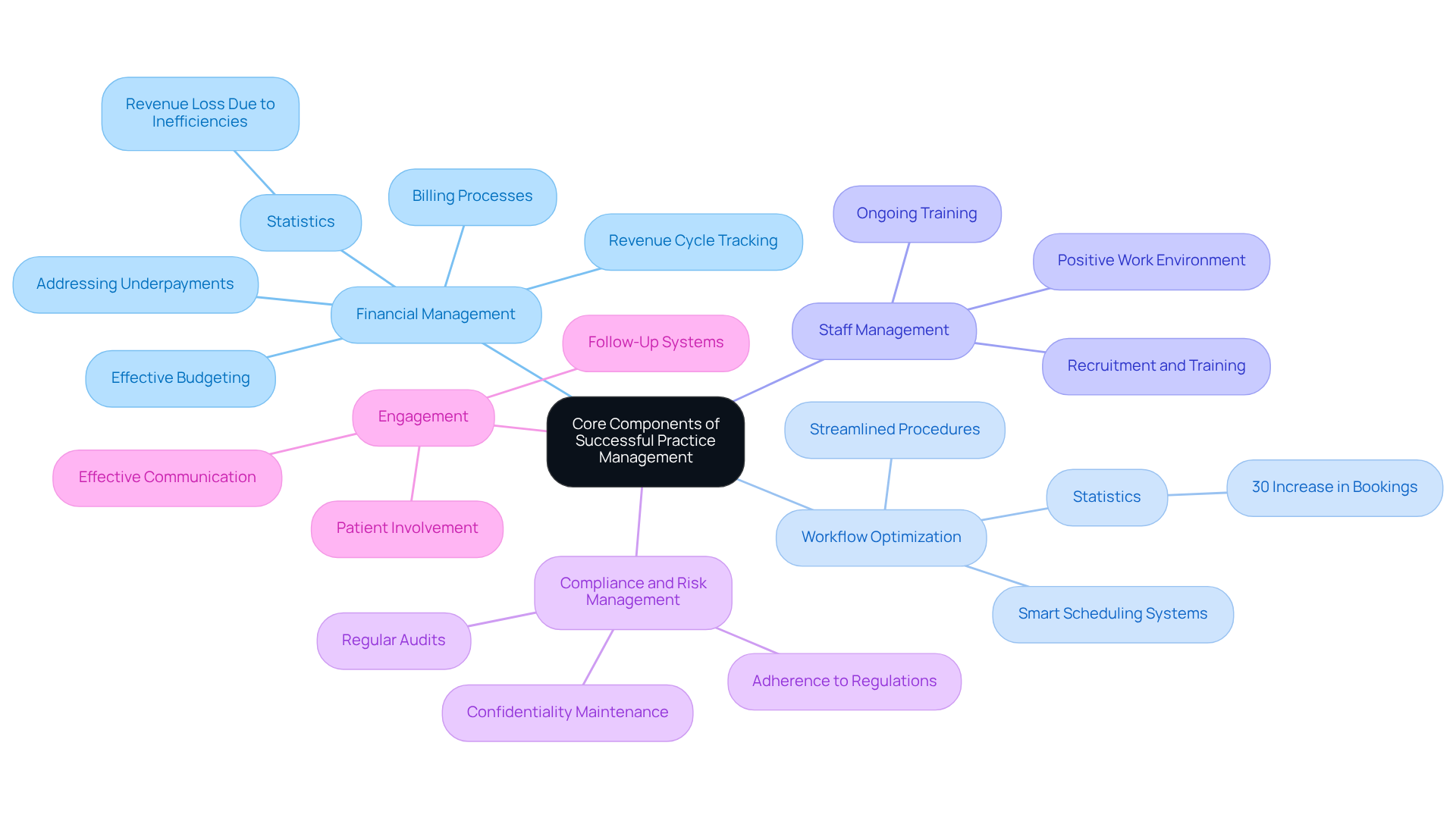
- Financial Management: Effective budgeting and financial oversight are critical for maintaining profitability while delivering quality care. This includes managing billing processes, tracking revenue cycles, and ensuring compliance with insurance requirements. Generating statements for clients and following up on balances is a crucial aspect of financial management. This includes addressing underpayments, unprocessed claims, and aging claims. Statistics indicate that mental health organizations face significant revenue loss due to inefficiencies in scheduling and billing processes, underscoring the importance of robust financial practices.
- Workflow Optimization: Streamlining workflows reduces delays and improves the flow of care. Implementing standardized procedures for intake, treatment planning, and follow-up can significantly enhance operational efficiency. Facilities that adopted smart scheduling systems reported a 30% increase in bookings per provider per month, effectively reducing revenue loss from unfilled slots. Furthermore, effective management of client statements can lead to a more streamlined billing process, addressing underpayments and aging claims efficiently.
- Staff Management: Recruiting, training, and retaining qualified staff is crucial. A well-prepared team enhances interactions with individuals and boosts the overall performance of the facility. Ongoing training and clear communication foster a positive work environment, leading to improved staff satisfaction and retention.
- Compliance and Risk Management: Adhering to healthcare regulations and maintaining confidentiality of individuals is paramount. Regular training and audits assist in reducing risks linked to non-compliance, ensuring that healthcare facilities operate within legal frameworks and safeguard sensitive information.
- Engagement: Building strong relationships with individuals through effective communication and follow-up can lead to better treatment adherence and satisfaction. Involving individuals in their care journey not only enhances outcomes but also boosts the overall reputation of the practice.
By focusing on these essential components, mental health facilities can enhance practice management in healthcare, building a robust operational framework that fosters success and improves patient care outcomes. Implementing operational oversight programs can result in a 20-30% reduction in claim denials and quicker reimbursement rates of 15-25% within 30-90 days, further strengthening the financial stability of the organization.
Implement Strategies for Operational Efficiency and Growth
To enhance operational efficiency and foster growth in mental health clinics, it is essential to adopt strategic measures that address key operational challenges:
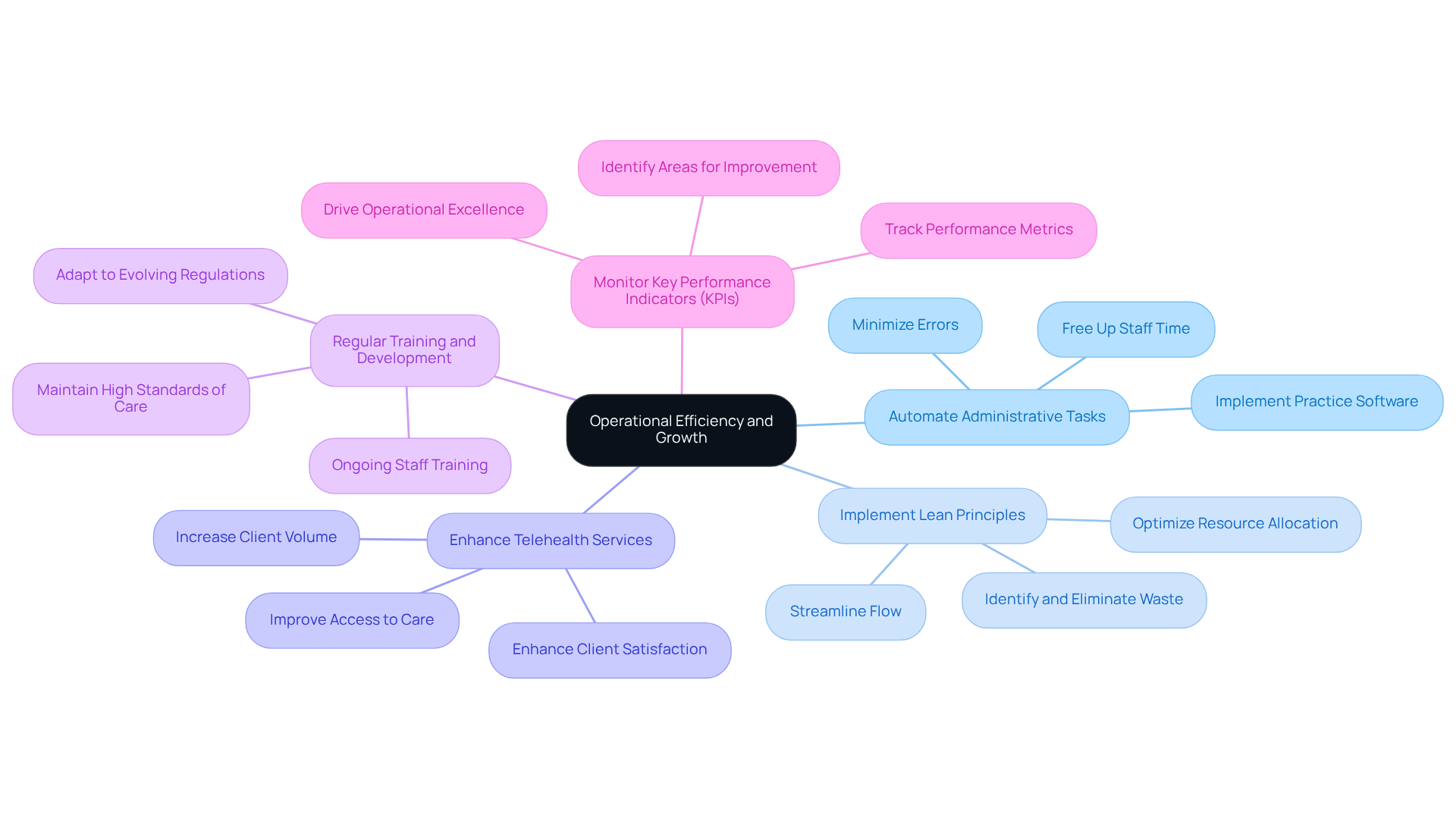
- Automate Administrative Tasks: Implement practice software to automate scheduling, billing, and documentation. This minimizes errors and frees up valuable staff time for care, which enhances service delivery. Healthcare Partners Consulting & Billing, LLC (HPC) offers comprehensive administrative and billing solutions that streamline these processes.
- Implement Lean Principles: Adopt lean management techniques to identify and eliminate waste in processes. Streamlining flow and optimizing resource allocation can significantly reduce wait times and enhance overall clinic efficiency.
- Enhance Telehealth Services: Expanding telehealth offerings improves access to care, particularly for individuals in remote areas. This strategy not only increases client volume but also enhances satisfaction, as individuals appreciate the convenience of virtual consultations. HPC facilitates telehealth integration through platforms such as TherapyNotes and SimplePractice, which ensures a smooth delivery of services.
- Regular Training and Development: Invest in ongoing training for staff to keep them updated on optimal methods and compliance requirements. A knowledgeable team is essential for maintaining high standards of care and adapting to evolving healthcare regulations. HPC emphasizes a compliance-first approach, ensuring that your team is well-equipped to meet industry standards.
- Monitor Key Performance Indicators (KPIs): Establish KPIs to track performance of the facility, such as satisfaction scores, revenue per individual, and appointment no-show rates. Regularly reviewing these metrics can help identify areas for improvement and drive operational excellence. With HPC’s comprehensive revenue cycle management customized for behavioral and mental health organizations, facilities can achieve significant enhancements in financial performance.
By implementing these strategies, mental health facilities can improve practice management in healthcare, achieving greater operational efficiency that ultimately leads to enhanced patient care and growth. The financial benefits of these strategies underscore their importance in the evolving landscape of mental health care.
Utilize Technology and Virtual Assistance for Streamlined Operations
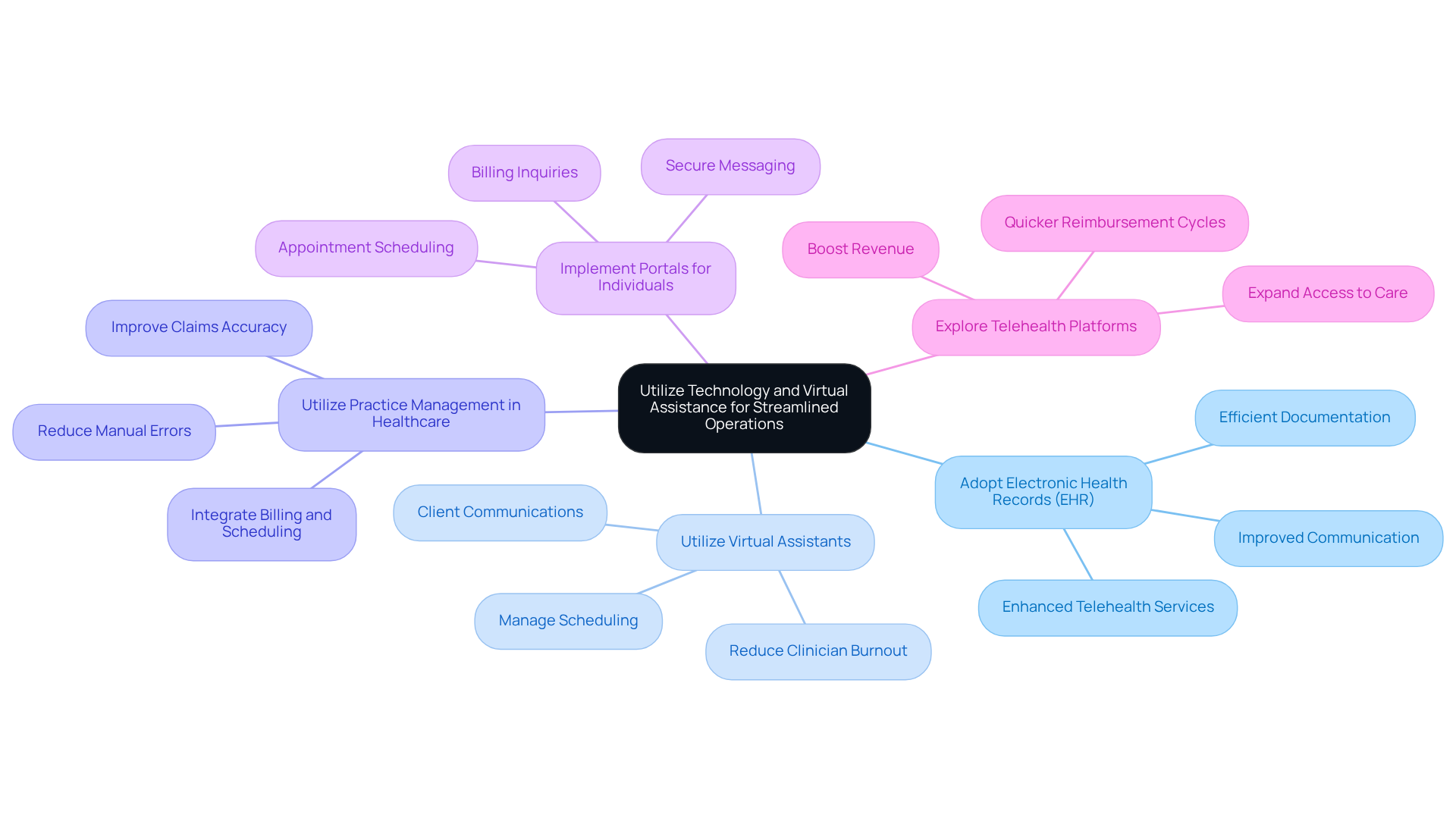
Mental health clinics face increasing administrative burdens that can hinder the quality of care. Incorporating technology and virtual assistance into clinic operations can significantly streamline processes and enhance efficiency. Here are some effective approaches:
- Adopt Electronic Health Records (EHR): Implementing a robust EHR system allows for efficient documentation and easy access to records. It also improves communication among staff. EHRs enhance telehealth services, simplifying the provision of care remotely and ensuring that nearly all encounters are documented electronically.
- Utilize Virtual Assistants: Employing virtual assistants can aid in managing scheduling, client communications, and administrative tasks. This enables in-house staff to concentrate on clinical responsibilities. As a result, overall productivity improves, and clinician burnout decreases.
- Utilize practice management in healthcare: Investing in comprehensive practice management in healthcare that integrates billing, scheduling, and compliance tracking can reduce manual errors and streamline workflows. This results in improved experiences for individuals and operational efficiency, with potential enhancements in claims accuracy and decreased denial rates.
- Implement Portals for Individuals: Offering portals for appointment scheduling, billing inquiries, and secure messaging enhances engagement and satisfaction. Patients appreciate the convenience of managing their healthcare online, which can lead to increased adherence to treatment plans.
- Explore Telehealth Platforms: Utilizing telehealth platforms expands access to care, particularly for individuals who may have difficulty attending in-person appointments. This not only enhances access for individuals but also boosts revenue for the practice, as telehealth services can result in quicker reimbursement cycles and better financial performance.
Embracing these technological advancements is not just beneficial; it is essential for the future of mental health care.
Conclusion
Effective practice management is not merely beneficial; it is essential for the success of mental health clinics. By prioritizing strategic oversight of clinical and administrative functions, healthcare providers can significantly reduce administrative burdens, allowing them to focus on what truly matters – delivering exceptional care to individuals. This approach enhances patient satisfaction while simultaneously strengthening the practice’s financial health.
Key components of successful practice management include:
- Robust financial oversight
- Workflow optimization
- Staff management
- Compliance adherence
- Patient engagement
Implementing strategies such as automating administrative tasks, adopting lean principles, and enhancing telehealth services is pivotal in achieving significant operational efficiency. Moreover, utilizing technology and virtual assistance can streamline processes, reduce errors, and ultimately enhance the quality of care provided.
The significance of effective practice management cannot be overstated. By embracing these best practices, mental health clinics can navigate the complexities of operational oversight and position themselves for sustainable success. Empowering healthcare providers through comprehensive revenue cycle management tailored to their unique needs is crucial. For those seeking to enhance their practice management, reaching out to Healthcare Partners Consulting & Billing, LLC (HPC) can provide the necessary support and expertise to thrive in today’s challenging healthcare landscape. Ultimately, the right support can turn operational challenges into avenues for growth and excellence in patient care.
Frequently Asked Questions
What is effective practice management in healthcare?
Effective practice management in healthcare involves strategic oversight of clinical and administrative operations, including scheduling, billing, compliance, and patient engagement, to improve care quality and operational efficiency.
How does effective practice management impact patient care?
It enables healthcare facilities to streamline workflows, minimize administrative challenges, and prioritize exceptional care, leading to enhanced patient satisfaction and reduced no-show rates.
What are the financial benefits of effective practice management?
Effective practice management can lead to a reduction in claim denials by 20-30% and quicker reimbursement timelines of 15-25% within 30-90 days, improving the overall financial health of the clinic.
How do integrated management systems contribute to practice management?
Integrated management systems, such as electronic health record (EHR) systems and telehealth solutions, enhance scheduling, decrease wait times, and increase satisfaction among patients.
What are the main challenges faced by mental health organizations in practice management?
The primary challenges are operational bottlenecks that hinder effectiveness, rather than patient demand, which can significantly impact practice management and financial performance.
What strategies can mental health organizations use to improve practice management?
By addressing operational bottlenecks and focusing on structured workflows for patient intake and follow-up, mental health organizations can enhance their practice management and service delivery.