

Introduction
Clinic owners encounter significant hurdles in managing neurology billing services, which can jeopardize financial stability and compliance. Intricate coding requirements and high rejection rates create significant challenges for practices aiming to maintain cash flow and deliver quality patient care.
Effective strategies for streamlining billing processes and enhancing revenue cycle management are essential for clinic owners in this demanding landscape. This article will discuss how best practices can help healthcare providers reduce administrative burdens, enabling them to concentrate on patient care.
Understand the Unique Challenges of Neurology Billing
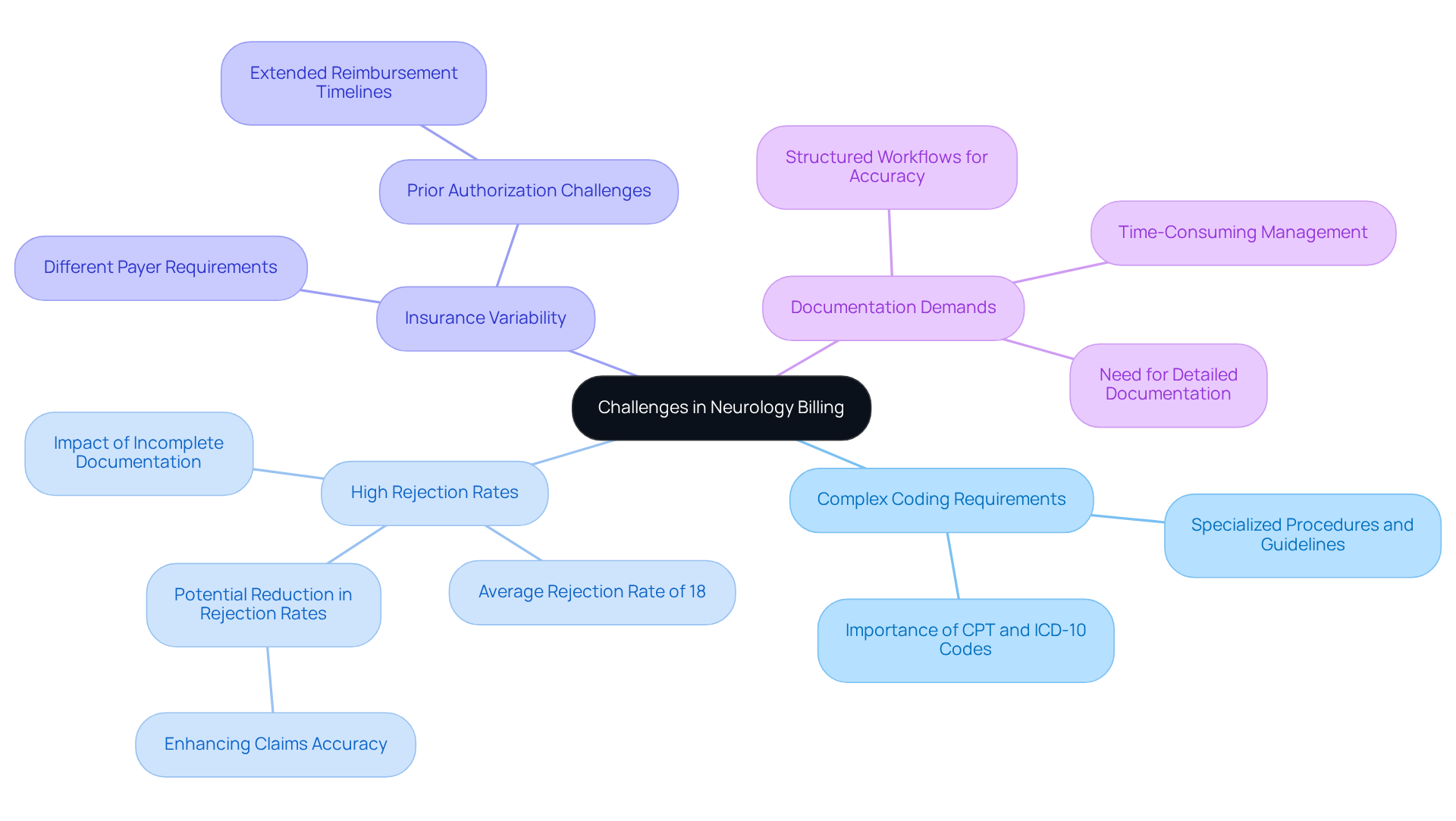
Navigating neurology billing services is fraught with challenges that clinic owners must address to secure accurate compensation and maintain compliance. Key issues include:
- Complex Coding Requirements: Neurology encompasses a variety of specialized procedures and diagnostic tests, each governed by specific coding guidelines. Mastery of CPT and ICD-10 codes is essential for accurate neurology billing services, as even minor errors can lead to significant revenue loss.
- High Rejection Rates: Neurology facilities frequently face rejection rates averaging around 18%. This issue primarily stems from incomplete documentation or coding errors, which can significantly impact revenue. Studies indicate that enhancing claims accuracy can lower rejection rates by 20-30%, underscoring the need for meticulous attention to detail.
- Insurance Variability: Different insurance providers impose varying requirements for neurology services, necessitating that practices remain vigilant and updated on payer policies and regulations. Claims requiring prior authorization can extend reimbursement timelines to 45-90 days, further complicating cash flow.
- Documentation Demands: Neurologists must provide detailed documentation to justify the medical necessity of services rendered. Managing this requirement can be time-consuming and may lead to errors, which in turn causes delays in reimbursement. Practices that implement structured workflows and real-time checks can enhance their documentation accuracy and reduce denial rates.
By acknowledging these challenges, clinic owners can implement proactive measures to mitigate risks and enhance their financial processes through neurology billing services. Addressing these challenges is not merely a matter of compliance; it is essential for sustaining the financial viability of neurology practices.
Implement Accurate Coding and Documentation Practices
To achieve accurate coding and documentation in neurology billing, clinic owners must adopt strategic best practices that address common challenges:
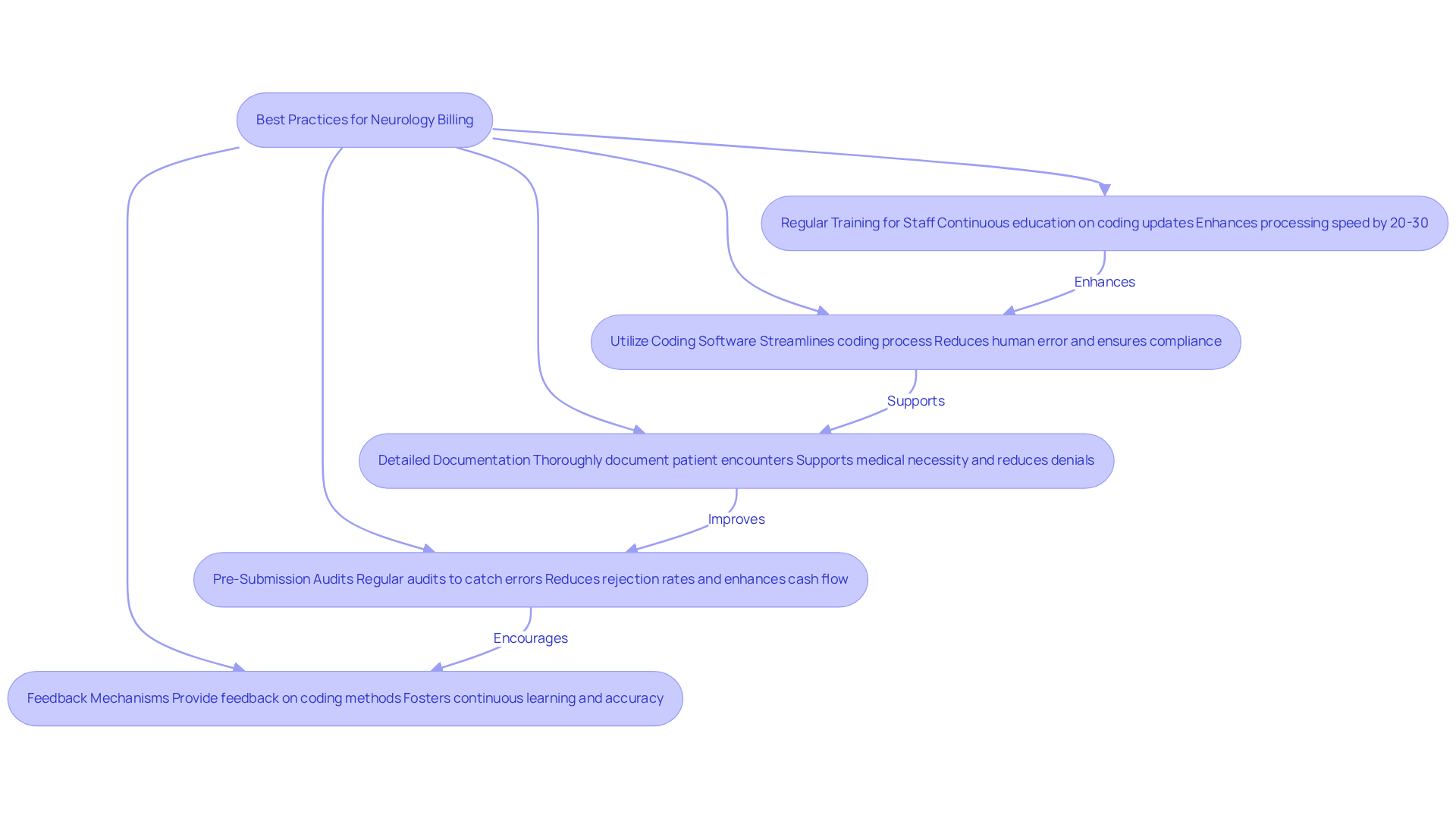
- Regular Training for Staff: Continuous education on the latest coding updates and documentation requirements is essential. Staff should be well-versed in the specific codes used in neurology to minimize errors. Comprehensive training programs can lead to enhancements in processing speed by 20-30% and significantly reduce management time. With denial rates in neurology averaging 18%, clinics face significant financial challenges that require effective solutions.
- Utilize Coding Software: Implementing specialized coding software can help streamline the coding process, reduce human error, and ensure compliance with the latest regulations. Such technology not only streamlines operations but also ensures adherence to accurate coding practices.
- Detailed Documentation: It’s crucial for providers to thoroughly document every aspect of patient encounters. This includes the reasoning for tests requested and treatments administered, which supports the medical necessity of the requests. Proper documentation is essential, as missing or unsigned interpretation reports are frequent triggers for refusals. Garvit Chouhan emphasizes that these reports remain the single most common trigger for EEG submissions.
- Pre-Submission Audits: Conduct regular audits of claims before submission to catch potential errors. This proactive approach can significantly reduce rejection rates and enhance cash flow. Clinics that implement changes in Q2 often experience a 15-25% drop in denial rates by Q4, which enhances their revenue cycle performance. Additionally, focusing on patient statements and claims management can address underpayments and aging claims, ensuring that clinics maintain a healthy cash flow.
- Feedback Mechanisms: Establish a system for providing feedback to staff on coding and documentation methods. This helps identify common mistakes and areas for improvement, fostering a culture of continuous learning that boosts accuracy in financial transactions.
By implementing these practices, neurology clinics can enhance their financial accuracy and ensure timely reimbursements with neurology billing services. Many practices experience faster reimbursements of 15-25% within 30-90 days after adopting these strategies. Ultimately, these strategies not only enhance financial accuracy but also position clinics for sustained growth and success in a competitive landscape.
Adopt Effective Denial Management Strategies
To effectively manage denials in neurology billing services, clinic owners must adopt a strategic approach that addresses common challenges and enhances revenue integrity.
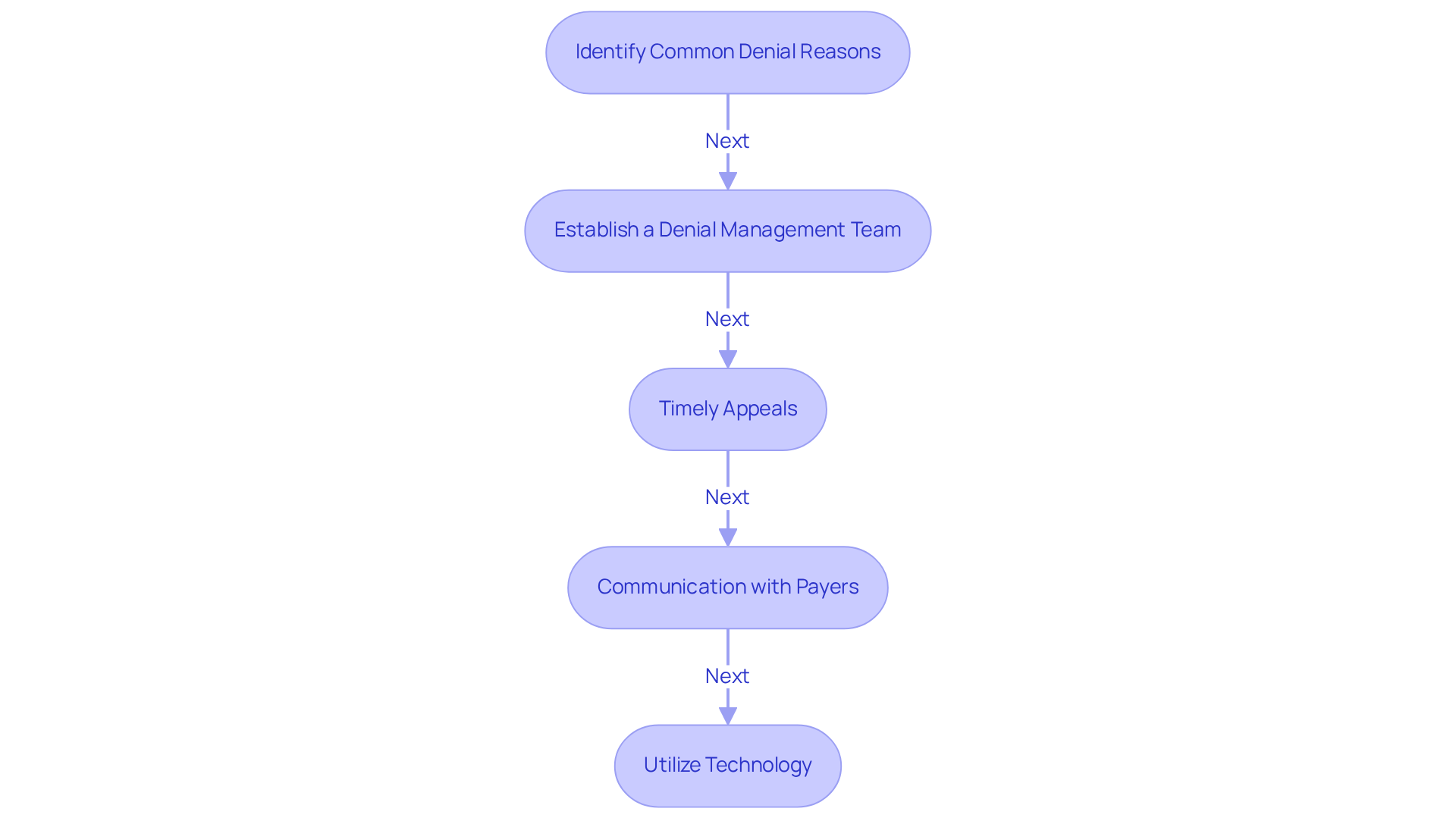
- Identify Common Denial Reasons: Analyze past denials to uncover patterns and frequent rejection reasons. This data can guide training initiatives and process improvements, as over 54% of initially denied requests are later approved, indicating that many rejections are avoidable. Practices can effectively address underpayments and unprocessed submissions by leveraging the expertise of Healthcare Partners Consulting.
- Establish a Denial Management Team: Designate a specialized group responsible for tracking, analyzing, and appealing denied requests. This team should possess comprehensive knowledge of neurology billing services intricacies, as effective claims management is essential for maintaining revenue integrity. With 39 years of experience, Healthcare Partners Consulting offers tailored support to enhance your team’s capabilities.
- Timely Appeals: Develop a streamlined process for appealing denied requests. Ensure that appeals are submitted without delay and include all essential documentation to support the request. Missing deadlines can result in refusals that are challenging to reverse, complicating the recovery of denied claims. Utilizing the fast follow-up services from Healthcare Partners Consulting can significantly improve your appeal success rate.
- Communication with Payers: Maintain open lines of communication with insurance payers to clarify denial reasons and resolve issues swiftly. Establishing connections with payer representatives can enable more efficient processing of requests and lessen administrative challenges. Healthcare Partners Consulting highlights how these relationships can significantly boost practice efficiency.
- Utilize Technology: Leverage technology solutions that provide real-time analytics on claim rejections and automate parts of the appeals process. Organizations that adopt such technologies can achieve reductions in claim rejections of 20-30% and quicker reimbursements of 15-25% within 30-90 days. Healthcare Partners Consulting integrates seamlessly with platforms like TherapyNotes and SimplePractice to streamline these processes.
By adopting these strategies, neurology practices can significantly reduce their rejection rates and enhance their neurology billing services and revenue cycle management. Ultimately, these strategies empower healthcare providers to prioritize patient care while ensuring financial stability.
Leverage Technology for Streamlined Billing Processes
To enhance billing processes effectively, neurology clinic owners must adopt innovative technological solutions that address common challenges:
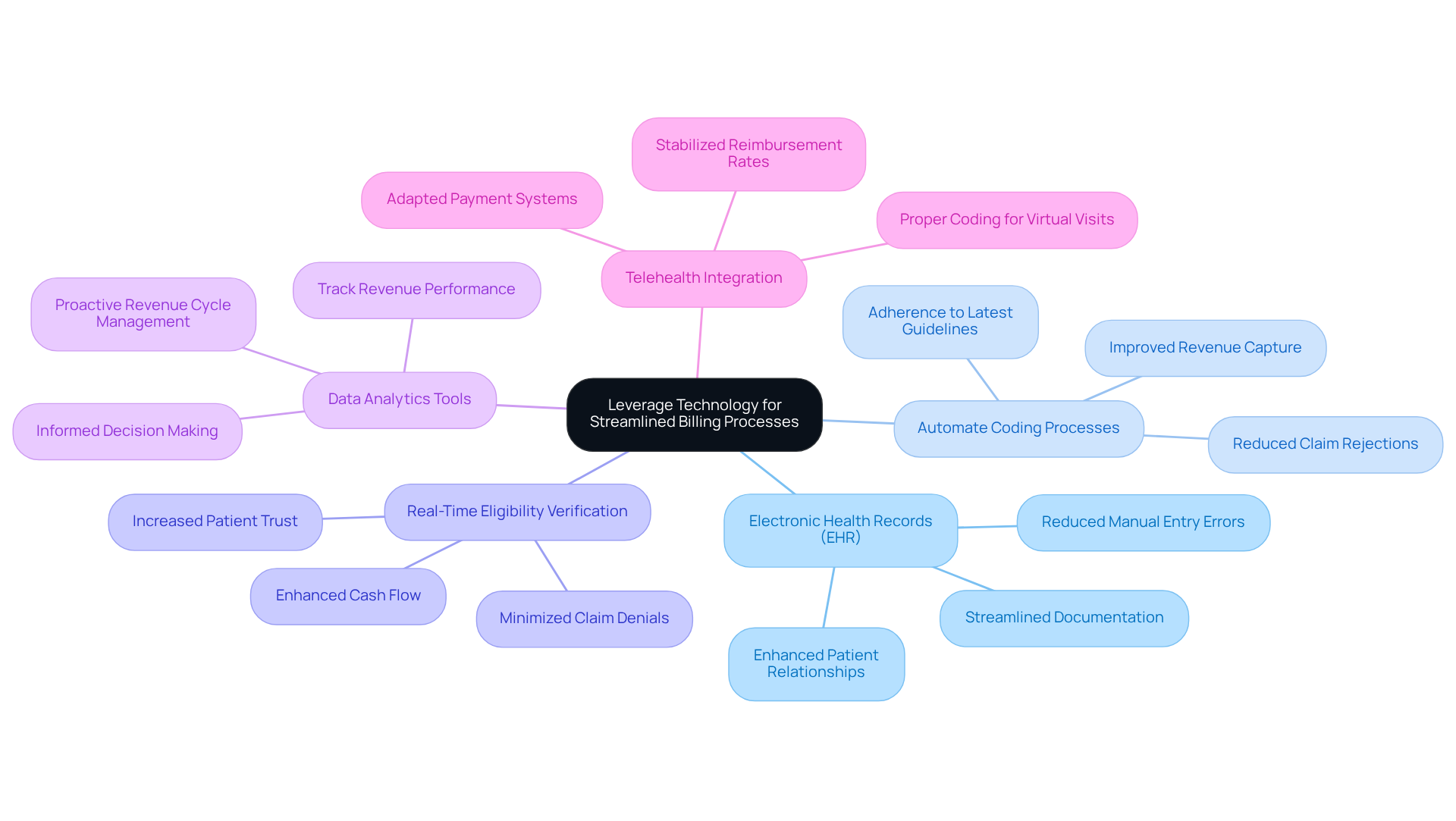
- Implement Electronic Health Records (EHR): EHR systems streamline documentation and billing by integrating clinical and billing data, significantly reducing manual entry errors. Manual entry errors can lead to costly billing mistakes and patient dissatisfaction. This integration boosts accuracy and helps build stronger, long-lasting relationships with patients. Healthcare Partners Consulting & Billing, LLC (HPC) emphasizes a compliance-first approach, ensuring that all EHR implementations meet regulatory standards.
- Automate Coding Processes: By utilizing advanced coding software, clinics can streamline their coding processes, adhere to the latest guidelines, and significantly reduce the risk of costly claim rejections. This automation is essential as neurology clinics encounter high rejection rates, where even minor inconsistencies can lead to substantial revenue loss. HPC’s expertise in behavioral and mental health billing ensures that organizations are equipped with the best tools for accurate coding.
- Real-Time Eligibility Verification: Implementing systems for real-time verification of patient insurance eligibility minimizes claim denials due to coverage issues, ultimately enhancing cash flow and patient trust in the clinic’s billing practices. This proactive approach can lead to quicker reimbursements, with entities achieving reimbursement rates of 15-25% within 30-90 days when effective strategies are employed. HPC’s customized solutions assist organizations in navigating the complexities of insurance verification.
- Data Analytics Tools: Utilizing analytics tools allows organizations to track revenue performance, recognize patterns, and make informed decisions, transforming revenue cycle management into a proactive process. By leveraging data insights, organizations can implement scorecard-driven adjustments linked to claims accuracy and denial rates, demonstrating operational rigor. HPC’s dedication to openness and innovation enhances methods in optimizing their financial strategies.
- Telehealth Integration: As telehealth becomes a permanent fixture in healthcare, adapting payment systems to accommodate these services is not just essential; it is crucial for clinics aiming to thrive in the modern healthcare landscape. This includes proper coding and documentation for virtual visits, which have matured significantly, with reimbursement rates stabilizing as of 2026. HPC’s experience in integrating telehealth solutions ensures that organizations can adapt to this evolving landscape.
By embracing these strategies, neurology practices can not only improve their neurology billing services but also elevate the standard of patient care they provide. As a veteran-owned company with 39 years of experience, Healthcare Partners Consulting & Billing, LLC (HPC) is dedicated to empowering healthcare providers by removing administrative burdens to allow focus on patient care.
Conclusion
Navigating the complexities of neurology billing services presents significant challenges that can impact both financial health and patient care. By understanding the unique challenges faced in this field, such as intricate coding requirements, high rejection rates, and the need for meticulous documentation, practices can implement effective strategies that streamline operations and empower healthcare providers to focus on patient care.
Key insights from this article highlight the importance of:
- Adopting accurate coding and documentation practices
- Establishing effective denial management strategies
- Leveraging technology to improve billing processes
Regular staff training, the use of specialized coding software, and proactive audits can significantly reduce errors and denial rates. Furthermore, integrating innovative technological solutions, such as electronic health records and real-time eligibility verification, can enhance efficiency and cash flow, ultimately leading to improved patient satisfaction.
In conclusion, implementing best practices in neurology billing is crucial for success. By focusing on compliance and operational excellence, clinics can secure their financial health and improve the quality of care they deliver. Embracing these strategies positions healthcare providers to thrive in a competitive landscape, ensuring that they can dedicate their efforts to what truly matters-caring for their patients. For personalized assistance with your billing processes, contact Healthcare Partners Consulting & Billing, LLC (HPC) at info@hpcbilling.com or call 888-517-4992 to discover how their expertise can enhance your practice.
Frequently Asked Questions
What are the main challenges in neurology billing services?
The main challenges include complex coding requirements, high rejection rates, insurance variability, and documentation demands.
Why is coding important in neurology billing?
Coding is crucial because neurology involves specialized procedures and diagnostic tests that require specific CPT and ICD-10 codes. Errors in coding can lead to significant revenue loss.
What is the average rejection rate for neurology claims?
Neurology facilities face an average rejection rate of around 18%, primarily due to incomplete documentation or coding errors.
How can practices reduce rejection rates in neurology billing?
Enhancing claims accuracy can lower rejection rates by 20-30%, highlighting the importance of meticulous attention to detail in the billing process.
What role does insurance variability play in neurology billing?
Different insurance providers have varying requirements for neurology services, which necessitates that practices stay updated on payer policies and regulations. This variability can complicate cash flow, especially with claims requiring prior authorization.
What are the documentation demands for neurologists?
Neurologists must provide detailed documentation to justify the medical necessity of services rendered, which can be time-consuming and may lead to errors that delay reimbursement.
How can practices improve their documentation accuracy?
Implementing structured workflows and real-time checks can enhance documentation accuracy and reduce denial rates in neurology billing.
Why is it important for clinic owners to address these billing challenges?
Addressing these challenges is essential for sustaining the financial viability of neurology practices and ensuring compliance with billing regulations.