

Introduction
In mental health clinics, the management of revenue cycle denials is often underestimated, yet it plays a pivotal role in financial sustainability. While healthcare providers aim to deliver quality care, administrative tasks often overshadow their primary focus on patient well-being. This article examines the key components of effective denials management, demonstrating how a strategic approach enhances revenue recovery and operational efficiency.
Mental health practices encounter various challenges with claim rejections; however, by adopting best practices, they can convert these challenges into growth opportunities.
Define Denials Management in Healthcare Revenue Cycle
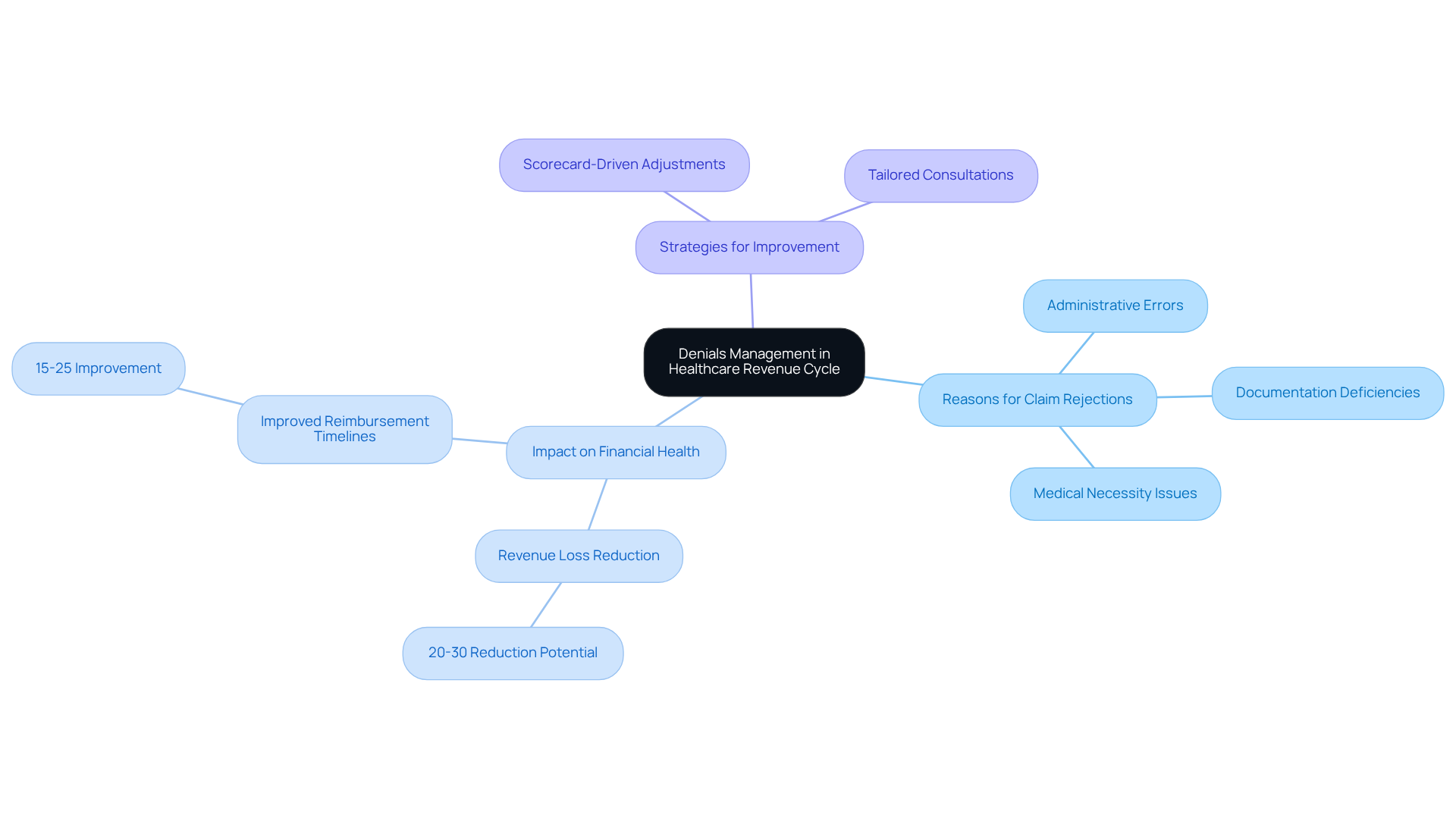
Revenue cycle denials management in the healthcare sector is essential for ensuring that healthcare providers receive the reimbursement they deserve. This process involves understanding the various reasons behind claim rejections, which can include:
- Administrative errors
- Documentation deficiencies
- Issues related to medical necessity
Addressing claim rejections is crucial for the financial health of mental health facilities, and effective revenue cycle denials management directly affects cash flow and operational efficiency. Implementing a comprehensive revenue cycle denials management strategy can reduce revenue loss by 20-30% and improve reimbursement timelines by 15-25% within 30 to 90 days.
Moreover, scorecard-driven adjustments related to claims accuracy, rejection rates, and days in accounts receivable can enhance operational rigor, ensuring that healthcare providers are compensated fairly for their services.
At Healthcare Partners Consulting & Billing, LLC (HPC), we provide tailored consultations to help you find the best administrative solutions for your practice. Our data-driven guidance assists you in addressing the appropriate rejections swiftly, ensuring you recover the revenue you’ve earned and grow your practice sustainably. Partnering with us can transform your approach to claim resolution, ensuring your practice thrives in a challenging financial landscape.
Identify Key Components of Effective Denials Management
Effective management of rejections through revenue cycle denials management is critical for optimizing healthcare revenue cycles and minimizing financial losses. Several essential elements collaborate to streamline this process and lower rejection rates. These components include:
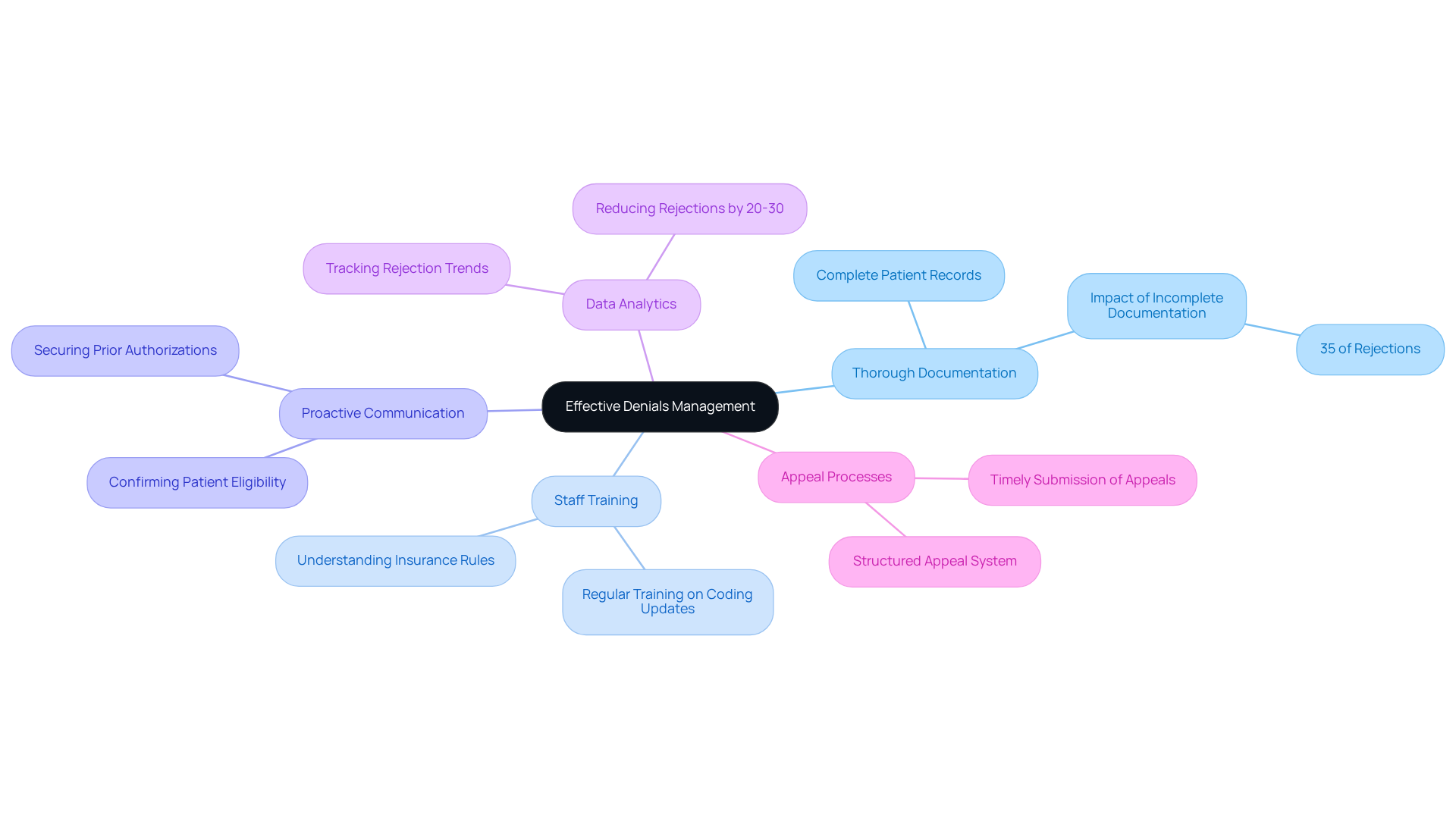
- Thorough Documentation: Ensuring that all patient records, treatment notes, and billing information are complete and accurate is crucial. Insufficient documentation often leads to claim rejections, creating financial strain on healthcare facilities, representing around 35% of all rejections due to incomplete or flawed medical documentation.
- Staff Training: Regular training for billing and administrative staff on coding updates, payer requirements, and best practices can significantly reduce errors that result in claim rejections. Continuous education enhances understanding of insurance rules and medical necessity, which is vital for minimizing costly mistakes.
- Proactive Communication: Establishing clear lines of communication with payers can help resolve issues before they develop into refusals. This involves confirming patient eligibility and acquiring prior authorizations when needed, as failing to secure necessary prior authorizations ensures a rejection.
- Data Analytics: Analytics tools help track rejection trends and root causes, allowing healthcare facilities to identify patterns and implement corrective actions effectively. Consistent tracking of rejection handling metrics is essential for success and ongoing enhancement, enabling healthcare facilities to decrease reimbursement rejections by 20-30%. Healthcare Partners Consulting (HPC) provides specialized analytics that can assist practices in understanding their rejection rates and enhancing their revenue cycle denials management.
- Appeal Processes: Creating a structured appeal system for rejected claims ensures that healthcare facilities can effectively challenge refusals and recover lost revenue. This includes submitting appeals promptly and documenting the reasons for reversing refusals, which is vital for stabilizing cash flow and enhancing patient satisfaction. A strong appeals process can lead to faster reimbursement, improving recovery rates within 30-90 days.
A well-structured approach to managing rejections not only safeguards revenue but also enhances patient trust and satisfaction.
Leverage Technology for Enhanced Denials Management
Integrating technology into revenue cycle denials management is crucial for enhancing operational efficiency and effectiveness in mental health clinics. Healthcare Partners Consulting & Billing, LLC (HPC), a veteran-owned business with 39 years of expertise, provides adaptable service plans customized to the size of your practice and volume of submissions. Key technological solutions include:
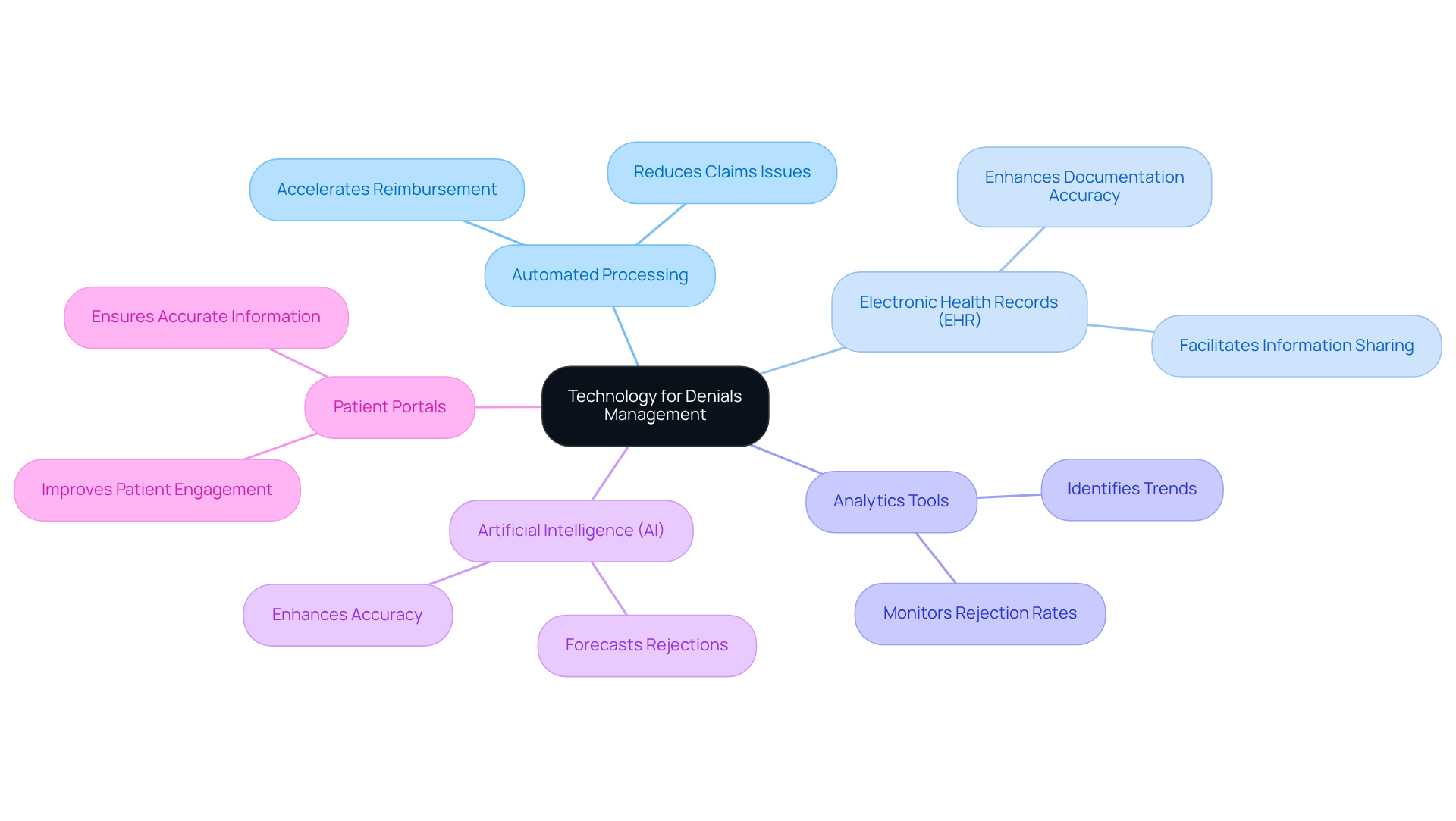
- Automated Processing of Submissions: Implementing software that automates the submission process minimizes human error, ensuring submissions are made accurately and on time. This automation can lead to a reduction in claims issues of 20-30% and accelerate reimbursement by 15-25% within 30-90 days. Accurate submissions are essential for decreasing denial rates and enhancing operational efficiency, which is a key focus in revenue cycle denials management, as emphasized by industry experts.
- Electronic Health Records (EHR): Utilizing EHR systems, such as those integrated with TherapyNotes, SimplePractice, Valant, AdvancedMD, and IntakeQ, enhances documentation accuracy and accessibility. This facilitates the provision of necessary information for submissions and appeals. Improved documentation supports clearer assertions, which are vital for sustaining cash flow and minimizing administrative burdens.
- Analytics Tools: Advanced analytics platforms enable clinics to monitor rejection rates, identify trends, and evaluate the effectiveness of their management strategies for denials. This data-driven strategy promotes ongoing enhancement and operational discipline, enabling scorecard-driven modifications linked to the accuracy of submissions and days in accounts receivable.
- Artificial Intelligence (AI): AI aids in forecasting possible rejections by examining historical data and recognizing trends that result in payment disputes. This proactive approach empowers clinics to address issues before they result in revenue cycle denials management, thereby enhancing overall revenue cycle performance. Integrating AI can significantly streamline the process of managing requests and enhance accuracy.
- Patient Portals: Offering patient portals facilitates better communication and information sharing, ensuring patients provide accurate information that supports the claims process. Improved patient engagement can further reduce denial rates and enhance the efficiency of revenue cycle denials management. However, healthcare facilities should be aware of the challenges associated with implementing these technologies, such as the need for human validation and the potential costs and time involved in integration.
Ultimately, these advancements allow mental health practices to prioritize patient care while optimizing their revenue cycle management.
Implement Best Practices for Successful Denials Management
Effective denials management is crucial for the financial health of mental health clinics, necessitating a structured approach to best practices:
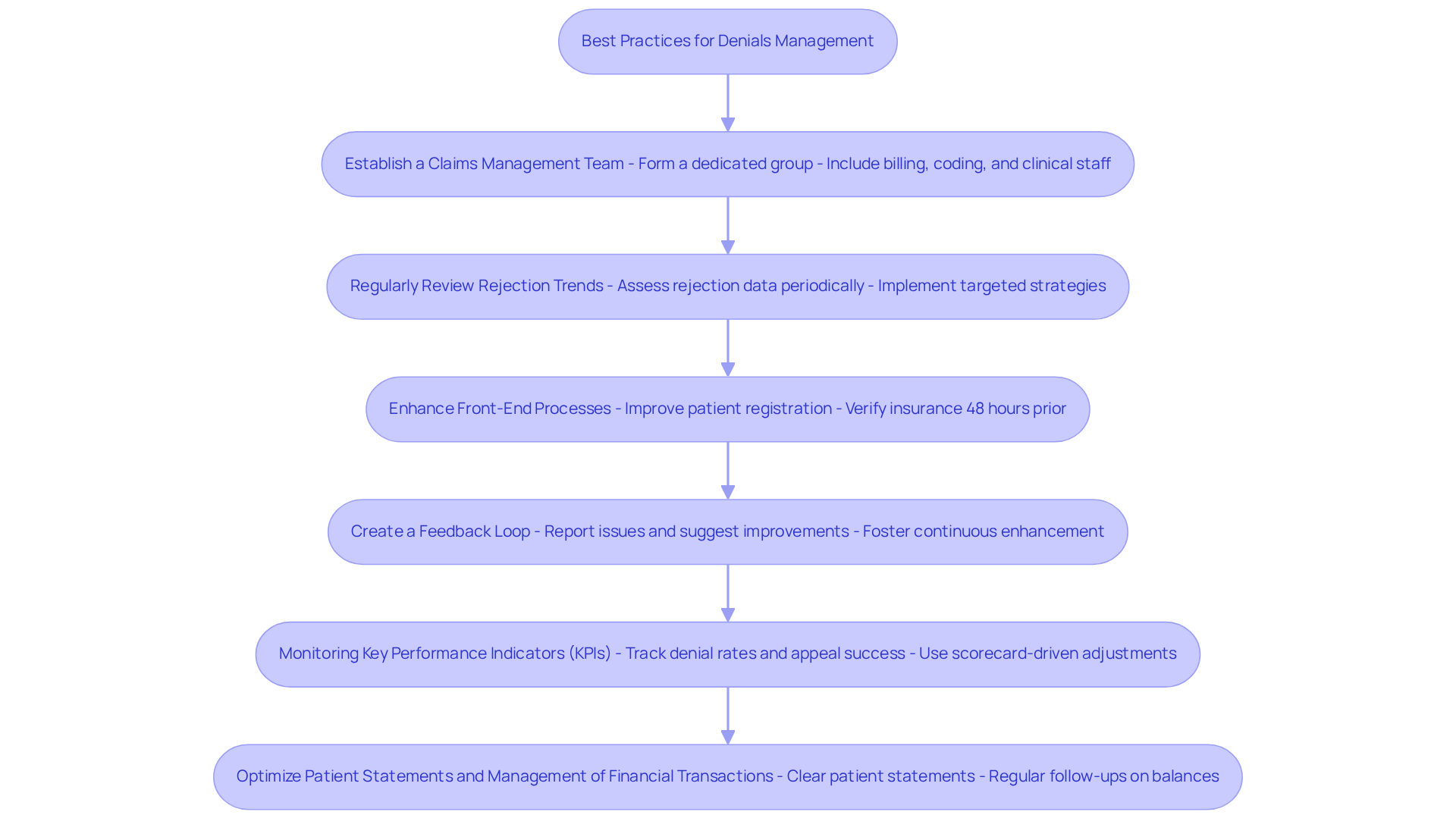
- Establish a Claims Management Team: Forming a dedicated group responsible for overseeing claims management ensures that submissions are monitored, analyzed, and addressed promptly. This team should include representatives from billing, coding, and clinical staff to foster collaboration, emphasizing a compliance-first approach to uphold regulatory standards.
- Regularly Review Rejection Trends: Conducting periodic assessments of rejection data helps clinics identify recurring issues and implement targeted strategies to address them. Examining rejection patterns can result in a decrease in refusals by 20-30%, greatly enhancing revenue cycle denials management, as highlighted in industry research.
- Enhance Front-End Processes: Improving front-end processes, such as patient registration and eligibility verification, can prevent many rejections from occurring in the first place. Implementing comprehensive insurance verification protocols 48 hours before patient sessions ensures current information about coverage and authorization requirements. Jacob Orth highlights that preventing rejections starts before the first appointment, emphasizing the importance of comprehensive insurance verification protocols.
- Create a Feedback Loop: Establishing a feedback mechanism where staff can report issues and suggest improvements fosters a culture of continuous enhancement in claims oversight. Implementing this method can lead to reimbursement rates improving by 15-25% within 30-90 days, enhancing overall operational efficiency.
- Monitoring Key Performance Indicators (KPIs): Monitoring KPIs related to revenue cycle denials management, such as denial rates and appeal success rates, provides valuable insights into the effectiveness of the clinic’s strategies. Employing scorecard-driven adjustments linked to accuracy of submissions and days in accounts receivable showcases operational rigor and emphasizes areas for further enhancement. Furthermore, monitoring appeal outcomes produces valuable insights that enhance future submission practices.
- Optimize Patient Statements and Management of Financial Transactions: Effective handling of patient statements is essential in addressing underpayments, unprocessed submissions, and aging transactions. By ensuring that patient statements are clear and precise, healthcare facilities can reduce confusion and enhance payment rates. Regular follow-ups on outstanding balances and claims can further enhance revenue cycle efficiency, allowing clinics to focus more on patient care rather than administrative burdens. With nearly four decades of experience, Healthcare Partners Consulting & Billing, LLC (HPC) focuses on empowering healthcare providers by streamlining administrative processes and ensuring compliance in billing practices.
By adopting these strategies, clinics can not only enhance their revenue cycle but also ensure a more streamlined patient experience, ultimately leading to better care outcomes.
Conclusion
Navigating the complexities of revenue cycle denials management is essential for mental health clinics aiming for financial stability and operational efficiency. By understanding that navigating the complexities of claim rejections can be challenging for healthcare providers, a structured approach can significantly enhance their revenue cycle processes. Effective denials management safeguards financial health and enables practitioners to prioritize quality patient care.
Key components of successful denials management include:
- Thorough documentation
- Staff training
- Proactive communication
- Leveraging technology
Each of these elements plays a crucial role in minimizing claim rejections and ensuring timely reimbursements. By adopting best practices such as establishing dedicated claims management teams and regularly reviewing rejection trends, clinics can create a robust framework that supports sustainable growth and improved patient satisfaction.
Effective denials management not only impacts financial metrics but also cultivates a culture of empowerment and innovation in healthcare practices. By prioritizing compliance and operational excellence, mental health clinics can navigate the complexities of the revenue cycle with confidence. Engaging with experts like Healthcare Partners Consulting & Billing, LLC (HPC) can further enhance these efforts, ensuring that healthcare providers are equipped to thrive in a challenging landscape. For more information on how to optimize your practice’s revenue cycle, reach out to HPC at info@hpcbilling.com or call 888-517-4992.
Frequently Asked Questions
What is denials management in healthcare revenue cycle?
Denials management in healthcare revenue cycle refers to the process of addressing claim rejections to ensure healthcare providers receive the reimbursement they deserve. It involves understanding the reasons behind claim rejections, such as administrative errors, documentation deficiencies, and issues related to medical necessity.
Why is addressing claim rejections important for healthcare providers?
Addressing claim rejections is crucial for the financial health of healthcare providers, particularly mental health facilities. Effective denials management directly impacts cash flow and operational efficiency, helping to ensure that providers are compensated fairly for their services.
What are the potential benefits of implementing a comprehensive denials management strategy?
Implementing a comprehensive denials management strategy can reduce revenue loss by 20-30% and improve reimbursement timelines by 15-25% within 30 to 90 days.
How can scorecard-driven adjustments improve operational efficiency in denials management?
Scorecard-driven adjustments related to claims accuracy, rejection rates, and days in accounts receivable can enhance operational rigor, ensuring that healthcare providers are compensated fairly and efficiently for their services.
What services does Healthcare Partners Consulting & Billing, LLC (HPC) offer regarding denials management?
HPC provides tailored consultations to help healthcare practices find the best administrative solutions for addressing claim rejections swiftly. Their data-driven guidance assists practices in recovering earned revenue and growing sustainably.