
Introduction
Navigating the complexities of the Medicaid Fee Schedule in Florida is crucial for clinics seeking to enhance their financial performance and patient care. This guide outlines the critical components of the fee schedule, including key CPT codes and their applications, while addressing administrative challenges that hinder compliance and efficiency.
Clinics often struggle with the complexities of the Medicaid Fee Schedule, which can impede their financial performance. By mastering these complexities, clinics can enhance their financial performance and focus on delivering high-quality care.
Define the Medicaid Fee Schedule in Florida
The Medicaid fee schedule Florida establishes critical payment parameters for healthcare services provided to Medicaid recipients. Managed by the Agency for Health Care Administration (AHCA), the Medicaid fee schedule Florida is updated annually to reflect shifts in healthcare costs and policy changes. It includes specific Current Procedural Terminology (CPT) codes linked to various services, ensuring equitable reimbursement for providers according to the Medicaid fee schedule Florida.
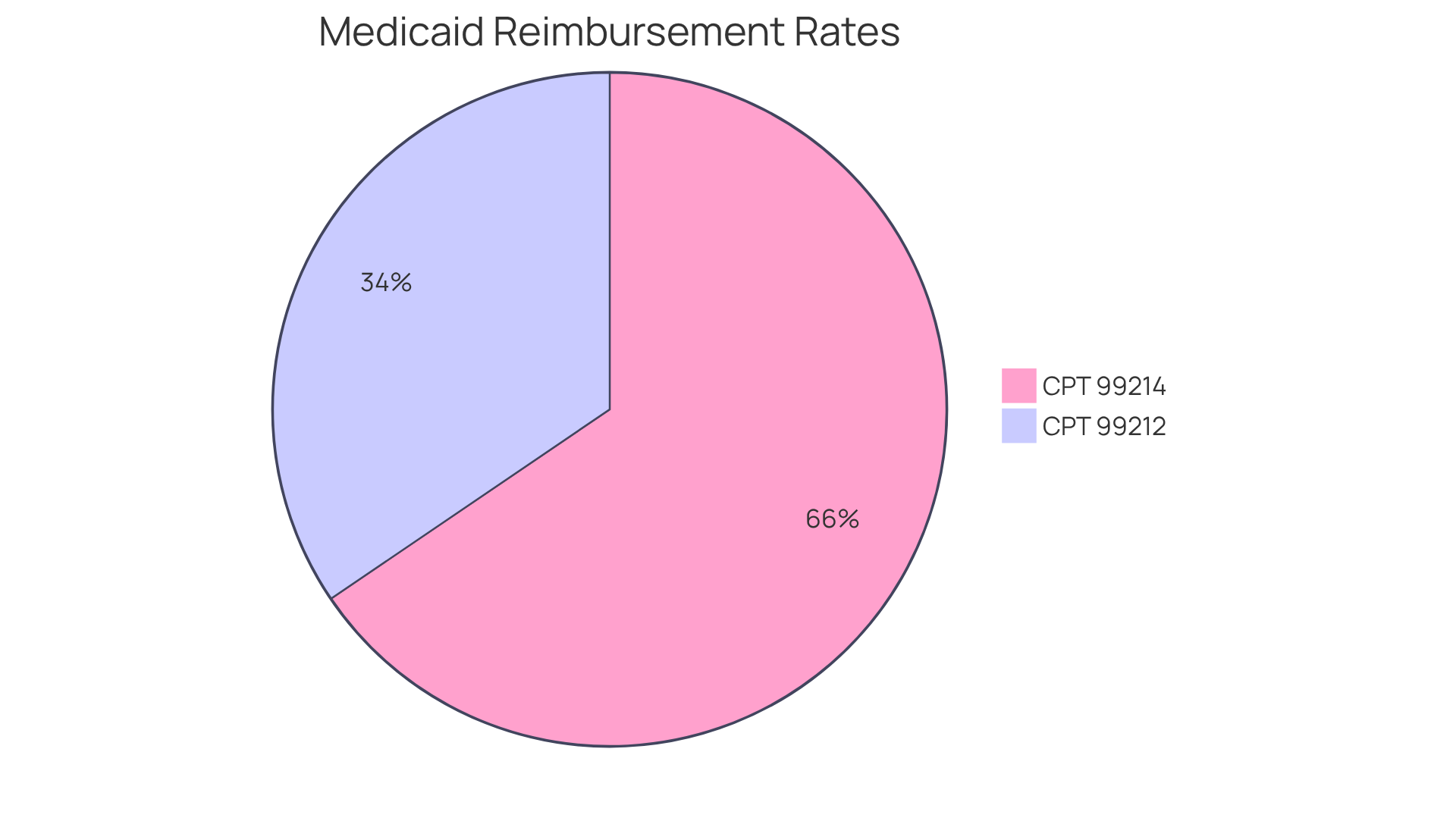
For example, in 2026, the reimbursement for a brief visit (CPT 99212) is set at $28.14, while a 30-minute visit (CPT 99214) is reimbursed at $53.43. Healthcare facilities must comprehend these rates to navigate billing processes effectively and ensure compliance with state regulations.
Furthermore, optimizing statements for individuals and addressing underpayments, unprocessed claims, and aging claims are essential elements of effective claims management. With 39 years of experience, Healthcare Partners Consulting emphasizes the necessity of staying informed about the Medicaid fee schedule Florida updates to improve financial outcomes and operational efficiency. By concentrating on these areas, clinics can lessen administrative burdens, enhance care quality, and ensure financial stability.
Explore Key CPT Codes and Their Applications
Understanding CPT codes is crucial for mental health providers to navigate the complexities of Medicaid billing effectively. In Florida, several key CPT codes are frequently utilized in mental health practices, including:
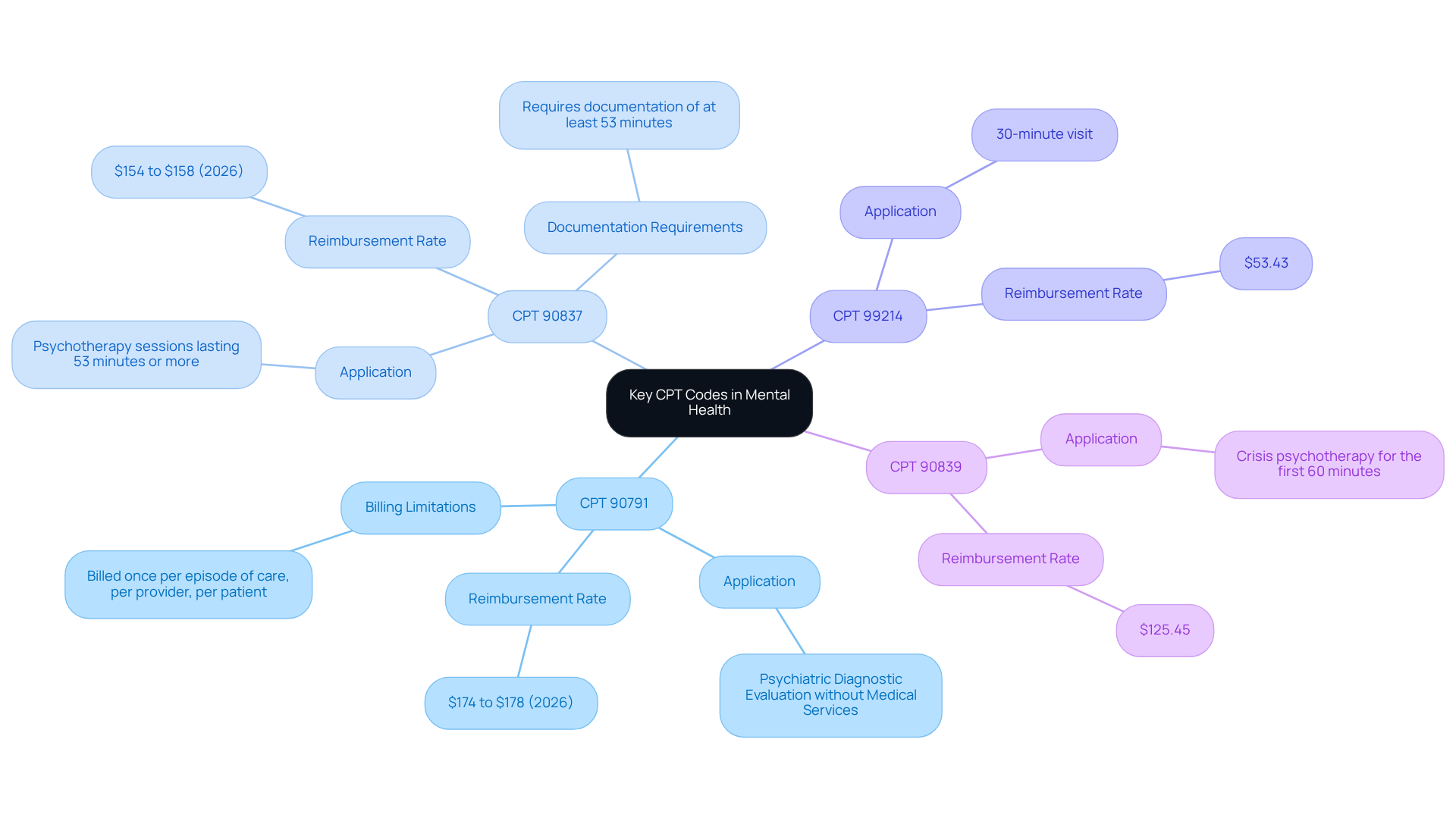
- CPT 90791: This code is for psychiatric diagnostic evaluations without medical services, reimbursed at approximately $174 to $178 in 2026. It is important to note that this code can only be billed once per episode of care, per provider, per patient.
- CPT 90837: Covering psychotherapy sessions lasting 53 minutes or more, this code has a reimbursement rate of $154 to $158. Billing for this code requires documentation of at least 53 minutes to avoid upcoding issues.
- CPT 99214: Applicable for a 30-minute visit, this code is reimbursed at $53.43.
- CPT 90839: This code is used for crisis psychotherapy for the first 60 minutes, with a reimbursement rate of $125.45.
Grasping these codes and their uses is essential for mental health providers to ensure precise invoicing and enhance revenue. Failure to stay updated on changes to these codes can lead to significant revenue loss for practices. For instance, outsourcing invoicing to Healthcare Partners Consulting can reduce denials by 20-30% and enhance reimbursement times by 15-25% within 30-90 days. Our team, including a financial manager and accounts receivable supervisor, streamlines administrative tasks, allowing providers to concentrate on patient care and financial sustainability. By prioritizing accurate coding and efficient invoicing, providers can significantly enhance their financial health and focus on delivering quality patient care.
Address Administrative Challenges and Compliance Requirements
Mental health clinics face significant obstacles in the complex realm of Medicaid billing. Key issues include:
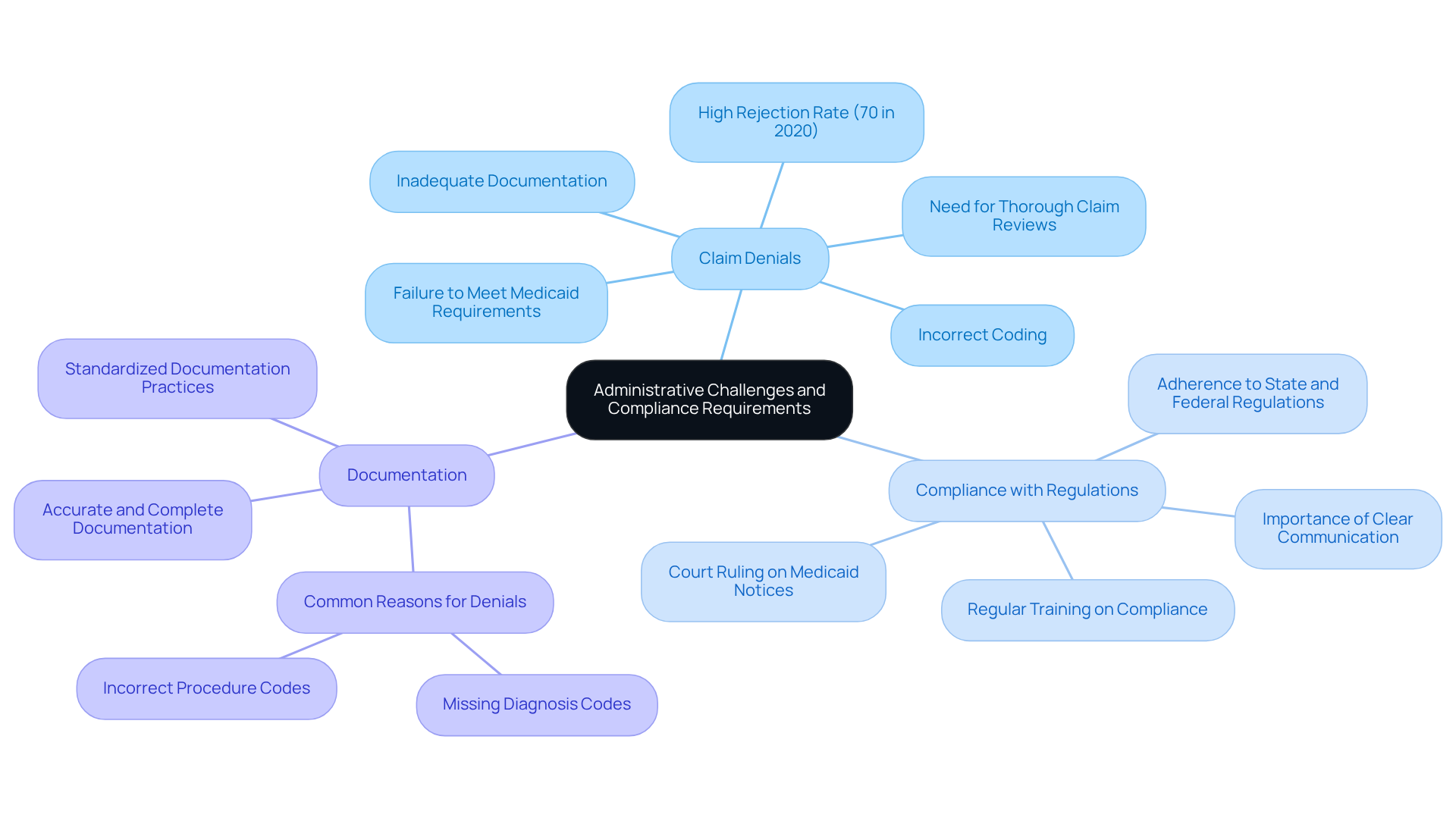
- Claim Denials: A significant portion of claims are denied due to incorrect coding, inadequate documentation, or failure to meet Medicaid’s specific requirements. In 2020, this high rejection rate highlighted the critical need for meticulous claim preparation, as around 70% of requests for individuals undergoing treatment for mental health issues were rejected. To mitigate this, providers must conduct thorough reviews of all claims before submission. This ensures compliance with Medicaid guidelines.
- Compliance with Regulations: Adhering to state and federal regulations, particularly those established by the Agency for Health Care Administration (AHCA), is essential. Regular training and updates on compliance requirements are essential to avoid penalties and maintain legal compliance. The recent court ruling mandating clearer communication from Florida’s Medicaid agency underscores the importance of compliance in maintaining patient access to care.
- Documentation: Accurate and complete documentation is vital for successful billing. Common reasons for claim denials include missing or incorrect diagnosis and procedure codes, which accounted for a significant percentage of denied claims. Providers should adopt standardized documentation practices to capture all necessary information during patient visits, thereby reducing the likelihood of denials.
To explore tailored solutions, schedule a 30-minute consultation with Healthcare Partners Consulting & Billing, LLC (HPC). During this call, we will outline your current workflow and pinpoint the comprehensive revenue cycle management services customized specifically for behavioral and mental health practices that will drive progress most effectively for your organization. By proactively addressing these billing challenges, clinics can enhance their operational efficiency and prioritize patient care.
Implement Strategies for Revenue Optimization and Efficiency
Mental health clinics often struggle with revenue optimization and operational efficiency, but several strategies can address these challenges effectively:
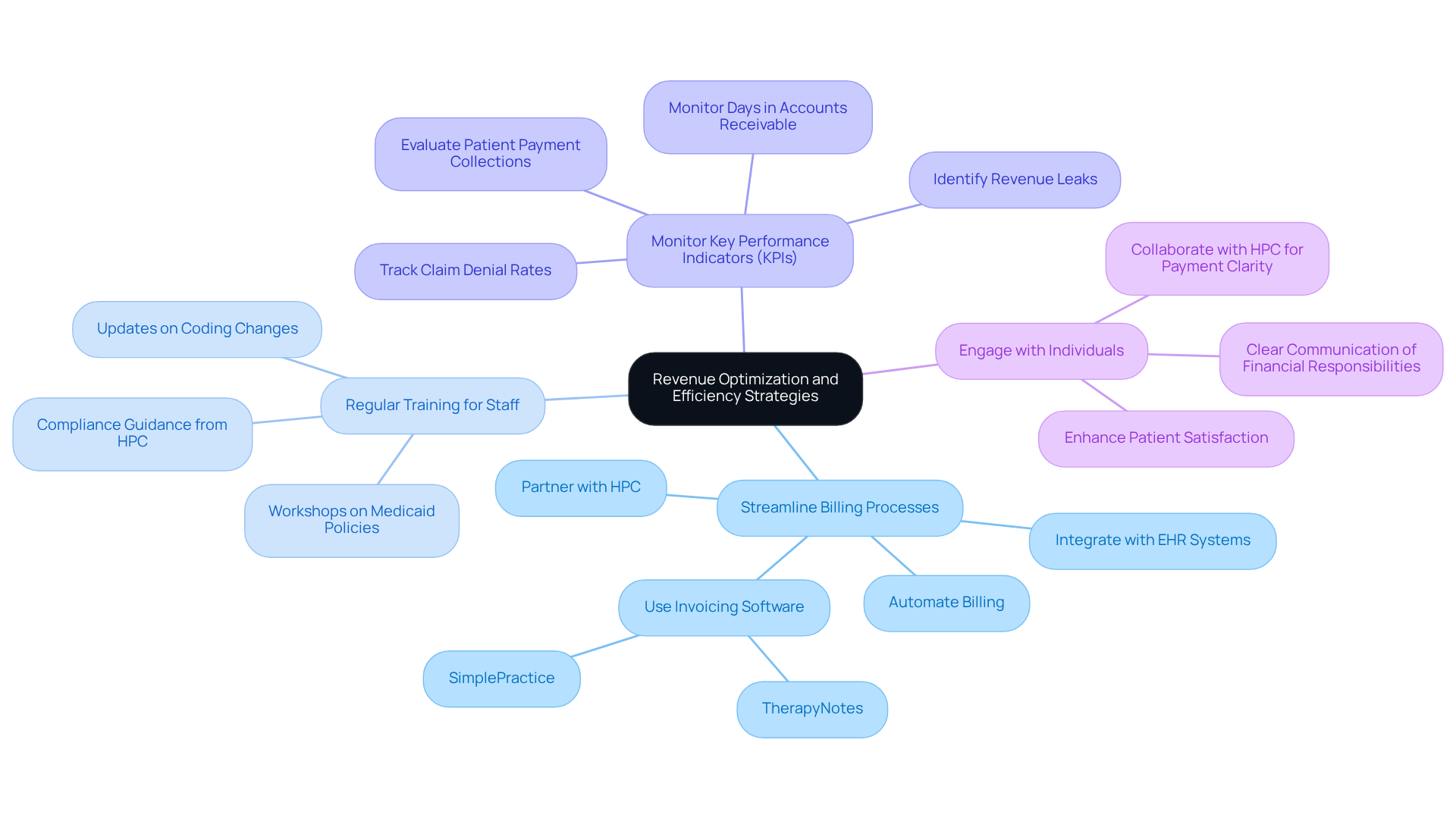
- Streamline Billing Processes: Automating billing processes significantly reduces errors and improves claim submission times. Investing in invoicing software that integrates seamlessly with electronic health records (EHR) systems, such as TherapyNotes and SimplePractice, can enhance accuracy and efficiency. Healthcare Partners Consulting & Billing, LLC (HPC) provides comprehensive medical invoicing solutions that streamline these processes, enabling clinics to concentrate on patient care.
- Regular Training for Staff: Ensuring that personnel involved in billing are well-versed in the Medicaid fee schedule Florida and its policies and procedures minimizes errors and enhances compliance. Regular workshops and updates on coding changes are essential for maintaining high standards in billing practices. Healthcare Partners Consulting provides expert guidance on compliance, ensuring that your team is always informed and prepared.
- Monitor Key Performance Indicators (KPIs): Tracking KPIs such as claim denial rates, days in accounts receivable, and patient payment collections provides valuable insights into areas needing improvement. Regularly reviewing these metrics enables healthcare facilities to adjust their strategies proactively, leading to improved financial outcomes. With Healthcare Partners Consulting’s data-driven guidance, clinics can identify hidden revenue leaks and enhance their invoicing practices.
- Engage with Individuals: When individuals understand their coverage and payment processes, collection rates tend to improve. Clear communication regarding financial responsibilities enhances satisfaction and reduces the likelihood of unpaid claims. By collaborating with Healthcare Partners Consulting, healthcare facilities can ensure that their payment processes are clear and patient-friendly.
By implementing these strategies, healthcare facilities can enhance their revenue cycle management, reduce administrative burdens, and focus more on delivering quality patient care. Without these strategies, clinics risk falling behind in an increasingly competitive healthcare landscape. Research indicates that facilities implementing automated payment solutions often see denial rates decrease by 20-30% within 30-90 days and encounter quicker reimbursement times of 15-25% during the same period, highlighting the efficacy of these methods. Additionally, as a veteran-owned business with 39 years of experience, Healthcare Partners Consulting is uniquely positioned to support mental health clinics in navigating the complexities of billing and compliance.
Conclusion
Mastering the Medicaid Fee Schedule is crucial for clinics striving to optimize revenue and enhance patient care. Navigating Medicaid billing can be challenging without a clear understanding of the fee schedule. Healthcare providers can simplify this process by focusing on key CPT codes and compliance requirements. This knowledge empowers clinics to secure appropriate reimbursements and reduces administrative burdens. As a result, practitioners can focus on delivering high-quality care.
Throughout this tutorial, we have shared critical insights regarding the importance of accurate coding, the necessity of thorough documentation, and the implementation of streamlined billing processes. Strategies such as regular staff training, monitoring key performance indicators, and engaging with patients about their financial responsibilities are vital for improving operational efficiency. By leveraging the expertise of Healthcare Partners Consulting & Billing, LLC (HPC), clinics can significantly reduce claim denials and enhance their financial health.
Mastering the Medicaid Fee Schedule is not just about compliance; it fosters an environment where healthcare providers can thrive. By prioritizing effective billing practices and embracing a compliance-first approach, clinics can ensure their sustainability and continue to provide essential services to their communities. Collaborating with a dedicated billing team like HPC streamlines these efforts, enabling providers to focus on patient care. For tailored solutions and expert guidance, consider reaching out to Healthcare Partners Consulting at info@hpcbilling.com or call 888-517-4992 to explore how to enhance your clinic’s revenue cycle management today.
Frequently Asked Questions
What is the Medicaid fee schedule in Florida?
The Medicaid fee schedule in Florida establishes payment parameters for healthcare services provided to Medicaid recipients and is managed by the Agency for Health Care Administration (AHCA).
How often is the Medicaid fee schedule in Florida updated?
The Medicaid fee schedule in Florida is updated annually to reflect changes in healthcare costs and policy.
What are Current Procedural Terminology (CPT) codes?
CPT codes are specific codes linked to various healthcare services that ensure equitable reimbursement for providers according to the Medicaid fee schedule.
Can you provide examples of reimbursement rates from the Medicaid fee schedule in Florida?
For example, in 2026, the reimbursement for a brief visit (CPT 99212) is set at $28.14, while a 30-minute visit (CPT 99214) is reimbursed at $53.43.
Why is it important for healthcare facilities to understand the Medicaid fee schedule?
Understanding the Medicaid fee schedule is crucial for healthcare facilities to navigate billing processes effectively and ensure compliance with state regulations.
What are some key elements of effective claims management related to the Medicaid fee schedule?
Key elements include optimizing statements for individuals, addressing underpayments, managing unprocessed claims, and handling aging claims.
How can staying informed about the Medicaid fee schedule updates benefit clinics?
Staying informed can improve financial outcomes and operational efficiency, lessen administrative burdens, enhance care quality, and ensure financial stability for clinics.