

Introduction
Mastering revenue cycle management in medical coding is essential for the financial health and operational success of healthcare clinics, especially in the behavioral and mental health sectors. Implementing best practices can enhance operational efficiency and reduce claim denials. This allows providers to focus more on delivering quality patient care. Clinics must find effective strategies to navigate the complexities of coding and billing processes for a seamless revenue cycle.
Define Revenue Cycle Management in Medical Coding
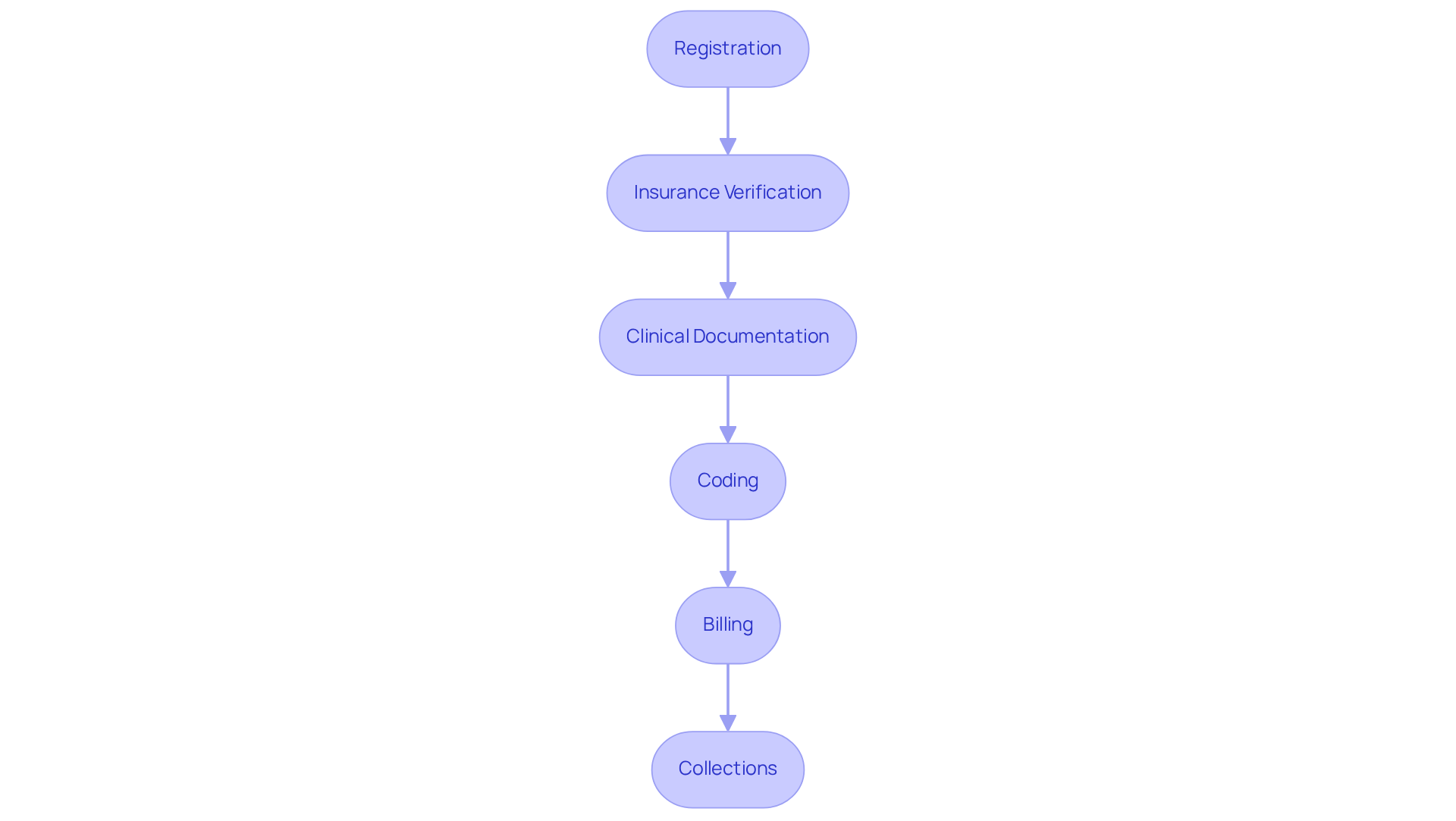
The entire framework that healthcare providers utilize to manage care episodes, from initial registration to final payment collection, is known as revenue cycle management in medical coding. This comprehensive cycle includes critical stages such as:
- Registration
- Insurance verification
- Clinical documentation
- Coding
- Billing
- Collections
Effective revenue cycle management in medical coding ensures that healthcare providers receive accurate and timely reimbursement, thereby stabilizing cash flow and enhancing operational efficiency. Mastering revenue cycle management in medical coding enables practices to identify areas for improvement, streamline processes, and enhance their focus on patient care.
Importantly, implementing robust revenue cycle management in medical coding strategies can lead to a 20-30% reduction in denial rates and a 15-25% increase in reimbursement speed within 30 to 90 days, significantly enhancing overall financial health.
Healthcare Partners Consulting & Billing, LLC (HPC) offers comprehensive end-to-end medical billing solutions tailored specifically for private practices, particularly in the behavioral and mental health sectors. Their services streamline operations by ensuring clean claims, fast follow-up, and clear reporting, which are essential for optimizing practice management.
With an emphasis on compliance and a profound understanding of payer behavior, HPC empowers healthcare providers to alleviate administrative burdens, enabling them to focus on delivering quality care. Additionally, HPC integrates seamlessly with leading EHR and practice management platforms such as:
- TherapyNotes
- SimplePractice
- Valant
- AdvancedMD
- IntakeQ
By leveraging HPC’s expertise, healthcare providers can significantly enhance their financial performance and focus more on patient care.
Outline Essential Steps in Revenue Cycle Management
Effective revenue cycle management in medical coding is crucial for optimizing financial operations in healthcare clinics, yet many providers overlook its vital steps. These steps include:
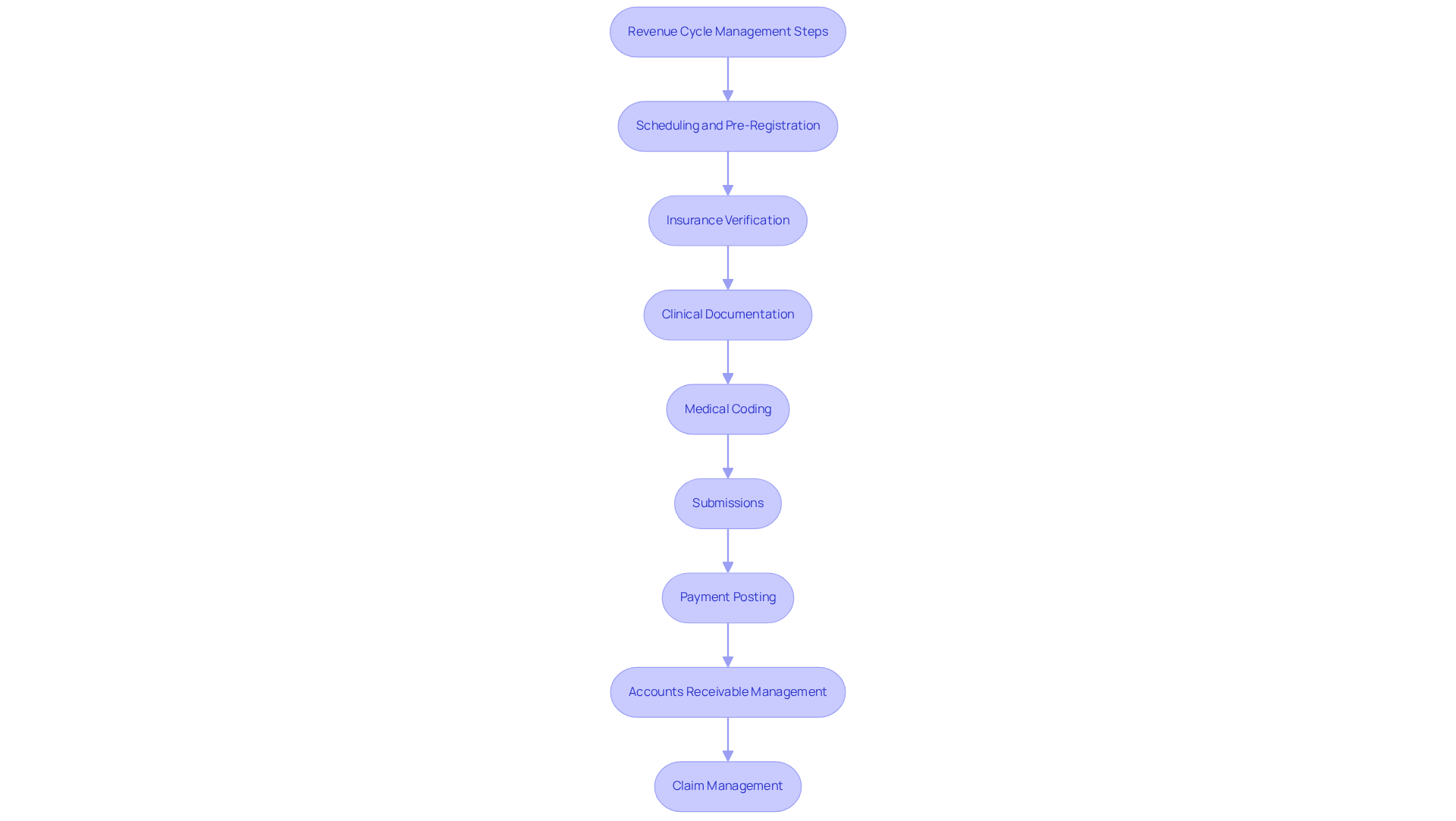
- Scheduling and Pre-Registration: This initial phase involves collecting necessary information and verifying insurance details before the appointment, setting clear financial expectations and reducing the risk of downstream collection issues.
- Insurance Verification: Confirming eligibility and benefits is essential to prevent future issues in the process. Real-time eligibility checks can significantly reduce payment delays and enhance cash flow.
- Clinical Documentation: Accurate and thorough documentation of patient encounters supports coding and billing, ensuring compliance with regulatory standards and minimizing the risk of rejections.
- Medical Coding: Translating clinical documentation into standardized codes is essential for billing purposes. Precise coding is critical, as mistakes can result in denial of requests and regulatory risks, affecting revenue.
- Submissions: Sending requests to insurance payers promptly and accurately facilitates timely reimbursement. Accurate submissions enhance payment speed, with top-tier organizations achieving an accurate submission rate of 98% on the first attempt.
- Payment Posting: Recording payments received from payers and patients ensures accurate financial records. Effective payment posting is crucial for maintaining transparency and accuracy in revenue reporting.
- Accounts Receivable Management: Monitoring outstanding invoices and following up on unpaid or denied submissions optimizes cash flow. Organizations that implement strategic accounts receivable recovery solutions can enhance their financial stability and reduce administrative burdens.
- Claim Management: Analyzing and addressing rejected claims is essential for recovering lost revenue and preventing future rejections. Effective management of claims can result in a decrease in rejections by 20-30% and quicker reimbursement of 15-25% within 30-90 days.
By diligently following these steps, healthcare providers can streamline their revenue cycle management in medical coding processes. This not only reduces administrative burdens but also allows them to concentrate on delivering quality patient care. Adopting scorecard-driven adjustments can significantly improve operational efficiency and financial outcomes, allowing organizations to focus on what truly matters: patient care.
Implement Effective Denial Management Strategies
Claim rejections pose a significant challenge for healthcare providers, impacting both revenue and patient care. Effective management strategies for claims are crucial for optimizing revenue cycle management in medical coding within healthcare. Here are key approaches:
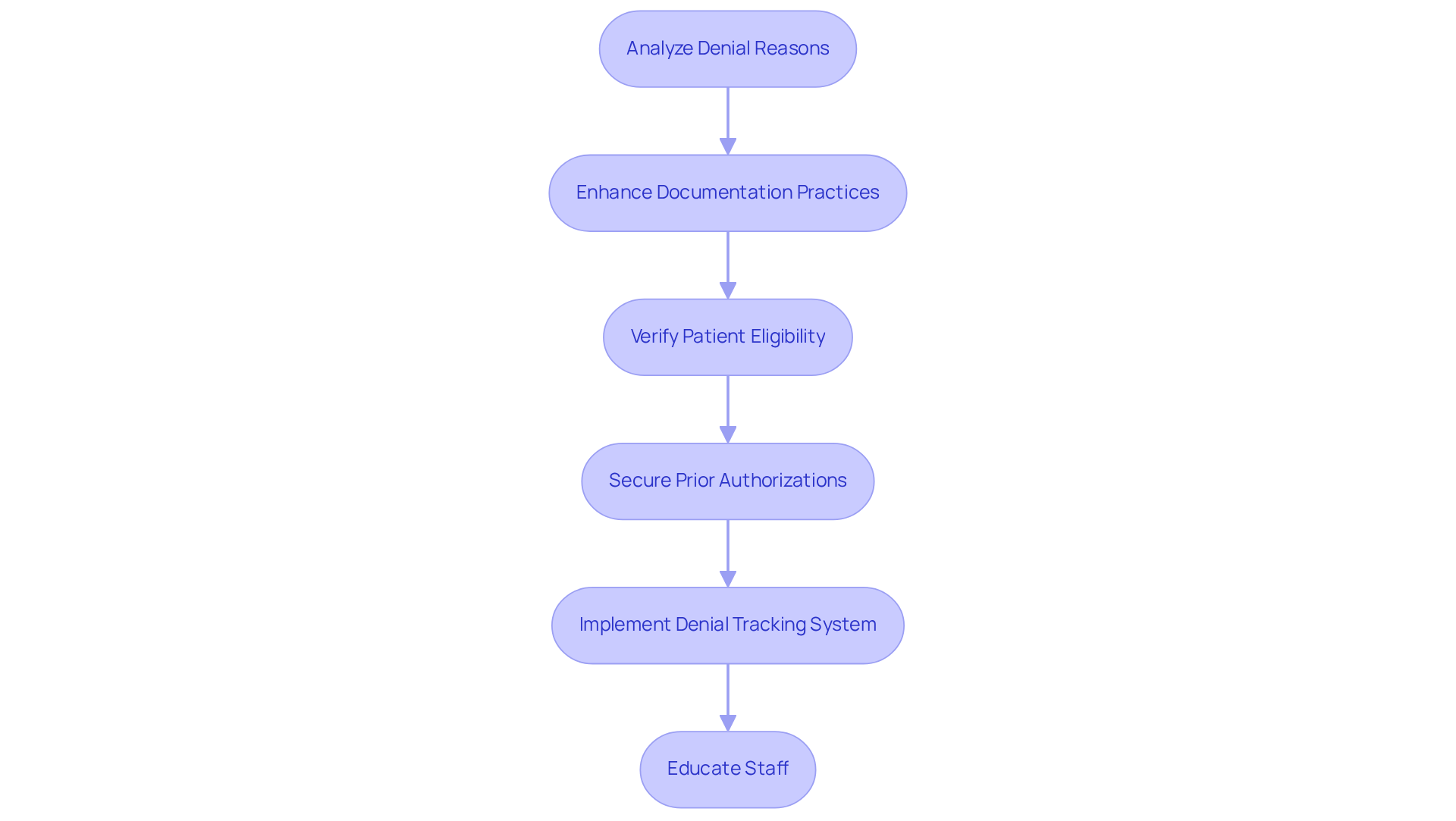
- Thoroughly Analyze Denial Reasons: Regularly review denied claims to identify common patterns and root causes. This analysis helps address systemic issues leading to refusals, enabling targeted interventions.
- Enhance Documentation Practices: Ensure that clinical documentation is comprehensive and meets payer requirements. Enhanced documentation decreases the chances of rejections due to inadequate information, as 35% of rejections arise from incomplete or flawed records.
- Verify Patient Eligibility: Conduct real-time eligibility checks before patient visits to confirm coverage and benefits. This proactive measure reduces the risk of rejections related to insurance issues, as over half of all claim rejections stem from front-end registration errors.
- Secure Prior Authorizations: Obtain necessary authorizations for high-cost procedures in advance to prevent refusals post-service. Almost one in five refusals are due to missing prior authorizations, emphasizing the significance of this step.
- Implement a Denial Tracking System: Utilize technology to monitor denied claims and automate follow-up activities. This guarantees prompt appeals and resubmissions, which can result in a 20-30% decrease in refusals and a 15-25% quicker reimbursement within 30-90 days.
- Educate Staff: Provide ongoing training for staff involved in the billing process to enhance their understanding of coding, documentation, and payer requirements. Well-informed staff can significantly reduce errors that lead to claim rejections.
Ultimately, these strategies empower healthcare providers to streamline operations and prioritize patient care over administrative challenges.
Leverage Technology and Data Analytics for RCM Success
Incorporating technology and data analytics into revenue cycle management in medical coding presents a pivotal opportunity for mental health clinics to enhance their operational efficiency. Here are effective strategies to leverage these tools with the expertise of Healthcare Partners Consulting & Billing, LLC (HPC):
- Automate Claims Processing: Utilize AI-enabled software solutions that automate the claims submission process. This reduces manual errors and accelerates reimbursement cycles. The 2026 Healthcare RCM Survey indicates that organizations adopting these technologies can reduce denials by 20-30%. Additionally, they can expect faster reimbursements, typically within 30-90 days, of 15-25%. HPC’s tailored solutions ensure measurable improvements in revenue cycles for practices.
- Implement EHR Systems: Electronic Health Records (EHR) systems streamline documentation and coding, ensuring accurate capture and easy access to all patient interactions. HPC works seamlessly with platforms such as TherapyNotes, SimplePractice, and Valant, which helps maintain compliance and boosts operational efficiency.
- Use Data Analytics: Analyze revenue cycle data to identify trends, monitor performance metrics, and pinpoint areas for improvement. This data-driven approach enables informed decision-making and operational rigor, allowing providers to adapt to changing market conditions. HPC’s expertise in behavioral health ensures that practices can effectively address underpayments and aging requests.
- Adopt AI Solutions: Artificial Intelligence can assist in coding accuracy, predict claim denials, and optimize billing workflows. This allows staff to focus on more complex tasks. Early adopters of AI in RCM have reported measurable revenue gains and operational efficiencies, with studies indicating that AI can improve clinical complexity capture accuracy to 90% or higher. HPC’s certified experts are dedicated to enhancing these processes for mental health practices.
- Enhance Engagement Tools: Implement portals and communication tools that facilitate better interaction, ensuring individuals are informed about their financial responsibilities and reducing the likelihood of payment delays. This proactive strategy helps alleviate the challenges smaller providers face when adopting new technologies, allowing them to focus more on client care.
By leveraging technology and data analytics, healthcare providers can optimize their revenue cycle management in medical coding, reduce administrative burdens, and ultimately enhance patient care. Ultimately, embracing these advancements can transform revenue cycle management in medical coding and enhance the quality of patient care in mental health practices.

Conclusion
Mastering revenue cycle management is crucial for healthcare providers seeking to enhance operational efficiency and prioritize patient care. Implementing effective strategies enables practices to streamline processes, mitigate administrative burdens, and enhance financial health. The emphasis on compliance and a deep understanding of payer behavior further empowers providers to navigate the complexities of medical billing with confidence.
Key insights from the article highlight the importance of each stage in the revenue cycle, from registration and insurance verification to coding and collections. Effective denial management strategies, the integration of technology, and data analytics play crucial roles in optimizing these processes. A comprehensive approach to revenue cycle management significantly reduces claim denials and accelerates reimbursement timelines, thereby enabling providers to focus on patient care.
In conclusion, embracing best practices in revenue cycle management not only enhances financial performance but also reinforces the core mission of healthcare providers: to prioritize patient care. By partnering with experts like Healthcare Partners Consulting & Billing, LLC (HPC), practices can leverage tailored solutions that align with their unique needs, ensuring compliance and operational excellence. Taking this step can lead to a transformative shift in how practices manage their revenue cycles, ultimately benefiting patient care.
Frequently Asked Questions
What is revenue cycle management in medical coding?
Revenue cycle management in medical coding is the framework that healthcare providers use to manage care episodes, encompassing stages from initial registration to final payment collection.
What are the critical stages included in revenue cycle management?
The critical stages of revenue cycle management include registration, insurance verification, clinical documentation, coding, billing, and collections.
Why is effective revenue cycle management important for healthcare providers?
Effective revenue cycle management ensures accurate and timely reimbursement for healthcare providers, stabilizing cash flow and enhancing operational efficiency.
How can mastering revenue cycle management benefit healthcare practices?
Mastering revenue cycle management allows practices to identify areas for improvement, streamline processes, and enhance their focus on patient care.
What financial improvements can be achieved through robust revenue cycle management strategies?
Implementing robust revenue cycle management strategies can lead to a 20-30% reduction in denial rates and a 15-25% increase in reimbursement speed within 30 to 90 days.
What services does Healthcare Partners Consulting & Billing, LLC (HPC) offer?
HPC offers comprehensive end-to-end medical billing solutions tailored for private practices, particularly in the behavioral and mental health sectors, ensuring clean claims, fast follow-up, and clear reporting.
How does HPC support healthcare providers in managing their practices?
HPC supports healthcare providers by alleviating administrative burdens, emphasizing compliance, and providing a deep understanding of payer behavior, allowing providers to focus on delivering quality care.
Which EHR and practice management platforms does HPC integrate with?
HPC integrates seamlessly with leading EHR and practice management platforms such as TherapyNotes, SimplePractice, Valant, AdvancedMD, and IntakeQ.