

Introduction
Claim denials are increasingly jeopardizing the financial stability of healthcare providers. Effectively managing denials is essential for healthcare organizations, allowing them to improve operational efficiency and prioritize patient care. However, with denial rates climbing and the complexities of billing regulations, what strategies can providers employ to navigate the complexities of claim denials and secure timely reimbursements?
Define the Denial Management Process
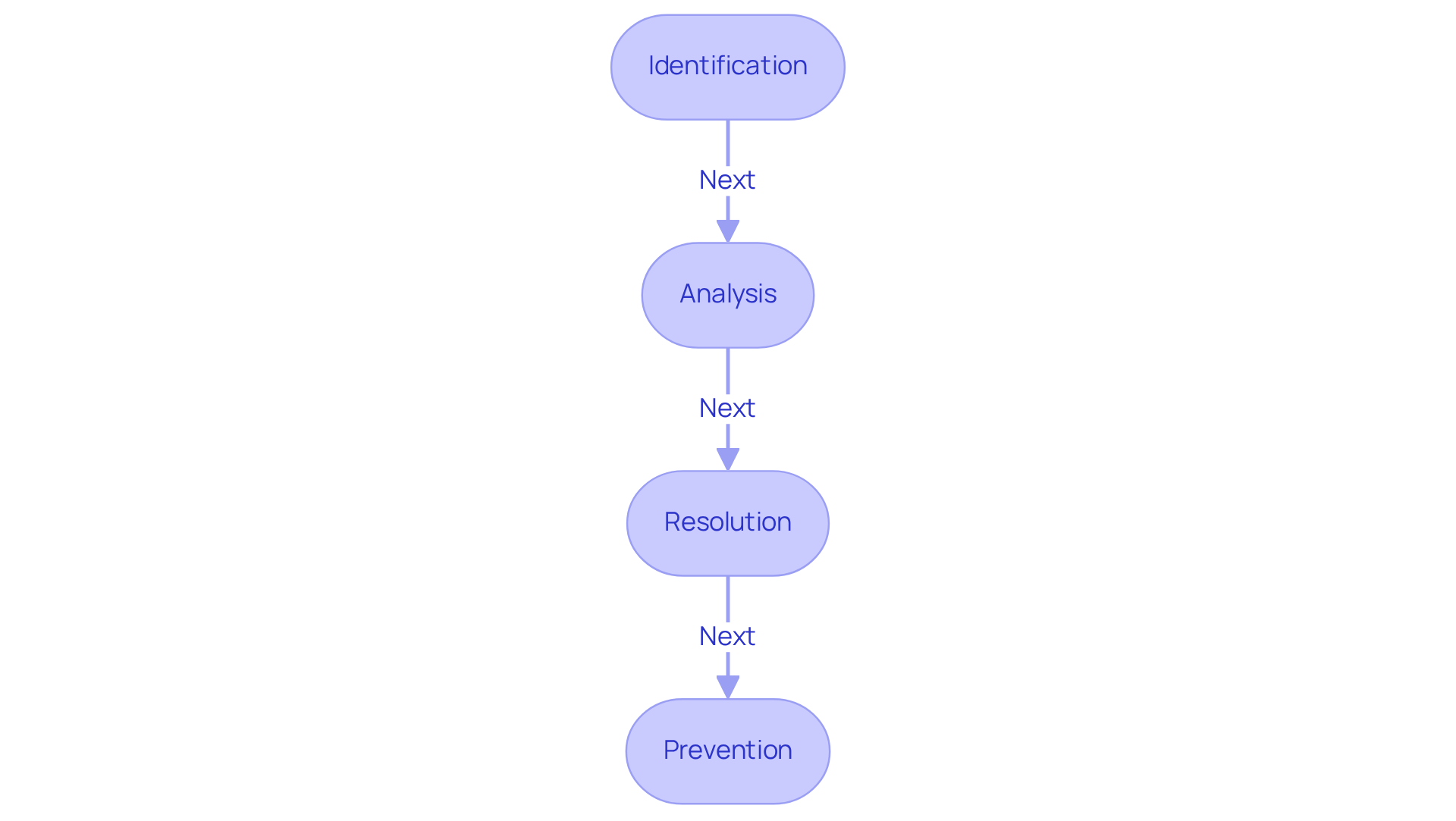
In an era of increasing claim denials, effective denial management in healthcare is essential for financial stability. This process includes several critical components:
- Identification: Prompt recognition of denied requests is crucial. This entails actively overseeing claims submissions and payer responses to identify refusals as soon as they happen. With rejection rates climbing, healthcare providers face significant financial challenges. Recent statistics indicate that initial rejection rates have reached 11.8%, highlighting the importance of swift identification to mitigate revenue loss.
- Analysis: Once a refusal is identified, examining the reasons behind it is essential. Common causes include incorrect coding, lack of prior authorization, and insufficient documentation. For example, the Experian Health 2025 report indicates that absent or erroneous data constitutes 50% of rejections. Understanding these causes is critical for improving claim success rates.
- Resolution: After understanding the cause of the refusal, the next step is to resolve the issue. This could mean fixing the claim and sending it back or challenging the denial. Case studies show that addressing correctable errors can significantly improve appeal outcomes, with success rates for appeals related to coding errors reaching 72%. By leveraging the expertise of Healthcare Partners Consulting & Billing, LLC (HPC), providers can navigate these complexities effectively.
- Prevention: Effective refusal oversight includes implementing strategies to avert future rejections. This can involve staff training, process enhancements, and the use of automated eligibility verification tools, which can decrease eligibility-related rejections by 60-70%. By focusing on prevention, healthcare providers can maintain cash flow and minimize revenue loss, ultimately enhancing their operational efficiency.
As denial rates continue to rise, the ability to adapt and implement effective strategies will determine the financial health of healthcare organizations. With 39 years of experience and a veteran-owned status, Healthcare Partners Consulting & Billing, LLC (HPC) is uniquely positioned to assist mental health clinic owners in enhancing their reimbursement procedures.
Outline Key Steps in Denial Management
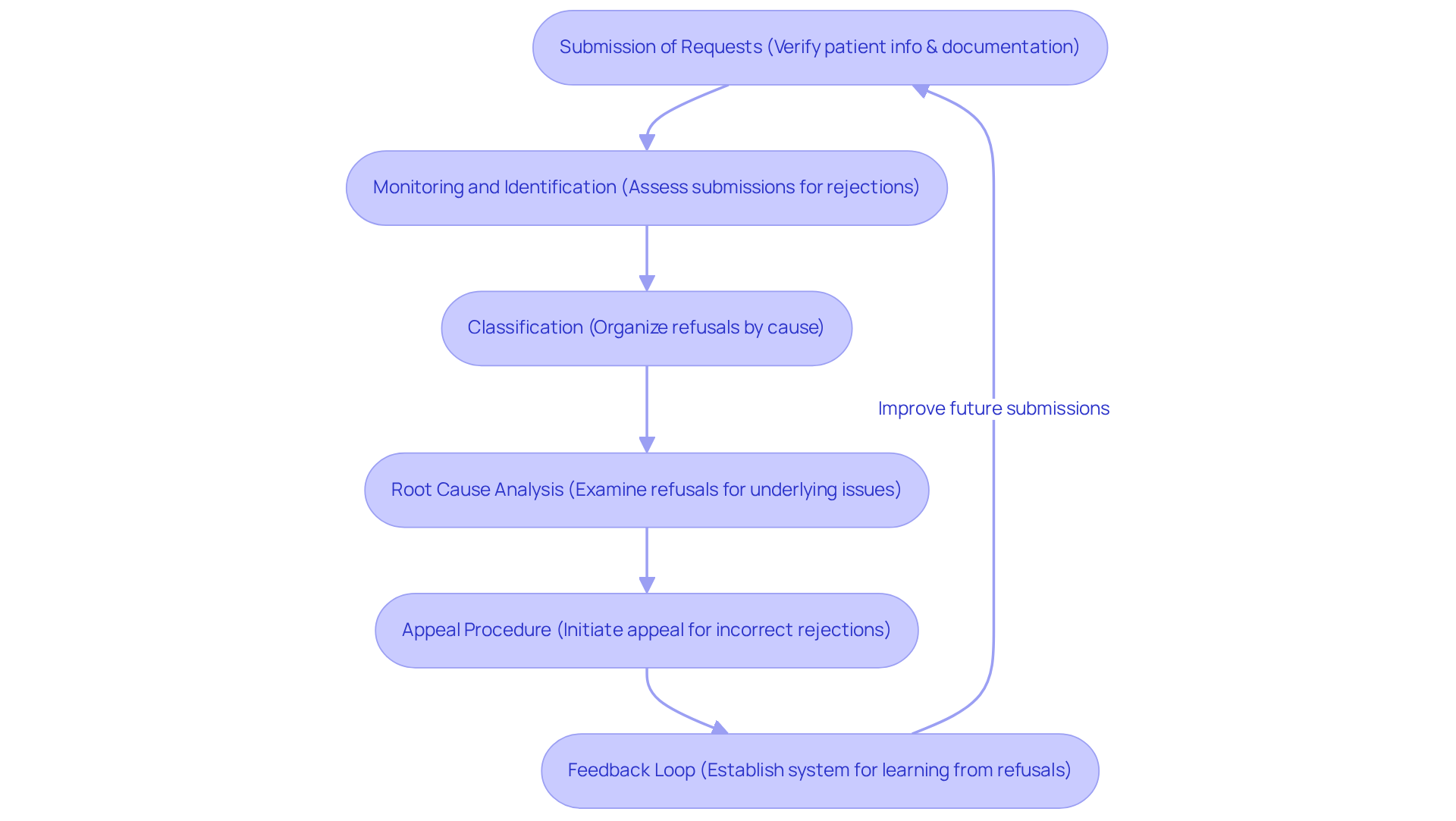
Optimizing the denial management process flow chart is crucial for healthcare providers aiming to enhance their claims management efficiency. The denial management process can be broken down into several key steps that are essential for optimizing patient statements and claims management:
- Submission of Requests: Accurate and timely submission of requests is essential. This includes verifying patient information and ensuring all necessary documentation is included to minimize underpayments and delays.
- Monitoring and Identification: Regularly assess submissions for rejections. Utilize tracking tools to quickly identify rejected claims, which is crucial for addressing aging claims effectively.
- Classification: Organize refusals according to their causes (e.g., coding mistakes, eligibility concerns) to enhance the resolution approach and focus efforts on the most significant areas.
- Root Cause Analysis: Conduct a thorough examination of the refusal to understand the underlying issues. Reviewing documentation and payer guidelines helps identify systemic issues leading to underpayments.
- Appeal Procedure: If a rejection is considered incorrect, initiate the appeal by gathering necessary documentation and submitting a well-structured appeal. This step is vital for recovering lost revenue.
- Feedback Loop: Establish a feedback system to learn from refusals and enhance future submission processes. This may involve staff training and process adjustments to prevent similar issues from recurring, ultimately enhancing the efficiency of patient statements and claims oversight.
Implementing these steps is vital for reducing rejection rates and ensuring timely reimbursements, as outlined in the denial management process flow chart, safeguarding financial stability and operational efficiency.
Implement Best Practices for Effective Management
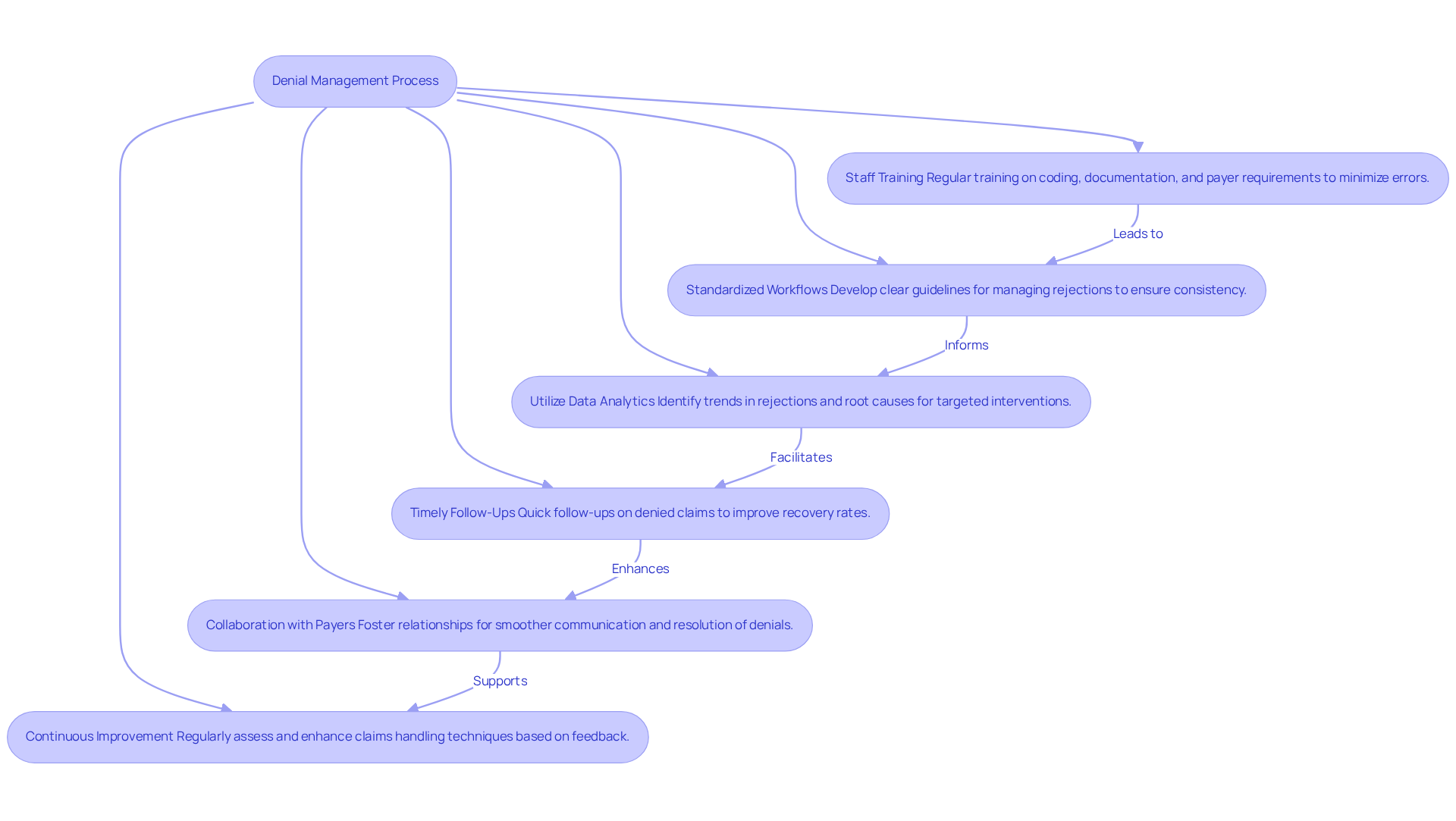
In the complex landscape of healthcare claims, an effective denial management process flow chart is crucial for financial sustainability. To enhance denial management, healthcare providers should consider the following best practices:
- Staff Training: It’s vital to set up regular training on coding, documentation, and payer requirements to minimize errors that lead to rejections. Ongoing education helps staff stay informed about changing payer regulations and documentation standards, which can significantly lower rejection rates.
- Developing standardized workflows for managing rejections, as outlined in the denial management process flow chart, ensures that all team members follow clear guidelines at each step of the process. This consistency can result in a 20-30% decrease in rejections, as it facilitates quicker identification and resolution of issues within the denial management process flow chart.
- Utilize Data Analytics: Leveraging data analytics to identify trends in rejections and their root causes enables targeted interventions as outlined in the denial management process flow chart. For instance, practices can track denial rates and categorize them by payer, service type, and reason, allowing for focused improvements.
- Timely Follow-Ups: Failure to address denied claims promptly can lead to significant financial repercussions. Establishing a denial management process flow chart for quick follow-ups on denied requests is crucial, as claims not worked within 30 days have significantly lower recovery rates. Prompt action can improve reimbursement times by 15-25% within 30-90 days.
- Collaboration with payers is crucial, as it fosters relationships that facilitate smoother communication and resolution of denied claims, which can be effectively represented in a denial management process flow chart. Interacting with payers can help clarify common reasons for refusals and streamline the appeals system, ultimately lessening administrative burdens.
- Continuous Improvement: Regularly assessing and enhancing claims handling techniques based on feedback and performance metrics ensures ongoing effectiveness. Practices should hold monthly review meetings to identify root causes of patterns and implement scorecard-driven adjustments to track claims accuracy and rejection rates.
Ultimately, the proactive management of claims denials, guided by the denial management process flow chart, can safeguard a practice’s financial health and operational efficiency.
Leverage Technology and Automation Tools
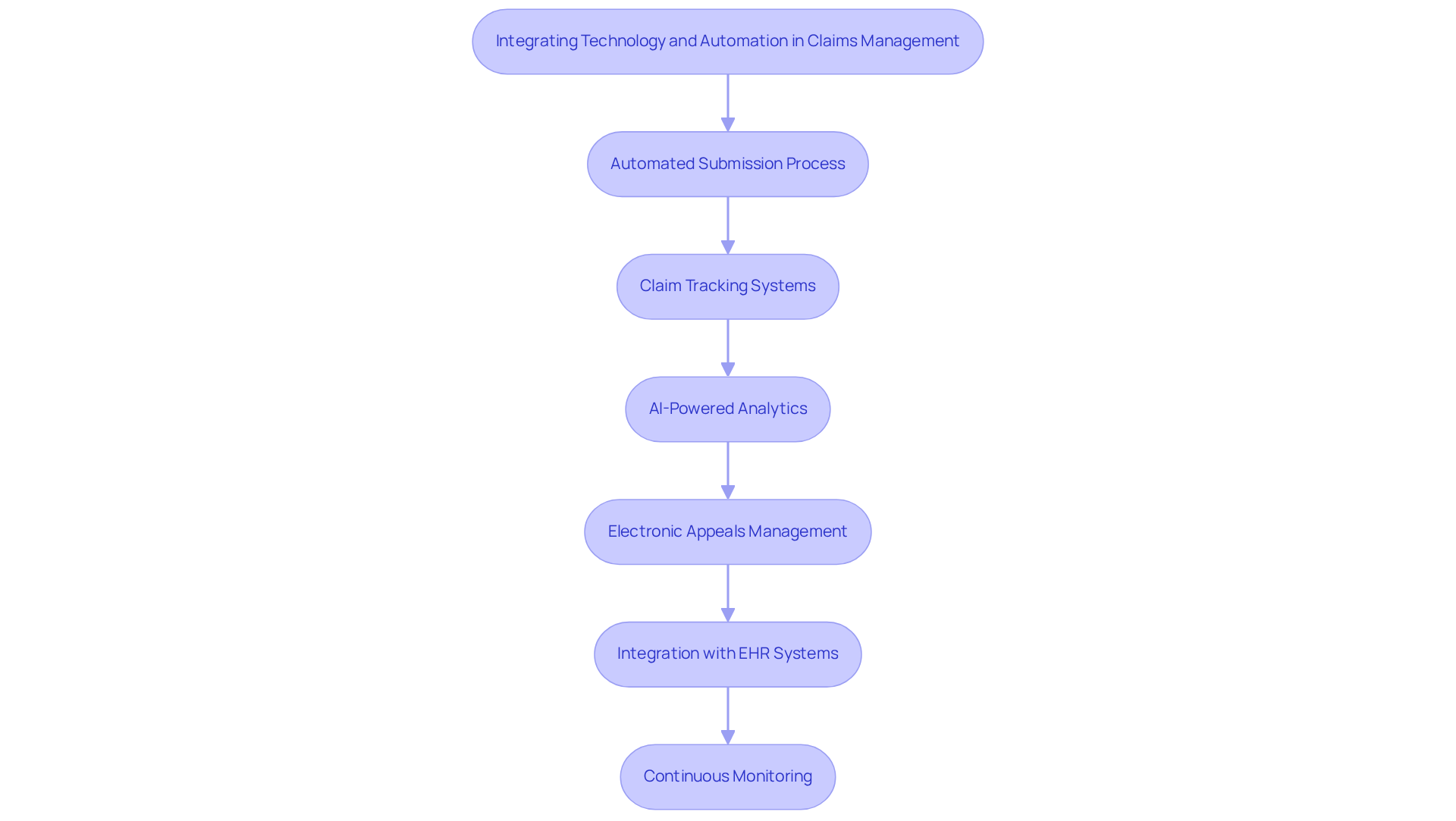
Integrating technology and automation into claims management presents a critical opportunity for enhancing operational efficiency. Consider the following tools and strategies:
- Automated Submission Process: Utilize software that streamlines the submission process, minimizing the risk of human error.
- Claim Tracking Systems: Implement claim tracking systems that provide real-time insights into claim statuses and rejection reasons.
- AI-Powered Analytics: Utilize AI-driven analytics to predict trend patterns and identify potential issues before they arise.
- Electronic Appeals Management: Streamline the appeals process with electronic systems that allow for quick submission and tracking of appeals.
- Integration with EHR Systems: Ensure that tools for managing claims integrate seamlessly with electronic health record (EHR) systems for improved data accuracy and accessibility.
- Continuous Monitoring: Utilize tools that consistently track claims and notify staff of potential issues, facilitating proactive oversight of rejections.
Adopting these technologies can reduce claim rejection rates by 20-30% and improve reimbursement timelines by 15-25% within 30-90 days, thereby enhancing revenue cycle performance. For instance, Nebraska Medicine successfully reallocated a full-time employee within 90 days of implementing AI, enhancing their ability to identify payer issues. Ultimately, embracing these technologies not only streamlines the denial management process flow chart but also enables healthcare providers to prioritize quality patient care.
Conclusion
The financial stability of healthcare practices hinges on effective denial management, especially in the behavioral and mental health sectors. By mastering the denial management process flow chart, healthcare providers can significantly enhance their claims management efficiency, ensuring they can devote more time to patient care rather than administrative burdens. A strong commitment to compliance, combined with a deep understanding of payer behavior, empowers providers to navigate the complexities of claim denials effectively.
Throughout the article, key steps in the denial management process were outlined, including:
- Identification
- Analysis
- Resolution
- Prevention of denials
Best practices such as staff training, standardized workflows, and the integration of technology were highlighted as essential strategies for improving outcomes. The importance of timely follow-ups and collaboration with payers cannot be overstated, as these actions directly impact the recovery of lost revenue and the overall financial health of practices.
In conclusion, the proactive management of claims denials is not just about recovering lost revenue; it is about fostering a sustainable practice that prioritizes patient care. By applying these insights and strategies, healthcare providers can improve their operations while keeping patient care at the forefront. Embracing these best practices and technologies will not only streamline the denial management process but also empower providers to thrive in an increasingly complex healthcare landscape. For further assistance, reaching out to Healthcare Partners Consulting & Billing, LLC (HPC) can provide tailored support in optimizing denial management practices.
Frequently Asked Questions
What is the denial management process in healthcare?
The denial management process in healthcare involves identifying, analyzing, resolving, and preventing claim denials to ensure financial stability for healthcare providers.
Why is prompt identification of denied claims important?
Prompt identification is crucial because it allows healthcare providers to recognize denied requests quickly, helping to mitigate revenue loss. With rejection rates reaching 11.8%, swift identification is essential to address financial challenges.
What are common reasons for claim denials?
Common reasons for claim denials include incorrect coding, lack of prior authorization, and insufficient documentation. According to the Experian Health 2025 report, absent or erroneous data accounts for 50% of rejections.
How can healthcare providers resolve denied claims?
Providers can resolve denied claims by understanding the reasons for the refusal and either fixing the claim and resubmitting it or challenging the denial. Addressing correctable errors can significantly improve appeal outcomes, with success rates for coding errors reaching 72%.
What strategies can be implemented to prevent future claim denials?
Strategies to prevent future claim denials include staff training, process enhancements, and using automated eligibility verification tools, which can reduce eligibility-related rejections by 60-70%.
How does effective denial management impact healthcare organizations?
Effective denial management helps maintain cash flow, minimizes revenue loss, and enhances operational efficiency, which is critical as denial rates continue to rise.