

Introduction
Navigating the complexities of healthcare billing requires a deep understanding of the distinct roles of the UB-04 and CMS-1500 claim forms. Each form serves a specific purpose, tailored to different types of services and providers, making their correct usage critical for financial health. Incorrect submissions can jeopardize financial stability and operational efficiency.
Clinic owners must ensure they are using the correct form to optimize their revenue cycle, thereby allowing them to focus on what truly matters: patient care.
Define UB-04 and CMS-1500 Claim Forms
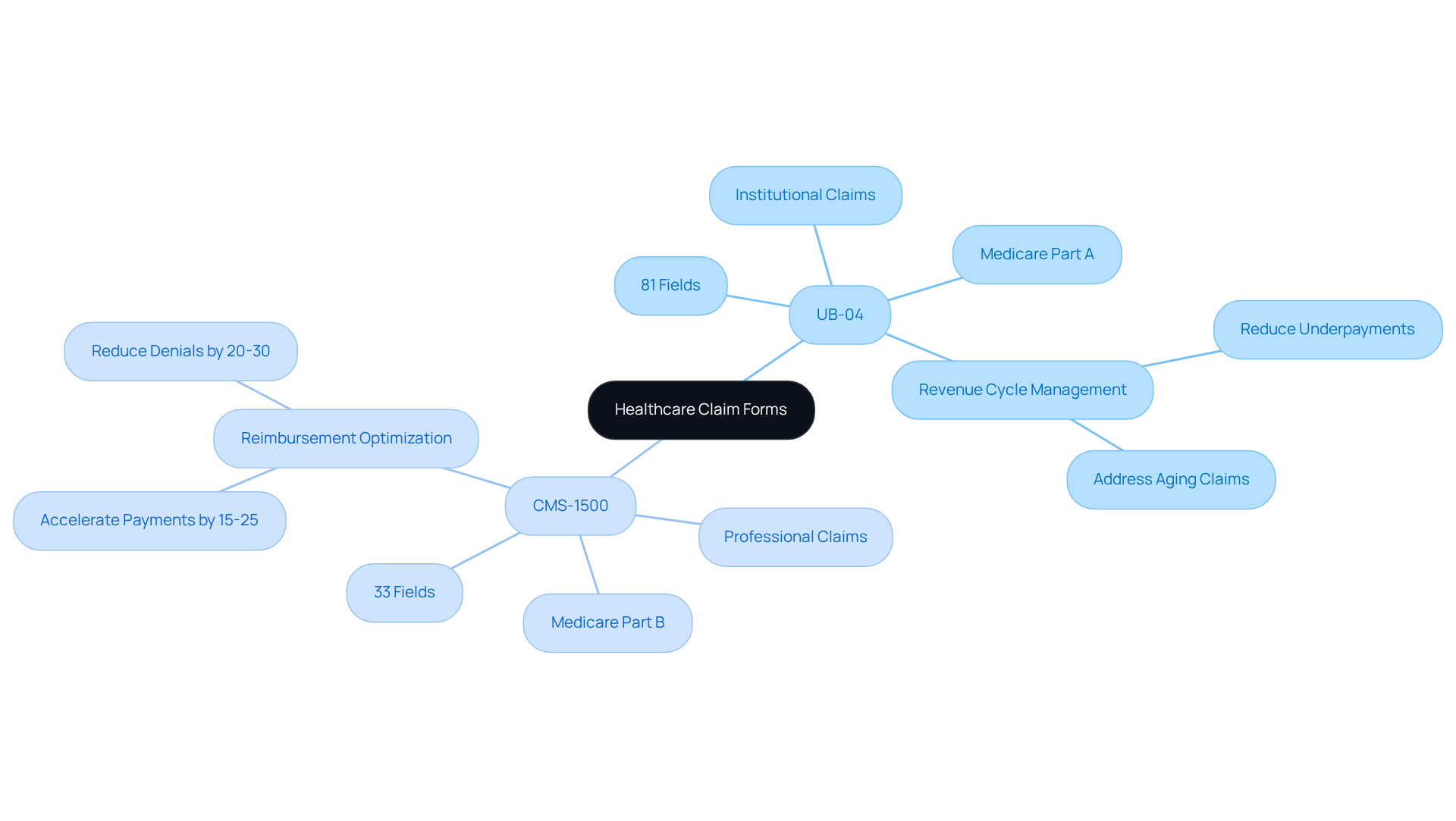
The UB-04 document, also known as the CMS-1450, plays a critical role in institutional claims processing for hospitals and healthcare facilities. It consists of 81 fields, or location identifiers, that capture extensive information about the care provided, patient demographics, and coding. This document is crucial for billing Medicare Part A and other institutional payers, facilitating appropriate reimbursement for healthcare providers. Effective management of UB-04 submissions is vital for reducing underpayments and addressing aging claims, thereby supporting a healthy revenue cycle.
Conversely, the CMS-1500 document serves professional submissions made by individual healthcare providers, including physicians and therapists. With 33 fields, it is utilized to bill for services covered under Medicare Part B and various other insurance programs. Grasping the unique roles of these documents is essential for precise billing and adherence to healthcare regulations, as incorrect completion can lead to significant delays and financial losses for healthcare providers. Proper utilization of these documents can reduce reimbursement denials by 20-30% and accelerate payments by 15-25% within 30-90 days. This optimization is particularly vital for mental health clinics, where timely reimbursements are essential for sustaining operations and focusing on patient care. Ultimately, mastering these billing documents is crucial for financial health and operational success in healthcare settings.
Compare Key Features and Usage Scenarios
A thorough comparison of the ub 04 vs cms 1500 forms reveals critical features that impact patient statements and claims management.
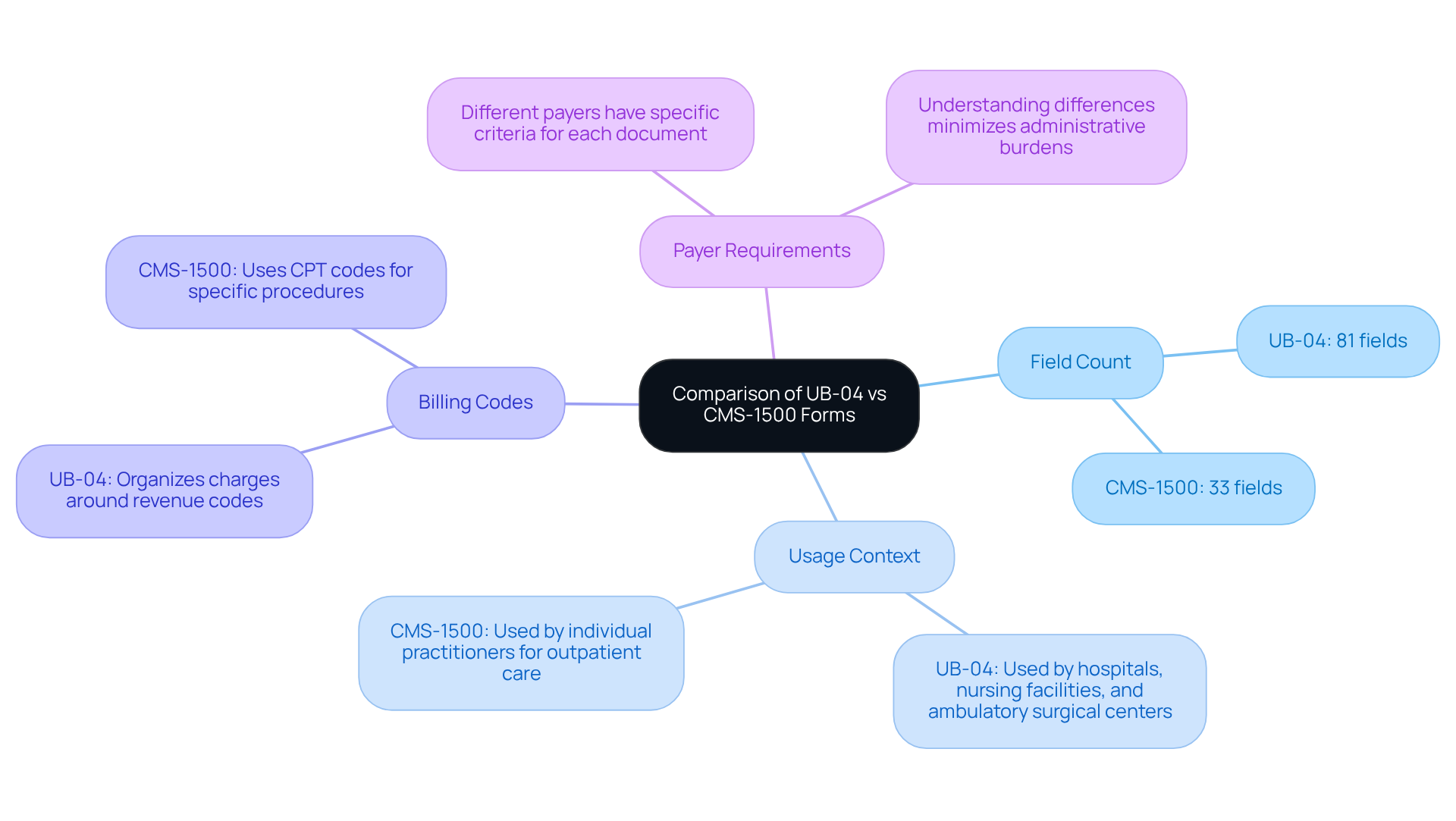
- Field Count: In the comparison of ub 04 vs cms 1500, the UB-04 has 81 fields for detailed reporting of institutional services, while the CMS-1500 has only 33 fields that focus on professional services. Grasping these fields is crucial for tackling underpayments and capturing all necessary information in patient statements.
- Usage Context: The comparison of UB 04 vs CMS 1500 shows that the UB-04 is typically utilized by hospitals, nursing facilities, and ambulatory surgical centers for charging facility costs, whereas the CMS-1500 is employed by individual practitioners for outpatient care. This distinction is crucial for mental health clinic owners to comply with payer requirements and streamline billing processes, improving revenue cycle management.
- Billing Codes: The comparison of ub 04 vs cms 1500 shows that the UB-04 organizes charges around revenue codes, which categorize services by department, while the CMS-1500 uses CPT codes to describe specific procedures performed by healthcare providers. Proper coding is essential in preventing underpayments and managing aging requests effectively.
- Payer Requirements: Different payers may have specific criteria for each document, making it essential for clinic owners to understand the differences between ub 04 vs cms 1500 in relation to their billing practices and payer guidelines. This knowledge empowers healthcare providers to minimize administrative burdens and focus more on patient care.
Incorrect form submissions can result in claim denials, complicating the billing process. Statistics show that accurate form usage can reduce denials by 20-30%. Furthermore, prompt reimbursements can enhance by 15-25% within 30-90 days when submissions are made accurately. Mastering these distinctions can significantly improve operational efficiency and bolster the financial health of mental health practices. As a veteran-owned company with 39 years of experience specializing in medical and mental health billing and practice management services nationwide, Healthcare Partners Consulting is committed to empowering healthcare providers through integrity, transparency, and innovation. Ultimately, mastering these forms can lead to improved financial outcomes and operational success for mental health practices.
Discuss Consequences of Incorrect Form Usage
The use of incorrect submission documents poses significant risks for healthcare providers, particularly in mental health clinics. Key consequences include:
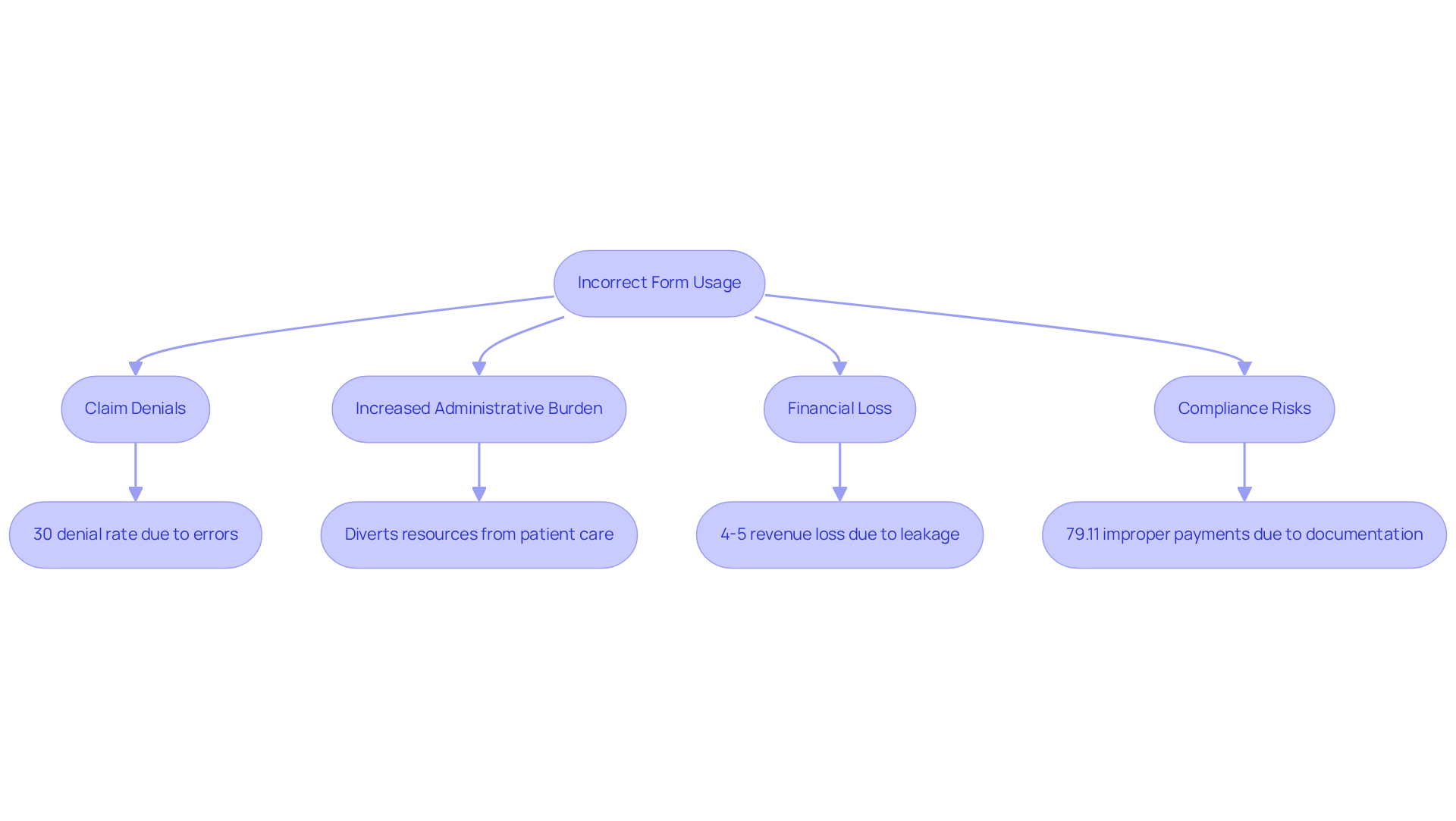
- Claim Denials: Submitting a UB-04 when a CMS-1500 is required (or vice versa) can lead to immediate claim denials, delaying reimbursement and negatively impacting cash flow. About 30% of insurance submissions face denial on the first attempt, frequently due to coding errors or improper form selection. A personalized consultation with Healthcare Partners Consulting & Billing, LLC (HPC) can help identify the optimal administrative solutions tailored to your practice.
- Increased Administrative Burden: Incorrect submissions necessitate additional administrative work to correct and resubmit requests, diverting valuable resources away from patient care. This situation can frustrate staff and increase operational costs, as correcting denied submissions drains resources, especially for smaller providers. HPC offers customized administrative support services to alleviate this burden, enabling your team to prioritize patient care.
- Financial Loss: Mistakes in invoicing can lead to lost revenue, as requests may be denied or underpaid due to incorrect coding or form usage. Healthcare organizations commonly lose 4-5% of their revenue due to revenue leakage, which can be exacerbated by incorrect claim submissions. To address this, HPC offers a quick quiz to evaluate your mental health practice’s profitability, assisting you in identifying hidden revenue leaks and obtaining personalized suggestions for enhancing efficiency and accuracy in financial matters.
- Compliance Risks: Incorrect usage of documents can raise compliance issues, potentially leading to audits or penalties from payers. In Medicaid, for example, 79.11% of improper payments are due to inadequate documentation, emphasizing the significance of following appropriate invoicing practices. With HPC’s expertise in revenue cycle management, you can ensure compliance and avoid these risks, empowering your practice to thrive in a complex regulatory environment. As a veteran-owned company with 39 years of experience, HPC is committed to supporting mental health practices with integrity and transparency. Accurate submissions are essential for protecting financial stability and ensuring compliance.
Guide on Best Practices for Form Selection
Selecting the appropriate billing form is critical for ensuring accurate reimbursement and compliance in healthcare practices. To achieve this, clinic owners should consider the following best practices when selecting between the UB-04 and CMS-1500 forms:
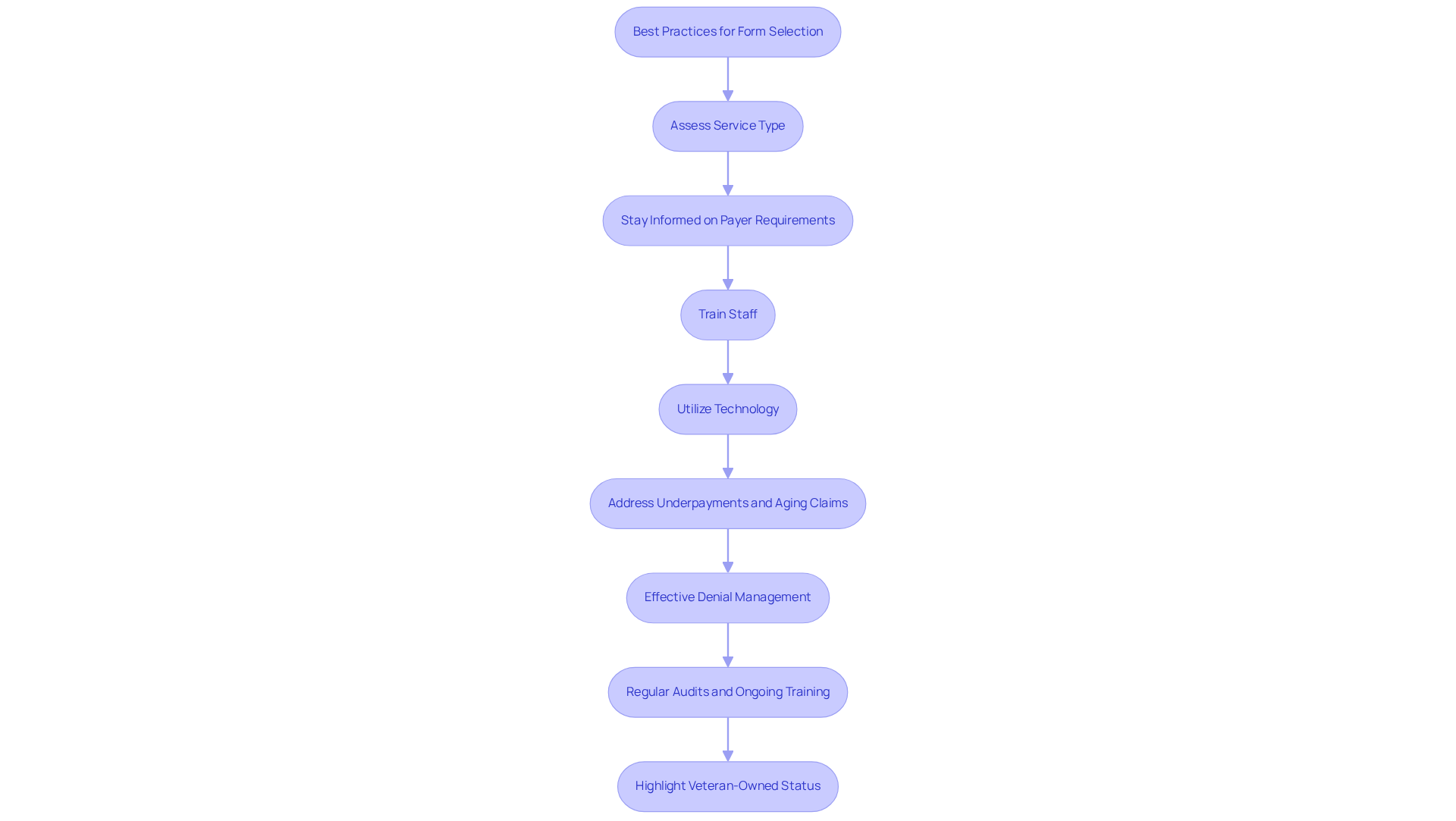
- Assess Service Type: Determine whether the services provided are institutional or professional. Utilize the UB 04 vs CMS 1500 for facility-based activities, such as inpatient stays and emergency room visits, which require detailed information like revenue codes and diagnosis codes. When considering ub 04 vs cms 1500, the CMS-1500 should be used for professional services like office visits and outpatient procedures.
- Stay Informed on Payer Requirements: Regularly review the payment guidelines of payers to ensure compliance with their specific criteria for each document, as these can vary significantly.
- Train Staff: Ensure that the personnel responsible for invoicing are well-trained in the distinctions between the documents and the correct procedures for completing them. Training can lead to a 20-30% reduction in denial rates. Additionally, it can improve reimbursement times by 15-25% within 30-90 days, highlighting the significance of continuous education in ensuring accuracy in financial processes.
- Utilize Technology: Implement software that can help automate the selection of the correct form based on the services rendered, reducing the risk of human error and improving overall efficiency. Integrating with platforms like TherapyNotes, SimplePractice, or Valant can streamline this process further.
- Address Underpayments and Aging Claims: Regularly monitor patient statements and follow up on underpayments and unprocessed claims. How can a proactive approach transform your revenue recovery and streamline invoicing?
- Effective Denial Management: Develop strategies to appeal the right denials quickly, leveraging data-driven insights to recover revenue that has been earned but not yet received. This is crucial for maintaining a healthy revenue cycle.
- Regular Audits and Ongoing Training: Conduct periodic audits of financial practices to identify and rectify any recurring issues related to form usage. Combined with ongoing training and skills evaluations, this practice guarantees continuous enhancement in the revenue management process and aids in sustaining a seamless revenue cycle.
- Highlight Veteran-Owned Status: As a veteran-owned business with 39 years of experience specializing in medical and mental health billing and practice management services, Healthcare Partners Consulting & Billing, LLC (HPC) is committed to empowering healthcare providers by removing administrative burdens to allow focus on patient care. By prioritizing these practices, clinics can significantly enhance their financial health and operational efficiency.
Conclusion
Recognizing the distinctions between the UB-04 and CMS-1500 claim forms is crucial for healthcare providers, especially in mental health and integrated care settings. Each form serves a distinct purpose in the billing process, with the UB-04 tailored for institutional claims and the CMS-1500 designed for professional services. Mastering these forms ensures compliance and improves revenue cycle management efficiency, enabling healthcare providers to prioritize patient care.
Key insights from the article highlight the importance of:
- Selecting the correct form based on the type of services rendered
- Understanding payer requirements
- Implementing best practices to minimize claim denials
Incorrect form usage can lead to significant financial strain and operational inefficiencies. By prioritizing training, leveraging technology, and conducting regular audits, healthcare providers can significantly enhance billing processes and financial outcomes.
Ultimately, committing to accurate billing practices is essential for keeping clinics operationally healthy. As a veteran-owned company with 39 years of experience, Healthcare Partners Consulting & Billing, LLC (HPC) stands ready to empower healthcare providers by alleviating administrative burdens and ensuring compliance. By adopting these strategies, clinics can not only safeguard their financial stability but also enhance the quality of care they provide to their patients. For personalized support, reach out to HPC at info@hpcbilling.com or call 888-517-4992.
Frequently Asked Questions
What is the UB-04 claim form?
The UB-04, also known as the CMS-1450, is a document used for institutional claims processing in hospitals and healthcare facilities. It contains 81 fields that capture detailed information about the care provided, patient demographics, and coding.
What is the purpose of the UB-04 form?
The UB-04 form is crucial for billing Medicare Part A and other institutional payers, ensuring appropriate reimbursement for healthcare providers. Effective management of UB-04 submissions helps reduce underpayments and address aging claims, supporting a healthy revenue cycle.
What is the CMS-1500 claim form?
The CMS-1500 form is used for professional submissions made by individual healthcare providers, such as physicians and therapists. It consists of 33 fields and is utilized to bill for services covered under Medicare Part B and various other insurance programs.
Why is it important to understand the roles of UB-04 and CMS-1500 forms?
Understanding the unique roles of these documents is essential for precise billing and compliance with healthcare regulations. Incorrect completion can lead to significant delays and financial losses for healthcare providers.
How can proper utilization of UB-04 and CMS-1500 forms impact reimbursement?
Proper utilization of these documents can reduce reimbursement denials by 20-30% and accelerate payments by 15-25% within 30-90 days, which is particularly vital for mental health clinics that rely on timely reimbursements to sustain operations.
What is the significance of mastering billing documents in healthcare?
Mastering billing documents like the UB-04 and CMS-1500 is crucial for the financial health and operational success of healthcare settings, as it directly impacts reimbursement processes and overall revenue cycle management.