

Introduction
Urgent care clinics in Florida face significant financial challenges due to rising patient volumes and diverse service offerings. As these challenges can lead to financial instability if not addressed effectively, the need for specialized billing strategies becomes paramount. This article delves into essential practices that empower healthcare providers to streamline their billing processes, enhance revenue cycle management, and ultimately focus more on patient care. Navigating these complexities is essential for ensuring compliance and maximizing profitability in a competitive landscape.
Understand the Unique Aspects of Urgent Care Billing
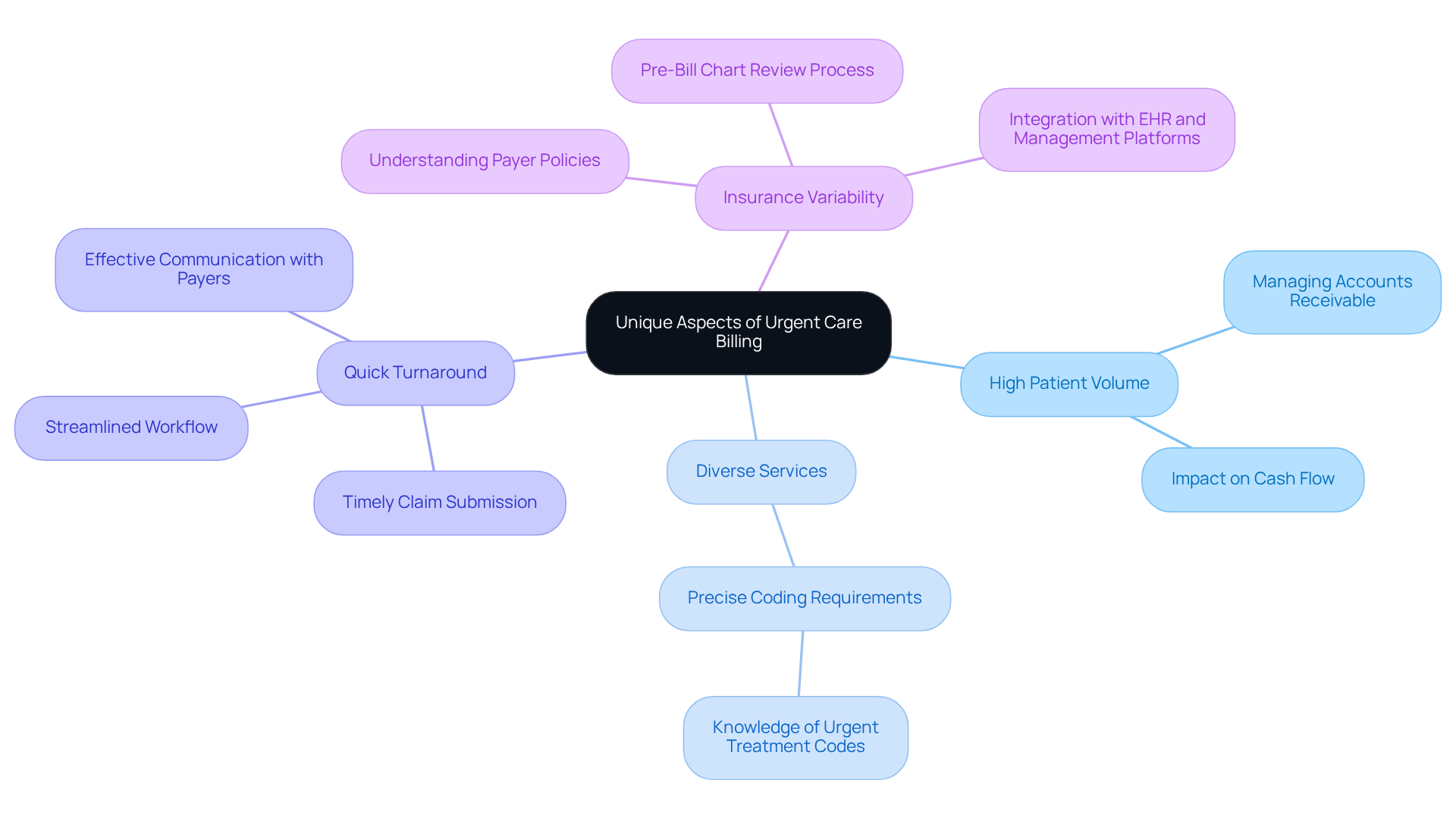
The unique challenges of invoicing in urgent service require specialized strategies, particularly in Florida urgent care billing services, to ensure financial viability. Key aspects include:
- High Patient Volume: Urgent care centers frequently encounter surges in patient visits. Failure to manage high patient volume effectively can result in prolonged accounts receivable days, impacting cash flow. Efficient Florida urgent care billing services are essential for managing this influx without sacrificing service quality.
- Diverse Services: The range of services offered, from minor injuries to diagnostic tests, necessitates precise coding. Precise invoicing hinges on the knowledge of specific urgent treatment codes, such as S codes, to ensure appropriate reimbursement.
- Quick Turnaround: Timely claim submission is crucial for preventing payment delays and maintaining cash flow. A streamlined workflow and effective communication with payers are vital, with practices achieving faster reimbursements of 15-25% within 30-90 days when processes are optimized. Healthcare Partners Consulting & Billing, LLC (HPC) specializes in Florida urgent care billing services, utilizing their 39 years of experience to enhance revenue cycle management.
- Insurance Variability: Each insurance plan has distinct requirements for urgent treatment invoicing, making it essential for clinics to stay informed about payer policies to minimize rejections. Implementing a pre-bill chart review process can significantly reduce denial rates by 20-30%, enhancing revenue cycle performance. Additionally, integrating with EHR and practice management platforms like TherapyNotes, SimplePractice, and others can streamline operations and ensure compliance.
With tailored invoicing strategies, clinics can not only enhance operational efficiency but also secure their financial future in a competitive landscape.
Implement a Structured Workflow for Urgent Care Billing
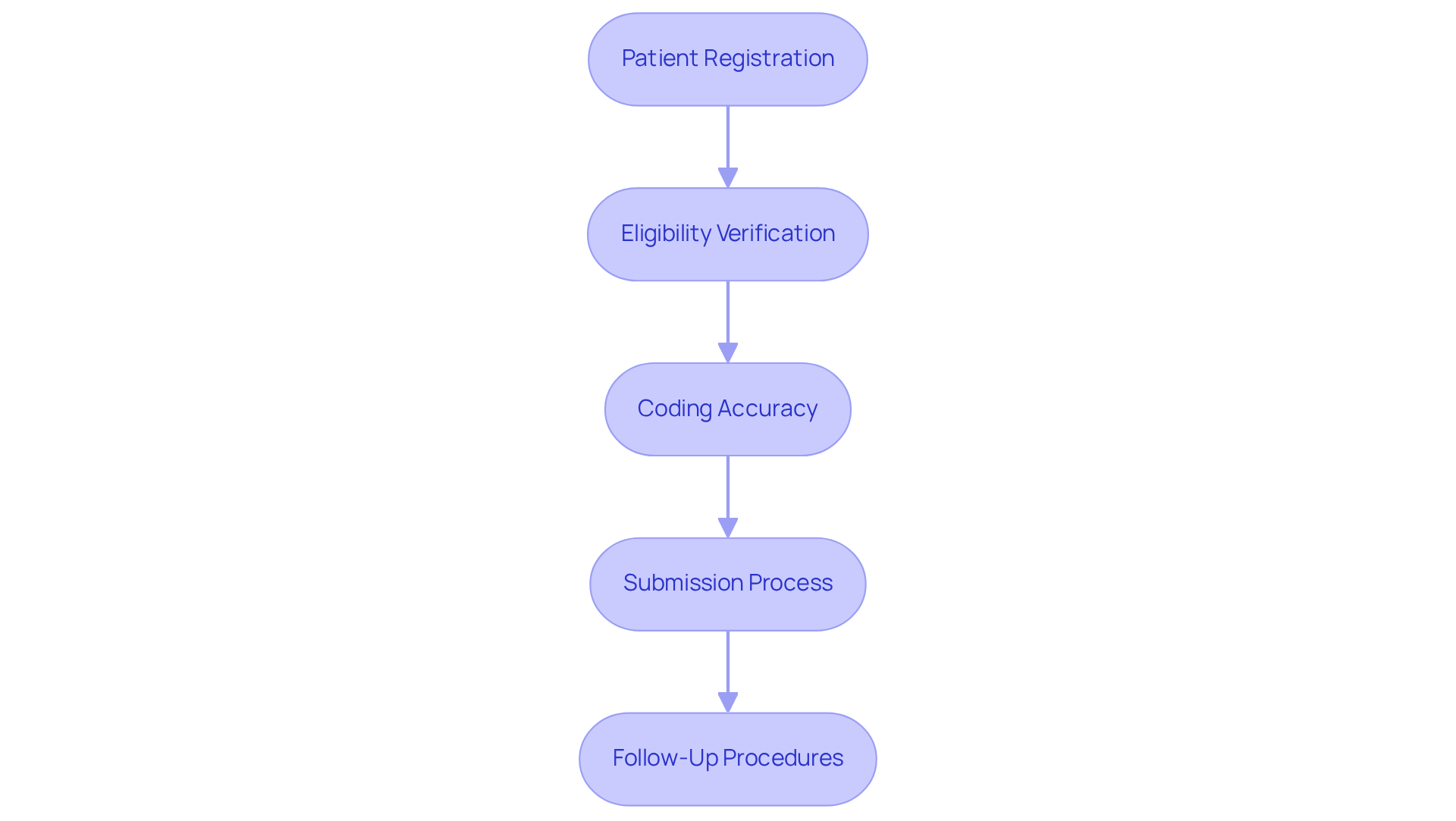
Inaccuracies in florida urgent care billing services can lead to substantial financial setbacks for healthcare facilities. To implement a structured workflow for urgent care billing, consider the following steps:
- Patient Registration: Accurately collect patient information, including insurance details, at the point of entry. This practice minimizes errors later in the billing process, ensuring a smoother workflow.
- Eligibility Verification: Conduct real-time eligibility checks to confirm coverage before services are rendered. This proactive approach significantly decreases denials due to coverage issues, enhancing financial sustainability.
- Coding Accuracy: Train staff on the specific coding requirements for urgent care services. Utilizing coding software that integrates with your practice management system can enhance accuracy and efficiency, leading to improved reimbursement outcomes.
- Submission Process: Establish a timeline for submissions, ideally within 24 hours of service delivery. Timely submissions help maintain cash flow and reduce the risk of delayed payments, contributing to overall operational efficiency.
- Follow-Up Procedures: Implement a systematic follow-up process for unpaid invoices. Regularly reviewing accounts receivable allows clinics to identify and address outstanding claims promptly, which can lead to a 20-30% reduction in denials and a 15-25% faster reimbursement cycle within 30-90 days.
Ultimately, a robust revenue management process that incorporates florida urgent care billing services can transform the financial landscape of urgent care facilities, ensuring their sustainability and growth.
Utilize Technology and Data Analytics for Enhanced Billing Efficiency
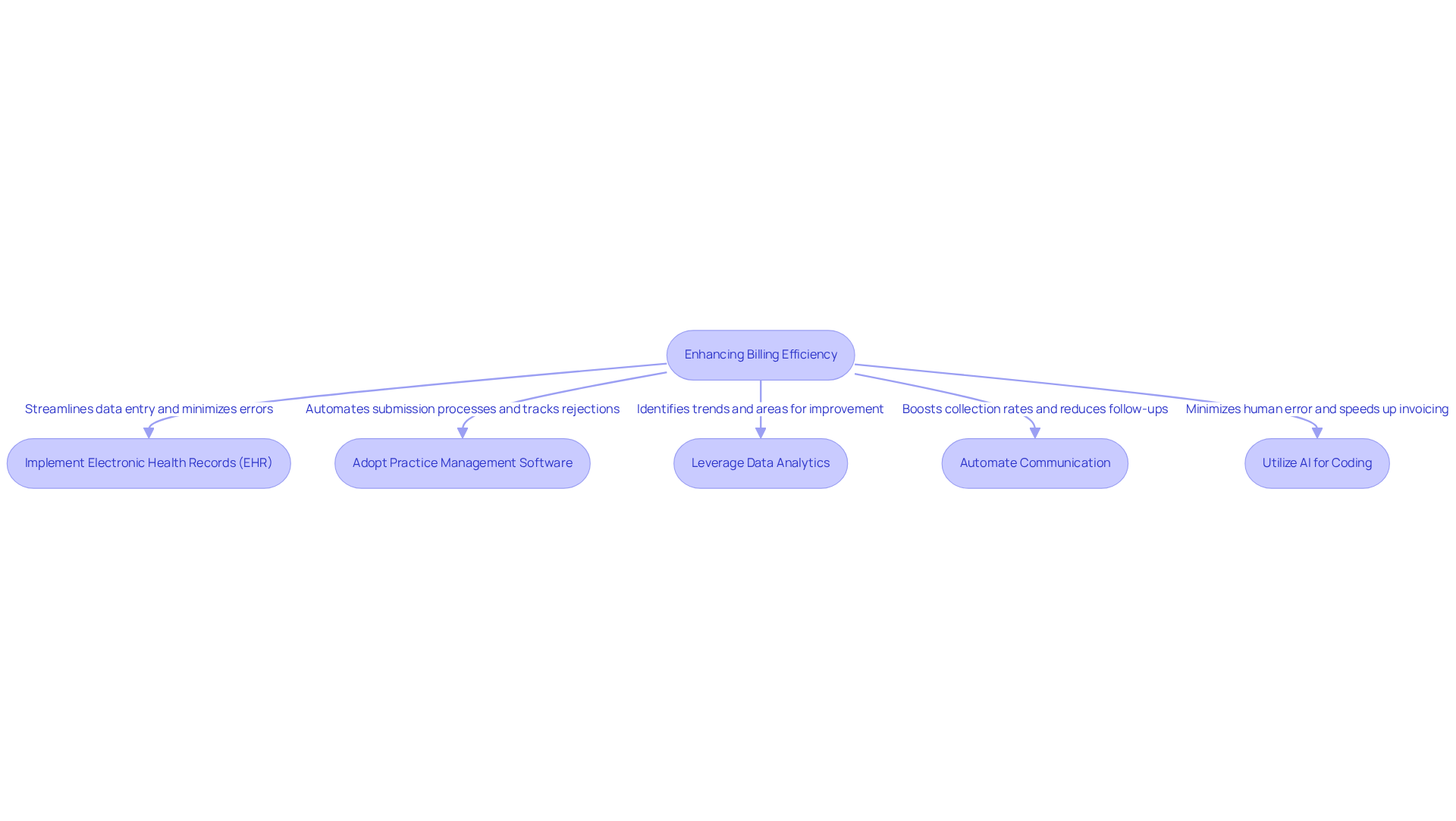
Urgent care clinics face significant challenges in billing efficiency, necessitating the adoption of advanced technology and data analytics. To enhance billing efficiency, clinics should consider the following strategies:
- Implement Electronic Health Records (EHR): Utilizing EHR systems with integrated payment modules streamlines data entry and minimizes manual errors. This integration leads to smoother transitions from patient support to invoicing, ensuring precision and effectiveness. Utilizing EHR systems can lead to a 20-30% decrease in rejection rates. Additionally, clinics may experience quicker reimbursement times of 15-25% within 30-90 days.
- Adopt Practice Management Software: Investing in software designed for urgent treatment invoicing automates submission processes, tracks rejections, and oversees accounts receivable. This not only reduces administrative burdens but also enhances cash flow, enabling clinics to prioritize patient care more effectively. Healthcare Partners Consulting & Billing, LLC (HPC) offers specialized solutions that cater to the unique needs of mental health practices, ensuring a comprehensive revenue cycle management approach with flexible service plans and transparent pricing models.
- Leverage Data Analytics: Utilizing analytics tools to track essential billing performance metrics, such as payment rejection rates and average time to payment, is crucial. Analyzing this data helps identify trends and areas for improvement, enabling clinics to make informed operational adjustments. By implementing scorecard-driven adjustments for claims accuracy and denial rates, clinics can enhance their operational rigor, a strategy backed by HPC’s 39 years of expertise.
- Automate Communication: Implementing automated reminders for patients regarding outstanding balances and payment options can boost collection rates and lighten the administrative load of follow-ups, letting healthcare providers concentrate on delivering quality care.
- Utilize AI for Coding: Exploring AI-driven coding solutions, such as AI Scribe technology, that analyze patient records and suggest appropriate codes minimizes the chance of human error and speeds up the invoicing process. This contributes to a more efficient revenue cycle and enhances documentation accuracy, further aiding in the reduction of rejection rates.
By adopting these technology solutions and data analytics, urgent care clinics can significantly improve their florida urgent care billing services, leading to enhanced revenue cycle management and better patient experiences. Clinics that fail to embrace these advancements risk falling behind in an increasingly competitive healthcare landscape.
Adopt Effective Denial Management Strategies for Revenue Recovery
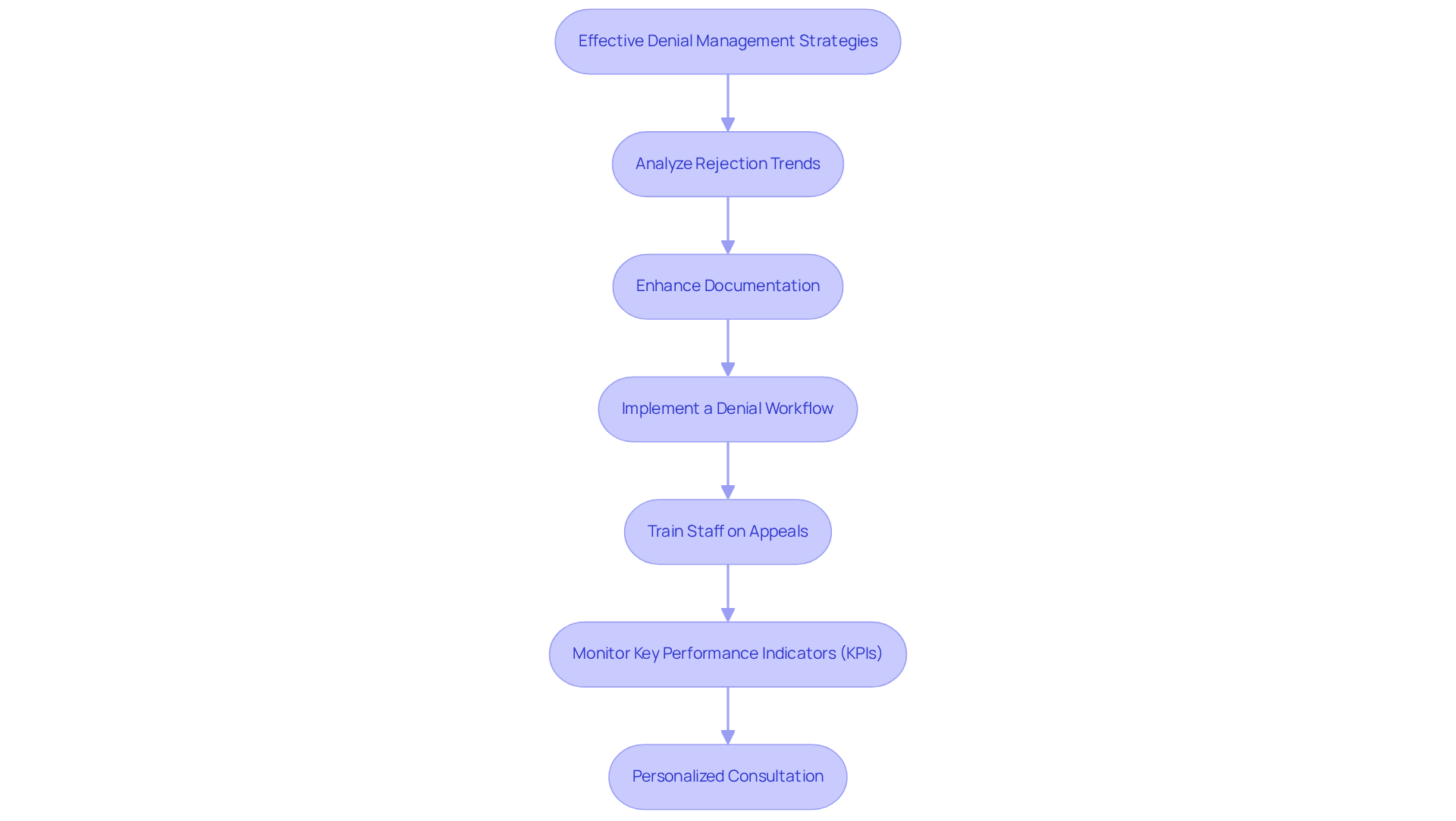
To effectively manage denials and recover revenue, urgent care clinics must adopt strategic approaches that address the root causes of claim refusals:
- Analyze Rejection Trends: Regularly review rejection reports to identify common reasons for refusals. Without understanding rejection trends, clinics may struggle to address the root causes of denials. Comprehending these trends enables clinics to tackle underlying issues and implement preventive strategies, significantly decreasing the chances of future rejections.
- Enhance Documentation: Ensure that all patient encounters are thoroughly documented, including clinical notes and treatment plans. Thorough documentation bolsters assertions and reduces the likelihood of refusals, as precise records are essential for justifying the care delivered.
- Implement a Denial Workflow: Establish a structured process for handling denied claims. This involves categorizing refusals, reviewing supporting documentation, and deciding whether to appeal. A systematic approach can lead to faster resolution times and improved recovery rates.
- Train Staff on Appeals: Provide training for billing staff on the appeals process, focusing on effective communication with payers and how to present compelling cases for reconsideration. Well-trained staff can significantly enhance the chances of overturning refusals.
- Monitor Key Performance Indicators (KPIs): Track KPIs related to denial management, such as the percentage of requests denied and the time taken to resolve denials. This data can assist clinics in refining their strategies and enhancing overall performance, ensuring that they maintain financial stability while delivering quality patient support.
- Personalized Consultation: Consider scheduling a 30-minute consultation with Healthcare Partners Consulting & Billing, LLC (HPC) to map your current workflow. This personalized approach can help identify the services that will optimize your claims management, particularly in addressing underpayments, unprocessed claims, and aging claims.
By adopting these strategies, clinics can not only recover lost revenue but also enhance their operational efficiency, potentially achieving a denial reduction of 20-30% and faster reimbursement cycles of 15-25% within 30-90 days. Recognizing the financial burden of denied claims is crucial for clinics aiming to sustain their operations and improve patient care. As highlighted by industry experts, ‘Denial prevention encompasses all the proactive measures taken to ensure a submission is accurate and complete before it is sent.’ Additionally, understanding that ‘the average cost of a denied claim is approximately $44 per claim‘ underscores the financial implications of effective denial management.
Conclusion
The financial viability of urgent care clinics hinges on the implementation of efficient billing practices. In Florida, where high patient volumes and diverse services present unique challenges, structured workflows and technology integration are essential. Effective denial management further enhances revenue cycle management and ensures financial sustainability. Healthcare Partners Consulting & Billing, LLC (HPC) provides specialized solutions in this field, allowing healthcare providers to focus on patient care rather than administrative burdens.
Key insights from the article emphasize the importance of:
- Accurate patient registration
- Real-time eligibility verification
- Timely claim submissions
Implementing advanced technology, such as Electronic Health Records and practice management software, can significantly streamline billing processes and reduce errors. Additionally, adopting effective denial management strategies can lead to substantial revenue recovery, with clinics potentially achieving a 20-30% reduction in denials and faster reimbursement cycles.
In today’s competitive healthcare landscape, it’s clear that urgent care clinics need to prioritize efficient billing practices if they want to thrive. Embracing these best practices not only enhances operational efficiency but also improves patient experiences. For clinics seeking to optimize their billing processes, engaging with experts like Healthcare Partners Consulting & Billing, LLC (HPC) can provide the necessary support and guidance. This investment can ultimately determine a clinic’s ability to thrive in a challenging healthcare environment.
Frequently Asked Questions
What are the unique challenges of urgent care billing?
The unique challenges of urgent care billing include managing high patient volume, offering diverse services that require precise coding, ensuring quick turnaround for claim submissions, and navigating insurance variability.
Why is managing high patient volume important in urgent care billing?
Managing high patient volume is crucial because failure to do so can lead to prolonged accounts receivable days, negatively impacting cash flow. Efficient billing services are essential to handle the influx of patients without compromising service quality.
What role does precise coding play in urgent care billing?
Precise coding is vital in urgent care billing as it ensures appropriate reimbursement for the diverse range of services offered, from minor injuries to diagnostic tests. Knowledge of specific urgent treatment codes, such as S codes, is necessary for accurate invoicing.
How does timely claim submission affect cash flow in urgent care?
Timely claim submission is critical for preventing payment delays and maintaining cash flow. Optimized processes can lead to faster reimbursements, with practices achieving 15-25% quicker payments within 30-90 days.
What strategies can reduce denial rates in urgent care billing?
Implementing a pre-bill chart review process can significantly reduce denial rates by 20-30%. Staying informed about each insurance plan’s distinct requirements also helps minimize rejections.
How can integrating with EHR and practice management platforms benefit urgent care billing?
Integrating with EHR and practice management platforms can streamline operations, ensure compliance, and enhance overall revenue cycle performance in urgent care billing.