

Introduction
The complexities of internal medicine billing pose significant challenges that threaten the financial viability of healthcare practices. As providers navigate complex coding requirements and high claim denial rates, these challenges often lead to revenue loss and operational inefficiencies. Identifying innovative approaches is crucial for practices to navigate these billing hurdles effectively. This article discusses how healthcare organizations must enhance their revenue cycle management through tailored solutions, allowing them to prioritize patient care while ensuring compliance and financial stability. Without effective strategies, practices risk financial instability and reduced patient care quality.
Understand the Unique Challenges of Internal Medicine Billing
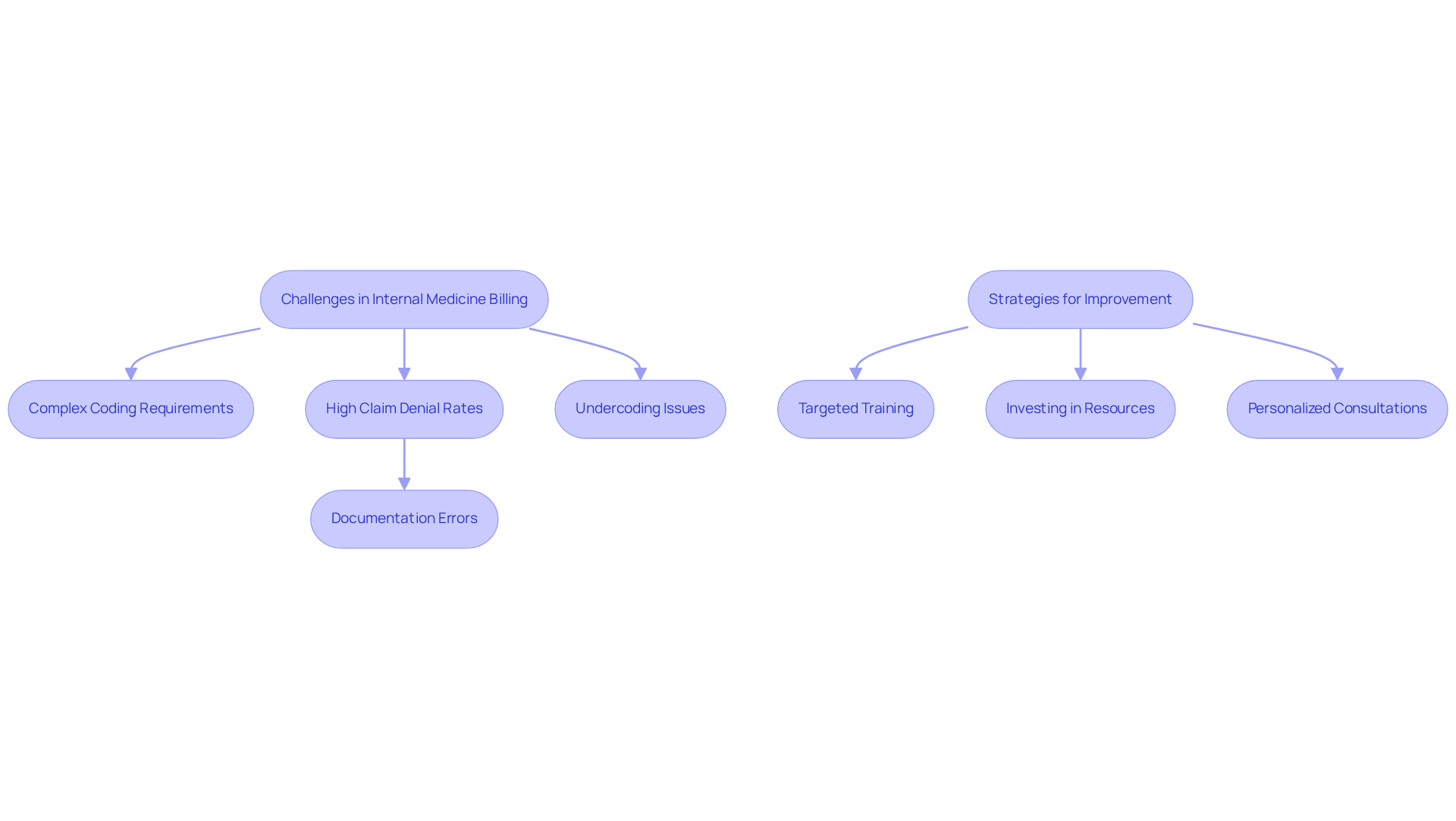
The complexities of internal medicine medical billing services create significant challenges that demand precise navigation of coding requirements. Providers face intricate coding requirements, especially Evaluation and Management (E/M) codes, which are essential for accurately reflecting the time and expertise involved in patient care. The high rate of claim denials in this specialty frequently arises from documentation errors, eligibility issues, and the necessity for prior authorizations. Recognizing these challenges is essential for developing effective billing strategies that ensure compliance and maximize revenue.
For instance, many internal medicine facilities struggle with undercoding, which leads to significant revenue loss and undermines the financial stability of healthcare organizations. This not only reduces revenue but also negatively impacts the overall financial well-being of the organization. Addressing these obstacles enables organizations to implement targeted training for financial staff and invest in resources that enhance coding accuracy and compliance. Research shows that methods concentrating on these areas can achieve a 20-30% decrease in denial rates and accelerate reimbursement timelines by 15-25% within 30-90 days, greatly enhancing their revenue cycle performance.
Healthcare Partners Consulting & Billing, LLC (HPC) brings 39 years of expertise as a veteran-owned organization, offering flexible service plans tailored to your operational scale, claim volume, and desired level of support, whether you need full-cycle management or focused accounts receivable assistance. HPC emphasizes that precise documentation is the hallmark of proper invoicing and reimbursement, especially in internal medicine medical billing services. Moreover, HPC integrates effortlessly with EHR and management platforms like TherapyNotes and SimplePractice, allowing providers to concentrate on patient care while managing the intricacies of financial processes. Personalized consultations are available to identify optimal administrative solutions for healthcare organizations, empowering providers to enhance their operational efficiency. Ultimately, addressing these challenges not only safeguards revenue but also enhances the overall quality of patient care.
Implement Effective Billing Strategies for Improved Revenue Cycle Management
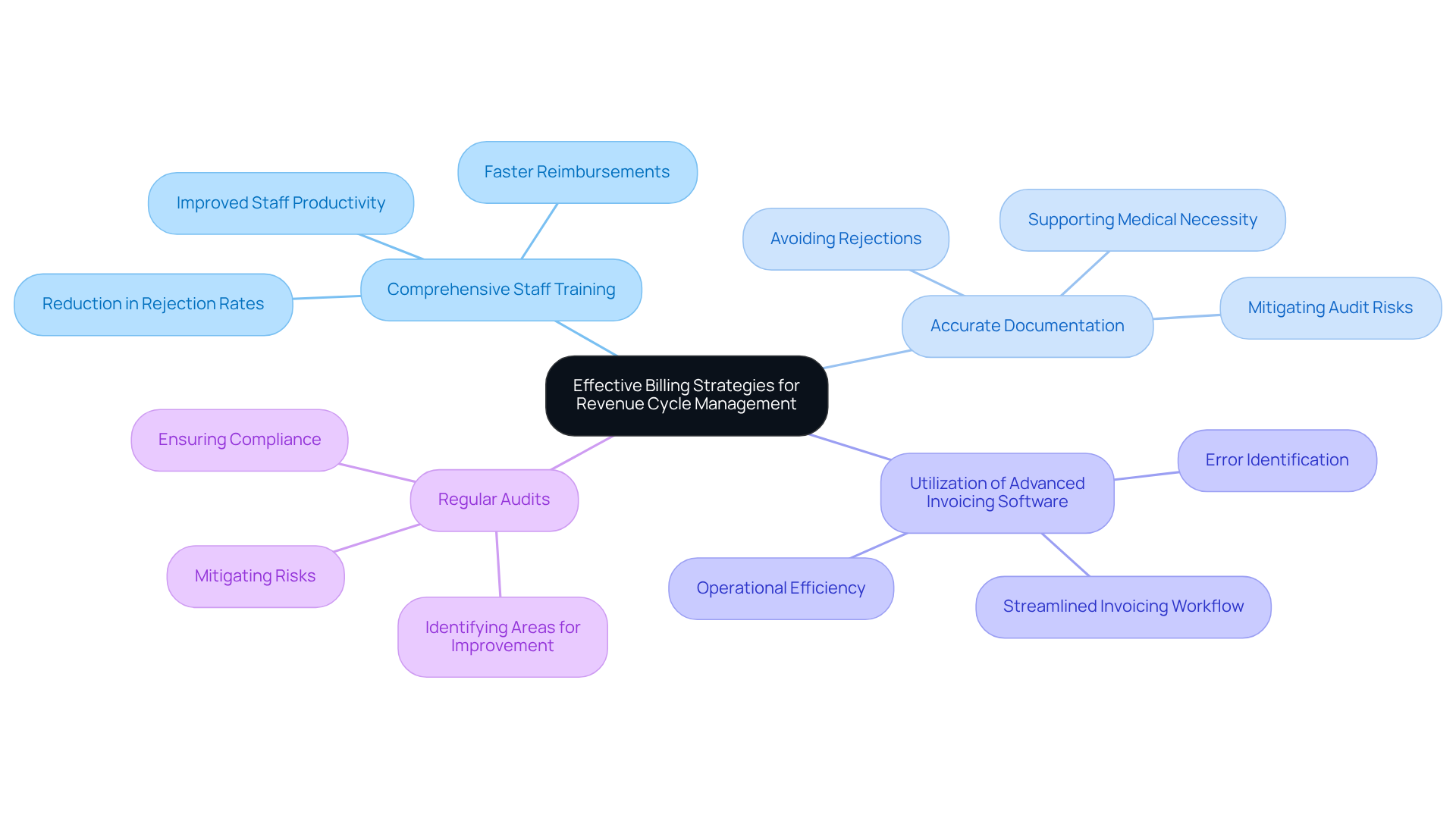
Many internal medicine practices struggle with revenue cycle management, often facing high rejection rates and delayed reimbursements due to inadequate internal medicine medical billing services. To enhance revenue cycle management, these practices should adopt several effective billing strategies:
- Comprehensive Staff Training: Regular training sessions for billing staff on the latest coding updates and compliance requirements can significantly reduce errors. Investing in ongoing education can lead to a 20-30% reduction in rejection rates. Additionally, practices may experience a 15-25% increase in quicker reimbursements within 30-90 days.
- Accurate Documentation: Ensuring that all patient encounters are thoroughly documented is critical. This includes capturing all pertinent details that validate the services charged, which can assist in avoiding rejections. Incomplete documentation is a frequent reason for rejection, making meticulous record-keeping essential.
- Utilization of Advanced Invoicing Software: Investing in robust invoicing software that automates submission processes and tracks rejections can streamline the invoicing workflow. Features like claim scrubbing can identify errors prior to submission, decreasing the chances of rejections and improving operational efficiency.
- Regular Audits: Conducting periodic evaluations of billing methods can help identify areas for improvement and ensure compliance with regulatory standards. This proactive approach can mitigate risks related to audits and penalties while providing insights into trends of rejection that can be addressed to enhance overall performance.
Implementing these strategies not only enhances cash flow but also allows providers to focus more on delivering quality patient care by utilizing internal medicine medical billing services. The commitment to operational rigor, demonstrated through scorecard-driven adjustments tied to claims accuracy and denial rates, further strengthens the financial health of the practice.
Utilize Technology and Expertise to Optimize Billing Processes
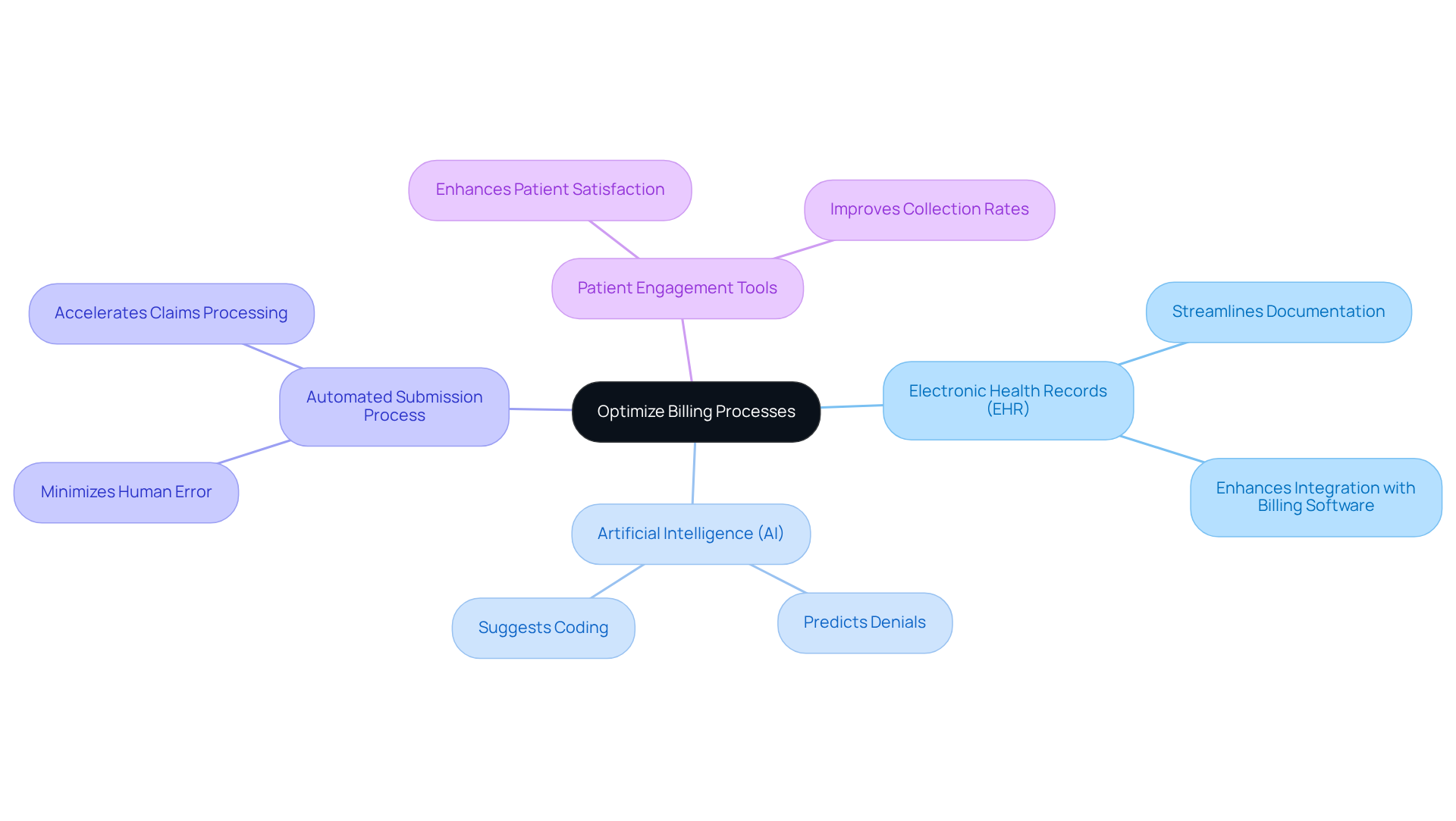
Integrating technology into invoicing processes is essential for enhancing efficiency and accuracy in healthcare billing. Here are key areas where technology can be utilized:
- Electronic Health Records (EHR): Utilizing EHR systems integrated with HPC’s software streamlines the documentation process, ensuring that all necessary information is readily available for financial purposes. HPC’s compatibility with platforms like TherapyNotes and SimplePractice enhances this integration.
- Artificial Intelligence (AI): AI tools help practices analyze financial data, spotting patterns and predicting potential denials before they become issues. These tools can also assist in coding by suggesting appropriate codes based on documentation, further optimizing the billing process.
- Automated Submission Process: Streamlining the submission process minimizes the risk of human error, which can lead to delayed payments and increased administrative workload. This is particularly beneficial in managing high volumes of claims typical in internal medicine practices, as internal medicine medical billing services ensure faster reimbursements and improved cash flow. This leads to a more stable financial environment for practices, allowing them to invest in patient care and resources.
- Patient Engagement Tools: Implementing patient portals enhances patient satisfaction by providing easy access to payment information. This, in turn, improves collection rates. HPC’s emphasis on relationship-driven service ensures that patients feel supported throughout the payment process.
Ultimately, this integration not only streamlines operations but also allows healthcare providers to prioritize patient care over administrative tasks. With 39 years of experience and a commitment to compliance and transparency, HPC empowers healthcare providers by removing administrative burdens, allowing them to concentrate on delivering quality care.
Enhance Compliance and Denial Management for Financial Stability
To achieve financial stability, internal medicine organizations must prioritize effective internal medicine medical billing services and compliance. Here are strategies to enhance these areas:
- Establish a Compliance Program: Developing a comprehensive compliance program that includes regular training, audits, and updates on regulatory changes is essential for staying ahead of potential issues. The Office of Inspector General emphasizes that uncorrected misconduct can jeopardize an entity’s mission and reputation, making compliance a critical focus.
- Rejection Analysis: Regularly examining rejection trends aids in identifying common issues and root causes. Identifying root causes of claim rejections is often challenging for practices. For example, methods that utilize scorecard-driven adjustments can improve the accuracy of submissions and lower rejection rates by 20-30%. This approach enables practices to implement corrective actions and reduce future denials effectively.
- Appeal Processes: Establishing a clear and efficient method for contesting denied requests is crucial. This should include timely follow-ups and thorough documentation to support the appeal. Practices with structured appeal processes often recover a significant portion of denied revenue, leading to improved overall financial performance.
- Collaboration with Payers: Establishing robust connections with insurance payers promotes smoother communication and faster resolutions for denied requests. Participating in regular conversations about billing methods can help align expectations and enhance operational efficiency.
- Personalized Consultation: Scheduling a consultation with Healthcare Partners Consulting & Billing, LLC (HPC) can help map your current workflow. This personalized approach can identify the services that will optimize your administrative solutions and enhance your claims management processes.
Enhancing these strategies allows practices to safeguard their revenue while elevating patient care quality, ultimately leading to improved operational performance and faster reimbursement cycles of 15-25% within 30-90 days by utilizing internal medicine medical billing services.

Conclusion
Achieving financial success in internal medicine billing requires a strategic approach to overcome inherent challenges. By addressing the unique challenges of this specialty, healthcare providers can enhance their revenue cycle management. This allows them to focus more on delivering quality patient care. The emphasis on compliance, accurate documentation, and effective billing strategies not only safeguards revenue but also empowers providers to navigate the intricacies of medical billing with confidence.
Key insights from the article highlight the importance of:
- Comprehensive staff training
- The integration of advanced technology
- The establishment of robust compliance programs
These strategies collectively contribute to reducing claim denials, improving cash flow, and ultimately enhancing the financial stability of internal medicine practices. By leveraging the expertise of Healthcare Partners Consulting & Billing, LLC (HPC), providers can streamline their billing processes and ensure adherence to regulatory standards, allowing them to prioritize patient care over administrative burdens.
In conclusion, achieving financial success in internal medicine billing requires a strategic approach to overcome inherent challenges. By adopting a compliance-first approach and utilizing tailored billing solutions, healthcare providers can not only improve their operational efficiency but also foster a culture of empowerment and innovation within their practices. Engaging with HPC can be a transformative step in optimizing billing processes, ensuring that providers can focus on what truly matters – delivering exceptional care to their patients. For personalized support, reach out to HPC at info@hpcbilling.com or call 888-517-4992 to explore how tailored billing services can enhance your practice’s financial health.
Frequently Asked Questions
What are the main challenges of internal medicine billing?
The main challenges include intricate coding requirements, particularly for Evaluation and Management (E/M) codes, high rates of claim denials due to documentation errors, eligibility issues, and the need for prior authorizations.
How does undercoding affect internal medicine practices?
Undercoding can lead to significant revenue loss and undermine the financial stability of healthcare organizations, negatively impacting their overall financial well-being.
What strategies can help reduce claim denial rates in internal medicine billing?
Implementing targeted training for financial staff and investing in resources that enhance coding accuracy and compliance can lead to a 20-30% decrease in denial rates and accelerate reimbursement timelines by 15-25% within 30-90 days.
What services does Healthcare Partners Consulting & Billing, LLC (HPC) offer?
HPC offers flexible service plans tailored to operational scale, claim volume, and desired support level, including full-cycle management and focused accounts receivable assistance.
How does HPC ensure proper invoicing and reimbursement?
HPC emphasizes precise documentation as essential for proper invoicing and reimbursement, particularly in internal medicine billing services.
Can HPC integrate with existing healthcare management systems?
Yes, HPC integrates seamlessly with EHR and management platforms like TherapyNotes and SimplePractice, allowing providers to focus on patient care while managing financial processes.
What is the benefit of personalized consultations offered by HPC?
Personalized consultations help identify optimal administrative solutions for healthcare organizations, empowering providers to enhance their operational efficiency and safeguard revenue.