
Introduction
The intricate nature of prior authorization often diverts attention from the primary goal of patient care in mental health clinics. Outsourcing this critical function to a specialized partner can alleviate administrative burdens and enhance operational efficiency, allowing clinics to focus on delivering quality care. However, identifying effective strategies for prior authorization is essential to ensure success in this outsourcing endeavor.
What best practices can mental health clinics adopt to optimize their prior authorization processes and ultimately improve patient outcomes?
Define Prior Authorization Outsourcing for Mental Health Clinics
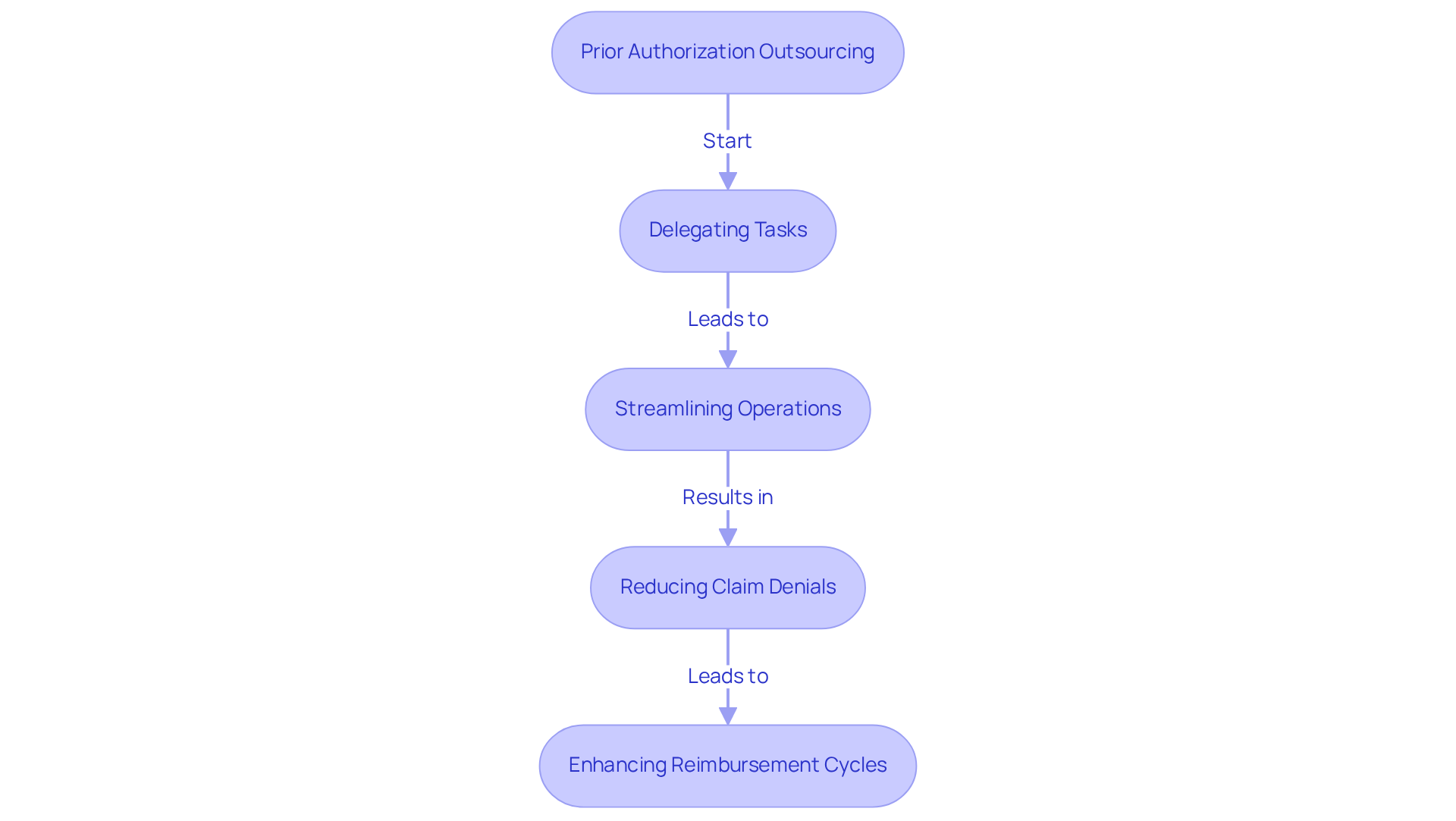
Navigating the intricate landscape of insurance requirements can overwhelm internal teams, diverting their focus from patient care. Prior authorization outsourcing involves delegating the task of securing necessary permissions from insurance companies for specific treatments or services to an external partner. This practice is particularly relevant in mental health facilities, where the complexity of services and diverse insurer requirements can create significant administrative burdens.
Outsourcing approval processes to Healthcare Partners Consulting & Billing, LLC (HPC), a veteran-owned organization with extensive expertise, allows for streamlined operations. This approach improves operational efficiency and also helps reduce claim denials, which can be decreased by 20-30% through enhanced processes and management of prior authorization outsourcing.
Moreover, facilities that implement outsourcing frequently observe quicker reimbursement cycles, with enhancements of 15-25% generally achieved within 30-90 days by streamlining previous approval workflows. Significantly, 84% of Medicare Advantage participants are in plans that utilize prior authorization outsourcing for mental health services, underscoring the significance of this approach.
By choosing to partner with HPC, healthcare facilities can not only streamline their approval processes but also significantly enhance their focus on delivering quality patient care. Client testimonials from practitioners like Dr. Sarah Mitchell and Dr. Michael Rodriguez further illustrate the effectiveness of HPC’s services in reducing administrative burdens and enhancing practice efficiency.
Evaluate Current Workflows and Identify Bottlenecks
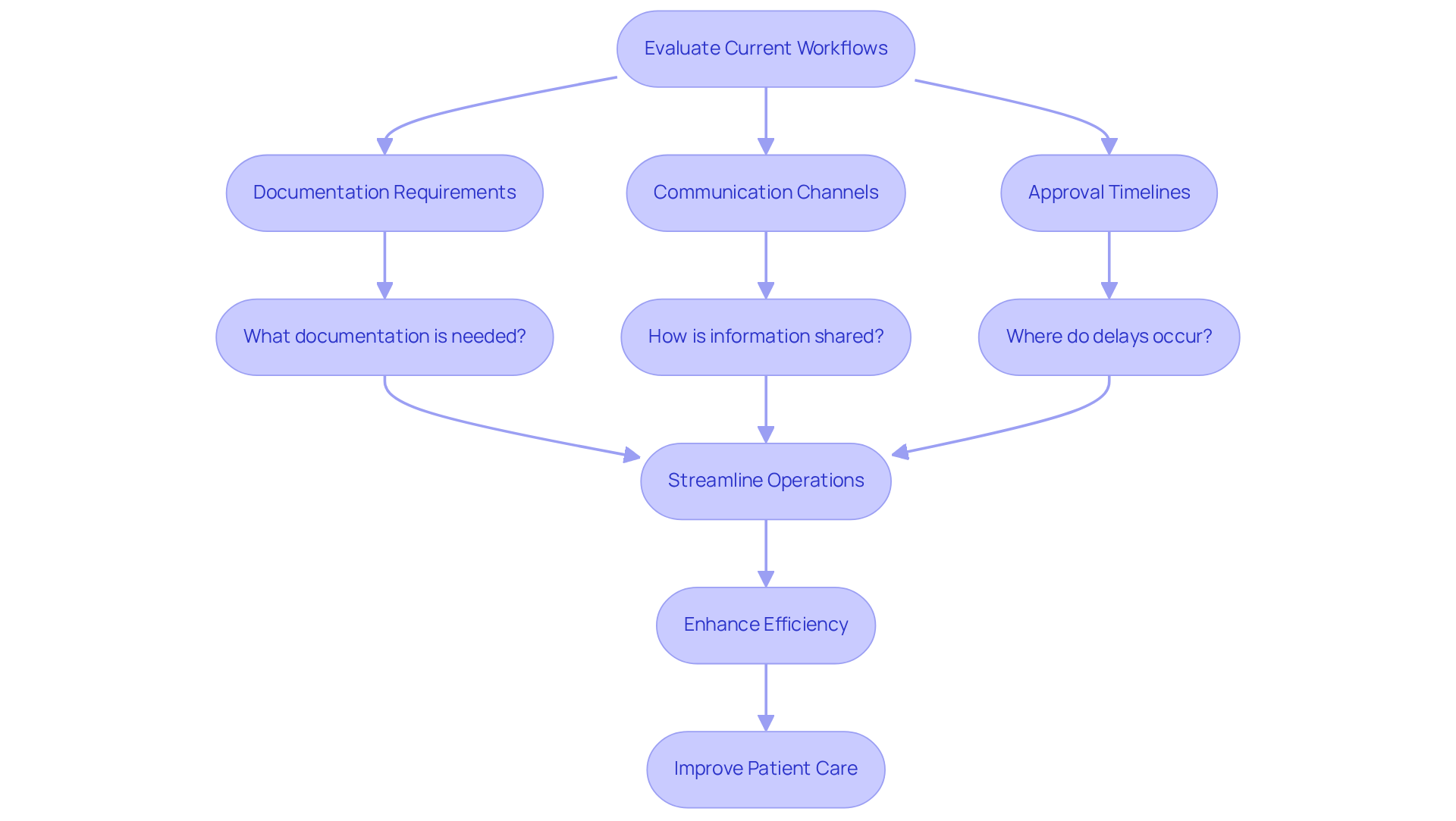
To effectively engage in prior authorization outsourcing, mental health clinics must first evaluate their existing workflows. This entails outlining each step of the authorization sequence, from initial patient intake to final approval. Key areas to assess include:
- Documentation Requirements: Ensure that all necessary clinical documentation is collected and organized to facilitate smoother approvals.
- Communication Channels: Identify how information is shared between staff and insurers, looking for gaps that may cause delays in the workflow.
- Approval Timelines: Track how long each step takes and pinpoint where delays frequently occur.
By identifying these obstacles, healthcare facilities can streamline operations, which enables prior authorization outsourcing to an expert partner like Healthcare Partners Consulting & Billing, LLC (HPC) to enhance efficiency. Implementing these changes results in a 20-30% reduction in denial rates and accelerates the reimbursement cycle by 15-25% within 30-90 days, ultimately enhancing the revenue cycle performance of the practice. Moreover, addressing these workflow challenges is imperative, as delays in previous approvals can adversely affect patient care, resulting in deteriorated health outcomes and heightened hospitalizations, as highlighted by the AMA’s support for reforming previous approval systems. For personalized consultation to identify optimal administrative solutions for your practice, get in touch with us at info@hpcbilling.com or call 888-517-4992. We are available nationwide, Monday-Friday.
Choose the Right Outsourcing Partner for Your Clinic
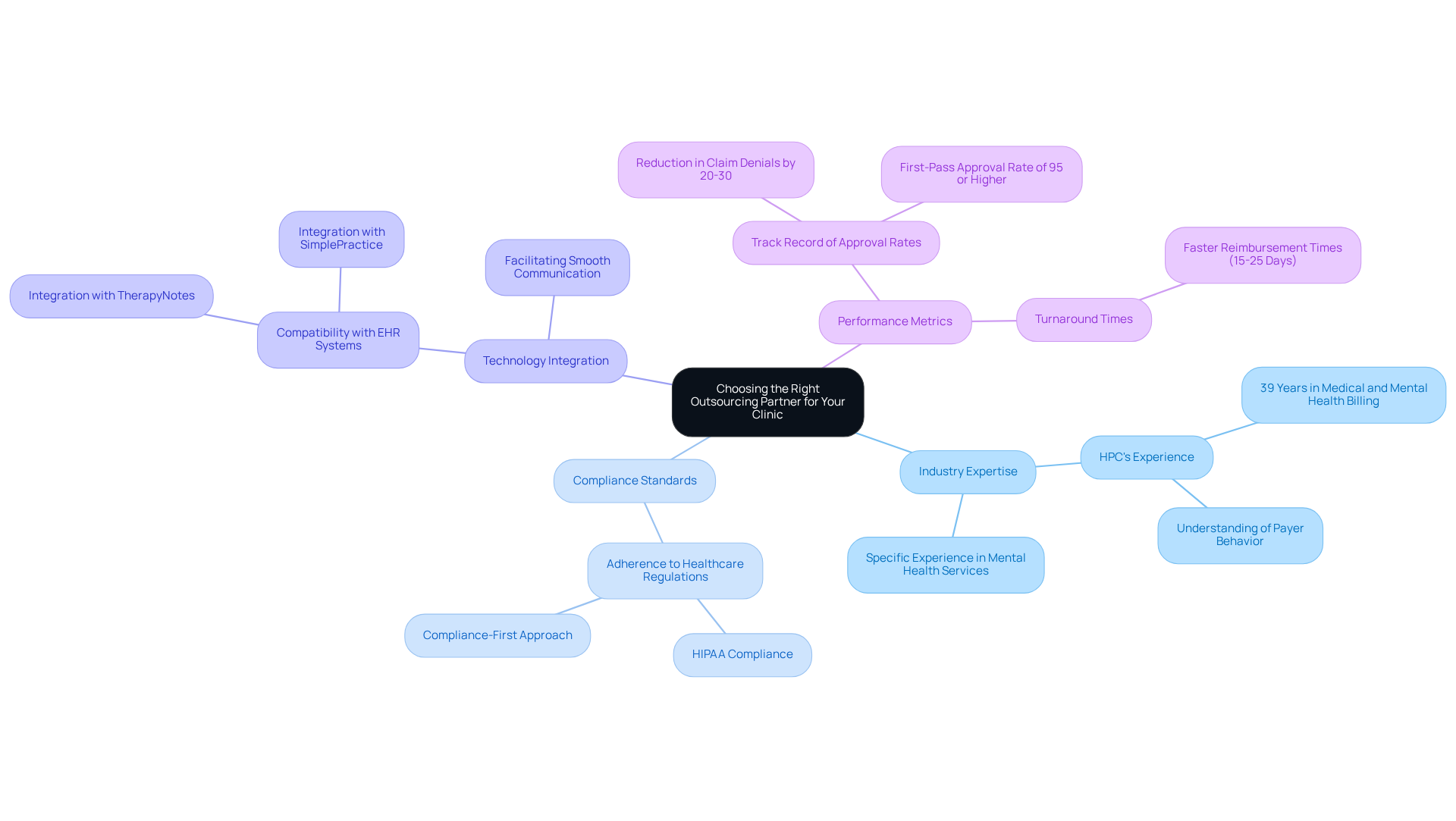
Selecting the right outsourcing partner can be daunting, especially in the complex landscape of mental health services. Here are key factors to consider:
- Industry Expertise: Choose a partner with specific experience in mental health services. Their comprehension of the unique challenges encountered by your practice can significantly enhance the effectiveness of prior authorization outsourcing. Healthcare Partners Consulting & Billing, LLC (HPC) is a veteran-owned company with 39 years of experience specializing in medical and mental health billing, ensuring a deep understanding of payer behavior and compliance.
- Compliance Standards: Ensure that the partner adheres to all relevant healthcare regulations, including HIPAA, to safeguard patient information and maintain compliance. HPC emphasizes a compliance-first approach, which is crucial in today’s regulatory environment.
- Technology Integration: Evaluate whether the partner’s systems can seamlessly connect with your facility’s existing electronic health records (EHR). HPC offers compatibility with leading platforms such as TherapyNotes and SimplePractice, facilitating smooth communication and data sharing, which can lead to faster reimbursement times.
- Performance Metrics: Inquire about their track record regarding approval rates and turnaround times. A strong partner should demonstrate a history of reducing claim denials by 20-30%, directly impacting your facility’s revenue cycle. HPC has a proven track record of enhancing operational efficiency and patient care through comprehensive revenue cycle management tailored to behavioral and mental health practices.
Failure to select an appropriate partner may lead to inefficiencies that compromise patient care and operational success.
Integrate Technology for Seamless Operations
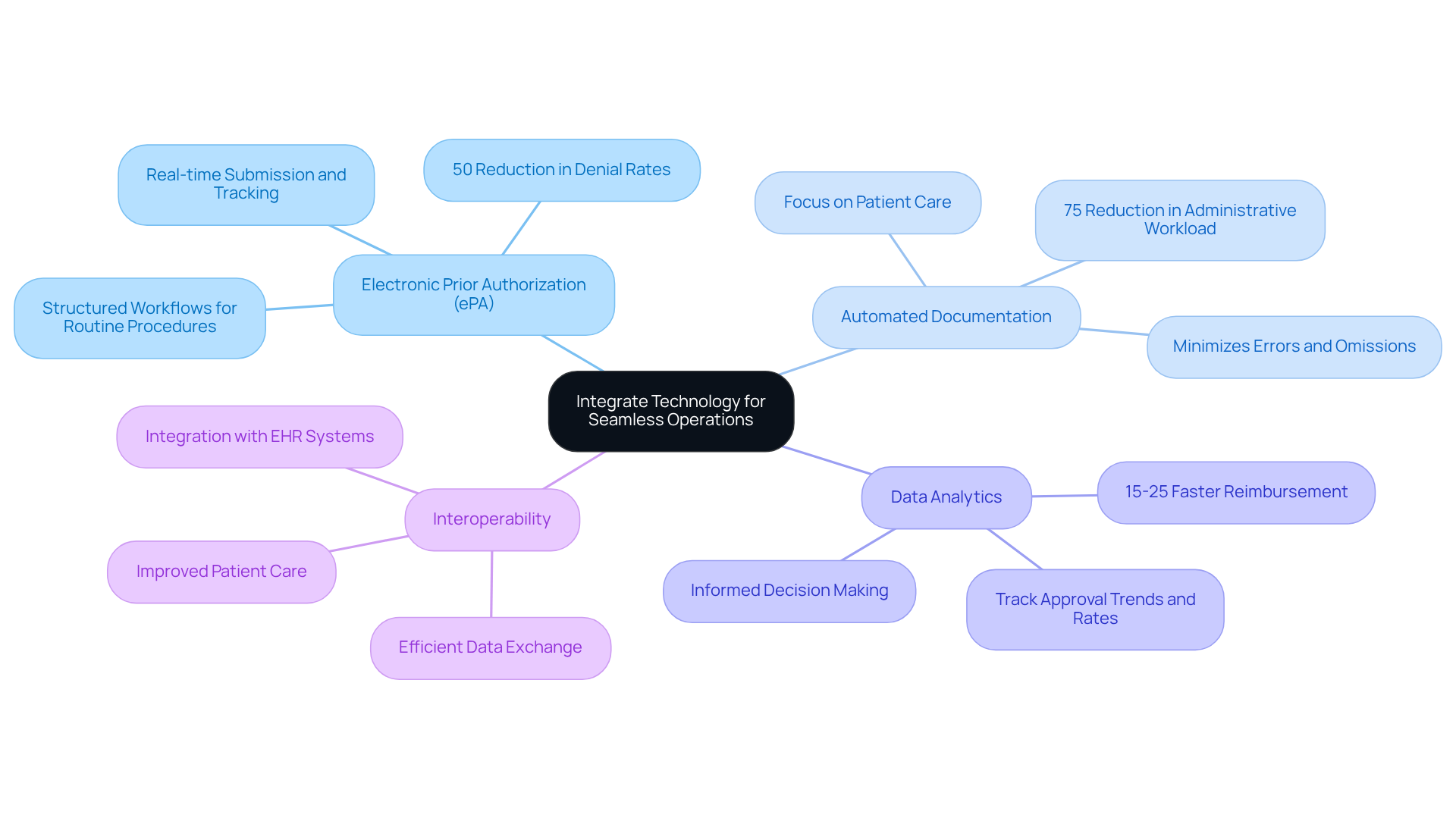
To enhance the efficiency of approval workflows, mental health clinics must leverage technological solutions that streamline operations. Consider the following strategies:
- Electronic Prior Authorization (ePA): Implement ePA systems that enable real-time submission and tracking of request approvals, significantly reducing delays linked to manual methods. Clinics implementing ePA report a 50% reduction in denial rates, particularly when using structured workflows for routine procedures. This underscores the effectiveness of organized processes.
- Automated Documentation: Utilize software that automatically compiles necessary clinical documentation, minimizing the risk of errors and omissions that can lead to denials. By automating documentation, clinics can cut administrative workload by as much as 75%, allowing staff to focus more on patient care rather than paperwork, as demonstrated in numerous studies on automation efficiency.
- Data Analytics: Utilize analytics tools to track approval trends, rates, and turnaround times. By analyzing this data, healthcare facilities can make informed decisions that lead to continuous improvement, including faster reimbursement rates of 15-25% within 30-90 days, which is essential for enhancing revenue cycle performance.
- Interoperability: Ensure that the technology used is interoperable with existing EHR systems, allowing for efficient data exchange and communication between providers and insurers. This integration is essential for enhancing the efficiency of previous approval processes and improving overall patient care.
By adopting these technological innovations, healthcare facilities can greatly improve their approval workflows, resulting in quicker authorizations and enhanced patient experiences. Ultimately, embracing these innovations not only accelerates authorizations but also significantly elevates the quality of patient care in mental health services.
Establish Performance Metrics for Continuous Improvement
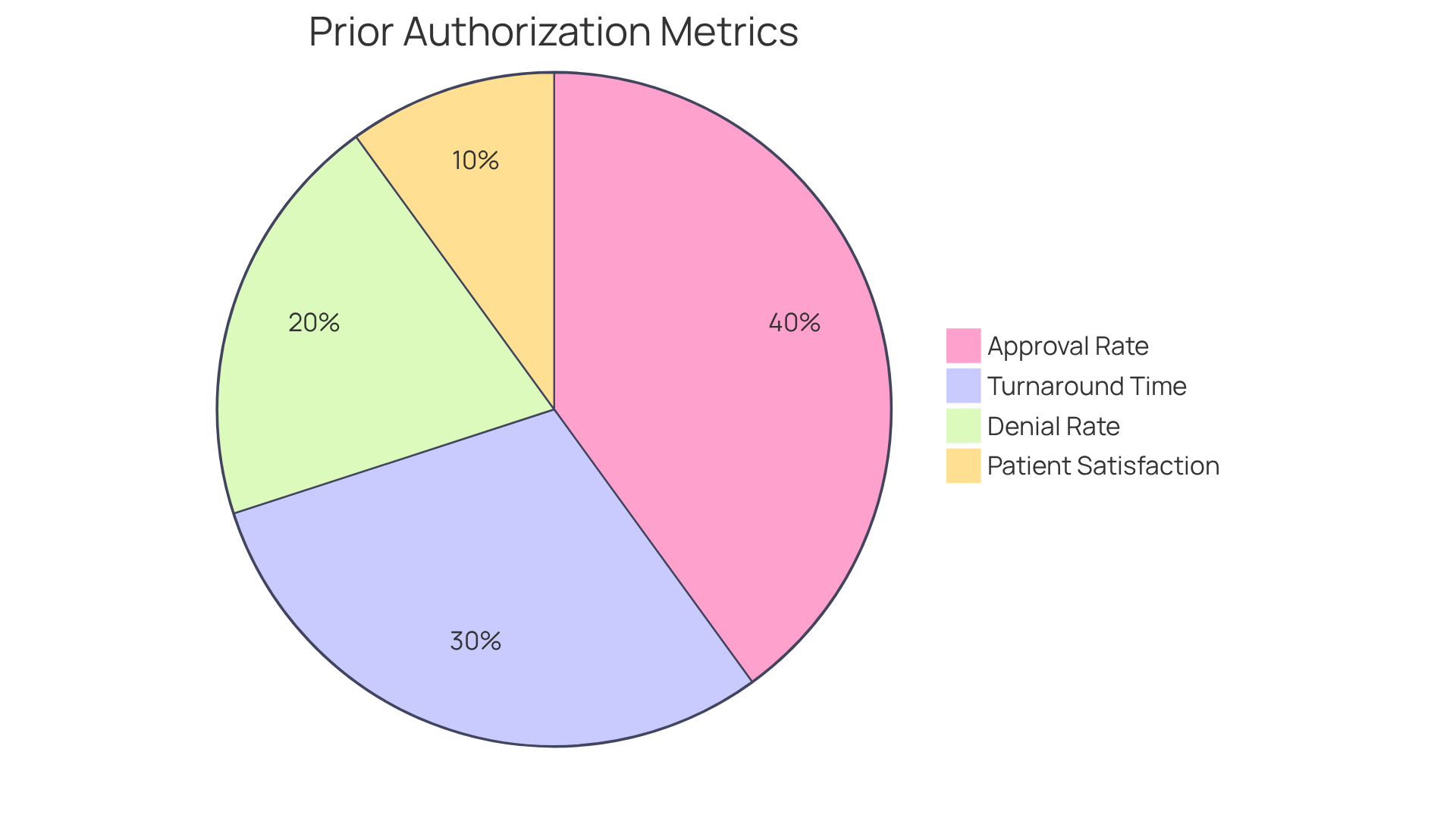
To optimize the processes involved in prior authorization outsourcing, mental health clinics must prioritize the establishment of clear performance metrics that facilitate continuous improvement. Key metrics to track include:
- Approval Rate: Assess the percentage of requests accepted on the initial submission, reflecting the efficiency of documentation and submission methods. A good approval rate typically exceeds 85-90%.
- Turnaround Time: Track the average time taken from submission to approval, helping to identify delays and areas for improvement. Recent benchmarks indicate that median response times for standard requests are about one day, with expedited requests requiring even less time.
- Denial Rate: Monitor the percentage of requests that are denied, analyzing the reasons for denials to address underlying issues in documentation or communication. Denial rates for standard prior requests can range from 12% to 18%, highlighting the need for proactive management.
- Patient Satisfaction: Gather patient feedback on their approval system experience to identify areas for improvement. High patient satisfaction is linked to efficient approval methods, ultimately enhancing care delivery.
Consistent evaluation of these metrics enables healthcare facilities to enhance workflows, leading to improved operational efficiency and patient care. Implementing effective strategies for prior authorization outsourcing has been shown to reduce denial rates by 20-30% and expedite reimbursements by 15-25% within 30-90 days, underscoring the financial benefits of a well-managed approval workflow. Additionally, clinics should be cautious of misapplying performance metrics, as this can lead to misguided strategies, ultimately complicating the authorization process and impacting patient care. For personalized consultation to identify the optimal administrative solutions for your practice, consider scheduling a 30-minute call with Healthcare Partners Consulting & Billing, LLC (HPC) to map your current workflow and discover specific services that will move the needle fastest.
Conclusion
Many clinics struggle with the complexities of prior authorization, diverting attention from patient care. Outsourcing prior authorization processes in mental health clinics is a strategic move that empowers healthcare providers to focus on what truly matters: patient care. Collaborating with a specialized partner like Healthcare Partners Consulting & Billing, LLC (HPC) allows clinics to alleviate administrative burdens, streamline workflows, and enhance operational efficiency. This strategy effectively minimizes claim denials and expedites reimbursement cycles, ultimately leading to improved financial health for practices.
The article highlights several best practices for successful prior authorization outsourcing, including:
- Evaluating current workflows
- Selecting the right partner
- Integrating technology
- Establishing performance metrics
Each of these elements plays a crucial role in optimizing the authorization process, ensuring that mental health providers can navigate the complexities of insurance requirements with greater ease. By implementing these strategies, clinics can expect to see significant improvements in their operational efficiency and patient satisfaction.
In conclusion, prior authorization outsourcing is essential for enhancing operational efficiency in mental health clinics. It represents a vital opportunity for mental health clinics to enhance their service delivery while maintaining compliance and operational integrity. By implementing these best practices and collaborating with a specialized partner such as HPC, healthcare providers can transform their administrative processes, allowing them to dedicate more time and resources to delivering high-quality care to their patients. For clinics aiming to enhance operational efficiency and patient outcomes, engaging with HPC could be the pivotal step toward a more effective administrative framework.
Frequently Asked Questions
What is prior authorization outsourcing for mental health clinics?
Prior authorization outsourcing involves delegating the task of securing necessary permissions from insurance companies for specific treatments or services to an external partner, which helps mental health facilities manage complex insurance requirements and reduce administrative burdens.
How does prior authorization outsourcing benefit mental health facilities?
It improves operational efficiency, reduces claim denials by 20-30%, and leads to quicker reimbursement cycles, enhancing revenue cycle performance.
What percentage of Medicare Advantage participants are in plans that utilize prior authorization outsourcing for mental health services?
84% of Medicare Advantage participants are in plans that utilize prior authorization outsourcing for mental health services.
What steps should mental health clinics take to evaluate their current workflows before outsourcing?
Clinics should outline each step of the authorization sequence, assess documentation requirements, evaluate communication channels, and track approval timelines to identify bottlenecks.
What are the expected outcomes of implementing prior authorization outsourcing?
Facilities can expect a 20-30% reduction in denial rates and a 15-25% acceleration in reimbursement cycles within 30-90 days.
Why is it important to address workflow challenges in prior authorization processes?
Delays in prior approvals can adversely affect patient care, leading to deteriorated health outcomes and increased hospitalizations, making it crucial to streamline these processes.
How can healthcare facilities get personalized consultation for administrative solutions?
Facilities can contact Healthcare Partners Consulting & Billing, LLC (HPC) at info@hpcbilling.com or call 888-517-4992 for personalized consultation.