

Introduction
Billing services for therapists present significant challenges that can hinder their focus on patient care in the complex landscape of mental health care. However, with the right strategies, therapists can streamline their billing processes, enabling them to prioritize their commitment to patient care. This article explores four essential practices that enhance revenue cycle management while ensuring compliance and efficiency in mental health billing.
Understand Mental Health Billing Fundamentals
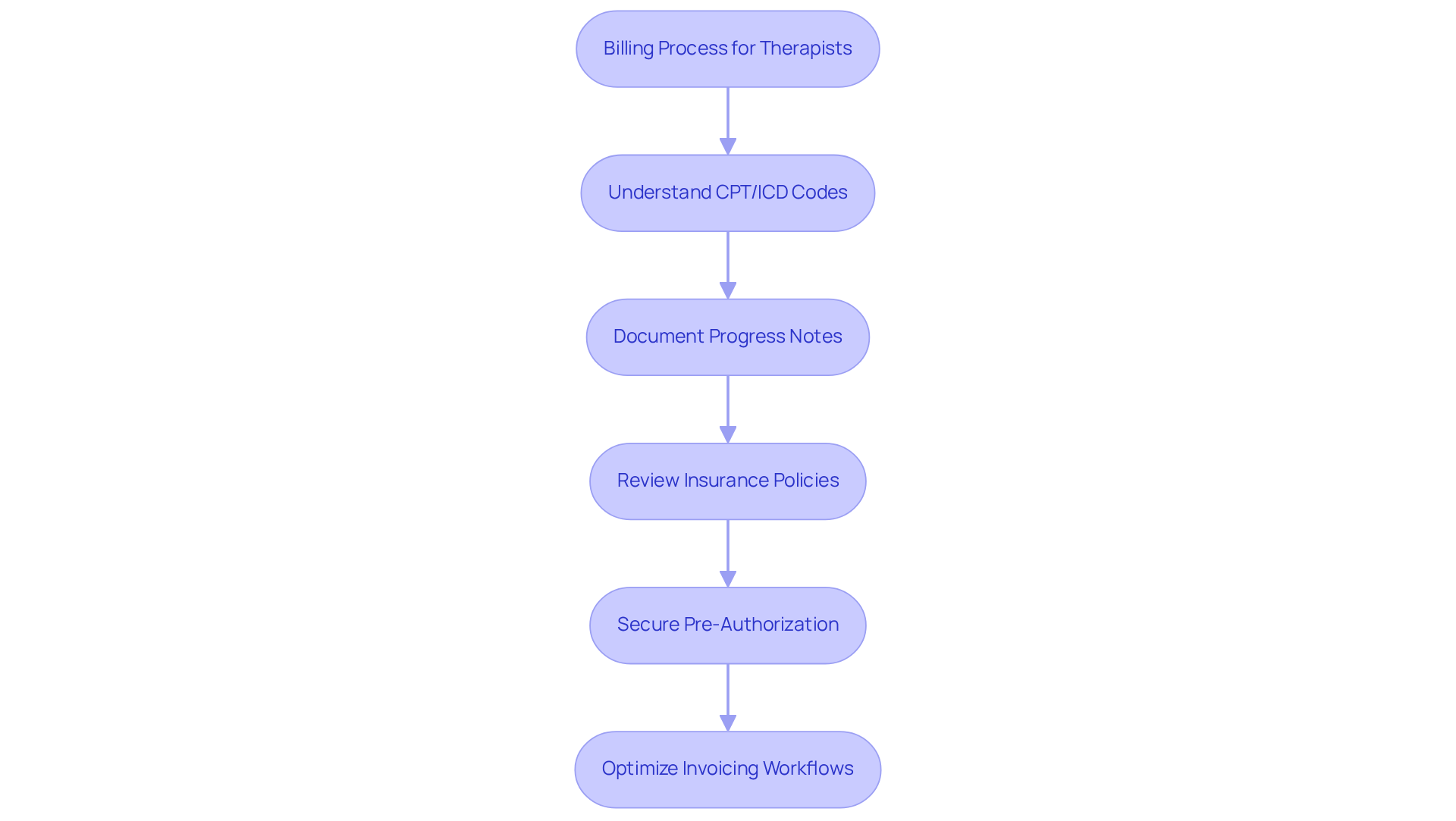
Mental health invoicing, particularly in billing services for therapists, presents unique challenges that require specialized knowledge and skills. Therapists must be well-versed in Current Procedural Terminology (CPT) codes and International Classification of Diseases (ICD) codes, as these are pivotal for the billing services for therapists and accurate reimbursement. For example, using the correct CPT code, such as 90834 for a 45-minute psychotherapy session, is essential to avoid claim rejections. Furthermore, documentation plays a crucial role; insurers require detailed progress notes to justify billed services, particularly for longer sessions.
Grasping the complexities of insurance policies, including co-pays, deductibles, and coverage limits, can greatly impact a healthcare entity’s revenue cycle. Therapists often struggle with claim denials and payment delays, which can hinder their practice’s financial health. Securing pre-authorization for specific services is also essential, as it can prevent payment delays and minimize the likelihood of refusals. By optimizing invoicing workflows and adhering to documentation standards, billing services for therapists can help practices reduce claim denials by 20-30% and achieve faster reimbursement timelines of 15-25% within 30-90 days.
Recent trends in mental health reimbursement for 2026 highlight the need for compliance with evolving regulations and documentation requirements. As methods adjust to these changes, utilizing technology and outsourcing billing services for therapists can enhance operational efficiency and ensure compliance with payer regulations. By addressing these complexities, therapists can not only enhance their financial outcomes but also ensure a higher standard of patient care.
If you’re unsure which service fits your needs best, Healthcare Partners Consulting & Billing, LLC (HPC) is here to help you find the right administrative solutions. Arrange a 30-minute call to review your current workflow and explore how HPC can optimize your financial processes, ultimately improving patient care and practice efficiency. You can reach us at info@hpcbilling.com or call 888-517-4992. We are available nationwide, Monday-Friday.
Choose a Specialized Billing Service Provider
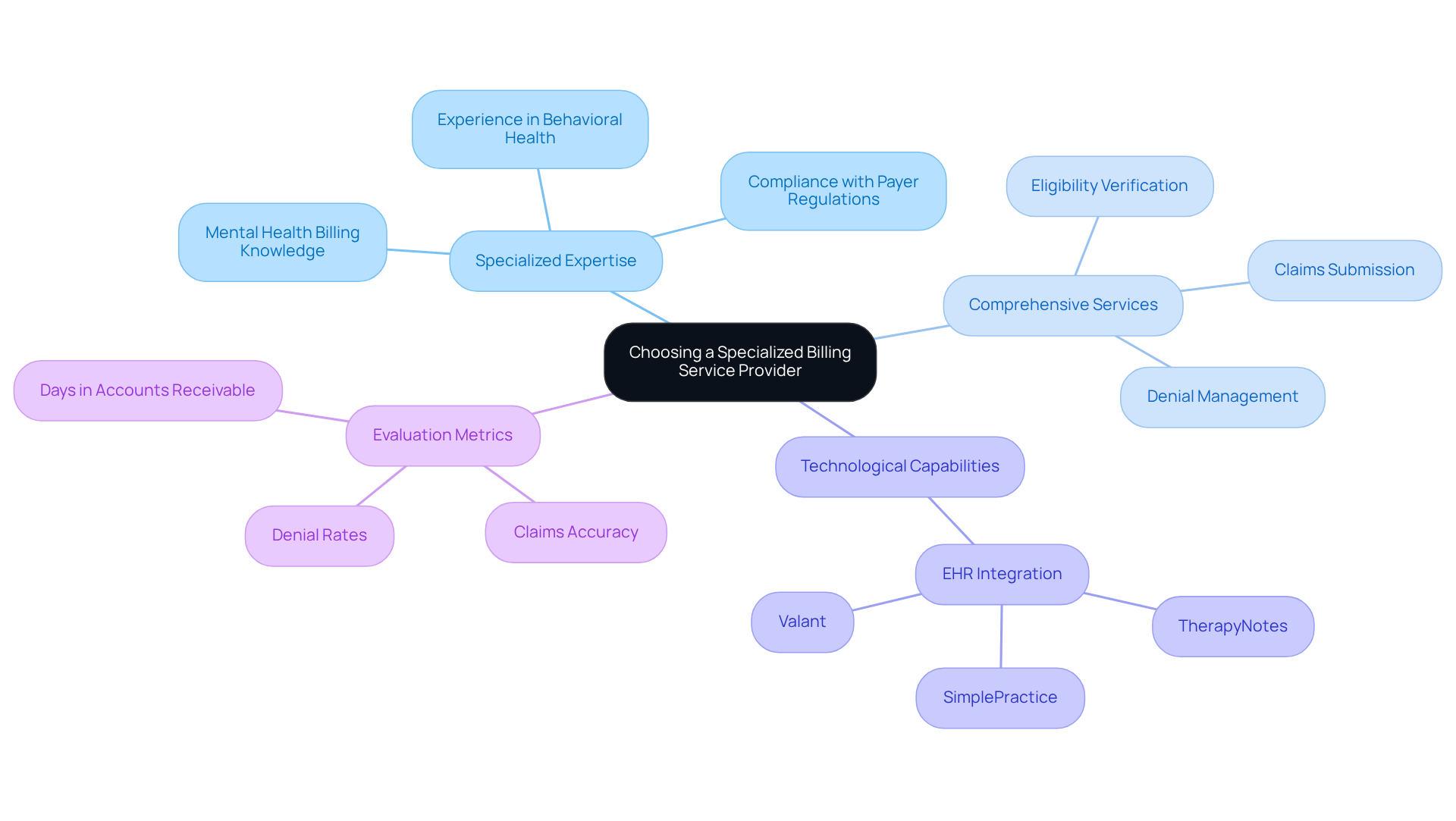
When selecting billing services for therapists, it is essential for them to prioritize providers with specialized expertise in mental health billing to ensure optimal operational efficiency. Look for providers that offer comprehensive services, including:
- Eligibility verification
- Claims submission
- Effective denial management strategies
A specialized provider, such as Healthcare Partners Consulting & Billing, LLC (HPC), which is veteran-owned and has 39 years of experience, understands the unique coding requirements and documentation standards necessary for mental health services. HPC offers tailored solutions that cater specifically to mental health practices, ensuring a compliance-first approach that enhances revenue recovery.
Furthermore, evaluate the provider’s technological capabilities, including integration with electronic health records (EHR) systems like:
- TherapyNotes
- SimplePractice
- Valant
This can optimize payment processes and improve accuracy. A specialized billing services for therapists provider enables them to focus on patient care while ensuring efficient financial operations, thereby alleviating administrative burdens.
To assess potential partners effectively, therapists should inquire about operational rigor, specifically regarding scorecard-driven adjustments related to:
- Claims accuracy
- Denial rates
- Days in accounts receivable
This data-driven approach can offer insights into the effectiveness of their financial methods and their commitment to adhering to payer regulations. Ultimately, this strategic choice not only improves financial health but also reinforces the commitment to quality patient care.
Implement Effective Denial Management Strategies
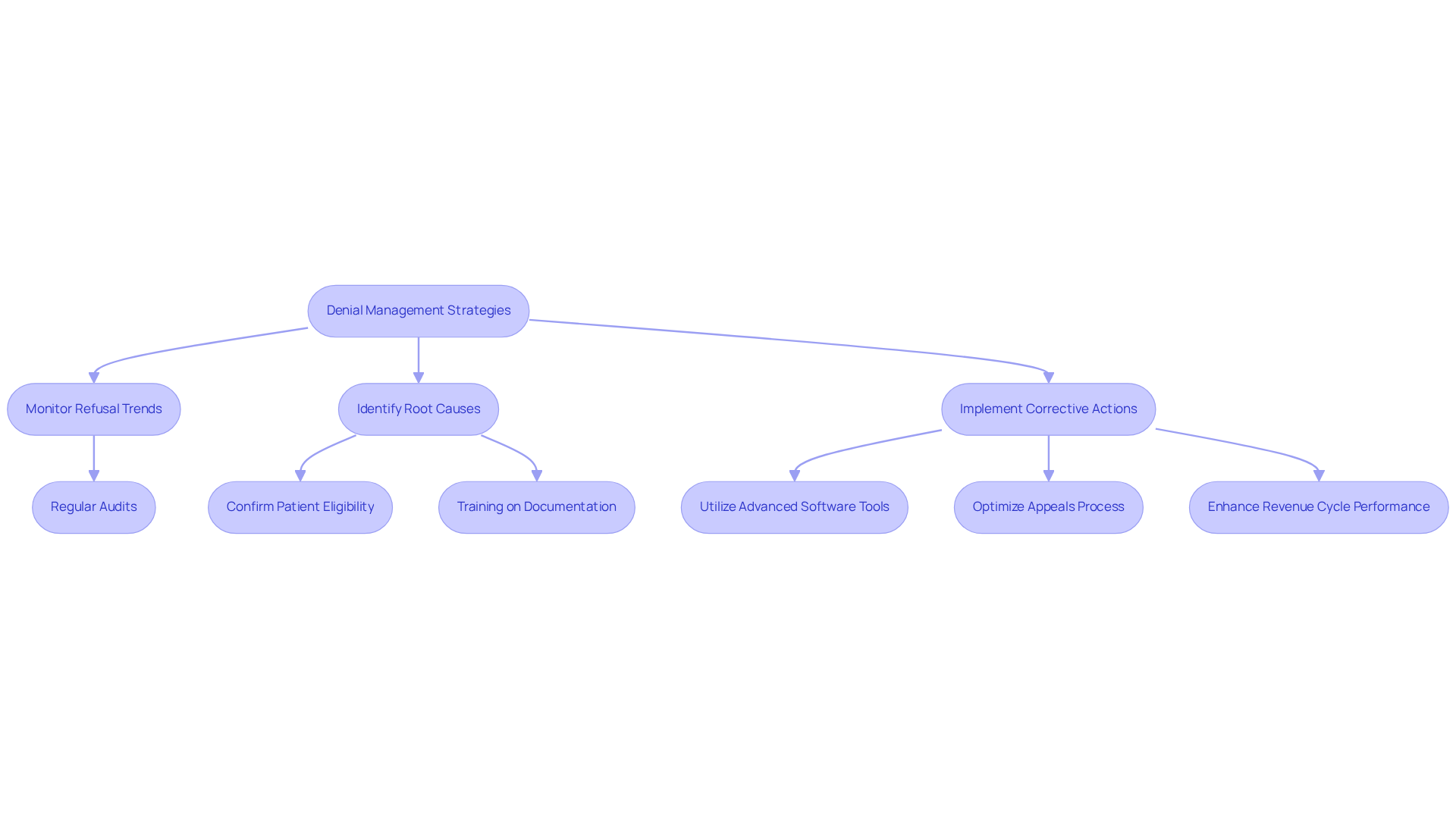
Effectively managing refusals is essential for mental health practitioners, as it directly impacts billing services for therapists and patient care. A systematic approach is necessary to tackle and minimize issues related to billing services for therapists. Key strategies include:
- Monitoring refusal trends
- Identifying root causes
- Implementing corrective actions
Regular audits of rejected submissions can reveal trends, such as frequent coding mistakes or insufficient documentation, which often lead to refusals.
To avoid coverage issues, confirming patient eligibility and benefits prior to appointments is crucial. This proactive measure can significantly decrease the chances of rejections, as over 50% of such issues stem from front-end problems. Furthermore, training personnel on precise documentation methods and coding can further mitigate risks, given that around 22% of initial claim rejections are linked to coding errors.
Advanced software tools that automate tracking and reporting of claims significantly improve the efficiency of managing rejections. These tools provide real-time insights into rejection rates and assist in optimizing the appeals process. Practices that implement comprehensive management strategies can reduce claims by 20-30% and expedite reimbursement cycles, especially by utilizing billing services for therapists, with enhancements of 15-25% within 30-90 days.
Healthcare Partners Consulting (HPC) highlights how crucial it is to optimize patient statements and manage billing services for therapists effectively to tackle issues like underpayments and unprocessed submissions. Case studies illustrate that organizations utilizing structured revenue management processes experience significant enhancements in their revenue cycle performance. For instance, organizations that implement scorecard-driven adjustments tied to claims accuracy and denial rates can maintain a denial rate under 10%, which is considered best-in-class for behavioral health.
Additionally, to evaluate your organization’s profitability, consider taking our quick quiz, which offers tailored suggestions to improve efficiency and invoicing precision. By concentrating on these effective strategies and utilizing HPC’s customized administrative support services, mental health providers can enhance their financial operations and ultimately improve patient care.
Integrate Billing Services with Practice Management Systems
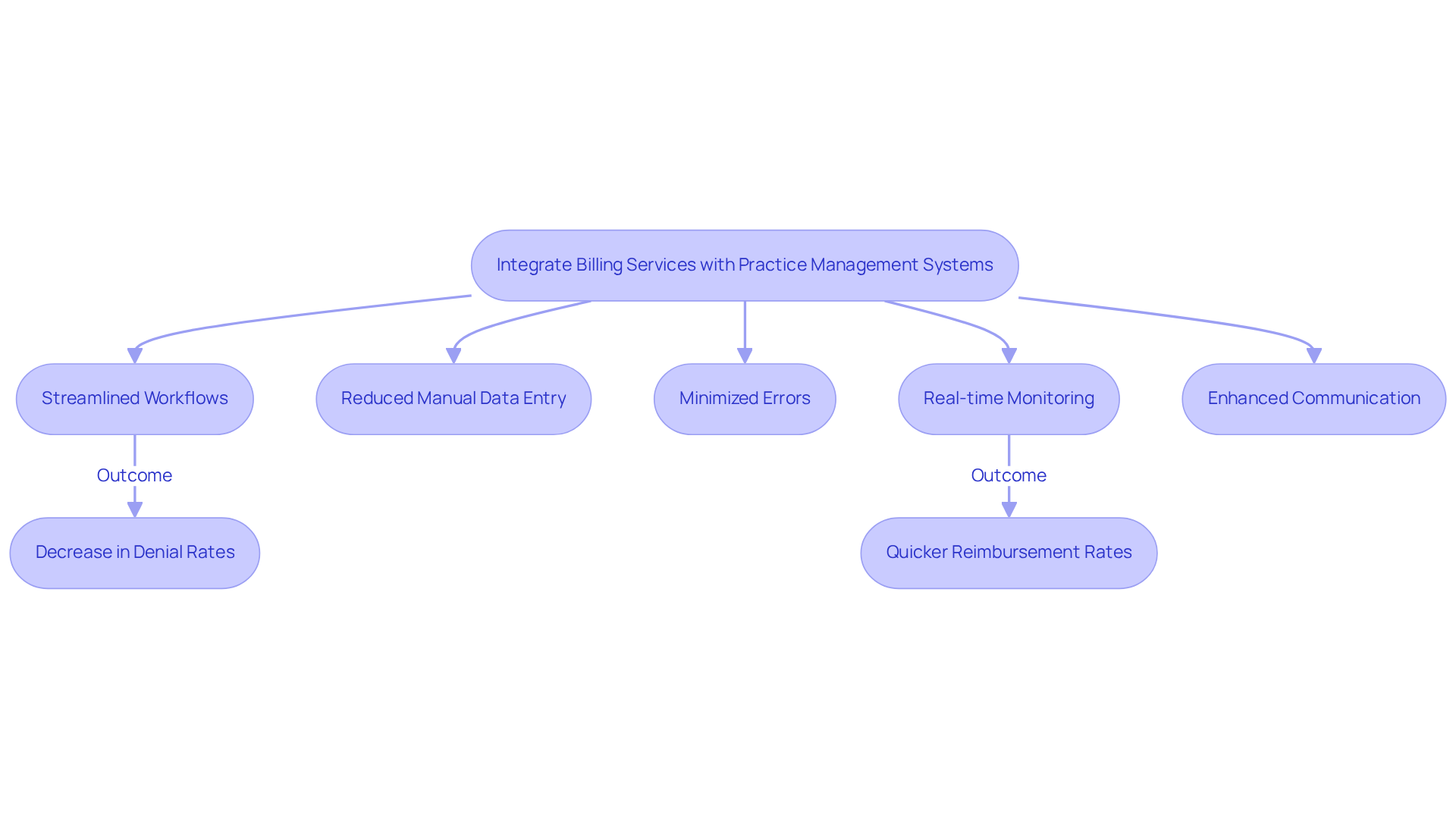
Integrating billing services for therapists with practice management systems addresses inefficiencies in mental health practices. By connecting financial software with EHR and scheduling systems, therapists can streamline workflows, reduce manual data entry, and minimize errors. For instance, when a patient schedules an appointment, their insurance details automatically populate the billing system. This ensures precise submission of requests. This integration enables real-time monitoring of requests and payments, offering therapists prompt insights into their revenue cycle.
Furthermore, approaches that utilize integrated systems can anticipate a decrease in denial rates by 20-30% and quicker reimbursement rates of 15-25% within 30-90 days. Such improvements are essential for enhancing financial stability and operational effectiveness. A unified system also enhances communication between administrative staff and clinicians, fostering a collaborative environment that ultimately benefits patient care.
With 39 years of experience, Healthcare Partners Consulting & Billing, LLC (HPC), a veteran-owned firm, focuses on comprehensive revenue cycle oversight for the behavioral and mental health sectors. Case studies demonstrate the effectiveness of these integrations. For instance, ICANotes supports the CMS-1500 form, enhancing the payment process and removing manual remittance reconciliation, which is especially advantageous for organizations handling high volumes of submissions. Moreover, automated eligibility verification aids in preventing claim denials due to changes in coverage status, ensuring smoother payment processes.
Therapists should evaluate their current systems and consider investing in integrated solutions, such as billing services for therapists, that align with their practice’s needs while ensuring compliance with payer requirements. Investing in integrated solutions not only enhances operational efficiency but also elevates the standard of patient care.
Conclusion
The complexities of billing services for therapists can lead to significant challenges in financial health and patient care. By focusing on specialized knowledge in mental health billing, practitioners can navigate the intricacies of CPT and ICD codes, ensuring accurate reimbursements and minimizing claim denials. Healthcare Partners Consulting & Billing, LLC (HPC) exemplifies a compliance-first approach that empowers therapists to focus on delivering quality care to their patients.
Key strategies discussed include:
- Selecting a specialized billing service provider
- Implementing effective denial management techniques
- Integrating billing services with practice management systems
Each of these practices streamlines operations and significantly reduces administrative burdens, allowing healthcare providers to concentrate on patient interactions rather than paperwork. The insights shared highlight the importance of leveraging technology and expertise to optimize revenue cycles, ultimately leading to improved financial outcomes and enhanced patient experiences.
In a landscape where compliance and efficiency are paramount, healthcare providers must prioritize specialized billing services that meet their unique needs. By partnering with experienced firms like HPC, therapists can ensure they are equipped with the tools and support necessary to thrive in a challenging environment. Prioritizing specialized billing services is essential for therapists aiming to enhance both their financial stability and the quality of care they provide.
Frequently Asked Questions
What are the key components of mental health billing?
Key components of mental health billing include understanding Current Procedural Terminology (CPT) codes and International Classification of Diseases (ICD) codes, as well as maintaining detailed documentation and progress notes to justify billed services.
Why is using the correct CPT code important in mental health billing?
Using the correct CPT code, such as 90834 for a 45-minute psychotherapy session, is essential to avoid claim rejections and ensure accurate reimbursement.
How do insurance policies affect mental health billing?
Insurance policies impact mental health billing through co-pays, deductibles, and coverage limits, which can significantly affect a healthcare entity’s revenue cycle.
What challenges do therapists face in mental health billing?
Therapists often face challenges such as claim denials, payment delays, and the need for pre-authorization for specific services, which can hinder their practice’s financial health.
How can optimizing invoicing workflows benefit therapists?
Optimizing invoicing workflows and adhering to documentation standards can help reduce claim denials by 20-30% and achieve faster reimbursement timelines of 15-25% within 30-90 days.
What trends are emerging in mental health reimbursement for 2026?
Emerging trends in mental health reimbursement for 2026 highlight the need for compliance with evolving regulations and documentation requirements, as well as the use of technology and outsourcing billing services to enhance operational efficiency.
How can Healthcare Partners Consulting & Billing, LLC (HPC) assist therapists?
HPC can assist therapists by reviewing their current workflow and exploring ways to optimize financial processes, ultimately improving patient care and practice efficiency. They offer consultations via phone or email.