
Introduction
The complexities of therapy billing can significantly impact the financial health of healthcare practices, particularly in behavioral and mental health sectors. By implementing best practices, providers can streamline their revenue cycle management, reduce administrative burdens, and ultimately focus more on patient care. This struggle often results in financial instability and hampers the ability to provide quality care.
What strategies can be employed to enhance billing efficiency and ensure compliance while maximizing revenue? Implementing effective strategies can transform billing processes, leading to improved financial health and enhanced patient care.
Verify Eligibility and Benefits Upfront
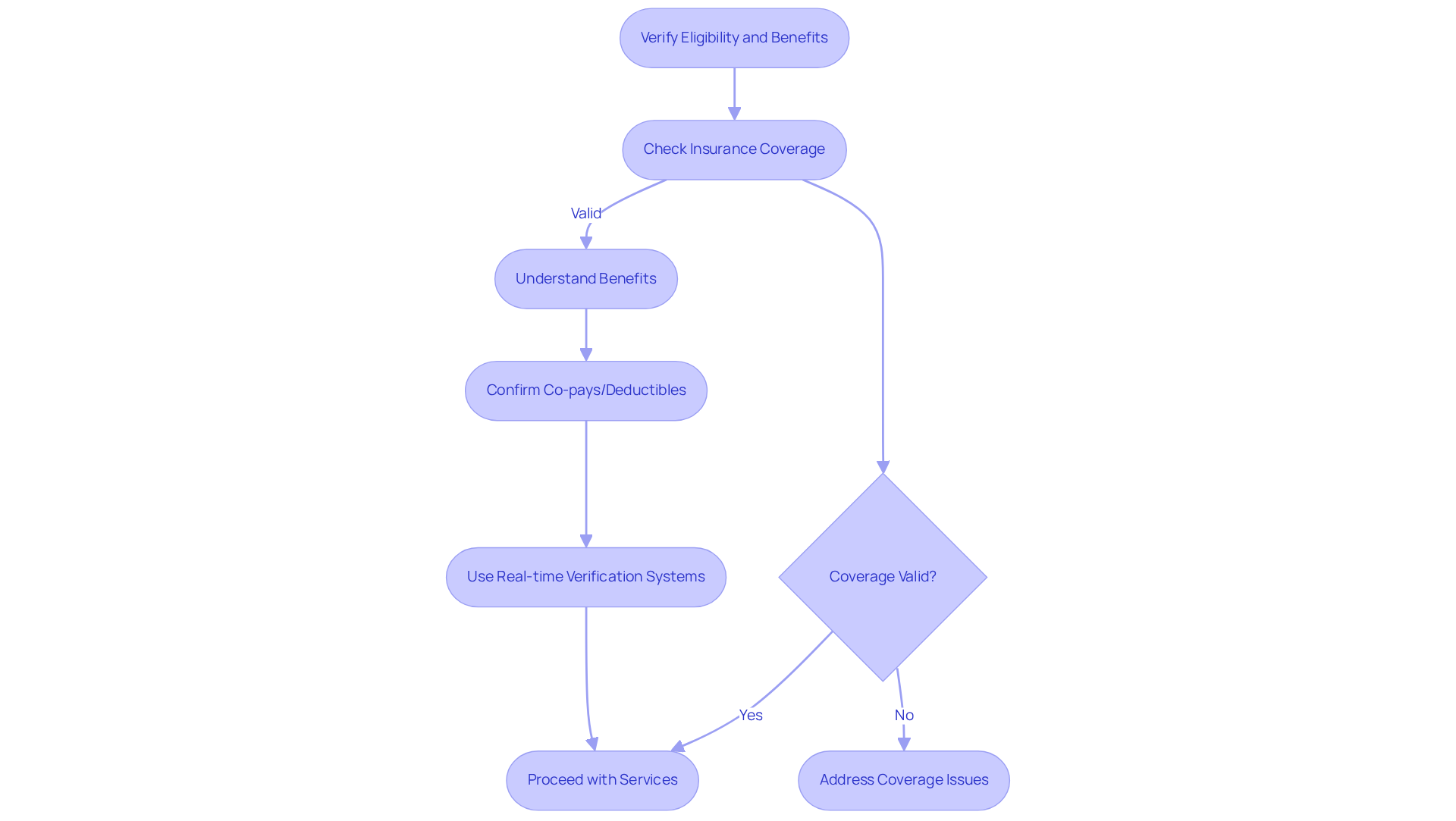
Confirming eligibility and benefits before providing services is essential for a seamless invoicing process. This involves checking the individual’s insurance coverage, understanding their benefits, and confirming any co-pays or deductibles. Use real-time eligibility verification systems to streamline the process.
For example, when arranging appointments, request individuals to provide their insurance details and confirm them through your billing software or directly with the insurance company. This proactive strategy reduces denial issues and clarifies financial responsibilities, enhancing overall satisfaction.
Additionally, consider scheduling a personalized consultation with Healthcare Partners Consulting & Billing, LLC (HPC) for a 30-minute call to discuss your practice’s needs. This consultation can help map your current workflow and identify the services that will optimize your administrative solutions.
Moreover, integrating with platforms like TherapyNotes, SimplePractice, Valant, AdvancedMD, and IntakeQ can greatly assist in managing statements and addressing underpayments, unprocessed submissions, and aging invoices effectively.
Document Thoroughly and Accurately
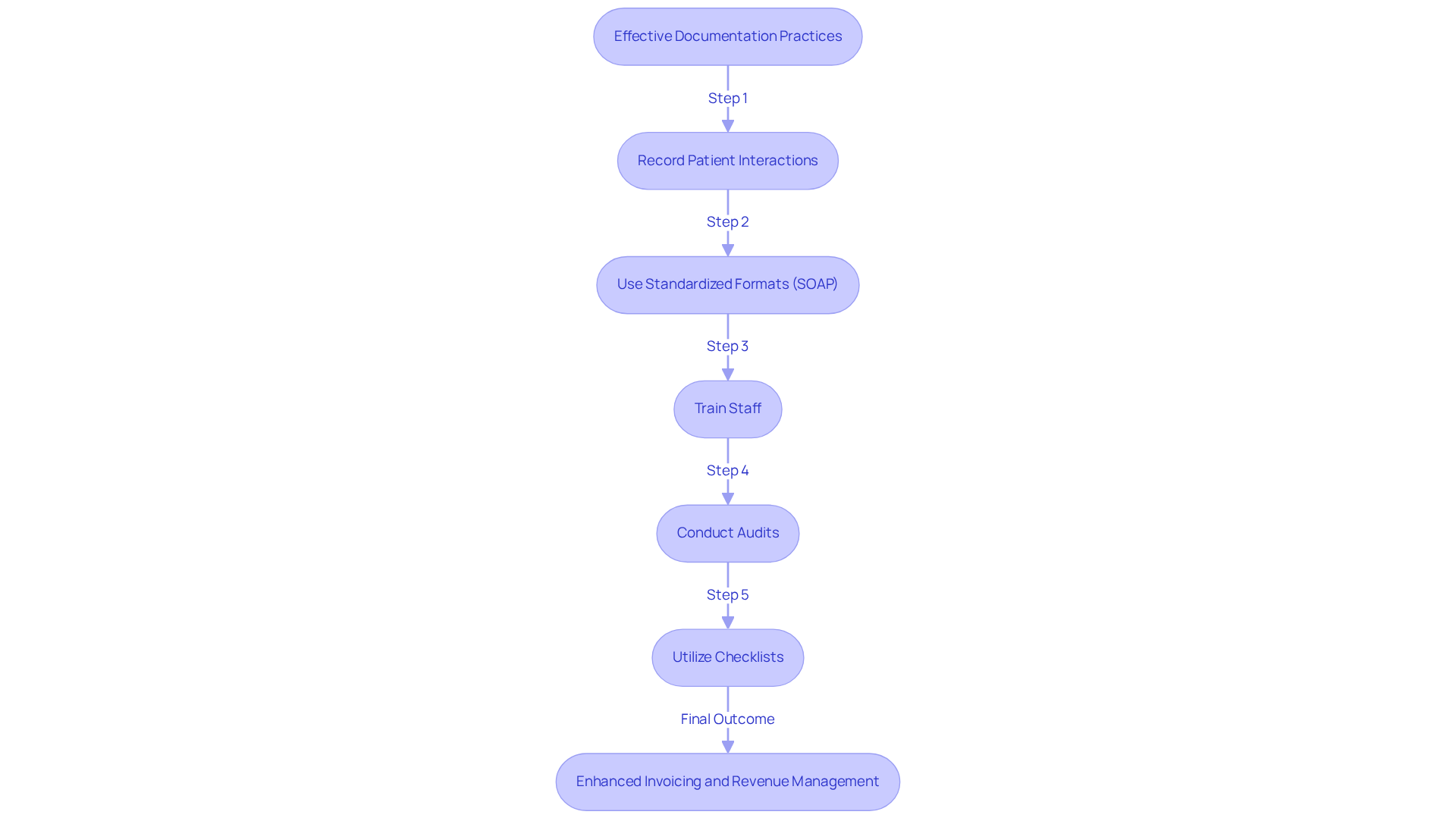
Inadequate documentation can lead to significant challenges in invoicing and revenue management. Precise documentation is essential for effective invoicing, particularly in managing client statements and claims. Ensure that all patient interactions, treatment plans, and progress notes are recorded in detail. Use standardized formats such as SOAP (Subjective, Objective, Assessment, Plan) to maintain consistency. This aids in billing. Additionally, it supports clinical decision-making and ensures continuity of care.
It’s important to regularly train staff on documentation standards and to conduct audits that help identify areas for improvement. Furthermore, addressing underpayments, unprocessed requests, and aging submissions is crucial for enhancing revenue cycle management. For instance, utilizing a checklist for documentation can assist in ensuring that all essential information is recorded, decreasing the chances of mistakes that could result in denial of requests.
Ultimately, effective documentation practices can enhance the financial health of mental health providers by utilizing therapy billing services.
Submit Clean Claims Quickly
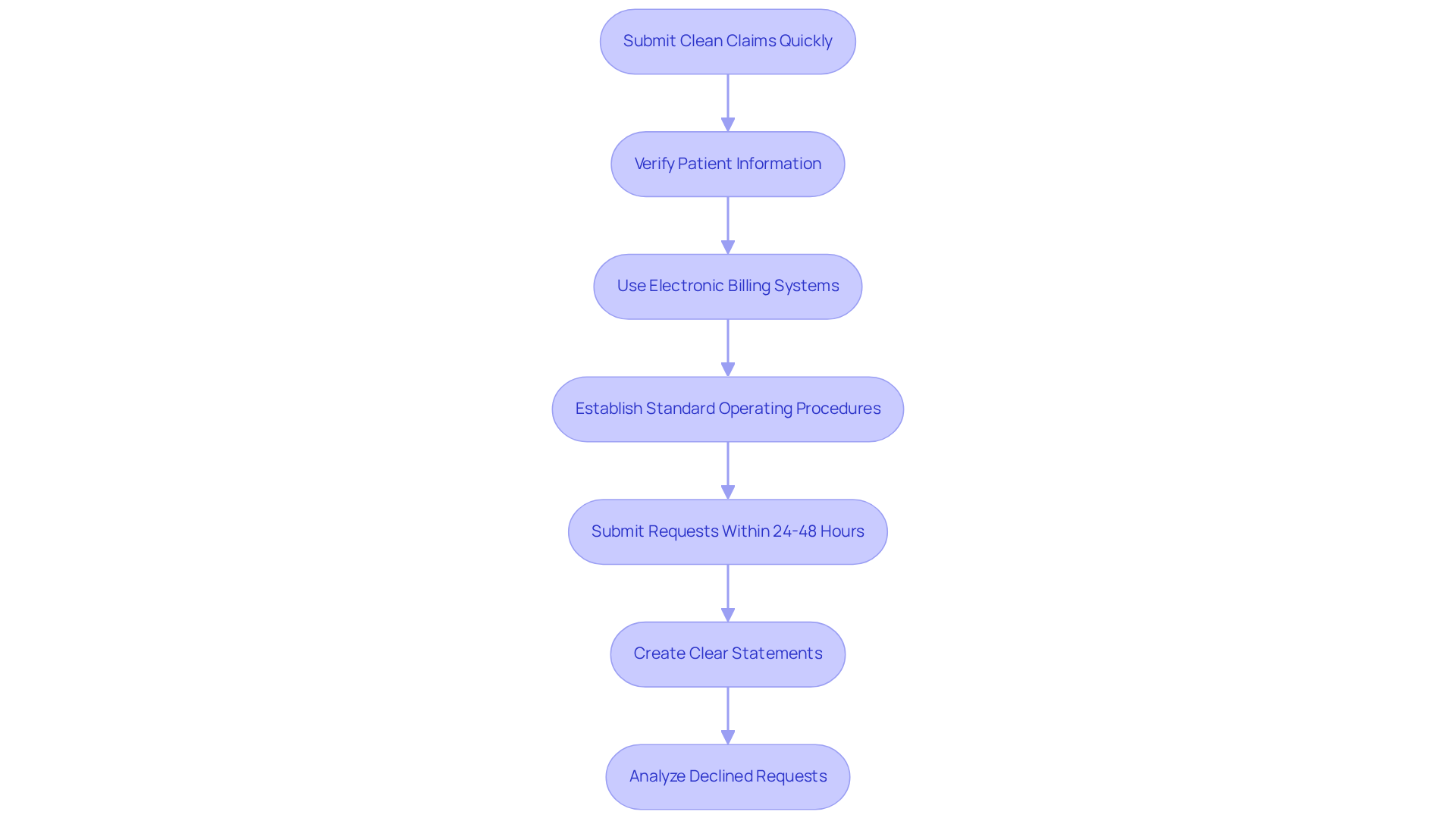
Inefficiencies in submitting requests can lead to delayed reimbursements, making prompt and clean submissions crucial. This requires thorough verification of patient information, coding, and documentation before submission.
Using electronic billing systems with automated checks detects potential errors before submissions are sent.
Establishing a standard operating procedure for request submissions is vital; aim to submit requests within 24-48 hours after services are provided.
Additionally, create clear statements for individuals detailing their balances and follow up on any underpayments or unprocessed requests.
In the event of a declined request, thoroughly analyze the rejection reasons and adjust procedures to minimize future occurrences.
This proactive approach not only accelerates the revenue cycle but also significantly reduces the administrative burden on staff, allowing them to concentrate on patient care.
Neglecting these practices may result in prolonged delays and increased administrative burdens, impacting overall revenue cycle performance.
Monitor Denials and Act Promptly
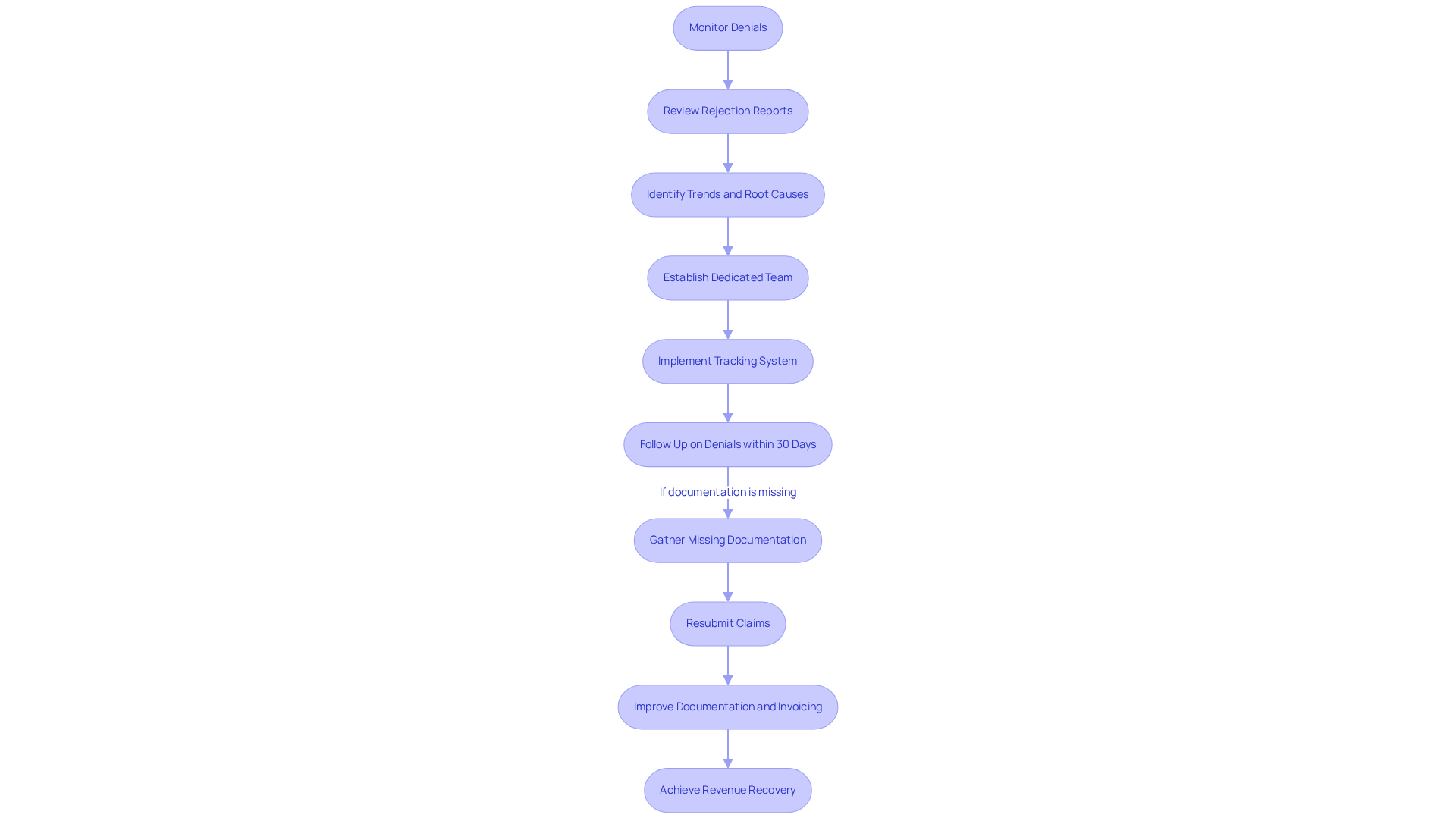
To enhance therapy billing services, practices must adopt a systematic approach to managing reimbursement refusals. Regularly reviewing rejection reports enables practices to identify trends and root causes, facilitating targeted interventions. A dedicated team should be established to handle rejections and resubmit requests. Implementing a tracking system ensures that all denials are followed up within a specific timeframe, ideally within 30 days. If a claim is denied for missing documentation, promptly gather the required information and resubmit. This proactive approach helps recover lost revenue and reveals areas for improvement in documentation and invoicing processes.
Focusing on these strategies can lead to a 20-30% reduction in denials and a 15-25% improvement in reimbursement timelines within 30-90 days, significantly enhancing revenue cycle performance with therapy billing services.
To further enhance your practice’s financial health, consider completing the quick assessment offered by Healthcare Partners Consulting & Billing, LLC (HPC) to evaluate your mental health practice’s profitability score. This assessment requires only 2 minutes and offers tailored recommendations to enhance efficiency and billing accuracy, ensuring structured support throughout the process.
Conclusion
Effective therapy billing services are essential for the financial sustainability of behavioral and mental health practices. Focusing on best practices – like verifying eligibility and benefits upfront, maintaining thorough documentation, submitting clean claims quickly, and monitoring denials – enables healthcare providers to reduce administrative burdens and enhance revenue cycle management. This shift enables practitioners to focus more on patient care, which ultimately benefits everyone involved.
Key insights from the article emphasize the importance of proactive measures in the billing process. Verifying insurance details before services are rendered, ensuring accurate and detailed documentation, and promptly addressing claim denials are all strategies that contribute to a smoother billing experience. By adopting these practices, providers can not only enhance their operational efficiency but also foster a more transparent and compliant billing environment.
The importance of adopting these best practices is clear and impactful. As healthcare providers navigate the complexities of billing, leveraging the expertise of Healthcare Partners Consulting & Billing, LLC (HPC) can provide invaluable support. With 39 years of experience and a commitment to integrity and innovation, HPC stands ready to assist practices in optimizing their billing processes. Engaging with HPC not only enhances financial outcomes but also empowers providers to prioritize patient care more effectively. For further assistance, consider reaching out via email at info@hpcbilling.com or calling 888-517-4992 to explore tailored solutions for your practice.
Frequently Asked Questions
Why is it important to verify eligibility and benefits upfront?
Verifying eligibility and benefits upfront is essential for a seamless invoicing process, as it helps confirm an individual’s insurance coverage, understand their benefits, and clarify any co-pays or deductibles.
How can I streamline the eligibility verification process?
You can streamline the eligibility verification process by using real-time eligibility verification systems and requesting individuals to provide their insurance details, which can be confirmed through your billing software or directly with the insurance company.
What are the benefits of confirming insurance details before appointments?
Confirming insurance details before appointments reduces denial issues, clarifies financial responsibilities, and enhances overall satisfaction for both the practice and the patients.
What additional support can I seek for optimizing my practice’s workflow?
You can schedule a personalized consultation with Healthcare Partners Consulting & Billing, LLC (HPC) for a 30-minute call to discuss your practice’s needs and identify services that will optimize your administrative solutions.
Which platforms can assist in managing billing and invoicing effectively?
Integrating with platforms like TherapyNotes, SimplePractice, Valant, AdvancedMD, and IntakeQ can greatly assist in managing statements, addressing underpayments, unprocessed submissions, and aging invoices effectively.