

Introduction
Emergency room billing complexities often hinder healthcare providers’ ability to prioritize patient care. As ER physicians face the challenge of navigating complex coding and documentation processes, the potential for improved billing efficiency emerges as a critical opportunity. This article examines how these professionals can streamline their processes while ensuring compliance and maximizing reimbursements. By adopting these best practices, ER physicians can reclaim valuable time for patient interactions, ultimately enhancing the quality of care provided.
Understand the Emergency Room Billing Process
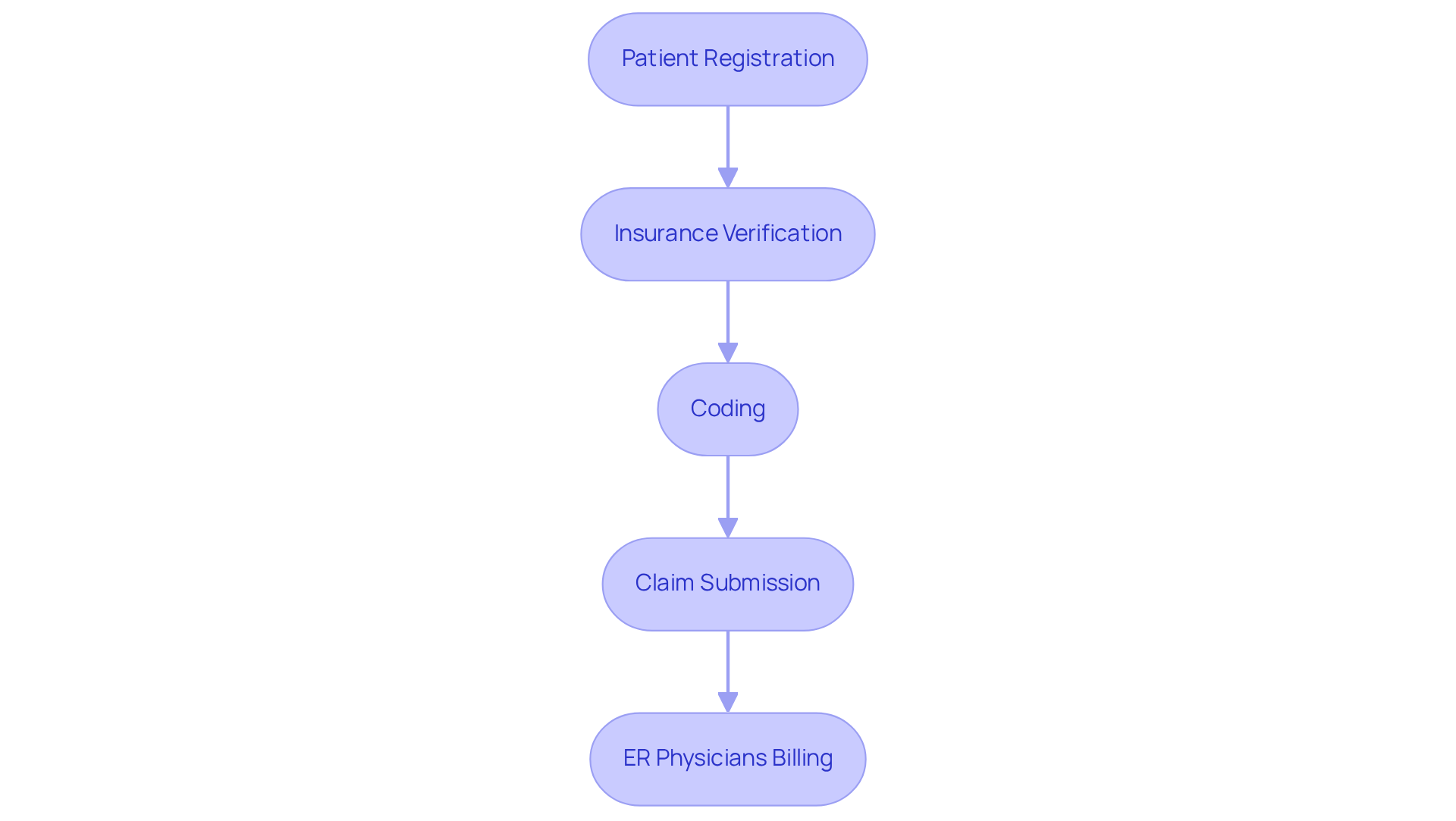
The financial processes in emergency room physicians billing present significant challenges that require precise navigation to ensure optimal reimbursement. These processes are multifaceted, involving critical steps such as:
- Patient registration
- Insurance verification
- Coding
- Claim submission
- ER physicians billing
ER physicians must be well-versed in the specific coding systems associated with emergency services, particularly Evaluation and Management (E/M) codes, which are essential for accurate reimbursement in ER physicians billing. This complexity is heightened by the distinct guidelines imposed by many payers for emergency services, which differ from standard outpatient care protocols. Staying informed about these regulations is essential for effective ER physicians billing to navigate the financial landscape.
Studies indicate that effectively mastering the invoicing complexities can reduce rejections by 20-30% and enable quicker reimbursements, typically within 30 to 90 days, by 15-25%. For instance, a recent case study highlighted how a dedicated revenue cycle management team implemented scorecard-driven adjustments tied to claims accuracy, denial rates, and days in accounts receivable, resulting in significant operational improvements.
Additionally, the 2026 updates to emergency room financial processes highlight the necessity for improved documentation methods to safeguard against algorithmic downcoding, which has become more widespread. To secure appropriate compensation for their services, emergency departments must adapt to these changes in ER physicians billing, thereby safeguarding their financial stability and enabling them to focus on delivering quality patient care.
Implement Accurate Coding and Documentation Practices
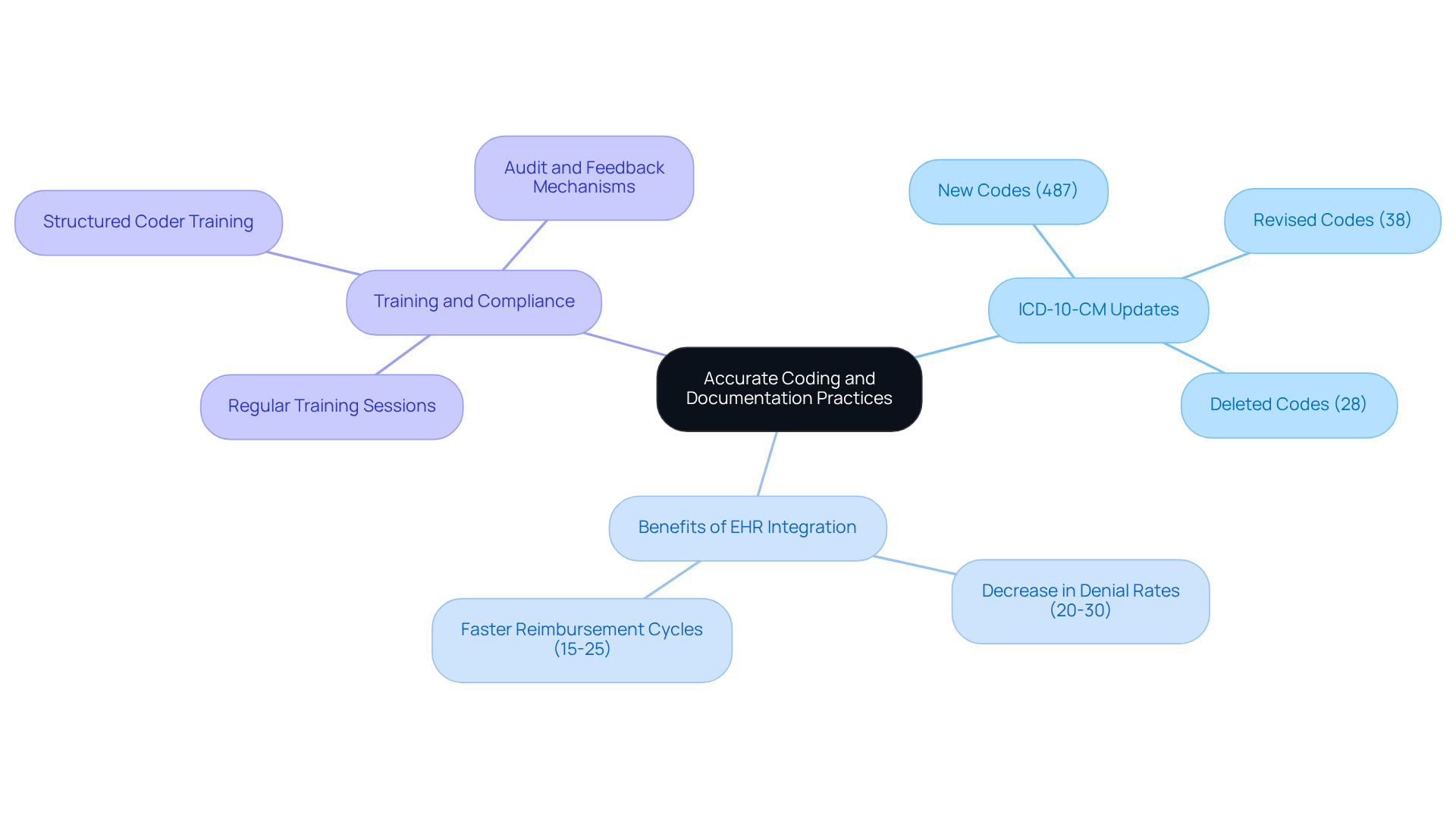
To achieve precise ER physicians billing, thorough coding and documentation practices must be implemented. This involves utilizing the correct CPT and ICD-10 codes that accurately reflect the services rendered during patient encounters. The FY 2026 ICD-10-CM update introduces:
- 487 new diagnosis codes
- 38 revised codes
- 28 deleted codes
This makes it essential for healthcare entities to stay informed about these changes. Regular training sessions for staff on the latest coding updates and documentation standards are crucial for maintaining accuracy. For example, a study emphasized that implementations of EHR systems with integrated coding tools saw a 20% decrease in coding errors. Moreover, EHR integration can result in:
- A 20-30% decrease in denial rates
- A speed up in reimbursement cycles by 15-25% within 30-90 days
Failure to adopt comprehensive coding methods can lead to significant financial losses for ER physicians billing. Accurate coding, comprehensive documentation, and organized coder training can significantly enhance approval rates and improve the financial efficiency of ER physicians billing. This shift not only enhances approval rates but also secures the financial stability of ER practices. With 39 years of experience, Healthcare Partners Consulting adopts a compliance-first approach to billing and coding, ensuring clients receive tailored support.
Adopt Effective Denial Management Strategies
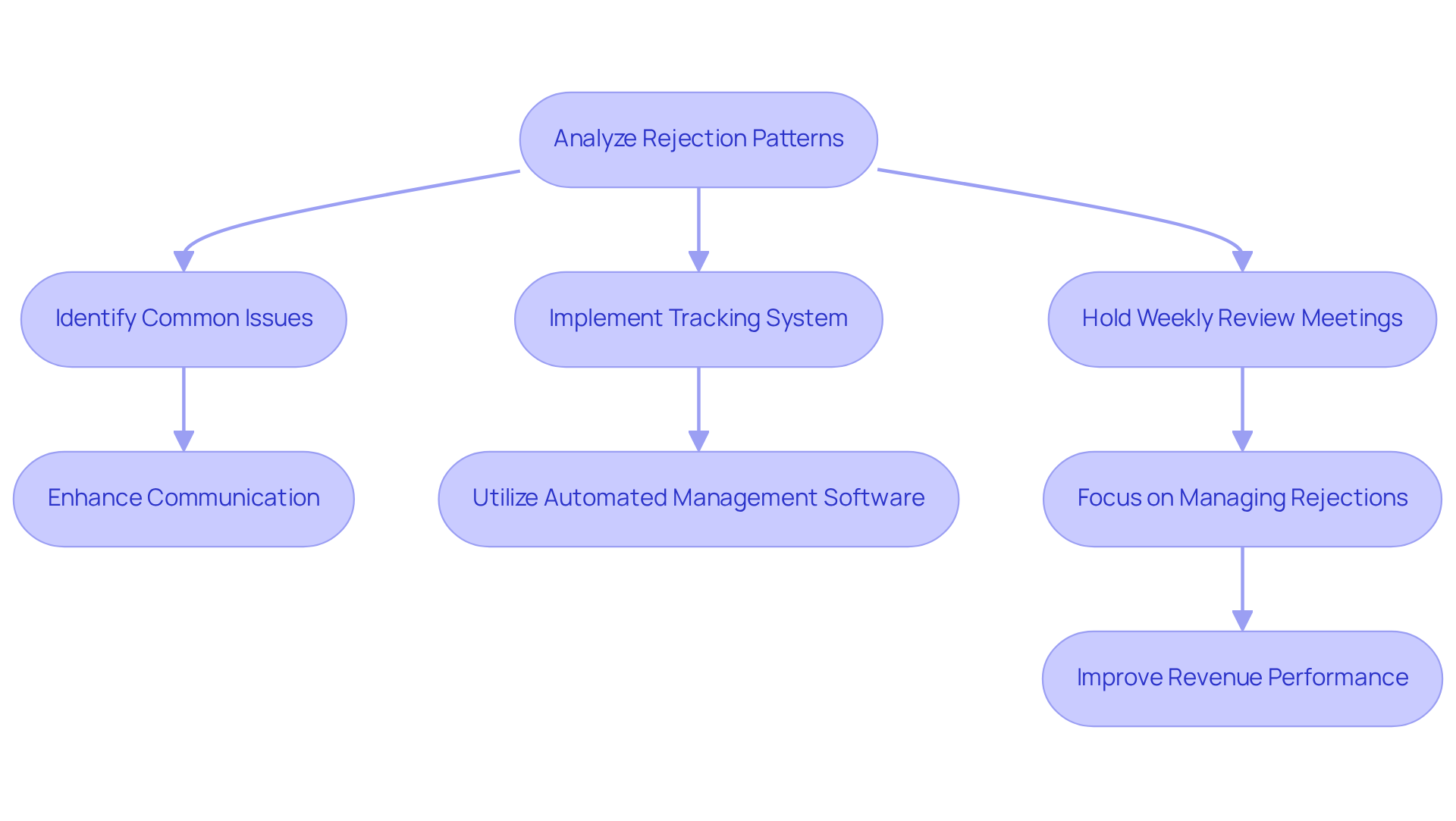
To mitigate the financial impact of claim rejections, ER physicians must adopt a strategic management approach. This involves regularly analyzing rejection patterns to identify common issues, such as insufficient documentation or coding errors. A tracking system for rejections helps organizations monitor and address these issues quickly.
For instance, holding weekly review meetings can enhance communication among financial staff and clinicians, ensuring alignment on documentation requirements. Furthermore, utilizing automated management software for claims can streamline the appeals process, enabling organizations to address rejections more effectively.
Focusing on managing rejections allows ER physicians to reduce the financial impact of billing disputes and improve their revenue performance. Healthcare Partners Consulting emphasizes the importance of appealing the right denials quickly to recover the revenue earned, ensuring sustainable growth for practices.
Moreover, optimizing patient statements and managing reimbursements is crucial for addressing underpayments and aging submissions, which can further enhance revenue recovery efforts. Failure to manage these rejections effectively can result in diminished revenue and hinder the growth of healthcare practices.
Leverage Technology and Virtual Assistant Services for Efficiency
The integration of technology into the invoicing process presents a critical opportunity for enhancing efficiency in emergency rooms. ER physicians should utilize electronic health record (EHR) systems that offer integrated payment solutions to streamline ER physicians billing, enabling real-time coding and claim submission.
Healthcare Partners Consulting, with 39 years of expertise in medical billing, offers tailored virtual assistant services that streamline operations by managing administrative tasks such as:
- Scheduling
- Patient follow-ups
- Documentation
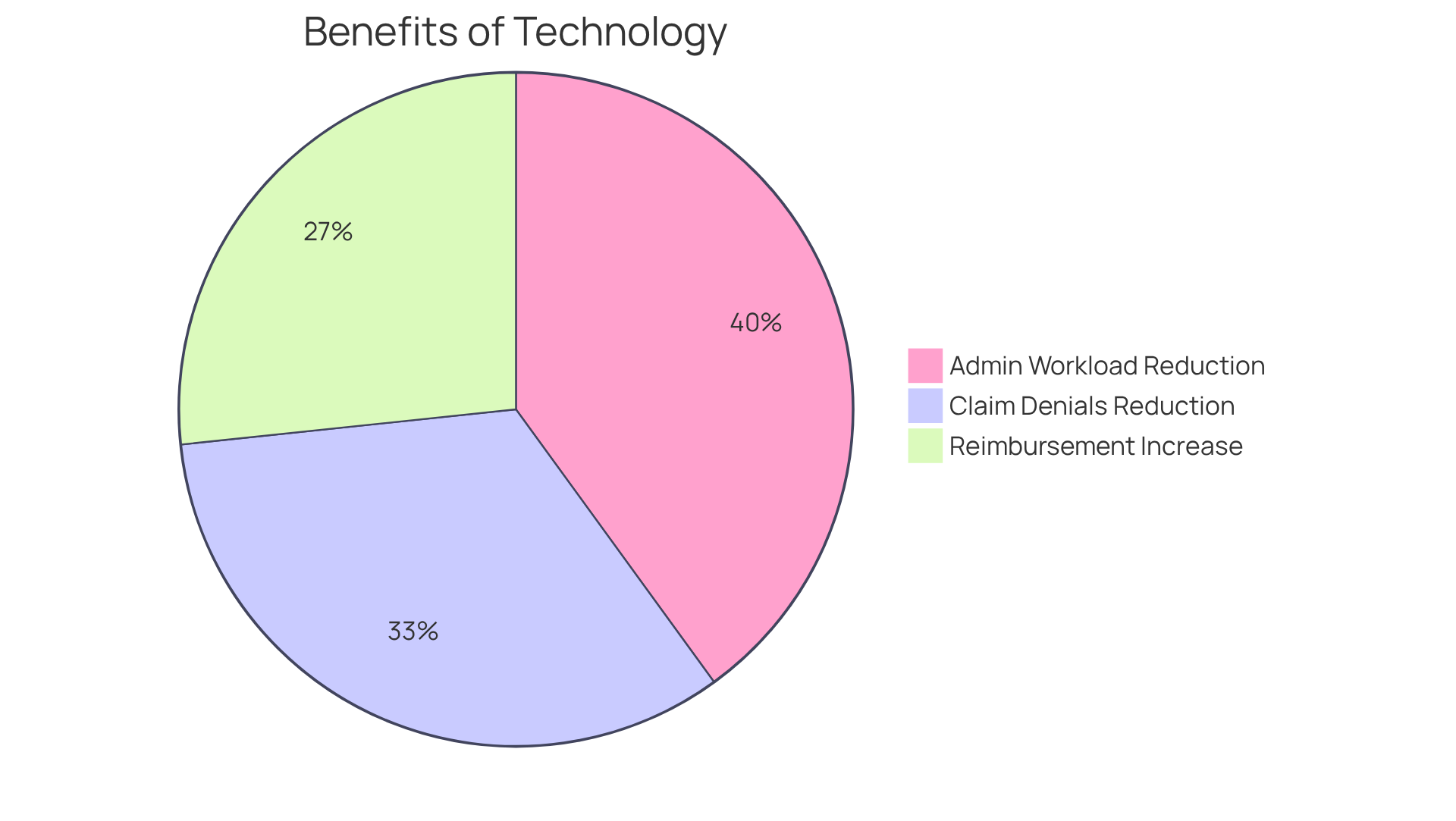
Organizations utilizing virtual assistants report a 30% reduction in administrative workload, aligning with enhanced patient satisfaction and care quality. Additionally, leveraging technology and virtual assistant services can lead to:
- A 20-30% reduction in claim denials
- A 15-25% increase in reimbursement rates within 30 to 90 days
Ultimately, the strategic adoption of these technologies can redefine the financial landscape of emergency medical practices, particularly in terms of ER physicians billing.
Conclusion
The complexities of emergency room billing can detract from the primary focus of healthcare providers: delivering exceptional patient care. Mastering accurate coding, effective denial management, and technology integration enables ER physicians to enhance financial outcomes and reduce administrative burdens.
Key strategies discussed include the importance of precise coding and documentation, which can lead to reduced denial rates and faster reimbursements. Effective denial management practices expedite billing dispute resolutions, safeguarding revenue. The integration of technology and virtual assistant services further streamlines operations, enabling healthcare providers to allocate more time to patient interactions rather than administrative tasks.
Ultimately, a strategic focus on billing best practices not only secures financial stability but also enhances the quality of care provided to patients.
Frequently Asked Questions
What are the key steps in the emergency room billing process?
The key steps in the emergency room billing process include patient registration, insurance verification, coding, claim submission, and ER physicians billing.
Why is coding important in emergency room billing?
Coding is important in emergency room billing because ER physicians must use specific coding systems, particularly Evaluation and Management (E/M) codes, to ensure accurate reimbursement for emergency services.
How do payer guidelines affect emergency room billing?
Payer guidelines impose distinct rules for emergency services that differ from standard outpatient care protocols, making it essential for ER physicians to stay informed about these regulations for effective billing.
What impact can mastering the invoicing complexities have on reimbursement?
Mastering the invoicing complexities can reduce claim rejections by 20-30% and enable quicker reimbursements, typically within 30 to 90 days, by 15-25%.
What recent changes are expected in emergency room financial processes by 2026?
The 2026 updates to emergency room financial processes emphasize the need for improved documentation methods to protect against algorithmic downcoding, which has become more common.
How can emergency departments secure appropriate compensation for their services?
Emergency departments can secure appropriate compensation by adapting to changes in ER physicians billing and improving their documentation methods, thereby ensuring financial stability and the ability to focus on patient care.