
Introduction
In the rapidly changing healthcare environment, back office operations play a crucial role in determining both patient care quality and financial viability. Implementing best practices in medical billing and effective practice management allows healthcare providers to streamline administrative tasks and prioritize patient care. As billing and compliance requirements grow more intricate, how can providers navigate these challenges to enhance operational efficiency and ensure quality care?
Implement Efficient Medical Billing Practices
In an increasingly complex healthcare landscape, efficient medical billing practices are essential for financial sustainability. To enhance back office operations, healthcare providers should adopt the following efficient medical billing practices:
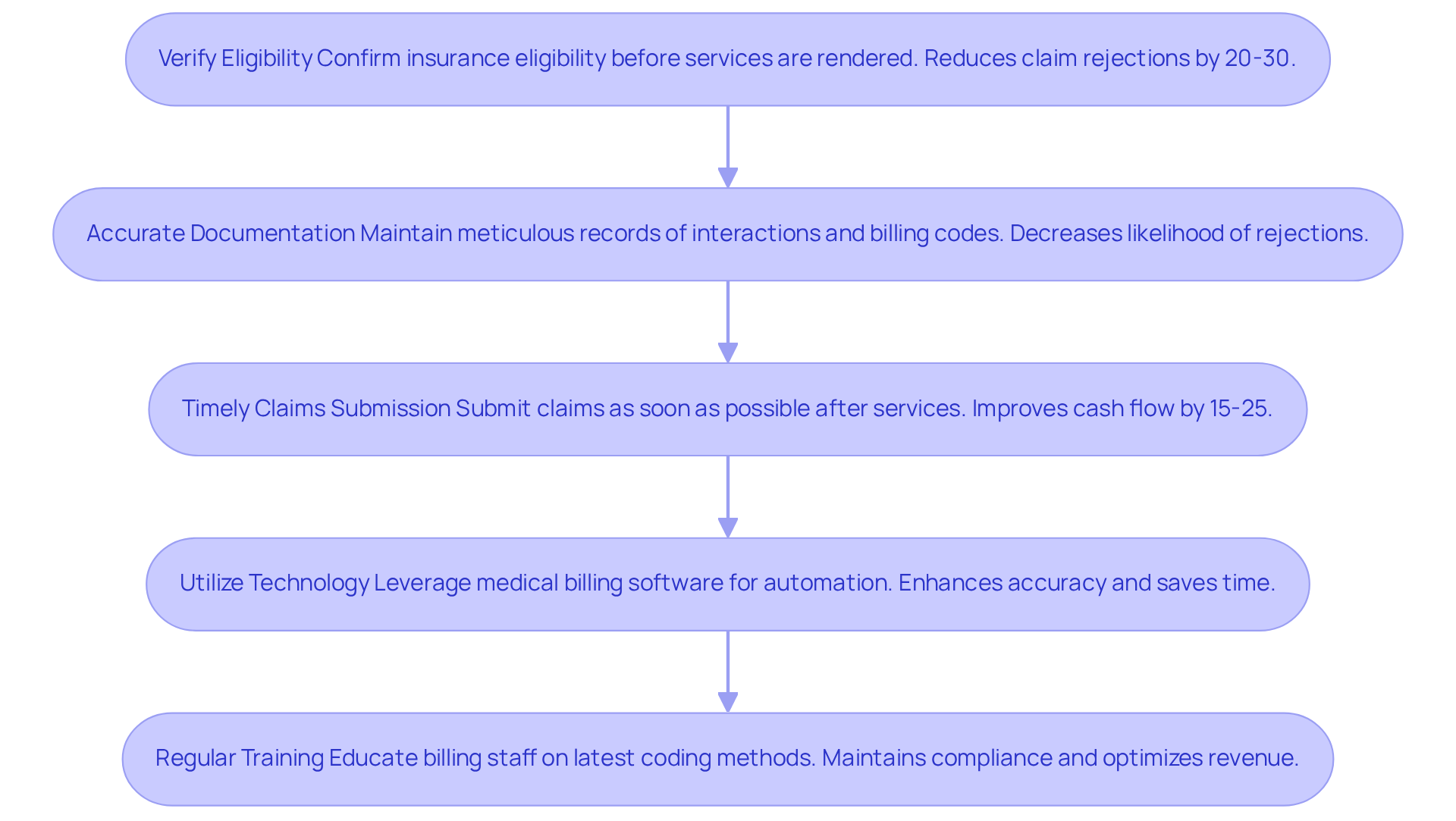
- Verify Eligibility: Always confirm insurance eligibility before services are rendered. This strategy reduces claim rejections and informs individuals of their financial obligations right from the start. Implementing real-time verification tools can lead to a 20-30% reduction in eligibility-related rejections, significantly enhancing revenue management.
- Accurate Documentation: Maintain meticulous records of interactions, treatments, and billing codes. Precise documentation is crucial for effective claims submission and can greatly decrease the likelihood of rejections. Errors in demographics, such as misspelled names or incorrect birth dates, can cost billing teams 20 to 45 minutes to correct, emphasizing the need for precision.
- Timely Claims Submission: Submit claims as soon as possible after services are provided. Delays can lead to missed deadlines and lost revenue. Practices that implement automated systems for claims submission often experience faster reimbursement rates, improving cash flow by 15-25% within 30-90 days.
- Utilize Technology: Leverage medical billing software that integrates with electronic health records (EHR) to automate billing processes, track claims, and manage rejections effectively. This not only enhances accuracy but also saves time, allowing staff to focus on patient care rather than administrative tasks. Automated systems can assist organizations in achieving a 30-40% reduction in claim denials.
- Regular Training: Ensure that billing staff are consistently educated on the latest coding methods and insurance policies. Keeping staff informed about changes that could affect billing and reimbursement is crucial for maintaining compliance and optimizing revenue cycle performance.
By implementing these practices, providers can transform their billing processes and optimize back office operations to improve overall patient care.
Adopt Comprehensive Practice Management Solutions
In an industry where operational efficiency is paramount, many healthcare providers encounter significant challenges in effectively managing their back office operations. To optimize these operations, healthcare providers should consider the following comprehensive practice management solutions offered by Healthcare Partners Consulting:
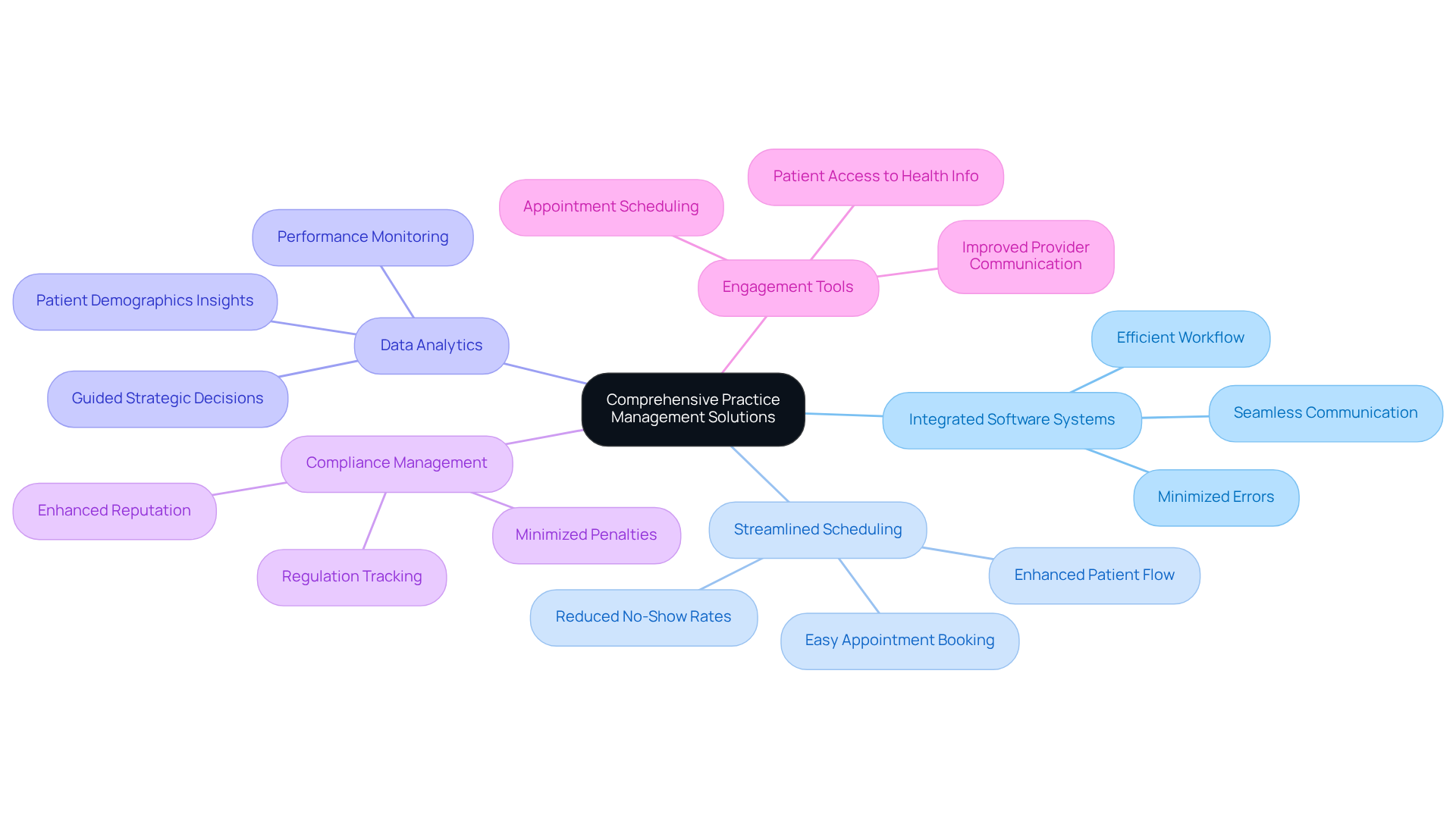
- Integrated Software Systems: Utilize management software that combines billing, scheduling, and client records. This approach fosters seamless communication across departments while minimizing the risk of errors, allowing for a more efficient workflow.
- Streamlined Scheduling: Implement scheduling tools that facilitate easy appointment booking and reminders. This can decrease no-show rates and enhance flow within the facility, ultimately boosting satisfaction among individuals receiving care.
- Data Analytics: Utilize analytics tools to monitor performance, patient demographics, and financial metrics. This data can guide strategic decisions and assist in identifying areas for enhancement, ensuring that methods remain competitive and efficient.
- Compliance Management: Ensure that the management system includes features for tracking adherence to regulations in the medical sector. This minimizes the risk of penalties and enhances the practice’s reputation, aligning with a compliance-first approach that is crucial in today’s healthcare landscape.
- Engagement Tools: Incorporate portals that allow individuals to access their health information, schedule appointments, and communicate with providers. This enhances satisfaction and engagement, fostering a stronger relationship between providers and individuals.
Ultimately, the choice to implement these solutions could define the future success of healthcare practices in a competitive landscape. With a veteran-owned status and 39 years of expertise in medical and mental health billing and management services nationwide, HPC is committed to empowering providers to achieve exceptional efficiency and care.
Utilize Specialized Virtual Assistant Services
Administrative tasks often distract healthcare providers from their primary focus: patient care. Healthcare providers can enhance their back office operations by utilizing specialized virtual assistant services from Healthcare Partners Consulting (HPC), a veteran-owned company with 39 years of experience, in the following ways:
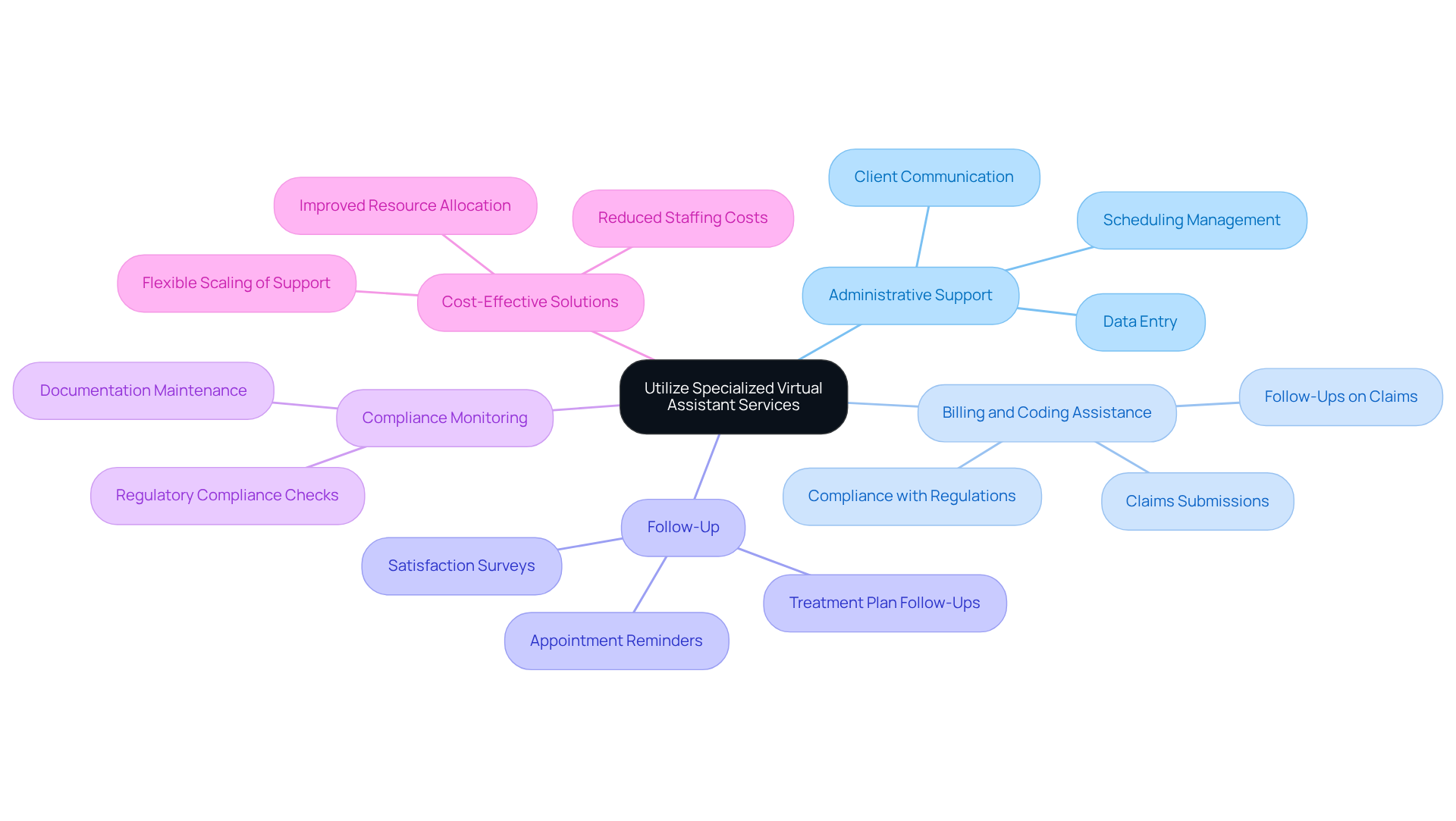
- Administrative Support: HPC’s trained virtual assistants, who specialize in behavioral and mental health, can manage scheduling, communications with clients, and data entry. This allows medical providers to focus on clinical duties. As a result, overall practice efficiency and patient care improve.
- Billing and Coding Assistance: Employ virtual assistants trained in medical billing and coding to manage claims submissions and follow-ups. This specialized support can improve accuracy and reduce the time spent on billing tasks, ensuring compliance with healthcare regulations and enhancing revenue cycle management.
- Follow-Up: Use HPC’s virtual assistants to conduct follow-up calls with individuals regarding appointments, treatment plans, and satisfaction surveys. This proactive approach enhances patient engagement and retention, which is essential for mental health services.
- Compliance Monitoring: Virtual assistants can assist in monitoring compliance with healthcare regulations, ensuring that all necessary documentation is maintained and up to date. This vigilance is essential for maintaining integrity in operations and avoiding costly penalties.
- Cost-Effective Solutions: Using HPC’s virtual assistants often proves more cost-effective than hiring full-time staff, allowing organizations to use their resources more wisely while still receiving top-notch administrative support. Administrative cost reductions can significantly enhance the ability to invest in care for individuals and practice growth.
By integrating specialized virtual assistant services from Healthcare Partners Consulting, medical providers can streamline their back office operations, reduce administrative burdens, and enhance overall patient care. This strategic integration not only streamlines operations but also prioritizes patient care, ultimately leading to better health outcomes.
Implement Effective Denial Management Strategies
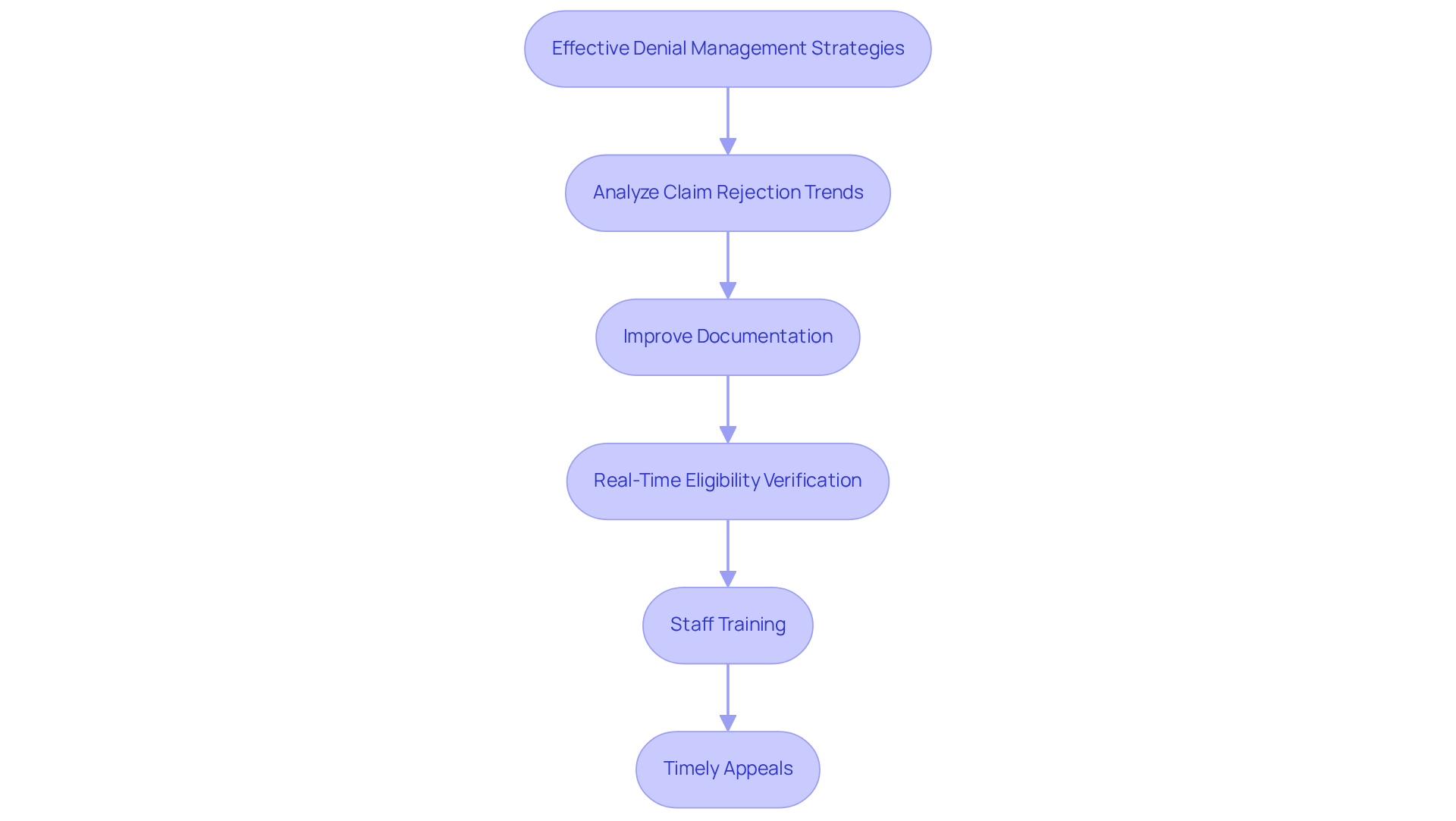
To enhance back office operations, healthcare providers must adopt effective denial management strategies that address the root causes of claim denials:
- Analyze Claim Rejection Trends: Regularly review rejection reports to identify common reasons for claim denials. Without understanding these trends, providers risk continued financial losses and operational inefficiencies. For example, initial rejection rates have risen to around 12% in 2024, emphasizing the necessity for proactive analysis.
- Improve Documentation: Ensure that all claims are supported by comprehensive documentation, including accurate coding, detailed treatment notes, and necessary pre-authorizations. Incomplete or inaccurate data at intake leads to rejections for 68% of providers, highlighting the need for thorough documentation.
- Real-Time Eligibility Verification: Implement systems that allow for real-time verification of patient eligibility and benefits at the time of service. This can prevent refusals related to coverage issues, which are increasingly common as prior authorization requirements expand.
- Staff Training: Provide ongoing training for billing personnel on the latest coding practices and management techniques for claims. Knowledgeable staff are better prepared to manage claims efficiently, decreasing the chances of mistakes that result in refusals.
- Timely Appeals: Establish a process for promptly appealing denied claims. This includes gathering necessary documentation and submitting appeals within required timeframes. Timely appeals can reduce claim denials by 20-30% and accelerate reimbursements by 15-25% within 30-90 days. This proactive approach not only mitigates losses but also enhances cash flow.
By prioritizing these strategies, providers can not only safeguard their revenue but also enhance their back office operations while focusing on patient care. Healthcare Partners Consulting & Billing, LLC (HPC), a veteran-owned firm with 39 years of expertise, provides customized consultations to identify optimal administrative solutions tailored to your needs, ensuring a compliance-first approach that empowers you to concentrate on patient care. Our flexible service plans and integrations with EHR systems like TherapyNotes and SimplePractice further enhance our ability to support your practice effectively.
Conclusion
Enhancing back office operations in healthcare is essential for enabling providers to prioritize patient care. Streamlining administrative processes enables healthcare practices to enhance operational efficiency while ensuring compliance and financial sustainability. The strategies outlined in this article serve as a roadmap for healthcare providers seeking to optimize their back office functions.
Key insights include:
- The importance of efficient medical billing practices
- Comprehensive practice management solutions
- Specialized virtual assistant services
- Effective denial management strategies
These elements are crucial for reducing administrative burdens, improving accuracy, and enhancing patient outcomes. When healthcare providers adopt these practices, they can truly transform their operations and focus more on delivering high-quality care.
As the healthcare landscape evolves, the necessity for streamlined operations grows clearer. Embracing these best practices not only positions healthcare providers for success but also reinforces their commitment to patient-centered care. For those looking to enhance their back office operations, partnering with Healthcare Partners Consulting & Billing, LLC (HPC) offers the expertise needed to navigate these challenges effectively. Reach out to HPC at info@hpcbilling.com or call 888-517-4992 to explore tailored solutions that empower your practice and enhance patient care.
Frequently Asked Questions
Why are efficient medical billing practices important for healthcare providers?
Efficient medical billing practices are essential for financial sustainability in an increasingly complex healthcare landscape, helping to enhance back office operations and improve revenue management.
What is the first step healthcare providers should take to improve their billing practices?
Healthcare providers should verify insurance eligibility before services are rendered to reduce claim rejections and inform individuals of their financial obligations.
How can verifying eligibility impact claim rejections?
Implementing real-time verification tools can lead to a 20-30% reduction in eligibility-related rejections, significantly enhancing revenue management.
Why is accurate documentation crucial in medical billing?
Precise documentation of interactions, treatments, and billing codes is crucial for effective claims submission and can greatly decrease the likelihood of rejections.
What are the consequences of errors in documentation?
Errors in demographics, such as misspelled names or incorrect birth dates, can cost billing teams 20 to 45 minutes to correct, highlighting the need for precision.
When should claims be submitted to ensure timely reimbursement?
Claims should be submitted as soon as possible after services are provided to avoid missed deadlines and lost revenue.
How can automated systems benefit claims submission?
Practices that implement automated systems for claims submission often experience faster reimbursement rates, improving cash flow by 15-25% within 30-90 days.
What role does technology play in medical billing?
Leveraging medical billing software that integrates with electronic health records (EHR) can automate billing processes, track claims, and manage rejections effectively, enhancing accuracy and saving time.
How can automation affect claim denials?
Automated systems can assist organizations in achieving a 30-40% reduction in claim denials.
Why is regular training important for billing staff?
Regular training ensures that billing staff are consistently educated on the latest coding methods and insurance policies, which is crucial for maintaining compliance and optimizing revenue cycle performance.