
Introduction
As technology reshapes therapy practice management, practitioners face critical decisions regarding software selection. By leveraging effective therapy practice management software, healthcare providers can streamline workflows, reduce administrative burdens, and focus more on delivering quality care. However, practitioners often struggle to navigate the multitude of software options, leading to potential inefficiencies in their practice. Selecting inappropriate tools can hinder operational efficiency and compromise patient care quality.
Identify Essential Features of Therapy Practice Management Software
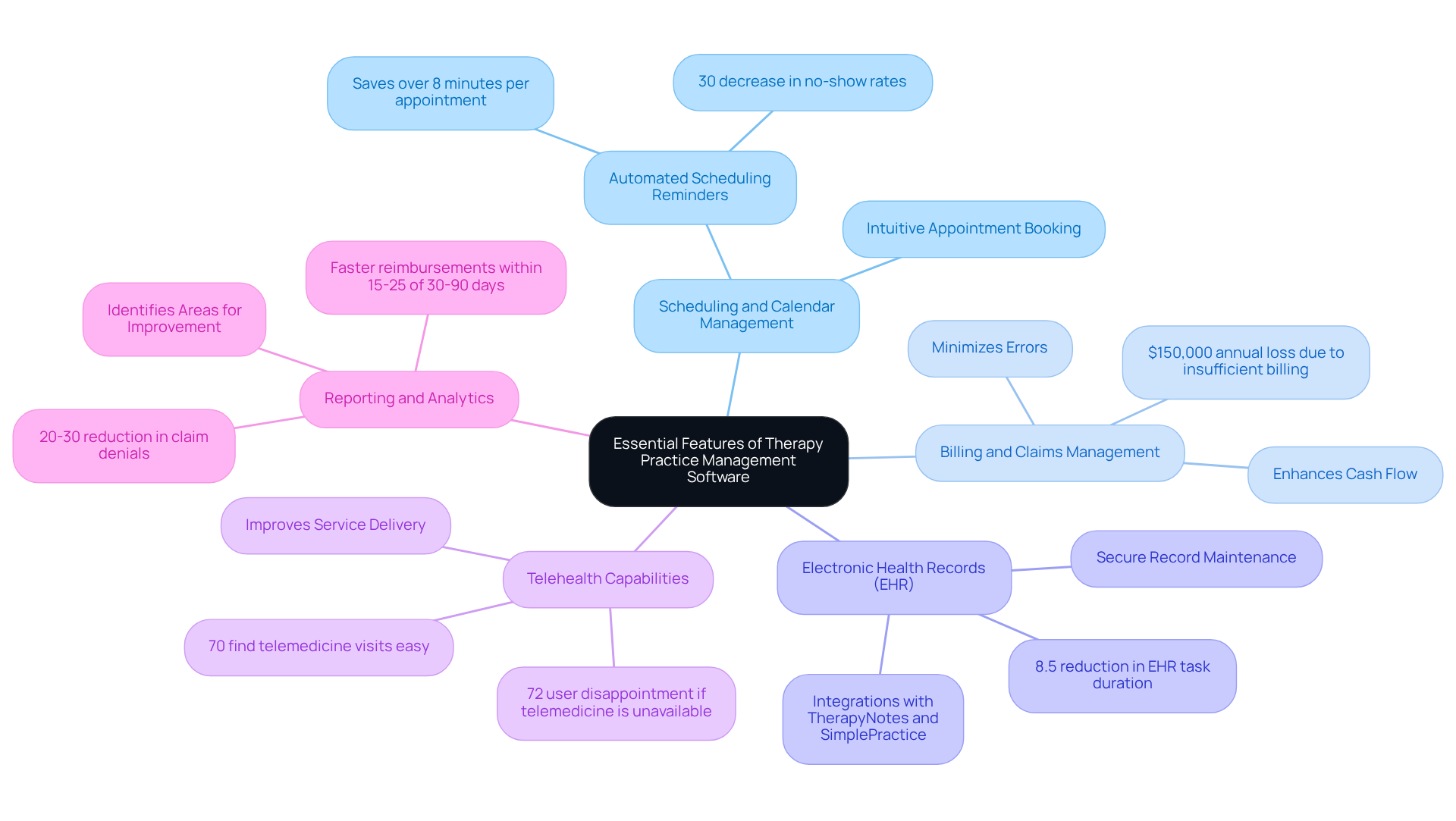
Effective therapy practice management relies on the right tools that enhance operational efficiency and compliance. Key features to consider include:
- Scheduling and Calendar Management: Effective scheduling and calendar management are crucial; opt for software that offers intuitive tools for easy appointment booking, reminders, and calendar synchronization. Automated scheduling reminders can decrease no-show rates by as much as 30%, greatly enhancing attendance and saving over 8 minutes per appointment.
- Billing and Claims Management: It is essential that the software effectively manages insurance claims, patient billing, and payment processing. This minimizes errors and enhances cash flow, which is vital for practice sustainability. Organizations can lose around $150,000 each year due to insufficient billing methods, making strong billing features crucial. Healthcare Partners Consulting, a veteran-owned company with 39 years of experience, specializes in comprehensive revenue cycle management tailored for behavioral and mental health practices, ensuring compliance and efficiency.
- Electronic Health Records (EHR): A comprehensive EHR system is essential for securely maintaining records, as it directly supports improved patient care outcomes. The average duration spent on EHR tasks can reduce by 8.5% when utilizing advanced systems, enabling clinicians to concentrate more on interactions with individuals receiving care. Integrations with platforms like TherapyNotes and SimplePractice can enhance compatibility and streamline operations.
- Telehealth Capabilities: Given the rising demand for remote therapy, integrated telehealth features are vital for improving service delivery and ensuring accessibility for patients. Over 70% of users find telemedicine visits easy, indicating a strong preference for flexible care options.
- Reporting and Analytics: Software that provides actionable insights into performance not only identifies areas for improvement but also supports strategic decision-making, ultimately enhancing practice efficiency. Effective analytics can lead to a reduction in claim denials by 20-30% and faster reimbursements within 15-25% of 30-90 days, significantly boosting revenue cycle performance.
By prioritizing these essential features and considering the expertise of Healthcare Partners Consulting, practitioners can choose therapy practice management solutions that not only meet their operational needs but also enhance the quality of patient care. Ultimately, selecting the right tools can significantly elevate both operational efficiency and patient care quality.
Implement Tailored Solutions for Optimal Workflow Integration
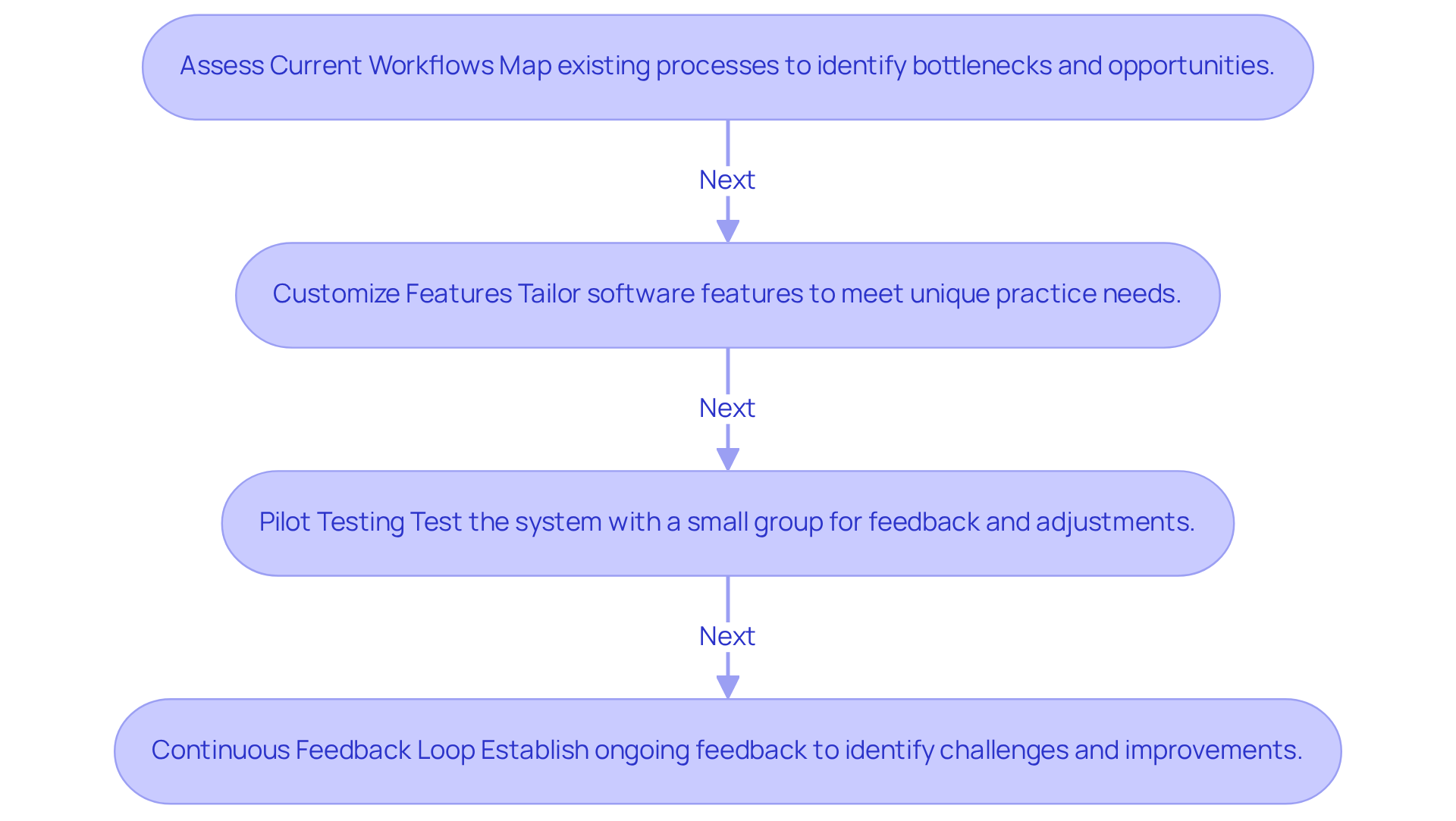
To maximize the effectiveness of therapy practice management tools, it is crucial to implement solutions that are specifically tailored to your workflows. Here are key steps to ensure effective integration:
- Assess Current Workflows: Start by mapping out existing processes to pinpoint areas where the software can enhance efficiency. This assessment reveals critical bottlenecks and highlights opportunities for operational enhancement.
- Customize Features: Collaborate with your provider to tailor features that address your practice’s unique needs, such as specific billing codes or documentation templates. Tailored functionalities can significantly streamline operations.
- Pilot Testing: Conduct a pilot test with a small group of personnel before full implementation. This enables you to collect feedback and make necessary adjustments, ensuring the system meets the practical demands of your team.
- Continuous Feedback Loop: Establish a system for ongoing feedback from team members to identify challenges and areas for further customization. This iterative approach fosters a culture of improvement and adaptability.
Customizing technology to fit your workflows facilitates a smoother transition and boosts staff acceptance. This, in turn, leads to improved patient care outcomes. These optimal approaches enhance operational rigor in therapy practice management, which can potentially improve claims accuracy and reduce denial rates, thereby boosting overall revenue cycle performance.
Evaluate and Adapt Software Solutions for Continuous Improvement
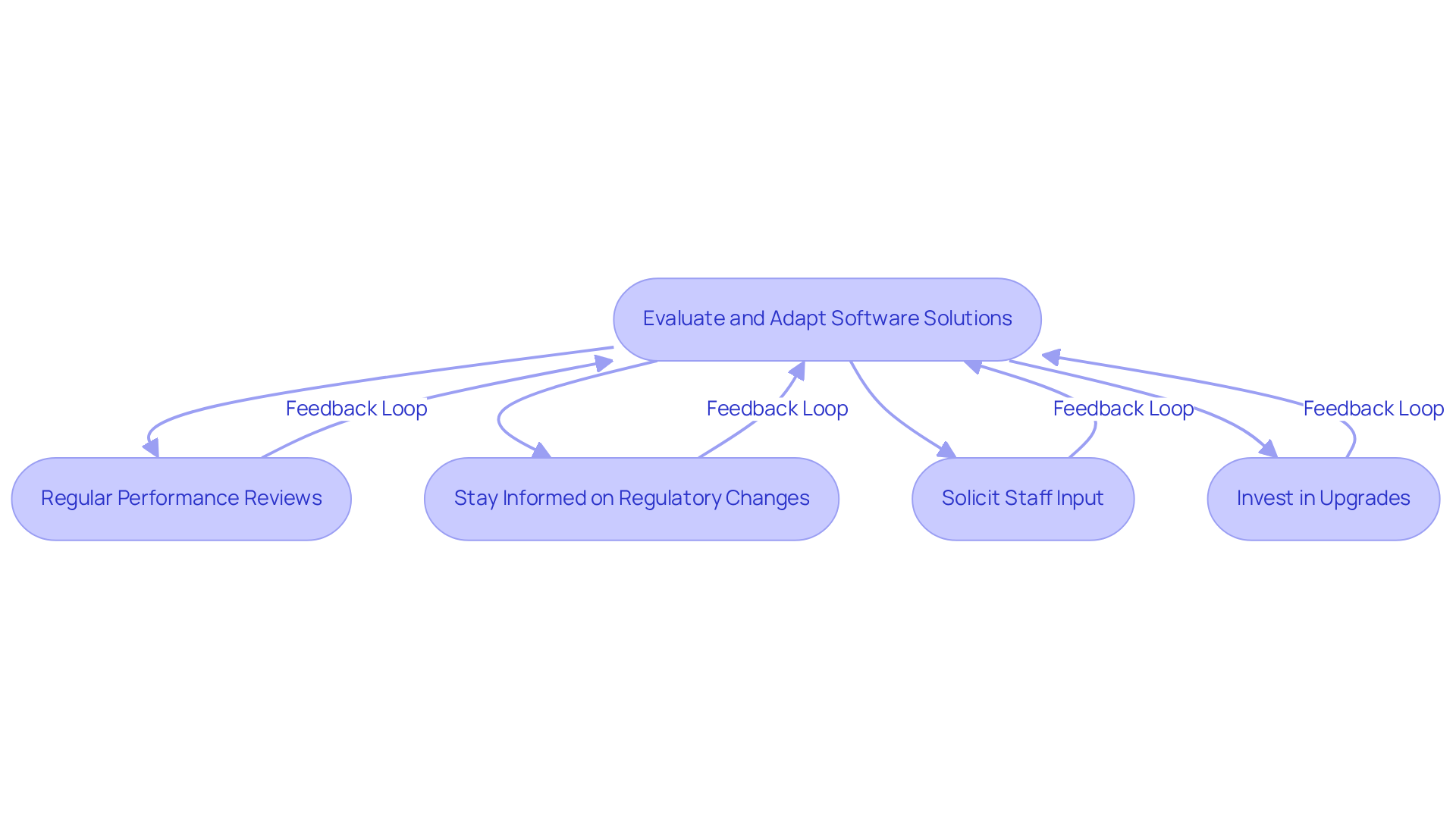
To maintain the effectiveness of therapy management tools, regular assessment and adjustment are essential. Consider implementing the following strategies:
- Regular Performance Reviews: Schedule periodic assessments of the software’s performance against your practice goals. This helps identify gaps and areas for improvement, ensuring that the system aligns with operational needs.
- Stay Informed on Regulatory Changes: Keeping abreast of changes in healthcare regulations is crucial. This guarantees that your system remains compliant and meets evolving requirements, protecting your operations from potential penalties.
- Solicit Staff Input: Encourage team feedback on system functionality and challenges. This input is invaluable for guiding updates and improvements, fostering a collaborative environment that enhances overall efficiency.
- Invest in Upgrades: Regularly evaluate the availability of new features or updates that could improve your operations’ efficiency and care for individuals. Staying current with technological advancements can significantly improve operational workflows.
Without regular assessments, therapy management tools may fail to meet operational needs. This proactive approach not only enhances operational efficiency but also significantly improves client outcomes. For example, implementing a modern therapy management system can lead to improved organization and reduced administrative workload, ultimately enhancing client outcomes. Additionally, utilizing scorecard-driven adjustments tied to claims accuracy and denial rates can further demonstrate operational rigor, contributing to better financial performance and reduced denial rates by 20-30%.
Provide Comprehensive Training and Support for Staff Utilization
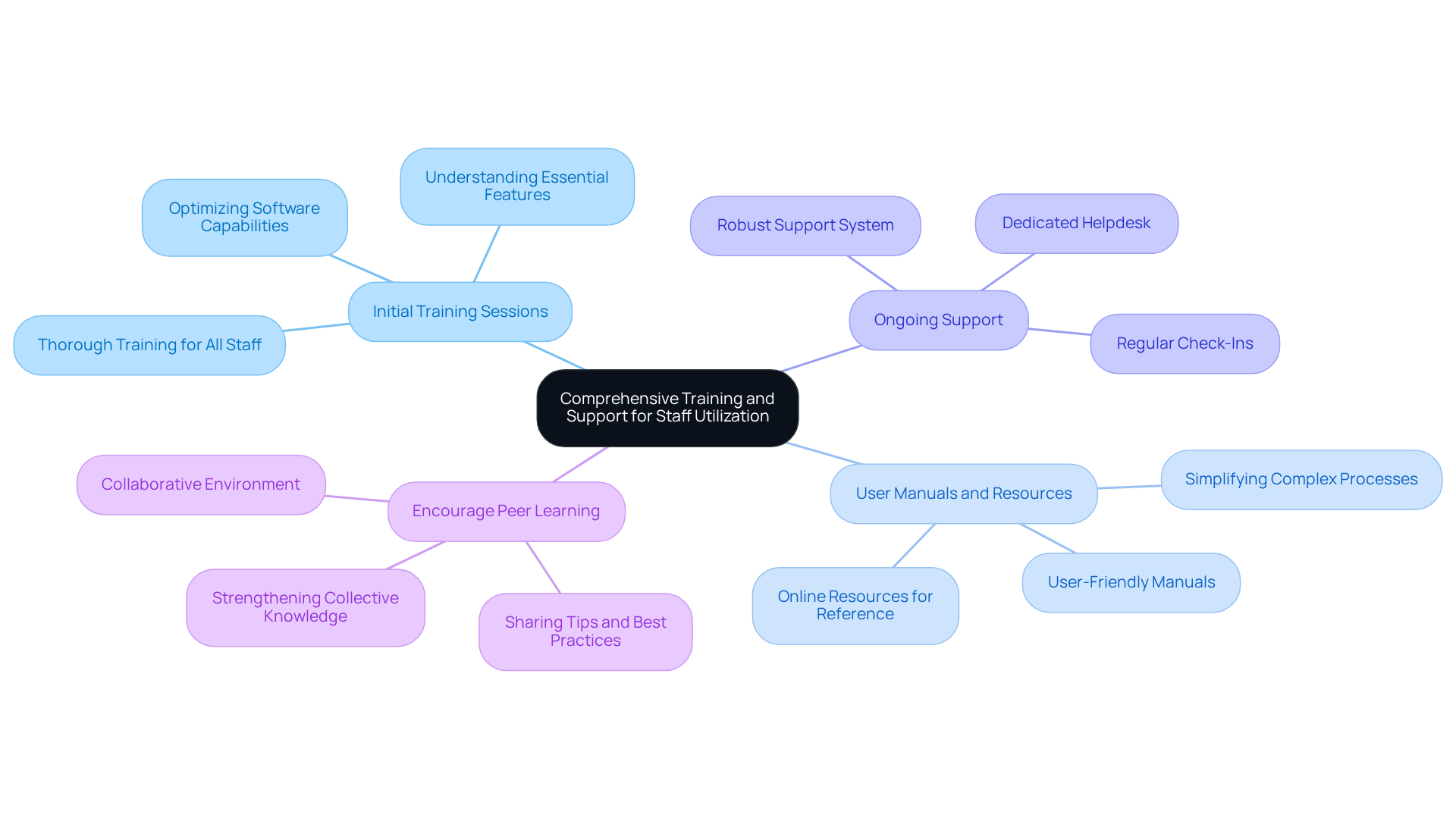
Effective utilization of therapy practice management tools relies on comprehensive training and ongoing support for personnel. Key components to consider include:
- Initial Training Sessions: Conduct thorough training sessions for all staff members during the software rollout, ensuring they understand all essential features and functionalities. This foundational training is vital for optimizing the software’s capabilities.
- Create User Manuals and Resources: Develop user-friendly manuals and online resources that personnel can easily reference as needed. These materials should simplify complex processes and serve as a quick guide for daily operations.
- Ongoing Support: Establish a robust support system to address team questions and challenges as they arise. This could involve a dedicated helpdesk or regular check-ins to ensure team members feel supported and confident in utilizing the system.
- Encourage Peer Learning: Foster an environment where team members can share tips and best practices with each other. This collaborative approach strengthens collective knowledge and instills confidence in the effective use of the tools.
Investing in comprehensive training and support empowers staff to utilize the therapy practice management system effectively, resulting in improved operational efficiency and enhanced patient care. For example, organizations that implement thorough training programs often see a reduction in claim denials by 20-30% and experience faster reimbursement cycles of 15-25% within 30-90 days, significantly boosting their revenue cycle performance. Additionally, with the strategic consulting and data-driven guidance from Healthcare Partners Consulting, a veteran-owned company with 39 years of experience, practices can appeal the right denials quickly, recovering revenue they’ve earned. Furthermore, 94% of employees say they would stay longer at a company that invests in their continued learning and development, highlighting the importance of training in employee retention and engagement. Ultimately, investing in staff training not only enhances operational efficiency but also fosters a culture of continuous improvement and employee satisfaction.
Conclusion
Without the right therapy practice management software, healthcare practices may struggle to maintain operational efficiency and compliance. By focusing on essential tools, practitioners can streamline workflows, lessen administrative burdens, and enhance patient care. Tailored solutions, continuous evaluation, and comprehensive training empower healthcare providers to concentrate on delivering high-quality care.
Key insights from this article emphasize the importance of features such as:
- scheduling
- billing
- electronic health records
- telehealth capabilities
- robust reporting tools
These functionalities not only improve operational performance but also support strategic decision-making, leading to better revenue cycle management. Moreover, ongoing feedback and adaptation ensure that therapy practice management systems remain effective and aligned with evolving regulatory requirements.
In a landscape where patient care is paramount, investing in the right therapy practice management software is not merely a choice but a necessity. By prioritizing compliance, operational efficiency, and staff empowerment, practices can thrive in delivering exceptional care. Engaging with experts like Healthcare Partners Consulting & Billing, LLC, a veteran-owned company with nearly four decades of experience, can provide the necessary support and guidance to navigate these complexities. The right software not only enhances compliance and efficiency but also ensures that patient care remains the top priority.
Frequently Asked Questions
What are the essential features of therapy practice management software?
Essential features include scheduling and calendar management, billing and claims management, electronic health records (EHR), telehealth capabilities, and reporting and analytics.
Why is scheduling and calendar management important in therapy practice management software?
Effective scheduling and calendar management are crucial for easy appointment booking, reminders, and calendar synchronization. Automated scheduling reminders can decrease no-show rates by up to 30%, enhancing attendance and saving time.
How does billing and claims management contribute to a therapy practice’s sustainability?
Effective billing and claims management minimizes errors and enhances cash flow, which is vital for practice sustainability. Insufficient billing methods can lead to significant financial losses, making strong billing features crucial.
What role do electronic health records (EHR) play in therapy practice management?
A comprehensive EHR system securely maintains patient records and supports improved patient care outcomes. Advanced EHR systems can reduce the time spent on EHR tasks, allowing clinicians to focus more on patient interactions.
Why are telehealth capabilities important in therapy practice management software?
Integrated telehealth features are vital for improving service delivery and ensuring accessibility for patients, especially given the rising demand for remote therapy. Many users find telemedicine visits easy, indicating a preference for flexible care options.
How can reporting and analytics improve a therapy practice’s performance?
Software that provides actionable insights into performance helps identify areas for improvement and supports strategic decision-making. Effective analytics can reduce claim denials and lead to faster reimbursements, boosting revenue cycle performance.
How can Healthcare Partners Consulting assist in therapy practice management?
Healthcare Partners Consulting specializes in comprehensive revenue cycle management tailored for behavioral and mental health practices, ensuring compliance and efficiency in billing and operational processes.