
Introduction
Clinics face significant challenges in medical claims recovery, which can jeopardize their financial health and patient care quality. Implementing targeted best practices for the healthcare landscape can significantly enhance revenue cycle management. What effective strategies can clinics employ to navigate the challenges of claims recovery and maximize their revenue? This article outlines four best practices that enable healthcare providers to streamline claims processes, minimize administrative burdens, and prioritize patient care.
Understand the Medical Claims Recovery Process
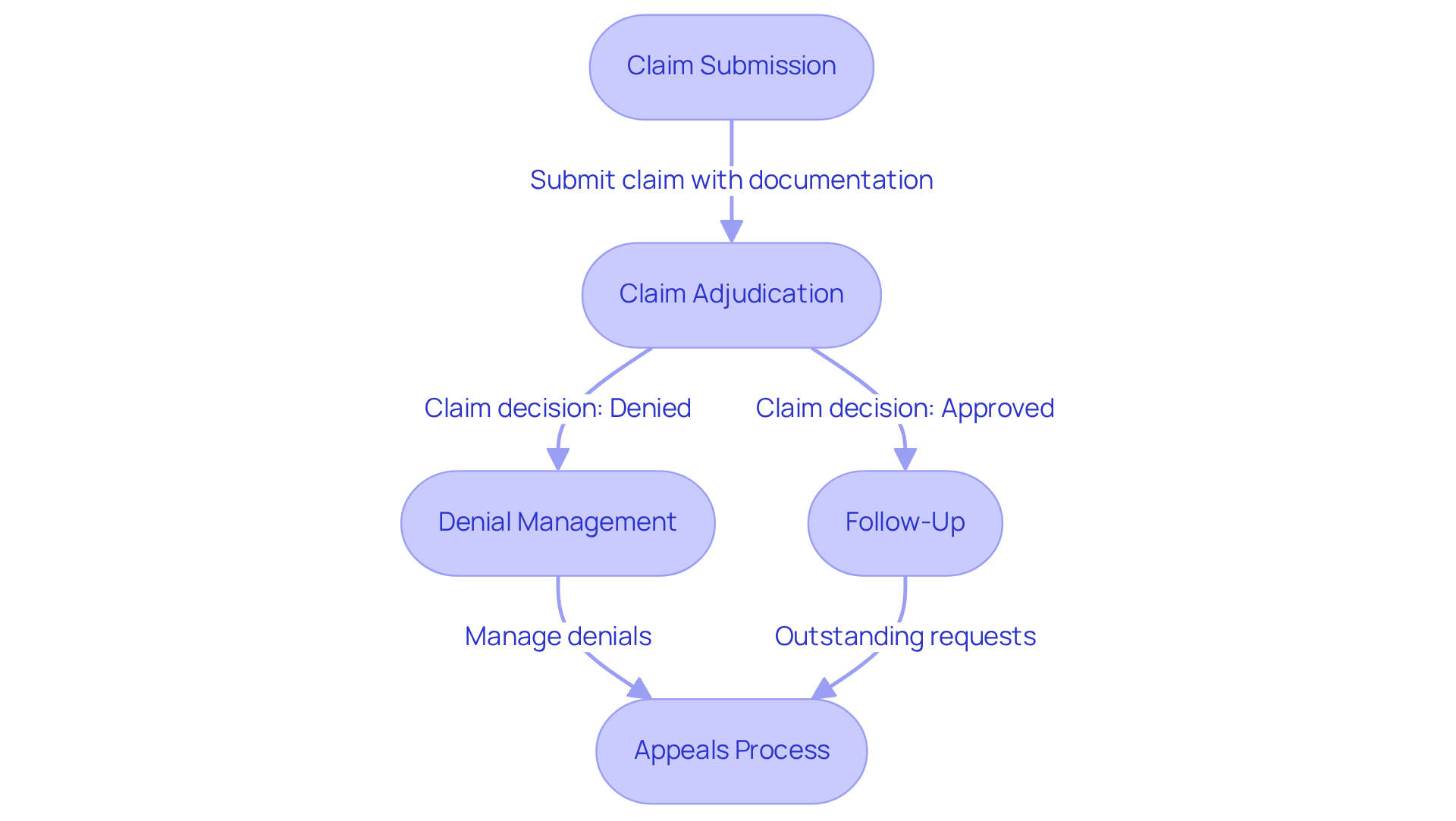
Navigating the medical claims recovery services process is critical for healthcare providers aiming to secure appropriate compensation for their services. This process begins with the submission of a claim to the insurance payer, which must include detailed documentation of the services provided. Understanding the lifecycle of a claim, from submission to payment, allows clinics to pinpoint potential pitfalls and areas for improvement.
- Claim Submission: Claims must be submitted accurately and promptly. This involves verifying patient information, coding services correctly, and ensuring that all necessary documentation is included. Accurate submissions can significantly lower rejection rates, which are often preventable.
- Claim Adjudication: After submission, claims undergo a review process by the payer, determining whether the submission will be paid, denied, or require additional information. Staying informed about payer policies is essential during this stage to prevent unnecessary rejections.
- Denial Management: Denials can create significant delays in revenue flow, making it crucial to understand their causes. Common reasons include coding errors, lack of medical necessity, or incomplete documentation. Addressing these issues can lead to a more efficient revenue cycle and improved financial outcomes with the help of medical claims recovery services.
- Follow-Up: Regular monitoring of outstanding requests is vital. This entails tracking the status of requests and communicating with payers to address any issues that may occur. Proactive follow-up can lead to faster reimbursements, often improving timelines by 15-25% within 30-90 days.
- Appeals Process: For rejected submissions, facilities should have a structured appeals process established. This includes gathering necessary documentation, understanding payer policies, and submitting appeals in a timely manner. A well-managed appeals process can further enhance the effectiveness of medical claims recovery services.
Implementing these strategies can lead to improved financial health, allowing practices to prioritize quality care. Furthermore, as a veteran-owned enterprise with 39 years of expertise in medical and mental health billing, Healthcare Partners Consulting & Billing, LLC (HPC) is distinctly equipped to assist your practice in enhancing financial health and ensuring a focus on quality care.
Establish Effective Denial Management Strategies
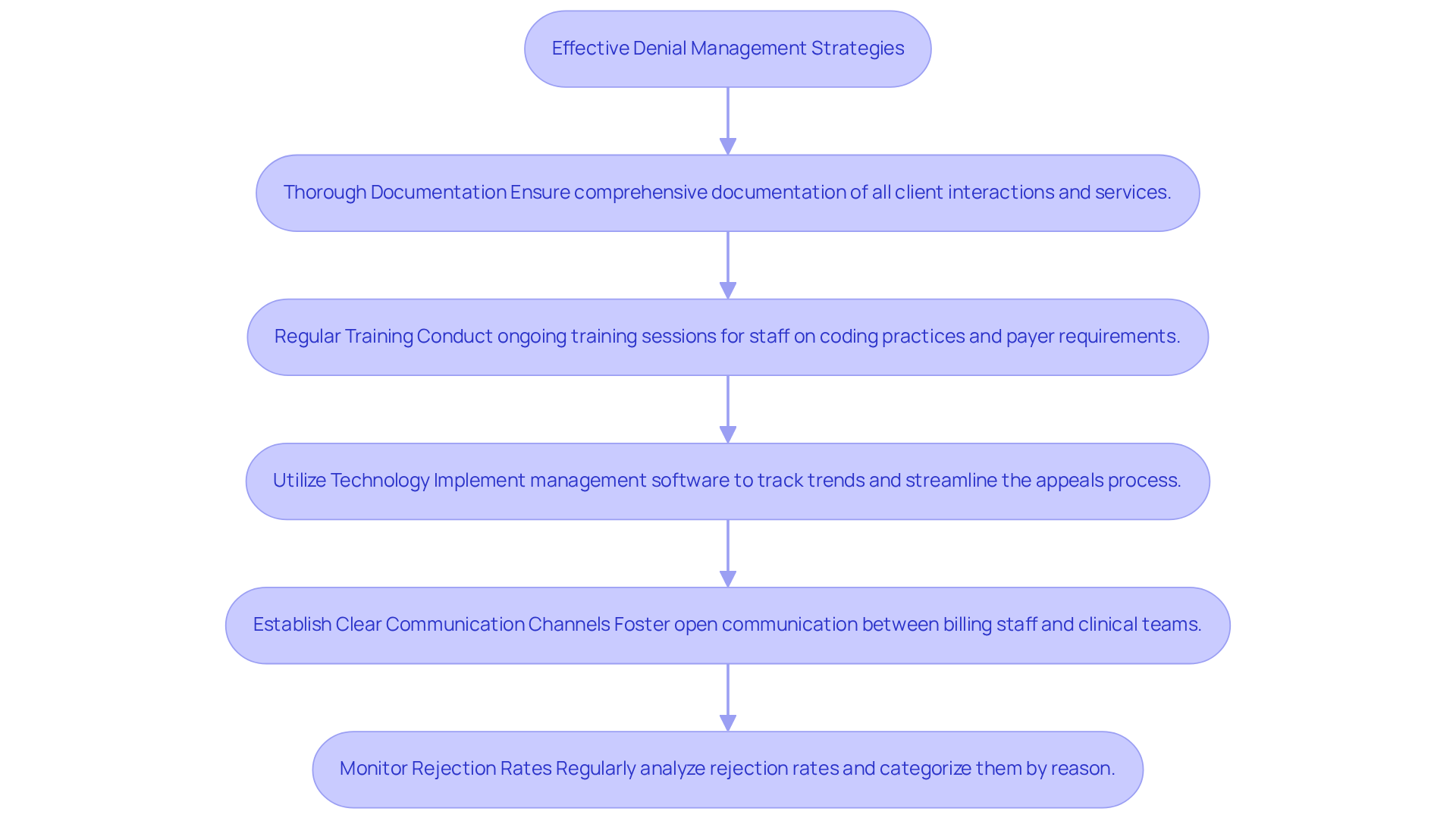
To effectively manage denials, clinics must adopt a proactive approach that encompasses several key strategies:
- Thorough Documentation: Ensure comprehensive documentation of all client interactions and services, including clinical notes and treatment plans. This reinforces the medical necessity of services and can avert refusals. Precise documentation is essential for aligning resources with healthcare populations.
- Regular Training: Conduct ongoing training sessions for staff on the latest coding practices, payer requirements, and common reasons for claim rejections. Keeping staff informed aids in minimizing mistakes that can lead to rejections, which can account for up to 5% of net patient revenue loss. This loss can severely impact a clinic’s financial stability.
- Utilize Technology: Implement management software that tracks trends, automates follow-ups, and streamlines the appeals process. Technology helps clinics identify patterns in refusals, allowing them to address root causes directly. Proactive monitoring of submissions can result in a 20-30% decrease in rejections and quicker reimbursement timelines of 15-25% within 30-90 days.
- Establish Clear Communication Channels: Foster open communication between billing staff and clinical teams. This teamwork makes sure all essential information is ready for claims submission and can expedite the resolution of any issues, enhancing overall operational efficiency.
- Monitor Rejection Rates: Regularly analyze rejection rates and categorize them by reason. This data-driven method enables healthcare facilities to pinpoint specific areas for enhancement and implement focused strategies to minimize rejections. Employing scorecard-driven adjustments can improve accuracy in submissions and operational rigor, contributing to a healthier revenue cycle.
Ultimately, these strategies not only enhance recovery efforts but also fortify the clinic’s financial health by utilizing medical claims recovery services.
Leverage Technology and Data Analytics for Efficiency
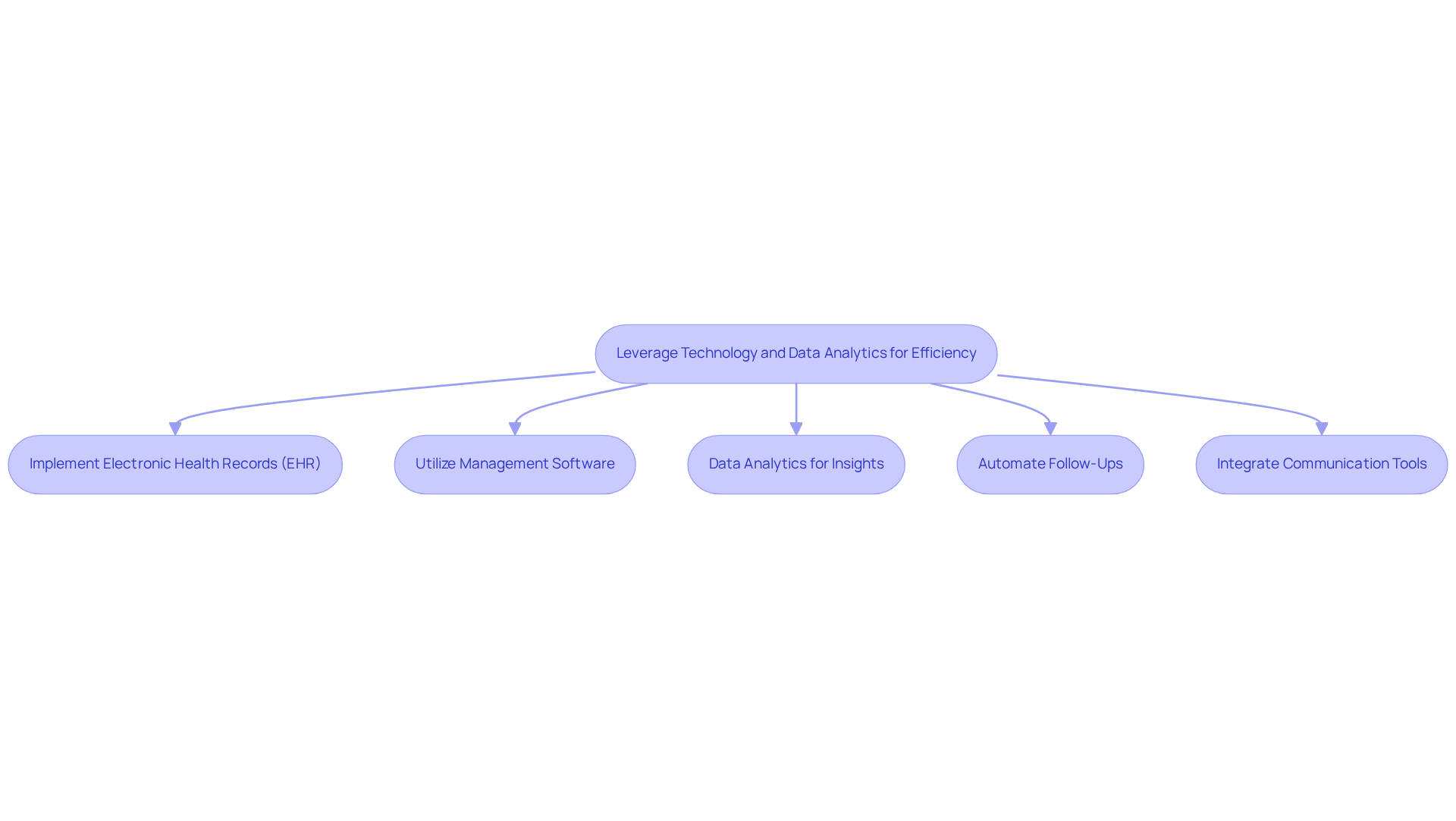
In the current landscape of healthcare, the integration of technology and data analytics is crucial for optimizing medical claims recovery services, particularly in addressing underpayments and overdue submissions. Here are key strategies to consider:
- Implement Electronic Health Records (EHR): EHR systems simplify the documentation process, ensuring that all individual information is readily available and accurately coded. This decreases the chances of mistakes that can result in rejections and unprocessed submissions, ultimately affecting statements for individuals.
- Utilize Management Software: Invest in software that automates the submission process, tracks status updates, and generates reports on rejection trends. This technology significantly reduces manual processing time and improves accuracy, ultimately addressing underpayments effectively and enhancing the management of statements.
- Data Analytics for Insights: Utilize data analytics to track key performance indicators (KPIs) related to recovery of claims, such as clean submission rates and denial rates. Examining this information assists clinics in recognizing areas for enhancement, especially in managing aging accounts and ensuring timely follow-up on statements.
- Automate Follow-Ups: Implement automated systems for following up on outstanding requests. This guarantees that no requests slip through the gaps and that prompt measures are taken to address concerns, thereby improving the management of statements and enhancing overall recovery.
- Integrate Communication Tools: Utilize communication platforms that facilitate collaboration between clinical and billing teams. This integration guarantees that all stakeholders have access to the essential information for efficient management of claims, enabling healthcare providers to concentrate more on care for their patients.
By utilizing technology and data analysis, healthcare facilities can enhance their operational efficiency, lessen administrative burdens, and ultimately improve their recovery outcomes, particularly through medical claims recovery services and management of patient statements. Failure to adopt these technological advancements may hinder operational efficiency and compromise recovery outcomes, ultimately affecting patient care.
Invest in Staff Training and Development
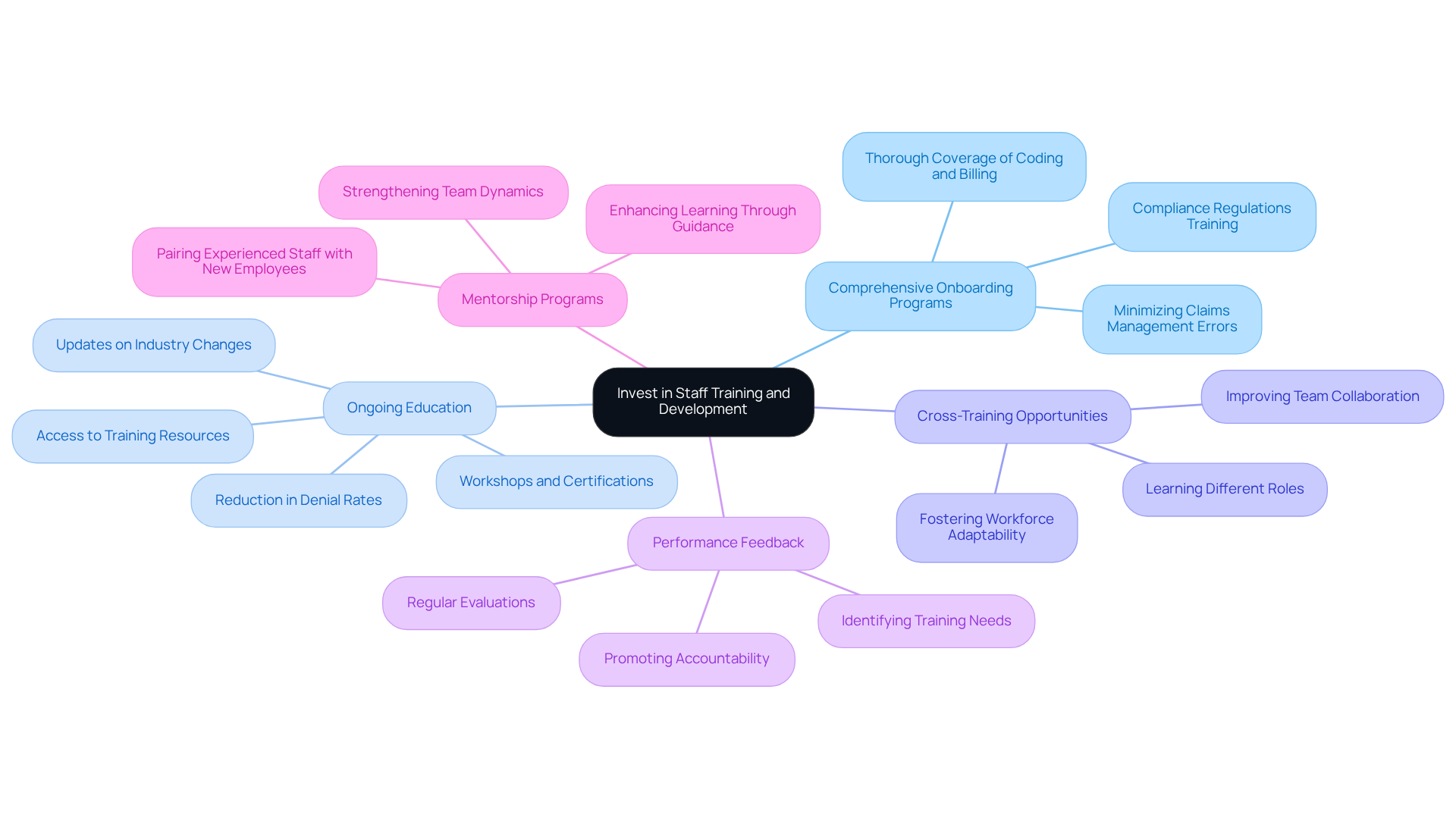
To enhance the recovery of reimbursements, healthcare facilities must prioritize staff training and development, as inadequate training can lead to costly errors in claims management. Here are effective strategies to implement:
- Comprehensive Onboarding Programs: Develop thorough onboarding programs for new staff that cover essential topics such as coding, billing procedures, and compliance regulations. A solid foundation guarantees that employees are well-equipped to manage claims efficiently, minimizing mistakes that can result in expensive rejections.
- Ongoing Education: Encourage continuous learning by providing access to training resources, workshops, and certifications related to medical billing and coding. Keeping staff updated on industry changes and best practices is vital for maintaining compliance and accuracy. Healthcare Partners Consulting can help facilities achieve a 20-30% reduction in denial rates and expedite reimbursements by 15-25% within 30-90 days. Our veteran-owned status and 39 years of experience specializing in medical and mental health billing further enhance our commitment to empowering clinics.
- Cross-Training Opportunities: Implement cross-training initiatives that allow staff to learn different roles within the billing department. This flexibility improves team collaboration and ensures that all members can participate in recovery efforts, fostering a more resilient and adaptable workforce.
- Performance Feedback: Establish a system for regular performance evaluations and feedback. This assists in recognizing areas where staff may require further training or assistance, promoting a culture of ongoing enhancement and accountability, which is vital for optimizing management processes.
- Mentorship Programs: Pair experienced staff with newer employees to provide guidance and support. Mentorship can enhance learning and assist in creating a cohesive team focused on achieving optimal recovery outcomes. This approach not only improves individual performance but also strengthens overall team dynamics.
Investing in staff training and development equips healthcare teams to effectively manage medical claims recovery services, leading to better financial outcomes. Regular audits and monitoring practices can further support these initiatives, ensuring that training aligns with operational needs and compliance standards. Additionally, integrating with EHR and practice management platforms like TherapyNotes and SimplePractice can streamline workflows and enhance efficiency. Ultimately, these strategies not only improve financial outcomes but also elevate the standard of patient care.
Conclusion
The complexities of medical claims recovery pose significant challenges for healthcare providers aiming to optimize revenue and deliver quality care. Implementing best practices in claims submission and denial management, alongside advanced technology, enables clinics to enhance financial health and operational efficiency. A compliance-first approach not only recovers lost revenue but also safeguards operational integrity.
Key strategies discussed include:
- The importance of thorough documentation
- Regular staff training
- The integration of advanced technology and data analytics
These elements work together to minimize claim denials and streamline the recovery process, ultimately leading to improved reimbursement timelines and reduced administrative burdens. Healthcare Partners Consulting & Billing, LLC (HPC), with its veteran-owned status and 39 years of specialized experience, stands ready to empower clinics in achieving these goals.
In conclusion, the significance of effective medical claims recovery cannot be overstated. By prioritizing these best practices, healthcare providers can enhance their financial outcomes while ensuring they remain focused on what truly matters – providing exceptional care to their patients. Without a dedicated partner like HPC, practices risk falling short in a challenging healthcare landscape. For more information, reach out at info@hpcbilling.com or call 888-517-4992 to explore how HPC can support your practice’s success.
Frequently Asked Questions
What is the medical claims recovery process?
The medical claims recovery process involves submitting claims to insurance payers, which must include detailed documentation of services provided. Understanding the lifecycle of a claim, from submission to payment, helps healthcare providers identify potential issues and improve their processes.
What are the key steps in the medical claims recovery process?
The key steps include claim submission, claim adjudication, denial management, follow-up, and the appeals process.
What is involved in claim submission?
Claim submission requires accurate and prompt submission of claims, which includes verifying patient information, correctly coding services, and ensuring all necessary documentation is included to reduce rejection rates.
What happens during claim adjudication?
During claim adjudication, the payer reviews the submitted claims to determine if they will be paid, denied, or if additional information is needed. Understanding payer policies is crucial to avoid unnecessary rejections.
How can denial management improve revenue flow?
Denial management helps identify the causes of claim denials, such as coding errors or incomplete documentation. Addressing these issues can lead to a more efficient revenue cycle and improved financial outcomes.
Why is follow-up important in the claims recovery process?
Regular follow-up is vital for tracking the status of outstanding requests and communicating with payers. Proactive follow-up can lead to faster reimbursements, improving timelines by 15-25% within 30-90 days.
What should be included in a structured appeals process?
A structured appeals process should include gathering necessary documentation, understanding payer policies, and submitting appeals in a timely manner to enhance the effectiveness of medical claims recovery services.
How can implementing these strategies benefit healthcare practices?
Implementing these strategies can lead to improved financial health for practices, allowing them to prioritize quality care while ensuring efficient revenue recovery.