
Introduction
As mental health care evolves, clinic owners face increasing pressure to manage revenue cycles effectively. Attending specialized conferences in 2026 offers a unique opportunity for mental health clinic owners to gain insights into compliance, billing optimization, and enhancing patient care. With many events scheduled, clinic owners must determine which conferences will best address their challenges and allow them to prioritize patient care.
Overview of Revenue Cycle Management Conferences for Mental Health Professionals
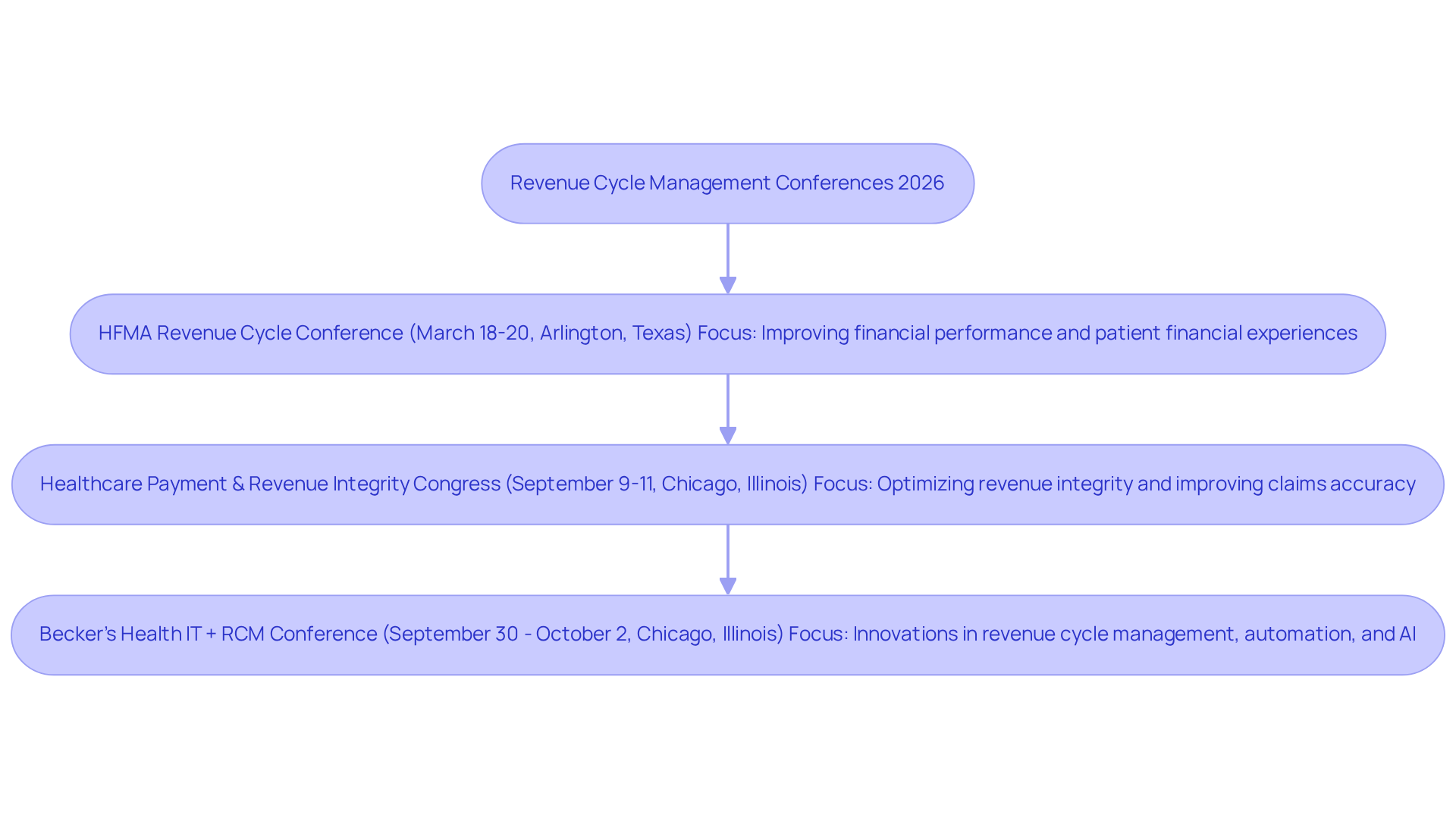
In 2026, the revenue cycle management conferences 2026 will address the pressing challenges in revenue cycle processes for healthcare professionals, focusing on issues such as regulatory compliance, billing optimization, and enhancing patient care through effective financial oversight. Notable events include:
- HFMA Revenue Cycle Conference (March 18-20, Arlington, Texas): This conference will explore strategies for improving financial performance and patient financial experiences, featuring expert speakers and workshops aimed at enhancing operational efficiency.
- Becker’s Health IT + RCM Conference (September 30 – October 2, Chicago, Illinois): This event, part of the revenue cycle management conferences 2026, will gather healthcare finance executives to discuss innovations in revenue cycle management, emphasizing the integration of automation and AI to streamline processes and reduce denial rates by 20-30%.
- Healthcare Payment & Revenue Integrity Congress (September 9-11, Chicago, Illinois): This event, part of the revenue cycle management conferences 2026, will focus on optimizing revenue integrity by providing insights into navigating complex reimbursement models and improving claims accuracy, with potential for faster reimbursements within 30-90 days.
The revenue cycle management conferences 2026 will provide healthcare professionals with expert insights and practical workshops aimed at enhancing operational efficiency and prioritizing patient care. At the revenue cycle management conferences 2026, attendees will gain valuable insights into aligning financial operations with patient-centered care, ultimately maximizing reimbursement and enhancing overall practice efficiency.
Top 5 Revenue Cycle Management Conferences in 2026: Features and Focus Areas
As healthcare systems grapple with increasing operational complexities, the need for effective revenue cycle management has never been more critical.
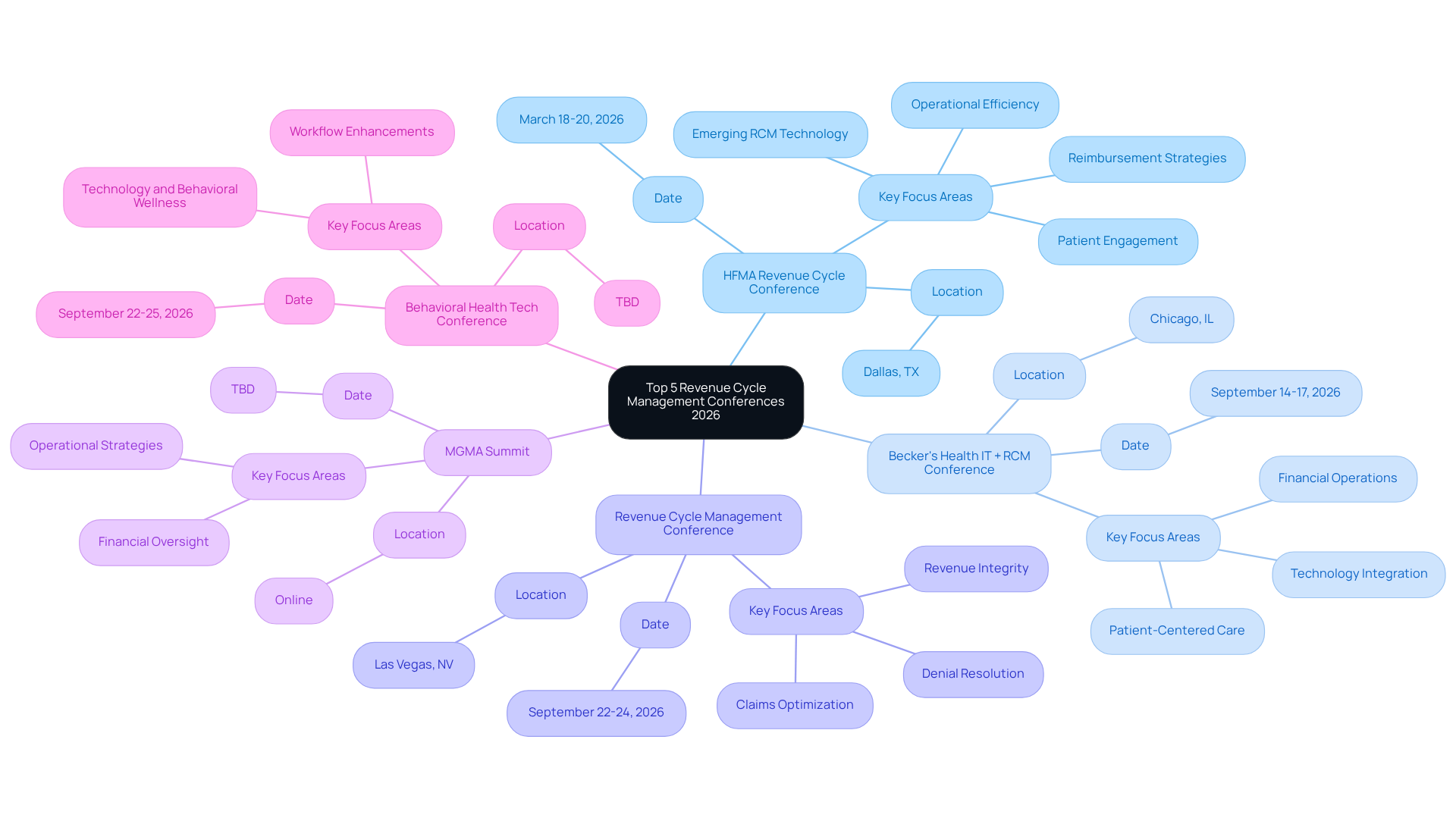
- The revenue cycle management conferences 2026, specifically the HFMA Revenue Cycle Conference (March 18-20, 2026, Dallas, TX), will focus on operational efficiency, reimbursement strategies, and emerging trends in revenue cycle management (RCM) technology. It includes sessions on automation and compliance, making it particularly beneficial for providers looking to enhance their billing processes. Attendees will gain insights into intelligent patient engagement and revenue protection, both vital for improving financial outcomes in behavioral services. The conference also addresses rising denial rates, payer complexity, and operational costs that healthcare systems currently face, emphasizing the direct impact of patient engagement on payment outcomes, brand perception, and long-term loyalty. Furthermore, discussions will cover effective strategies for managing patient statements, addressing underpayments, unprocessed claims, and aging claims, which are crucial for improving billing efficiency in clinics.
- The revenue cycle management conferences 2026, including the Becker’s Health IT + RCM Conference (September 14-17, 2026, Chicago, IL), will unite healthcare executives and RCM professionals to explore financial operations and patient-centered care. The focus on technology integration in RCM is essential for organizations aiming to enhance patient experiences and simplify billing processes, particularly in handling claims and improving revenue cycles.
- Revenue cycle management conferences 2026 (September 22-24, 2026, Las Vegas, NV): Covering a broad spectrum of topics, including denial resolution and revenue integrity, this conference is especially beneficial for clinics focused on optimizing claims processes and minimizing revenue leaks. Discussions will highlight scorecard-driven adjustments tied to claims accuracy and denial rates, reinforcing operational rigor and addressing the critical issues of underpayments, unprocessed claims, and aging claims.
- MGMA Summit (Date TBD): This online conference explores financial oversight and operational strategies designed for medical facilities, including behavioral clinics. It provides valuable insights into effectively overseeing the financial elements of practice operations, which is crucial for maintaining fiscal stability and tackling issues related to patient statements and claims processing.
- The Behavioral Health Tech Conference (September 22-25, 2026) specifically addresses the intersection of technology and behavioral wellness, focusing on workflow enhancements and incorporating insights from revenue cycle management conferences 2026 designed for providers in the wellness field. Participants will learn about innovative approaches to enhance patient engagement and streamline revenue cycle processes, ultimately driving better financial outcomes while effectively managing underpayments and aging claims.
Without addressing these challenges, clinics risk not only financial instability but also diminished patient trust and loyalty.
Comparative Analysis: Pros and Cons of Each Conference
Navigating the complexities of revenue cycle management is crucial for mental health clinics aiming to optimize their financial performance.
-
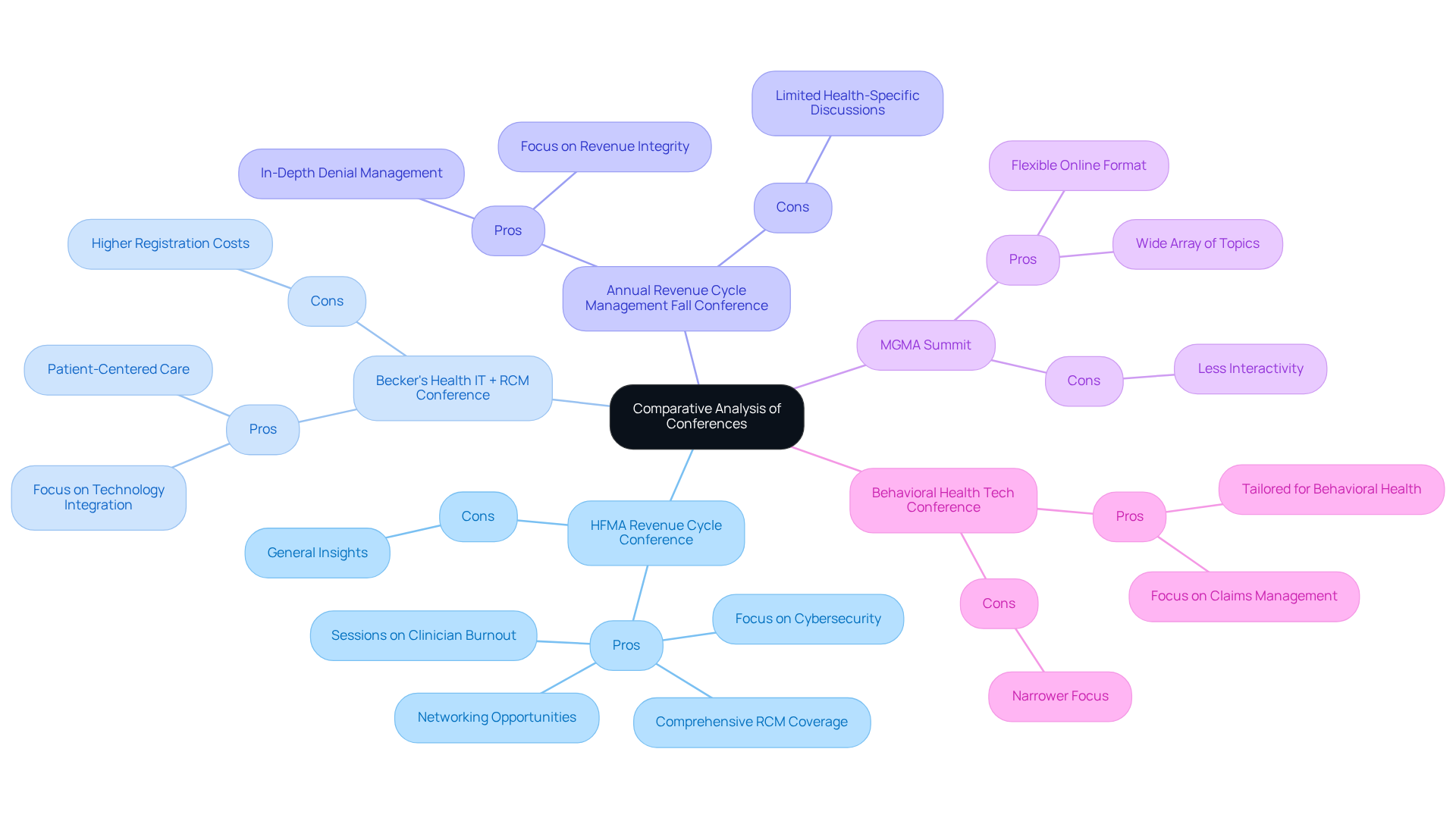
HFMA Revenue Cycle Conference
- Pros: Offers comprehensive coverage of revenue cycle management (RCM) topics, with a strong emphasis on compliance and networking opportunities with industry leaders. Attendees can gain insights into strategies for scaling innovation and enhancing financial resilience, which are essential for practices related to well-being. Additionally, the conference will address cybersecurity concerns, a significant topic given recent events, and is expected to attract between 3,500 and 4,000 participants, enhancing networking opportunities. Sessions on clinician burnout and workforce shortages will also be included, making it relevant for clinics focused on psychological well-being.
- Cons: This generality may hinder specialized clinics from fully benefiting from the insights offered.
-
Becker’s Health IT + RCM Conference
- Pros: Concentrates on technology integration and patient-centered care, making it relevant for clinics aiming to enhance patient experiences. This focus aligns well with the needs of mental health providers looking to leverage technology for better outcomes.
- Cons: Higher registration costs may deter smaller practices from attending, limiting access to valuable insights.
-
Annual Revenue Cycle Management Fall Conference
- Pros: Features in-depth sessions on denial management and revenue integrity, which are essential for optimizing billing processes. The focus on denial reduction, which can vary from 20% to 60%, can greatly benefit clinics providing psychological services. This improvement can significantly impact the financial health of clinics focused on psychological services.
- Cons: The conference may not address health-specific challenges as thoroughly as other events, potentially leaving gaps in relevant discussions.
-
MGMA Summit
- Pros: The online format allows for flexible attendance, covering a wide array of financial management topics that can benefit mental health clinics.
- Cons: The virtual nature may result in less interactivity compared to in-person events, which could limit networking opportunities crucial for building professional relationships.
-
Behavioral Health Tech Conference
- Pros: Specifically tailored for behavioral health, this conference addresses unique challenges and innovations in the field, making it highly relevant for mental health clinic owners. It provides an opportunity to explore solutions that can optimize patient statements and claims management, addressing underpayments and aging claims effectively.
- Cons: The narrower focus may limit broader discussions on RCM, potentially missing out on valuable insights applicable to a wider range of healthcare approaches.
Ultimately, selecting the right conference can be pivotal in addressing the unique challenges faced by mental health practices today.
Addressing the Needs of Mental Health Clinic Owners: Relevance of Conferences
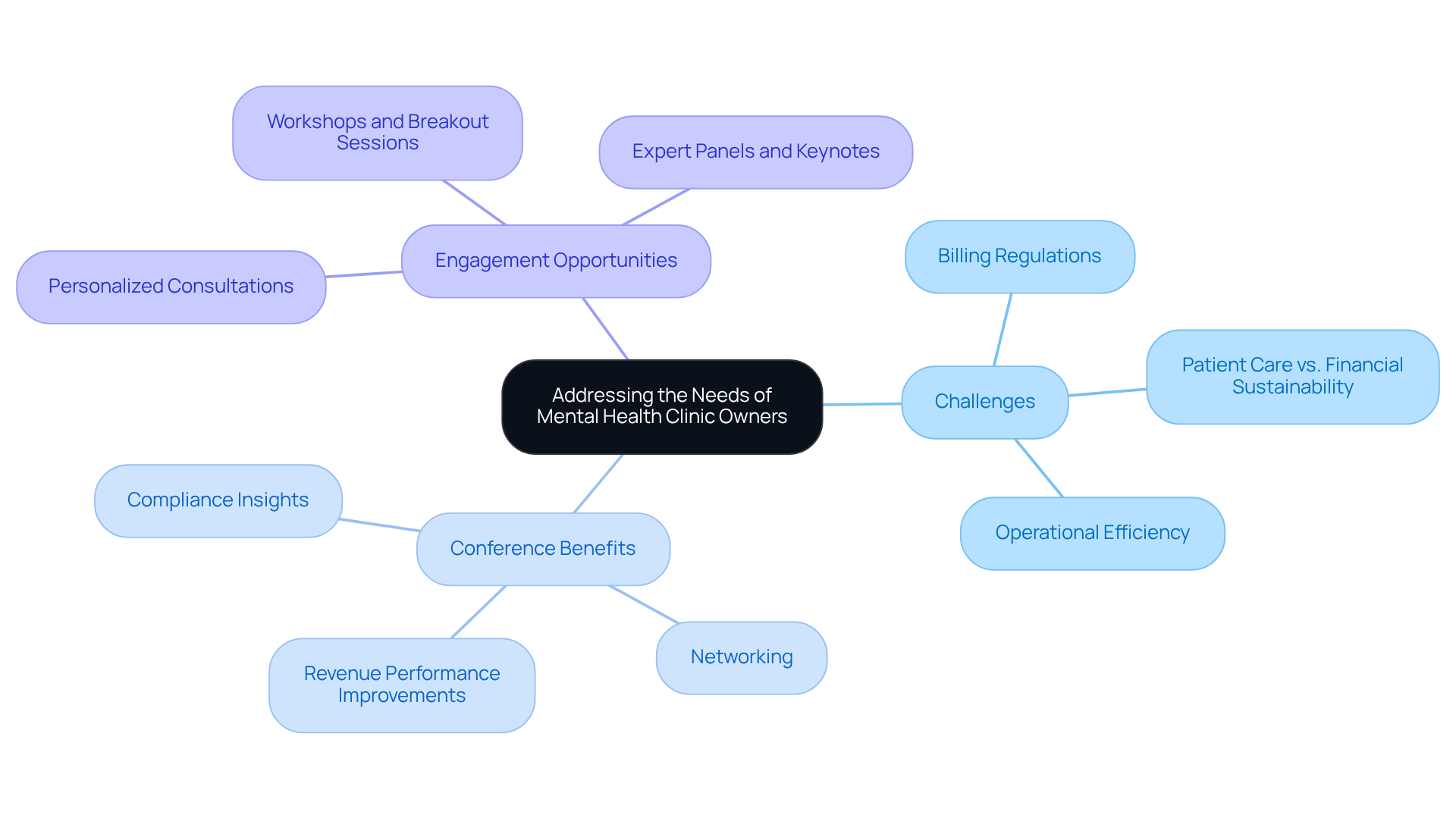
Mental wellness clinic owners encounter significant challenges that can hinder their operational success. These challenges include:
- Navigating complex billing regulations
- Balancing patient care with financial sustainability
- Improving operational efficiency
Revenue cycle management conferences 2026 serve as vital resources, offering insights into compliance updates and innovative solutions tailored for the behavioral wellness sector. These events provide networking opportunities with peers and industry leaders, fostering collaboration and knowledge sharing that enhances practice management and patient outcomes.
Participation in the revenue cycle management conferences 2026 allows psychological service providers to stay informed about trends and technologies impacting their operations. Notably, organizations that implement targeted strategies at these events have reported denial reductions of 20-30% and faster reimbursement rates of 15-25% within 30-90 days, underscoring the potential for enhanced revenue cycle performance.
Additionally, insights regarding operational benchmarks and the impact of telehealth and workforce pressures further illustrate the relevance of these conferences to the challenges faced by mental health clinic owners. Engaging with experts can lead to tailored solutions that address specific operational challenges, ultimately enhancing clinic performance.
Clinic owners can optimize their administrative processes by scheduling a personalized consultation with Healthcare Partners Consulting & Billing, LLC (HPC) at info@hpcbilling.com or 888-517-4992.
Key Takeaways and Recommendations for Conference Attendance
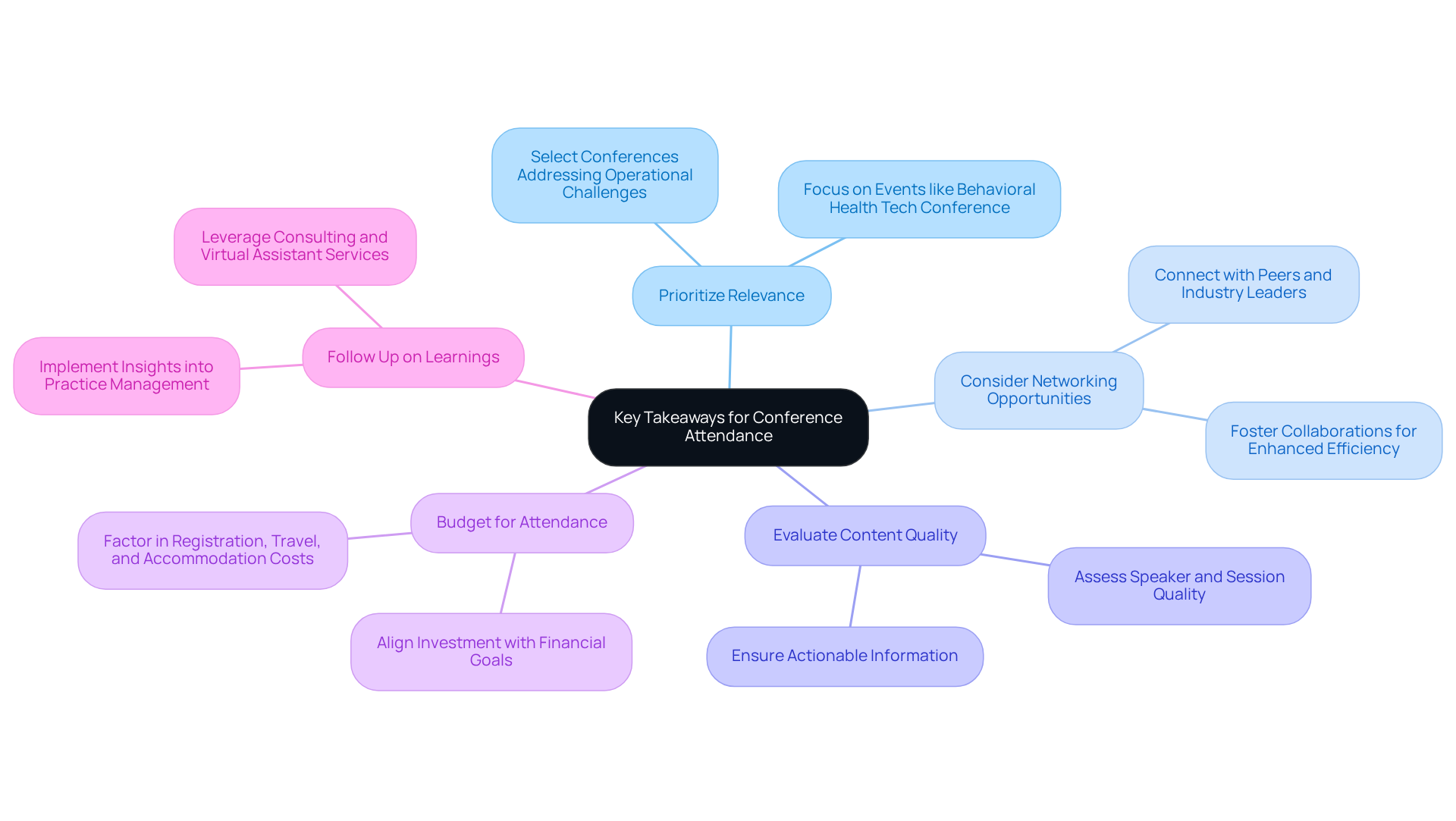
- Prioritize Relevance: Selecting the right conferences is crucial for addressing the operational challenges faced by mental health clinics. Events like the Behavioral Health Tech Conference may provide focused insights, particularly regarding enhancing management through streamlined operations.
- Consider Networking Opportunities: Seek conferences that offer substantial networking opportunities with peers and industry leaders. These connections can lead to valuable collaborations and insights that enhance your operations’ efficiency.
- Evaluate Content Quality: Assess the quality of speakers and sessions offered at each conference to ensure that the information presented is actionable and pertinent to your field. This evaluation is crucial for implementing effective strategies that align with the clean claims and fast follow-up processes advocated by Healthcare Partners Consulting.
- Budget for Attendance: Factor in registration costs, travel, and accommodation when planning to attend conferences. Ensure that this investment aligns with your organization’s financial goals. Insights gained can enhance patient care and operational efficiency, backed by HPC’s comprehensive revenue cycle solutions.
- Follow Up on Learnings: After attending, implement the insights gained into your practice management strategies to enhance operational efficiency and patient care. Leverage the data-driven consulting and trained virtual assistant services offered by Healthcare Partners Consulting to effectively address underpayments and aging claims.
Conclusion
Navigating the complexities of revenue cycle management is a pressing challenge for mental health clinic owners in 2026. Attending revenue cycle management conferences presents a unique opportunity to enhance operational efficiency and financial performance. These events empower healthcare providers by simplifying billing and compliance, enabling a greater focus on patient care. By participating in these conferences, clinic owners can gain valuable insights into the latest trends and technologies that directly impact their practices.
The article highlights five key conferences, each offering distinct advantages tailored to the needs of mental health professionals. From the HFMA Revenue Cycle Conference’s focus on operational efficiency to the Behavioral Health Tech Conference’s emphasis on innovative solutions, these events provide a platform for networking, learning, and collaboration. Insights gained can significantly improve revenue cycle management, reducing denial rates and accelerating reimbursements, which benefits both providers and patients.
In conclusion, engaging with the revenue cycle management conferences in 2026 is not just an investment in knowledge but a strategic move towards enhancing the sustainability and effectiveness of mental health practices. Embracing the insights from these conferences could be the key to not only surviving but thriving in the competitive landscape of mental health care.
Frequently Asked Questions
What is the focus of the revenue cycle management conferences in 2026?
The conferences will address challenges in revenue cycle processes for healthcare professionals, focusing on regulatory compliance, billing optimization, and enhancing patient care through effective financial oversight.
When and where will the HFMA Revenue Cycle Conference take place?
The HFMA Revenue Cycle Conference will be held from March 18-20, 2026, in Arlington, Texas.
What topics will be covered at the HFMA Revenue Cycle Conference?
The conference will explore strategies for improving financial performance and patient financial experiences, featuring expert speakers and workshops aimed at enhancing operational efficiency.
What is the purpose of the Becker’s Health IT + RCM Conference?
Scheduled for September 30 – October 2, 2026, in Chicago, Illinois, this conference will gather healthcare finance executives to discuss innovations in revenue cycle management, particularly the integration of automation and AI to streamline processes and reduce denial rates.
What will attendees learn at the Healthcare Payment & Revenue Integrity Congress?
Taking place from September 9-11, 2026, in Chicago, Illinois, this event will focus on optimizing revenue integrity, navigating complex reimbursement models, and improving claims accuracy for faster reimbursements.
How do these conferences benefit healthcare professionals?
The conferences provide expert insights and practical workshops aimed at enhancing operational efficiency and prioritizing patient care, ultimately maximizing reimbursement and improving overall practice efficiency.
What are some key features of the revenue cycle management conferences in 2026?
Key features include sessions on operational efficiency, reimbursement strategies, automation, compliance, and addressing issues like denial rates, payer complexity, and operational costs.
What is the significance of patient engagement discussed in these conferences?
Patient engagement is emphasized as vital for improving payment outcomes, brand perception, and long-term loyalty, directly impacting financial outcomes in behavioral services.
What is the focus of the MGMA Summit?
The MGMA Summit, with a date to be determined, will explore financial oversight and operational strategies for medical facilities, including behavioral clinics, focusing on maintaining fiscal stability and effective claims processing.
What will the Behavioral Health Tech Conference address?
Scheduled for September 22-25, 2026, this conference will focus on the intersection of technology and behavioral wellness, enhancing patient engagement and streamlining revenue cycle processes for better financial outcomes.