Introduction
Clinics often struggle to find software that addresses their specific operational challenges in managing patient records. Essential features of this software include:
- Compliance with regulations
- Integration of telehealth capabilities, which are vital for enhancing client care
Selecting the right software is not just a choice; it is a critical factor that can significantly impact client outcomes and operational success.
Understanding Patient Record Software Needs for Mental Health Clinics
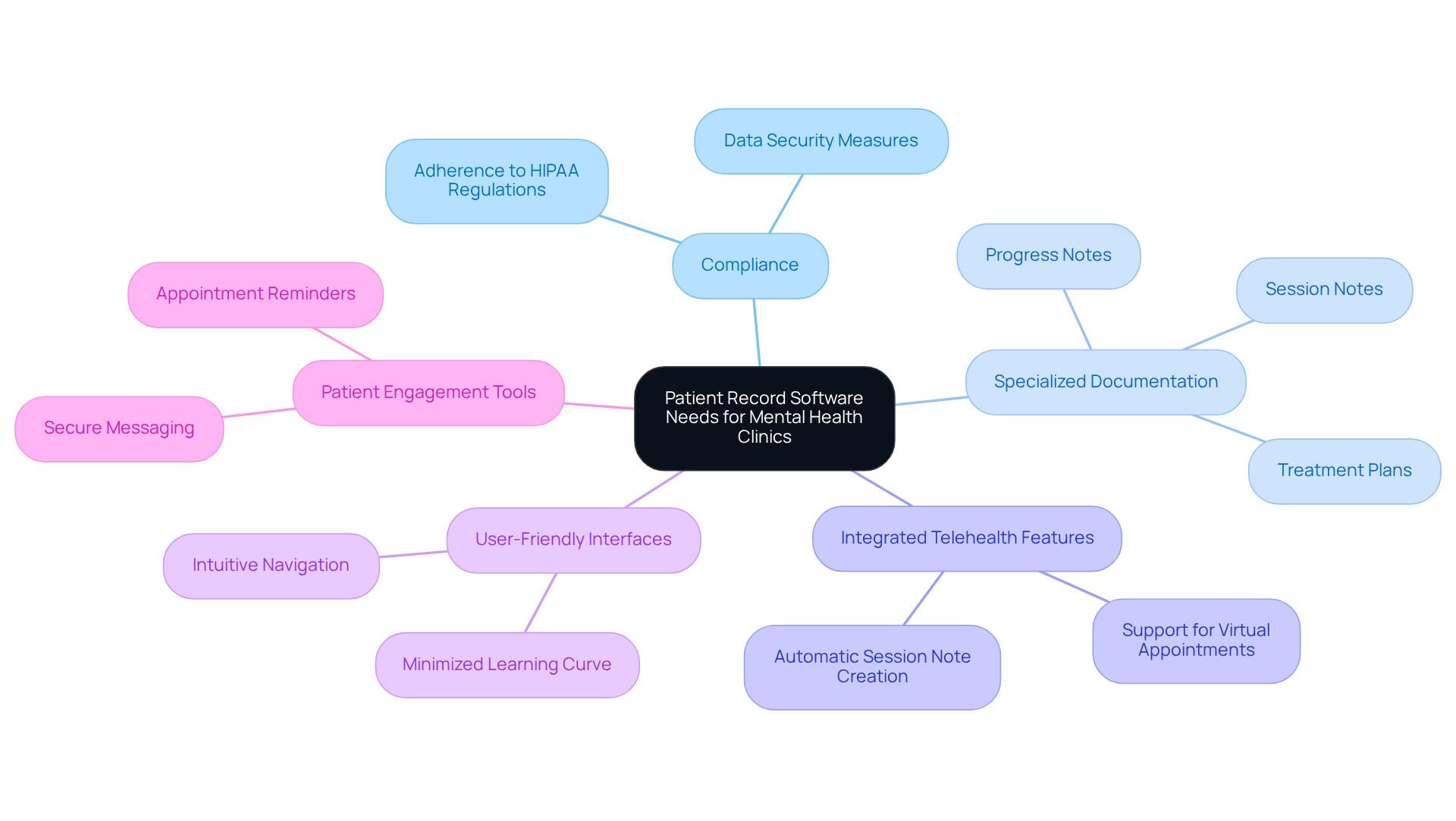
Mental wellness clinics face distinct challenges that necessitate specialized client record software to ensure effective operations and compliance. Key needs include:
- Compliance with Regulations: Mental health practices must adhere to strict regulations such as HIPAA, which governs patient privacy and data security. Software must ensure compliance to avoid legal repercussions.
- Specialized Documentation: Unlike general medical practices, mental wellness clinics require specific documentation features, such as progress notes, treatment plans, and session notes that reflect the nuances of mental care.
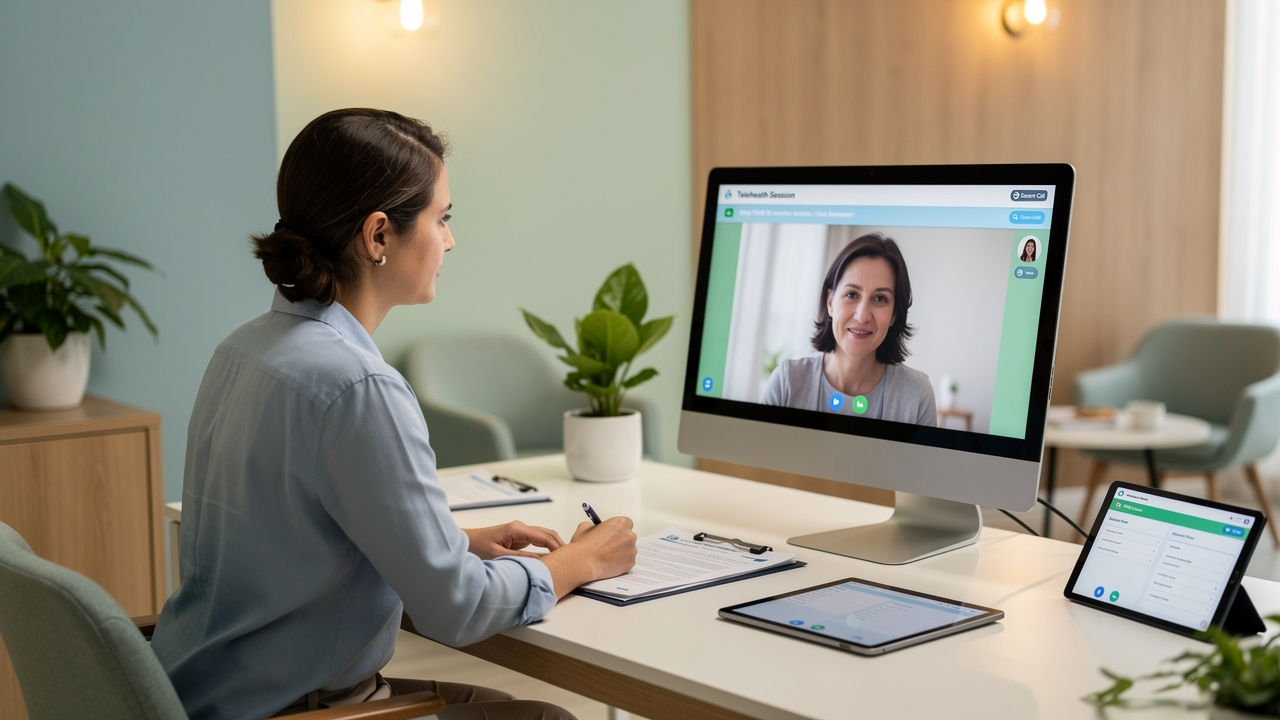
- Integrated Telehealth Features: With the growth of telehealth, technological solutions must support virtual appointments, allowing clinicians to provide care remotely while maintaining secure client records.
- User-Friendly Interfaces: Given the diverse backgrounds of mental health professionals, applications should be intuitive and easy to navigate, minimizing the learning curve and enhancing productivity.
- Patient Engagement Tools: Features that facilitate patient communication, such as secure messaging and appointment reminders, are essential for improving patient engagement and adherence to treatment plans.
To navigate these complexities, clinics should consider a 30-minute consultation with Healthcare Partners Consulting to identify the most suitable software solutions. During this call, we will outline your current workflow and direct you toward the services that will create the most significant impact, addressing the unique challenges faced by mental wellness providers. Our consultation will address customized technological solutions that improve compliance, documentation, telehealth capabilities, and client engagement. Choosing the right software for patient records is not just a matter of convenience; it is essential for maintaining compliance and enhancing the quality of care provided to clients.
Evaluating Key Features of Leading Patient Record Software
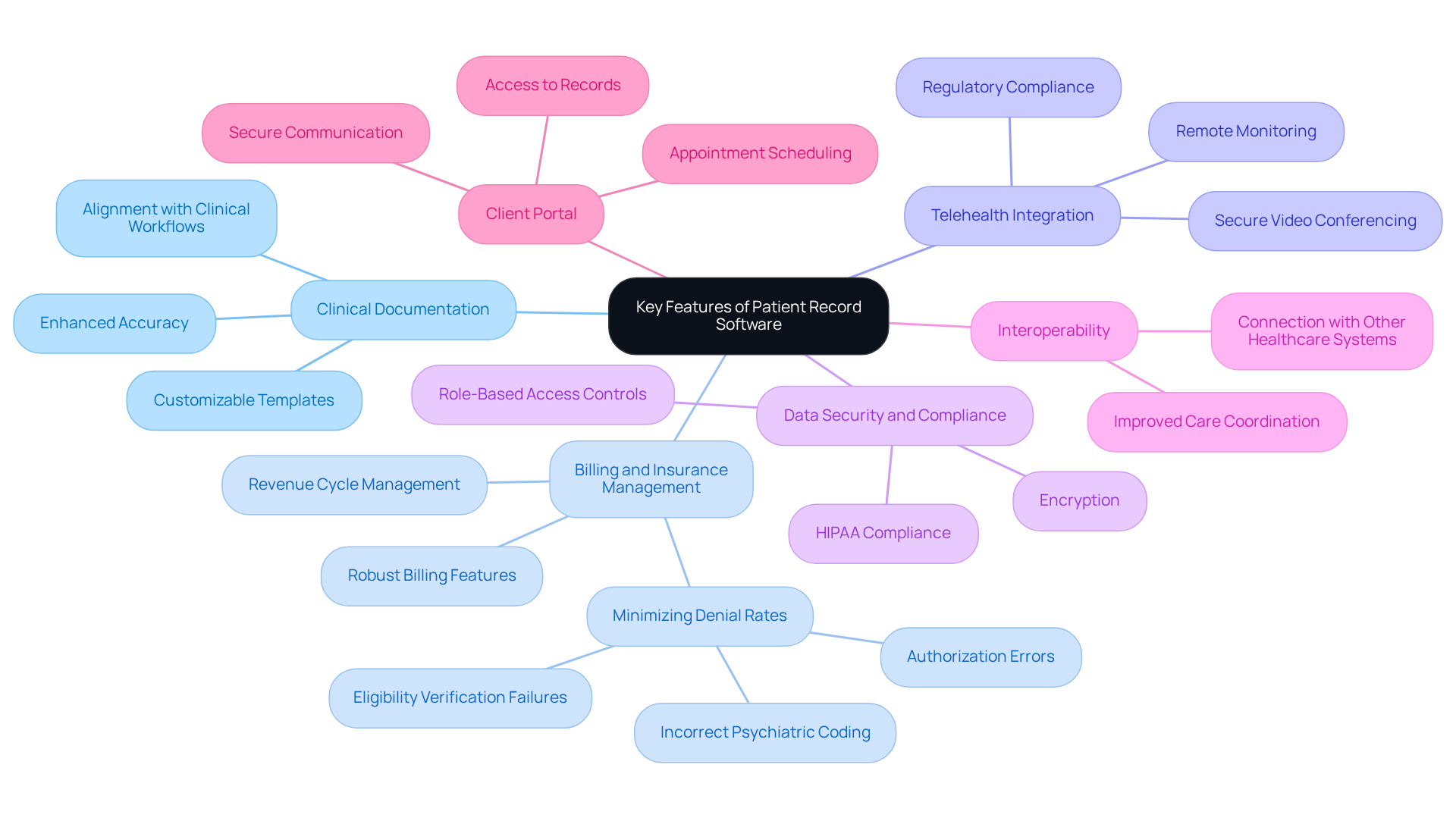
Choosing the right software for patient records is critical for mental health clinics, as inadequate solutions can hinder operational efficiency and client care. Several critical features warrant careful consideration:
- Clinical Documentation: Opt for software that provides customizable templates for progress notes, treatment plans, and assessments specifically designed for mental health practices. This ensures that documentation aligns with clinical workflows and enhances accuracy.
- Billing and Insurance Management: Robust billing features are essential for managing mental health-specific coding and insurance claims using software for patient records. With denial rates for behavioral health claims ranging from 15 to 25 percent, effective billing solutions can significantly improve revenue cycle management by minimizing errors related to authorization and eligibility verification.
- Telehealth Integration: The software should support telehealth functionalities, including secure video conferencing and remote individual monitoring, to facilitate virtual care. This is increasingly important as telehealth services continue to expand, especially in light of recent regulatory changes.
- Data Security and Compliance: Strong security measures, such as encryption and role-based access controls, are vital for protecting sensitive individual information and ensuring compliance with HIPAA regulations. This is particularly crucial given the sensitive nature of mental health records.
- Interoperability: The capability to connect with other healthcare systems, such as laboratories and pharmacies, improves care coordination and simplifies workflows, enabling a more thorough approach to individual care.
- Client Portal: A user-friendly client portal allows individuals to access their records, schedule appointments, and communicate securely with providers. This feature not only boosts engagement but also enhances overall satisfaction with the care experience.
Failing to implement these essential features may compromise both client outcomes and the clinic’s operational success.
Comparing Advantages and Disadvantages of Each Software Solution
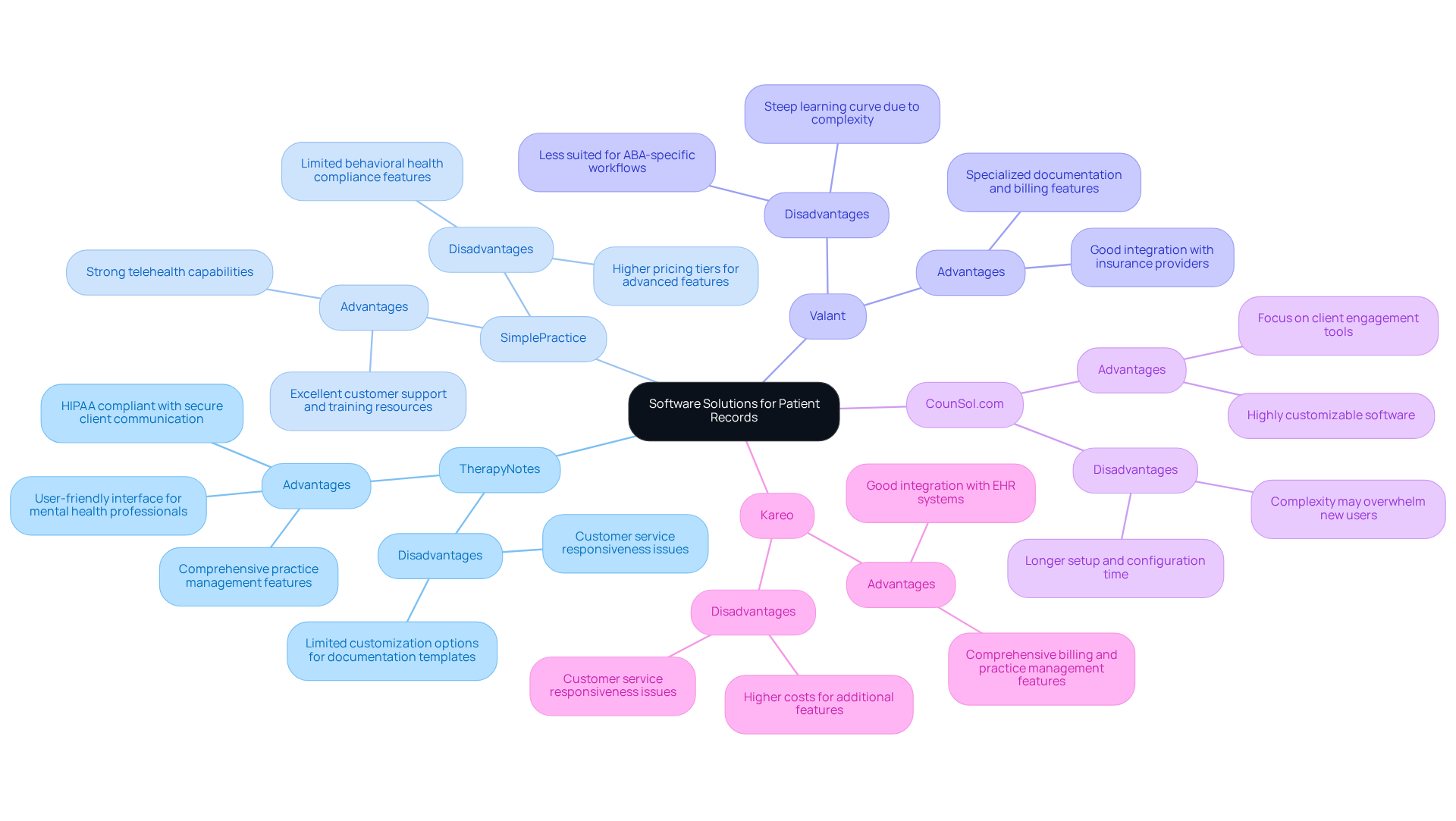
Selecting the right software for patient records is crucial for mental health clinics, as each option presents unique advantages and challenges. Here’s a comparison of some leading patient record software solutions for mental health clinics, focusing on their advantages and disadvantages:
-
TherapyNotes
- Advantages: Offers comprehensive practice management features, including scheduling, billing, and telehealth integration. Its user-friendly interface is specifically tailored for mental health professionals.
- Disadvantages: Limited customization options for documentation templates compared to some competitors.
-
SimplePractice
- Advantages: Strong telehealth capabilities and a robust patient portal enhance patient engagement. The platform is known for excellent customer support and training resources.
- Disadvantages: Higher pricing tiers for advanced features may pose a barrier for smaller practices.
-
Valant
- Advantages: Specifically designed for behavioral health, it offers specialized documentation and billing features, along with good integration with insurance providers.
- Disadvantages: Some users report a steep learning curve due to the complexity of its features.
-
CounSol.com
- Advantages: Highly customizable software with a focus on client engagement tools, offering a variety of features for billing and documentation.
- Disadvantages: May require more time for setup and configuration compared to more straightforward solutions.
-
Kareo
- Advantages: Comprehensive billing and practice management features tailored for small practices, with good integration with EHR systems.
- Disadvantages: Some users have noted issues with customer service responsiveness.
Ultimately, the choice of software for patient records can significantly impact the efficiency and effectiveness of a clinic’s operations, making careful consideration essential.
Determining Software Suitability for Various Mental Health Practices
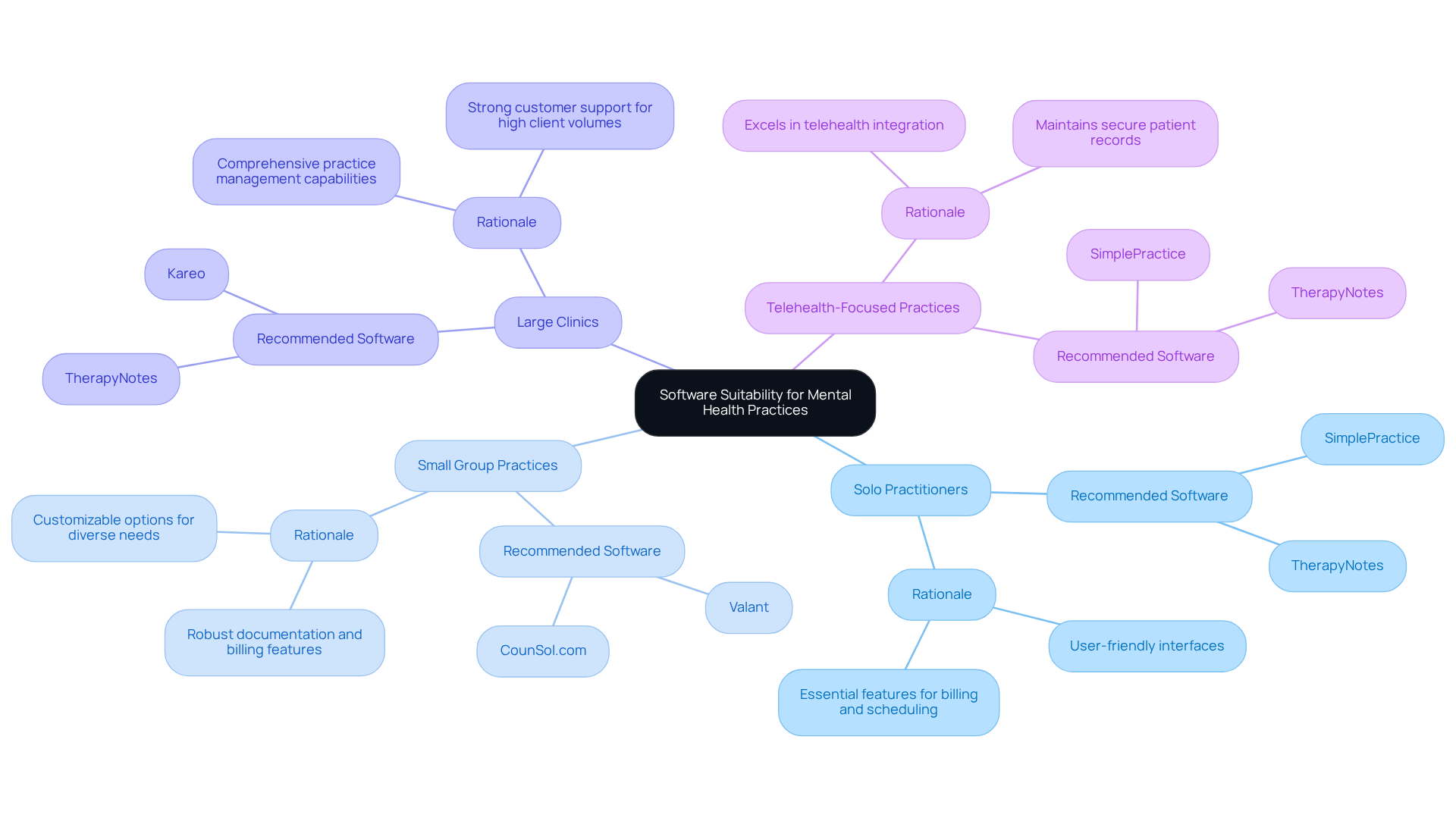
Choosing the appropriate software for patient records is essential for optimizing the operations of mental health facilities, as each type has distinct needs. Here’s a breakdown of suitable software options based on practice characteristics:
-
Solo Practitioners:
- Recommended Software: SimplePractice or TherapyNotes
- Rationale: These solutions offer user-friendly interfaces and essential features for billing and scheduling, making them ideal for solo practitioners who face challenges in efficiently managing their practice. They align with Healthcare Partners Consulting’s focus on operational support, ensuring clean claims and fast follow-up.
-
Small Group Practices:
- Recommended Software: Valant or CounSol.com
- Rationale: These platforms provide robust documentation and billing features, along with customizable options that cater to the diverse needs of small teams. They support collaborative workflows and enhance involvement, which is crucial for small group settings. Incorporating management services from Healthcare Partners Consulting can further streamline operations and enhance outcomes for individuals receiving care.
-
Large Clinics:
- Recommended Software: Kareo or TherapyNotes
- Rationale: With comprehensive practice management capabilities and strong customer support, these solutions can handle the complexities of larger operations, including multiple providers and extensive patient records. They are especially advantageous for clinics handling high client volumes, particularly when combined with clear reporting to enhance operational efficiency, a key service provided by Healthcare Partners Consulting.
-
Telehealth-Focused Practices:
- Recommended Software: SimplePractice or TherapyNotes
- Rationale: Both platforms excel in telehealth integration, allowing practices to provide remote care while maintaining secure patient records. As mentioned by the MedSoftwares Team, integrated telehealth is crucial for behavioral wellness services, making these solutions essential in today’s healthcare environment.
Ultimately, the right software not only streamlines operations but also significantly enhances the quality of care provided to patients.
Conclusion
The selection of patient record software is a critical factor influencing the operational efficiency and quality of care in mental health clinics. The appropriate software enhances regulatory compliance while addressing the specific documentation needs of mental health practices, integrates telehealth capabilities, and fosters patient engagement. Each clinic’s specific requirements must be carefully evaluated to ensure that the chosen software aligns with its operational goals and enhances overall service delivery.
Throughout the article, key features such as:
- clinical documentation customization
- billing and insurance management
- data security
- interoperability
were highlighted as essential considerations in the software selection process. The comparison of leading software solutions, including TherapyNotes, SimplePractice, Valant, CounSol.com, and Kareo, provided insights into their respective advantages and disadvantages, helping clinics make informed decisions based on their unique practice characteristics. Additionally, the breakdown of suitable software for:
- solo practitioners
- small group practices
- large clinics
- telehealth-focused setups
underscores the necessity of tailoring solutions to fit specific operational needs.
Choosing the right software can lead to improved patient care and operational efficiency. Clinics are encouraged to engage in thorough evaluations of their options and consider consulting with experts to identify solutions that not only meet regulatory requirements but also improve the patient experience. By prioritizing the right technology, mental health providers can ensure they are well-equipped to deliver high-quality care and support to their clients.
Frequently Asked Questions
What are the main challenges faced by mental wellness clinics regarding patient record software?
Mental wellness clinics face challenges such as compliance with regulations, the need for specialized documentation, integration of telehealth features, user-friendly interfaces, and patient engagement tools.
Why is compliance with regulations important for mental health practices?
Compliance with regulations, such as HIPAA, is crucial for mental health practices to ensure patient privacy and data security and to avoid legal repercussions.
What type of documentation features do mental wellness clinics require?
Mental wellness clinics require specialized documentation features including progress notes, treatment plans, and session notes that reflect the nuances of mental care.
How has the growth of telehealth impacted the needs of mental health clinics?
The growth of telehealth has increased the need for software that supports virtual appointments, allowing clinicians to provide care remotely while maintaining secure client records.
What is meant by user-friendly interfaces in patient record software?
User-friendly interfaces refer to applications that are intuitive and easy to navigate, minimizing the learning curve for mental health professionals with diverse backgrounds and enhancing productivity.
What tools can improve patient engagement in mental health clinics?
Tools that facilitate patient communication, such as secure messaging and appointment reminders, are essential for improving patient engagement and adherence to treatment plans.
How can clinics find suitable software solutions for their needs?
Clinics can consider a 30-minute consultation with Healthcare Partners Consulting to identify the most suitable software solutions, addressing their unique challenges and improving compliance, documentation, telehealth capabilities, and client engagement.
Why is choosing the right software for patient records critical for mental wellness clinics?
Choosing the right software is essential for maintaining compliance and enhancing the quality of care provided to clients, making it more than just a matter of convenience.