
Introduction
As healthcare payment models evolve, the choice between Fee-for-Service (FFS) and Capitation presents critical implications for providers. Each model offers distinct advantages and challenges that can affect the operational efficiency and patient care outcomes of mental health practices. As healthcare providers strive to empower their operations and focus on delivering quality care, it is crucial for providers to understand the nuances of these payment structures.
Determining which model aligns better with clinic goals – FFS’s flexibility or Capitation’s efficiency – is vital. This article explores both approaches, providing insights to help mental health organizations make informed decisions regarding financial sustainability and patient care strategies.
Define Fee-for-Service and Capitation Models
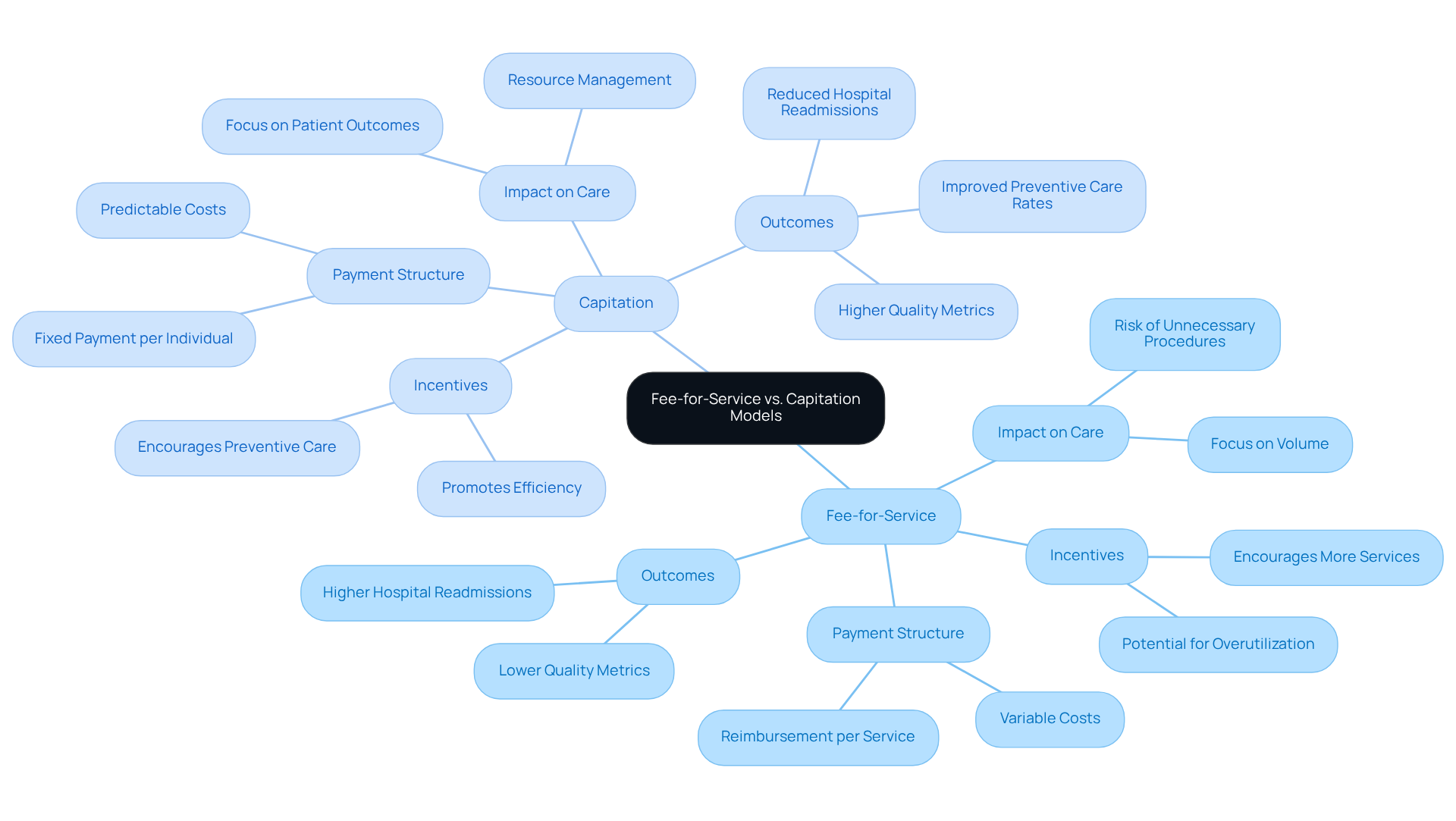
The discussion of fee for service versus capitation reveals that the traditional Fee-for-Service (FFS) approach often incentivizes unnecessary service delivery, which sharply contrasts with the Capitation model that promotes efficiency and preventive care. In the context of fee for service versus capitation, healthcare providers receive reimbursement for each distinct task performed for individuals. This model incentivizes providers to deliver more services, potentially leading to unnecessary care. Conversely, the approach of fee for service versus capitation entails a fixed payment per individual, typically on a monthly basis, regardless of the number of services rendered. This model shifts the financial risk to the provider, encouraging a focus on preventive care and efficient resource management.
Understanding the differences between fee for service versus capitation models is crucial for evaluating their impact on mental health service operations. Research indicates that practices employing capitation can achieve higher quality metrics, emphasizing preventive care, which can lead to improved outcomes for individuals and reduced overall healthcare costs. For instance, individuals under global capitation exhibited higher controlled blood sugar levels at 89% and received more eye exams at 84%, compared to lower rates under FFS. Furthermore, capitation has been associated with a 20-25% decrease in hospital readmissions, underscoring its potential to enhance patient outcomes and lower overall healthcare expenses. Dr. Richard Migliori, chief medical officer of UnitedHealth Group, highlights that global capitation benefits patients by prioritizing preventive care, essential for maintaining health and minimizing hospital visits.
For improved operational efficiency and billing accuracy, consider a consultation with Healthcare Partners Consulting & Billing, LLC (HPC). They offer tailored administrative support and a quick quiz to assess your mental health organization’s profitability, providing personalized recommendations to enhance your operational success. Schedule a meeting today to explore how HPC can assist in streamlining your operations.
Examine Operational Mechanics of Each Model
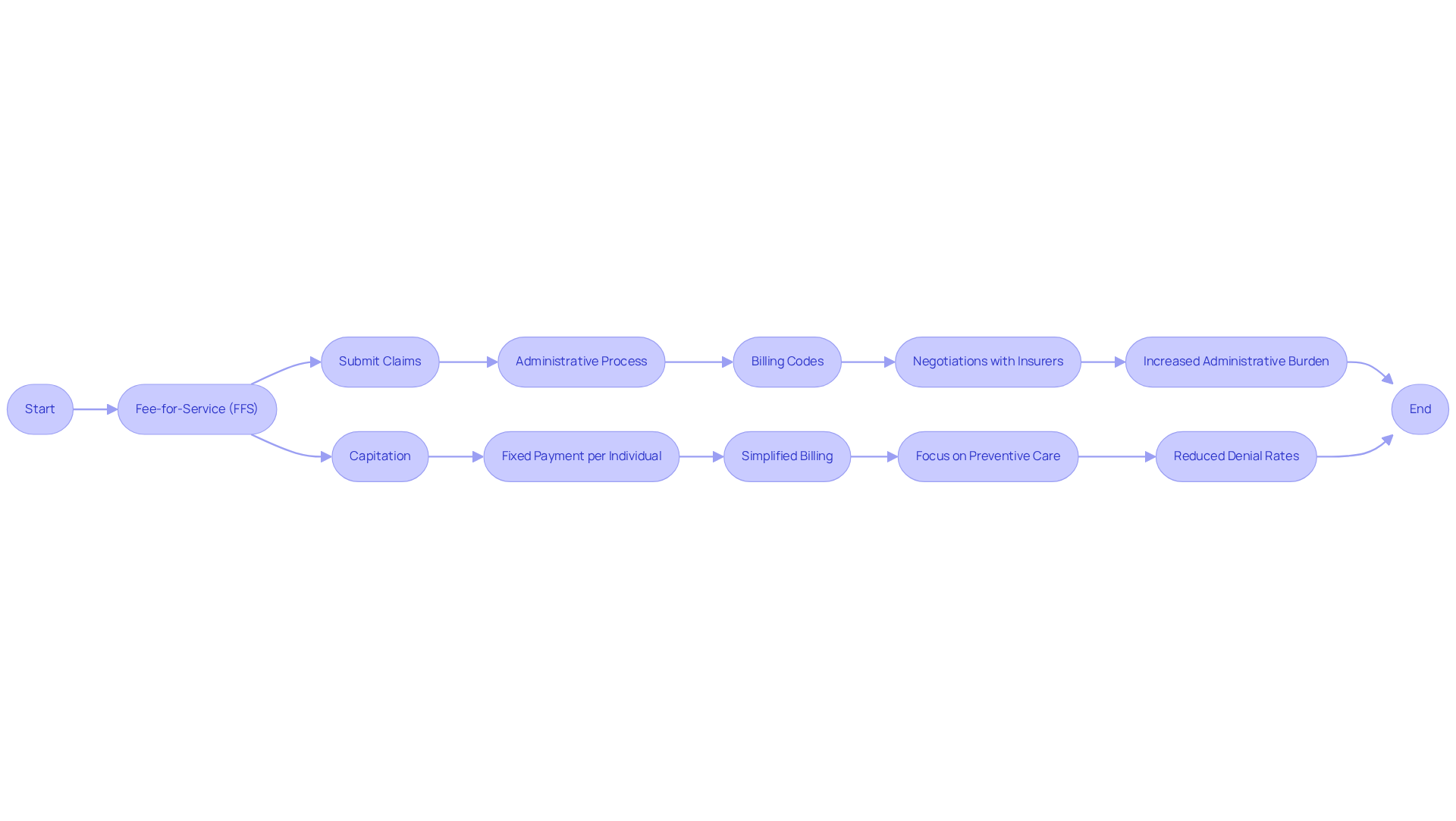
The complexities of the Fee-for-Service (FFS) framework present significant challenges for healthcare providers, particularly in administrative efficiency. In this model, providers submit claims for each rendered task, resulting in a complicated administrative process that requires precise billing codes and negotiations with insurers. This framework significantly increases the administrative burden on healthcare facilities, as comprehensive documentation is necessary to validate services. Administrative demands of the FFS model significantly reduce the time healthcare professionals can dedicate to patient care, with many organizations reporting that up to 30% of their operational time is consumed by billing-related activities.
In contrast, the Capitation approach simplifies billing by offering a fixed amount for each enrolled individual, minimizing the necessity for extensive claims processing. This framework encourages a focus on preventive care and patient outcomes, as revenue is not directly linked to the quantity of services delivered. Studies indicate that entities operating under capitation can achieve a 20-30% reduction in denial rates and experience faster reimbursement timelines of 15-25% within 30-90 days, enhancing overall revenue cycle performance.
Grasping these operational mechanics is crucial for mental health professionals to assess the administrative implications of each model. By acknowledging the variations in how these payment structures function, clinic owners can make informed choices that align with their operational objectives and care priorities. Additionally, Healthcare Partners Consulting & Billing, LLC (HPC) offers tailored administrative support services aimed at enhancing billing accuracy and efficiency, assisting organizations in navigating these complexities. Their rapid evaluation tool enables mental health organizations to identify their profitability score and receive tailored recommendations, ensuring they enhance their operational efficiency and concentrate on delivering quality care.
Compare Advantages and Disadvantages of Each Model
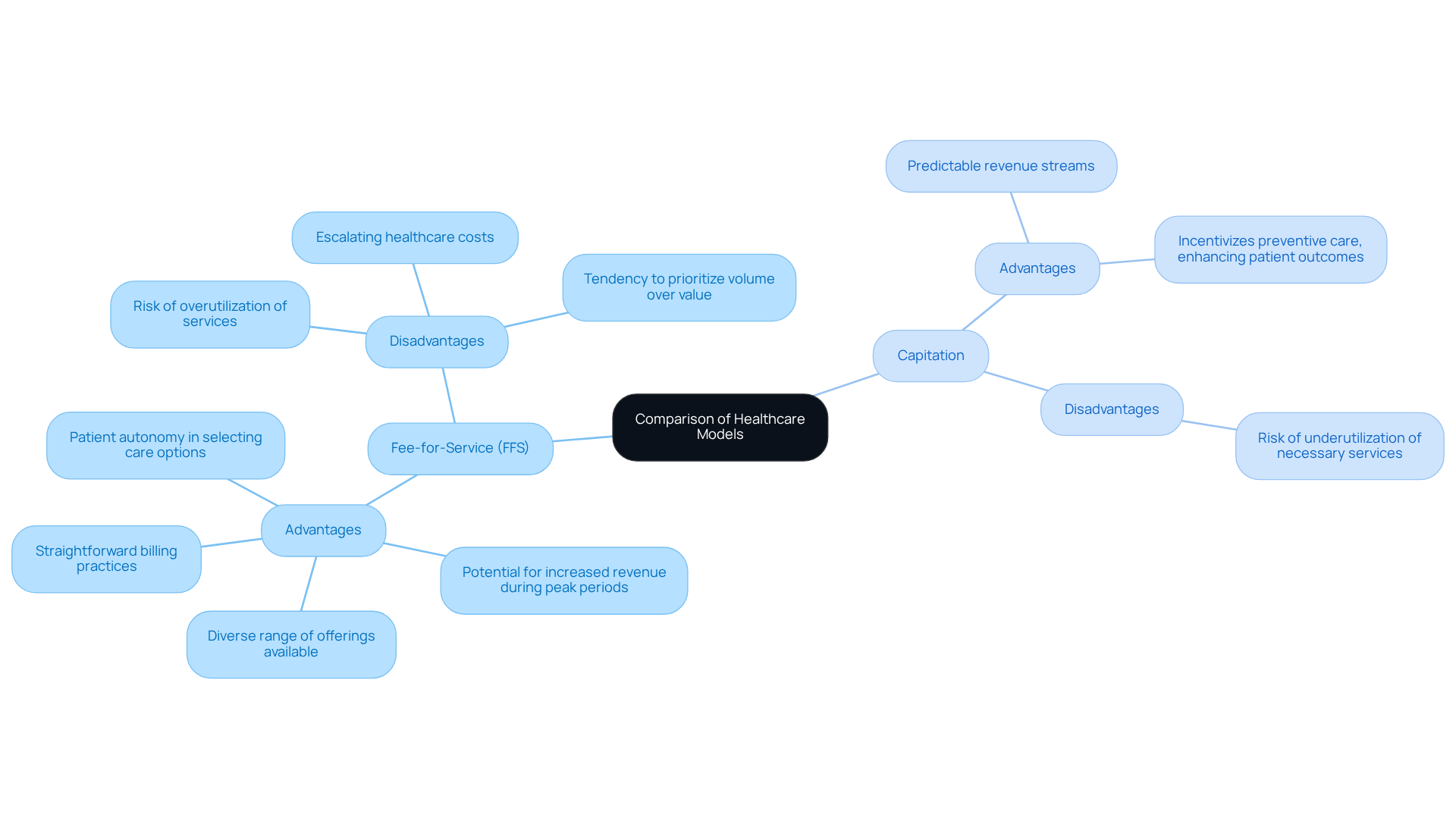
The choice between fee for service versus capitation models has critical implications for healthcare financial management. The FFS approach offers several advantages, including straightforward billing practices and the potential for increased revenue during peak periods. However, this flexibility can lead to overutilization of resources, driving up healthcare costs and shifting the focus from value to volume. This model allows healthcare providers to offer various options, giving patients the power to select their preferred care.
Conversely, the Capitation model fosters predictable revenue streams and incentivizes preventive care, which can enhance patient outcomes. Yet, this model poses the risk of underutilization, as providers may limit essential services to safeguard their profit margins.
Comprehending these benefits and drawbacks is essential for mental health organizations aiming to align their operational strategies with financial goals, particularly in the context of fee for service versus capitation.
Advantages of Fee-for-Service (FFS):
- Straightforward billing practices.
- Potential for increased revenue during peak periods.
- Diverse range of offerings available.
- Patient autonomy in selecting care options.
Disadvantages of Fee-for-Service (FFS):
- Risk of overutilization of services.
- Escalating healthcare costs.
- Tendency to prioritize volume over value.
Advantages of Capitation:
- Predictable revenue streams.
- Incentivizes preventive care, enhancing patient outcomes.
Disadvantages of Capitation:
- Risk of underutilization of necessary services to maintain profitability.
Significantly, approaches utilizing FFS can experience denial reduction rates of 20-30% and quicker reimbursement timelines of 15-25% within 30-90 days, highlighting the model’s potential for enhanced revenue cycle performance. Additionally, effective management of client statements is essential in addressing underpayments, unprocessed claims, and aging claims, which can significantly impact a practice’s financial health.
Healthcare Partners Consulting & Billing, LLC (HPC), a veteran-owned organization with 39 years of experience, specializes in optimizing these administrative and billing processes. HPC empowers mental health clinics to focus more on patient care while ensuring compliance and efficiency in their billing processes. Understanding the differences between fee for service versus capitation is crucial for mental health organizations to navigate the complexities of financial sustainability and patient care effectively.
Assess Suitability for Different Mental Health Practices
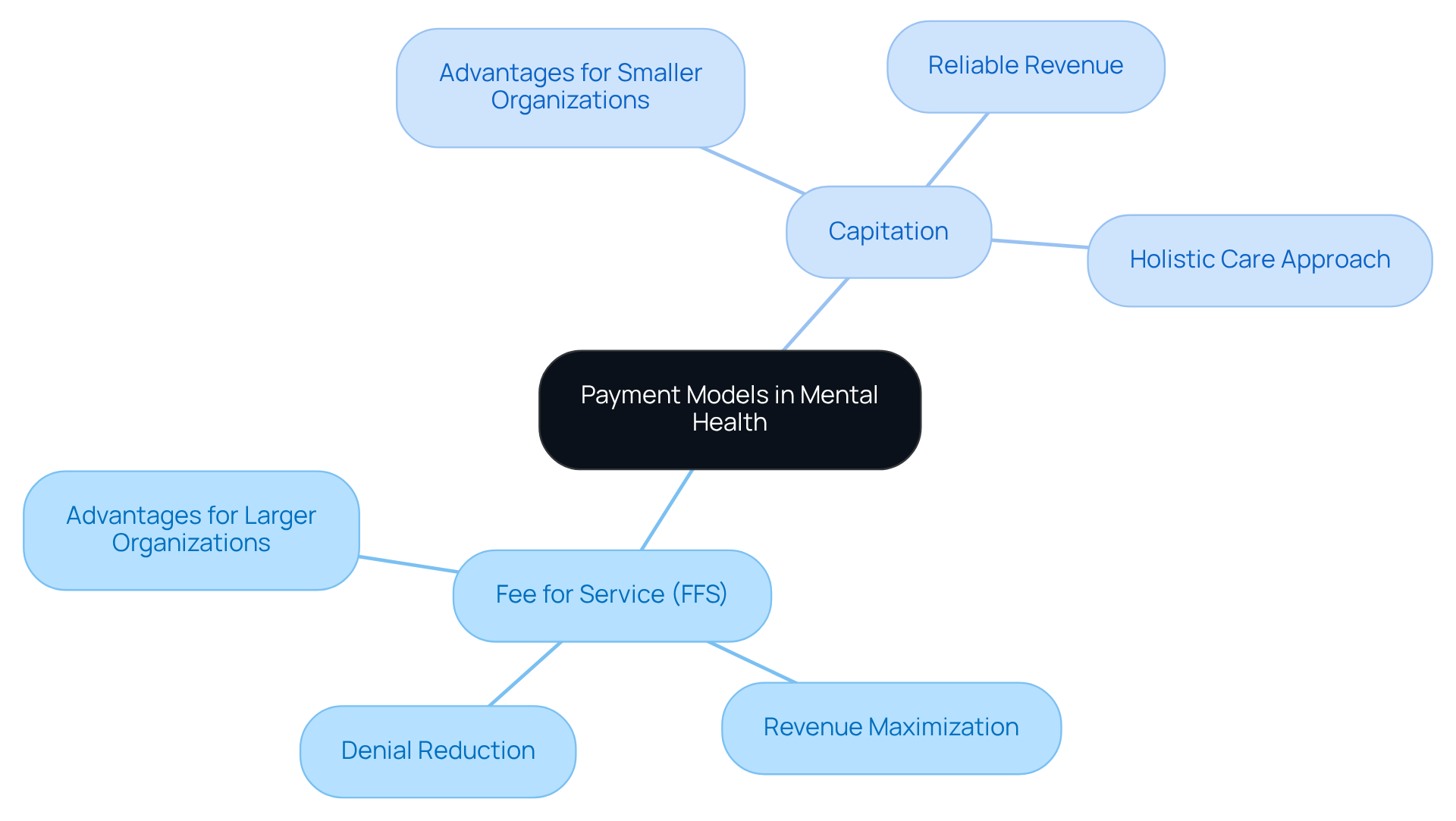
The choice of payment model, specifically fee for service versus capitation, in mental health organizations significantly influences operational efficiency and patient care outcomes. The approach of fee for service versus capitation is frequently more appropriate for larger mental health organizations that offer a wide range of options and possess the administrative skills to manage complex billing procedures.
Larger organizations can leverage the flexibility of FFS to maximize revenue by increasing the volume of services offered. In contrast, smaller healthcare entities or those focusing on preventive care may find the fee for service versus capitation model more advantageous. Capitation provides reliable revenue sources and encourages a holistic approach to care, which is especially beneficial for organizations serving populations with chronic conditions. This approach promotes care coordination and preventive strategies, aligning with the needs of individuals requiring ongoing support.
Ultimately, the selection of a payment approach, specifically fee for service versus capitation, must align with the operational goals and patient demographics of each mental health organization. For instance, case studies indicate that larger organizations utilizing FFS can experience a reduction in denials by 20-30% and achieve faster reimbursements within 30-90 days, enhancing their revenue cycle performance. Selecting the right payment model can ultimately determine the success and sustainability of mental health services in diverse populations.
Conclusion
The choice between fee-for-service and capitation models represents a pivotal moment for healthcare providers, influencing both financial strategy and patient care quality. Each model offers distinct advantages and challenges, which can profoundly affect both operational efficiency and patient outcomes. By understanding these differences, mental health organizations can make informed choices that empower them to focus on delivering quality care while managing their financial sustainability.
Key insights reveal that the Fee-for-Service model, while offering flexibility and potential revenue growth, often complicates administrative processes and shifts focus away from quality care. In contrast, the Capitation model promotes preventive care and efficiency, encouraging a proactive approach to patient health, leading to improved outcomes but also carries the risk of underutilization. The choice between these models should be guided by the specific needs and operational goals of the practice, particularly in the context of behavioral and mental health services.
Ultimately, the decision regarding which payment model to adopt is not merely a financial one; it is a strategic choice that can shape the future of patient care. HPC is here to help organizations navigate these complexities with ease, ensuring compliance and operational efficiency. By prioritizing the empowerment of healthcare providers and reducing administrative burdens, HPC enables practices to concentrate on what truly matters: the health and well-being of their patients. Choosing the right payment model is a strategic decision that will ultimately define the quality of care provided to patients.
Frequently Asked Questions
What is the Fee-for-Service (FFS) model in healthcare?
The Fee-for-Service (FFS) model is a traditional approach where healthcare providers receive reimbursement for each distinct task performed for individuals. This model incentivizes providers to deliver more services, which can lead to unnecessary care.
How does the Capitation model differ from Fee-for-Service?
The Capitation model involves a fixed payment per individual, typically on a monthly basis, regardless of the number of services rendered. This model shifts the financial risk to the provider, encouraging a focus on preventive care and efficient resource management.
What are the benefits of the Capitation model?
Research indicates that practices employing capitation can achieve higher quality metrics, emphasizing preventive care, which can lead to improved outcomes for individuals and reduced overall healthcare costs. For example, individuals under global capitation exhibited higher controlled blood sugar levels and received more eye exams compared to those under FFS.
How does Capitation impact hospital readmissions?
Capitation has been associated with a 20-25% decrease in hospital readmissions, highlighting its potential to enhance patient outcomes and lower overall healthcare expenses.
What does Dr. Richard Migliori say about the benefits of Capitation?
Dr. Richard Migliori, chief medical officer of UnitedHealth Group, emphasizes that global capitation benefits patients by prioritizing preventive care, which is essential for maintaining health and minimizing hospital visits.
How can healthcare organizations improve operational efficiency and billing accuracy?
Healthcare organizations can consider consulting with Healthcare Partners Consulting & Billing, LLC (HPC), which offers tailored administrative support and assessments to enhance operational success.