

Introduction
Healthcare providers often struggle to keep pace with the complexities of ambulance billing services, particularly due to evolving regulations and payer requirements. This article explores best practices that ensure compliance and enhance operational efficiency, enabling providers to concentrate on what truly matters: patient care.
As the landscape of ambulance billing shifts, providers can effectively manage denials and leverage technology to streamline their processes through strategic approaches.
Mastering these strategies not only mitigates billing challenges but also allows providers to prioritize patient care more effectively.
Understand the Ambulance Billing Landscape
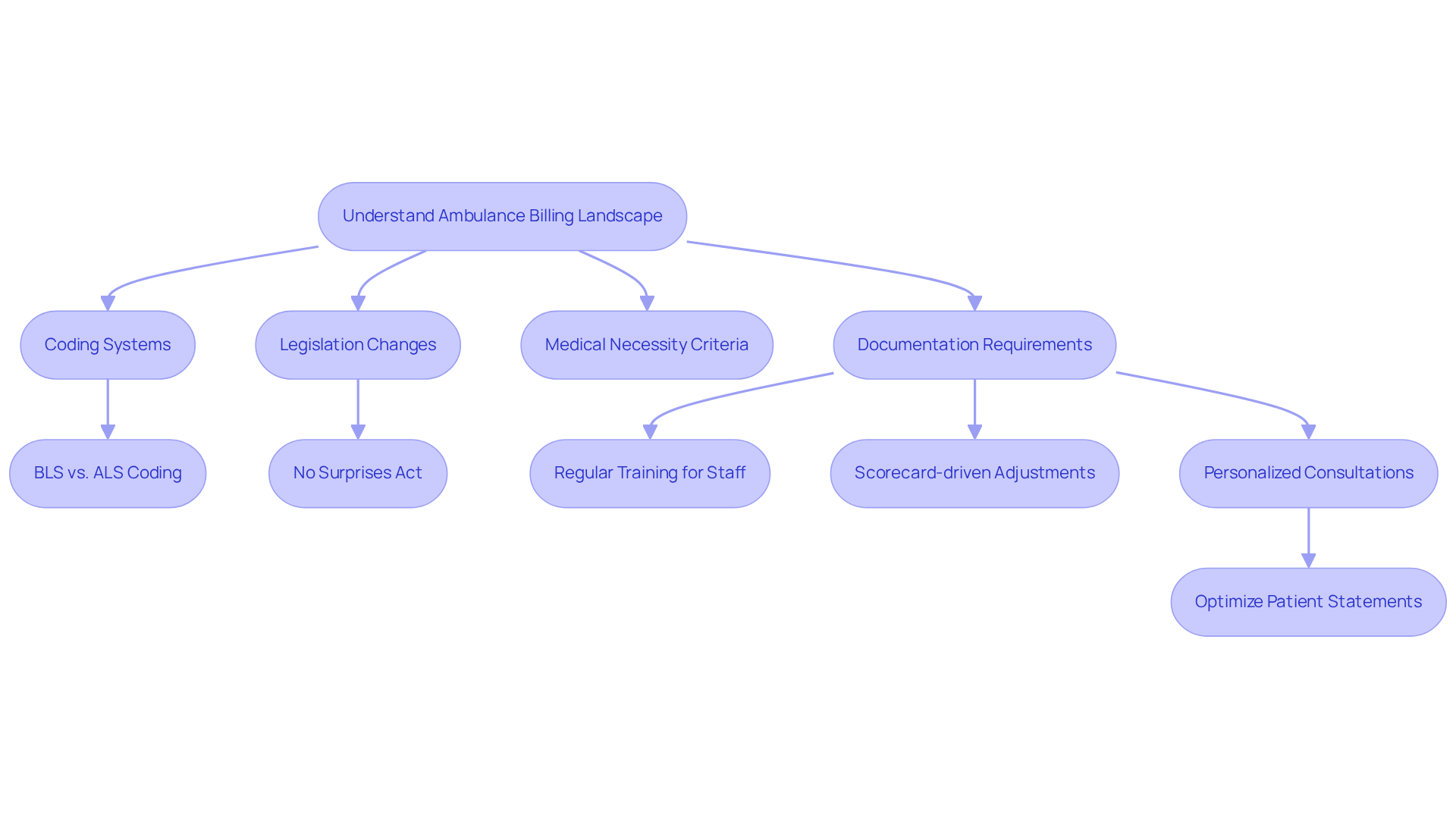
Navigating the intricate regulations and payer requirements in ambulance billing services presents significant challenges for providers. Providers need to understand the coding systems, documentation requirements, and medical necessity criteria set by Medicare and other insurers to effectively manage ambulance billing services. For instance, comprehending the distinction between Basic Life Support (BLS) and Advanced Life Support (ALS) coding is crucial for precise claims submission.
Furthermore, remaining informed about changes in legislation, such as the No Surprises Act, is essential to prevent unforeseen payment issues. As of early 2026, twenty-two states enacted protections against unexpected charges for ground ambulance services, including safeguards for nonemergency transportation in 13 states, reflecting a growing trend towards consumer protection in this area.
Regular training and education for billing staff can help ensure compliance in ambulance billing services and reduce the risk of denials. Effective practices can decrease denial rates by 20-30%. By implementing scorecard-driven adjustments linked to the accuracy of submissions, denial rates, and days in accounts receivable, providers can further enhance operational rigor and achieve quicker reimbursements, typically within 30-90 days, with an anticipated improvement of 15-25%.
To optimize patient statements and claims management, including addressing underpayments and aging claims, providers can benefit from personalized consultations offered by Healthcare Partners Consulting & Billing, LLC (HPC). By mapping current workflows and identifying the services that will move the needle fastest, HPC empowers healthcare providers to focus on patient care while ensuring compliance and operational efficiency. A thorough understanding of the reimbursement environment is essential for providers aiming to secure timely compensation and operational success.
Document Essential Information for Compliance
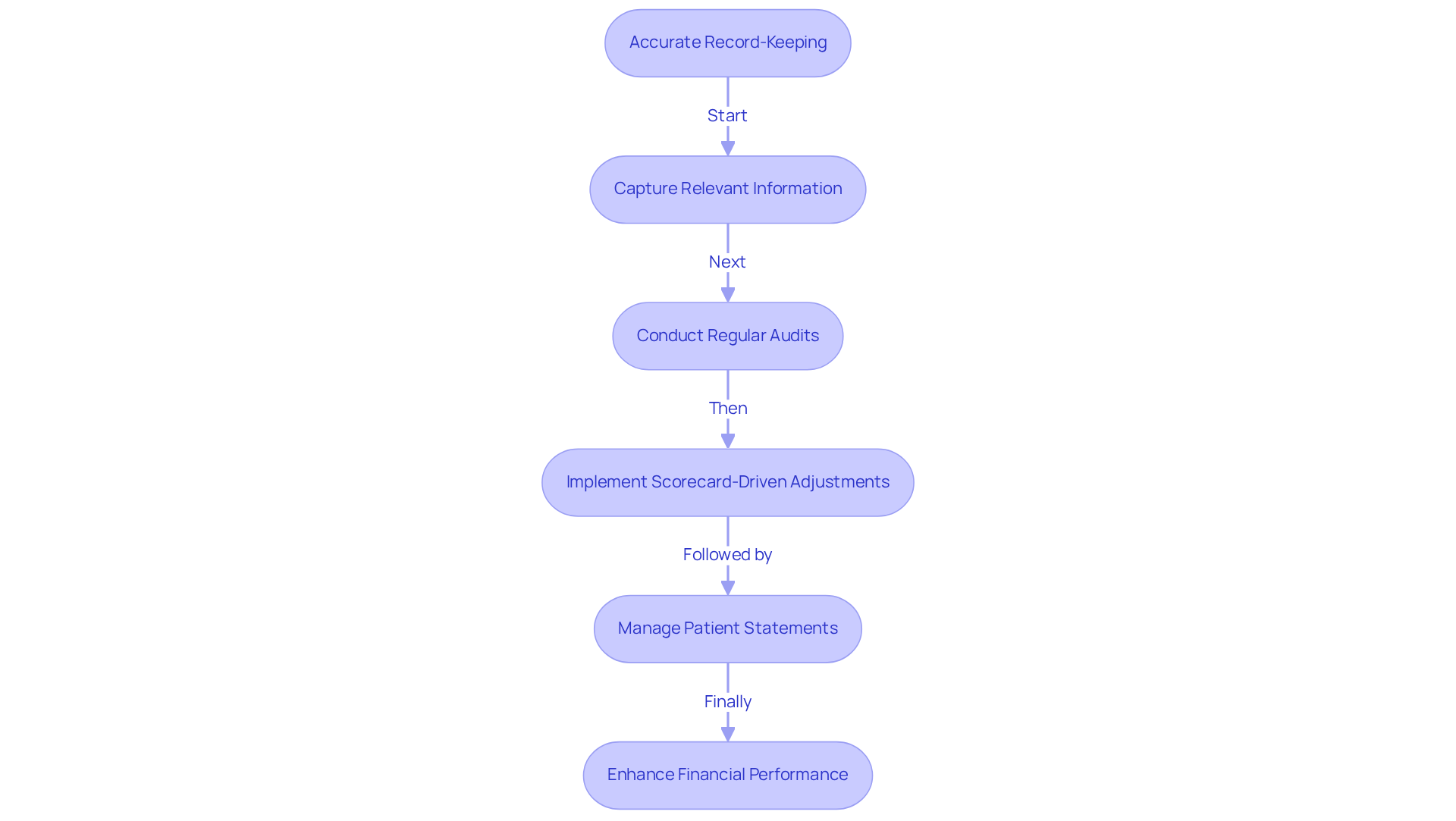
Accurate record-keeping is essential for compliance and reimbursement in ambulance billing services. Providers must meticulously capture all relevant information, including the patient’s condition during transport, the medical necessity for ambulance services, and specific transport details such as vital signs, treatments administered, and dispatch times. Standardized forms, such as the Physician Certification Statement (PCS), simplify this process.
Regular audits of record-keeping practices are crucial for identifying gaps and ensuring adherence to Medicare and other payer requirements. Inadequate record-keeping has led to significant financial losses, with improper payment rates reaching 13.2% in 2024. By emphasizing comprehensive records, ambulance billing services can significantly reduce denial rates by as much as 20-30% and enhance billing efficiency, resulting in quicker reimbursements within 30-90 days.
To effectively manage underpayments and aging claims, it is vital to implement scorecard-driven adjustments that track claims accuracy, denial rates, and days in accounts receivable. This proactive strategy not only reduces the risk of denials but also promotes a culture of ongoing enhancement in record-keeping practices. Regular QA inspections can help reinforce good record-keeping practices and offer training where improvements are needed.
Case studies have shown that agencies focusing on documentation quality see substantial improvements in their revenue cycle performance, reinforcing the importance of accurate and complete documentation in ambulance billing services compliance. Furthermore, efficient management of patient statements, including addressing underpayments and unprocessed requests, is essential for enhancing revenue cycle management, especially for mental health clinics. By integrating these practices, Healthcare Partners Consulting & Billing, LLC (HPC) empowers healthcare providers to concentrate on patient care while ensuring effective management of submissions. Ultimately, prioritizing documentation quality not only safeguards compliance but also enhances financial performance.
Implement Proactive Denial Management Strategies
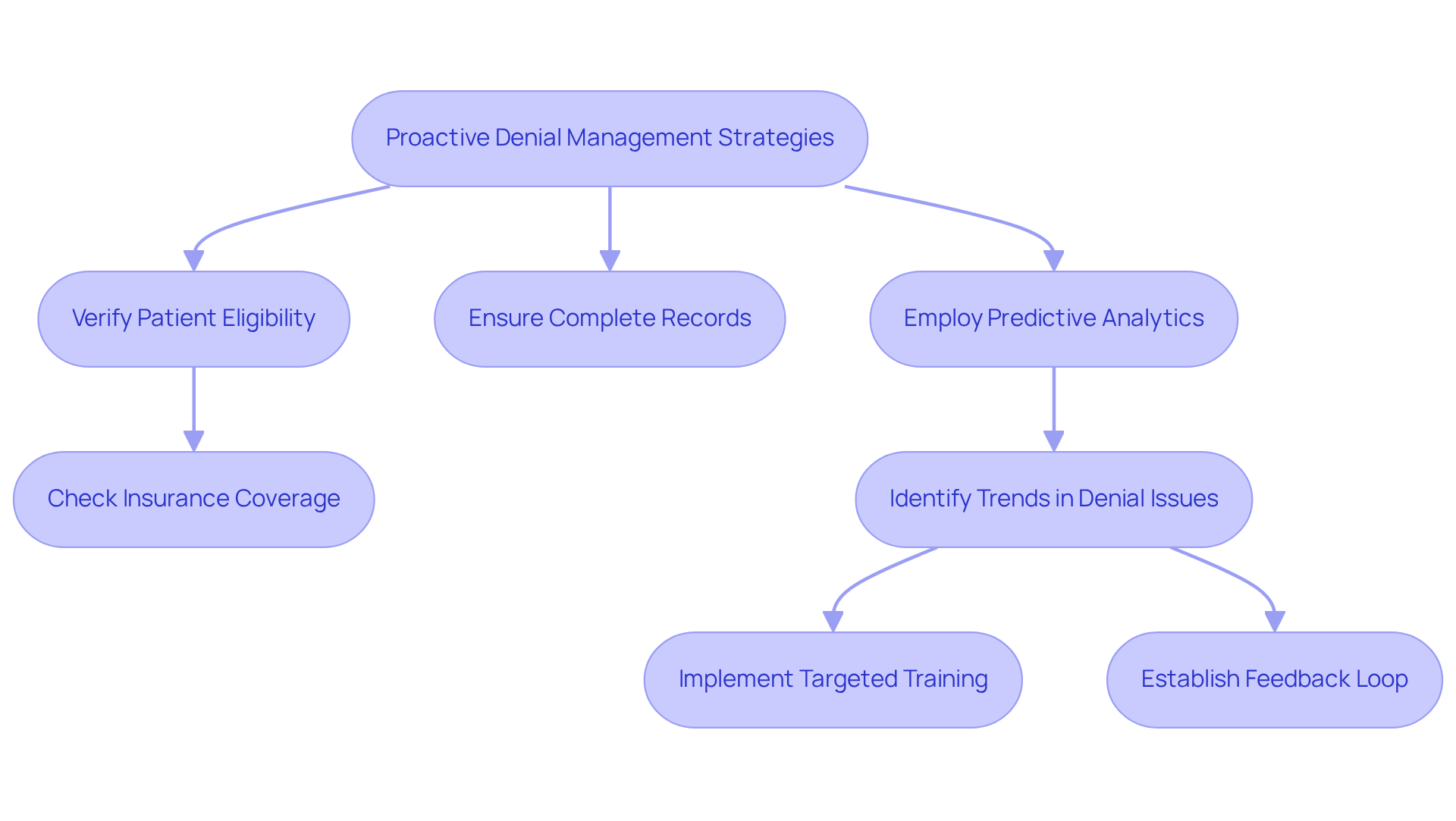
Denial rates present a significant challenge in ambulance billing services, necessitating a proactive approach to management. Proactive denial management is crucial, concentrating on identifying and addressing potential issues prior to submission of requests. Essential strategies include:
- Verifying patient eligibility and insurance coverage prior to transport
- Ensuring that all records are complete and precise
- Employing predictive analytics to identify trends in denial issues
For instance, if a specific payer frequently denies claims due to missing documentation, targeted training can be implemented to address this issue effectively. Establishing a feedback loop with billing staff to discuss common denial reasons fosters a culture of continuous improvement. Implementing these proactive measures can lead to a significant reduction in denial rates, with external sources suggesting a decrease of 20-30%. This approach can also facilitate reimbursement rates that improve by 15-25% within a 30-90 day timeframe, as supported by industry data. Moreover, efficient management of patient statements is vital in tackling underpayments, unprocessed requests, and overdue submissions, ensuring that healthcare providers can sustain financial stability while concentrating on patient care. Ultimately, a strategic focus on denial management and ambulance billing services can transform financial outcomes for healthcare providers, ensuring their viability while prioritizing patient care.
Utilize Technology to Enhance Billing Efficiency
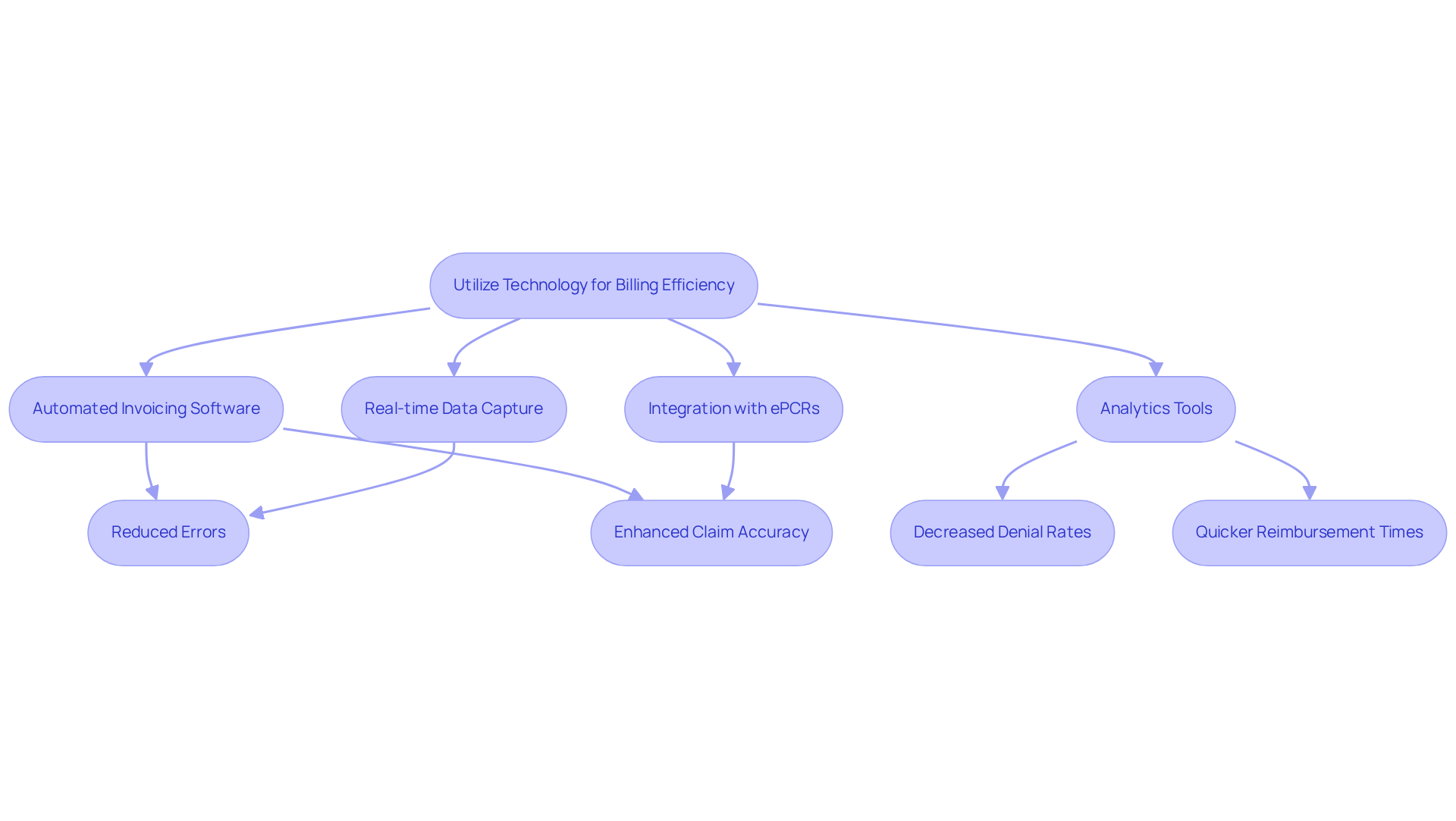
Despite the complexities of ambulance billing services, technology is paving the way for greater efficiency and accuracy. Healthcare Partners Consulting & Billing, LLC (HPC) offers advanced invoicing software that automates key payment processes. This includes streamlining data entry and request submissions. By integrating electronic patient care reports (ePCRs) with HPC’s financial systems, all necessary information is captured in real-time, which reduces errors and enhances claim accuracy. The ambulance invoicing software market is projected to grow significantly, with a compound annual growth rate (CAGR) of 12.8% from 2026 to 2033, driven by the increasing demand for efficient invoicing processes and regulatory compliance.
Analytics tools help providers identify financial performance trends, leading to data-driven decisions that improve operational efficiency. Regular training on new technologies and software updates is essential for maximizing these benefits. For instance, agencies that implement automated invoicing solutions from HPC report a decrease in denial rates by 20-30% and quicker reimbursement times of 15-25% within 30-90 days.
Case studies illustrate the effectiveness of these technologies. In 2023, North America captured 42.8% of the EMS invoicing software market, driven by high emergency response volumes and established reimbursement systems. Leading providers, including HPC, are integrating advanced software platforms with ePCRs and automated claims processing, significantly improving reimbursement accuracy and operational efficiency. By embracing technology, ambulance billing services can streamline their billing processes, alleviate administrative burdens, and focus more on delivering quality patient care. By alleviating administrative burdens, HPC enables healthcare providers to focus on what truly matters: delivering exceptional patient care.
Conclusion
The complexities of ambulance billing services present significant challenges that demand strategic solutions. By prioritizing accurate documentation and proactive denial management, along with integrating advanced technology, healthcare providers can significantly enhance their billing processes. This strategy ensures compliance while allowing providers to concentrate on delivering high-quality patient care, free from the burdens of administrative inefficiencies.
Key strategies discussed include:
- The importance of meticulous record-keeping, which can reduce denial rates by 20-30%.
- The implementation of proactive measures to address potential issues before they escalate.
- Leveraging technology, such as automated invoicing solutions from Healthcare Partners Consulting & Billing, LLC (HPC), to streamline operations and improve reimbursement timelines.
These practices collectively contribute to a more robust revenue cycle management system tailored specifically for ambulance services.
Ultimately, embracing these best practices is essential for healthcare providers aiming to thrive in a challenging billing landscape. Failure to implement these strategies may result in increased denial rates and financial instability. Engaging with expert partners like HPC can further empower providers to navigate these complexities, ensuring that they remain compliant while prioritizing what truly matters: the health and well-being of their patients.
For more information on how to optimize ambulance billing services, contact HPC at info@hpcbilling.com or call 888-517-4992.
Frequently Asked Questions
What are the main challenges in ambulance billing services?
The main challenges include navigating intricate regulations and payer requirements, understanding coding systems, documentation requirements, and medical necessity criteria set by Medicare and other insurers.
Why is it important to understand the difference between Basic Life Support (BLS) and Advanced Life Support (ALS) coding?
Understanding the distinction between BLS and ALS coding is crucial for precise claims submission, which directly impacts the success of reimbursement.
What recent legislative changes affect ambulance billing?
The No Surprises Act has introduced protections against unexpected charges for ground ambulance services in twenty-two states, including safeguards for nonemergency transportation in thirteen states.
How can regular training and education for billing staff impact ambulance billing services?
Regular training and education can ensure compliance and reduce the risk of denials, potentially decreasing denial rates by 20-30%.
What practices can enhance operational efficiency in ambulance billing?
Implementing scorecard-driven adjustments linked to submission accuracy, denial rates, and days in accounts receivable can enhance operational rigor and improve reimbursement timelines.
What is the typical timeframe for reimbursements in ambulance billing?
Reimbursements are typically received within 30-90 days, with an anticipated improvement of 15-25% through effective practices.
How can providers optimize patient statements and claims management?
Providers can benefit from personalized consultations that map current workflows and identify services that will improve operational efficiency and compliance.
Why is understanding the reimbursement environment important for healthcare providers?
A thorough understanding of the reimbursement environment is essential for securing timely compensation and achieving operational success in ambulance billing services.