

Introduction
Navigating the complexities of the healthcare landscape requires effective chiropractic practice management to ensure high-quality patient care. By focusing on essential elements such as:
- Streamlined administrative processes
- Compliance awareness
- Financial oversight
practitioners can empower themselves to prioritize patient care over administrative burdens. Despite the clear benefits, practitioners often struggle with the complexities of implementation, which can hinder their potential for sustainable growth and operational efficiency. This article outlines key strategies that enhance practice management and position chiropractic providers for long-term success.
Understand Essential Elements of Chiropractic Practice Management
Effective chiropractic practice management is not merely a function of routine; it is a strategic endeavor that hinges on several essential elements:
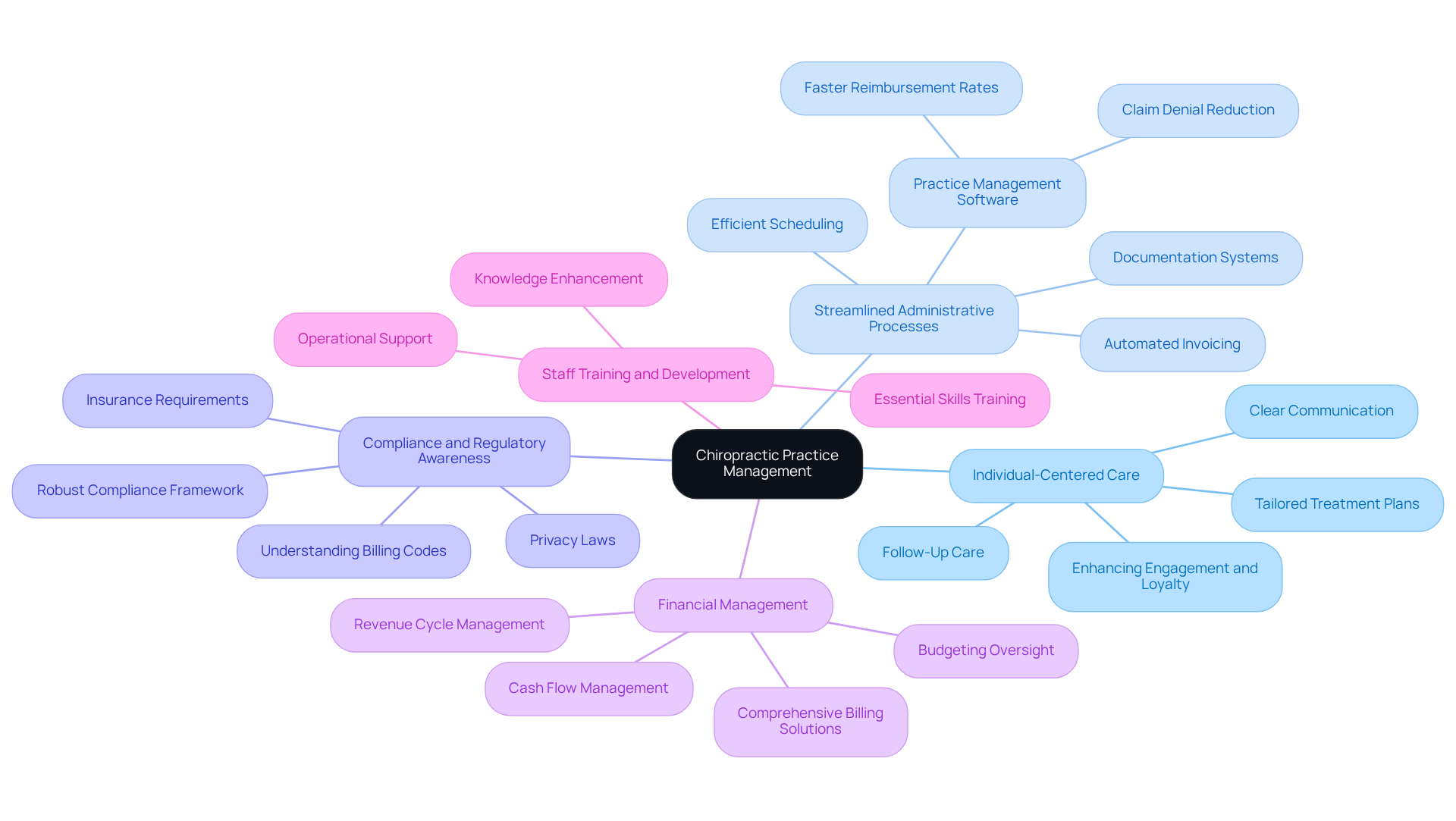
- Prioritizing the needs and experiences of individuals is fundamental. This encompasses clear communication, tailored treatment plans, and follow-up care to ensure satisfaction and retention. Recent trends suggest that approaches concentrating on individual-centered care are better positioned to enhance engagement and loyalty.
- Streamlined Administrative Processes: Implementing efficient scheduling, invoicing, and documentation systems reduces administrative burdens, allowing practitioners to concentrate more on care for their clients. Using practice management software, like those from Healthcare Partners Consulting & Billing, LLC (HPC), automates many of these tasks. This can cut claim denials by 20-30% and speed up reimbursement rates by 15-25% within 30-90 days, enhancing operational efficiency. Integrations with EHR systems like TherapyNotes and SimplePractice further illustrate seamless compatibility, streamlining operations.
- Compliance and Regulatory Awareness: However, many practitioners struggle to stay updated on the ever-changing regulations. Staying informed about healthcare regulations and compliance requirements is vital. This encompasses understanding billing codes, insurance requirements, and privacy laws to avoid legal issues and ensure smooth operations. A robust compliance framework supports operational integrity and enhances patient trust, particularly important in a profession that is increasingly diverse and emphasizes gender balance.
- Financial Management: Yet, many practices find it challenging to maintain effective oversight of resources like budgeting and cash flow management. Effective oversight of resources, including budgeting, cash flow management, and revenue cycle management, is crucial for sustainability. Consistently assessing economic metrics aids in recognizing trends and opportunities for enhancement, ensuring that methods remain sustainable while providing quality care. Comprehensive billing solutions from Healthcare Partners Consulting can streamline these processes, addressing underpayments and aging claims effectively. With 39 years of experience and a veteran-owned status, HPC is well-equipped to support organizations in achieving financial health.
- Staff Training and Development: Investing in staff training ensures that all team members are equipped with the essential skills and knowledge to support operational functions and enhance care quality. A well-trained team contributes to a more efficient work environment and enhanced outcomes for individuals.
By concentrating on these elements, chiropractic practice management can enable establishments to develop a strong framework that enhances both operational efficiency and high-quality care for individuals. Ultimately, a robust chiropractic practice management framework not only enhances operational efficiency but also positions chiropractic practices as leaders in delivering high-quality care.
Implement Advanced Management Strategies for Success
To elevate the effectiveness of chiropractic practice management, it is essential to adopt advanced strategies that address operational inefficiencies:
- Utilize Technology: Leverage management software that integrates scheduling, billing, and client records. This approach streamlines operations while simultaneously improving data accuracy and accessibility, leading to a potential reduction in claim denials by 20-30% and faster reimbursements within 15-25% over 30-90 days.
- Data-Driven Decision Making: Regularly analyze practice metrics such as retention rates, average revenue per individual, and appointment no-show rates. Use this data to inform strategic decisions and identify areas for improvement, ensuring that operational adjustments are tied to claims accuracy and denial rates.
- Enhance Engagement: Implement engagement tools such as automated reminders for appointments and follow-ups. Customized communication can greatly enhance retention and satisfaction, cultivating a loyal clientele.
- Optimize Workflow Processes: Conduct regular assessments of workflow processes to identify bottlenecks. Optimizing these procedures can decrease wait times and enhance the overall experience for individuals, ultimately boosting operational efficiency.
- Develop a Strong Referral Network: Building relationships with other healthcare providers can lead to increased referrals. Creating a referral program that rewards existing clients for bringing in new customers can also be advantageous, aiding in growth.
By adopting these advanced strategies, chiropractic practice management can enable organizations to improve their operational efficiency, enhance patient satisfaction, and ultimately drive growth. For personalized consultation to identify optimal administrative solutions for your organization, please contact Healthcare Partners Consulting at info@hpcbilling.com or call 888-517-4992. We are available nationwide, Monday-Friday, to assist you in streamlining your operations.

Adopt Financial Strategies for Sustainable Practice Growth
Without effective financial strategies, chiropractic practice management risks instability and diminished growth potential. To ensure sustainable growth in chiropractic practices, consider implementing the following financial strategies:
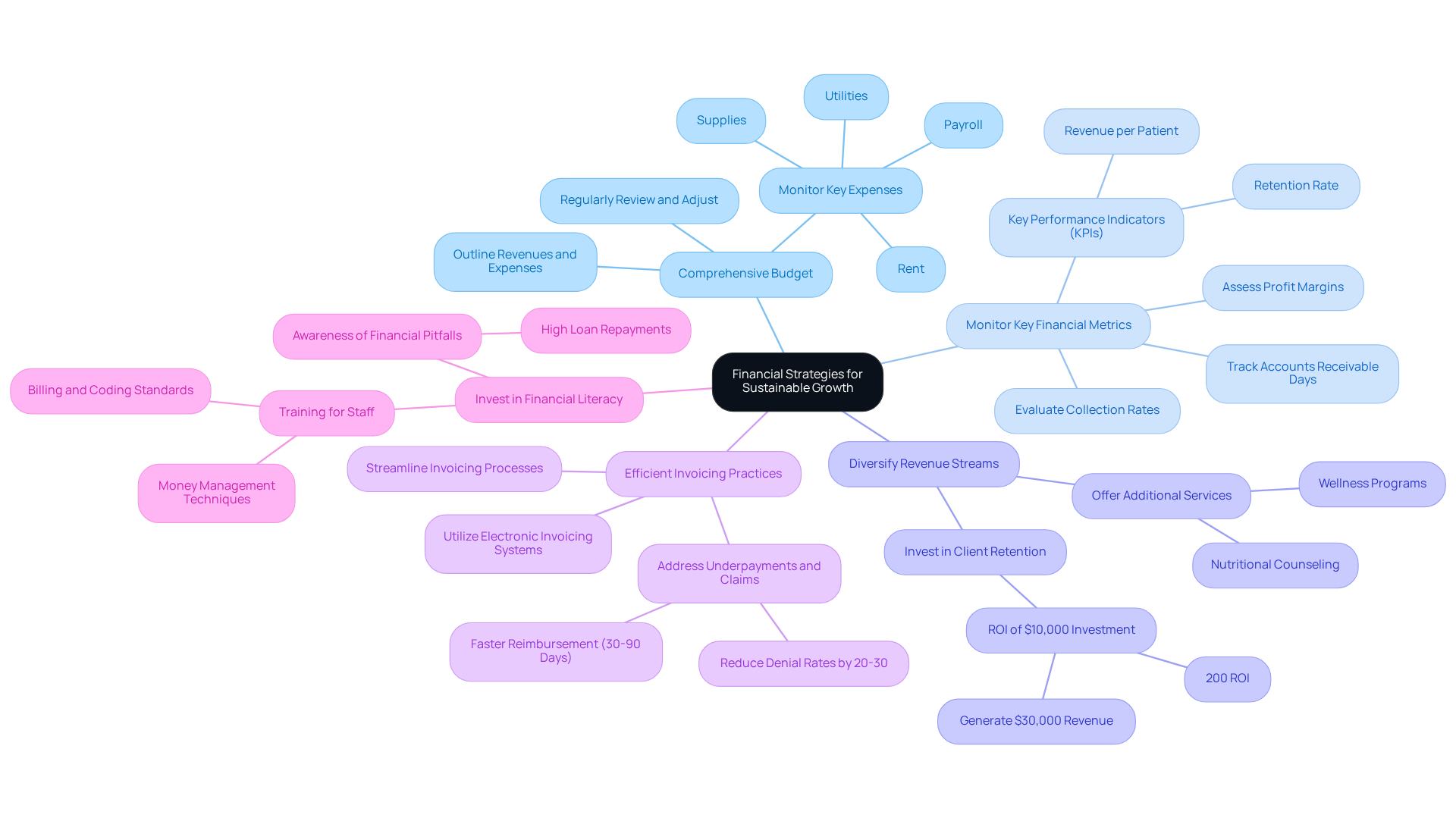
- Create a Comprehensive Budget: Develop a detailed budget that outlines expected revenues and expenses. Regularly review and adjust this budget to reflect changes in practice operations and market conditions. A well-organized budget is crucial for monitoring expenses such as rent, utilities, payroll, and supplies, ensuring that monetary goals are achieved.
- Monitor Key Financial Metrics: Keep track of essential metrics such as accounts receivable days, collection rates, and profit margins. Monitoring these metrics aids in recognizing trends and informs monetary decisions, allowing chiropractic practice management to make data-driven adjustments that enhance operational performance. Key performance indicators (KPIs) such as revenue per individual and retention rate are essential for evaluating economic health.
- Diversify Revenue Streams: Explore opportunities to offer additional services, such as wellness programs or nutritional counseling, to diversify income sources and reduce reliance on traditional chiropractic services. Investing $10,000 in client retention can generate an additional $30,000 in revenue, resulting in a 200% ROI. This approach not only attracts new patients but also increases patient lifetime value (PLTV), which is essential for effective chiropractic practice management and contributes to overall financial health.
- Implement Efficient Invoicing Practices: Streamline invoicing processes to reduce errors and enhance collection rates. Utilizing electronic invoicing systems can automate claims submissions and follow-ups, effectively addressing underpayments, unprocessed claims, and aging claims. This leads to a reduction in denial rates by 20-30% and faster reimbursement within 30-90 days, significantly enhancing revenue cycle performance. By concentrating on enhancing patient statements and overseeing aging claims, organizations can guarantee a more seamless payment experience and better cash flow.
- Invest in Financial Literacy: Provide training for staff on money management techniques. Equipping staff with knowledge about billing and coding standards can enhance adherence and contribute to the organization’s economic well-being. Additionally, be aware of potential pitfalls, such as high loan repayments that can negatively impact cash flow.
Implementing these strategies in chiropractic practice management can turn financial challenges into opportunities for growth. With 39 years of experience, Healthcare Partners Consulting & Billing, LLC (HPC) stands ready to support organizations in navigating these financial strategies.
Overcome Challenges in Chiropractic Practice Management
Chiropractic practice management involves addressing numerous operational challenges that can hinder their effectiveness and patient care. Here are effective strategies to overcome these obstacles:
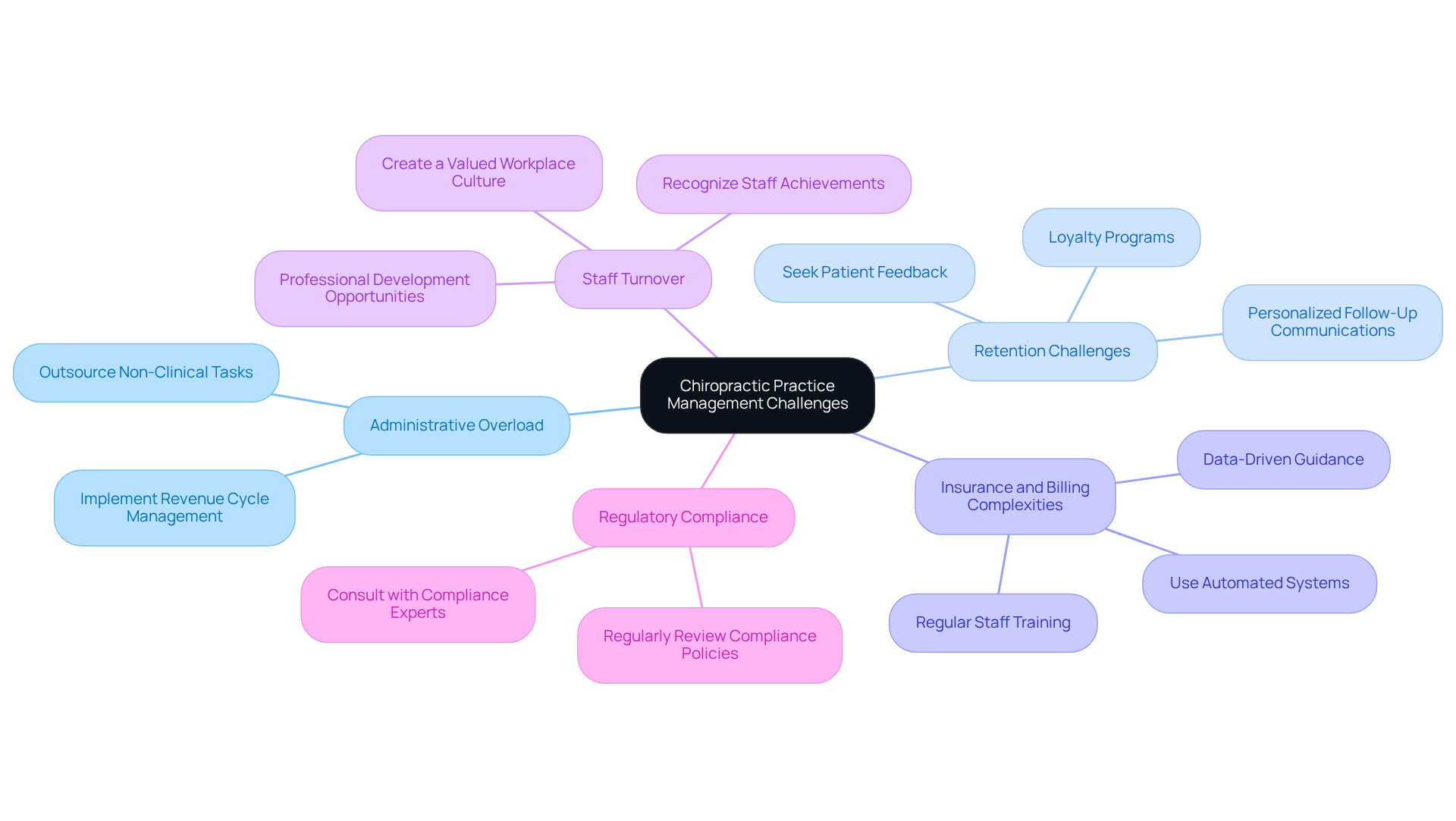
- Administrative Overload: Administrative burdens can lead to significant burnout among physicians, impacting their ability to provide quality care. To alleviate this, consider outsourcing non-clinical tasks such as billing and scheduling to specialized firms like Healthcare Partners Consulting & Billing, LLC (HPC). Their streamlined revenue cycle management services ensure clean claims and quick follow-up, allowing practitioners to focus on care and ultimately enhancing service quality.
- Retention Challenges: Enhancing engagement is essential for keeping individuals. Implement personalized follow-up communications and loyalty programs to foster relationships. Consistently seeking feedback can assist organizations in identifying areas for enhancement and addressing patient concerns proactively. By enhancing engagement, practices can not only retain patients but also foster a loyal community that supports their growth.
- Insurance and Billing Complexities: Navigating the complexities of insurance policies and billing codes is essential. Regular staff training on these topics can significantly reduce errors and improve claim acceptance rates. Practices that use automated systems report a 20-30% reduction in claim denials. This improvement leads to faster reimbursements, typically within 30-90 days, with increases of 15-25%. HPC offers data-driven guidance to assist organizations in navigating these complexities effectively.
- Staff Turnover: High turnover can disrupt continuity of care. It’s essential to create a workplace culture that genuinely values staff contributions. Providing opportunities for professional development and recognizing achievements can enhance staff retention and morale.
- Regulatory Compliance: Compliance with healthcare regulations is non-negotiable. Regularly reviewing compliance policies and procedures ensures adherence to legal requirements. Consulting with experts like HPC can assist organizations in staying informed about optimal methods and navigating the complexities of regulatory compliance.
Proactively addressing these challenges with Healthcare Partners Consulting can enhance operational efficiency and ensure a continued focus on quality care in chiropractic practice management facilities. Implementing these strategies can lead to not only improved patient satisfaction but also a more sustainable and profitable practice model.
Conclusion
Effective chiropractic practice management is crucial for ensuring both high-quality patient care and operational efficiency. Focusing on patient-centered care, streamlined administrative processes, compliance awareness, financial management, and staff development allows practices to build a robust framework that enhances patient satisfaction and sustainability. The integration of advanced strategies, such as leveraging technology and data-driven decision-making, empowers practitioners to overcome challenges and drive growth.
Key insights from the article highlight the importance of adopting comprehensive revenue cycle management tailored to the unique needs of chiropractic practices. Utilizing specialized services from Healthcare Partners Consulting & Billing, LLC (HPC) can significantly reduce administrative burdens, allowing practitioners to concentrate on what truly matters: patient care. With 39 years of experience and a veteran-owned status, HPC stands out as a trusted partner in navigating the complexities of billing and compliance, ensuring practices can thrive in a competitive landscape.
In conclusion, embracing these best practices not only positions chiropractic practices for success but also reinforces the commitment to delivering exceptional care. For practitioners aiming to enhance their operational capabilities, engaging with Healthcare Partners Consulting can be a pivotal step towards achieving excellence in patient care.
Frequently Asked Questions
What are the essential elements of effective chiropractic practice management?
The essential elements include prioritizing individual needs and experiences, streamlining administrative processes, maintaining compliance and regulatory awareness, effective financial management, and investing in staff training and development.
How does prioritizing individual needs impact chiropractic practice?
Prioritizing individual needs enhances engagement and loyalty through clear communication, tailored treatment plans, and follow-up care, which are fundamental for patient satisfaction and retention.
What role does practice management software play in chiropractic practices?
Practice management software automates scheduling, invoicing, and documentation, reducing administrative burdens and improving operational efficiency. It can cut claim denials by 20-30% and speed up reimbursement rates by 15-25% within 30-90 days.
Why is compliance and regulatory awareness important in chiropractic practice management?
Staying informed about healthcare regulations, billing codes, insurance requirements, and privacy laws is vital to avoid legal issues and ensure smooth operations, thereby enhancing patient trust.
What challenges do chiropractic practices face in financial management?
Many practices struggle with effective oversight of budgeting, cash flow management, and revenue cycle management, which are crucial for sustainability and recognizing trends for improvement.
How can staff training and development benefit a chiropractic practice?
Investing in staff training equips team members with essential skills and knowledge, contributing to a more efficient work environment and improved care quality for patients.
What is the overall benefit of focusing on these essential elements in chiropractic practice management?
Concentrating on these elements enhances operational efficiency and positions chiropractic practices as leaders in delivering high-quality care, ultimately benefiting both the practice and its patients.