
Introduction
The complexities inherent in managing mental health clinics can significantly impede both patient care and operational efficiency. Implementing best practices in back office management enables clinics to reduce administrative burdens, allowing providers to concentrate on delivering quality care. This article identifies specific strategies that mental health practices can adopt to streamline operations and enhance revenue cycle management. Ultimately, these strategies not only streamline operations but also position healthcare providers for sustained success in a competitive landscape.
Implement Efficient Medical Billing Practices
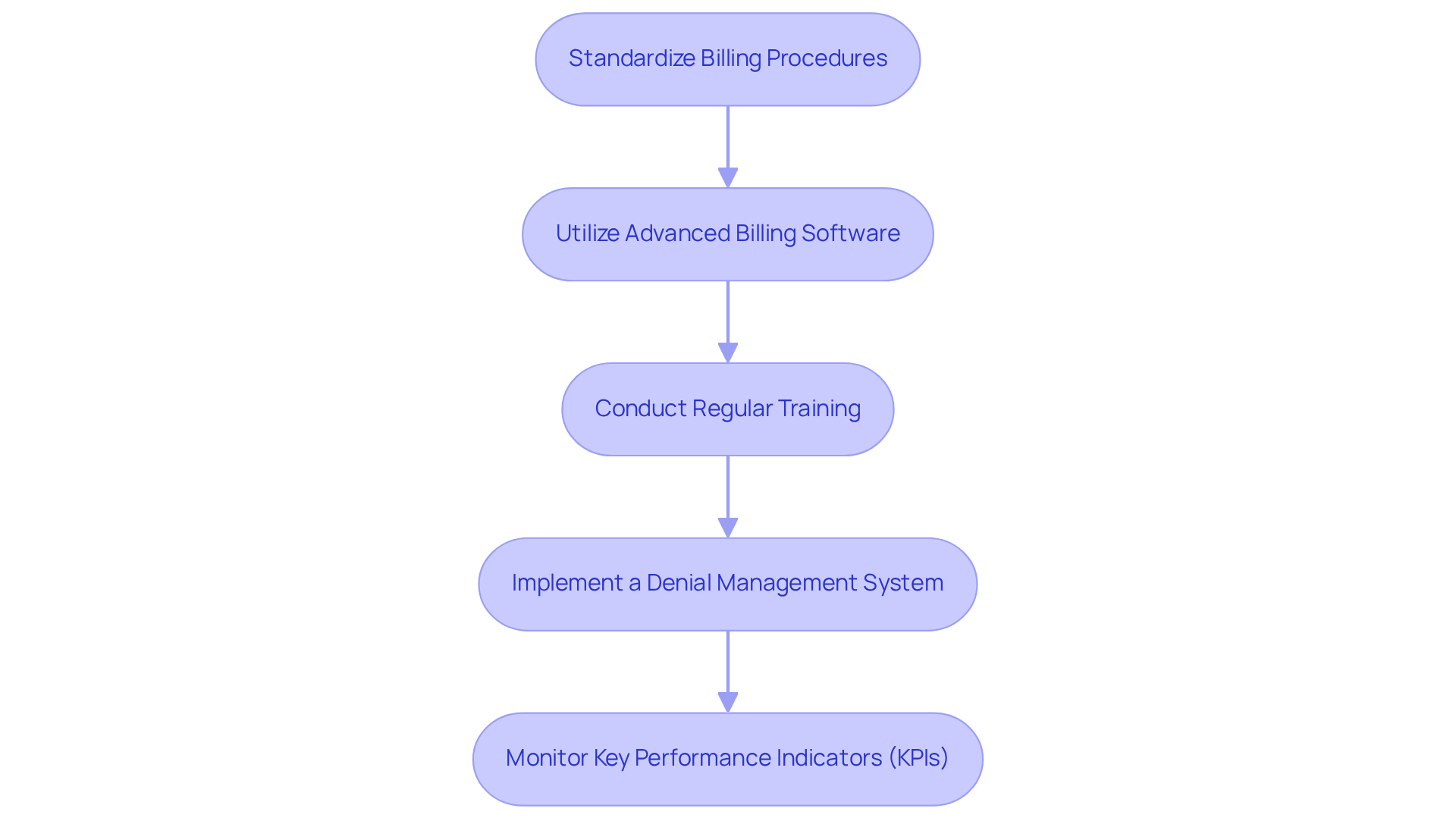
Billing errors and delays can lead to significant revenue loss for mental health clinics, making efficient billing practices essential. To streamline medical billing processes, mental health clinics should adopt the following best practices:
- Standardize Billing Procedures: Establish clear protocols for billing that include accurate coding and timely submission of claims. This approach reduces errors and accelerates payment cycles. Clinics may see a 20-30% reduction in claim denials.
- Utilize Advanced Billing Software: Invest in specialized billing software that integrates with electronic health records (EHR) to automate claims submissions and track payments. This minimizes manual entry errors and enhances efficiency, leading to faster reimbursement times of 15-25% within 30-90 days.
- Conduct Regular Training: Ensure that staff members are well-trained in billing practices and updates in coding regulations. Regular training sessions can help maintain compliance and improve accuracy in billing, which is essential given the evolving regulatory landscape in 2026.
- Implement a Denial Management System: Develop a systematic approach to handle denied claims. Analyzing denial reasons to identify patterns and address underlying issues can significantly reduce revenue loss and improve overall financial health.
- Monitor Key Performance Indicators (KPIs): Track metrics such as days in accounts receivable and claim rejection rates to identify areas for improvement. Regularly reviewing these KPIs can assist healthcare facilities in adjusting their strategies proactively, ensuring operational rigor and enhancing revenue cycle performance.
Ultimately, these improvements can empower providers to focus more on delivering quality patient care rather than managing administrative burdens.
Adopt Comprehensive Practice Management Solutions
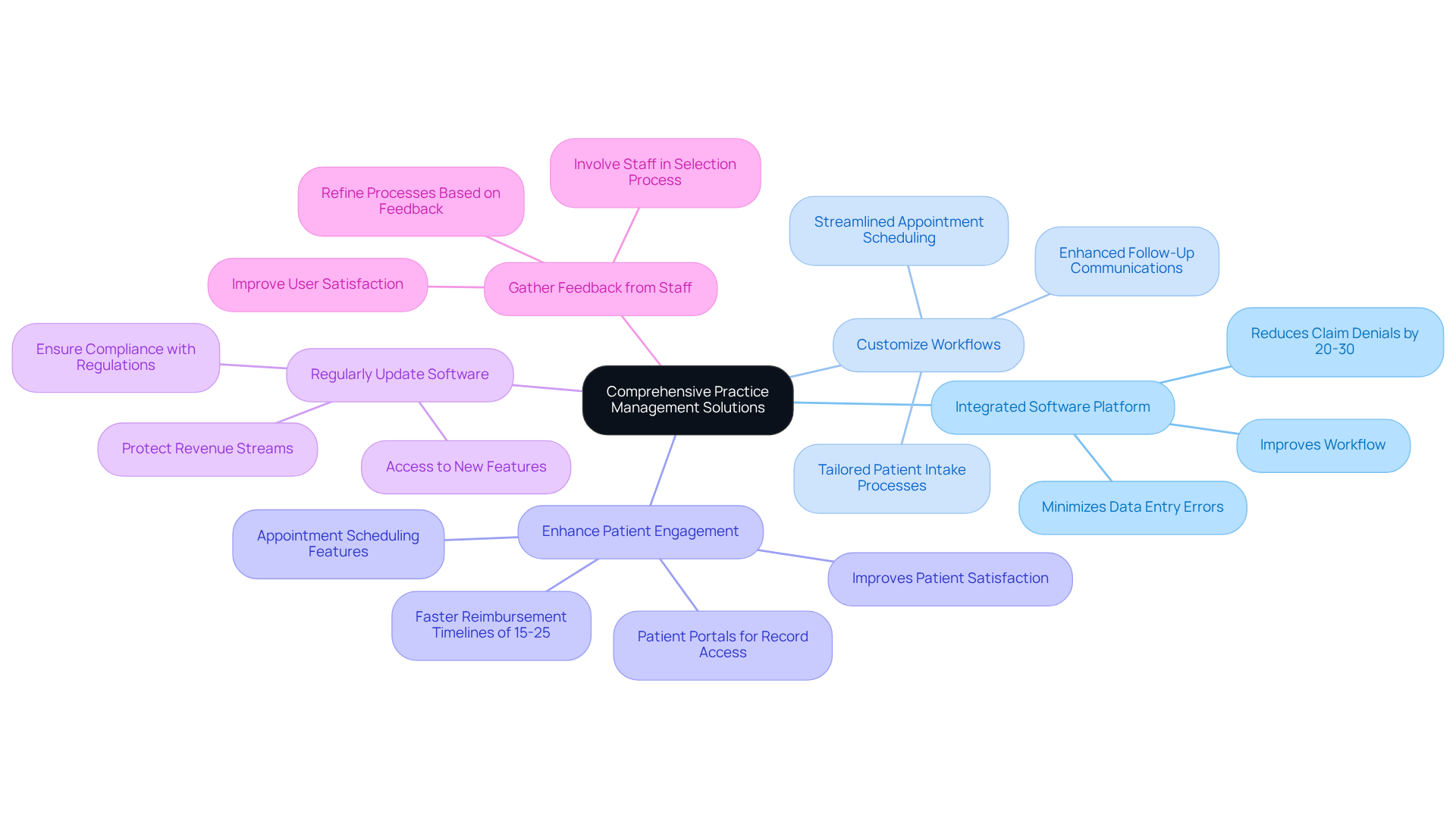
Operational inefficiencies in mental health clinics can severely impact patient care and clinic performance. To enhance operational efficiency, mental health clinics should consider the following best practices for adopting comprehensive practice management solutions:
- Choose an Integrated Software Platform: Select a practice management system that combines scheduling, billing, and patient records in one platform. This integration minimizes data entry errors and improves workflow, leading to a potential reduction in claim denials by 20-30%.
- Customize Workflows: Tailor the software to fit the specific needs of the clinic. Custom workflows can streamline processes such as patient intake, appointment scheduling, and follow-up communications, enhancing overall operational performance.
- Enhance Patient Engagement: Utilize features such as patient portals that allow clients to access their records, schedule appointments, and communicate with providers. This not only improves patient satisfaction but also reduces administrative tasks for staff, contributing to faster reimbursement timelines of 15-25% within 30-90 days.
- Regularly Update Software: Keep the management software updated to ensure compliance with the latest regulations and to take advantage of new features that can enhance efficiency, thereby protecting revenue.
- Gather Feedback from Staff: Involve staff in the selection and implementation process to ensure the chosen solution meets their needs and addresses pain points. Regular feedback can help refine processes and improve user satisfaction, ultimately supporting better patient care.
Ultimately, the right management solutions can transform clinic operations, leading to better patient outcomes and satisfaction.
Leverage Strategic Consulting for Sustainable Growth
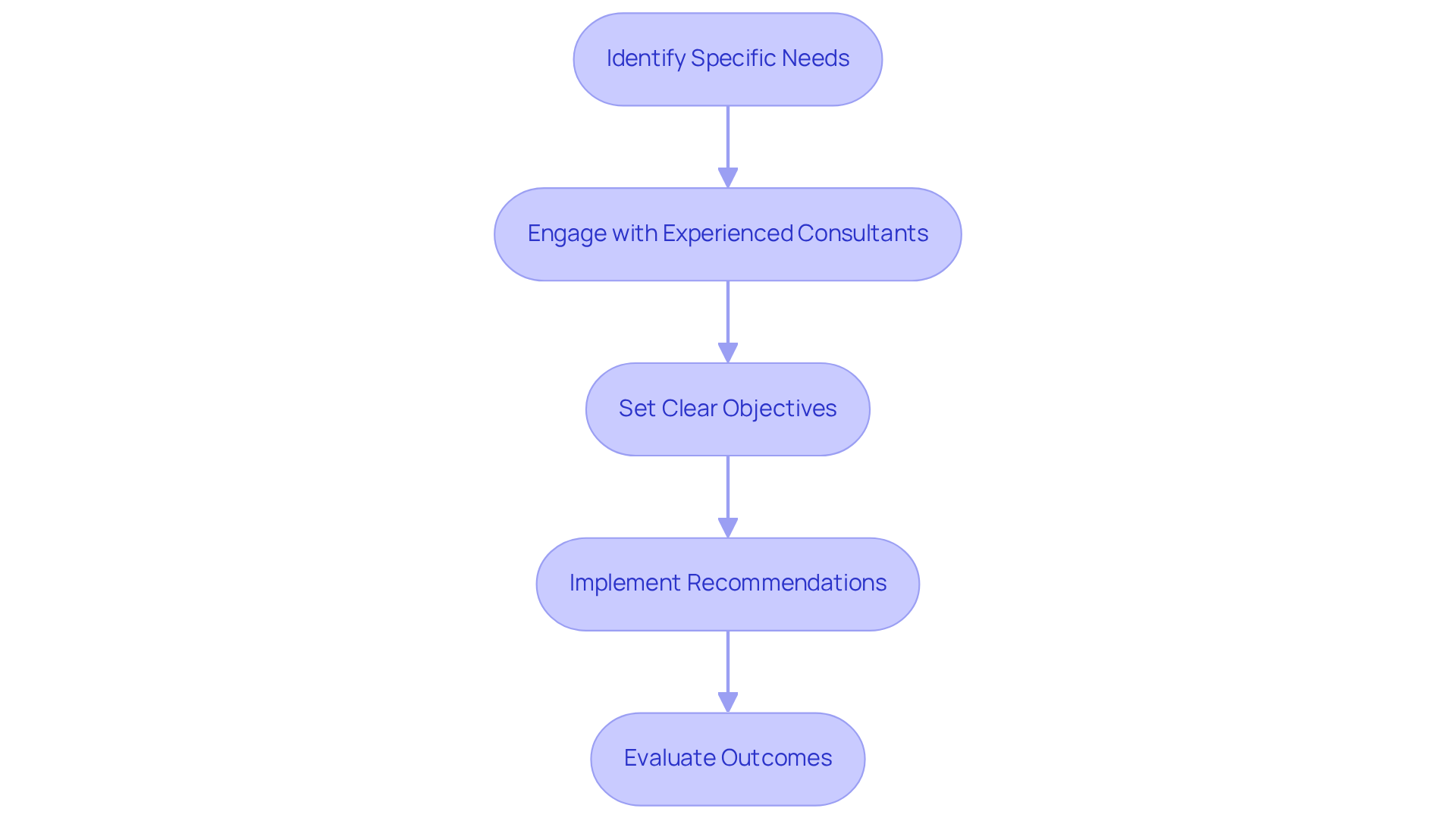
To achieve sustainable growth, mental health clinics must strategically leverage consulting services tailored to their unique challenges:
- Identify Specific Needs: Assess the current challenges and areas for improvement within the healthcare facility, such as operational inefficiencies, compliance issues, or growth opportunities. It’s essential to grasp these needs to ensure interventions are truly effective.
- Engage with Experienced Consultants: Partner with Healthcare Partners Consulting & Billing, LLC (HPC), specialists in mental health services. Their expertise in revenue cycle management and profound understanding of payer behavior can offer valuable insights into industry trends and optimal approaches, assisting healthcare facilities in navigating the complexities of the healthcare landscape.
- Set Clear Objectives: Collaborate with HPC consultants to establish clear, measurable goals for the engagement. This alignment ensures that both parties can track progress effectively and make data-driven decisions.
- Implement Recommendations: Actively work on the recommendations provided by HPC. This could mean changing processes, training staff, or even bringing in new technologies to boost operational efficiency. Organizations that implement these practices can expect to see improvements in revenue cycle performance, including a possible decrease in denial rates by 20-30% and quicker reimbursement timelines of 15-25% within 30-90 days.
- Evaluate Outcomes: After implementing changes, regularly evaluate the outcomes against the established objectives. Regular evaluations help healthcare facilities grasp how consulting efforts are making a difference and making necessary adjustments to enhance performance. Operational rigor can be demonstrated through scorecard-driven adjustments related to claims accuracy, denial rates, and days in accounts receivable.
By utilizing strategic consulting from HPC, healthcare facilities can effectively navigate challenges, drive growth, and enhance operational efficiency. Ultimately, the proactive application of strategic consulting can redefine operational success and resilience in the healthcare sector.
Utilize Virtual Assistant Services to Enhance Efficiency
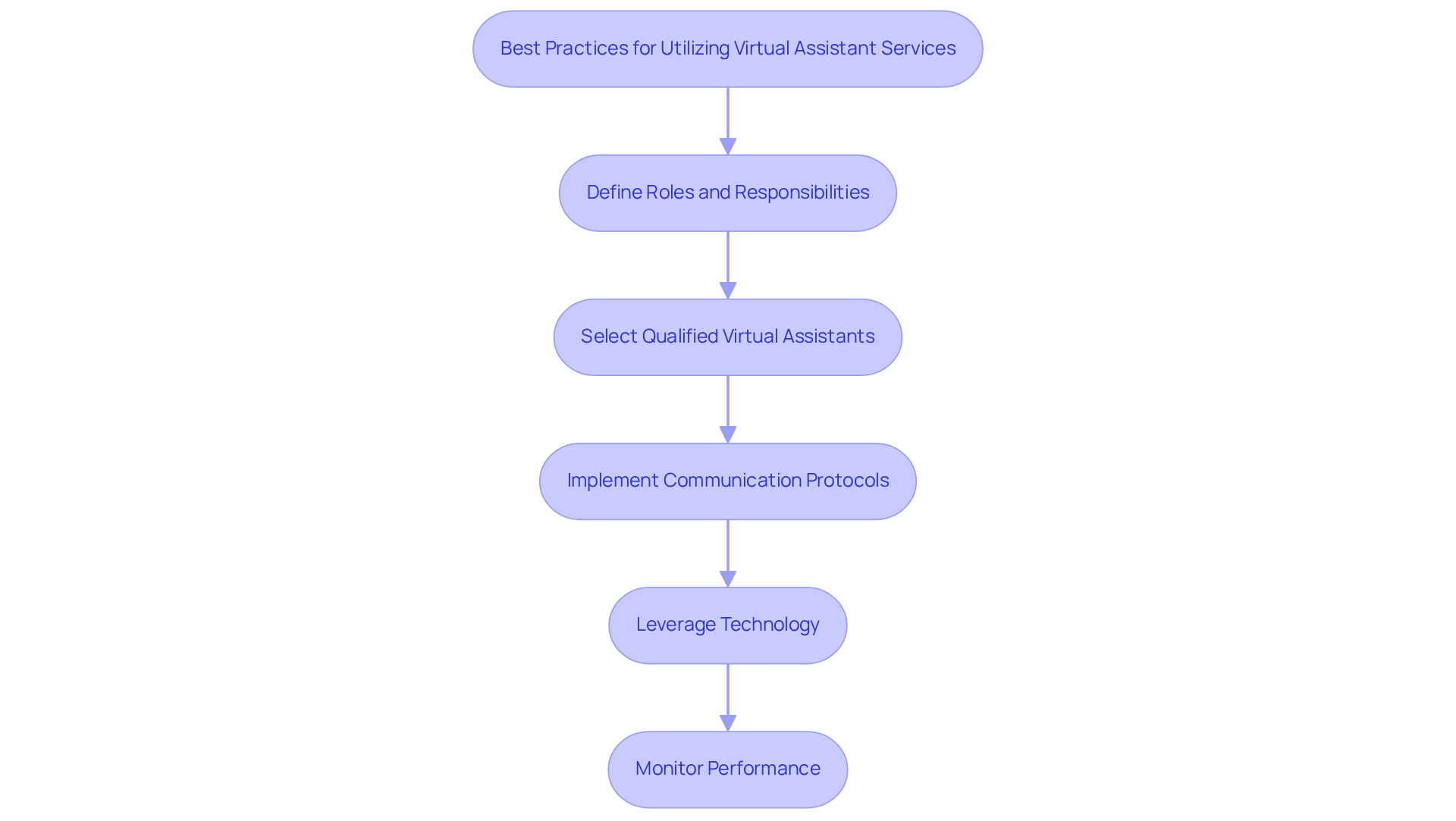
To maximize the benefits of virtual assistant services, mental health clinics must adopt strategic best practices:
- Define Roles and Responsibilities: Clearly outline the tasks that virtual assistants will handle, such as scheduling, patient follow-ups, and administrative paperwork. This clarity helps in maximizing their effectiveness.
- Select Qualified Virtual Assistants: Choose virtual assistants with experience in healthcare settings, particularly in mental health. Their knowledge of industry-specific tasks can enhance productivity and compliance, ultimately contributing to improved patient care.
- Implement Communication Protocols: Establish clear communication channels between in-house staff and virtual assistants. Regular check-ins and updates can ensure that tasks are completed accurately and on time, fostering a collaborative environment.
- Leverage Technology: Utilize technology tools that facilitate collaboration and task management between in-house staff and virtual assistants. This can include project management software and secure communication platforms, which streamline workflows and enhance operational efficiency.
- Monitor Performance: Regularly evaluate the performance of virtual assistants to ensure they meet the standards and expectations of the practice. Without regular evaluations, virtual assistants may not align with the clinic’s operational standards. Offering feedback and training as needed can improve their contributions and support the organization’s operational goals.
Utilizing virtual assistant services helps healthcare facilities streamline operations in the back office. This reduces the administrative burdens in the back office and enhances patient care. Applying these optimal approaches can result in a decrease in denial rates by 20-30% and quicker reimbursement cycles of 15-25% within 30-90 days, greatly improving the clinic’s financial stability and service delivery. Steven B. Kupferman emphasizes that virtual assistants in mental wellness help providers broaden access to care by minimizing operational obstacles. Additionally, Healthcare Partners Consulting offers personalized consultations to identify optimal administrative solutions tailored to the unique needs of mental health practices, ensuring compliance and efficiency in billing and practice management. Such strategies lead to better financial health and improved patient outcomes.
Conclusion
Enhancing patient care in mental health clinics hinges on streamlining back office operations. By implementing best practices such as:
- Efficient medical billing
- Comprehensive practice management solutions
- Strategic consulting
- Virtual assistant services
clinics can significantly reduce administrative burdens. This enables healthcare providers to concentrate on delivering quality patient care.
Key insights from the article highlight the importance of:
- Standardizing billing procedures
- Utilizing advanced software
- Engaging with experienced consultants like Healthcare Partners Consulting & Billing, LLC (HPC)
These strategies not only improve operational efficiency but also lead to faster reimbursement cycles and reduced claim denials. Additionally, leveraging virtual assistants can further enhance clinic productivity, ensuring that administrative tasks do not detract from patient engagement and care.
Ultimately, the proactive adoption of these best practices can transform mental health clinics, fostering sustainable growth and improved patient outcomes. By prioritizing operational excellence, clinics can redefine their approach to patient care and organizational success. For clinics looking to enhance their operations, reaching out to HPC can provide tailored solutions that align with their unique needs, ensuring compliance and operational excellence.
Frequently Asked Questions
Why are efficient medical billing practices important for mental health clinics?
Efficient medical billing practices are essential for mental health clinics because billing errors and delays can lead to significant revenue loss.
What is the first best practice for streamlining medical billing processes?
The first best practice is to standardize billing procedures by establishing clear protocols for accurate coding and timely submission of claims, which can reduce errors and accelerate payment cycles.
How much can clinics expect to reduce claim denials by standardizing billing procedures?
Clinics may see a 20-30% reduction in claim denials by standardizing their billing procedures.
What role does advanced billing software play in medical billing?
Advanced billing software helps automate claims submissions and track payments, minimizing manual entry errors and enhancing efficiency, leading to faster reimbursement times of 15-25% within 30-90 days.
Why is regular training important for billing staff?
Regular training is important to ensure that staff members are well-trained in billing practices and updates in coding regulations, which helps maintain compliance and improve accuracy in billing.
What is a denial management system and why is it important?
A denial management system is a systematic approach to handle denied claims. It is important because analyzing denial reasons can help identify patterns and address underlying issues, significantly reducing revenue loss.
What key performance indicators (KPIs) should clinics monitor?
Clinics should monitor metrics such as days in accounts receivable and claim rejection rates to identify areas for improvement and adjust their strategies proactively.
How do these billing improvements benefit healthcare providers?
These billing improvements empower providers to focus more on delivering quality patient care rather than managing administrative burdens.