

Introduction
Navigating the complexities of emergency billing presents significant challenges for healthcare providers, impacting both financial stability and patient care quality. Emergency billing services play a crucial role in healthcare. They often encounter unique challenges, including complex coding requirements and strict regulatory compliance needs. Clinics that master these intricacies not only enhance their financial stability but also improve the quality of care they provide to patients.
So, how can healthcare providers tackle the challenges of emergency billing while ensuring compliance and boosting revenue? This article explores best practices that enable clinics to streamline billing processes, minimize administrative burdens, and enhance their focus on patient care.
Understand the Fundamentals of Emergency Billing Services
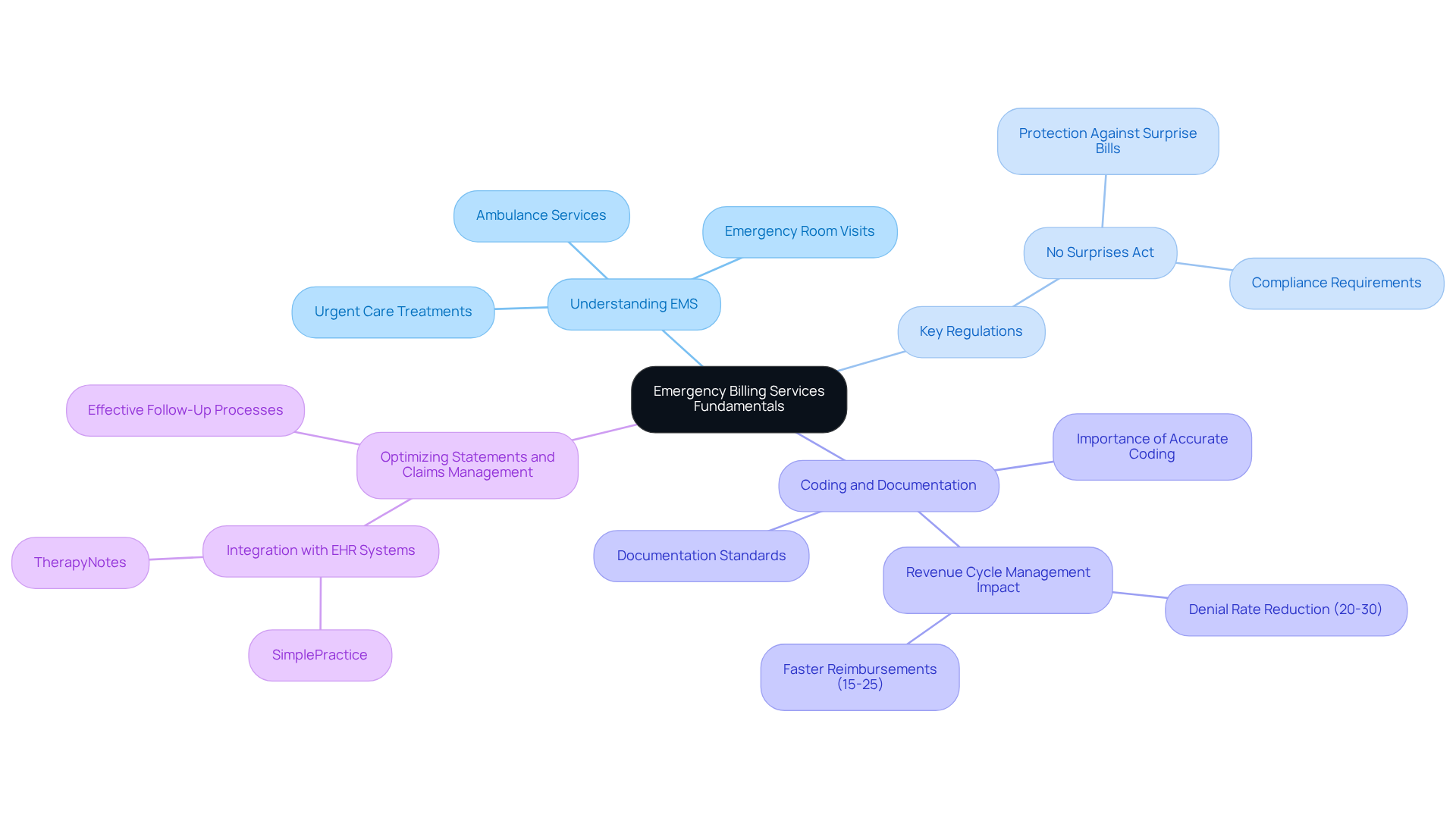
Emergency billing services face unique challenges that require specialized knowledge and adherence to specific regulations. These emergency billing services must adhere to specific regulations and coding requirements that differ from standard invoicing practices. Key components include:
- Understanding Emergency Medical Services (EMS): Emergency medical services (EMS) involve urgent situations that require precise billing practices, including ambulance services, emergency room visits, and urgent care treatments. These scenarios demand immediate attention and meticulous emergency billing services to ensure proper reimbursement.
- Key Regulations: Understanding key regulations, such as the No Surprises Act, is essential for compliance and financial transparency. This act safeguards individuals from unforeseen medical expenses in emergency situations, ensuring that providers cannot charge patients for surprise or balance bills from out-of-network providers at in-network facilities. Clinics must stay informed about these protections to avoid potential pitfalls.
- Coding and Documentation: In emergency billing services, accurate coding is vital. Providers must document services meticulously to ensure compliance and proper reimbursement related to emergency billing services. Effective revenue cycle management can lead to a 20-30% reduction in denial rates and a 15-25% increase in quicker reimbursements within 30-90 days, underscoring the importance of operational rigor in billing practices.
- Optimizing Statements and Claims Management: Managing statements effectively is key to resolving underpayments and unprocessed claims. By implementing robust follow-up processes and ensuring clear communication with individuals, organizations can enhance their revenue cycle and reduce administrative burdens. Integrating with EHR and practice management platforms like TherapyNotes and SimplePractice can further streamline this process.
By mastering these fundamentals, healthcare facilities can significantly enhance their financial stability and patient care quality. Additionally, as a veteran-owned business with 39 years of experience, Healthcare Partners Consulting & Billing, LLC (HPC) is committed to empowering healthcare providers by removing administrative burdens, allowing them to focus on patient care. This expertise not only streamlines financial processes but also enhances the overall quality of care provided to patients.
Identify Common Challenges in Emergency Billing Implementation
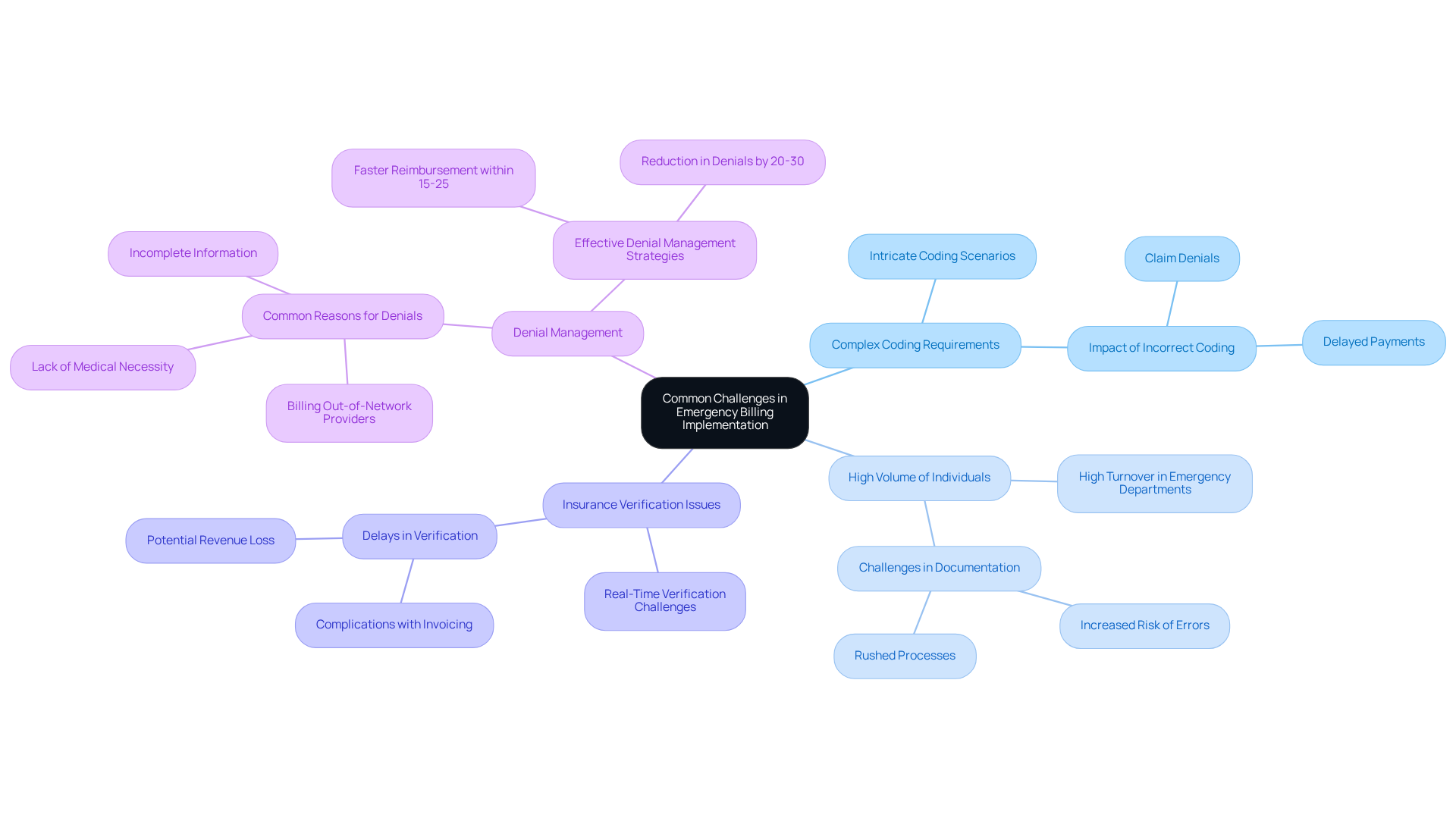
Clinics face significant hurdles in effectively managing emergency billing services. Common issues include:
- Complex Coding Requirements: Emergency services often involve multiple procedures and diagnoses, leading to intricate coding scenarios. Incorrect coding can result in claim denials and delayed payments, significantly impacting revenue.
- High Volume of Individuals: Emergency departments frequently experience high turnover of individuals, making it challenging to maintain accurate documentation and financial practices amidst the chaos. This high volume often results in rushed processes, heightening the risk of errors.
- Insurance Verification Issues: Verifying patient insurance coverage in real-time can be difficult, especially in emergencies where time is of the essence. Delays in verification can result in complications with invoicing and potential revenue loss, as providers may not receive timely reimbursements.
- Denial Management: Claims denials are common in emergency billing due to the complexity of services rendered. Clinics must have effective denial management strategies in place to address and appeal denied requests promptly. Implementing robust processes can lead to a reduction in denials by 20-30% and faster reimbursement within 15-25% of submissions processed in 30-90 days.
By acknowledging these obstacles, healthcare facilities can adopt focused strategies to address them, ensuring a more efficient payment process and enhanced financial results. By implementing targeted strategies, clinics can significantly improve their invoicing processes and safeguard their financial health.
Ensure Compliance with Regulatory Standards in Emergency Billing
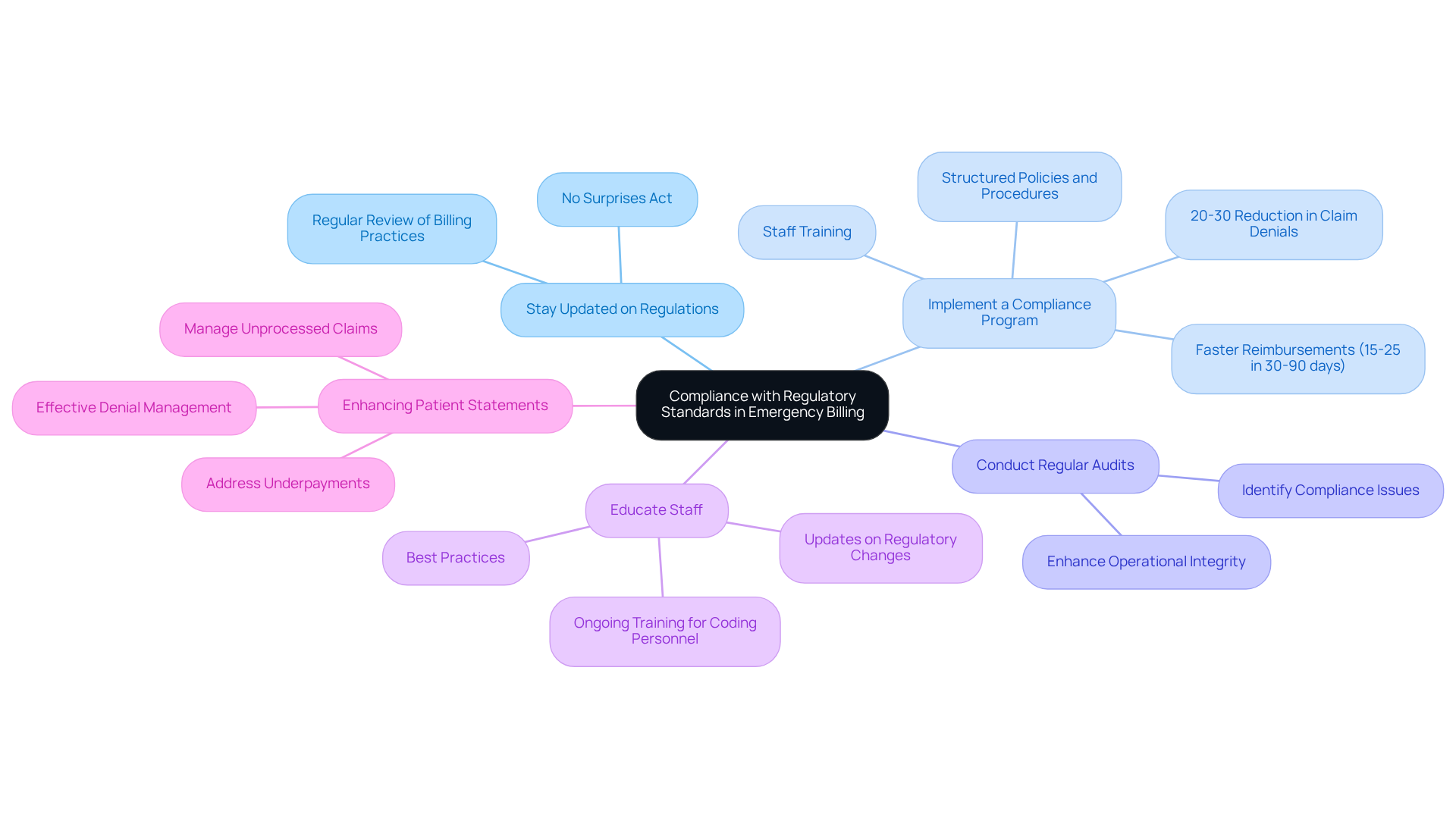
Navigating the complexities of emergency invoicing requires strict adherence to regulatory standards, which is vital for safeguarding both clinics and patients. Key compliance measures include:
- Stay Updated on Regulations: Regularly review and update billing practices to align with current regulations, including the No Surprises Act, which has significantly impacted billing procedures since its implementation.
- Implement a Compliance Program: Establish a structured compliance program that encompasses policies, procedures, and staff training to ensure adherence to reimbursement regulations. Organizations that have adopted robust compliance frameworks report a reduction in claim denials by 20-30% and faster reimbursements within 15-25% in 30-90 days.
- Conduct Regular Audits: Routine evaluations of financial practices are essential for identifying potential compliance issues. By rectifying these proactively, clinics enhance operational integrity and prepare for regulatory scrutiny.
- Educate Staff: Provide ongoing training for coding personnel on updates, regulatory changes, and best practices. Continuous education ensures that all team members are informed and compliant, reducing the risk of billing errors.
Alongside these compliance measures, enhancing patient statements and managing requests is essential. Addressing underpayments, unprocessed claims, and aging claims can significantly enhance revenue recovery. Effective denial management strategies, such as appealing the right denials promptly, can assist healthcare facilities in recovering revenue they’ve earned. Healthcare Partners Consulting & Billing, LLC (HPC) specializes in denial management services that enable healthcare facilities to navigate complex financial challenges effectively. Prioritizing compliance and optimizing claims management allows healthcare facilities to mitigate risks associated with invoicing errors. This approach not only enhances operational integrity but also leads to improved financial performance and greater patient satisfaction. Case studies indicate that clinics with effective compliance programs experience fewer disputes and better reimbursement outcomes, reinforcing the importance of a proactive approach to regulatory adherence.
Leverage Technology for Efficient Emergency Billing Management
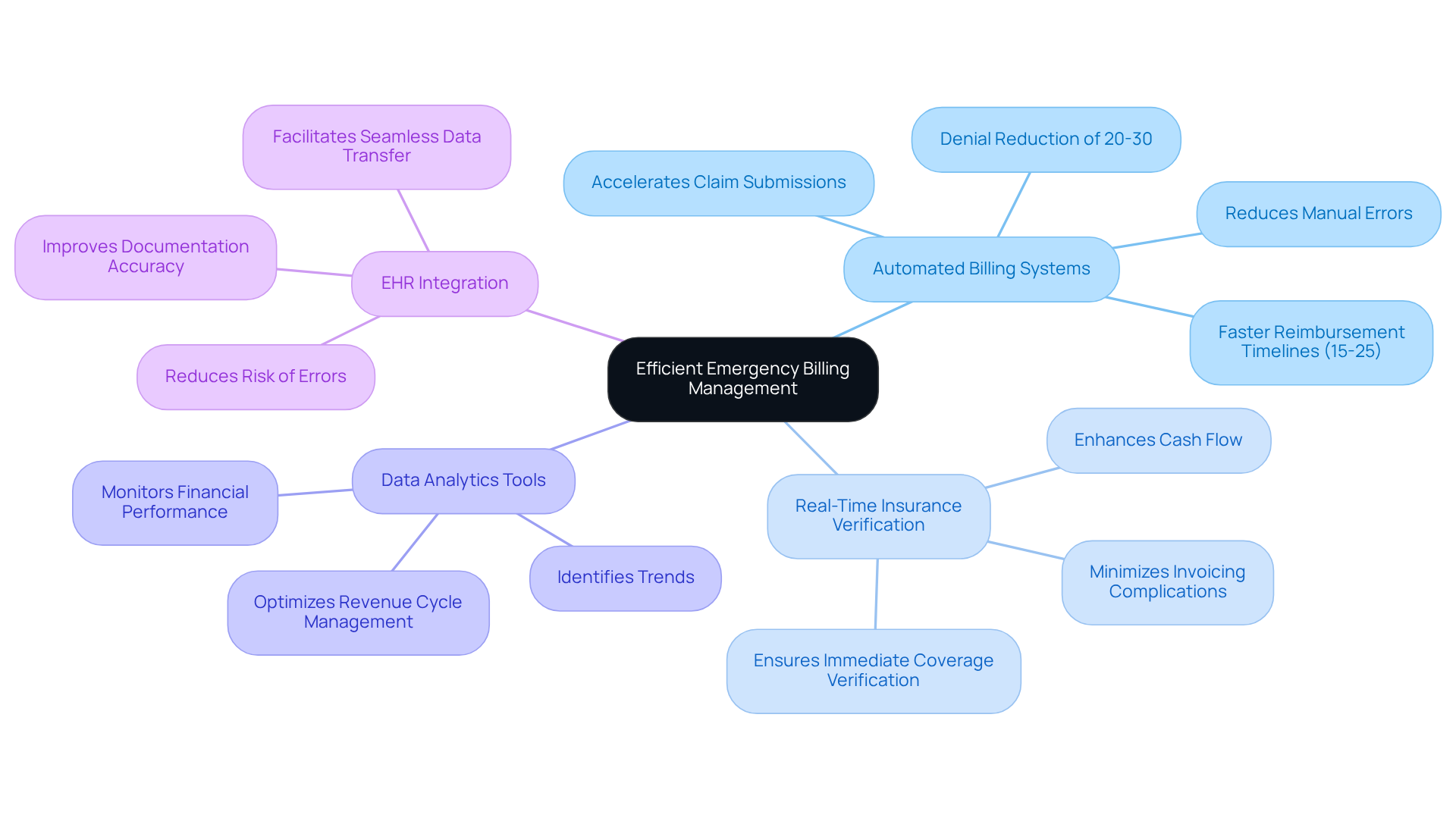
Clinics frequently encounter challenges in managing emergency billing services, which can hinder their financial performance. Integrating technology into these processes can significantly enhance efficiency and accuracy, especially when leveraging the expertise of Healthcare Partners Consulting & Billing, LLC (HPC), a veteran-owned organization with 39 years of experience. Key technological solutions include:
- Automated Billing Systems: Implement automated billing software that streamlines the billing process, reduces manual errors, and accelerates claim submissions. HPC’s specialty-focused service tailors these systems to the unique needs of mental and behavioral health practices, contributing to a denial reduction of 20-30% and faster reimbursement timelines of 15-25% within 30-90 days.
- Real-Time Insurance Verification: Utilize technology that enables immediate verification of insurance coverage, ensuring that clinics can swiftly determine eligibility and minimize complications with invoicing. This capability is essential for optimizing patient statements and managing requests, enhancing cash flow.
- Data Analytics Tools: Utilize data analytics to monitor financial performance, identify trends, and optimize revenue cycle management. HPC’s certified specialists assist healthcare facilities in making informed choices to enhance their payment practices, effectively addressing underpayments and aging claims.
- Electronic Health Records (EHR) Integration: Ensure that financial systems are integrated with EHRs to facilitate seamless data transfer, improving documentation accuracy and reducing the risk of errors. HPC’s compatibility with platforms like TherapyNotes and SimplePractice enhances this integration.
By integrating technology, clinics can transform their billing processes, resulting in faster reimbursements and enhanced patient care. Additionally, HPC offers flexible service plans and transparent pricing models, ensuring that practices receive tailored support without hidden fees. Ultimately, the integration of technology not only streamlines billing but also empowers clinics to prioritize patient care effectively.
Conclusion
Mastering emergency billing services is essential for clinics striving to enhance both financial health and the quality of patient care. By focusing on the unique challenges and regulatory requirements associated with emergency billing, healthcare providers can streamline their processes and ensure compliance. This not only mitigates risks but also empowers clinics to prioritize patient care by reducing administrative burdens.
Key insights from the article highlight the importance of understanding the fundamentals of emergency billing, including:
- Coding accuracy
- Compliance with regulations like the No Surprises Act
- Implementation of effective denial management strategies
Additionally, leveraging technology such as automated billing systems and real-time insurance verification can significantly improve efficiency and accuracy in billing practices. The expertise of Healthcare Partners Consulting & Billing, LLC (HPC) further enhances these efforts, providing tailored solutions that cater specifically to the needs of behavioral and mental health practices.
In conclusion, the integration of best practices in emergency billing extends beyond financial performance; it fosters an environment where healthcare providers can focus on the core focus of healthcare – patient care. By prioritizing compliance and leveraging advanced technology, clinics can navigate the complexities of emergency billing with confidence. Embracing these strategies will ultimately foster a more efficient and patient-centered healthcare system. For further assistance, consider reaching out to Healthcare Partners Consulting & Billing, LLC at info@hpcbilling.com or call 888-517-4992 to explore how tailored billing solutions can empower your practice.
Frequently Asked Questions
What are emergency billing services?
Emergency billing services involve specialized billing practices for urgent medical situations, including ambulance services, emergency room visits, and urgent care treatments, requiring precise and compliant invoicing.
Why is understanding regulations important in emergency billing?
Understanding key regulations, such as the No Surprises Act, is essential for compliance and financial transparency, protecting patients from unexpected medical expenses and ensuring providers do not charge surprise or balance bills from out-of-network providers at in-network facilities.
How does coding and documentation impact emergency billing?
Accurate coding and meticulous documentation are vital in emergency billing services to ensure compliance and proper reimbursement. Effective revenue cycle management can reduce denial rates by 20-30% and increase quicker reimbursements by 15-25% within 30-90 days.
What role does claims management play in emergency billing?
Effective claims management is crucial for resolving underpayments and unprocessed claims. Implementing robust follow-up processes and clear communication can enhance the revenue cycle and reduce administrative burdens.
How can integrating with EHR and practice management platforms help?
Integrating with EHR and practice management platforms, such as TherapyNotes and SimplePractice, can streamline the billing process, improving efficiency and reducing administrative tasks.
What benefits do healthcare facilities gain from mastering emergency billing fundamentals?
By mastering emergency billing fundamentals, healthcare facilities can enhance their financial stability and improve the quality of patient care, allowing providers to focus more on patient needs rather than administrative tasks.