
Introduction
Deciphering the complexities of healthcare billing, particularly the Explanation of Benefits (EOB), presents significant challenges for both patients and clinic owners. This essential document outlines the financial details of medical services rendered and holds significant implications for both parties. As unexpected medical bills continue to plague consumers, mastering the art of reading an EOB becomes crucial for financial clarity and effective management of healthcare expenses. Clinics must take proactive steps to empower their patients to navigate this complex landscape and avoid the pitfalls of miscommunication and financial strain.
Define the Explanation of Benefits (EOB)
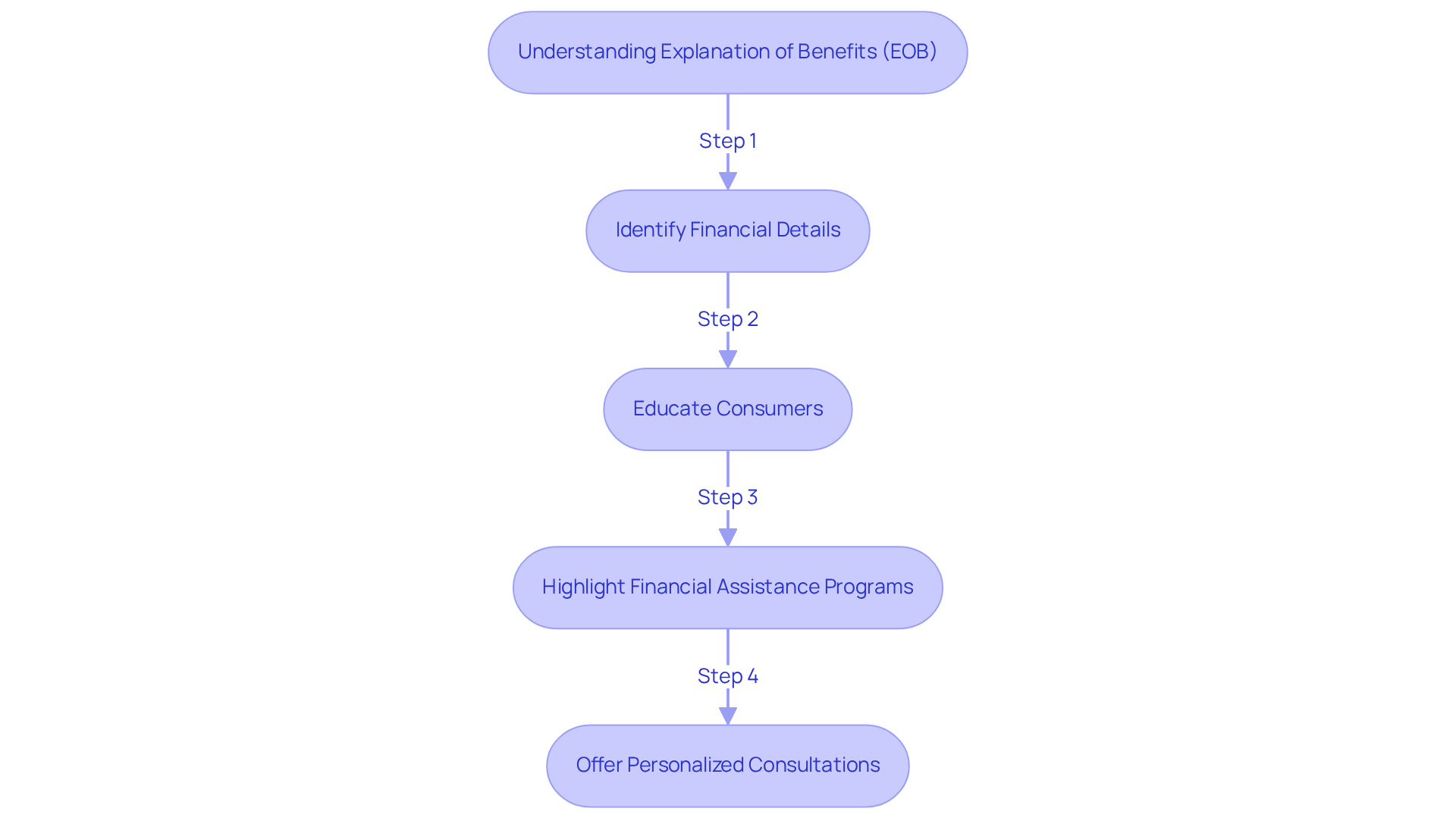
An Explanation of Benefits (EOB) is a critical document that outlines the financial details of medical treatments received, but many consumers find it challenging to understand how to read an explanation of benefits. It serves as a detailed report on healthcare financials, detailing total charges from healthcare providers, the amount covered by insurance, and any outstanding balance owed by the individual.
Clinic owners must understand this document, as it impacts individual financial management and the clinic’s revenue cycle. In 2021, many consumers encountered surprise medical bills, highlighting the need for clear communication about EOBs to reduce financial strain. Furthermore, many consumers are unaware of available financial assistance programs that could help them manage their medical bills.
By helping individuals learn how to read an explanation of benefits and understand their available resources, clinics can enhance financial transparency and aid in managing healthcare expenses.
To further enhance this process, Healthcare Partners Consulting offers personalized consultations to help identify optimal administrative solutions for your practice. By outlining your existing workflow, we can assist you in finding services that effectively tackle underpayments, unprocessed requests, and aging invoices, ultimately enhancing your statements and management of requests.
Identify Key Components of an EOB
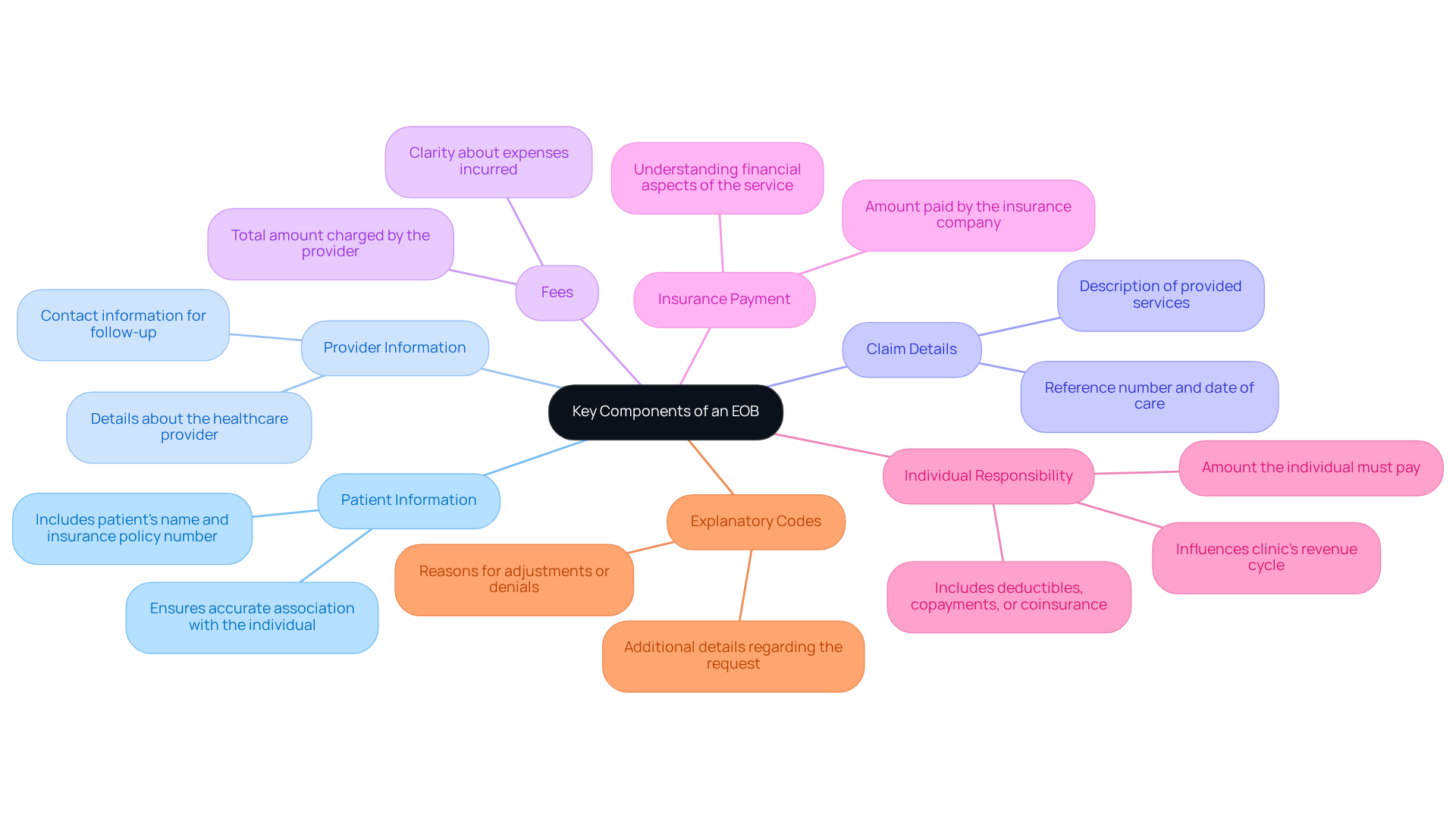
Navigating the complexities of healthcare requests can be challenging, particularly when it comes to learning how to read an explanation of benefits (EOB). An EOB is an essential document that describes the specifics of healthcare requests. Understanding its components can significantly impact the operations of mental health clinics. Here are the key elements typically found in an EOB:
- Patient Information: This section contains the patient’s name, insurance policy number, and other identifying details, ensuring that the request is accurately associated with the correct individual.
- Provider Information: Details about the healthcare provider who delivered the assistance, including their name and contact information, are essential for any follow-up or inquiries regarding the request.
- Claim Details: This encompasses the reference number, date of care, and a description of the provided services, which aids in monitoring and handling requests efficiently.
- Fees: The total amount charged by the provider for the assistance provided is detailed here, offering clarity about the expenses incurred.
- Insurance Payment: This indicates the amount that the insurance company has paid towards the claim, which is vital for understanding the financial aspects of the service provided.
- Individual Responsibility: This section describes the amount the individual is accountable for paying, which may encompass deductibles, copayments, or coinsurance, directly influencing the clinic’s revenue cycle. According to a recent survey, 68% of providers indicated that inaccurate or incomplete patient data at intake is a primary driver of denials, highlighting the importance of accurate patient responsibility information in addressing underpayments.
- Explanatory Codes: These codes offer extra details regarding the request, such as reasons for any adjustments or denials. Grasping these codes is essential for tackling any problems that may occur during the process.
Ultimately, a thorough understanding of how to read an explanation of benefits can be the difference between financial stability and operational inefficiency for mental health clinics. By effectively interpreting EOBs, clinic owners can enhance their operational efficiency and improve patient care.
Analyze and Interpret the EOB Details
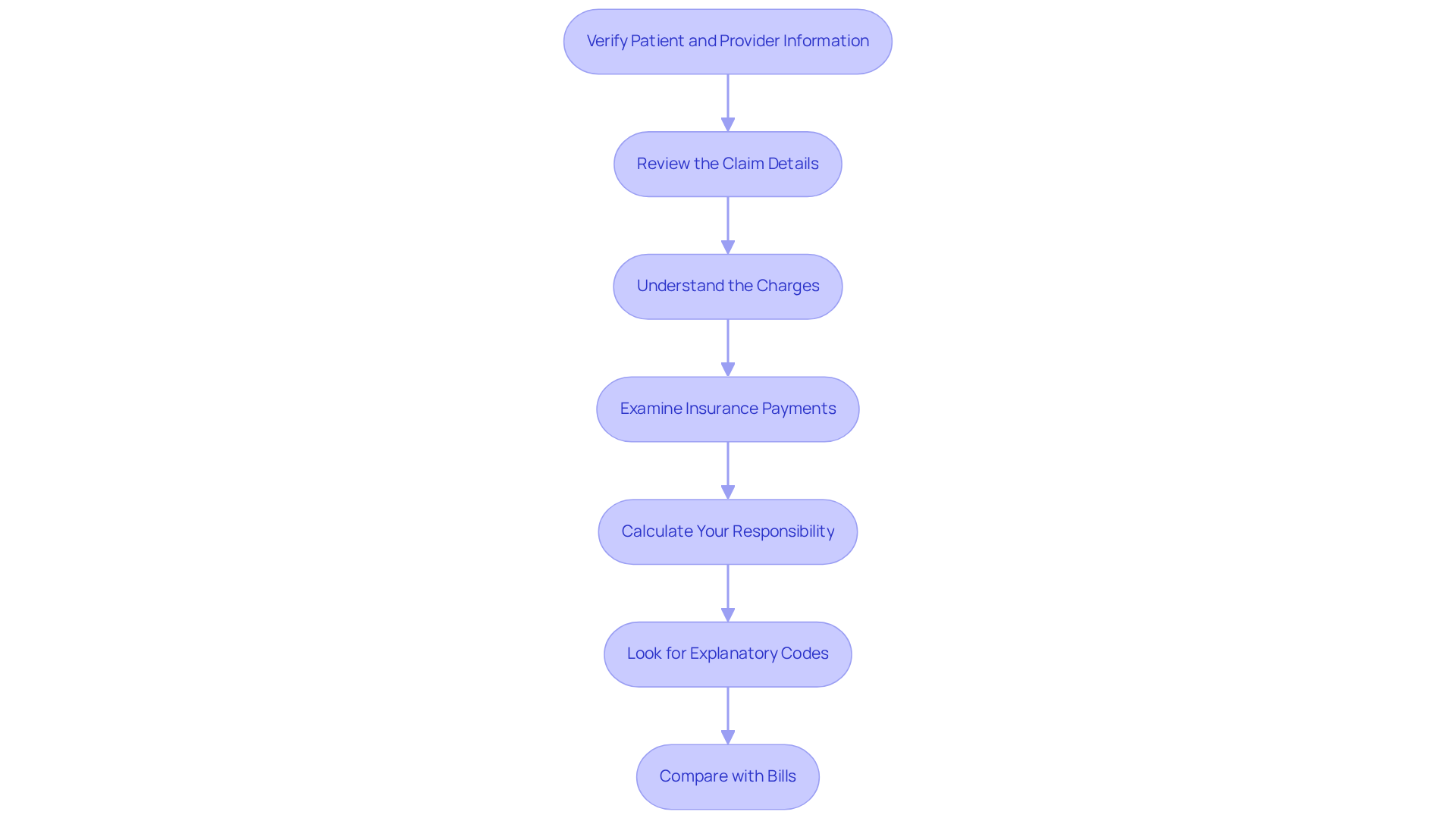
To effectively analyze and interpret your Explanation of Benefits (EOB), follow these steps:
- Verify Patient and Provider Information: Ensure that both your name and the provider’s details are accurate. Any discrepancies should be addressed immediately to prevent future billing issues.
- Review the Claim Details: Verify the date of provision and the description of offerings delivered. Confirm that these details align with your records to avoid misunderstandings.
- Understand the Charges: Examine the total charges listed on the EOB and compare them with your provider’s bill. This comparison can reveal potential overcharges. It’s important to note that around 80% of medical bills contain errors.
- Examine Insurance Payments: Note the amount your insurance has paid. Grasping the extent of coverage for the assistance provided is essential, particularly as roughly 30% of insurance requests are rejected on initial submission, frequently because of coding problems.
- Calculate Your Responsibility: Determine the amount you owe after the insurance payment, including any deductibles or copayments. Many individuals face unexpected financial burdens due to errors in their EOBs.
- Look for Explanatory Codes: Pay attention to any codes that explain adjustments or denials. Comprehending these codes can assist you in addressing problems with your request, as nearly 17% of insured adults were denied coverage for doctor-recommended services in 2023.
- Compare with Bills: If you receive a bill from your provider, compare it with the EOB to ensure consistency. This can help you spot errors or misunderstandings, as practices with poor billing automation see denial rates of 15-20%, compared to a benchmark of 5-7%.
By learning how to read an explanation of benefits, you can safeguard your finances and ensure fair billing. Ultimately, a thorough understanding of EOBs can significantly reduce unexpected healthcare costs.
Troubleshoot Common EOB Issues
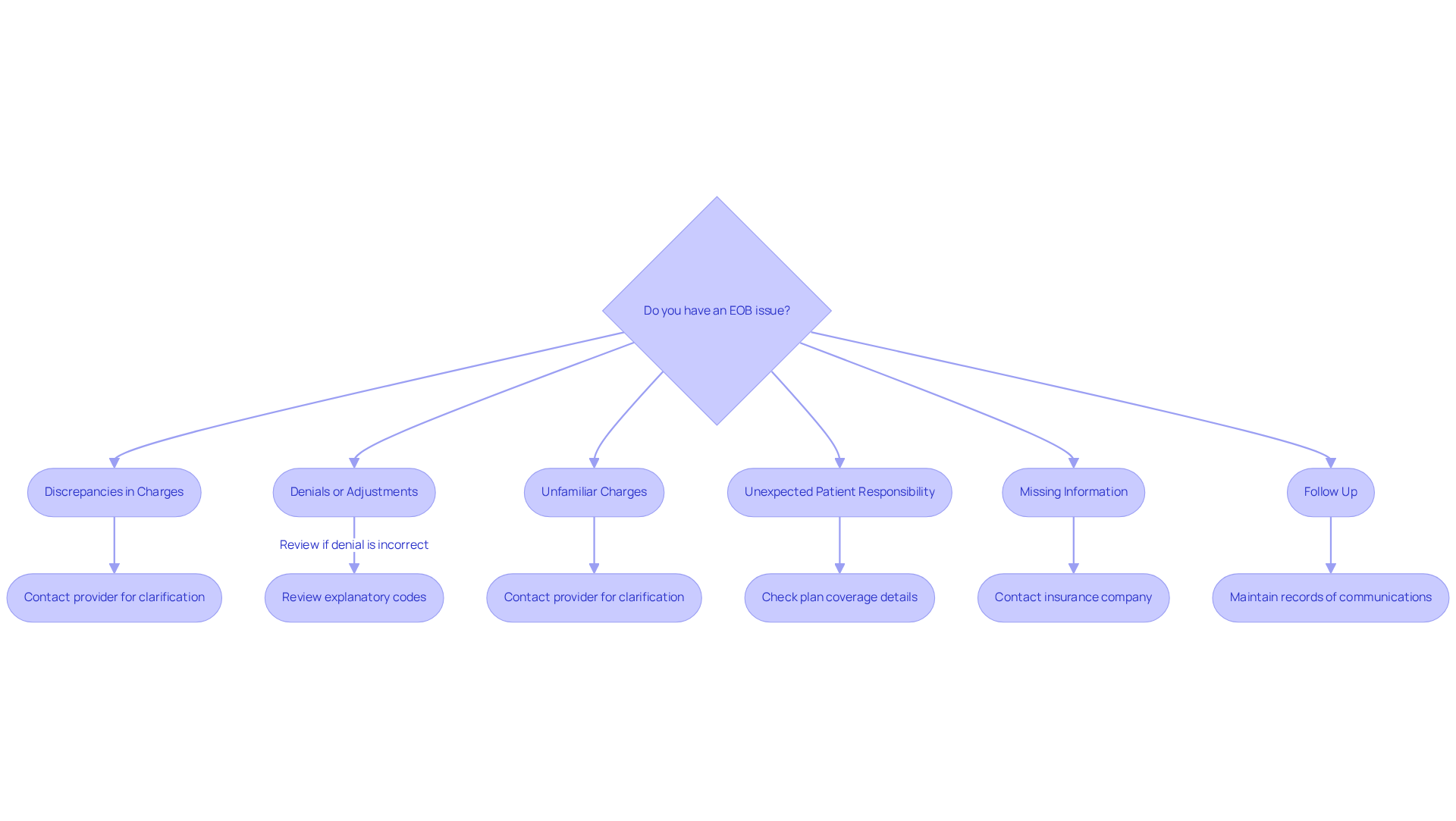
Understanding how to read an explanation of benefits (EOB) can present challenges that require careful attention and action. Here’s how to troubleshoot common issues effectively:
- Discrepancies in Charges: If the charges on your EOB do not match your provider’s bill, contact your provider’s office for clarification. They can help identify any billing errors that may have occurred.
- Denials or Adjustments: In the event of a denial or adjustment of a request, review the explanatory codes on your EOB. These codes provide reasons for the denial. If you believe the denial is incorrect, it may help to understand how to read an explanation of benefits before reaching out to your insurance company to initiate an appeal. Notably, the healthcare industry experiences a claim denial rate of approximately 11%, with common reasons including inaccurate information and lack of documentation.
- Unfamiliar Charges: If you notice fees for offerings you do not recognize, it’s crucial to reach out to your provider for clarification. This could indicate a billing error or misunderstanding that needs to be resolved.
- Unexpected Patient Responsibility: If the amount you owe seems unexpectedly high, check your plan’s coverage details. Verify whether you have met your deductible or if there are any copayments required. Understanding your coverage can prevent surprises in your financial responsibility.
- Missing Information: If your EOB lacks necessary details, such as the date of service or provider information, contact your insurance company for a detailed explanation. Missing information can complicate your understanding of the charges.
- Follow Up: It’s essential to maintain a record of all communications with your provider and insurance company. This documentation can be invaluable if you need to escalate the issue further. Effective communication is crucial in resolving discrepancies and ensuring accurate billing.
Addressing these discrepancies not only safeguards your finances but also enhances your overall healthcare experience. For instance, clinics that invest in staff training and utilize specialized billing software have reported significant reductions in claim denials, leading to improved reimbursement rates.
Conclusion
Understanding EOBs is crucial for both consumers and clinic owners, as it directly influences financial management and transparency. This critical document not only outlines the financial details of medical treatments but also plays a significant role in managing healthcare expenses. By clarifying EOBs, clinics enable patients to manage their healthcare costs effectively, enhancing financial management and operational efficiency.
The article highlights several key components of an EOB, including:
- Patient and provider information
- Claim details
- Fees
- Insurance payments
- Individual responsibility
- Explanatory codes
Each of these elements is crucial for accurately interpreting the financial implications of medical services. Additionally, the guide provides practical steps for analyzing EOBs and troubleshooting common issues, such as discrepancies in charges or unexpected patient responsibilities. By following these best practices, both patients and clinics can navigate the complexities of healthcare billing more effectively.
In conclusion, mastering the intricacies of EOBs is not merely an administrative task; it is a vital skill that can significantly impact financial health and patient care. Clinics must prioritize education on EOBs to ensure patients are informed and supported. By taking proactive steps to enhance understanding and communication regarding EOBs, clinics can help reduce financial strain on individuals and improve their overall revenue cycle, ultimately contributing to a more sustainable financial future for both patients and clinics.
Frequently Asked Questions
What is an Explanation of Benefits (EOB)?
An Explanation of Benefits (EOB) is a document that outlines the financial details of medical treatments received, including total charges from healthcare providers, the amount covered by insurance, and any outstanding balance owed by the individual.
Why is understanding the EOB important for consumers?
Understanding the EOB is important for consumers because it helps them manage their healthcare expenses and financial responsibilities, especially in light of potential surprise medical bills and available financial assistance programs.
How can clinics benefit from understanding EOBs?
Clinics can benefit from understanding EOBs as it impacts individual financial management and the clinic’s revenue cycle, allowing for better financial transparency and improved communication with patients.
What challenges do consumers face regarding EOBs?
Many consumers find it challenging to understand how to read an EOB, which can lead to confusion about their medical bills and financial obligations.
What services does Healthcare Partners Consulting offer related to EOBs?
Healthcare Partners Consulting offers personalized consultations to help identify optimal administrative solutions for practices, including assistance with underpayments, unprocessed requests, and aging invoices to enhance statements and management of requests.