

Introduction
Healthcare providers frequently struggle with the complexities of medical billing, particularly in managing claim denials. Effective denial management is essential for financial health and allows providers to prioritize patient care. Mastering denial management in medical coding enables healthcare organizations to improve revenue, streamline operations, and enhance patient satisfaction. With rejection rates projected to rise, providers must adopt strategies to effectively tackle these challenges and maintain financial stability.
Define Denial Management and Its Importance in Healthcare
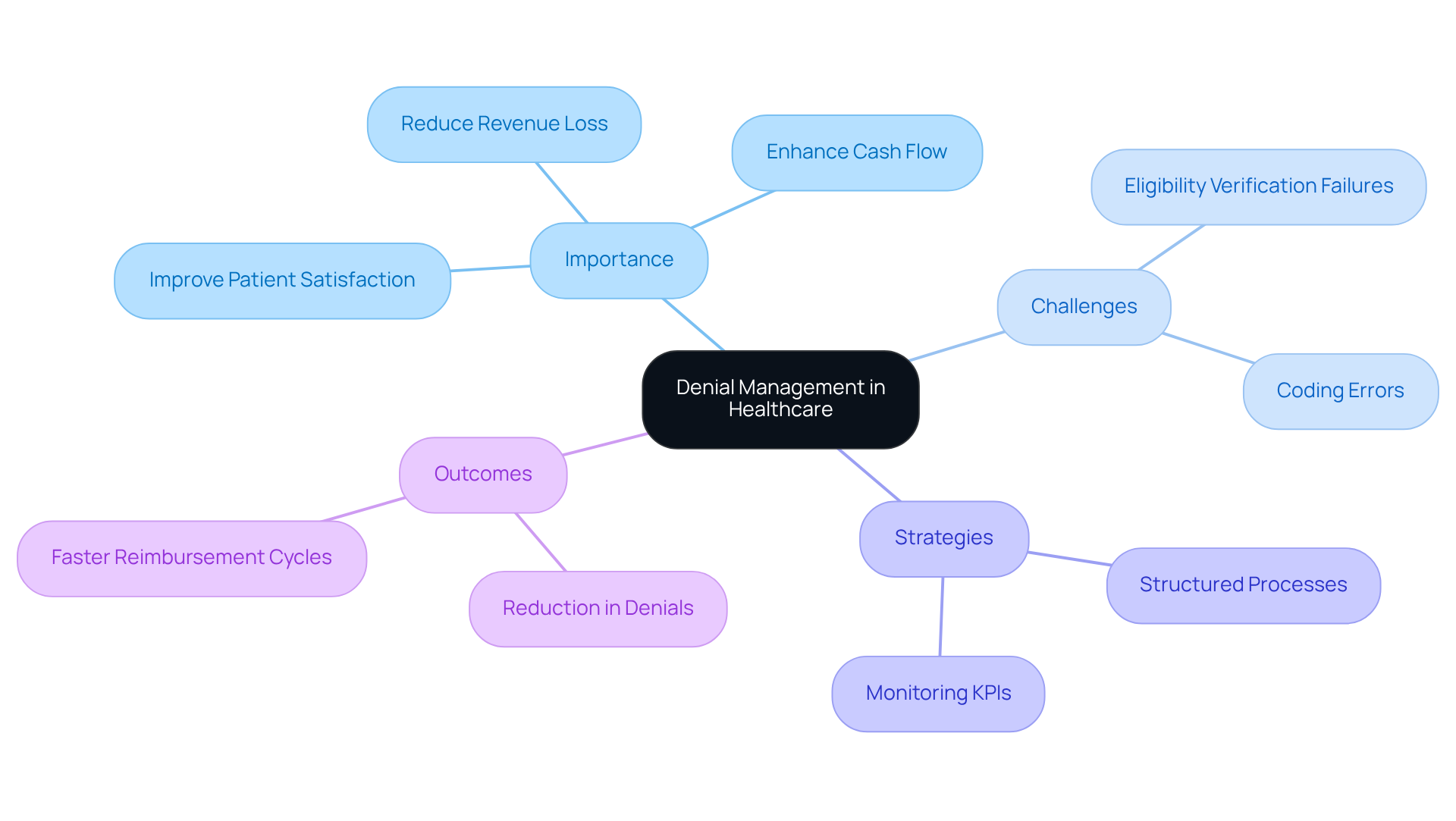
Denial oversight is critical for ensuring that healthcare providers receive the compensation they deserve for their services. This systematic process of denial management in medical coding involves identifying, analyzing, and resolving denied claims within healthcare billing. By effectively utilizing denial management in medical coding, organizations can safeguard their revenue and improve operational efficiency, thereby reducing the administrative burden on staff.
The importance of managing claims is underscored by its ability to reduce revenue loss, enhance cash flow, and ensure financial stability for healthcare organizations. Providers often struggle with denial management in medical coding due to common issues like eligibility verification failures and coding errors. Addressing these root causes enables providers to streamline their billing processes, ensuring timely reimbursements. This proactive approach not only boosts financial health but also enhances patient satisfaction.
By adopting structured denial management in medical coding processes, healthcare organizations can achieve a reduction in denials by 20-30%, leading to faster reimbursement cycles of 30-90 days. Monitoring key performance indicators (KPIs) related to claims management, such as rejection rates and appeal success rates, can lead to measurable improvements in financial performance. By concentrating on these metrics, practices can recognize trends and implement corrective measures to minimize future instances of refusals.
By 2026, the average rejection rate is expected to hit 15%, highlighting the growing challenges for healthcare providers. Therefore, incorporating effective denial management in medical coding strategies into revenue cycle processes is essential for protecting financial stability and ensuring that healthcare providers can focus on delivering quality patient care. Healthcare Partners Consulting specializes in enhancing management of appeals through prompt processing and remittance reconciliation, addressing underpayments and aging submissions to maximize revenue for healthcare providers, particularly in the mental health sector. Additionally, we offer personalized consultations to identify optimal administrative solutions tailored to your practice’s needs.
Identify Common Types of Healthcare Claim Denials
In 2026, healthcare providers face a range of challenges related to denial management in medical coding that can significantly impact their financial stability. Common types of healthcare claim denials include:
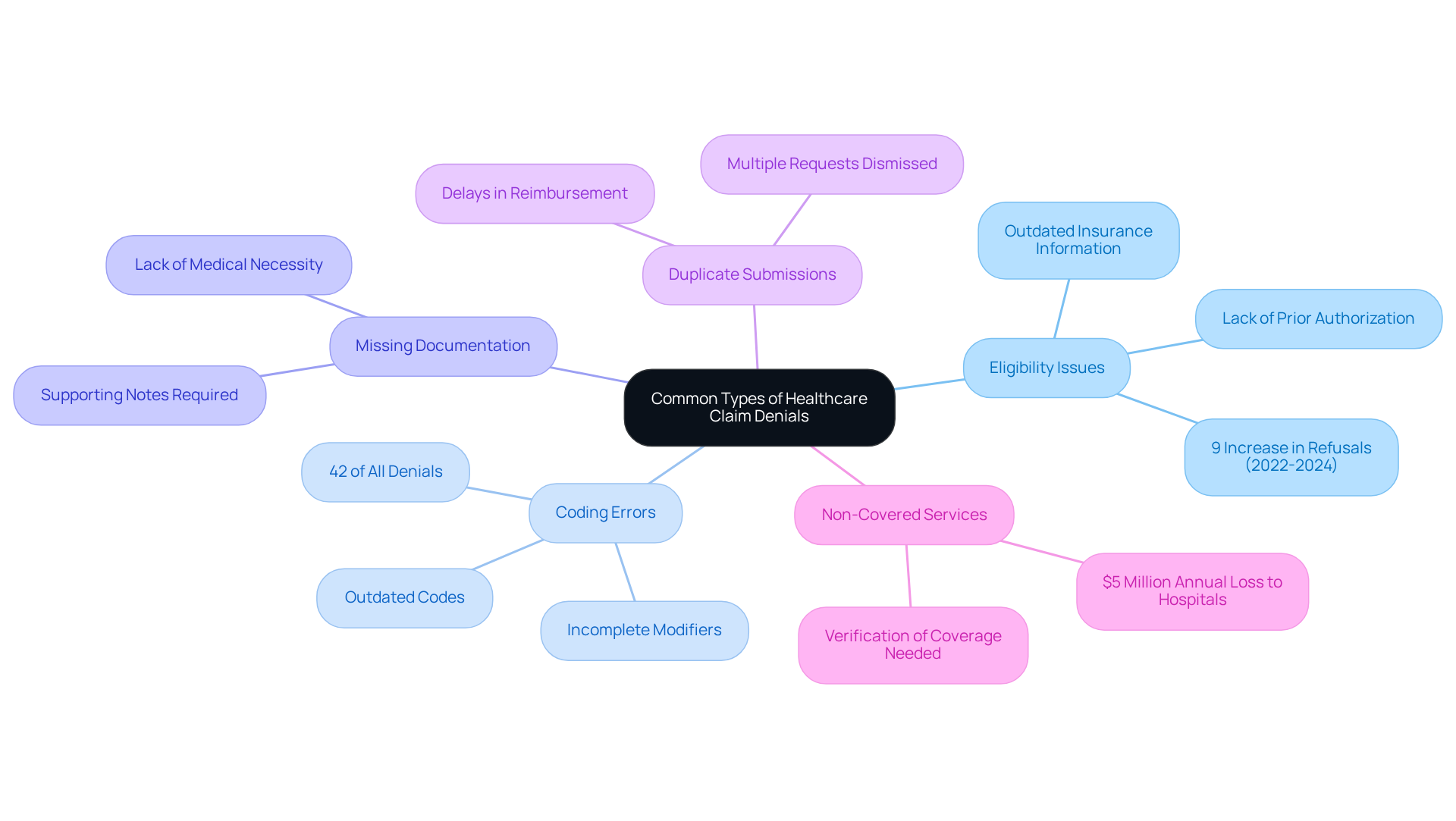
- Eligibility Issues: Claims may be denied if the patient is not eligible for the services billed, often due to outdated insurance information or lack of prior authorization. Refusals triggered by requests for information increased by 9% from 2022 to 2024. This underscores the critical need for accurate eligibility verification.
- Coding Errors: Incorrect or incomplete coding can result in rejections, accounting for approximately 42% of all submissions being denied. This includes using outdated codes or failing to include necessary modifiers. Practices that invest in coder education can see a direct return on investment by reducing these errors.
- Missing Documentation: Claims that lack required documentation, such as medical necessity or supporting notes, are often denied. A systematic approach to ensure all necessary documentation is submitted can significantly lower rejection rates.
- Duplicate Submissions: Sending the same request multiple times can lead to rejections, as payers will dismiss duplicates. This not only delays reimbursement but also creates unnecessary work for billing teams.
- Non-Covered Services: Services that are not covered under the patient’s insurance plan will be denied, emphasizing the importance of verifying coverage before treatment. In 2023, hospitals lost an average of $5 million annually to claim rejections, highlighting the financial impact of these issues.
Comprehending these prevalent types of rejection enables healthcare providers to enhance denial management in medical coding, decreasing the chances of future rejections and ensuring smoother revenue cycles. Proactively managing these areas can lead to a 20-30% reduction in denials and a 15-25% increase in reimbursement speed within 30-90 days, significantly improving financial performance through denial management in medical coding. Additionally, implementing a structured appeals process is crucial for recovering significant revenue that would otherwise be lost.
Healthcare Partners Consulting & Billing, LLC (HPC) offers personalized consultations to help practices enhance patient statements and manage submissions more effectively. This encompasses addressing underpayments, unprocessed requests, and aging submissions for improved billing efficiency.
Implement Effective Strategies for Managing Denials
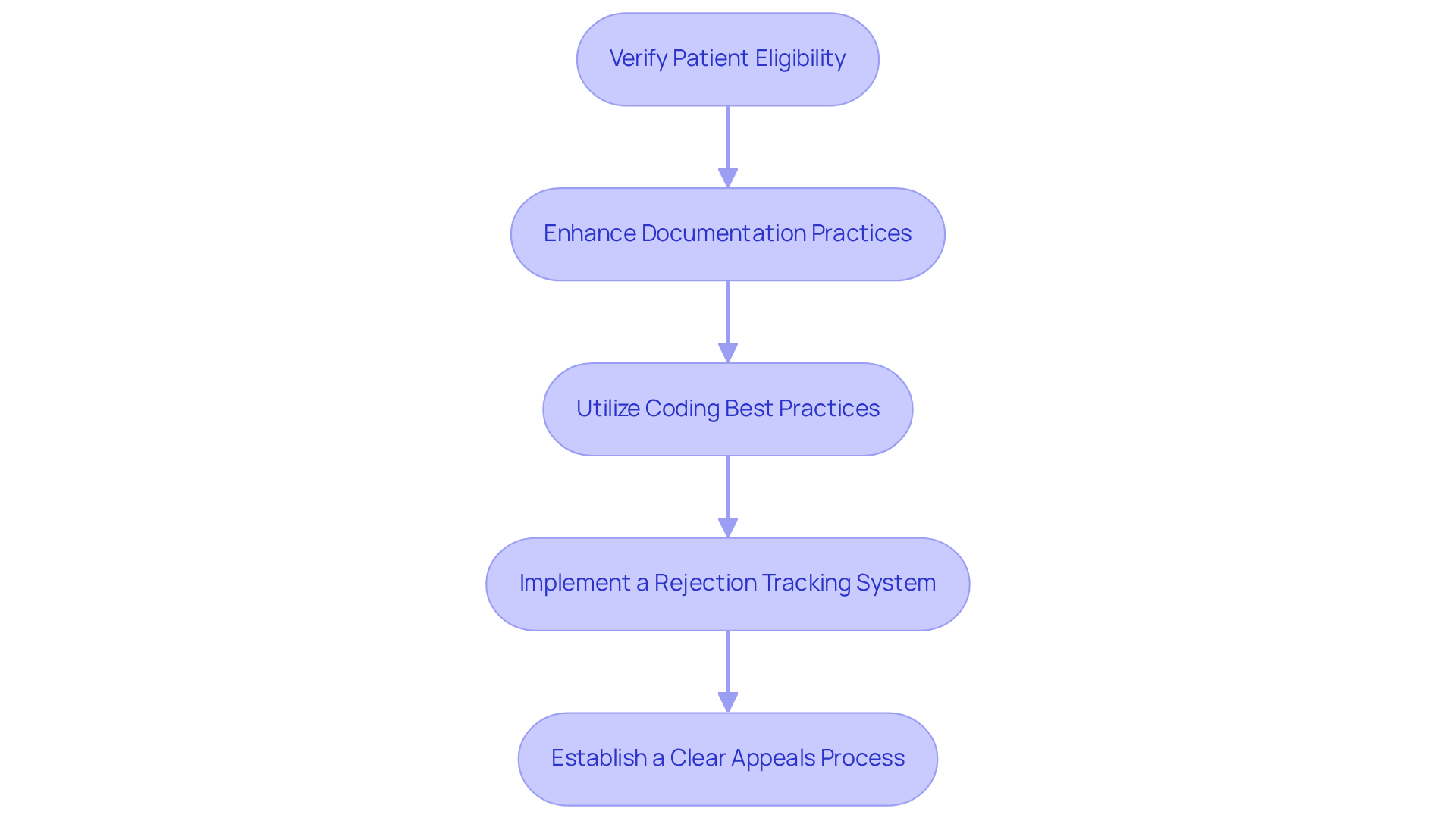
Navigating the complexities of denial management in medical coding can significantly hinder healthcare providers’ ability to deliver quality care. To effectively manage denials and optimize patient statements, healthcare providers should consider the following strategies:
- Verify Patient Eligibility: Conduct thorough eligibility checks before services are rendered to ensure that patients have active coverage and understand their benefits.
- Enhance Documentation Practices: Ensure that all necessary documentation is complete and accurate. This encompasses keeping comprehensive medical records that validate the services rendered, which is essential for addressing underpayments and unprocessed requests.
- Utilize Coding Best Practices: Train staff on the latest coding guidelines and ensure that submissions are made with the correct codes and modifiers to avoid rejections, thereby reducing the incidence of aging submissions.
- Implement a Rejection Tracking System: Use software tools to monitor rejection trends and analyze the reasons behind them. This data can help identify patterns and areas for improvement, facilitating timely appeals and remittance reconciliation.
- Establish a Clear Appeals Process: Develop a streamlined procedure for contesting denied requests, ensuring timely follow-ups and resubmissions to maximize recovery rates. This is crucial for effective refusal oversight and revenue recovery.
Implementing these strategies can significantly improve denial management in medical coding and reduce reimbursement issues for healthcare providers. Healthcare Partners Consulting & Billing, LLC (HPC) specializes in comprehensive revenue cycle oversight tailored to behavioral and mental health practices, ensuring that HPC’s expertise allows providers to navigate reimbursement complexities effectively, ensuring that financial stability does not compromise patient care.
Leverage Technology for Enhanced Denial Management
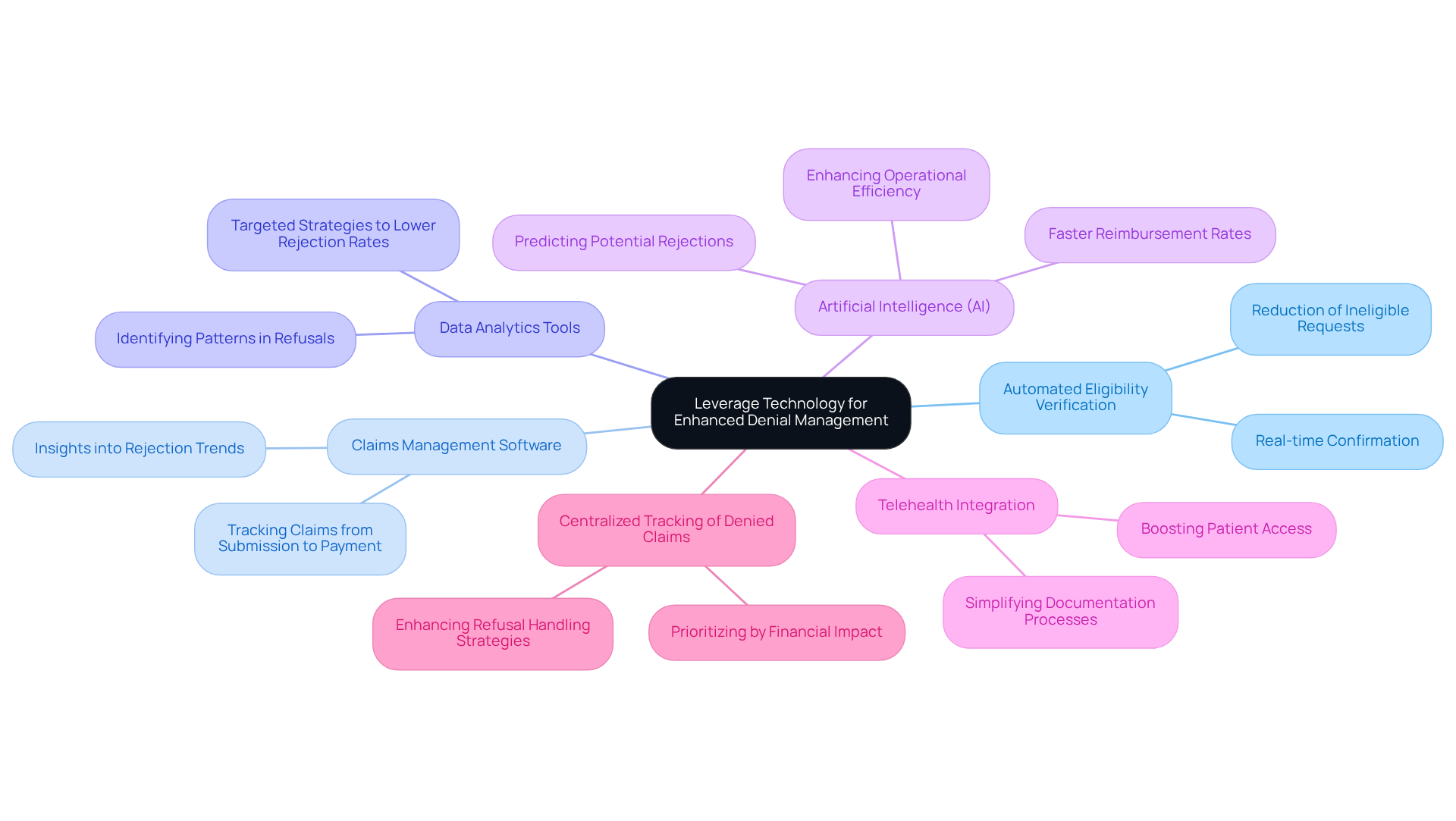
In the evolving landscape of healthcare, technology is pivotal in refining management processes. Here are several ways to leverage technology effectively:
- Automated Eligibility Verification: Implement systems that automatically confirm patient eligibility in real-time, significantly reducing the chances of submitting requests for ineligible services. This measure helps avoid common eligibility-related rejections.
- Claims Management Software: Utilize specialized software that tracks claims from submission to payment, providing insights into rejection reasons and trends. This enables organizations to identify and address recurring issues, enhancing overall efficiency.
- Data Analytics Tools: Utilize analytics to identify patterns in refusals, enabling practices to address root causes proactively. By examining rejection data, clinics can implement targeted strategies to lower rejection rates, which can decrease by 20-30% with effective interventions, as noted in recent studies on automation’s impact on rejection oversight.
- Artificial Intelligence (AI): Integrate AI solutions that analyze claims data, predict potential rejections, and suggest corrective actions before claims are submitted. AI-driven platforms can enhance operational efficiency and improve cash flow, with organizations reporting faster reimbursement rates of 15-25% within 30-90 days after implementation, demonstrating the effectiveness of AI in streamlining claims management processes.
- Telehealth Integration: For mental health providers, incorporating telehealth platforms can simplify documentation and coding processes, decreasing the chances of rejections related to service delivery. This integration boosts patient access and ensures better compliance with documentation.
- Centralized Tracking of Denied Claims: Establish a system for tracking denied claims centrally, allowing billing teams to prioritize by financial impact and appeal deadlines. This method guarantees that practices can tackle the most critical issues first, enhancing overall refusal handling strategies.
By embracing these technological advancements, healthcare providers can significantly enhance their denial management in medical coding, leading to improved cash flow and operational efficiency. Adopting these technologies not only streamlines denial management in medical coding but also positions healthcare providers for sustainable financial health.
Conclusion
Navigating the complexities of denial management is crucial for healthcare providers striving for financial stability while prioritizing patient care. Implementing targeted strategies and utilizing advanced technology enables organizations to effectively reduce claim denials, improve cash flow, and enhance operational efficiency. This proactive approach safeguards revenue and allows healthcare providers to focus more on patient care, fostering a healthier practice environment.
Throughout the article, key insights were shared regarding the common types of claim denials, such as eligibility issues, coding errors, and missing documentation. Verifying patient eligibility, improving documentation practices, and using advanced claims management software are effective strategies to tackle these challenges. Additionally, the importance of a structured appeals process and the integration of technology, including AI and data analytics, were emphasized as vital components in streamlining denial management and improving reimbursement rates.
In conclusion, the significance of denial management in healthcare cannot be overstated. By prioritizing a compliance-first approach and adopting best practices tailored to the unique needs of behavioral and mental health practices, providers can navigate the complexities of the revenue cycle with confidence. Without effective denial management, healthcare providers risk financial instability and reduced patient care quality. Ultimately, the commitment to effective denial management can transform the financial landscape of healthcare practices, allowing providers to focus on delivering exceptional care.
For personalized support in enhancing your practice’s denial management processes, consider reaching out to Healthcare Partners Consulting & Billing, LLC at info@hpcbilling.com or call 888-517-4992.
Frequently Asked Questions
What is denial management in healthcare?
Denial management in healthcare refers to the systematic process of identifying, analyzing, and resolving denied claims within healthcare billing to ensure that providers receive appropriate compensation for their services.
Why is denial management important in healthcare?
Denial management is important because it helps reduce revenue loss, enhances cash flow, and ensures financial stability for healthcare organizations. It also streamlines billing processes, leading to timely reimbursements and improved patient satisfaction.
What are common issues that healthcare providers face with denial management?
Common issues include eligibility verification failures and coding errors, which can hinder effective denial management and lead to increased denied claims.
How can structured denial management processes benefit healthcare organizations?
Structured denial management processes can reduce denials by 20-30%, leading to faster reimbursement cycles of 30-90 days and improved financial performance through monitoring key performance indicators (KPIs) related to claims management.
What key performance indicators (KPIs) should be monitored in denial management?
Key performance indicators to monitor include rejection rates and appeal success rates, which can help practices recognize trends and implement corrective measures to minimize future denials.
What is the expected average rejection rate for healthcare claims by 2026?
The average rejection rate for healthcare claims is expected to reach 15% by 2026, indicating increasing challenges for healthcare providers.
How can healthcare organizations protect their financial stability through denial management?
By incorporating effective denial management strategies into their revenue cycle processes, healthcare organizations can safeguard their financial stability and focus on delivering quality patient care.
What services does Healthcare Partners Consulting offer related to denial management?
Healthcare Partners Consulting specializes in enhancing management of appeals through prompt processing and remittance reconciliation, addressing underpayments and aging submissions to maximize revenue for healthcare providers, particularly in the mental health sector. They also offer personalized consultations to identify optimal administrative solutions tailored to practices’ needs.