
Introduction
In the intricate landscape of healthcare, mastering medical billing and practice management is crucial for clinic success. By implementing best practices, healthcare providers can streamline their operations and enhance patient care by reducing administrative burdens. Clinics often struggle with the complexities of billing processes while ensuring compliance and maximizing revenue. This discussion will outline critical strategies that empower clinics to overcome common obstacles, optimize their revenue cycle, and ultimately refocus on delivering exceptional patient care.
Implement Effective Medical Billing Processes
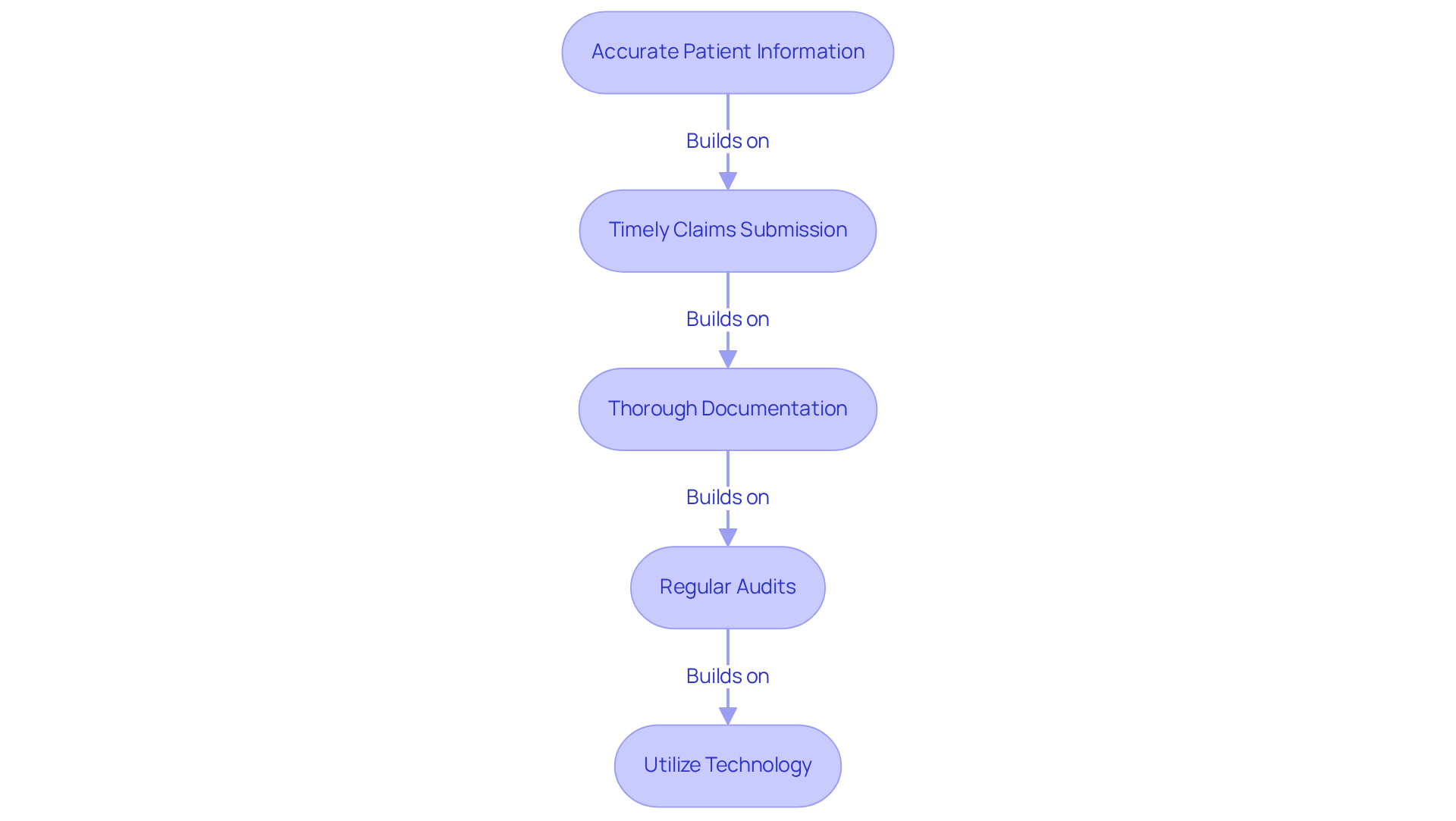
To excel in medical billing, clinics must implement a systematic approach that encompasses essential best practices:
- Accurate Patient Information: Ensure that all patient demographics and insurance details are collected accurately at the point of registration. This reduces the likelihood of claim denials due to incorrect information, as approximately 80% of medical bills contain errors. Confirming eligibility prior to each session is essential to further reduce administrative mistakes in invoicing.
- Timely Claims Submission: Submit claims promptly after services are rendered. Delays in claims submission can jeopardize timely reimbursements, creating cash flow challenges. By optimizing their medical billing and practice management processes, practices can achieve faster reimbursement. In fact, 15-25% of claims are processed within 30-90 days.
- Thorough Documentation: Maintain comprehensive documentation that supports the services billed. This includes clinical notes, treatment plans, and any relevant communications with patients. Accurate documentation is crucial, as coding mistakes are cited in about 32% of first-submission denials. The complexities of behavioral health invoicing necessitate meticulous documentation to avoid potential compliance issues.
- Regular Audits: Conduct periodic reviews of invoicing practices to identify and rectify any discrepancies. This proactive approach helps in maintaining compliance and improving accuracy. Without regular audits, clinics risk increased denials and financial instability. Implementing regular audits in the realm of medical billing and practice management can lead to a 20-30% reduction in denials, ensuring financial stability.
- Utilize technology in medical billing and practice management by implementing software that integrates with electronic health records (EHR) to streamline the invoicing process and reduce manual errors. Automation can significantly enhance efficiency and accuracy, with methods that leverage technology seeing clean claim rates above 98%.
By prioritizing these practices, clinics can enhance their financial health while focusing on delivering quality patient care. With 39 years of experience, our veteran-owned company, Healthcare Partners Consulting, specializes in services tailored for behavioral health practices, ensuring compliance and efficiency in billing processes. For personalized support, clinics can reach out to our dedicated service teams at Healthcare Partners Consulting by emailing info@hpcbilling.com or calling 888-517-4992.
Adopt Robust Denial Management Strategies
Managing claim denials effectively is crucial for clinics aiming to maintain financial health and operational efficiency. To achieve this, clinics should implement the following strategies:
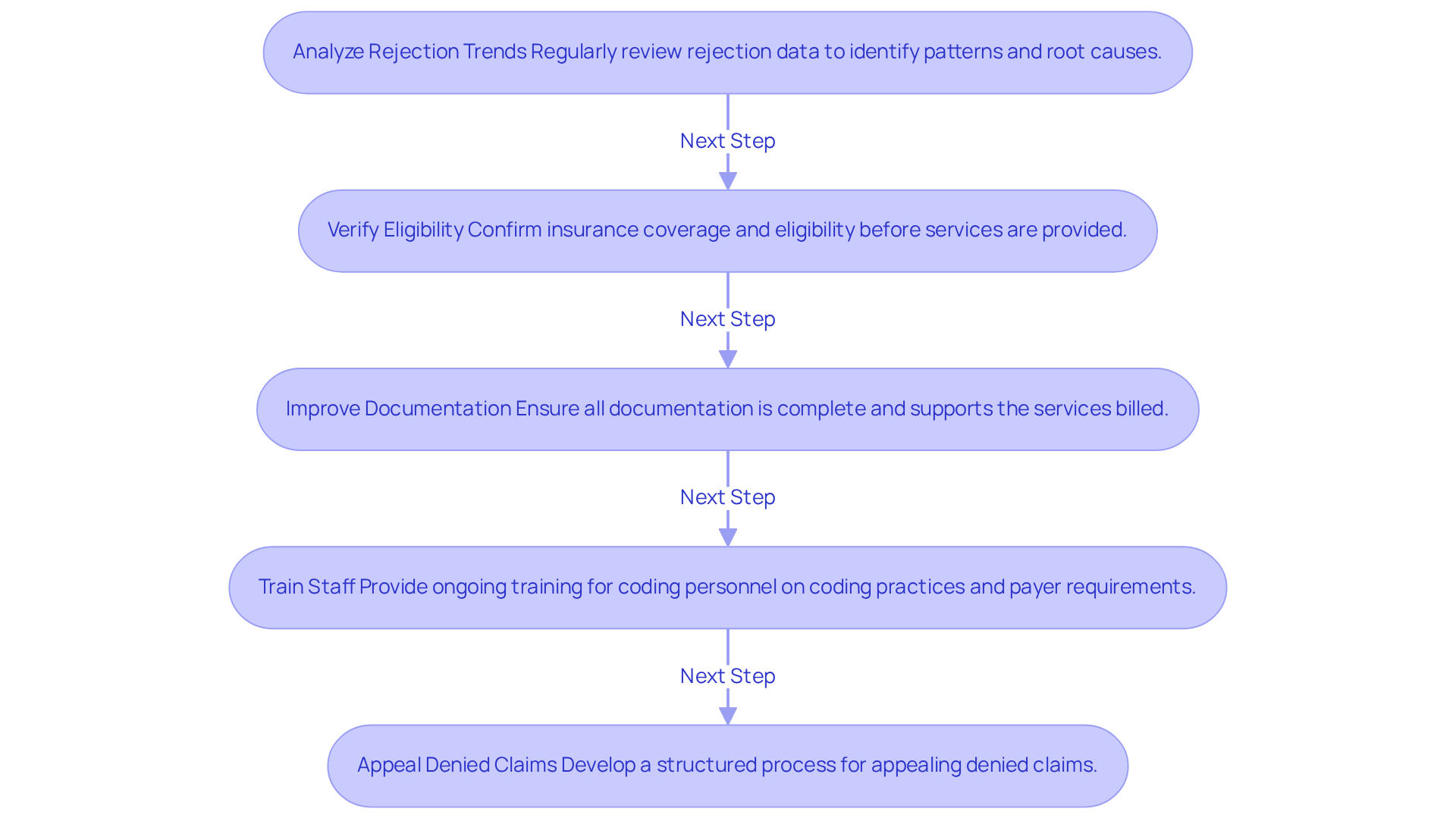
- Analyze Rejection Trends: Regularly review rejection data to identify patterns and root causes. Understanding why claims are denied allows clinics to address systemic issues, potentially reducing denial rates by 20-30%. This analysis can also guide client statement processes. Clear communication about outstanding balances is essential.
- Verify Eligibility: Confirm insurance coverage and eligibility before services are provided. This proactive measure can avert refusals related to coverage issues, ensuring smoother claims processing and enhancing satisfaction through accurate statements.
- Improve Documentation: Ensure that all documentation is complete and supports the services billed. Inadequate documentation is a common reason for claim denials, and precise records can significantly enhance claim approval rates. Clinics should also ensure that patient statements reflect accurate payment information to avoid confusion.
- Train Staff: Provide ongoing training for coding personnel on coding practices and payer requirements. Well-informed staff are better equipped to submit accurate claims and manage rejections effectively, leading to faster reimbursement timelines of 15-25% within 30-90 days. Our team, which includes a billing manager and accounts receivable manager, is here to provide your staff with the training and support they need.
- Appeal Denied Claims: Develop a structured process for appealing denied claims. Many refusals can be reversed with proper documentation and justification, and clinics that implement effective appeal strategies can see significant improvements in their revenue cycle performance. Healthcare Partners Consulting specializes in claims management, offering comprehensive support to maximize revenue recovery.
By implementing these strategies, clinics can significantly lower the rate of claim rejections and enhance their overall revenue cycle performance, ultimately improving financial stability and patient care. Additionally, clinics should be aware of common pitfalls in denial management, such as failing to track denial codes or neglecting to follow up on appeals, which can hinder their efforts to optimize revenue. Ignoring these pitfalls can lead to missed opportunities for revenue recovery and compromised patient care.
Leverage Technology for Streamlined Operations
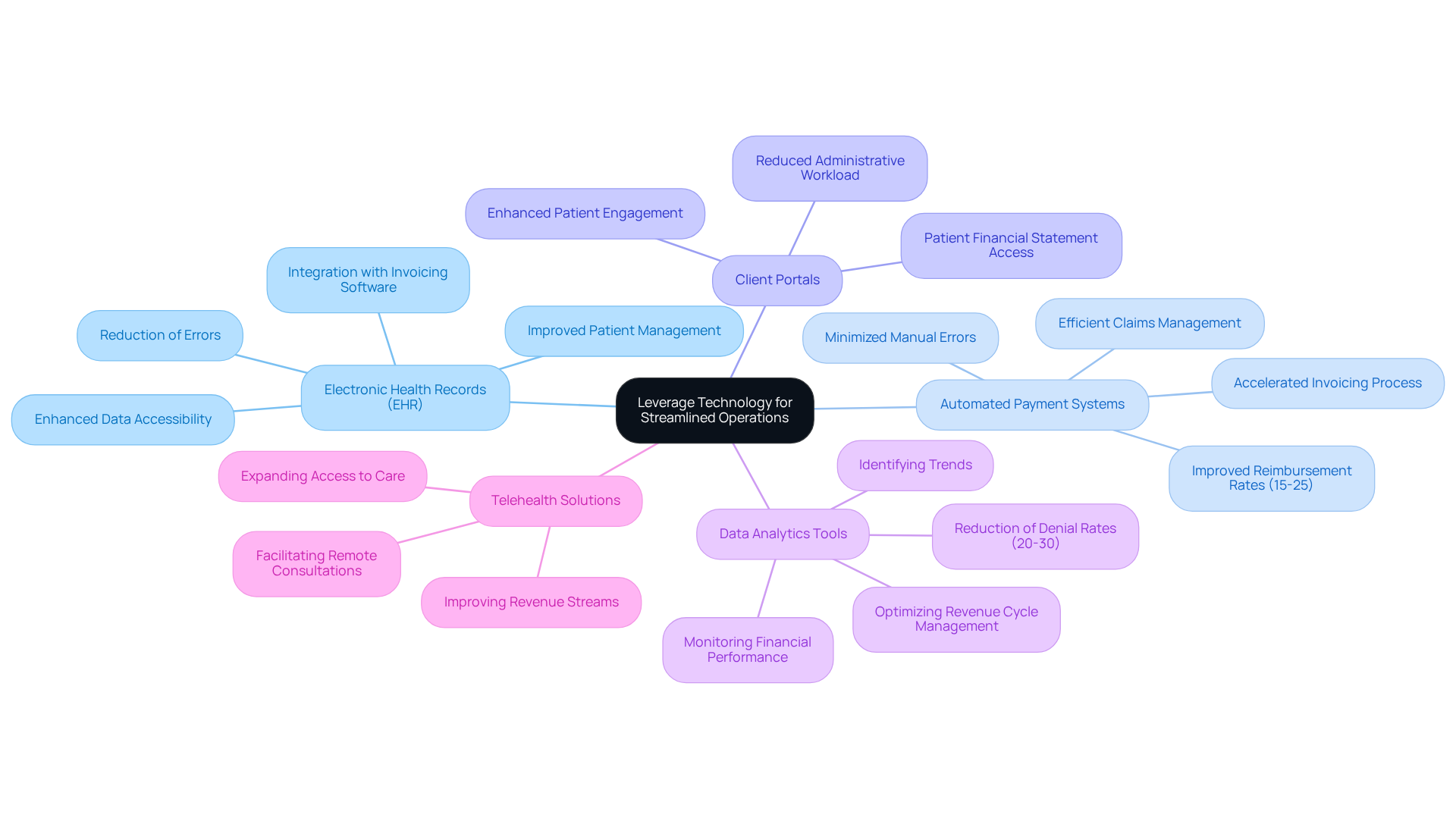
To achieve optimal operational efficiency, clinics must adopt advanced technological solutions that address current inefficiencies in practice management, particularly those offered by Healthcare Partners Consulting, a veteran-owned company with 39 years of experience specializing in medical and mental health billing and practice management services:
- Electronic Health Records (EHR): Implement EHR systems that integrate seamlessly with invoicing software, such as TherapyNotes and SimplePractice, to streamline documentation and invoicing processes. This integration reduces the risk of errors and enhances data accessibility, which is vital for effective patient management.
- Automated Payment Systems: Implement automated payment systems that efficiently manage claims submissions, follow-ups, and payment postings. In the realm of medical billing and practice management, automation minimizes manual errors and accelerates the invoicing process, potentially improving reimbursement rates by 15% to 25% within 30 to 90 days. Such efficiency is crucial for maintaining financial sustainability in mental health services.
- Client Portals: Provide client portals that enable individuals to view their financial statements, make payments, and communicate with the practice. This not only enhances patient engagement but also reduces the administrative workload on staff, fostering a more collaborative care environment.
- Data Analytics Tools: Utilize analytics tools to monitor financial performance, identify trends, and make data-driven decisions. These tools can help clinics optimize their revenue cycle management, potentially reducing denial rates by 20% to 30%. For instance, a research analysis on improved invoicing methods demonstrated notable advancements in revenue cycle effectiveness through the application of analytics.
- Telehealth Solutions: Incorporate telehealth platforms that facilitate remote consultations and billing. This expands access to care and can significantly improve revenue streams for mental health practices, especially in a landscape increasingly focused on remote healthcare delivery.
Embracing these technological advancements is not merely an option; it is a necessity for clinics aiming to thrive in an increasingly competitive healthcare landscape.
Invest in Staff Training for Compliance and Accuracy
To achieve compliance and accuracy in medical billing, clinics must prioritize comprehensive staff training initiatives:
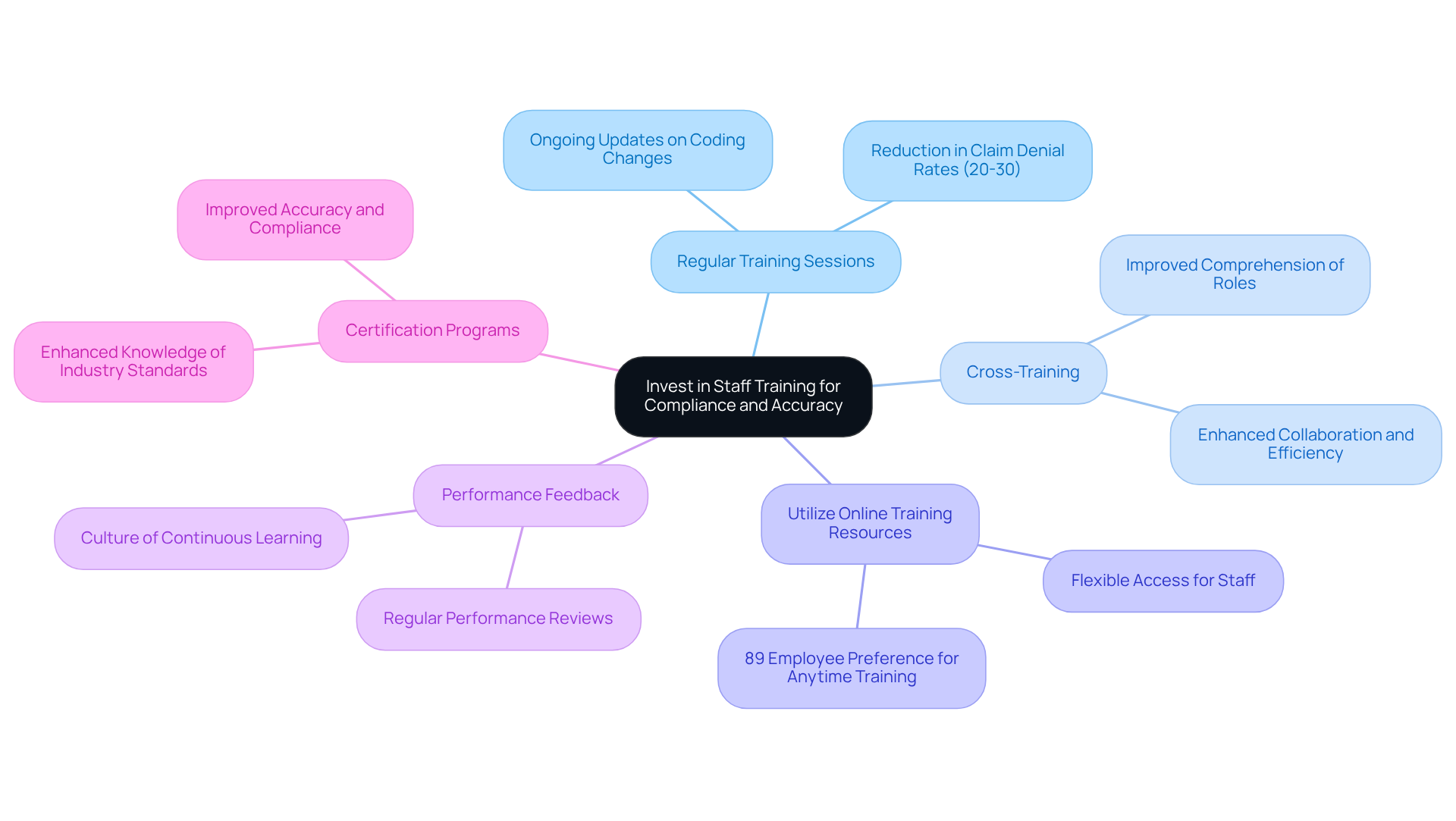
- Regular Training Sessions: Schedule ongoing training sessions to keep staff updated on coding changes, payer requirements, and compliance regulations. This proactive approach not only prevents errors but also ensures adherence to best practices, leading to a reduction in claim denial rates by 20-30%.
- Cross-Training: Promote cross-training among staff to improve their comprehension of various roles within the invoicing process. This encourages collaboration and enhances overall efficiency, resulting in a more unified financial operation.
- Utilize Online Training Resources: Leverage online training platforms that offer courses on medical coding and compliance. These resources offer flexible access, accommodating staff schedules. Notably, 89% of employees prefer training that is available anytime and anywhere.
- Performance Feedback: Provide regular feedback on staff performance related to invoicing accuracy and compliance. Constructive feedback assists staff in recognizing areas for enhancement and reinforces optimal methods, contributing to a culture of continuous learning.
- Certification Programs: Encourage staff to pursue certification in medical coding. Certified professionals are often more knowledgeable about industry standards and best practices, which can significantly enhance accuracy and compliance.
Investing in staff training enhances medical billing and practice management processes and ensures compliance, which in turn improves patient care. Ultimately, clinics that invest in their staff’s education will see significant improvements in both financial performance and patient outcomes.
Conclusion
Effective medical billing and practice management are critical for clinics navigating the complexities of the healthcare landscape. Focusing on best practices streamlines operations and enhances compliance. This empowers healthcare providers and significantly improves clinics’ financial health while prioritizing patient care. Emphasizing accuracy and timely claims submission mitigates denial risks. Thorough documentation fosters a culture of transparency and integrity within the practice.
Key strategies discussed include:
- Robust denial management
- Leveraging technology for operational efficiency
- Investing in comprehensive staff training
Each of these elements plays a critical role in optimizing revenue cycle management, particularly in the specialized fields of behavioral and mental health. By adopting a compliance-first approach and utilizing advanced technological solutions, clinics can navigate the complexities of medical billing with greater ease and effectiveness.
Failure to address these challenges can detract from the primary mission of healthcare: providing exceptional patient care. Clinics should embrace these best practices and reach out to Healthcare Partners Consulting & Billing, LLC for tailored support. With 39 years of experience, HPC is committed to integrity and innovation, ready to assist clinics in achieving operational goals while ensuring compliance and enhancing patient outcomes. By prioritizing these strategies, clinics can not only enhance their financial performance but also ensure that patient care remains at the forefront of their operations.
Frequently Asked Questions
What are the essential best practices for effective medical billing?
Essential best practices for effective medical billing include ensuring accurate patient information, timely claims submission, thorough documentation, regular audits, and utilizing technology to streamline the invoicing process.
Why is accurate patient information important in medical billing?
Accurate patient information is crucial because approximately 80% of medical bills contain errors. Collecting correct demographics and insurance details at registration reduces the likelihood of claim denials.
How does timely claims submission affect medical billing?
Timely claims submission is important as delays can jeopardize reimbursements and create cash flow challenges. Optimizing billing processes can lead to faster reimbursements, with 15-25% of claims processed within 30-90 days.
What role does documentation play in medical billing?
Thorough documentation supports the services billed and includes clinical notes and treatment plans. Accurate documentation is vital, as coding mistakes contribute to about 32% of first-submission denials.
How can regular audits improve medical billing practices?
Regular audits help identify and rectify discrepancies in invoicing practices, maintaining compliance and improving accuracy. Implementing audits can lead to a 20-30% reduction in denials, ensuring financial stability.
What technology can be utilized in medical billing?
Clinics can implement software that integrates with electronic health records (EHR) to streamline the invoicing process and reduce manual errors. Automation can enhance efficiency and accuracy, achieving clean claim rates above 98%.
How can clinics contact Healthcare Partners Consulting for support?
Clinics can reach out to Healthcare Partners Consulting for personalized support by emailing info@hpcbilling.com or calling 888-517-4992.