
Introduction
In mental health care, the complexities of medical billing and coding present significant challenges that must be addressed to ensure fair compensation for providers. By mastering these processes, clinics can enhance their revenue cycle management and alleviate administrative burdens, enabling healthcare professionals to prioritize patient care. Given the evolving landscape of regulations and coding requirements, mental health practices must develop strategies to navigate these challenges and enhance their operational and financial health.
Understand Medical Billing and Coding Fundamentals
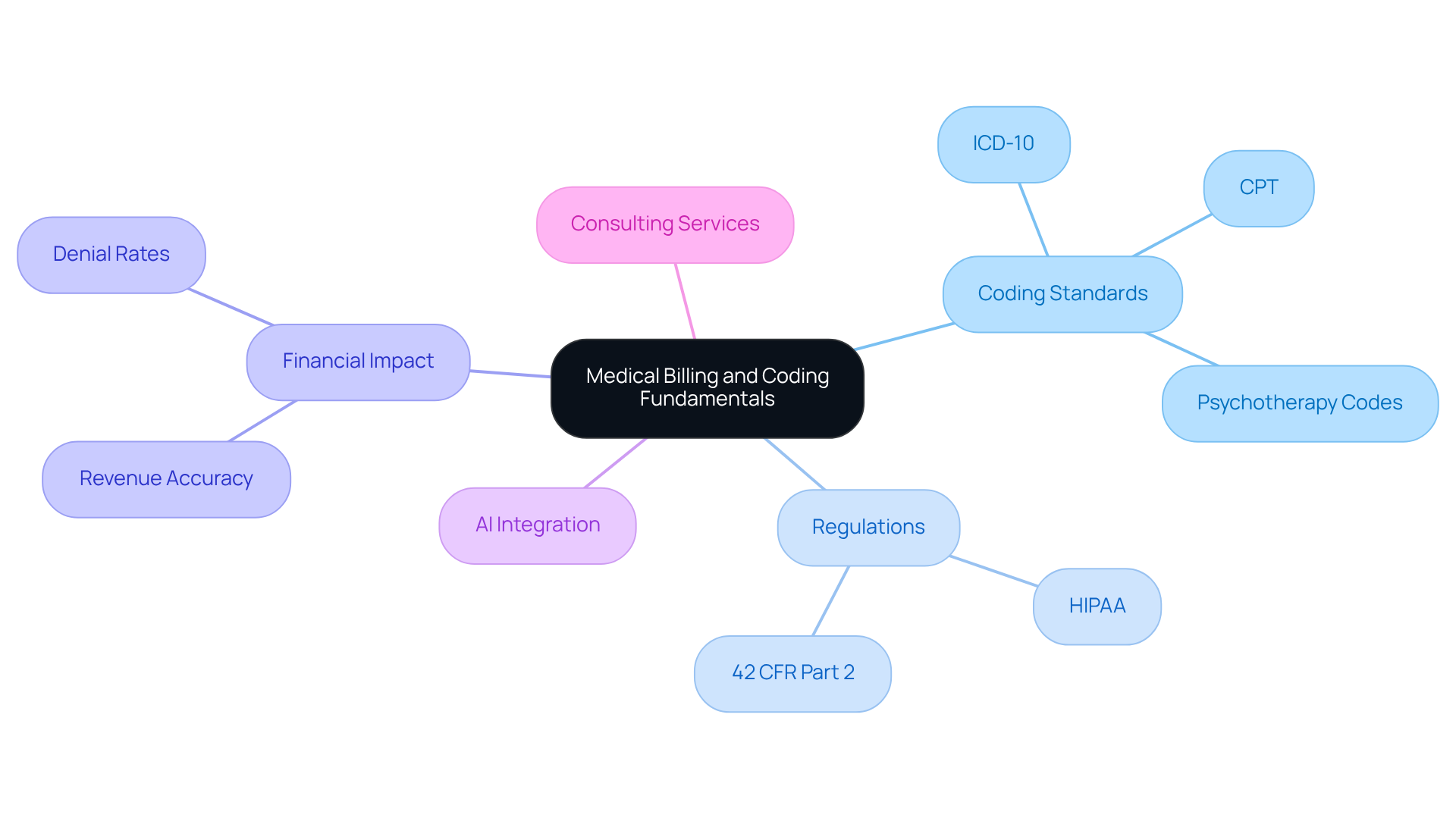
In the intricate landscape of healthcare, medical billing coding services and reimbursement play a pivotal role in ensuring providers receive fair compensation for their services. In clinics focused on psychological well-being, medical coding converts healthcare services, diagnoses, and procedures into standardized codes, such as ICD-10 for diagnoses and CPT for procedures. Understanding these nuances is crucial, as providers in psychological services encounter unique invoicing scenarios, such as therapy sessions and psychiatric assessments.
For example, specific psychotherapy codes vary based on session duration and complexity, necessitating familiarity with these distinctions. Adherence to regulations, especially HIPAA and the forthcoming full enforcement of revised 42 CFR Part 2 regulations on February 16, 2026, is crucial to protect patient information throughout the payment process. By mastering these fundamentals, mental health clinics can significantly enhance revenue accuracy and streamline their medical billing coding services and revenue cycle management.
Healthcare Partners Consulting (HPC) takes a compliance-first approach, focusing on personalized consultations to help practices find the best administrative solutions for their unique needs. Recent trends indicate that the complexity of payment requirements is increasing, with more explicit documentation needed to demonstrate medical necessity. Practices that effectively monitor patient progress and integrate this data into their financial processes are better positioned to negotiate with payers and enhance their competitive advantage. Moreover, HPC’s specialized medical billing coding services can assist in decreasing denial rates by 20-30% and speeding up reimbursement timelines by 15-25% within 30-90 days, demonstrating how effective invoicing practices can lead to significant financial benefits.
Furthermore, the integration of AI and automation in medical billing coding services is transforming how healthcare facilities manage their operations, enhancing coding accuracy and alleviating administrative burdens. Case studies reveal that healthcare facilities leveraging integrated revenue cycle management platforms experience fewer errors and improved operational efficiency. HPC’s dedication to delivering tailored administrative support services allows practices to concentrate on patient care while improving their profitability. To further assist practices in evaluating their financial status, HPC offers the ‘Discover Your Mental Health Practice Profitability Score’ quiz, enabling practices to identify hidden revenue leaks and obtain tailored recommendations. Practices that proactively adapt to these changes will not only safeguard their revenue but also enhance their overall operational efficiency.
Choose Tailored Billing and Coding Solutions for Your Clinic
Clinics often struggle with operational inefficiencies that hinder patient care. They should prioritize specialized medical billing coding services that accommodate unique coding requirements and integrate seamlessly with electronic records systems like TherapyNotes and SimplePractice.
Healthcare Partners Consulting (HPC) offers comprehensive invoicing solutions designed to streamline all aspects of clinic operations. For instance, healthcare facilities utilizing HPC’s customized invoicing services have reported:
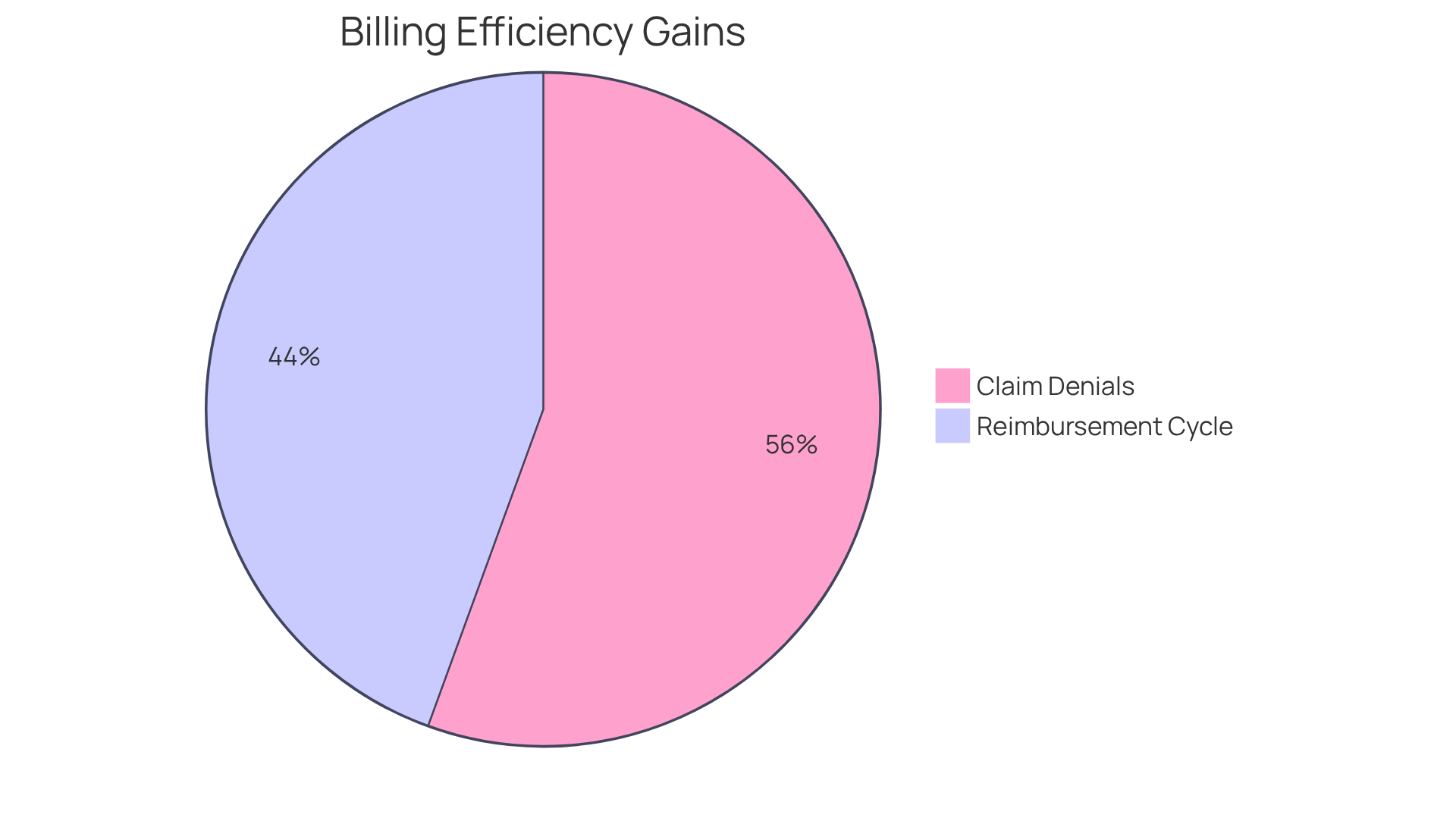
- A 20-30% decrease in claim denials
- A 15-25% quicker reimbursement cycle within 30-90 days
This transformation turns operational challenges into streamlined processes that enhance patient care. Moreover, HPC’s veteran-owned status and 39 years of experience in the field underscore its commitment to compliance and excellence.
Scalability is also a crucial factor when evaluating these solutions, ensuring that the chosen software can grow alongside the practice. By investing in medical billing coding services from Healthcare Partners Consulting, behavioral facilities can optimize their operations, enhance compliance, and ultimately improve patient outcomes.
Invest in Staff Training and Continuous Education
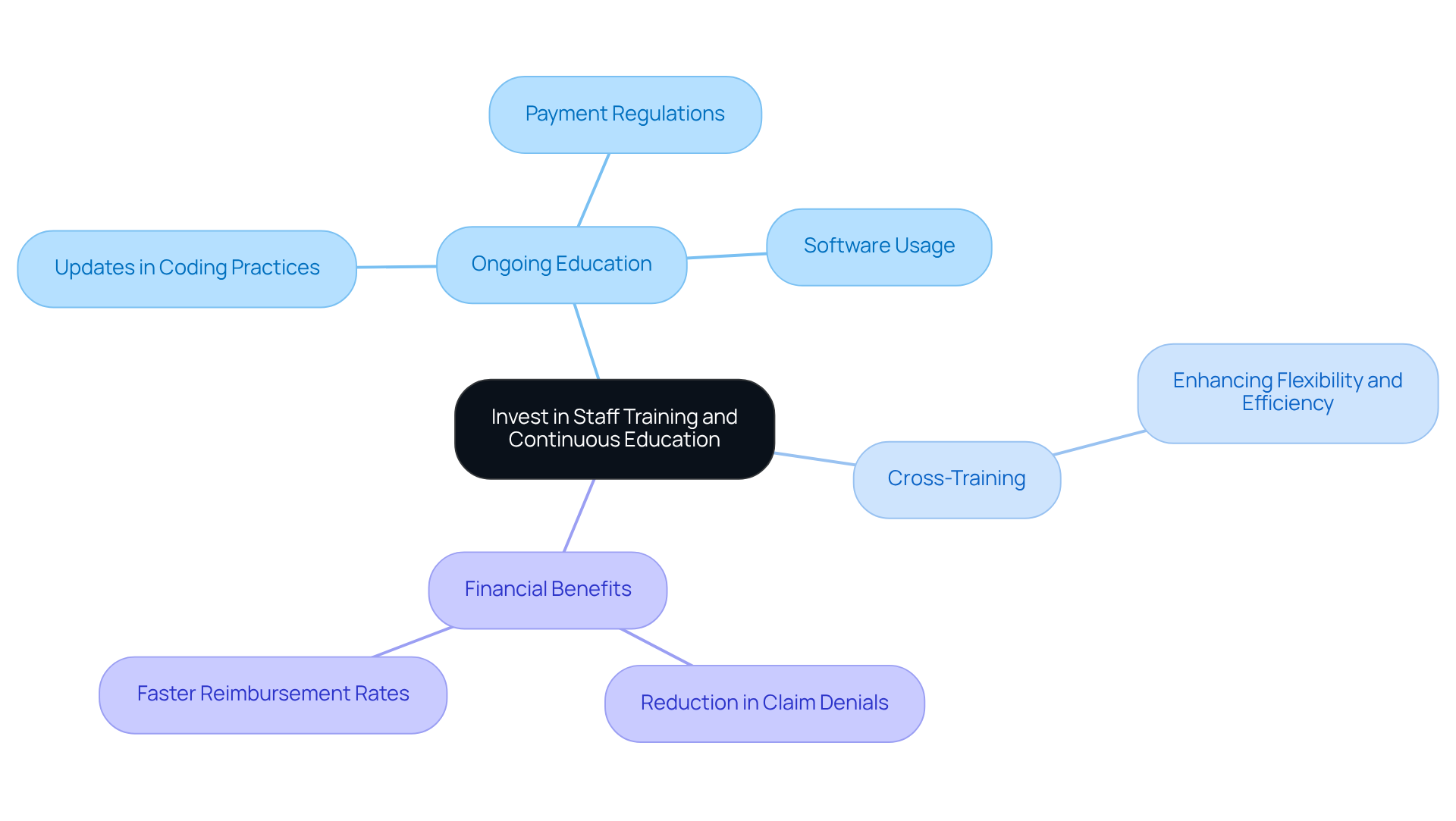
In the complex landscape of medical billing coding services, ongoing education for coding personnel is crucial to maintaining compliance and accuracy. Regular training sessions must focus on updates in coding practices, payment regulations, and software usage, especially regarding the latest ICD-10 codes for psychological care and invoicing for telehealth services.
- Cross-training staff in various roles within the invoicing process can further enhance flexibility and efficiency.
- Investing in staff training can reduce claim denials by 20-30% and improve revenue cycle management, resulting in reimbursement rates that are 15-25% faster within 30 to 90 days.
Healthcare Partners Consulting provides medical billing coding services through adaptable plans customized to the specific requirements of psychological care facilities, ensuring that these establishments can modify their invoicing processes efficiently. Ultimately, prioritizing education not only minimizes errors but also fortifies the financial health of psychological clinics.
Implement Effective Denial Management Strategies
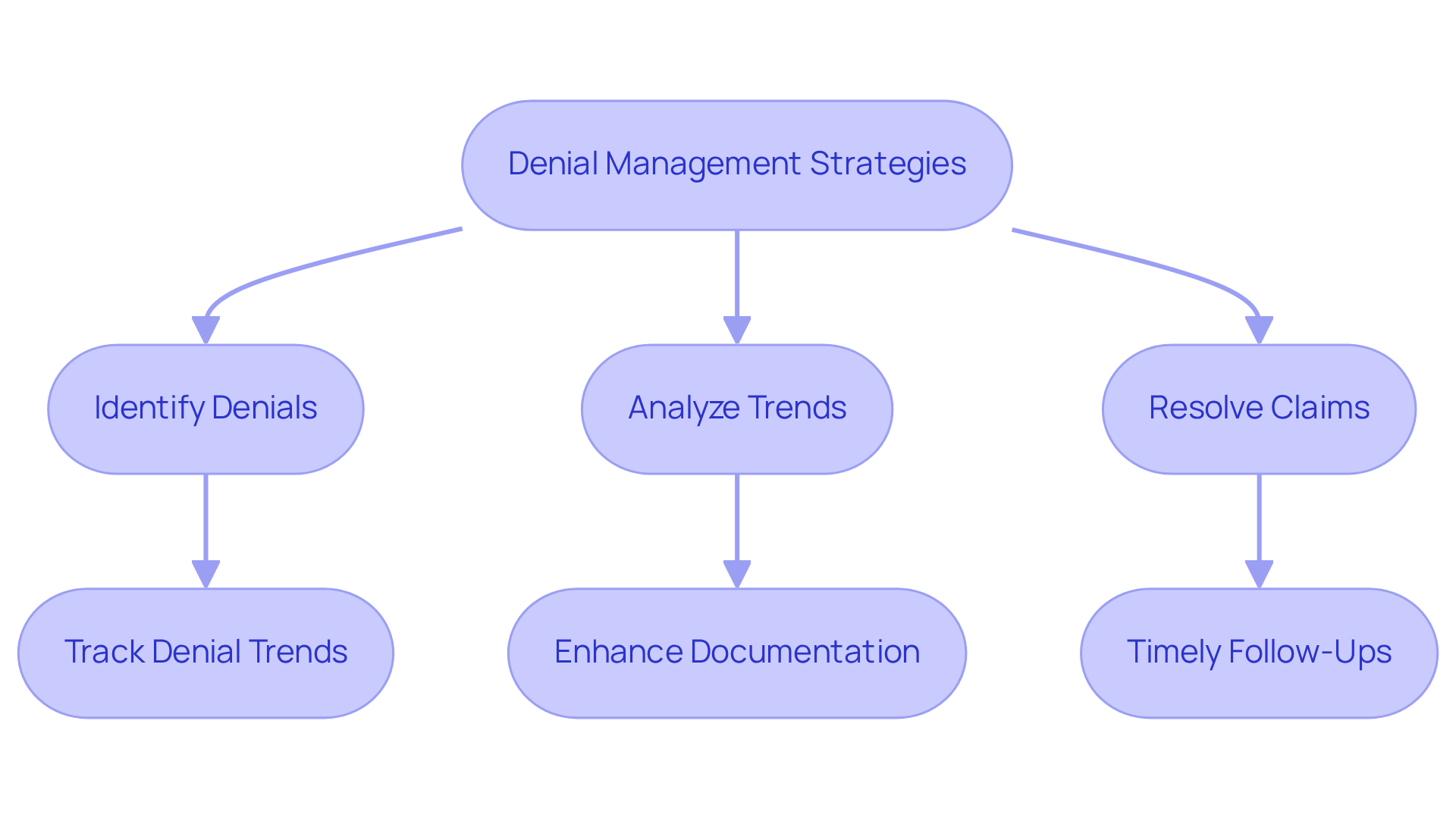
Optimizing revenue cycles hinges on effective denial management, a critical yet often overlooked aspect of financial health in healthcare facilities. Establishing a systematic approach to identify, analyze, and resolve claim denials is essential. This includes tracking denial trends to pinpoint common issues and implementing preventive measures.
For instance, enhancing documentation practices ensures that all necessary information is included in claims, significantly reducing the likelihood of denials. Timely follow-ups on denied claims improve recovery rates. Proactive strategies can reduce denials by 20-30% and expedite reimbursements by 15-25% within 30-90 days.
Implementing these strategies enables mental health facilities to enhance financial performance and secure appropriate compensation for the care provided. Case studies demonstrate that clinics implementing structured denial management processes see improved operational efficiency and reduced administrative burdens, allowing them to focus more on patient care.
Ultimately, the implementation of structured denial management processes can transform financial stability, enabling facilities to prioritize patient care over administrative challenges.
Conclusion
Enhancing operational efficiency in mental health clinics hinges on mastering medical billing coding services, which is crucial for prioritizing patient care. Prioritizing compliance and tailored solutions enables practices to navigate billing complexities effectively, ensuring fair compensation for their services. This approach alleviates administrative burdens and empowers healthcare providers to dedicate more time to their patients.
Key insights from the article highlight the importance of:
- Understanding medical billing fundamentals
- Investing in staff training
- Implementing effective denial management strategies
By leveraging specialized services from Healthcare Partners Consulting & Billing, LLC (HPC), clinics can significantly reduce claim denials and expedite reimbursement cycles. The emphasis on continuous education and tailored billing solutions ensures that practices remain compliant and financially healthy, ultimately leading to improved patient outcomes.
In a landscape where operational efficiency directly impacts patient care, clinics must embrace best practices in billing management. By investing in comprehensive revenue cycle management and prioritizing compliance, providers can transform their billing processes and enhance their overall practice performance. Engaging with expert services like those offered by HPC not only safeguards revenue but also fosters a culture of empowerment and innovation within the healthcare community. For further assistance, practices can reach out to HPC at info@hpcbilling.com or call 888-517-4992 to explore tailored solutions that meet their unique needs.
Frequently Asked Questions
What is the role of medical billing and coding in healthcare?
Medical billing and coding are essential for ensuring that healthcare providers receive fair compensation for their services by converting healthcare services, diagnoses, and procedures into standardized codes.
What coding systems are commonly used in medical billing?
The commonly used coding systems include ICD-10 for diagnoses and CPT for procedures.
Why is understanding medical billing and coding important for psychological services?
Providers in psychological services face unique invoicing scenarios, such as therapy sessions and psychiatric assessments, which require familiarity with specific psychotherapy codes that vary based on session duration and complexity.
What regulations must be adhered to in medical billing and coding?
Adherence to regulations such as HIPAA and the revised 42 CFR Part 2 regulations, which will be fully enforced on February 16, 2026, is crucial to protect patient information during the payment process.
How can mastering medical billing and coding fundamentals benefit mental health clinics?
By mastering these fundamentals, mental health clinics can enhance revenue accuracy and streamline their medical billing coding services and revenue cycle management.
What approach does Healthcare Partners Consulting (HPC) take in assisting practices?
HPC takes a compliance-first approach, offering personalized consultations to help practices find the best administrative solutions tailored to their unique needs.
What recent trends are affecting medical billing requirements?
The complexity of payment requirements is increasing, necessitating more explicit documentation to demonstrate medical necessity.
How can practices improve their negotiation position with payers?
Practices that effectively monitor patient progress and integrate this data into their financial processes are better positioned to negotiate with payers and enhance their competitive advantage.
What financial benefits can HPC’s medical billing coding services provide?
HPC’s services can decrease denial rates by 20-30% and speed up reimbursement timelines by 15-25% within 30-90 days.
How is AI and automation impacting medical billing coding services?
The integration of AI and automation is transforming operations by enhancing coding accuracy and alleviating administrative burdens in healthcare facilities.
What additional resources does HPC offer to help practices evaluate their financial status?
HPC offers the ‘Discover Your Mental Health Practice Profitability Score’ quiz, which helps practices identify hidden revenue leaks and obtain tailored recommendations.
What is the overall benefit of adapting to changes in medical billing and coding?
Practices that proactively adapt to changes can safeguard their revenue and enhance their overall operational efficiency.