

Introduction
Effective financial management serves as the backbone of any successful clinic. However, many healthcare providers find it challenging to navigate the complex landscape of clinic finances. By mastering essential financial concepts and metrics, clinic managers can enhance profitability and operational efficiency. Yet, with rising costs and regulatory pressures, clinics must consider how to not only survive but thrive in this demanding environment. This article outlines critical steps for effective clinic financial management, presenting strategies that empower healthcare providers to take control of their financial health and secure long-term success.
Understand Key Financial Concepts for Your Clinic
To effectively manage your clinic’s finances, understanding several key financial concepts is crucial:
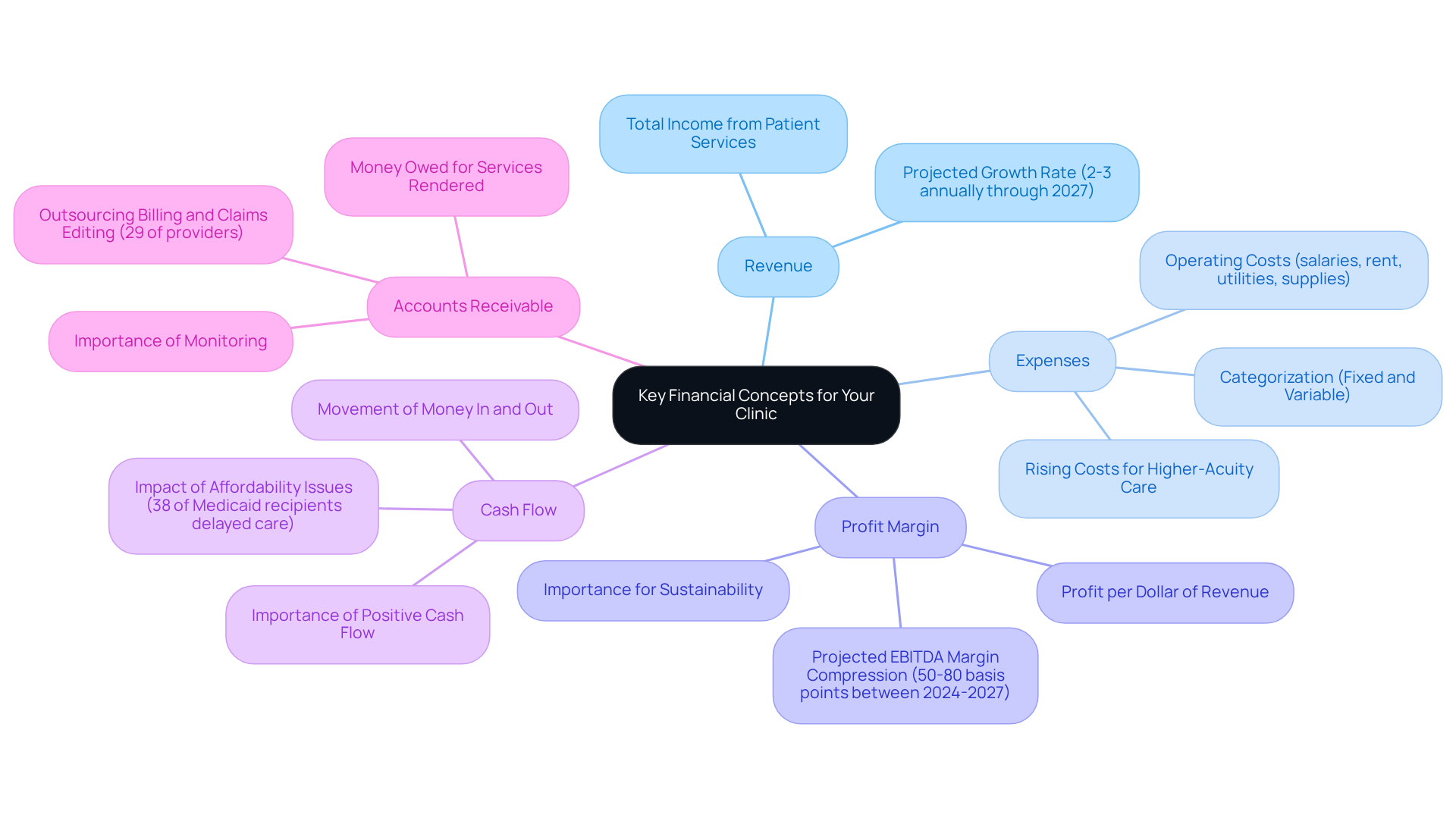
- Revenue: This represents the total income generated from patient services before any expenses are deducted. Grasping your revenue streams is essential for accurate forecasting and budgeting, particularly as revenue per member in the large group segment is projected to rise by 2 to 3 percent annually through 2027.
- Expenses: These encompass the costs incurred in operating your facility, including salaries, rent, utilities, and supplies. By 2026, average expenses for mental health facilities are expected to reflect the rising costs associated with higher-acuity patient care. Categorizing expenses into fixed and variable can significantly aid in managing cash flow effectively.
- Profit Margin: This metric indicates the profit your practice generates for every dollar of revenue. A healthy profit margin is vital for sustainability, especially as EBITDA margins in the healthcare sector are anticipated to compress by 50 to 80 basis points between 2024 and 2027.
- Cash Flow: This refers to the movement of money in and out of your practice. Positive cash flow is essential for meeting operational expenses and investing in growth, particularly in an environment where 38% of Medicaid recipients have delayed care due to affordability issues.
- Accounts Receivable: This is the money owed to your practice for services rendered but not yet paid. Monitoring accounts receivable is critical for managing cash flow effectively, as 29% of providers outsource billing and claims editing to enhance their revenue cycle management.
By comprehending these principles, healthcare managers will understand how to manage clinic finances more effectively and make informed decisions that impact their practice’s success.
Identify and Monitor Essential Financial Metrics
To maintain a healthy financial status for your clinic, focus on the following essential financial metrics:
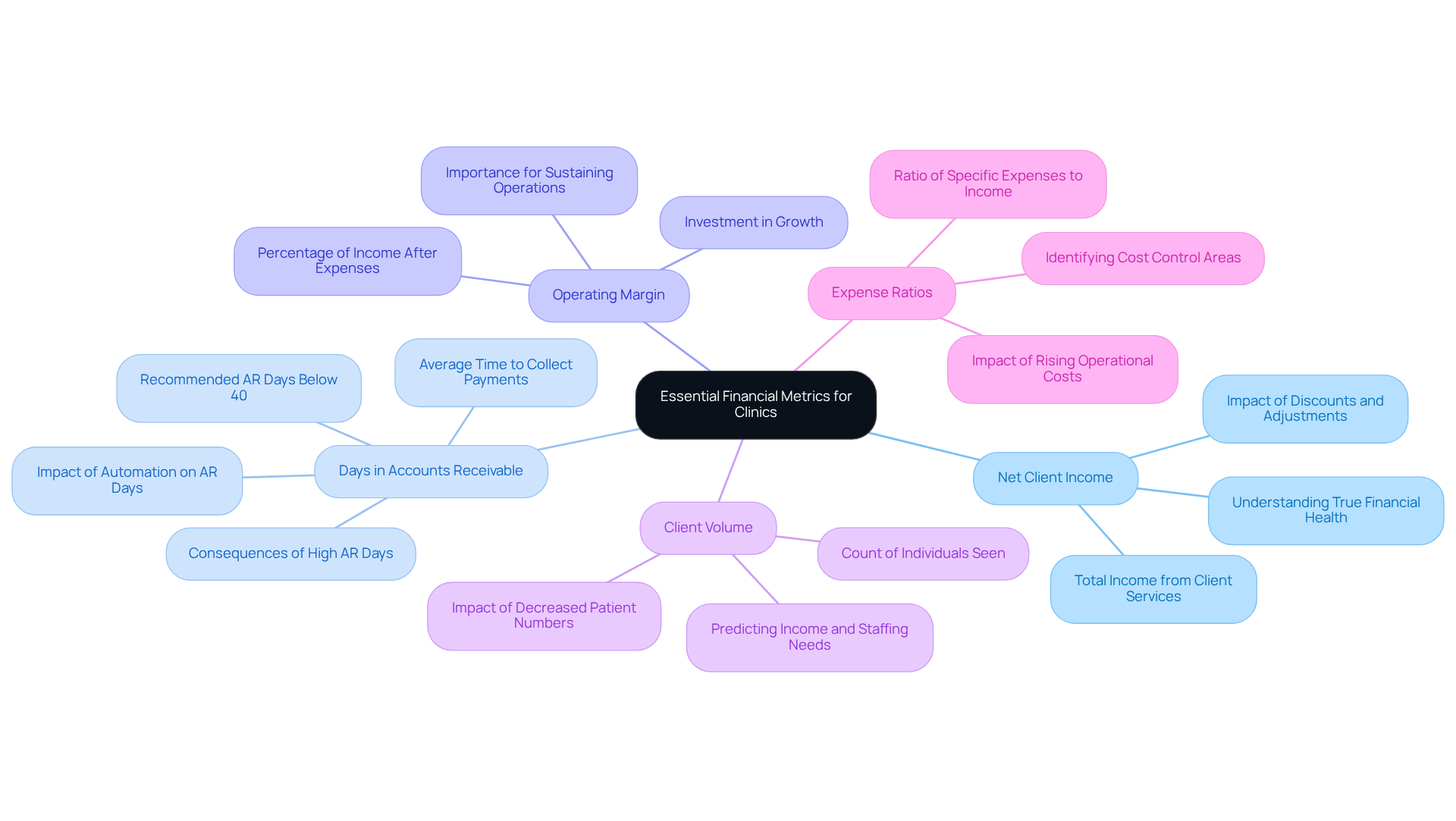
- Net Client Income: This metric signifies the total income generated from client services after considering contractual adjustments and discounts. Efficiently monitoring net patient earnings is essential for comprehending your facility’s true income and financial well-being.
- Days in Accounts Receivable (AR): This figure indicates the average time it takes to collect payments after services are rendered. Healthcare organizations recommend keeping AR days below 40, with high-performing practices targeting under 30 days. A lower AR days number indicates effective billing practices and enhanced cash flow, as every extra day in AR can signify millions of dollars in income left unpaid. With Healthcare Partners Consulting’s streamlined accounts receivable management, medical facilities can achieve a 20-40% reduction in days in AR, significantly enhancing cash flow and reducing administrative burdens.
- Operating Margin: This metric measures the percentage of income remaining after covering operating expenses, providing insight into your clinic’s profitability. A healthy operating margin is essential for sustaining operations and investing in growth.
- Client Volume: Tracking the count of individuals seen during a designated timeframe is essential for predicting income and handling staffing requirements. A decrease in patient numbers can greatly affect economic stability, making it essential to adjust strategies accordingly.
- Expense Ratios: Analyzing the ratio of specific expenses, such as payroll or rent, to total income helps identify areas where costs can be controlled. With increasing operational costs, understanding these ratios is essential for sustaining economic health.
Consistently assessing these metrics, while utilizing extensive income cycle management services from Healthcare Partners Consulting, including proactive follow-up with payers and organized payment plans, teaches managers how to manage clinic finances effectively, enabling informed adjustments to operations and strategy to ensure economic stability.
Implement Effective Financial Management Strategies
To ensure your clinic’s financial success, consider implementing the following strategies:
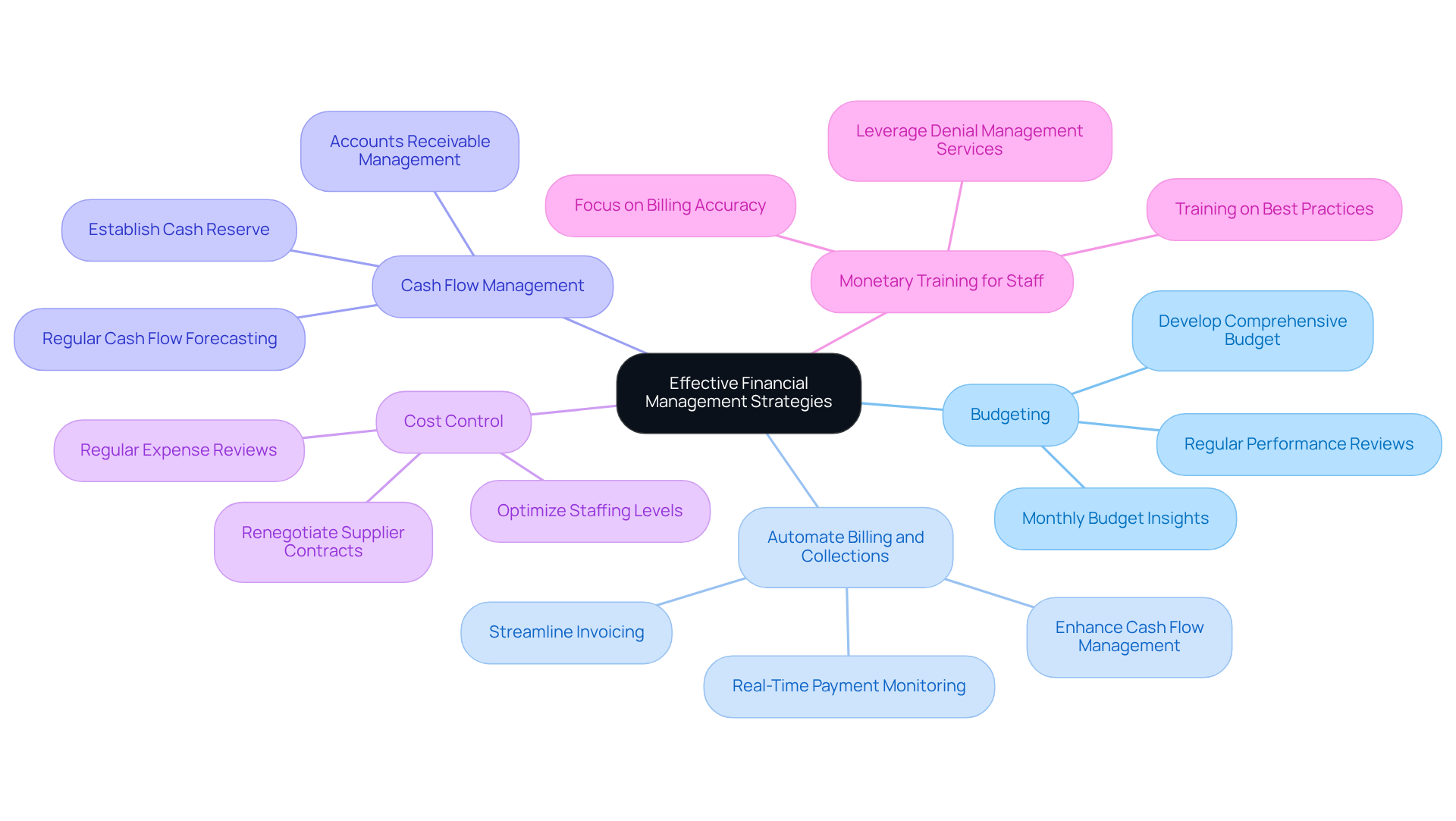
- Budgeting: Develop a comprehensive budget that details expected revenues and expenses. Regularly reviewing actual performance against this budget is crucial for understanding how to manage clinic finances by identifying variances and allowing for timely adjustments. Monthly budget reviews can provide insights on how to manage clinic finances by helping clinics catch financial issues early, ensuring better planning around seasonal fluctuations.
- Automate Billing and Collections: Leverage automated billing systems to streamline invoicing and minimize errors. These systems not only improve billing precision but also provide insights on how to manage clinic finances through real-time monitoring of payments and automated notifications for individuals, significantly enhancing cash flow management. Practices that adopt automation can reduce billing time by up to 50%, leading to faster payments and improved patient relationships.
- Cash Flow Management: Establish a cash reserve to address unexpected expenses and regularly forecast cash flow to anticipate potential shortfalls. Understanding how to manage clinic finances is crucial for planning for unpredictable income, such as cancellations and no-shows, to maintain financial stability. Utilizing conservative revenue forecasts based on historical trends can further protect cash flow. Implementing effective accounts receivable management, including analyzing aging claims and proactive follow-up with payers, is essential for clinics to understand how to manage clinic finances, as it can lead to a 20-40% reduction in days in accounts receivable and significantly improve cash flow.
- Cost Control: Conduct regular reviews of expenses to identify areas for cost reduction without compromising patient care. This may involve renegotiating supplier contracts or optimizing staffing levels. Clinics that understand how to manage clinic finances, particularly variable expenses like payment processing fees and marketing costs, can significantly improve their economic well-being.
- Monetary Training for Staff: Provide your team with training on monetary best practices, including billing accuracy and expense management. A knowledgeable team can play a crucial role in teaching staff how to manage clinic finances, thereby preserving the establishment’s economic well-being and ensuring that everyone is aligned with the organization’s monetary objectives. Additionally, consider leveraging Healthcare Partners Consulting’s denial management services to protect practice revenue and reduce administrative burdens, allowing your team to focus more on patient care.
By applying these strategies, managers can create a strong economic structure that fosters long-term success and improves overall operational efficiency.
Ensure Compliance with Healthcare Regulations
Adhering to healthcare regulations is essential for safeguarding your practice against legal and financial repercussions. Here are key steps to ensure compliance:
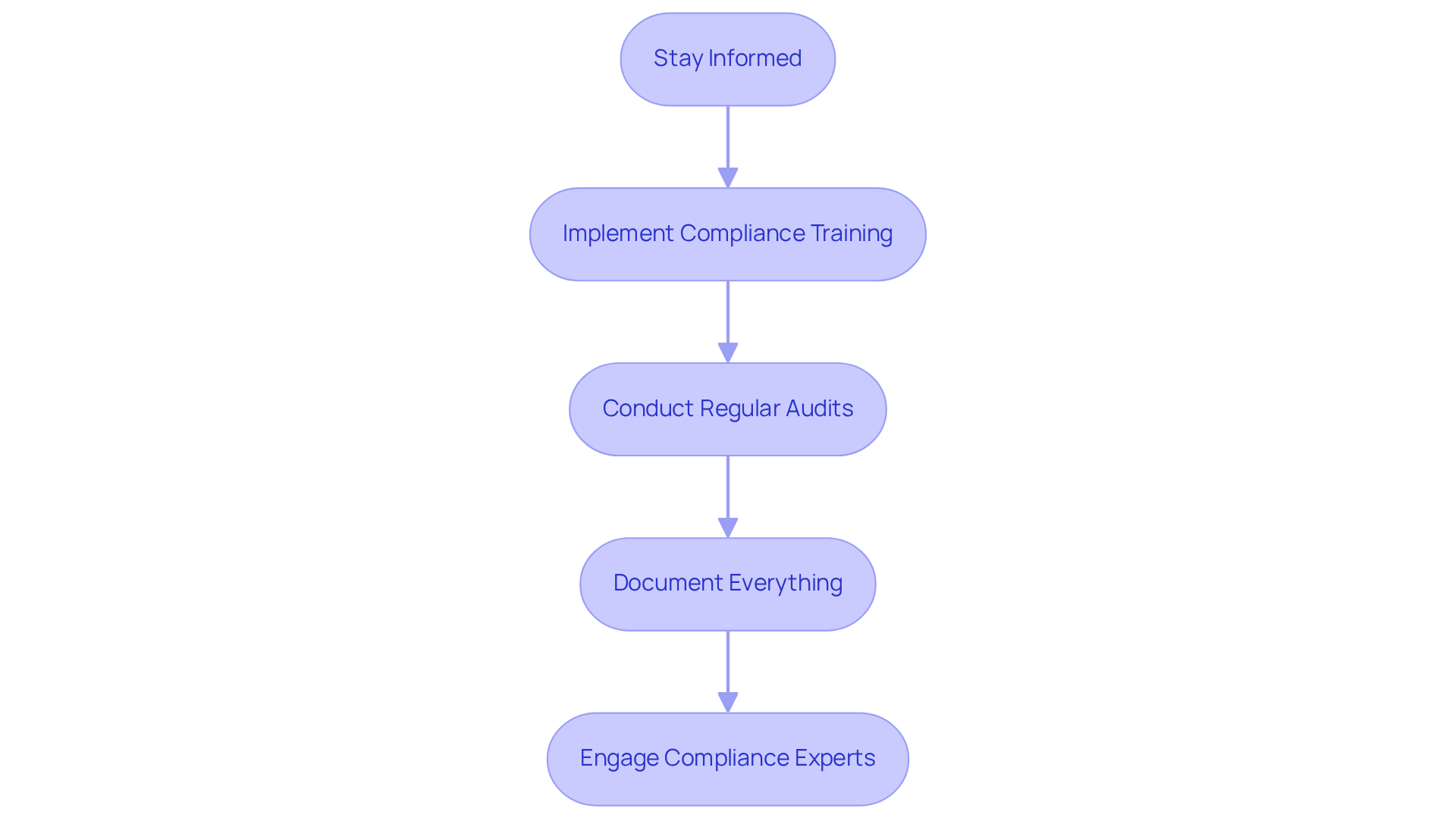
- Stay Informed: Regularly update yourself on federal, state, and local regulations that impact your clinic, including HIPAA, billing practices, and individual rights. As of 2026, HIPAA compliance remains a critical area of enforcement, with substantial penalties for violations.
- Implement Compliance Training: Conduct ongoing training sessions for staff on compliance issues, such as data privacy and billing regulations. Effective compliance training empowers employees to make ethical decisions and enhances patient care, as organizations prioritizing compliance often gain a competitive edge.
- Conduct Regular Audits: Perform internal audits to assess compliance with operational and fiscal policies. Regular audits help identify areas of risk and facilitate prompt corrective actions, ensuring that your practice remains compliant with evolving regulations.
- Document Everything: Maintain thorough documentation of all financial transactions, patient interactions, and compliance training. Comprehensive records can serve as evidence of compliance during audits, thereby protecting your establishment’s reputation and operational integrity.
- Engage Compliance Experts: Consider hiring or consulting with compliance professionals who can provide tailored guidance for your facility’s specific needs. Their expertise can assist in navigating complex regulations and enhancing your compliance strategy.
By prioritizing compliance, clinic managers can shield their practices from potential legal challenges and cultivate a trustworthy reputation within the community.
Conclusion
Effectively managing clinic finances is a complex task that demands a thorough understanding of essential financial concepts, key metrics, and strategic practices. By comprehending the nuances of revenue, expenses, profit margins, and cash flow, clinic managers can obtain critical insights into their financial health. This foundational knowledge serves as the basis for informed decision-making and strategic planning, ultimately fostering a more sustainable and successful practice.
The article highlights several key strategies to improve financial management within clinics. These strategies include:
- Developing comprehensive budgets
- Automating billing processes
- Implementing effective cash flow management techniques
Furthermore, monitoring vital financial metrics such as net client income and days in accounts receivable can yield actionable insights that drive performance enhancements. Emphasizing compliance with healthcare regulations further protects clinics from potential risks, ensuring that financial practices adhere to legal standards.
In conclusion, the importance of robust financial management in the healthcare sector cannot be overstated. By adopting best practices and remaining vigilant in monitoring financial performance, clinics can enhance their operational efficiency and secure their long-term viability. Embracing these principles empowers healthcare providers to concentrate on delivering quality patient care while maintaining a solid financial foundation, ultimately contributing to the overall success of their practice.
Frequently Asked Questions
What is revenue in the context of clinic finances?
Revenue represents the total income generated from patient services before any expenses are deducted. Understanding revenue streams is essential for accurate forecasting and budgeting.
What are expenses in a clinic?
Expenses include the costs incurred in operating the facility, such as salaries, rent, utilities, and supplies. These costs are expected to rise due to higher-acuity patient care.
How can expenses be categorized for better management?
Expenses can be categorized into fixed and variable, which can significantly aid in managing cash flow effectively.
What is profit margin and why is it important?
Profit margin indicates the profit generated for every dollar of revenue. A healthy profit margin is vital for sustainability, especially as EBITDA margins in the healthcare sector are expected to compress in the coming years.
What does cash flow refer to in clinic management?
Cash flow refers to the movement of money in and out of the practice. Positive cash flow is essential for meeting operational expenses and investing in growth.
What is accounts receivable and its significance?
Accounts receivable is the money owed to the practice for services rendered but not yet paid. Monitoring accounts receivable is critical for managing cash flow effectively.
How can understanding these financial concepts benefit healthcare managers?
By comprehending these principles, healthcare managers can manage clinic finances more effectively and make informed decisions that impact their practice’s success.