

Introduction
Mastering payer enrollment services is essential for mental health providers seeking to enhance operational efficiency and financial health. Understanding this process enables practitioners to minimize administrative burdens, thereby allowing greater focus on patient care. Mental health providers often face obstacles that hinder their ability to secure timely reimbursements, such as incomplete applications and lengthy processing times.
How can they navigate these challenges effectively? Addressing these challenges is vital for ensuring financial health and operational efficiency in mental health practices.
Understand Payer Enrollment Fundamentals
Payer registration is a vital process for healthcare providers, particularly mental health practitioners, as it facilitates their integration into insurance networks, enabling them to bill and receive reimbursement for services rendered. Grasping the essential elements of provider registration is crucial for enhancing operations and ensuring financial viability.
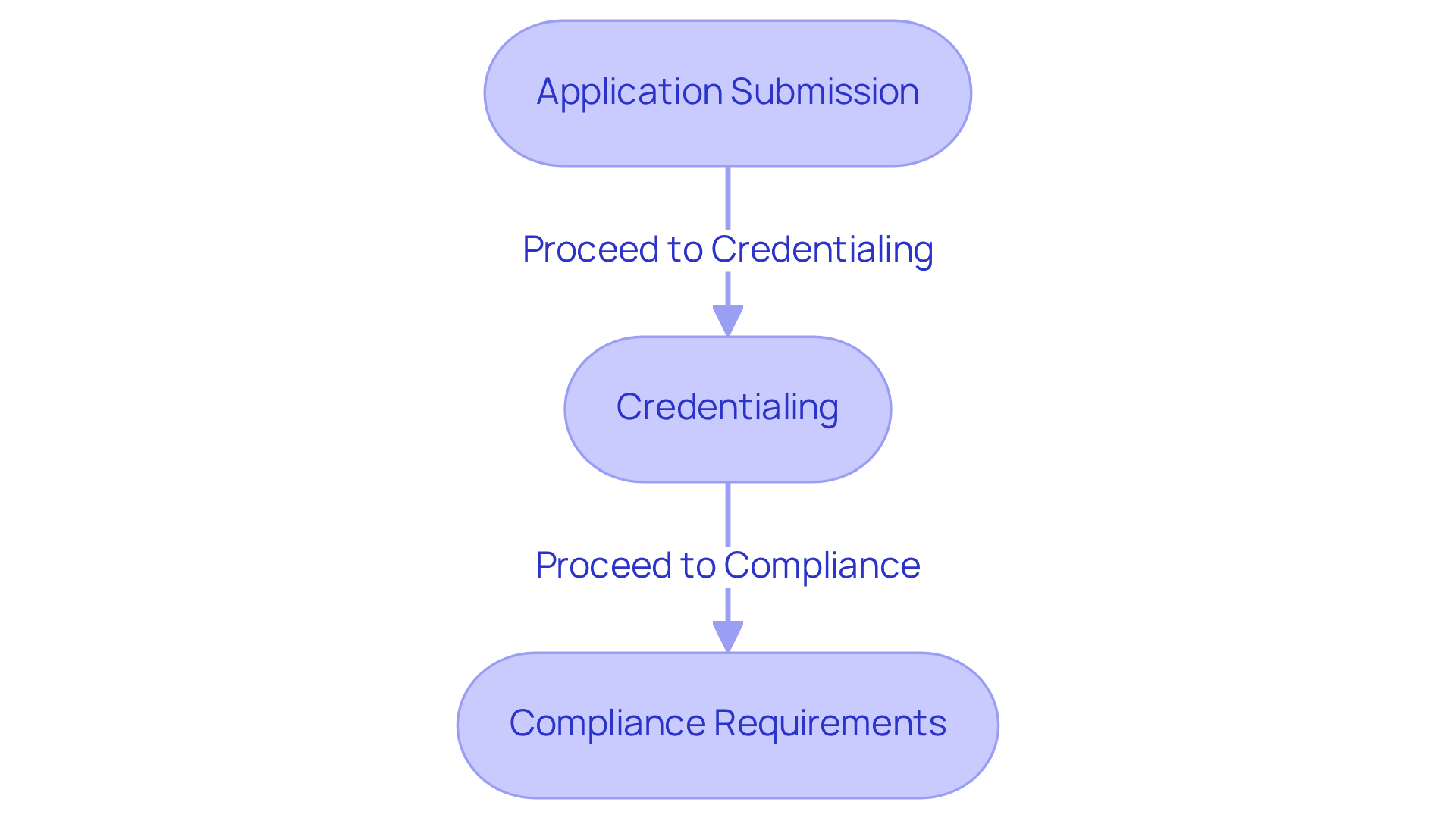
- Application Submission: Providers must complete and submit applications to various insurers, which require detailed information about the practice, including provider credentials, practice location, and services offered. The registration procedure can take between 90 to 120 days, making timely and precise submissions crucial. Almost half of enrollment teams report revenue declines due to slow onboarding methods, underscoring the importance of addressing these issues. Healthcare Partners Consulting, with 39 years of experience and as a veteran-owned firm, specializes in optimizing this approach for mental health practices.
- Credentialing: This step involves verifying the provider’s qualifications, licenses, and training to ensure compliance with payer standards. Credentialing is essential, as delays in this activity can result in substantial revenue losses, with providers generating an average of $10,122 daily. Errors in applications may remain undetected until a denial occurs, which can happen over 30 days post-submission, highlighting the need for meticulous attention to detail. HPC’s dedicated team ensures that all credentialing processes are handled efficiently, minimizing potential revenue loss.
- Compliance Requirements: Each payer has specific compliance requirements that must be met, including maintaining up-to-date licenses and certifications. Grasping these requirements is essential for preventing delays and ensuring a seamless registration process. More than half of those surveyed emphasize the importance of automating and developing efficient systems for 2024, suggesting a transition towards automation as a remedy for existing difficulties in the registration procedure. HPC prioritizes a compliance-first strategy, ensuring that all practices meet necessary standards to avoid complications.
By mastering these fundamentals, mental health providers can better navigate the admission framework, mitigate common pitfalls, and enhance their operational efficiency, ultimately leading to improved patient care and financial outcomes. By implementing these strategies, mental health providers can significantly enhance their operational efficiency and financial stability.
Follow a Structured Payer Enrollment Process
To facilitate an efficient payer enrollment process, mental health practices must adhere to a structured methodology:
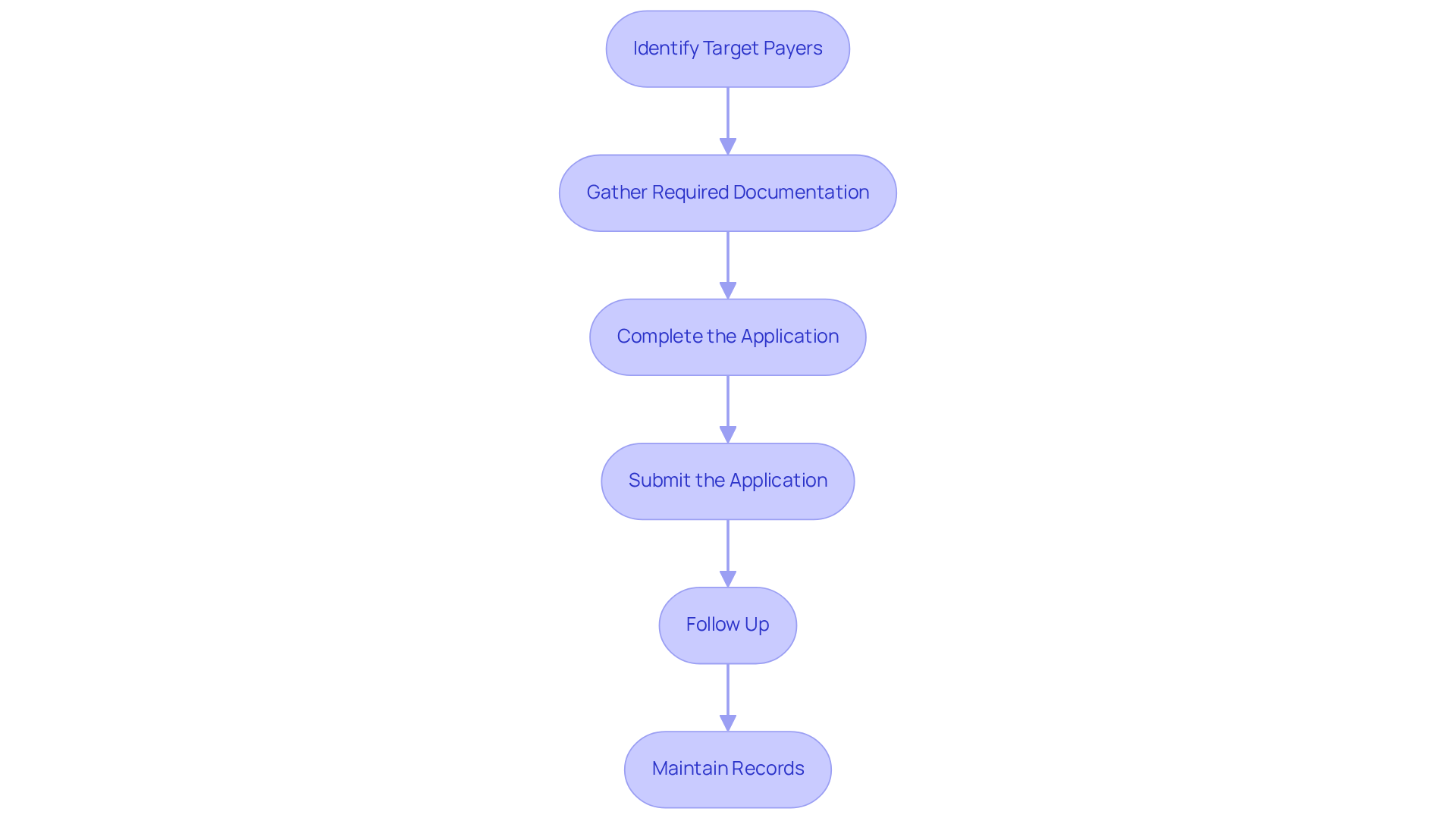
- Identify Target Payers: Research and select insurance companies that align with your practice’s patient demographics and service offerings. Recognizing which contributors are most significant can simplify the enrollment experience.
- Gather Required Documentation: Compile all necessary documents, including state licenses, DEA certificates, malpractice insurance, and any other credentials required by the insurers. Having these documents ready can expedite the application process.
- Complete the Application: Fill out the application accurately, ensuring that all information is current and complete. Incomplete applications can lead to delays or denials, which can cost healthcare organizations an average of $7,500 per physician per day due to credentialing delays. Notably, 74% of healthcare organizations report that credentialing delays significantly hinder revenue maximization.
- Submit the Application: Send the application along with all required documentation to the designated recipient. Keep a record of submission dates and any confirmation received to track progress effectively.
- Follow Up: Regularly check the status of your application with the payer. This proactive approach can help identify any issues early on and facilitate quicker resolutions, potentially reducing claim denials by 20-30%. Organizations with streamlined credentialing systems encounter 30% fewer claim denials related to provider registration issues.
- Maintain Records: Document all communications and submissions related to the registration activities. This will help in tracking progress and addressing any discrepancies that may arise.
Following this structured approach can significantly boost the likelihood of successful registration while reducing administrative burdens, ultimately resulting in quicker reimbursements within 30-90 days and enhanced revenue cycle performance. The typical credentialing timeline spans 90-120 days to finalize, highlighting the significance of prompt registration. Engaging with experts can significantly streamline your administrative processes and enhance overall operational efficiency.
Implement Best Practices for Efficient Enrollment
To enhance the payer enrollment process, mental health practices must implement strategic best practices that address common challenges:
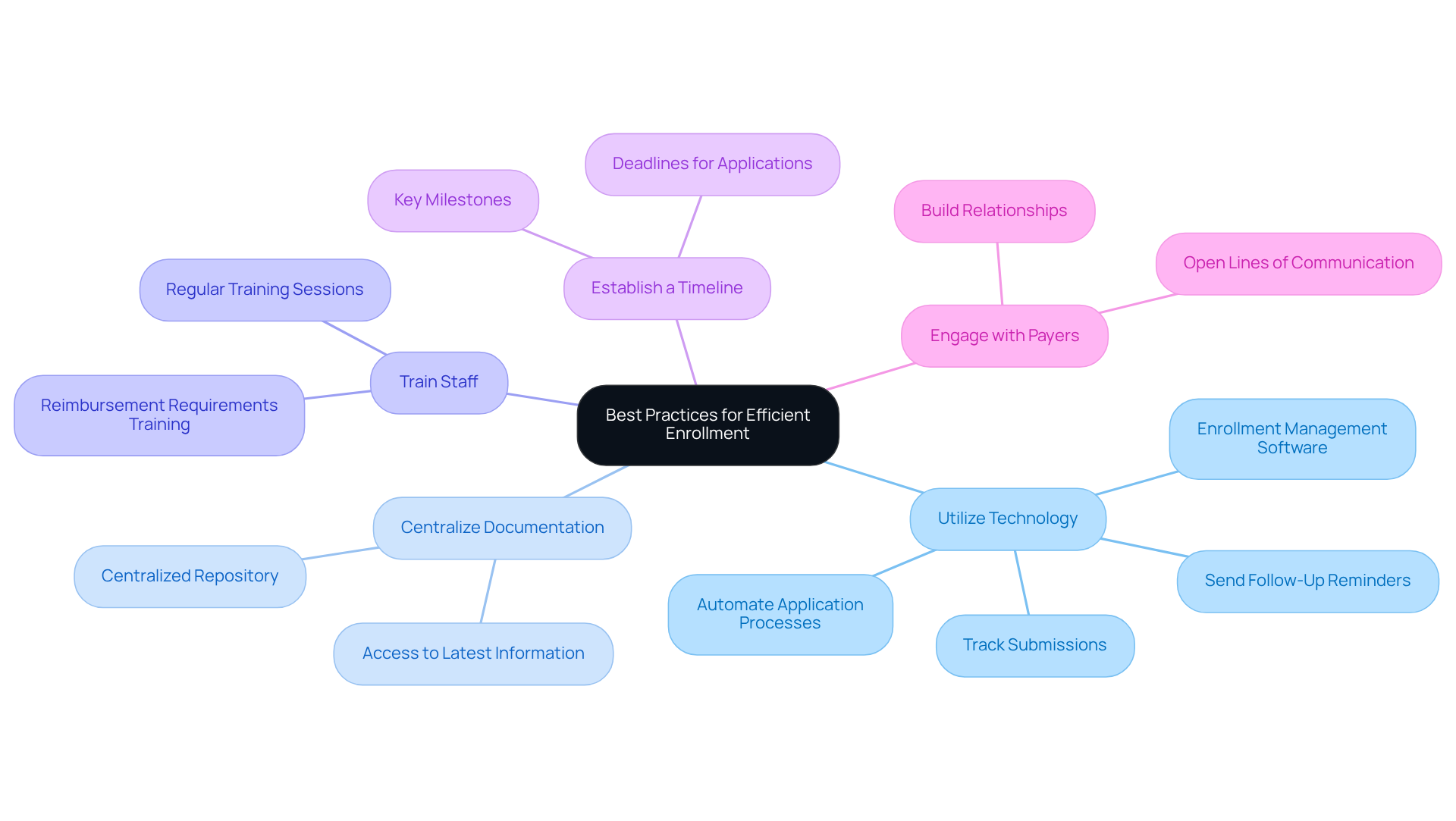
- Utilize Technology: Implement enrollment management software to automate application processes, track submissions, and send reminders for follow-ups. This approach significantly reduces manual errors and saves valuable time. The new ACCESS model introduced by CMS emphasizes the integration of technology in managing chronic conditions, which can be beneficial for mental health practices.
- Centralize Documentation: Maintain a centralized repository for all enrollment-related documents. This ensures that all team members have access to the latest information and can quickly retrieve necessary documents when needed.
- Train Staff: Ensure that personnel involved in registration activities are well-prepared on reimbursement requirements and related tasks. Regular training sessions keep the team updated on any changes in payer policies, enhancing compliance and efficiency.
- Establish a Timeline: Create a timeline for enrollment activities that includes key milestones and deadlines. This assists in keeping everything on track and guarantees that applications are submitted promptly, minimizing the chance of delays.
- Engage with Payers: Build relationships with payer representatives. Open lines of communication facilitate smoother interactions and quicker resolutions to any issues that arise during the registration process.
By adopting these optimal methods, mental health providers can enhance their efficiency in registration. This improvement leads to better patient access and contributes to greater financial stability. Additionally, focusing on these strategies can lead to a reduction in denial rates by 20-30% and faster reimbursement within 15-25% of 30-90 days, further supporting the financial health of the practice. Grasping the current trends in Medicaid and CHIP enrollment as of March 2026, where total enrollment exceeded 74 million, highlights the significance of effective payer enroll services in the current healthcare environment. Furthermore, Healthcare Partners Consulting offers personalized administrative support services, including scheduling and document management, to streamline these processes. This allows organizations to focus on patient care while improving profitability. To evaluate your business’s profitability, consider taking our quick quiz for personalized recommendations.
Overcome Challenges in Payer Enrollment
Mental health organizations frequently face significant challenges during the payer enroll services process. Here are some common obstacles and effective strategies to overcome them:
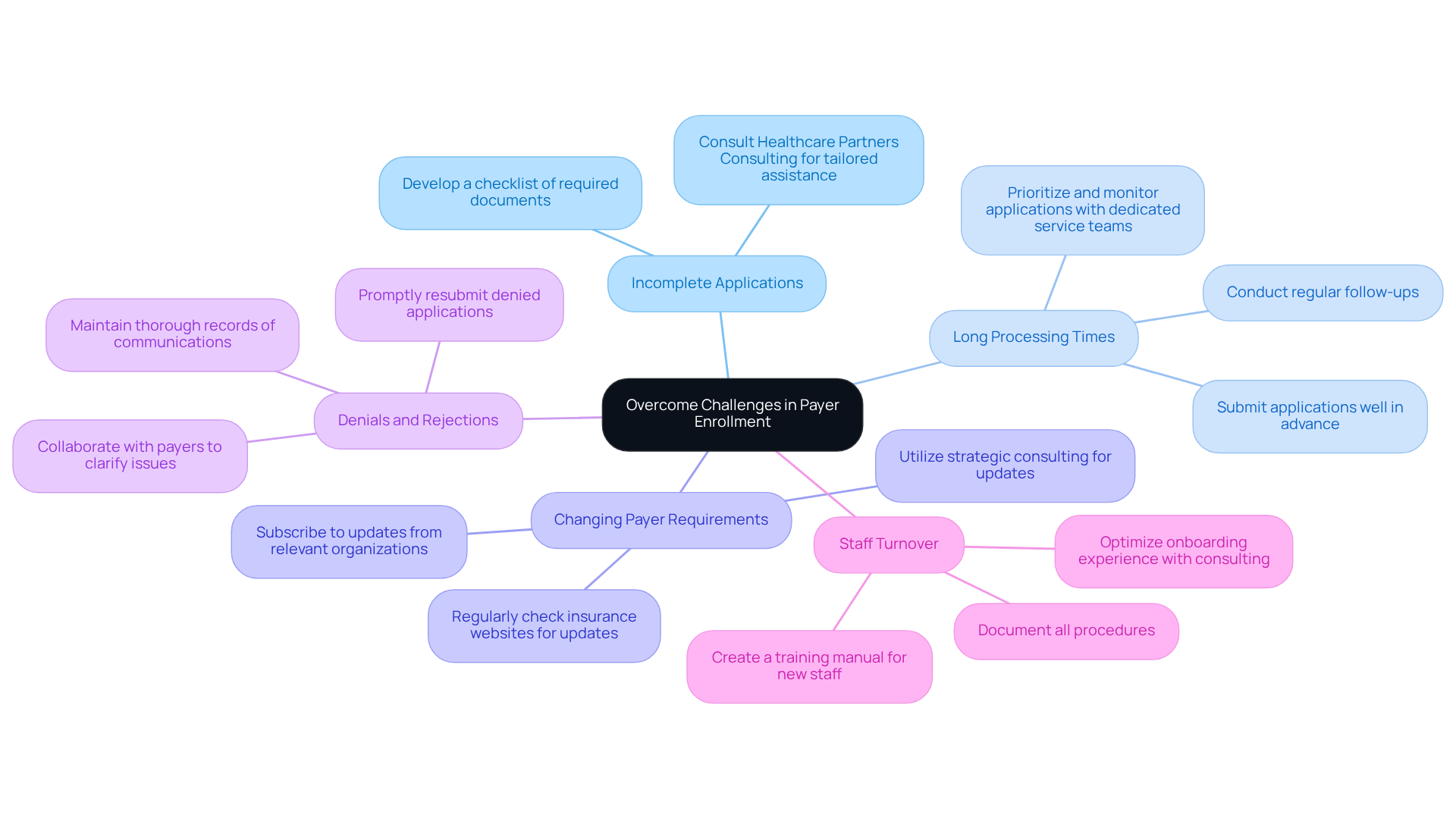
- Incomplete Applications: Submitting incomplete applications is a prevalent issue. To mitigate this, develop a checklist of required documents and information to ensure thoroughness before submission. Healthcare Partners Consulting provides tailored consultations to assist practices in identifying necessary documentation.
- Long Processing Times: Enrollment can take several months, delaying reimbursement. The average in-network denial rate for behavioral health hit 19% in 2024, underscoring the urgency of timely applications and follow-ups. Delays in reimbursement can strain financial resources and disrupt service delivery. To counter this, submit applications well in advance of anticipated billing dates and conduct regular follow-ups to expedite the process. Our dedicated service teams ensure that payer enroll services are prioritized and monitored closely.
- Changing Payer Requirements: Payers often update their enrollment criteria, which can lead to confusion. Stay informed by regularly checking insurance websites and subscribing to updates from relevant organizations. Healthcare Partners Consulting offers strategic consulting to ensure your practice is updated on changes related to payer enroll services.
- Denials and Rejections: Understanding the reasons behind application denials is crucial. With 60% of denied claims never resubmitted, it’s essential to address denials promptly to avoid significant revenue loss. Collaborate closely with the payer to clarify issues and promptly resubmit applications. Maintaining thorough records of all communications can enhance this undertaking. Our experienced team is here to assist you in navigating these challenges effectively.
- Staff Turnover: High turnover rates can disrupt the admission system. Combat this by documenting all procedures and creating a training manual for new staff members to ensure continuity. Healthcare Partners Consulting, a veteran-owned firm with 39 years of expertise, recognizes the significance of stability and can assist in optimizing your onboarding experience.
By implementing structured processes, organizations can not only reduce denial rates but also enhance their overall operational effectiveness. For instance, practices that implement structured processes often see denial rates decrease by 20-30% and experience faster reimbursement cycles of 15-25% within 30-90 days. This strategic focus enables providers to allocate more resources to patient care, ultimately enhancing service delivery.
Conclusion
Navigating payer enrollment services effectively is crucial for mental health providers seeking to optimize their operations and financial outcomes. Streamlining this process allows practitioners to dedicate more time to quality patient care instead of being hindered by administrative tasks. A structured approach simplifies integration into insurance networks and ensures compliance with payer requirements, resulting in faster reimbursement timelines.
Key insights from the article highlight the importance of:
- Understanding the fundamentals of payer enrollment
- Following a structured process
- Implementing best practices
By identifying target payers, gathering necessary documentation, and maintaining open communication with payer representatives, mental health practices can significantly reduce the likelihood of application denials and delays. Additionally, leveraging technology and training staff on reimbursement requirements can further enhance operational efficiency, allowing providers to allocate more resources to patient care.
The significance of efficient payer enrollment cannot be overstated. As mental health practices navigate the complexities of insurance networks, adopting a compliance-first approach and engaging with experienced partners like Healthcare Partners Consulting & Billing, LLC can empower providers to overcome challenges and thrive in a competitive landscape. Focusing on these strategies enables mental health organizations to enhance their financial viability while dedicating their efforts to delivering outstanding patient care.
For further assistance, consider reaching out to HPC at info@hpcbilling.com or call 888-517-4992 to explore tailored solutions that can enhance your practice’s efficiency.
Frequently Asked Questions
What is the importance of payer registration for healthcare providers?
Payer registration is crucial for healthcare providers, especially mental health practitioners, as it allows them to integrate into insurance networks and bill for services rendered, ensuring financial viability.
What does the application submission process involve?
Providers must complete and submit applications to various insurers, providing detailed information about their practice, including credentials, location, and services offered. The registration process typically takes 90 to 120 days.
What are the consequences of slow onboarding methods in payer enrollment?
Almost half of enrollment teams report revenue declines due to slow onboarding methods, highlighting the need for timely and precise application submissions.
What is credentialing, and why is it important?
Credentialing involves verifying a provider’s qualifications, licenses, and training to ensure compliance with payer standards. It is important because delays in credentialing can lead to significant revenue losses.
How can errors in applications affect providers?
Errors in applications may not be detected until a denial occurs, which can happen over 30 days after submission, emphasizing the need for meticulous attention to detail.
What are compliance requirements in the context of payer enrollment?
Compliance requirements include maintaining up-to-date licenses and certifications that each payer mandates. Meeting these requirements is essential to prevent delays in the registration process.
What strategies can mental health providers implement to improve their enrollment process?
Providers can enhance their operational efficiency and financial stability by mastering payer enrollment fundamentals, automating processes, and developing efficient systems to meet compliance requirements.
How does Healthcare Partners Consulting assist mental health practices?
Healthcare Partners Consulting specializes in optimizing the payer enrollment process for mental health practices, ensuring efficient credentialing and compliance to minimize potential revenue loss.