

Introduction
Provider credentialing is essential for ensuring operational integrity in healthcare, especially in mental health practices. By ensuring that only qualified professionals deliver care, clinics can enhance patient safety, maintain compliance, and secure necessary reimbursements. However, the credentialing process presents significant challenges, from time-consuming procedures to complex regulatory landscapes. Clinics must find ways to streamline this process to reduce administrative burdens and enhance patient care.
Define Provider Credentialing and Its Importance in Mental Health Practices
The process of provider credentialing is essential for ensuring that healthcare professionals, especially in mental health practices, meet the necessary qualifications and standards.
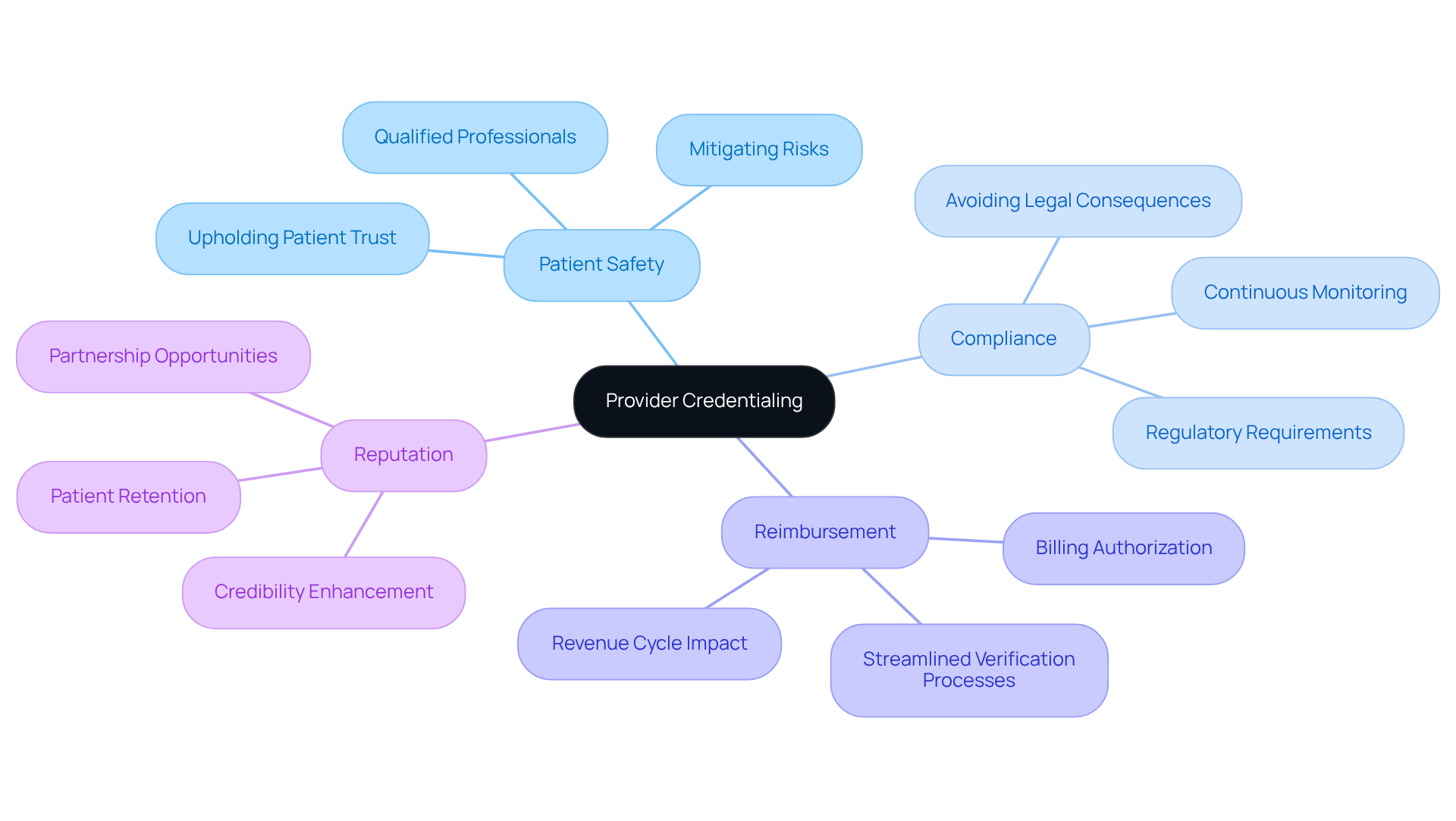
- Patient Safety: Credentialing ensures that only qualified professionals deliver care, protecting patients from unqualified practitioners. This safeguard is critical for upholding patient trust and ensuring safety in healthcare settings.
- Compliance: It assists organizations in adhering to regulatory requirements and standards established by insurance companies and healthcare entities, which is essential for avoiding legal consequences and preserving operational integrity.
- Reimbursement: Credentialed providers are authorized to bill insurance companies, a necessity for the financial well-being of a healthcare operation. Delays in verification can result in considerable revenue loss, especially for smaller firms, underscoring the importance of streamlined verification processes.
- Reputation: Being credentialed enhances a healthcare entity’s credibility and trustworthiness in the eyes of patients and partners. This reputation can directly influence patient retention and acquisition, as well as partnerships with other healthcare entities.
In 2026, the significance of verifying qualifications is emphasized by new Medicaid certification regulations for network adequacy, which will necessitate that all professionals are appropriately validated to meet compliance standards. Moreover, efficient verification systems can result in a 20-30% decrease in claim denials and a 15-25% acceleration in reimbursement speed, greatly influencing a healthcare entity’s revenue cycle performance.
Thus, provider credentialing is integral to delivering safe and effective mental health care, significantly impacting both operational success and financial sustainability.
Outline the Provider Credentialing Process: Steps and Best Practices
The provider credentialing process is a critical component for the operational integrity of mental health clinics and typically involves several key steps:
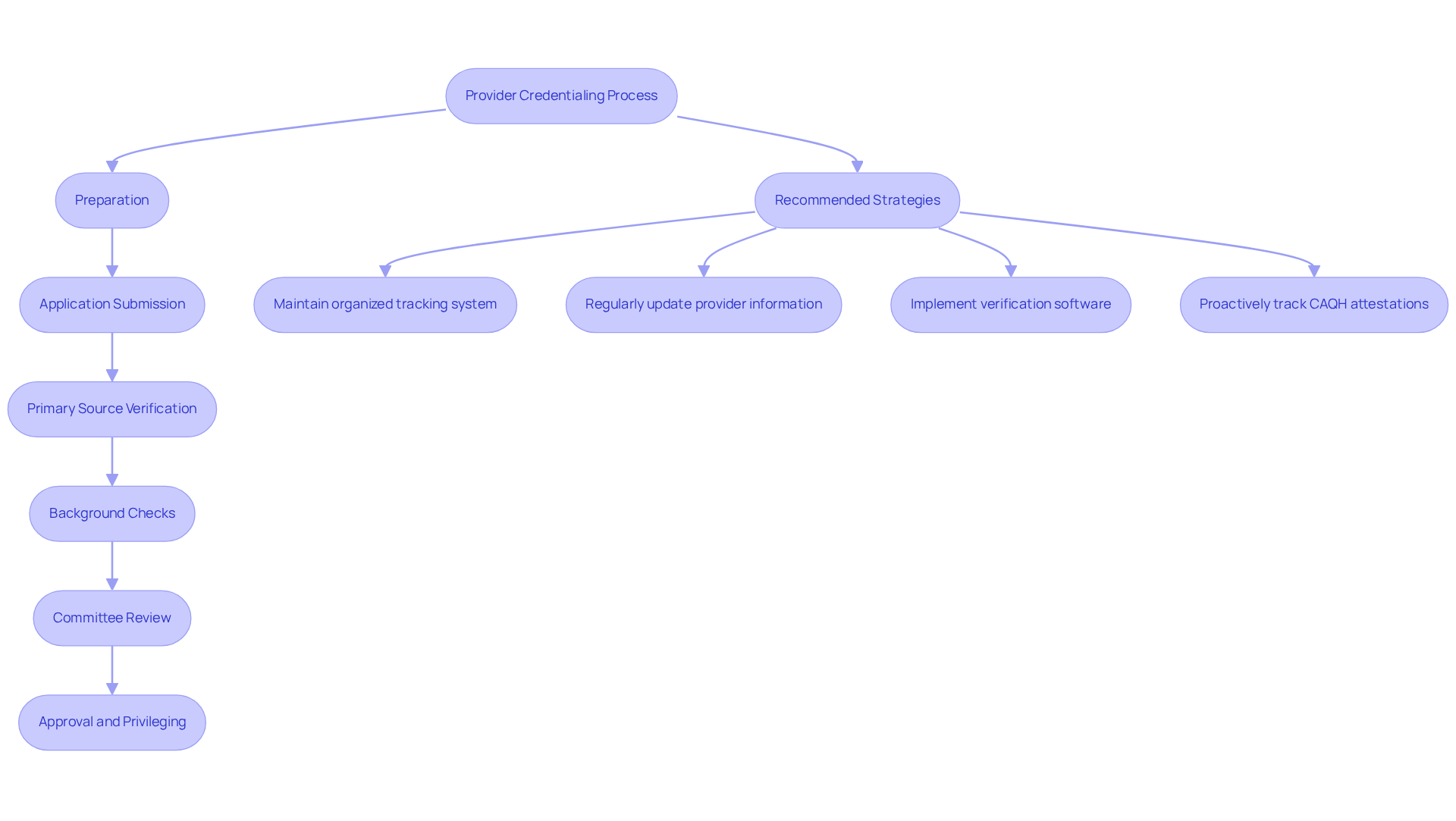
- Preparation: Gather all necessary documents, including licenses, certifications, and proof of education. This step is crucial for ensuring that the application is complete and accurate.
- Application Submission: Complete and submit the application for credentials to the relevant insurance companies or healthcare organizations. Ensure that all information is accurate to avoid delays.
- Primary Source Verification: Verify the information provided in the application with original sources, such as educational institutions and licensing boards.
- Background Checks: Conduct thorough background checks to identify any potential issues that could affect the individual’s eligibility.
- Committee Review: The application is evaluated by a qualifications committee, which assesses the individual’s credentials and makes a decision regarding privileges.
- Approval and Privileging: Once authorized, the individual is granted privileges to operate within the organization or network.
Recommended Strategies:
- Maintain an organized system for tracking documents and deadlines to ensure compliance.
- Regularly update provider information to avoid lapses in verification status, including maintaining a CAQH profile with attestations every 120 days.
- Consider implementing verification software to enhance efficiency and alleviate administrative challenges, such as dedicated virtual assistant services tailored to behavioral and mental health settings, which can assist with scheduling, client intake, and communications.
- Proactively track CAQH attestations and expirables to enhance efficiency.
Implementing these optimal approaches in provider credentialing can lead to a reduction in denial rates by 20-30% and enhance reimbursement times by 15-25% within 30-90 days, ultimately improving the financial performance of mental health clinics. Furthermore, it is crucial to recognize that verification timelines vary from 60 to 180 days, and penalties for non-compliance have risen significantly in 2026, highlighting the necessity of adhering to verification standards.
Healthcare Partners Consulting provides tailored consultations to identify the most suitable services for your practice. By scheduling a 30-minute call, you can discuss your practice’s workflow, allowing us to point you toward the services that will move the needle fastest for your clinic, including direct access to a dedicated billing team to streamline your revenue cycle management. Understanding and implementing these strategies is essential for maintaining compliance and optimizing clinic operations.
Identify Challenges in Provider Credentialing and Solutions to Overcome Them
In 2026, mental health clinics face critical challenges in the provider credentialing process that can significantly impact their operations:
-
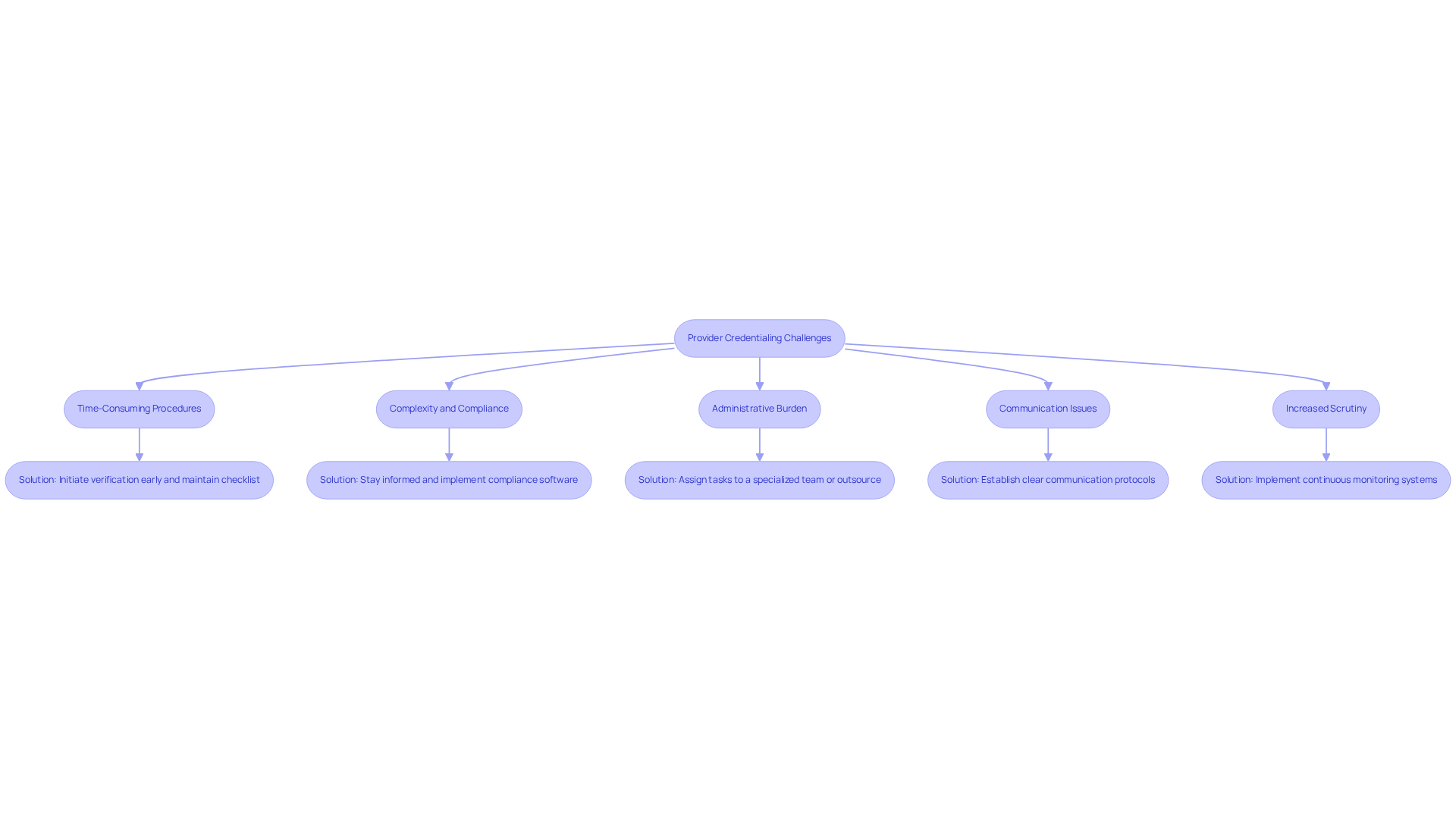
Time-Consuming Procedures: Credentialing can take 90 to 120 days or longer. Delays in provider credentialing can hinder patient access to necessary mental health services.
- Solution: Initiate the verification process early and maintain a detailed checklist to track required documents and deadlines, which can help mitigate delays.
-
Complexity and Compliance: The regulatory landscape is increasingly intricate, with frequent changes that can overwhelm clinic staff.
- Solution: Stay informed about licensing regulations and consider implementing compliance management software to streamline adherence to these evolving requirements.
-
The administrative burden of extensive paperwork in provider credentialing can overwhelm staff, resulting in administrative burnout.
- Solution: Assign credential verification tasks to a specialized team or outsource to a professional verification service, allowing your clinic to concentrate on patient care.
-
Communication Issues: Misunderstandings between providers and administrative staff can lead to mistakes and additional delays in the verification activities.
- Solution: Establish clear communication protocols and conduct regular check-ins to ensure alignment and clarity among all team members.
-
Increased scrutiny and compliance risks related to provider credentialing mean that clinics face greater operational risks due to heightened enforcement and penalties for non-compliance.
- Solution: Implement continuous monitoring systems to track licenses and sanctions, ensuring compliance and reducing the risk of penalties.
Addressing these challenges not only enhances operational efficiency but also ensures that clinics can prioritize patient care effectively. For instance, organizations that adopt automated credentialing solutions can reduce processing costs by up to 60%, significantly improving operational efficiency and financial outcomes.
Conclusion
The provider credentialing process is often fraught with challenges that can impede the delivery of quality mental health care. Mastering this process is crucial for mental health clinics aiming to deliver high-quality care while ensuring compliance and operational efficiency. Understanding the steps and significance of credentialing enables clinics to allow their healthcare providers to concentrate on what truly matters: patient care. Streamlining this process not only enhances the clinic’s reputation but also safeguards patient safety and financial health.
Key insights from the article highlight the necessity of thorough preparation, timely application submissions, and the importance of primary source verification. Tackling challenges like time-consuming procedures and administrative burdens with effective strategies can greatly enhance the credentialing experience. Implementing dedicated teams and utilizing technology can alleviate the strain on clinic staff, allowing them to prioritize patient interactions and care.
It’s clear that a strong provider credentialing process is essential for any clinic. Clinics that embrace these best practices will not only enhance their operational efficiency but also ensure compliance with evolving regulations. Prioritizing credentialing is not just a regulatory requirement; it is a fundamental aspect of ensuring patient safety and care quality. Engaging with experts like Healthcare Partners Consulting & Billing, LLC can provide tailored solutions to streamline this essential process, ensuring that clinics remain focused on delivering exceptional care. For further assistance, reach out at info@hpcbilling.com or call 888-517-4992.
Frequently Asked Questions
What is provider credentialing?
Provider credentialing is the process of verifying that healthcare professionals, particularly in mental health practices, meet the necessary qualifications and standards to deliver care.
Why is provider credentialing important for patient safety?
Credentialing ensures that only qualified professionals provide care, protecting patients from unqualified practitioners and upholding trust and safety in healthcare settings.
How does provider credentialing assist with compliance?
It helps organizations adhere to regulatory requirements and standards set by insurance companies and healthcare entities, which is essential for avoiding legal issues and maintaining operational integrity.
What role does credentialing play in reimbursement for healthcare providers?
Credentialed providers are authorized to bill insurance companies, which is crucial for the financial health of a healthcare operation. Delays in verification can lead to significant revenue loss.
How does being credentialed affect a healthcare entity’s reputation?
Credentialing enhances the credibility and trustworthiness of a healthcare entity in the eyes of patients and partners, which can positively influence patient retention, acquisition, and partnerships.
What upcoming regulations will impact provider credentialing in 2026?
New Medicaid certification regulations for network adequacy will require that all professionals are appropriately validated to meet compliance standards.
What are the potential benefits of efficient verification systems in provider credentialing?
Efficient verification systems can lead to a 20-30% decrease in claim denials and a 15-25% acceleration in reimbursement speed, significantly improving a healthcare entity’s revenue cycle performance.
How does provider credentialing impact the operational success of mental health care?
It is integral to delivering safe and effective mental health care, significantly influencing both operational success and financial sustainability.