
Introduction
Effective revenue cycle management is crucial for the financial health of mental health clinics, yet many face significant challenges in its implementation. By mastering the fundamentals – from patient registration to collections – clinics can enhance their cash flow and improve patient care by reducing administrative burdens. Many clinics face significant challenges, including:
- High claim denial rates
- Complex billing processes
These issues can hinder their ability to optimize revenue cycle management. By adopting best practices and innovative strategies, mental health providers can overcome these challenges and prioritize quality patient care.
Understand the Fundamentals of Revenue Cycle Management in Mental Health Clinics
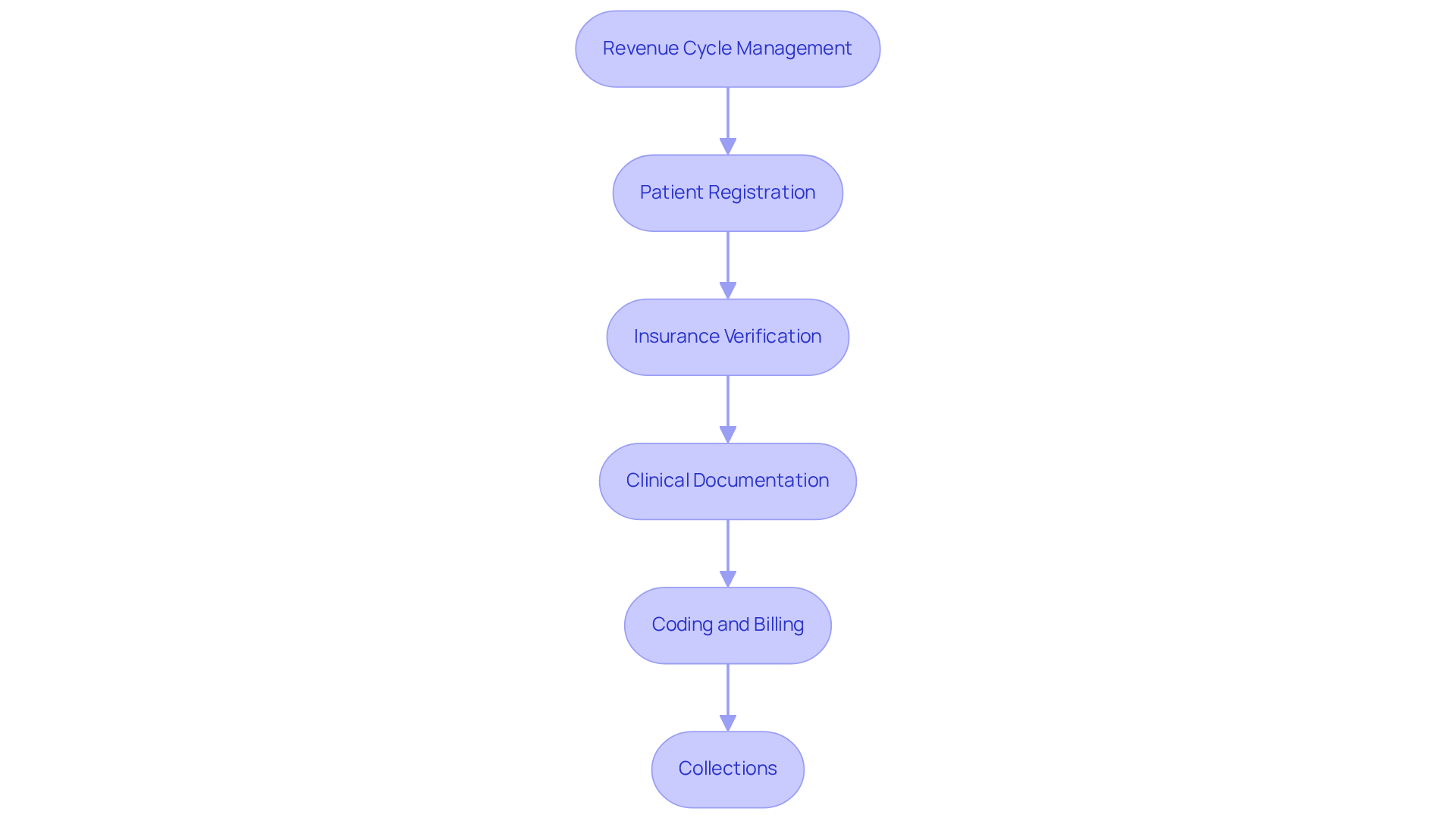
Effective revenue cycle management cycle is crucial for the financial health of mental wellness clinics, encompassing every step from client intake to payment collection. Key components include:
- Patient Registration: Patient Registration is a critical step in the RCM process, as accurate collection of patient information directly impacts billing and insurance claims. Errors in this stage can significantly impact revenue, leading to potential financial instability for practices.
- Insurance Verification: Insurance Verification is essential; confirming patient eligibility and benefits prior to service delivery helps mitigate the risk of reimbursement denials, which can account for nearly 30% of revenue loss in behavioral health practices.
- Clinical Documentation: Accurate documentation of services is crucial for billing and regulatory compliance, helping practices align with the standards established by the No Surprises Act.
- Coding and Billing: Using the right codes for services is key; it ensures submissions are processed smoothly and helps maximize reimbursements. Advanced coding tools can minimize errors and enhance the speed of processing requests.
- Collections: Collections require effective follow-up on outstanding claims and balances; without diligent follow-up, practices risk jeopardizing their financial health and operational efficiency. Practices that invest in end-to-end RCM technology can see a 20-30% improvement in cash flow within the first year.
Healthcare Partners Consulting, a veteran-owned firm with 39 years of experience specializing in medical and mental wellness billing, provides dedicated virtual assistant services customized for behavioral wellness practices. These services encompass scheduling, client intake, and communications, which enhance administrative efficiency and enable providers to concentrate on care. Comprehending these elements enables mental wellness facilities to pinpoint inefficiencies and apply strategies that enhance their revenue cycle management cycle. For instance, integrating predictive analytics can help anticipate claim issues and reduce denial rates by 20-30%, ultimately leading to improved care and financial stability. Adapting RCM practices is not merely a choice; it is essential for the long-term viability and success of mental wellness facilities in a changing healthcare environment.
Identify and Address Common Revenue Cycle Challenges in Mental Health Practices
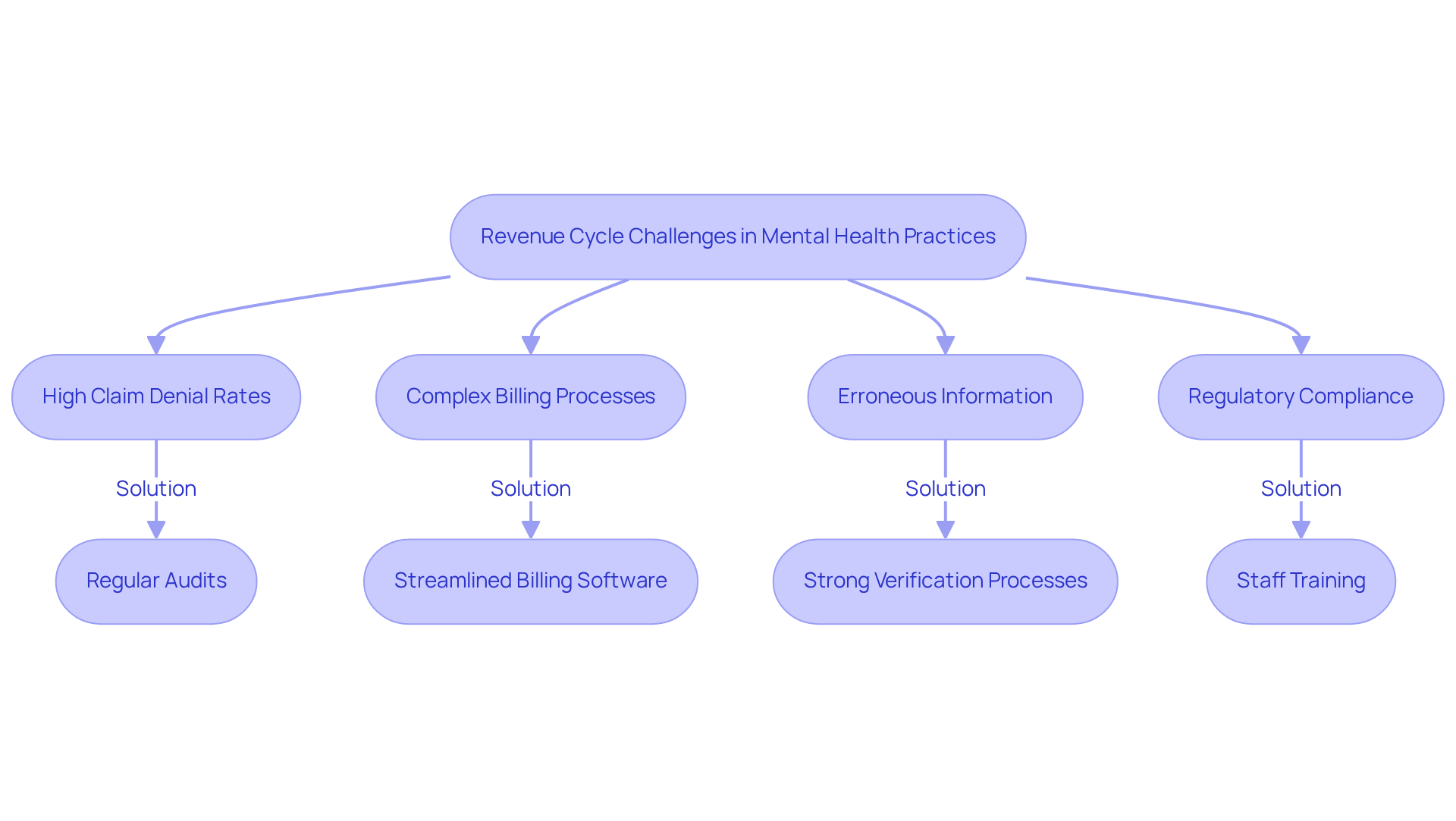
Mental wellness clinics face significant challenges in the revenue cycle management cycle that can adversely affect both financial performance and patient satisfaction. Key issues include:
- High Claim Denial Rates: In 2026, the average denial rate for behavioral health claims ranges from 10% to 20%, often exacerbated by increased scrutiny from payers. Common reasons for denials include incorrect coding, incomplete documentation, and eligibility issues. Regular audits and targeted staff training can effectively reduce these rates, with practices that implement such measures seeing denial reductions of 20-30%. To further assess your practice’s profitability, consider taking a quick quiz offered by Healthcare Partners Consulting, which can help identify hidden revenue leaks and provide personalized recommendations for improvement.
- Complex Billing Processes: The intricacies of mental health billing, characterized by varying payer requirements and complex coding, can lead to confusion and errors. Streamlining billing processes through specialized software, such as automated eligibility checks and electronic submission scrubbing, along with standardized procedures, can alleviate these issues. This ensures more accurate submissions and faster reimbursements, potentially improving cash flow by 15-25% within 30-90 days. Healthcare Partners Consulting also provides tailored administrative support services, including dedicated virtual assistants for scheduling and client intake, enabling you to concentrate more on care.
- Erroneous Information: Mistakes in data, such as mismatched insurance details, can lead to denials and delayed payments. It’s essential to have strong verification processes during registration to reduce errors and improve claim accuracy.
- Regulatory Compliance: Adhering to evolving healthcare regulations, including the Mental Health Parity and Addiction Equity Act (MHPAEA), is essential for maintaining operational integrity. Regular training and updates for staff on compliance standards can help ensure that practices meet the necessary requirements, reducing the risk of denials related to regulatory issues.
By tackling these challenges, clinics can boost cash flow and improve patient experiences by reducing billing-related delays and frustrations. Practices that prioritize consistent documentation and compliance training can significantly reduce the risk of denials and ensure ongoing authorization for therapy sessions, ultimately enabling providers to focus more on care. Ultimately, effective revenue cycle management cycle is not just about finances; it’s about ensuring that patients receive timely and quality care.
Implement Effective Strategies for Optimizing Revenue Cycle Processes
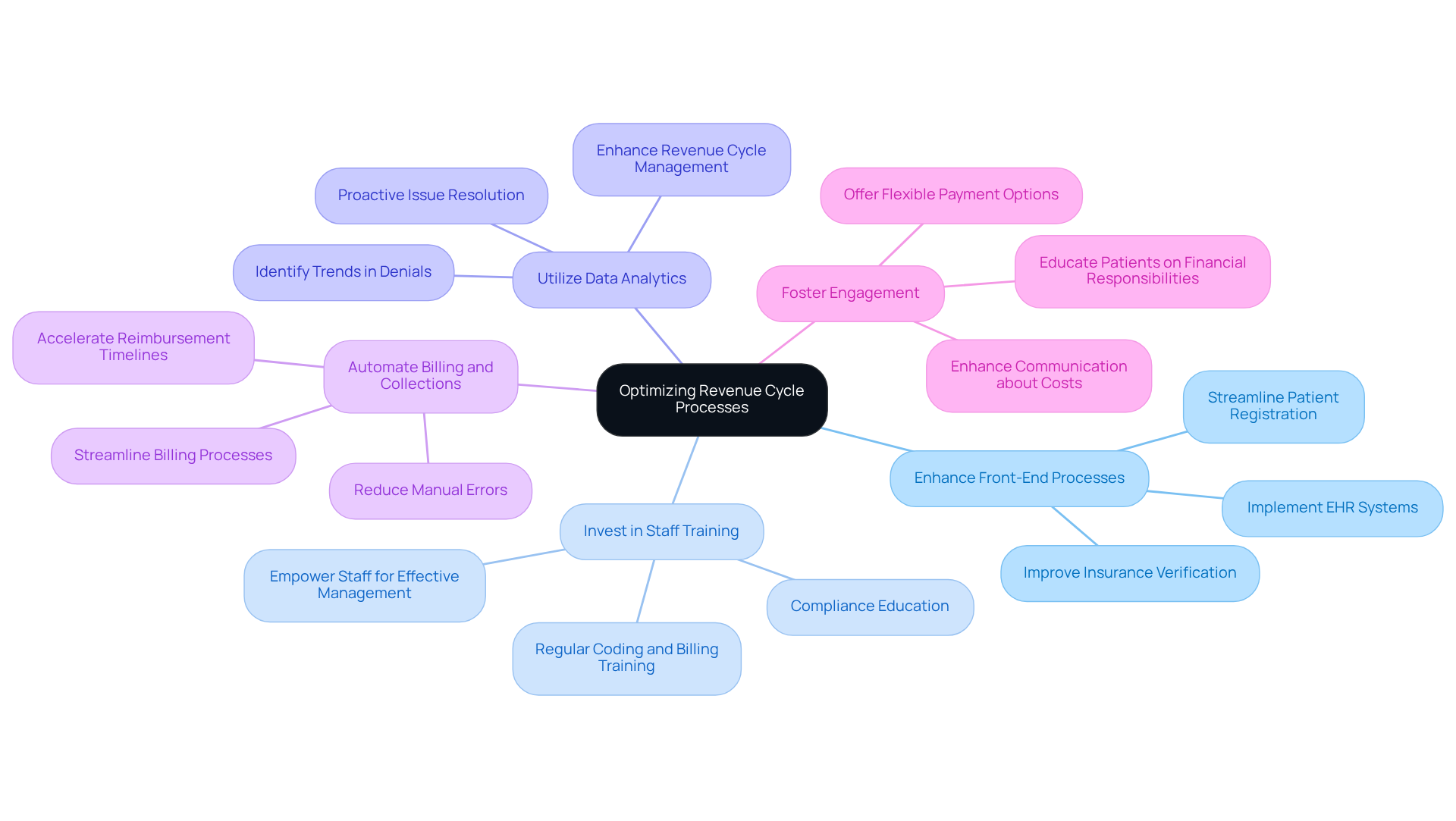
Many mental health clinics struggle with revenue cycle inefficiencies that hinder their operational success. To address these challenges, consider implementing the following strategies, tailored by Healthcare Partners Consulting, a veteran-owned company with 39 years of experience in medical and mental health billing:
- Enhance Front-End Processes: Implementing electronic health record (EHR) systems such as TherapyNotes and SimplePractice automates these processes, thereby reducing delays and improving accuracy. Streamlining patient registration and insurance verification is crucial for reducing errors and improving cash flow.
- Invest in Staff Training: Regular training on coding, billing practices, and compliance empowers staff to manage submissions effectively. This investment can lead to a reduction in denials and an improvement in overall accuracy, ultimately enhancing revenue performance.
- Utilize Data Analytics: Implementing data analytics tools enables healthcare facilities to identify trends in denial of requests and payment delays. By addressing these issues proactively, clinics can enhance their revenue cycle management cycle and reduce the likelihood of future denials.
- Automate Billing and Collections: Automation tools streamline billing processes, reduce manual errors, and improve follow-up on outstanding claims. This enhances efficiency and accelerates reimbursement timelines, resulting in payments that can improve by 15-25% within 30-90 days.
- Foster Engagement: Educating individuals about their financial responsibilities and offering flexible payment options significantly enhances collection rates. Clear communication about costs and payment plans enhances satisfaction and decreases bad debt.
These strategies not only improve the revenue cycle management cycle efficiency but also enable healthcare providers to concentrate more on delivering quality patient care. Without addressing these revenue cycle challenges, clinics risk compromising their financial stability and the quality of care they provide.
Utilize Technology to Enhance Revenue Cycle Management Efficiency
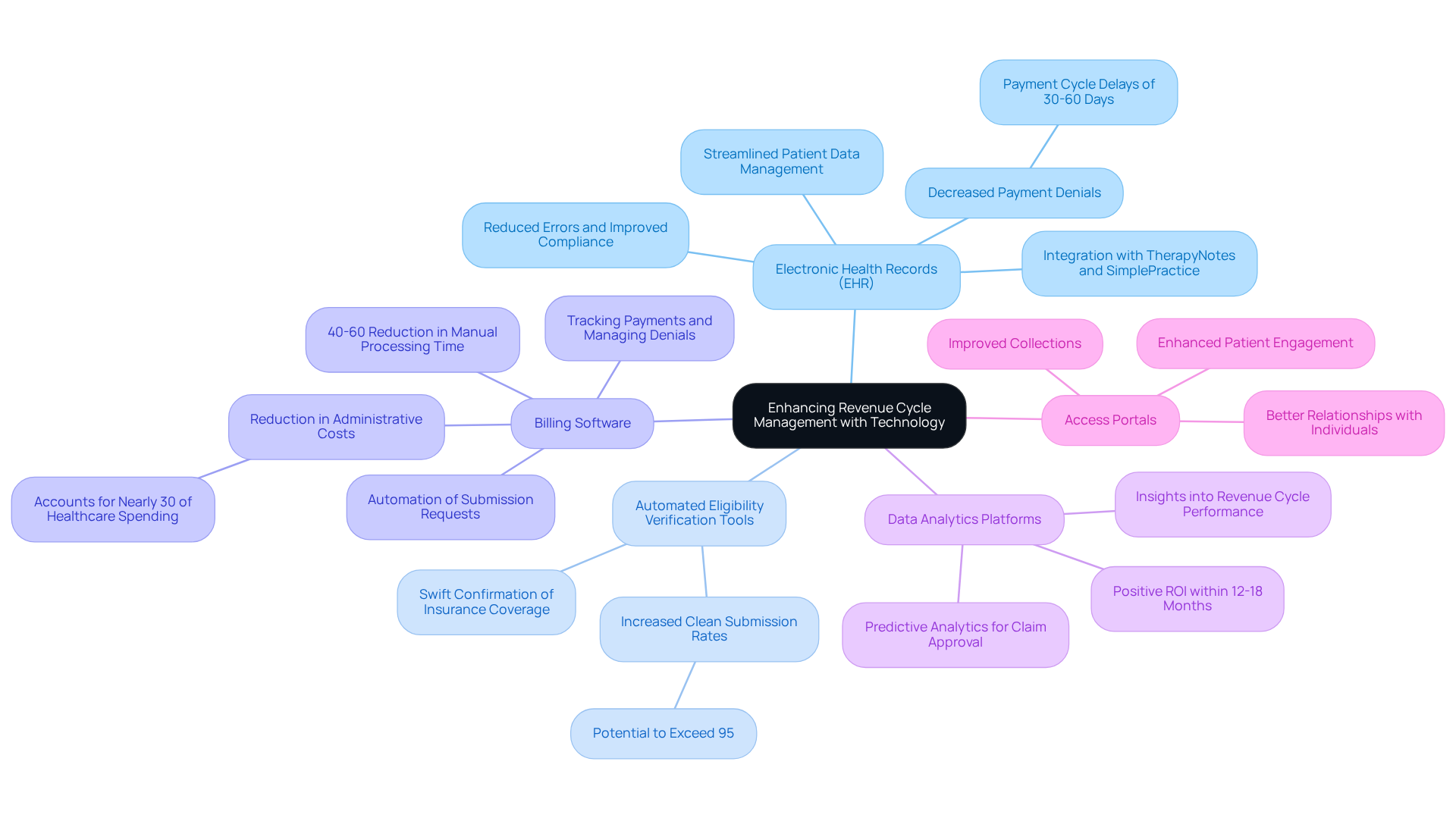
Many mental wellness clinics struggle with inefficient revenue cycle management processes that hinder their financial performance. Integrating technology into the revenue cycle management can greatly improve efficiency in these clinics. Healthcare Partners Consulting, a veteran-owned company with 39 years of experience specializing in medical and mental health billing, offers tailored solutions to streamline these processes. Key technologies to consider include:
- Electronic Health Records (EHR): EHR systems streamline patient data management, billing, and coding processes, reducing errors and improving compliance. They enhance data precision, which is essential for reducing payment denials that can postpone payment cycles by 30-60 days. Healthcare Partners Consulting integrates seamlessly with platforms like TherapyNotes and SimplePractice to enhance EHR functionality.
- Automated Eligibility Verification Tools: These tools swiftly confirm patient insurance coverage, decreasing the time spent on manual checks and reducing the likelihood of denials. By confirming eligibility prior to services being provided, healthcare facilities can enhance their clean submission rates, which can exceed 95% with effective execution. HPC’s expertise in behavioral health billing guarantees that practices optimize their clean submission potential.
- Billing Software: Advanced billing software automates submission of requests, tracks payments, and manages denials, allowing staff to focus on more complex tasks. This automation can lead to a reduction in administrative costs, which account for nearly 30% of healthcare spending. HPC’s solutions are designed to reduce manual processing time by 40-60%, enabling staff to concentrate on higher-value activities.
- Data Analytics Platforms: Utilizing analytics provides insights into revenue cycle performance, assisting healthcare facilities in identifying areas for improvement and optimizing processes. Predictive analytics can assess the likelihood of claim approval before submission, enhancing overall efficiency. Healthcare Partners Consulting’s analytics tools assist healthcare facilities in achieving positive ROI within 12-18 months through enhanced efficiency and decreased denial rates.
- Access Portals: Implementing access portals allows individuals to view their information, make payments, and communicate with the facility, enhancing engagement and improving collections. This technology not only optimizes operations but also enhances better relationships with individuals, which can lead to improved financial stability. Improved collections through engagement with individuals can greatly influence the revenue cycle management performance of the healthcare facility.
Ultimately, the integration of technology not only streamlines operations but also positions clinics for sustainable growth in a competitive landscape.
Conclusion
Effective revenue cycle management is crucial for the sustainability and success of mental health clinics. By focusing on the entire process from patient registration to payment collection, clinics can significantly enhance their financial health and allow providers to dedicate more time to patient care. Streamlined processes, compliance adherence, and advanced technology help reduce administrative burdens, allowing healthcare providers to concentrate on delivering quality mental health services.
Throughout the article, key strategies for optimizing revenue cycle processes have been highlighted. These include:
- Enhancing front-end operations
- Investing in staff training
- Utilizing data analytics
- Automating billing and collections
Each of these strategies plays a crucial role in addressing common challenges, such as high claim denial rates and complex billing processes. These challenges can hinder financial performance and patient care. By implementing these best practices, mental health clinics can improve cash flow, reduce errors, and ultimately enhance patient satisfaction.
In conclusion, the importance of mastering revenue cycle management cannot be overstated. As mental health clinics navigate an increasingly complex healthcare landscape, prioritizing effective RCM practices will not only safeguard their financial stability but also elevate the quality of care provided to patients. This shift not only enhances financial outcomes but also improves patient experiences. For those seeking to enhance their revenue cycle management, reaching out to experts like Healthcare Partners Consulting & Billing, LLC can provide the necessary support and guidance to thrive in this vital aspect of healthcare.
Frequently Asked Questions
What is revenue cycle management (RCM) in mental health clinics?
Revenue cycle management (RCM) in mental health clinics refers to the process that encompasses every step from client intake to payment collection, crucial for the financial health of these practices.
Why is patient registration important in the RCM process?
Patient registration is critical because accurate collection of patient information directly impacts billing and insurance claims. Errors at this stage can lead to significant revenue loss and financial instability for practices.
What role does insurance verification play in RCM?
Insurance verification is essential for confirming patient eligibility and benefits prior to service delivery, helping to mitigate the risk of reimbursement denials, which can account for nearly 30% of revenue loss in behavioral health practices.
How does clinical documentation affect revenue cycle management?
Accurate clinical documentation of services is crucial for billing and regulatory compliance, ensuring practices align with standards such as those established by the No Surprises Act.
Why is coding and billing important in the RCM process?
Using the correct codes for services is key to ensuring submissions are processed smoothly and maximizing reimbursements. Advanced coding tools can help minimize errors and enhance the speed of processing requests.
What is involved in the collections process of RCM?
The collections process involves effective follow-up on outstanding claims and balances. Without diligent follow-up, practices risk jeopardizing their financial health and operational efficiency.
How can investing in RCM technology benefit mental health clinics?
Practices that invest in end-to-end RCM technology can see a 20-30% improvement in cash flow within the first year.
What services does Healthcare Partners Consulting provide for mental wellness practices?
Healthcare Partners Consulting offers dedicated virtual assistant services customized for behavioral wellness practices, including scheduling, client intake, and communications, which enhance administrative efficiency.
How can predictive analytics improve RCM in mental health clinics?
Integrating predictive analytics can help anticipate claim issues and reduce denial rates by 20-30%, ultimately leading to improved care and financial stability.
Why is adapting RCM practices essential for mental wellness facilities?
Adapting RCM practices is essential for the long-term viability and success of mental wellness facilities in a changing healthcare environment.