

Introduction
Navigating the complexities of professional claims presents a significant challenge for mental health clinics aiming for financial stability. The CMS-1500 form, a critical billing document, significantly impacts a clinic’s cash flow, with research indicating that billing errors can lead to denial rates soaring by 15-30%. As the healthcare landscape evolves, mastering these claims is crucial for avoiding costly mistakes and ensuring timely reimbursements.
What strategies can mental health providers implement to effectively navigate this complex terrain and enhance their claims management processes?
Define Professional Claims in Medical Billing
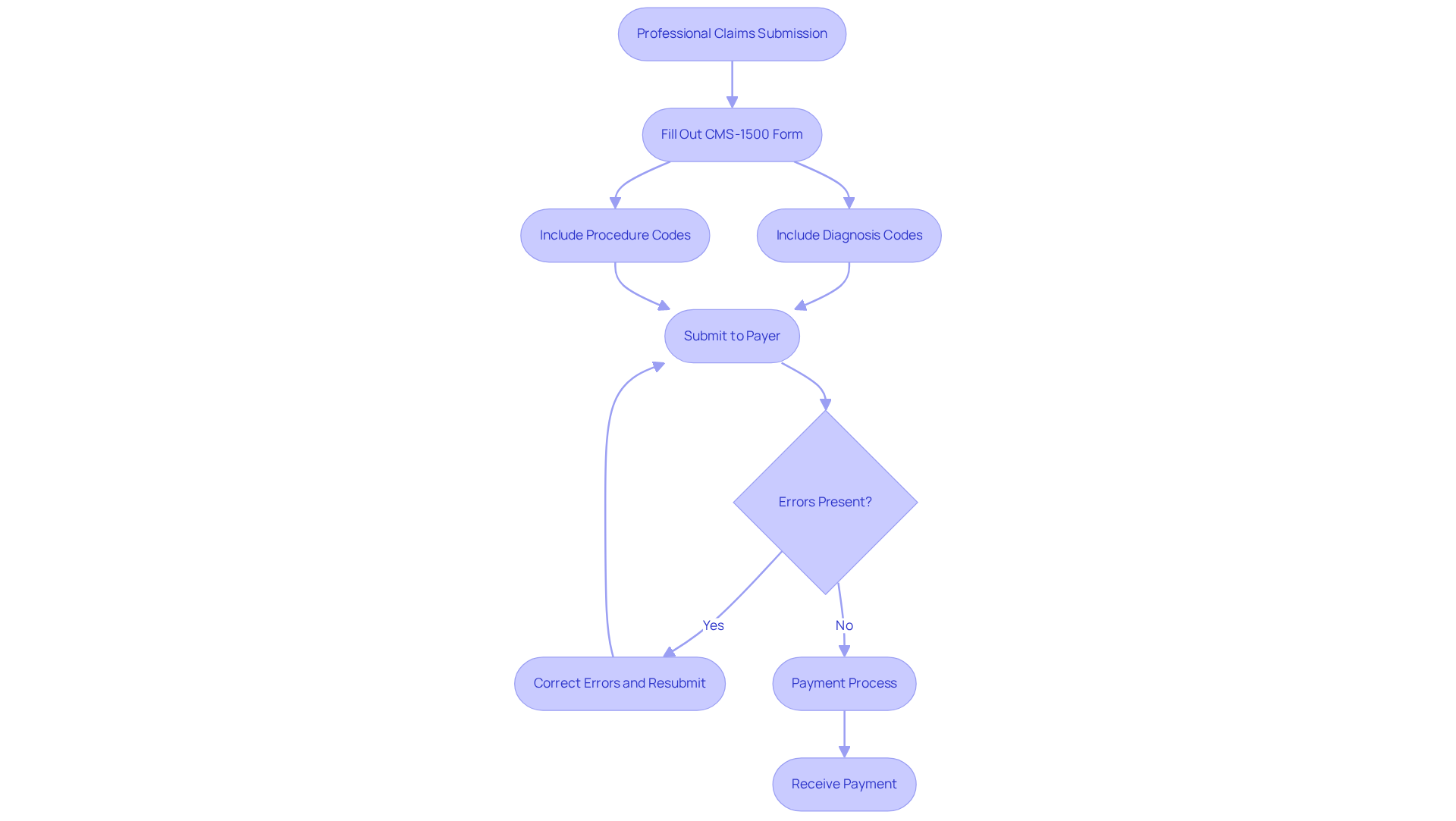
Professional submissions are critical billing documents that directly influence the financial health of healthcare providers, including therapists, psychologists, and psychiatrists, for services delivered directly to individuals. These assertions predominantly utilize the CMS-1500 form, which captures essential details such as diagnosis codes, procedure codes, and patient information.
Understanding what professional claims are is vital for mental health clinics, as billing errors lead to significant payment delays, impacting cash flow for practices. Research indicates that these mistakes can increase denial rates by 15-30%. Vina Goodman highlights that missing even a single detail can lead to stalled payments, increased denials, and compliance issues.
Thus, understanding what professional claims are is crucial for avoiding mistakes and ensuring a smoother reimbursement process, ultimately improving the financial status of mental health practices. To navigate these complexities effectively, consider scheduling a 30-minute consultation with Healthcare Partners Consulting. This customized meeting will assist in identifying ideal administrative solutions designed for your practice, addressing common issues such as underpayments and overdue requests.
With the evolving landscape of healthcare billing in 2026, mastering the CMS-1500 form is not just beneficial; it is essential for ensuring timely payments and sustaining practice viability.
Explore Characteristics and Requirements of Professional Claims
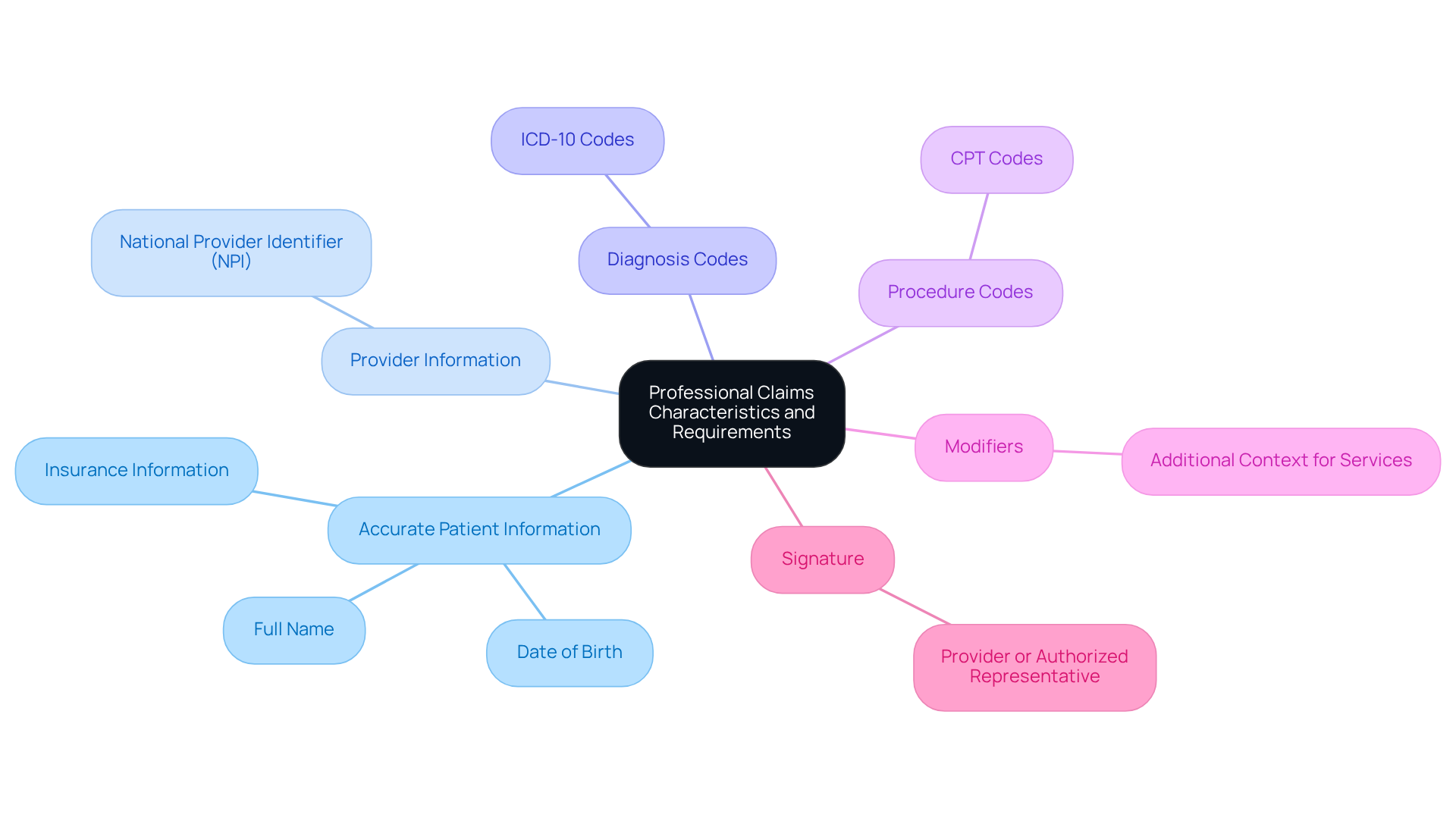
Understanding what are professional claims is critical for accurate processing to avoid claim denials and ensure timely reimbursements. Key elements include:
- Accurate Patient Information: Essential details such as the patient’s full name, date of birth, and insurance information must be entered correctly to avoid claim denials.
- Provider Information: The National Provider Identifier (NPI) of the healthcare provider is essential for recognizing the service provider and must be included in the submission.
- Diagnosis Codes: Accurate ICD-10 codes that reflect the patient’s condition are necessary for justifying the services rendered and ensuring compliance with payer requirements.
- Procedure Codes: CPT codes corresponding to the services provided must be included to facilitate proper reimbursement.
- Modifiers: When applicable, modifiers should be added to provide additional context about the service, which can help clarify the nature of the treatment.
- Signature: A signature from the provider or an authorized representative is often required to validate the request.
Mental health facilities can enhance their submission accuracy and adherence by understanding and applying these requirements. For instance, consider healthcare facilities that prioritize precise client information; they often see improved acceptance rates and faster reimbursement cycles. This proactive approach not only streamlines operations but also fosters better relationships with payers, ultimately benefiting patient care outcomes.
Manage Professional Claims: Challenges and Best Practices
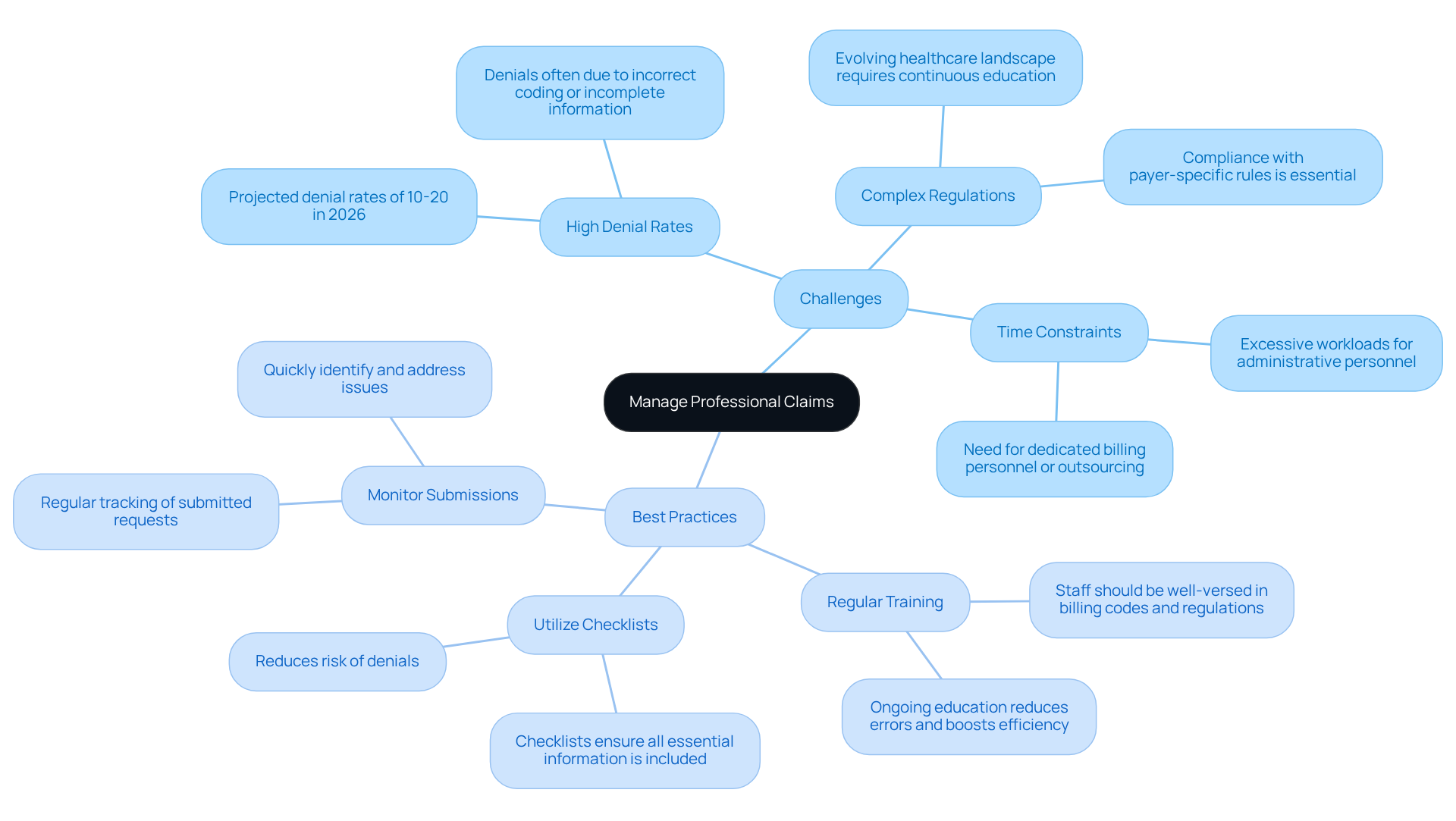
Navigating the complexities of professional claims in mental health clinics presents numerous challenges that require strategic management, including:
- High Denial Rates: High denial rates create significant financial strain on clinics, necessitating proactive measures to ensure claim accuracy. Claims are often denied due to incorrect coding or incomplete information. In 2026, denial rates for behavioral health claims are projected to range between 10% and 20%, significantly impacting revenue cycles. To alleviate this, healthcare facilities should apply thorough checks before submission to ensure accuracy.
- Complex Regulations: The healthcare landscape is continually evolving, making it essential for clinics to stay informed about changing regulations. Regular training and continuous education for staff are crucial to maintaining compliance and reducing errors.
- Time Constraints: Administrative personnel often encounter excessive workloads because of the number of requests. Employing dedicated billing personnel or outsourcing these tasks can relieve administrative burdens, enabling staff to prioritize patient care.
- Regular Training: Ensure that staff are well-versed in the latest billing codes and regulations. Keeping staff updated through ongoing education can significantly reduce errors and boost efficiency in management.
- Utilize Checklists: Create checklists for submission to ensure that all essential information is included, reducing the risk of denials.
- Monitor Submissions: Regularly track the status of submitted requests to quickly identify and address any issues, enhancing the overall efficiency of the submissions process.
By adopting these optimal methods, mental wellness facilities can enhance their reimbursement management procedures, resulting in quicker payouts and decreased administrative pressure. Ultimately, these strategies not only streamline operations but also foster a more patient-centered approach in mental health care.
Utilize Technology for Efficient Professional Claims Management
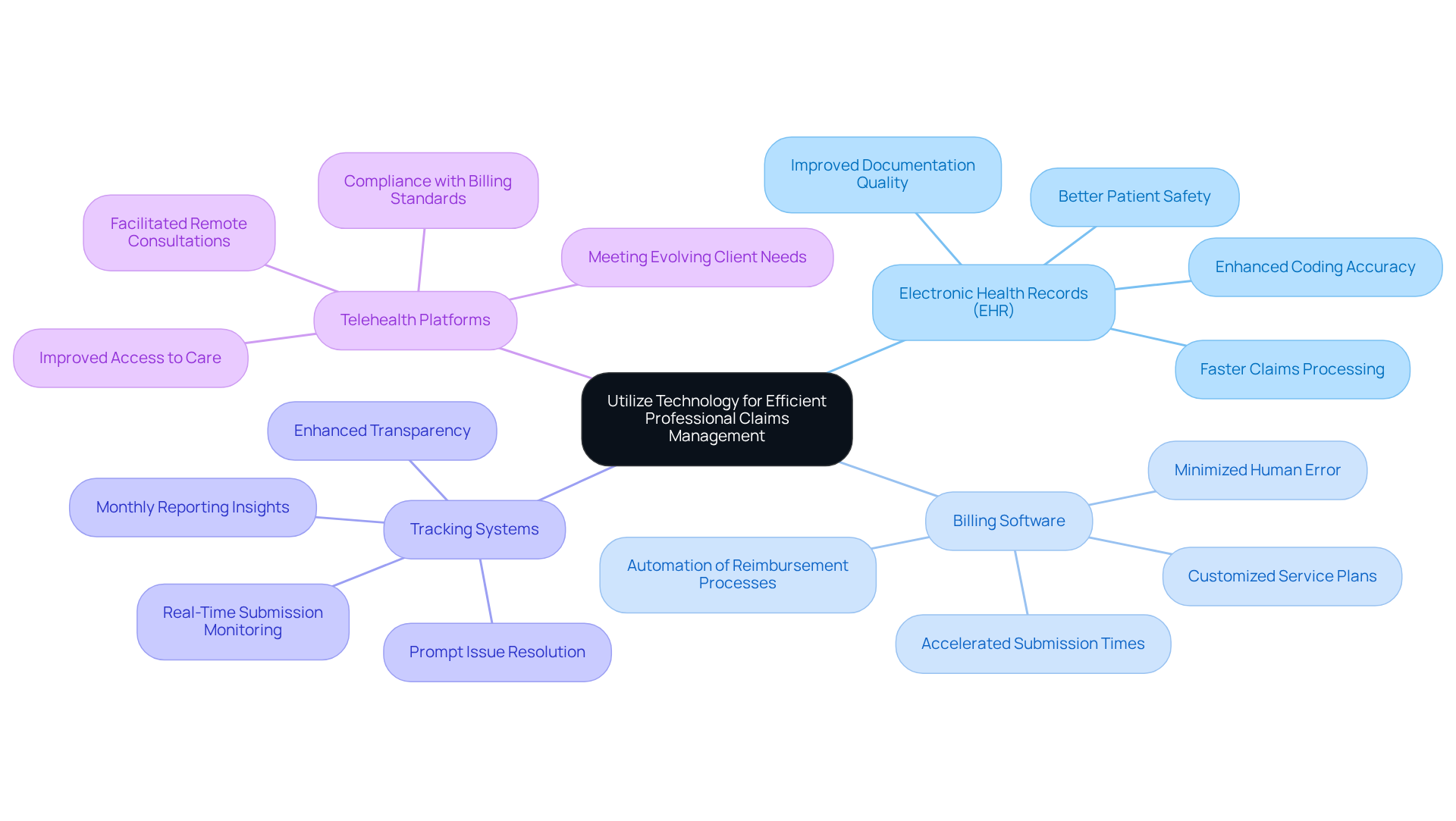
Technology plays a pivotal role in enhancing the professional management of mental health services. Here are key ways clinics can leverage these advancements:
- Electronic Health Records (EHR): The integration of Electronic Health Records (EHR) is transforming the landscape of mental health service management, addressing critical challenges in documentation and claims processing. Nearly 88% of office-based physicians now utilize EHRs, which enhances documentation quality and coding accuracy, directly influencing revenue cycle outcomes.
- Billing Software: Specialized billing software from Healthcare Partners Consulting automates various aspects of the reimbursement process, minimizing human error and accelerating submission times. By minimizing administrative burdens, this automation empowers healthcare providers to dedicate more time to patient care, ultimately enhancing service delivery. With 39 years of experience, Healthcare Partners Consulting provides adaptable service plans customized to the size of your practice and volume of requests, ensuring optimal support.
- Tracking Systems: These systems enable clinics to monitor the status of submissions in real-time, facilitating prompt responses to any issues that may arise. This proactive approach not only mitigates potential disputes but also reinforces the clinic’s commitment to efficient claims management. Healthcare Partners Consulting also emphasizes clear reporting, providing monthly insights into submission volumes and denial rates, which enhances transparency and accountability.
- Telehealth Platforms: The adoption of telehealth solutions is essential for mental wellness centers, as it facilitates remote consultations and ensures compliance with billing standards, meeting the evolving needs of clients. The increasing acceptance of telehealth has become vital in addressing client needs while ensuring adherence to billing standards.
By adopting these technological solutions, along with the expertise of Healthcare Partners Consulting, mental health clinics can significantly enhance their understanding of what are professional claims management processes, leading to improved financial outcomes and better patient care. Ultimately, the strategic implementation of these technologies not only streamlines operations but also enhances the overall quality of care provided to patients.
Conclusion
Mastering professional claims is crucial for mental health clinics striving for financial stability and efficient billing processes. These claims, primarily submitted using the CMS-1500 form, encapsulate vital information that directly affects reimbursement rates. Understanding professional claims helps clinics reduce errors that cause payment delays and protect their revenue.
The article highlights several key aspects of professional claims, including:
- The importance of accurate patient and provider information
- The necessity of precise diagnosis and procedure codes
- The role of technology in enhancing claims management
It also addresses the common challenges clinics often struggle with, such as high denial rates and complex regulations that hinder their financial stability, while providing best practices for improving claims accuracy and efficiency. Utilizing technology, such as EHRs and specialized billing software, can significantly streamline the claims process, reducing administrative burdens and improving patient care.
In light of these insights, mental health clinics are encouraged to prioritize the mastery of professional claims management. By investing in training and adopting best practices, clinics can really boost their operational efficiency and financial health. Embracing these strategies not only ensures timely reimbursements but also fosters a more effective and patient-centered approach to mental health care. Proactive management of claims can redefine the financial future of mental health practices.
Frequently Asked Questions
What are professional claims in medical billing?
Professional claims are critical billing documents that influence the financial health of healthcare providers, including therapists, psychologists, and psychiatrists, for services delivered directly to individuals. They primarily utilize the CMS-1500 form to capture essential details like diagnosis codes, procedure codes, and patient information.
Why is understanding professional claims important for mental health clinics?
Understanding professional claims is vital for mental health clinics because billing errors can lead to significant payment delays, impacting cash flow. Research shows that these mistakes can increase denial rates by 15-30%, affecting the financial status of practices.
What can happen if details are missing in professional claims?
Missing even a single detail in professional claims can lead to stalled payments, increased denial rates, and compliance issues, which can negatively affect a healthcare practice’s financial health.
How can healthcare providers improve their claims process?
Healthcare providers can improve their claims process by scheduling a consultation with Healthcare Partners Consulting. This meeting can help identify ideal administrative solutions to address common issues such as underpayments and overdue requests.
Why is mastering the CMS-1500 form essential for healthcare practices?
Mastering the CMS-1500 form is essential for ensuring timely payments and sustaining the viability of healthcare practices, especially with the evolving landscape of healthcare billing expected in 2026.