
Introduction
Accurate coding is essential for effective dental claims management, yet many clinics face challenges in accurately applying tooth codes, leading to potential reimbursement issues. Mastering these codes not only ensures proper reimbursement but also enhances patient transparency and satisfaction. This article explores strategies for streamlining coding processes, thereby reducing administrative burdens and enhancing financial outcomes amidst evolving dental billing regulations. Ultimately, a thorough understanding of tooth codes can significantly impact a clinic’s financial health and patient relationships.
Understand Tooth Codes and Their Importance in Dental Claims
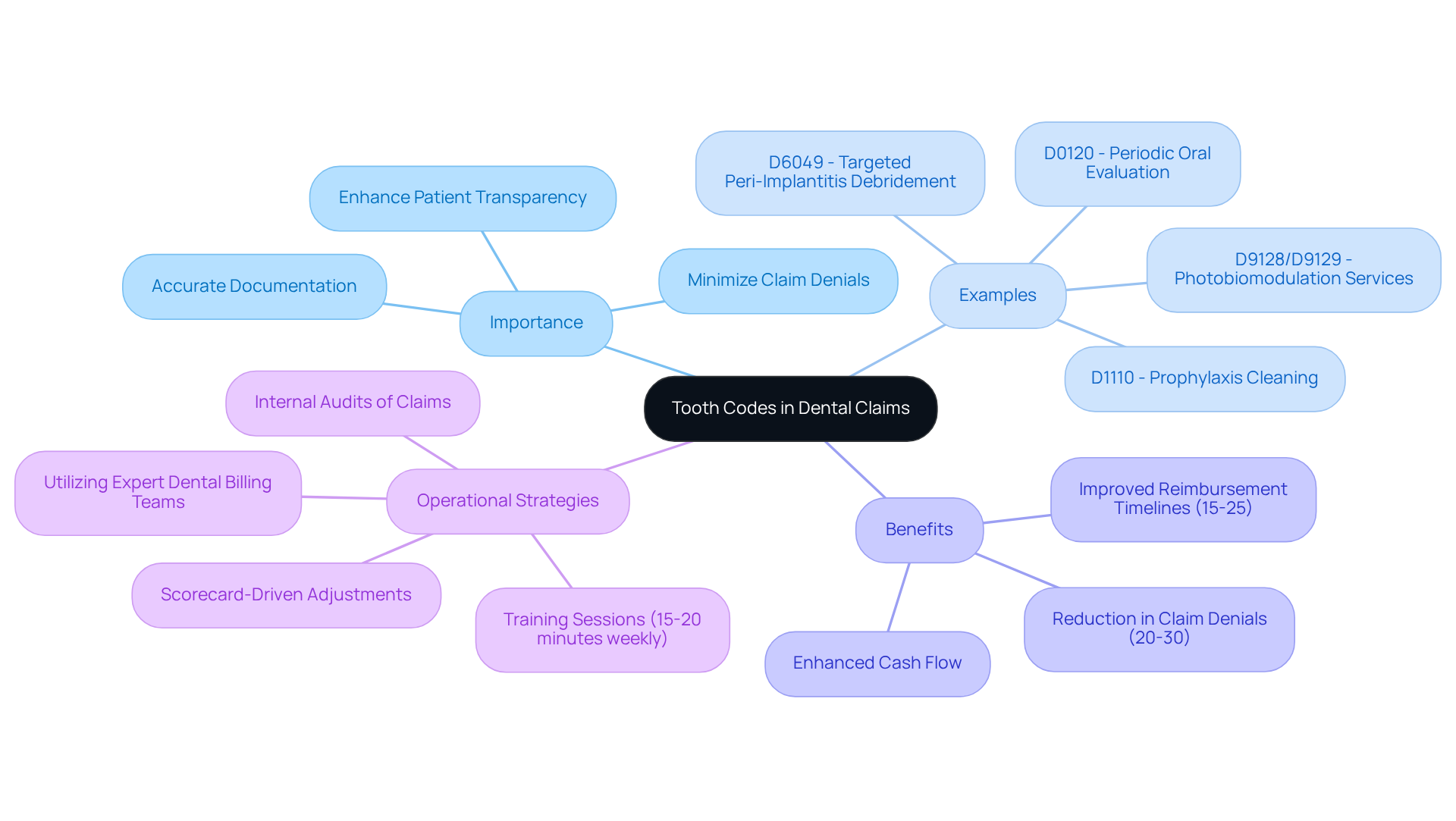
Accurate documentation of oral procedures hinges on the effective use of tooth codes for dental claims. To ensure proper reimbursement from insurance companies and accurately document oral procedures, it is essential to use tooth codes for dental claims. Each code corresponds to a specific dental service, facilitating clear communication between dental providers and payers. A thorough understanding of tooth codes for dental claims is essential to minimize claim denials and ensure appropriate compensation for services rendered.
For example, the CDT code D0120 refers to a periodic oral evaluation, while D1110 is designated for prophylaxis cleaning. Familiarity with tooth codes for dental claims not only enhances billing accuracy but also improves patient transparency regarding their treatment and associated costs. Practices that adeptly utilize CDT codes can expect to see a 20-30% decrease in claim denials and a 15-25% improvement in reimbursement timelines, typically within 30-90 days.
For instance, case studies reveal that organizations using precise CDT classification achieve more efficient submission processing and improved financial outcomes. One organization reported a notable reduction in rework of submissions and enhanced cash flow after implementing updated coding methods. By emphasizing precise documentation and aligning clinical notes with tooth codes for dental claims, dental offices can avoid denial of reimbursements and cultivate improved patient relationships through transparent billing.
Integrating scorecard-driven adjustments related to submission accuracy, denial rates, and accounts receivable days can significantly bolster operational efficiency. This organized method not only simplifies billing procedures but also enables healthcare teams to concentrate more on patient care, aligning with the core values of integrity and empowerment in healthcare. Ultimately, the strategic application of tooth codes for dental claims not only safeguards revenue but also enhances the overall patient experience.
Implement Accurate Coding Practices for Dental Procedures
To navigate the complexities of coding practices and claims management, dental clinics must implement strategic measures that ensure accuracy and efficiency:
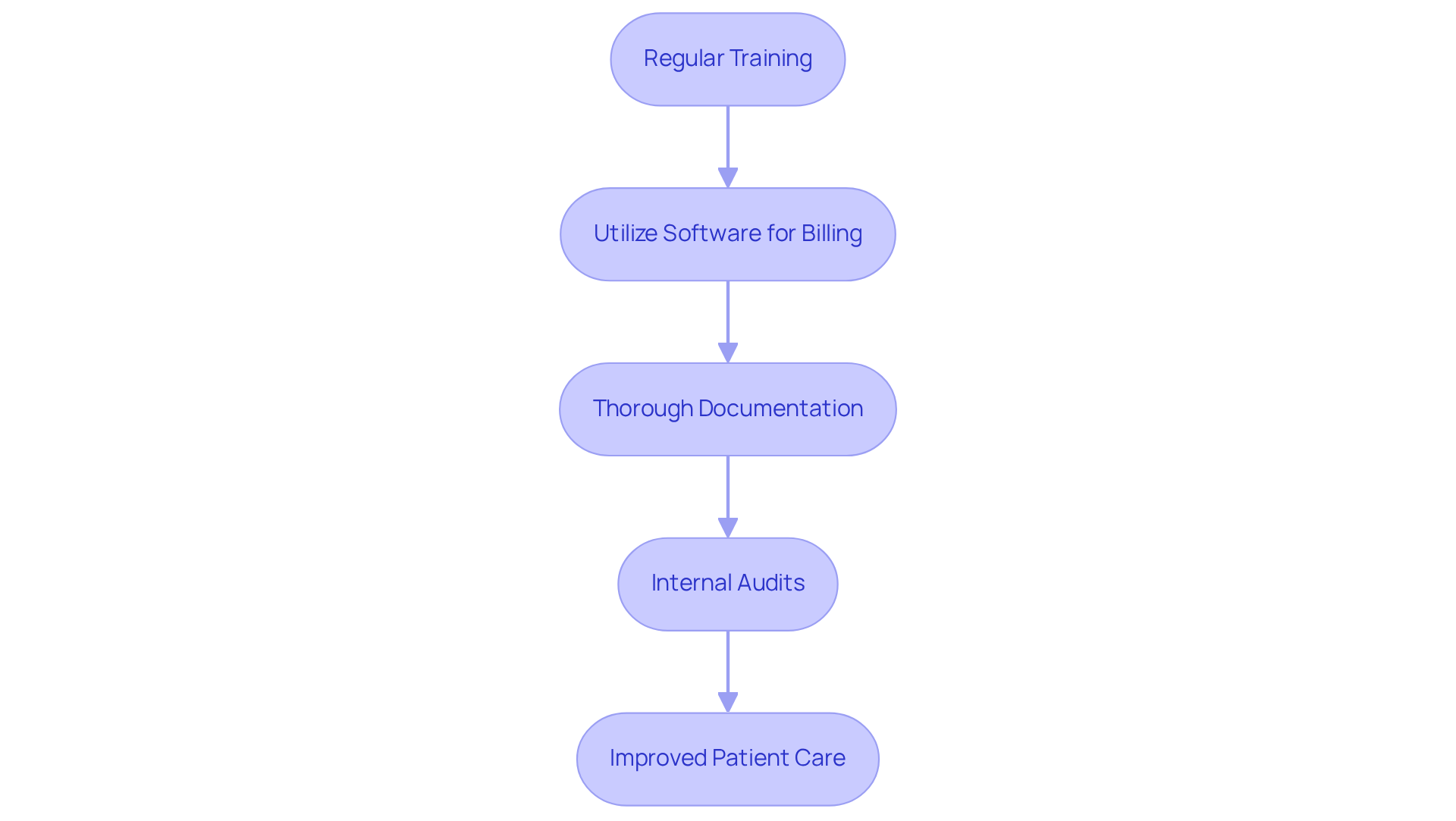
- Regular Training: Conduct annual training sessions for staff to keep them informed about the latest CDT codes and related methodologies. This guarantees that all participants in the billing process are informed about current standards, which is essential for addressing underpayments and unprocessed requests.
- Utilize Software for Billing: Invest in dental billing software that features current databases and integrates seamlessly with EHR and management platforms like TherapyNotes, SimplePractice, and AdvancedMD. This technology can assist in minimizing human error and optimizing the coding process, ultimately improving the management of patient statements and requests.
- Thorough Documentation: Ensure that all patient records are meticulously documented. Accurate clinical notes are essential for supporting the codes used in billing, as they provide the necessary justification for the services rendered. This approach is crucial for tackling aging issues and boosting compliance.
- Internal Audits: Conduct regular internal audits of coded submissions to identify and rectify any discrepancies. This proactive approach can significantly reduce the risk of denial issues and enhance compliance, leading to improved revenue cycle management.
Ultimately, these strategies empower healthcare providers to prioritize patient care over administrative burdens.
Streamline Dental Claims Submission Processes
To streamline the dental claims submission process, clinics can implement several best practices:
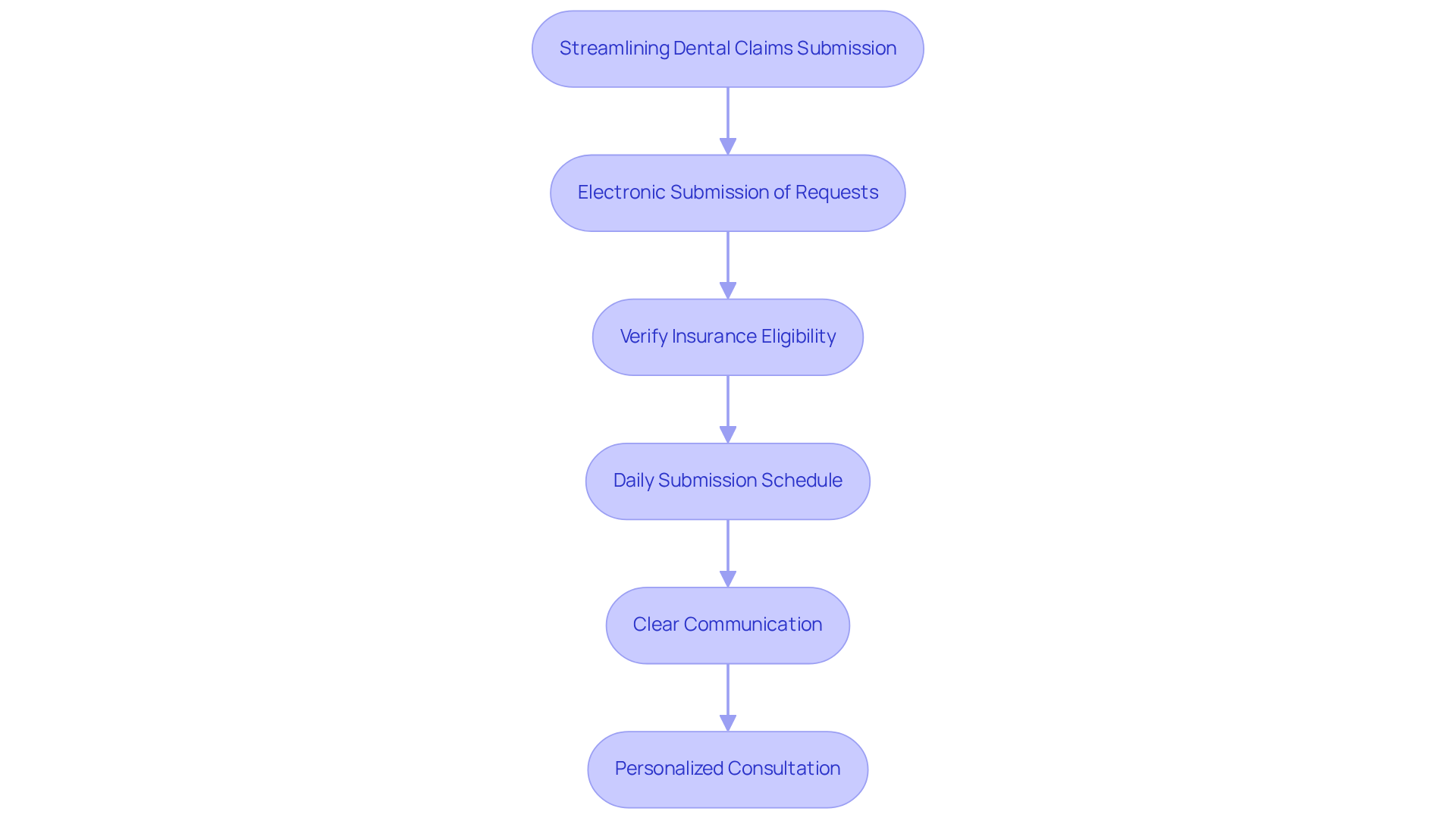
- Electronic Submission of Requests: Transitioning to electronic submission of requests significantly reduces processing times and minimizes errors associated with manual submissions. Electronic submissions are processed more quickly than paper submissions, resulting in faster reimbursements, often within 2-3 days.
- Verify Insurance Eligibility: Prior to treatment, verifying patients’ insurance eligibility is crucial. This step guarantees that the services offered are included, preventing denial of requests and minimizing the necessity for administrative follow-up. Real-time eligibility verification can eliminate common coverage issues before they arise.
- Daily Submission Schedule: Establishing a routine for submitting requests daily or within 24 hours of service helps maintain a steady cash flow and reduces the backlog of submissions waiting to be processed. This practice can lead to a decrease in denials by 20-30% and quicker reimbursement rates of 15-25% within 30-90 days.
- Clear Communication: Maintaining open lines of communication with insurance payers is essential. Understanding their needs and expectations can assist clinics in submitting more accurate submissions and addressing issues more effectively, ultimately improving the submission process.
- Personalized Consultation: Schedule a 30-minute consultation with Healthcare Partners Consulting & Billing, LLC (HPC) to map your current workflow. This tailored approach helps identify services that enhance administrative solutions and address issues like underpayments and aging accounts. Furthermore, integrating with EHR or management platforms like TherapyNotes, SimplePractice, or AdvancedMD can further enhance your reimbursement process.
By adopting these strategies, oral health providers can enhance their claims submission processes, leading to improved financial outcomes and reduced administrative burdens. Implementing these strategies not only streamlines operations but also positions clinics for sustainable financial health.
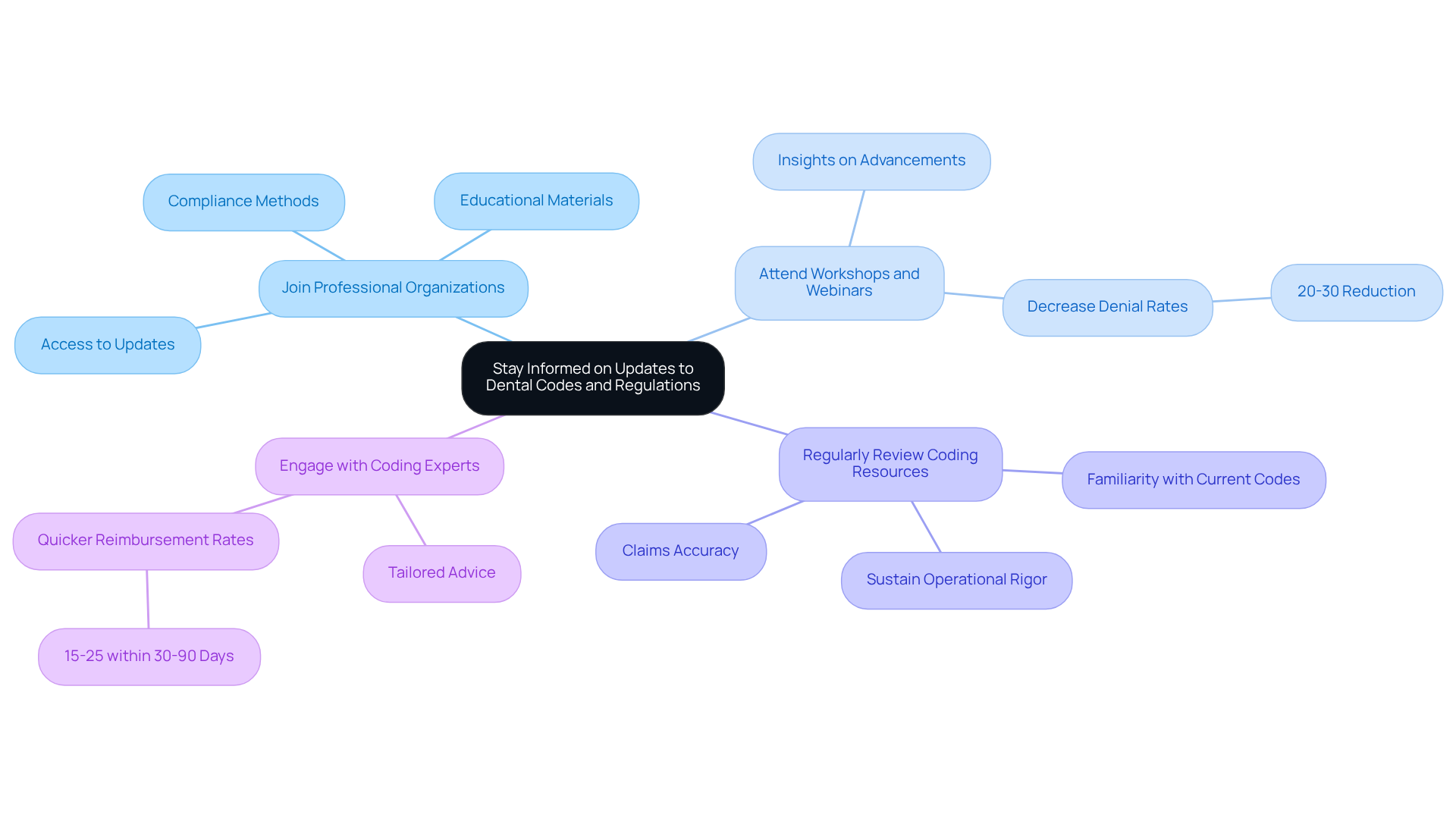
Stay Informed on Updates to Dental Codes and Regulations
To enhance billing methods effectively, clinics must prioritize staying informed about updates to oral health codes and regulations. Here are some effective strategies, backed by 39 years of experience from Healthcare Partners Consulting, a veteran-owned company dedicated to streamlining administrative and billing services:
- Join Professional Organizations: Becoming a member of groups like the American Dental Association (ADA) offers access to updates on changes in regulations, educational materials, and optimal methods that are crucial for compliance.
- Attend Workshops and Webinars: Engaging in workshops and webinars provides insights into the latest advancements in dental practices and billing methods. These events frequently provide valuable insights on compliance and operational efficiency, which can greatly decrease denial rates by 20-30%.
- Regularly Review Coding Resources: Keeping a copy of the latest CDT codebook and other relevant resources readily available ensures that staff are familiar with current codes and can apply them accurately. Regular evaluations assist in sustaining operational rigor, as precise data entry is linked to claims accuracy and days in accounts receivable.
- Engage with Coding Experts: Consulting with coding specialists or billing consultants can provide tailored advice and insights into navigating the complexities of coding. Their expertise can lead to quicker reimbursement rates of 15-25% within 30-90 days, enhancing the overall financial well-being of the organization.
Staying compliant with constantly changing regulations can be daunting for dental practices. Ultimately, these strategies can transform billing practices, ensuring both compliance and financial health for dental organizations.
Conclusion
Inaccurate tooth coding can lead to significant financial losses for dental practices. Accurate coding is essential for effective dental claims management, ensuring that practices receive appropriate reimbursement while enhancing patient transparency. Mastering tooth codes helps clinics reduce claim denials. This improvement in financial outcomes allows healthcare providers to concentrate on patient care instead of administrative tasks.
The article outlines several best practices for implementing accurate coding, including:
- Regular staff training
- Utilizing advanced billing software
- Conducting thorough documentation and internal audits
These strategies not only streamline the claims submission process but also empower dental practices to maintain compliance and operational efficiency. Additionally, staying informed about updates to dental codes and regulations is crucial for adapting to the evolving landscape of dental billing.
Prioritizing accurate coding and proactive compliance is essential for dental practices to enhance financial health and navigate the complexities of dental claims effectively. These practices can streamline revenue cycle management, benefiting both the clinic and its patients. Without these strategies, dental practices risk falling behind in a competitive landscape, ultimately impacting patient care. For personalized support, consider reaching out to Healthcare Partners Consulting & Billing, LLC (HPC) at info@hpcbilling.com or call 888-517-4992 to explore tailored solutions for your practice.
Frequently Asked Questions
What are tooth codes and why are they important in dental claims?
Tooth codes are specific codes used to document oral procedures for dental claims. They are essential for ensuring proper reimbursement from insurance companies and facilitating clear communication between dental providers and payers.
How do tooth codes affect claim denials and reimbursement timelines?
Familiarity with tooth codes can lead to a 20-30% decrease in claim denials and a 15-25% improvement in reimbursement timelines, typically within 30-90 days.
Can you provide examples of tooth codes?
Yes, for example, the CDT code D0120 refers to a periodic oral evaluation, while D1110 is designated for prophylaxis cleaning.
What benefits do practices experience by using accurate tooth codes?
Practices that effectively utilize CDT codes can achieve more efficient submission processing, improved financial outcomes, reduced rework of submissions, and enhanced cash flow.
How can dental offices avoid denial of reimbursements?
By emphasizing precise documentation and aligning clinical notes with tooth codes for dental claims, dental offices can avoid denial of reimbursements.
What operational improvements can be made by integrating scorecard-driven adjustments?
Integrating scorecard-driven adjustments related to submission accuracy, denial rates, and accounts receivable days can significantly enhance operational efficiency and simplify billing procedures.
How does the strategic application of tooth codes enhance the patient experience?
The strategic application of tooth codes safeguards revenue and improves patient transparency regarding treatment and associated costs, ultimately enhancing the overall patient experience.